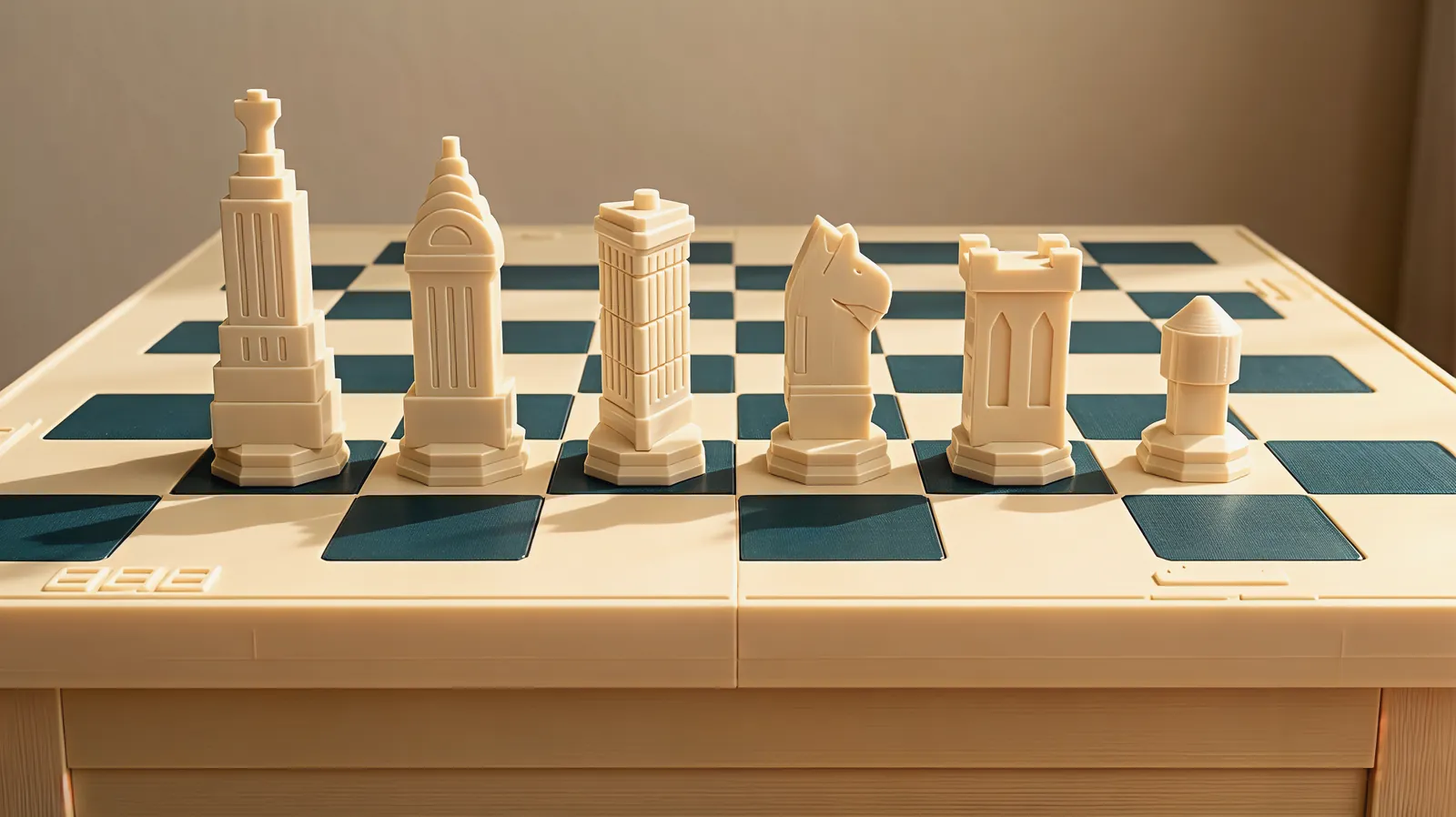
Both armies, ready.
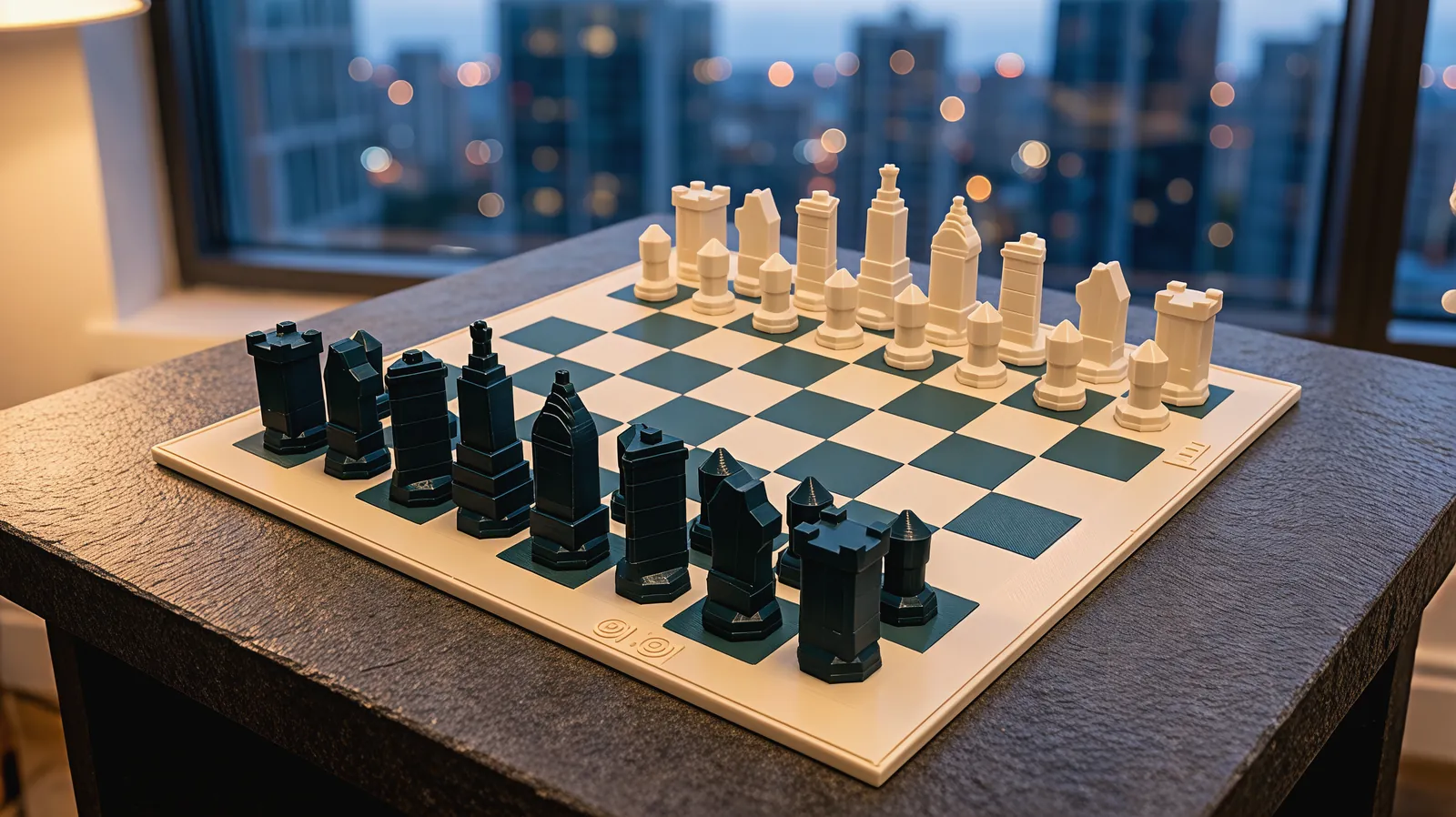
Thirty-two chessmen on a 15.1 in board: towers on the back ranks, rooftop water tanks in front. Keep scrolling to play a real game, one move at a time.
Thirty-two chessmen on a 15.1 in board: towers on the back ranks, rooftop water tanks in front. Keep scrolling to play a real game, one move at a time.
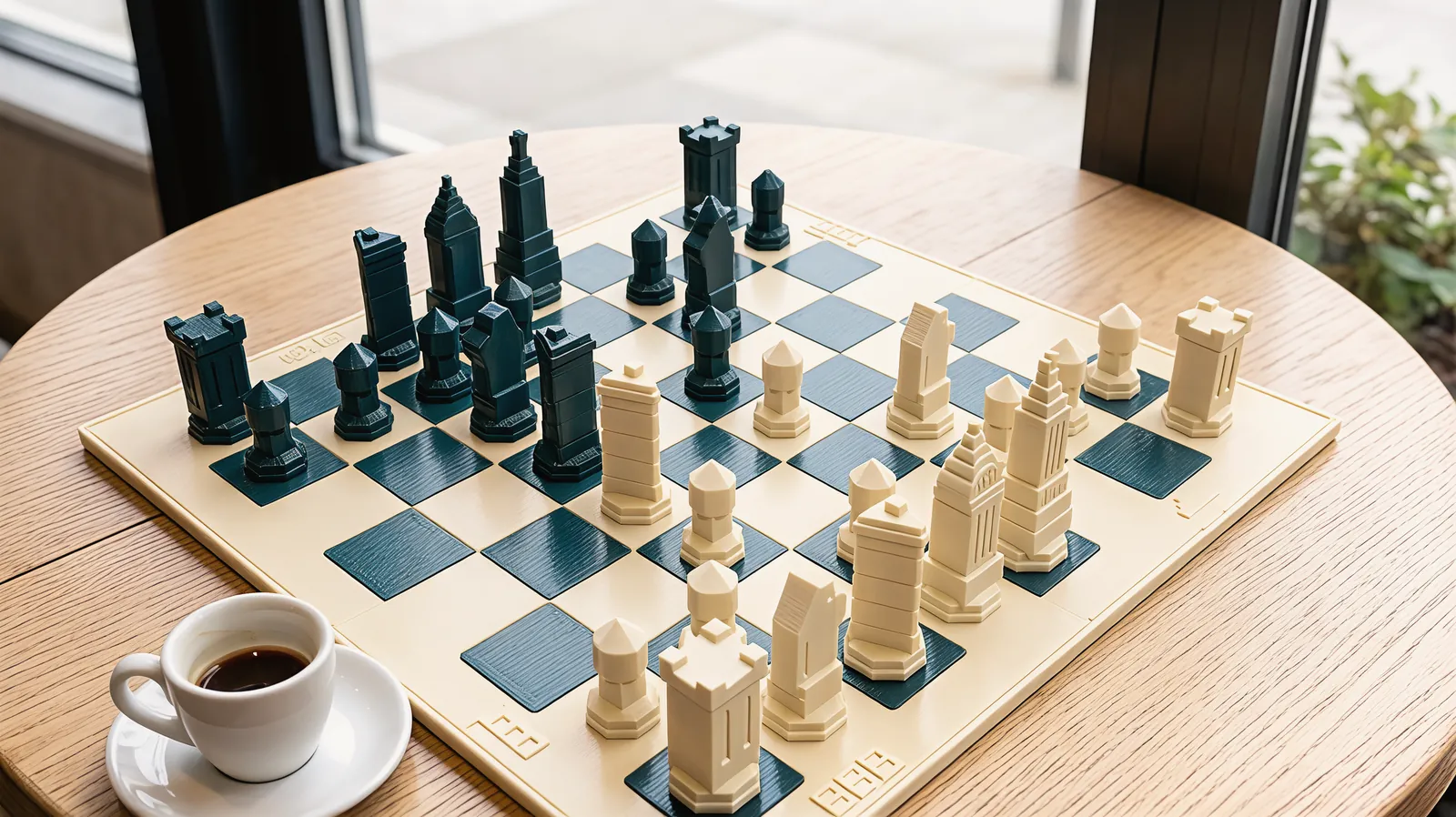
This is the Opera Game, Paul Morphy's win in Paris in 1858. The water tanks claim the centre and a city horse jumps out to f3.
Midnight's bishop pins the horse to its queen, then takes it on f3. The Chrysler queen takes back, and the centre pawns trade.
Bishops, knights and the queen find their squares. Midnight pushes a pawn to b5 to drive the Flatiron bishop away.
A knight is given up to open the b-file. Then the Empire State king steps to c1 and a Brooklyn Bridge rook swings to d1.
A rook crashes into d7, the queen gives herself up on b8, and the last Brooklyn Bridge rook lands on d8. Checkmate.
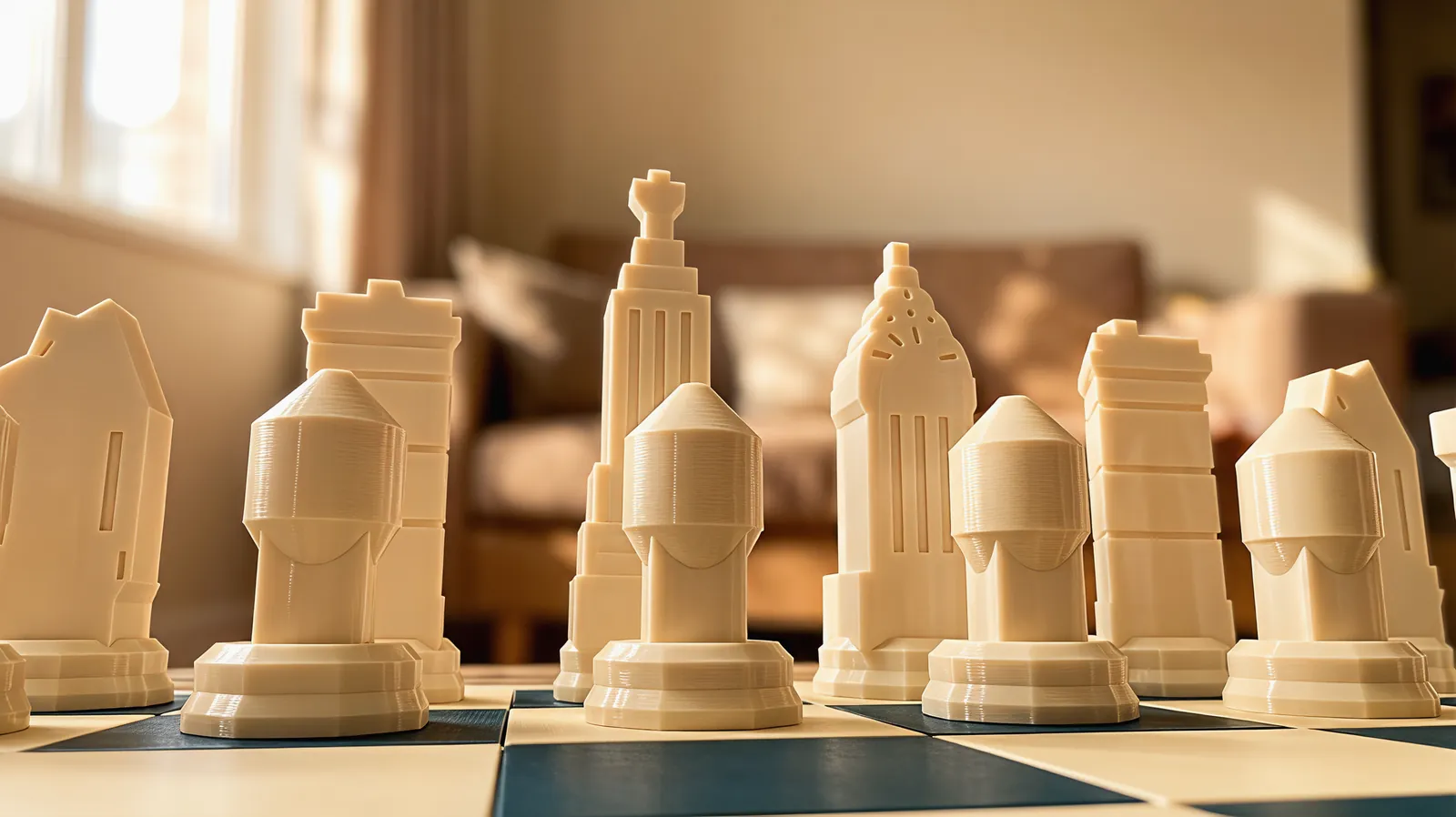
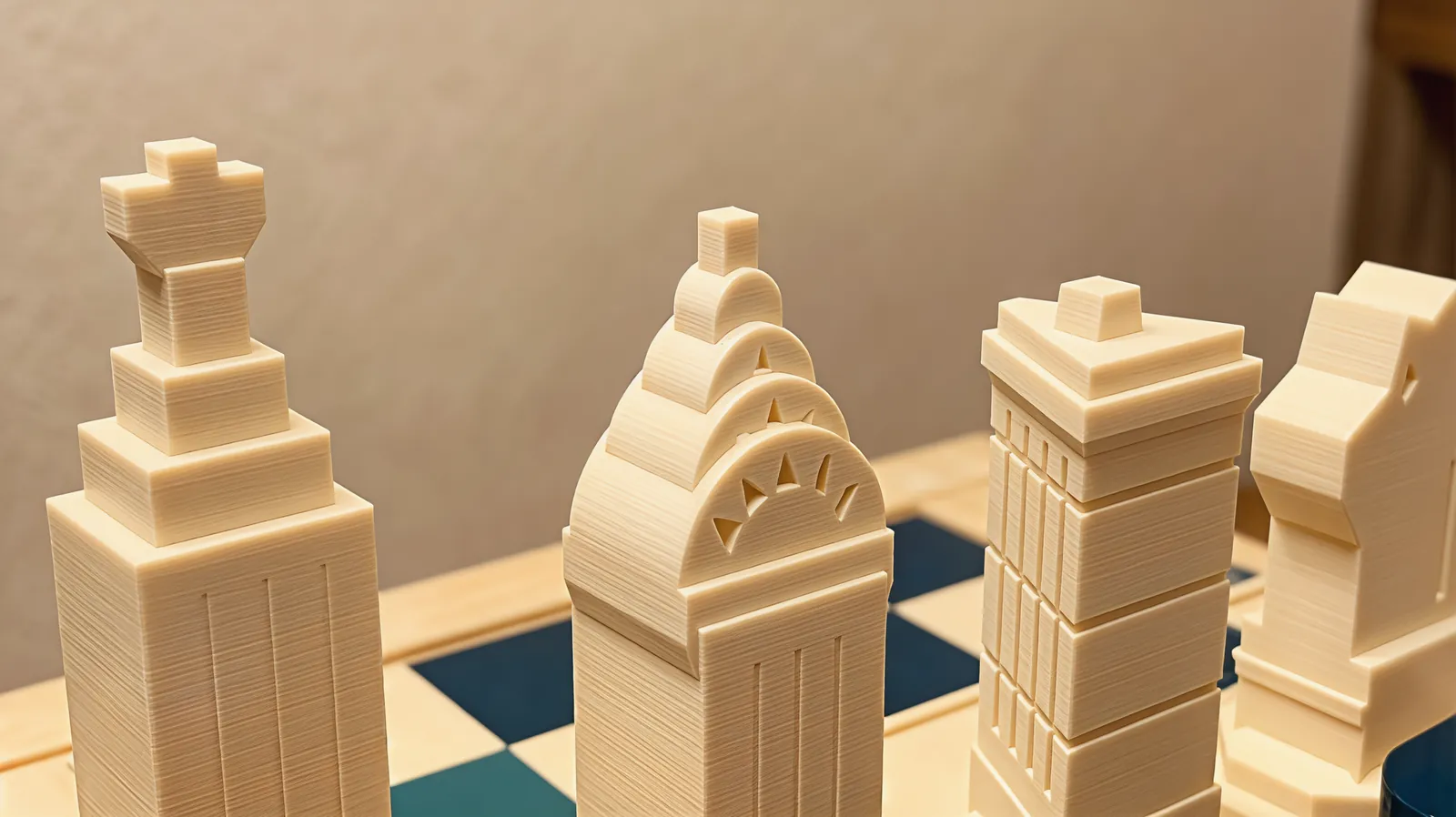
Both armies share one shape per role. Each silhouette comes from a New York landmark or from the water tanks on the city's roofs, stylized so the chess role reads first.
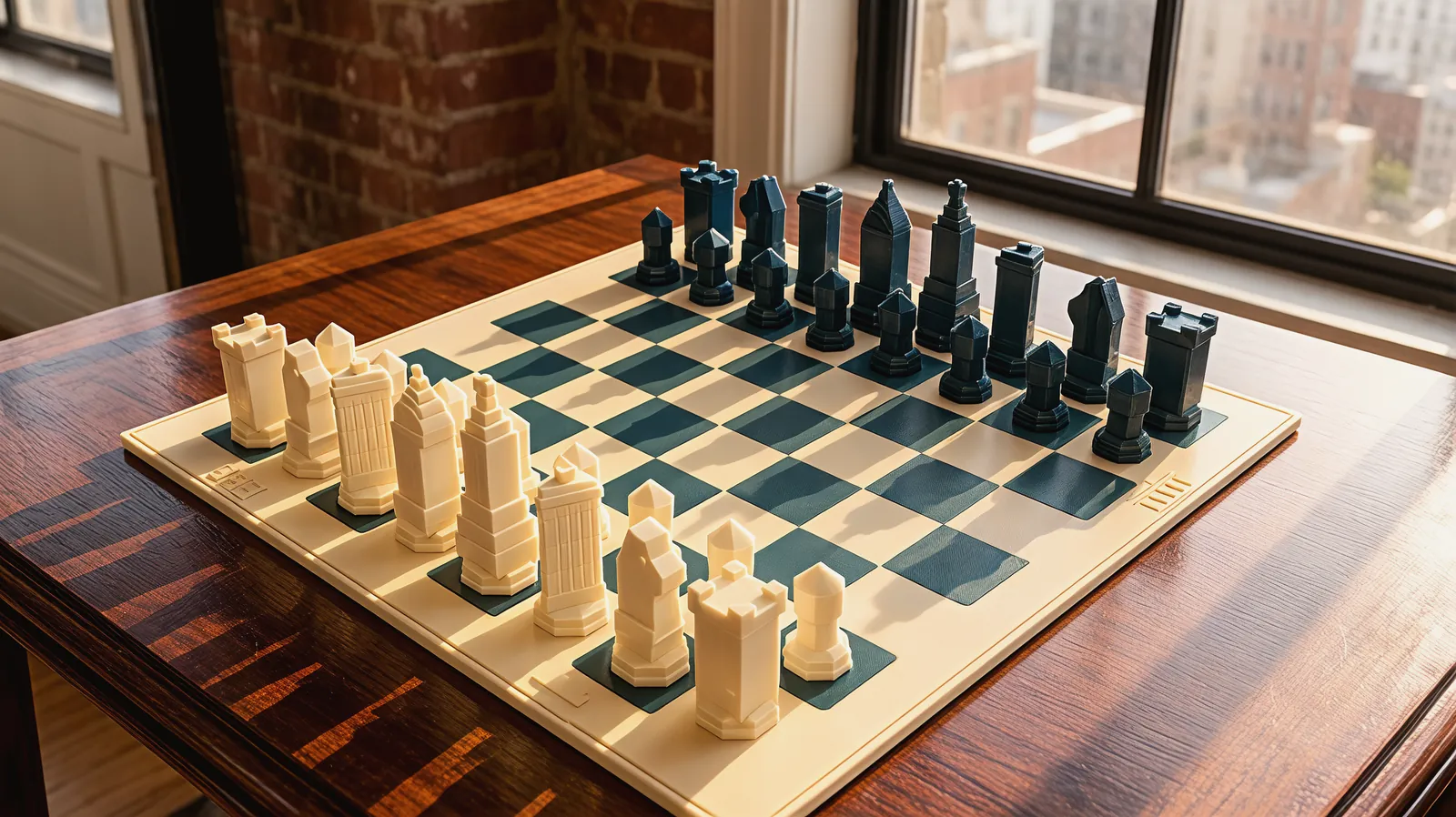
The board is 15.1 in square with 1.65 in squares, sized to sit between two players on a dining table, a café table or a desk by the window. Every piece stands on a flat octagonal base.
Walk the 0.9 in border and you pass five raised reliefs, each drawn from documented history in one New York community. Both players share the border; no neighbourhood belongs to a side.
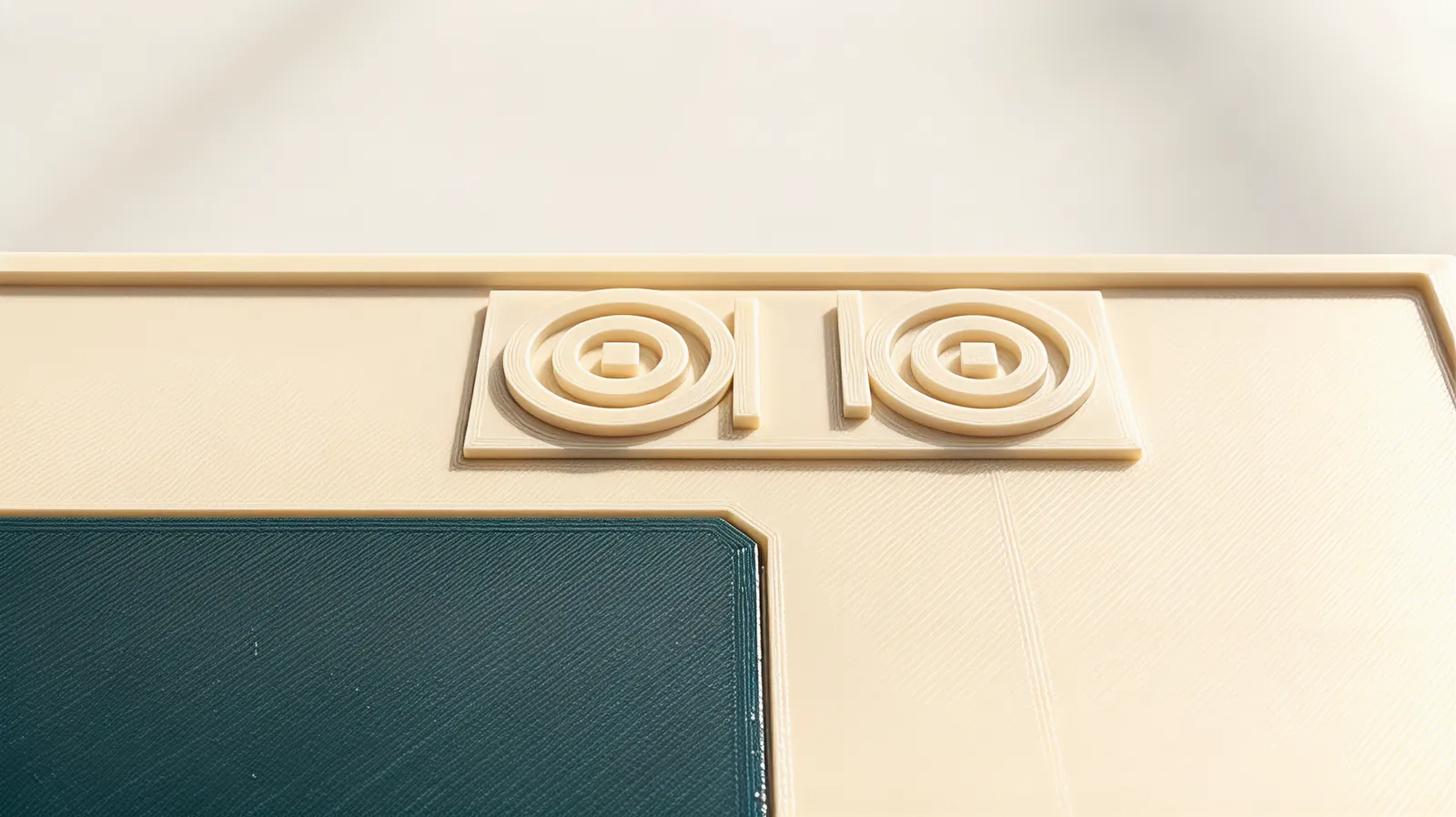
The panels rest side by side and the inlays lift out, so keep the board on the table while you play and take it apart to carry it.