Claude the Thinker
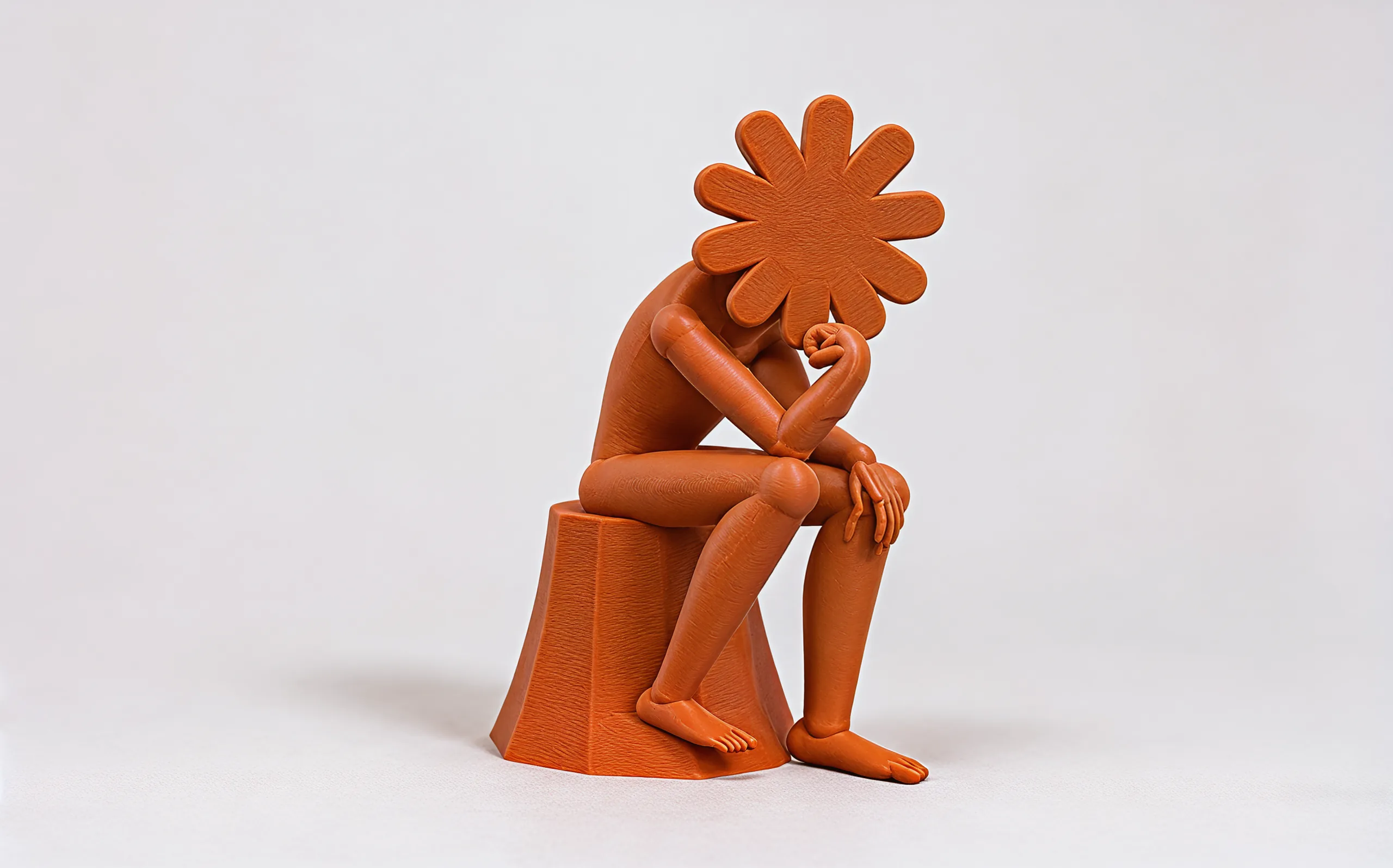
The old pose of thought, with a 10-ray asterisk where the face should be.
Lights up on a thinker.
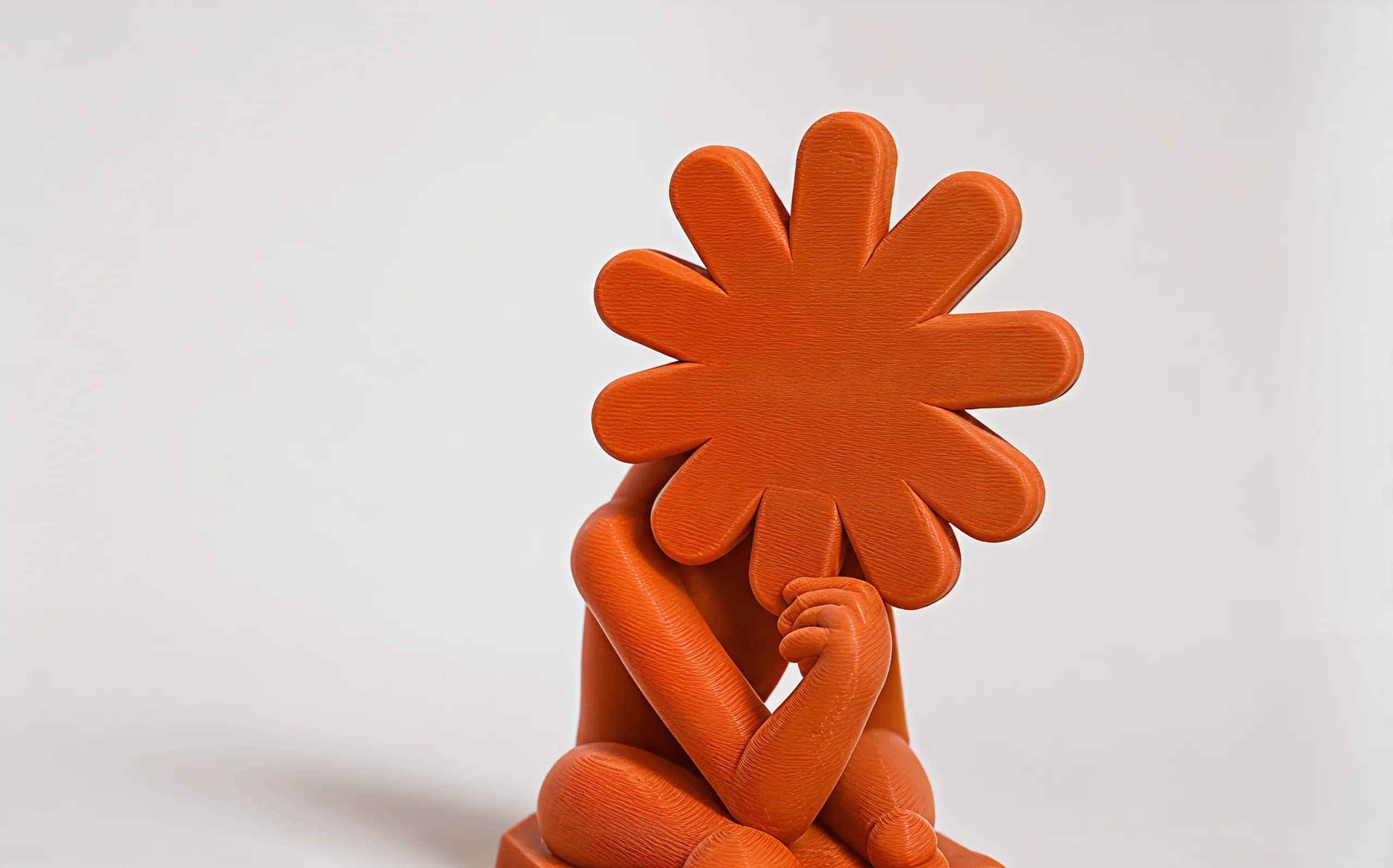
Elbow on knee, chin on fist, a whole body leaning into one idea. Only the head has been swapped: a flat asterisk with 10 rounded rays.
The fist does the holding.
The knuckles press up into the underside of the head, so the star seems to rest on the thought itself.
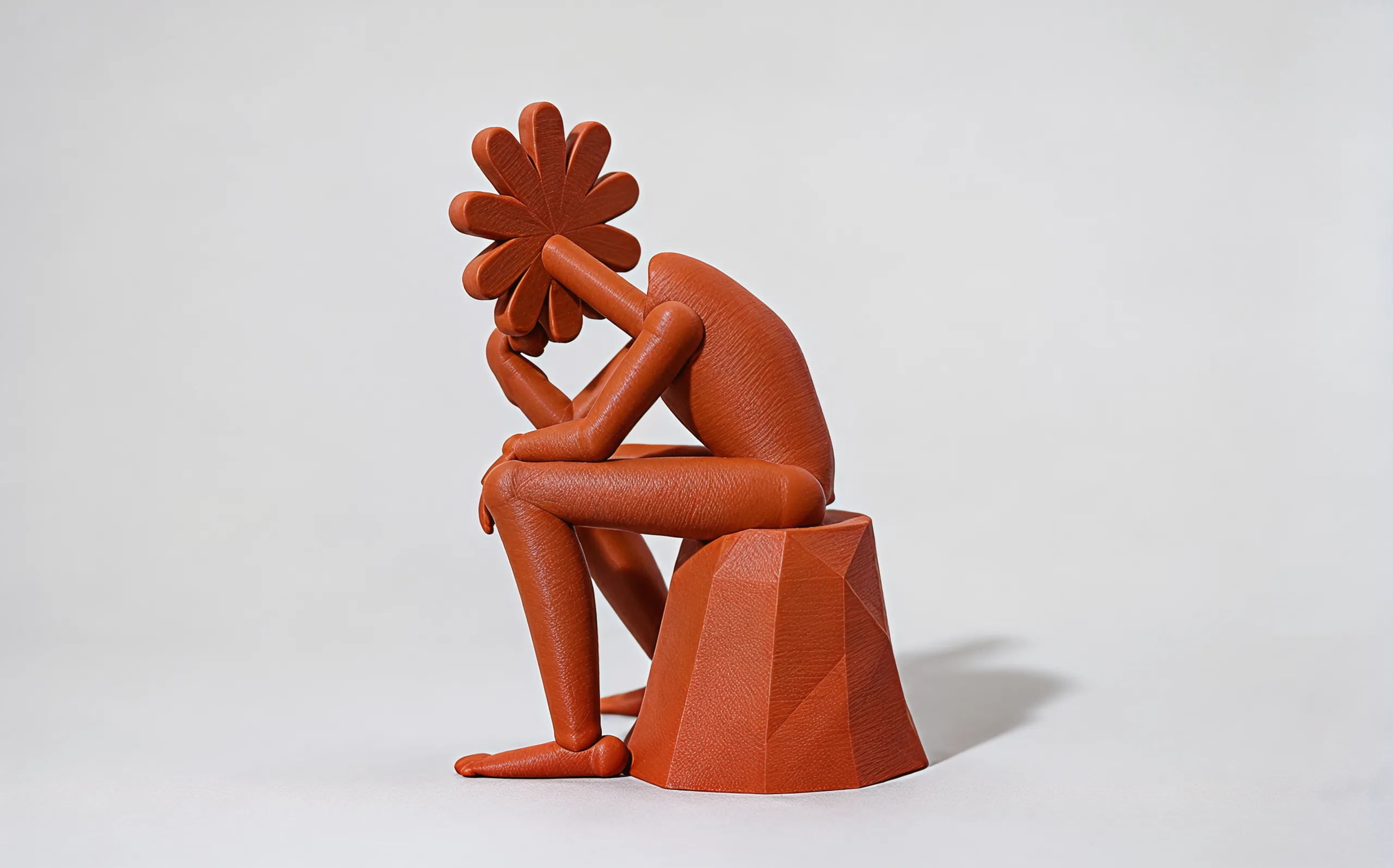
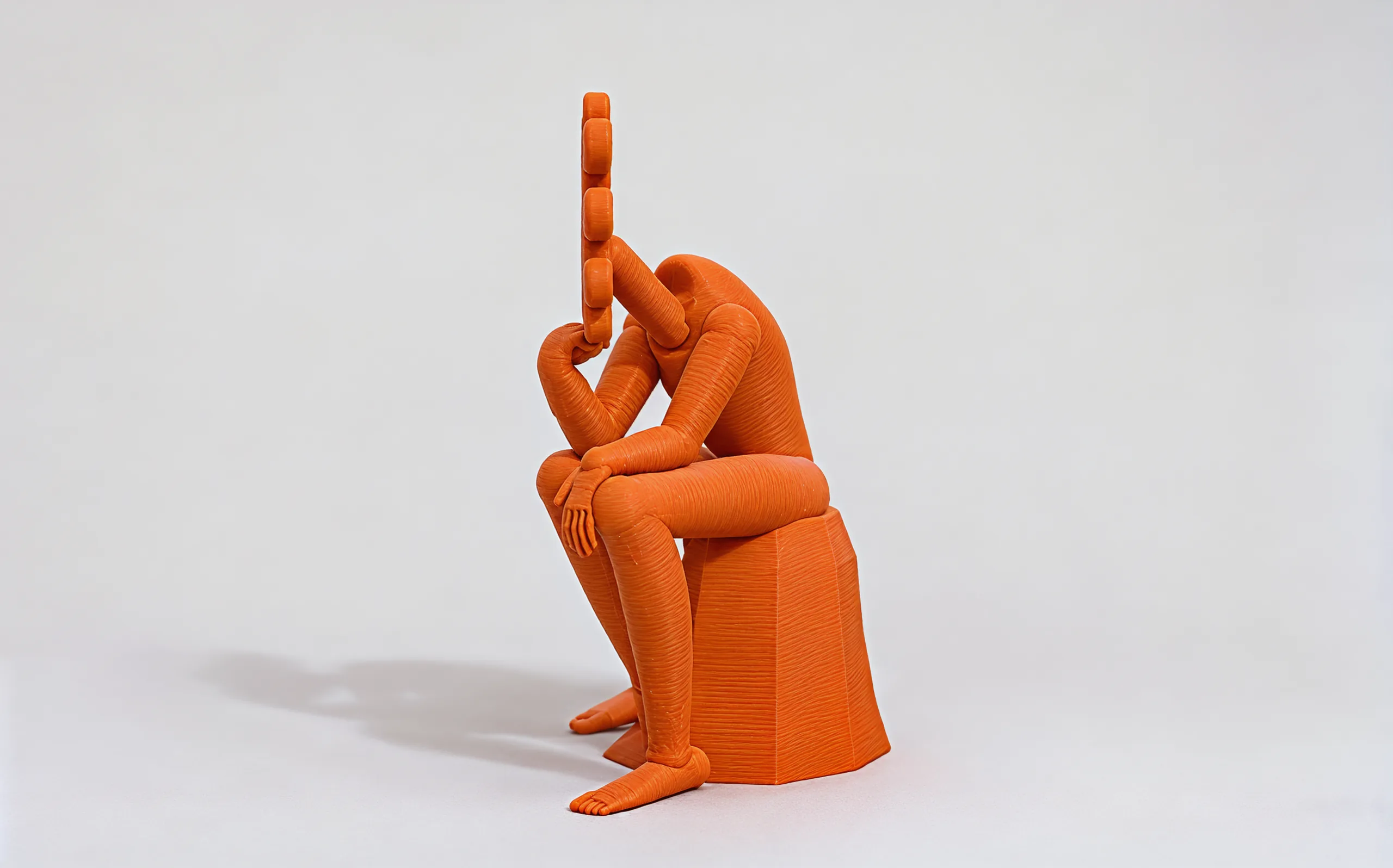
Turn it, and the star becomes a line.
Side on, the head is a single slab 0.26 in thick. Which reading you get depends on how you set it on the desk.
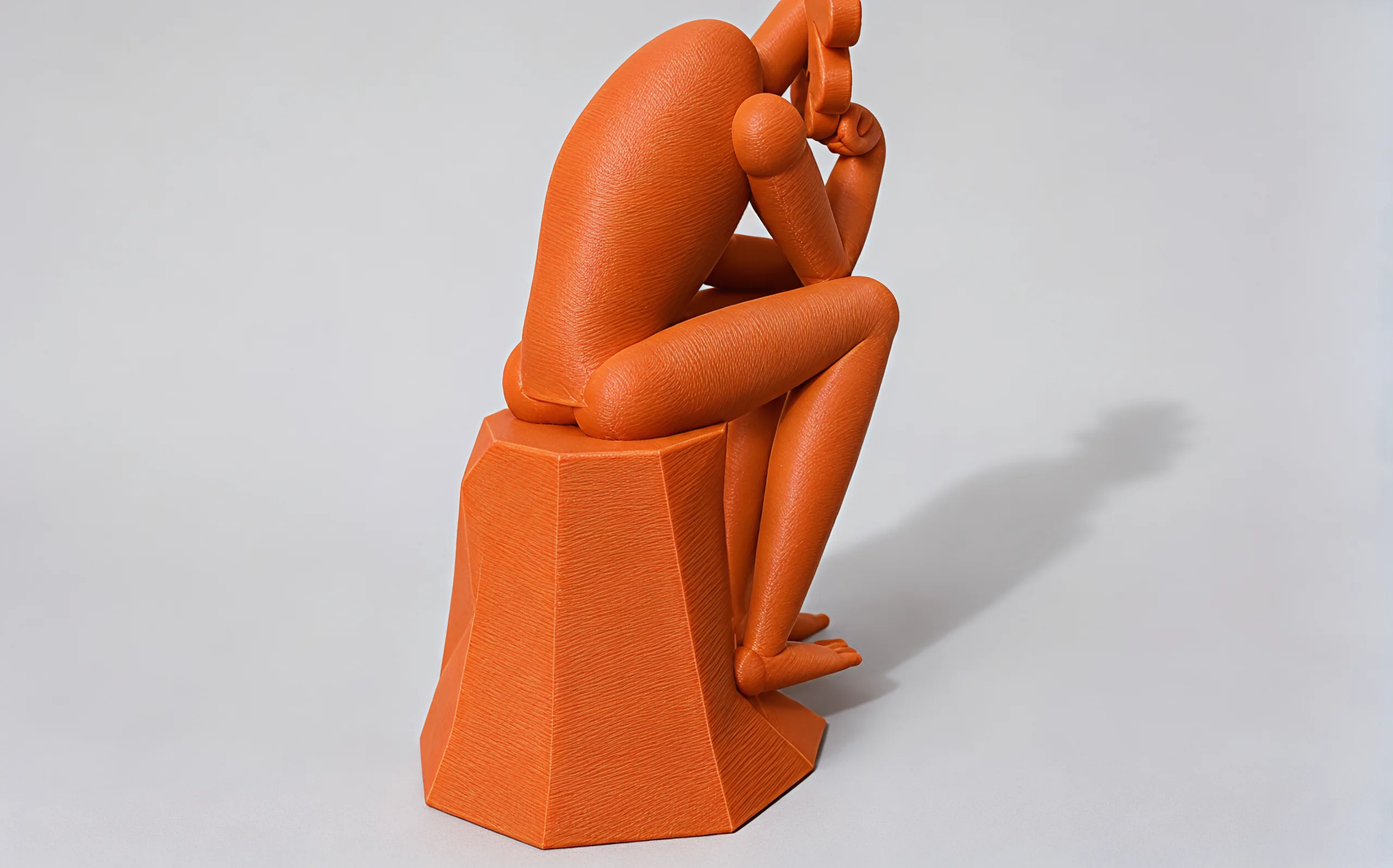
A back bent into the work.
From behind, the spine bows in one long curve down to the seat. The head still shows, a ring of rays over the shoulder.
Sat on a cut rock.
The seat is faceted like a quarried block. Move a lamp low and every plane takes a different shade of the same clay colour.
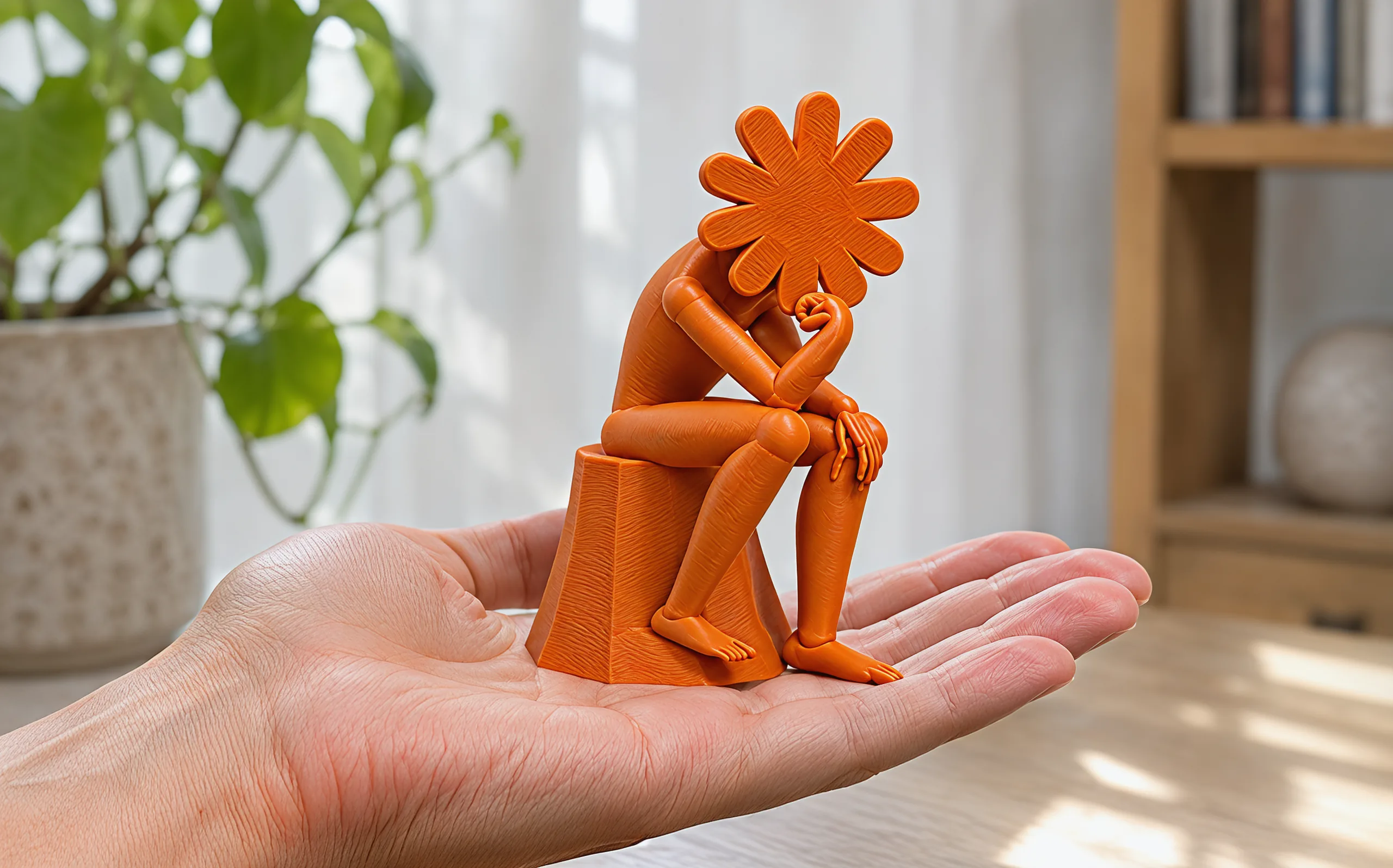
7.1 in of quiet company.
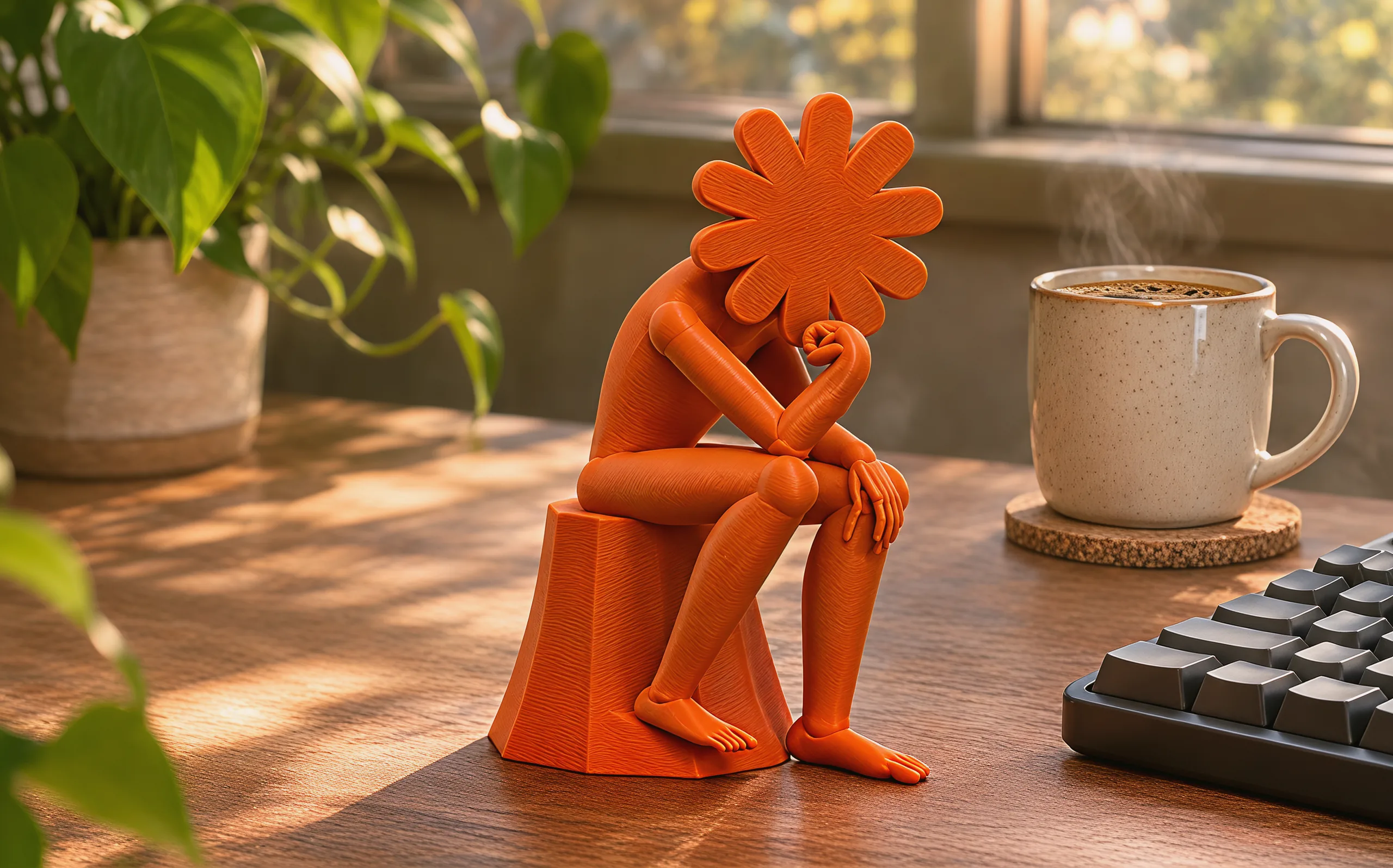
Tall enough to hold its own beside a monitor, small enough for the end of a bookshelf.
Up close
One colour all through, so the shape does the talking: smooth limbs, a cut-stone seat, and that star.

7.1 in tall and 4.5 oz: it stands on a hand, sits by a keyboard and fits a shelf without moving the books.
One head, two readings.
The head is a disc 2.5 in across and only 0.26 in thick. Face it toward the room and it is a star of 10 rays. Turn the sculpture a quarter turn and the star folds away to a thin line, the thinker gone quiet in profile.
Face on: 10 rays, 2.5 in across
One thinker in the box.
- 1
- seated figure on its cut rock, head, body and seat in one solid sculpture
Claude the Thinker Desk Sculpture
A thinker for the desk, with a star in place of a face.
- Size
- 3.2 × 5.0 × 7.1 in
- Height
- 7.1 in
- Weight
- 4.5 oz
- Head
- Flat asterisk, 10 rays
- Head size
- 2.5 in across, 0.26 in thick
- Colour
- Terracotta clay tone, all one colour
- Pose
- Seated, chin on fist, elbow on knee
Good to know
How big is it?
3.2 × 5.0 × 7.1 in, so 7.1 in tall, and it weighs 4.5 oz. Light enough to move around the desk with one hand.
What is the shape on its head?
A flat asterisk of 10 rounded rays, 2.5 in across and 0.26 in thick. Face on it reads as a star; side on it narrows to a line.
Does the head turn or come off?
No. Head, figure and rock are one solid sculpture. To change what it shows, turn the whole piece on the desk.
Does it move, light up or need power?
No. It is a still sculpture with nothing to wind, switch or charge.