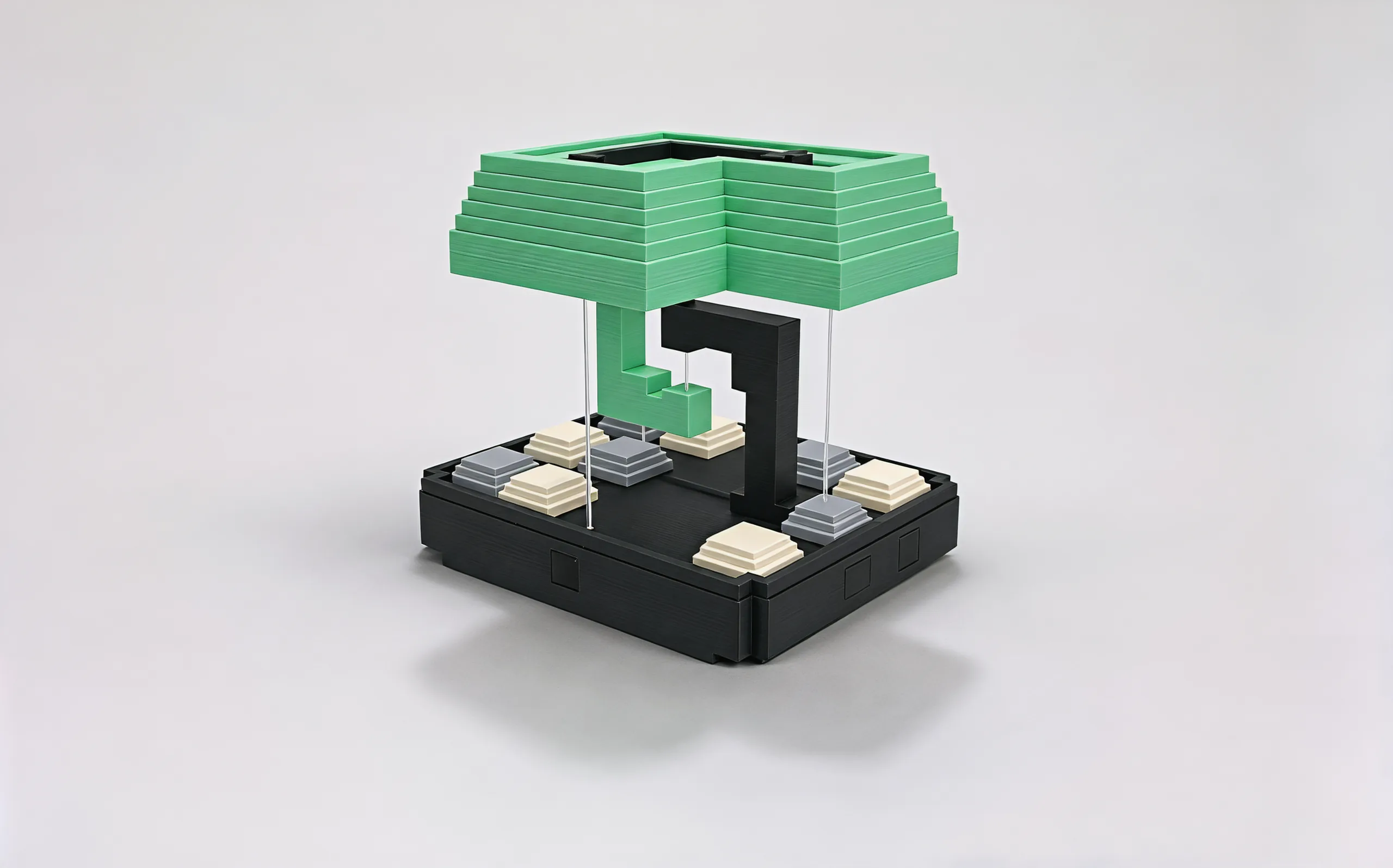
Enter Key Desk Sculpture
The one key every developer hits a thousand times a day, floating over the keyboard like it was just pressed.
Just pressed.
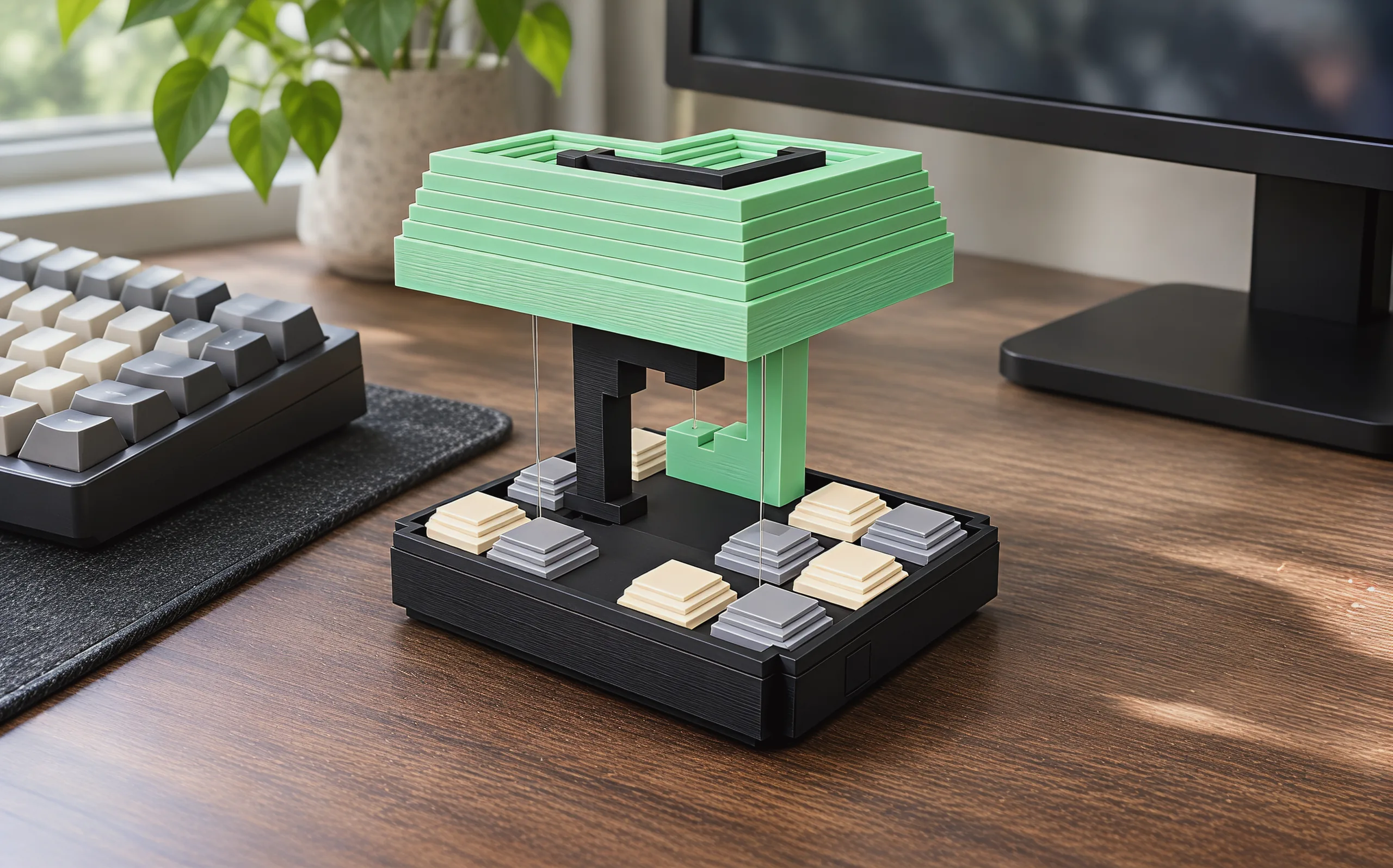
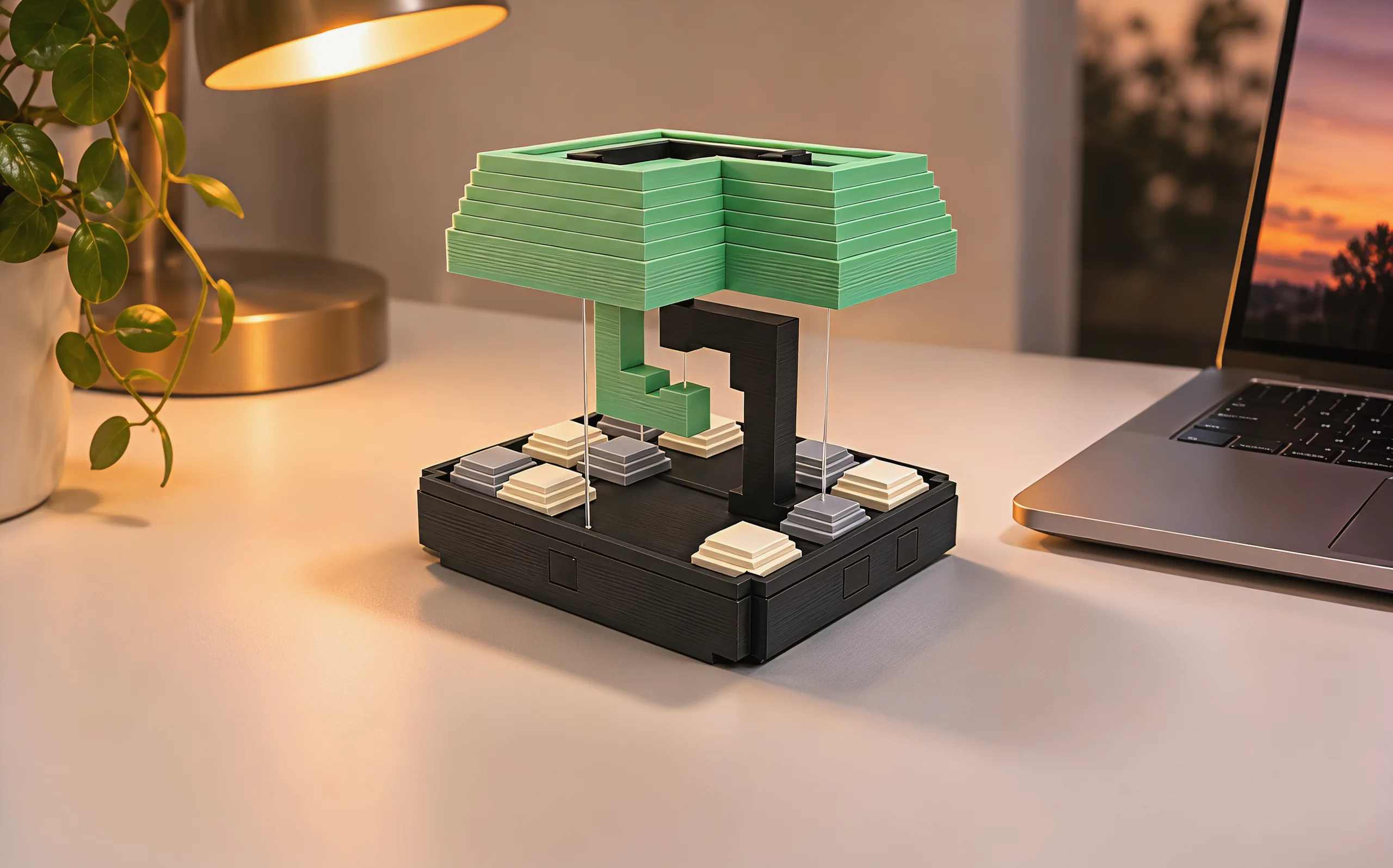
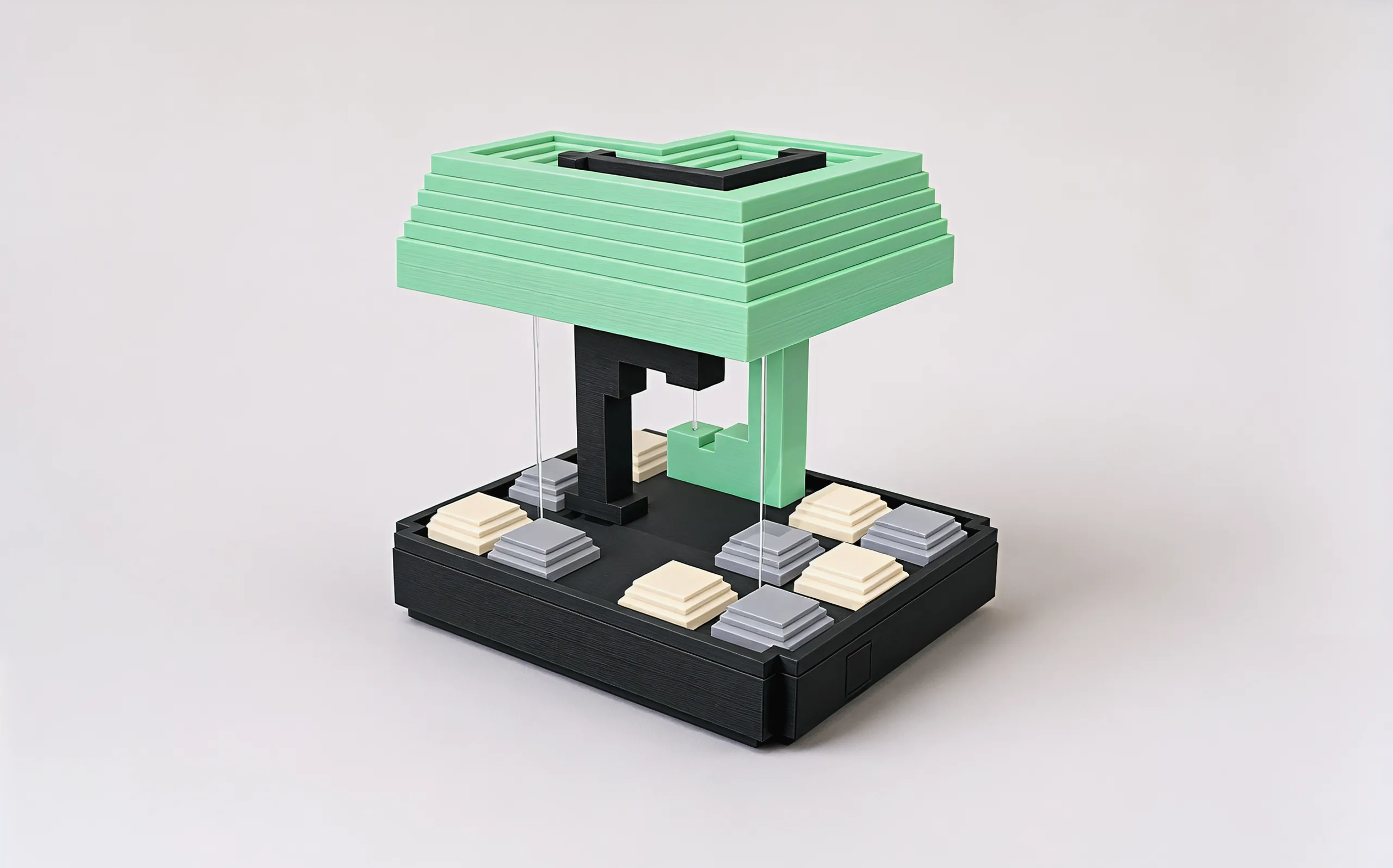
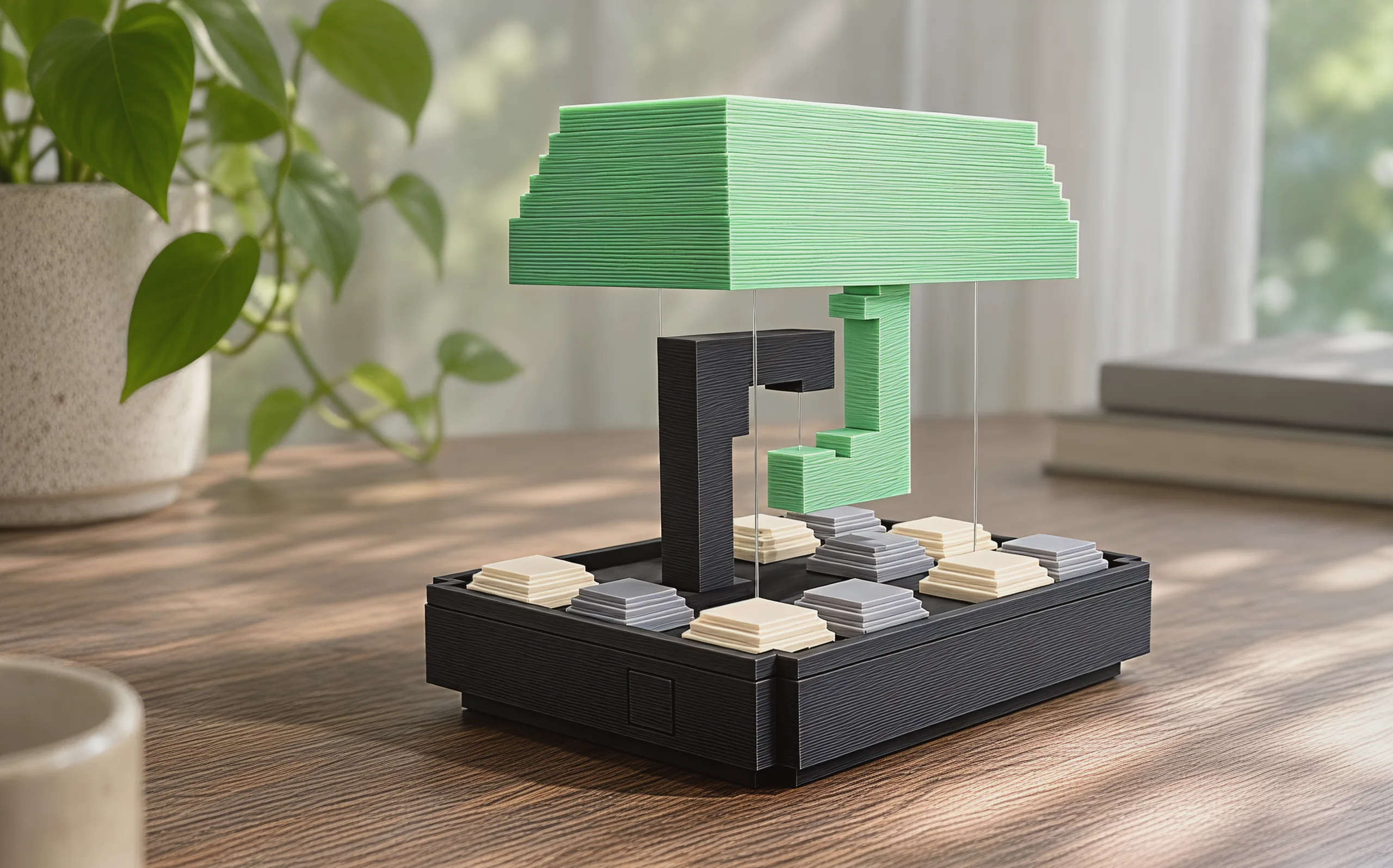
A mint Enter key with a dark pixel return arrow, hanging over a little charcoal keyboard of cream and grey keys. It looks like it is still on its way back up.
Two hooks that never touch.
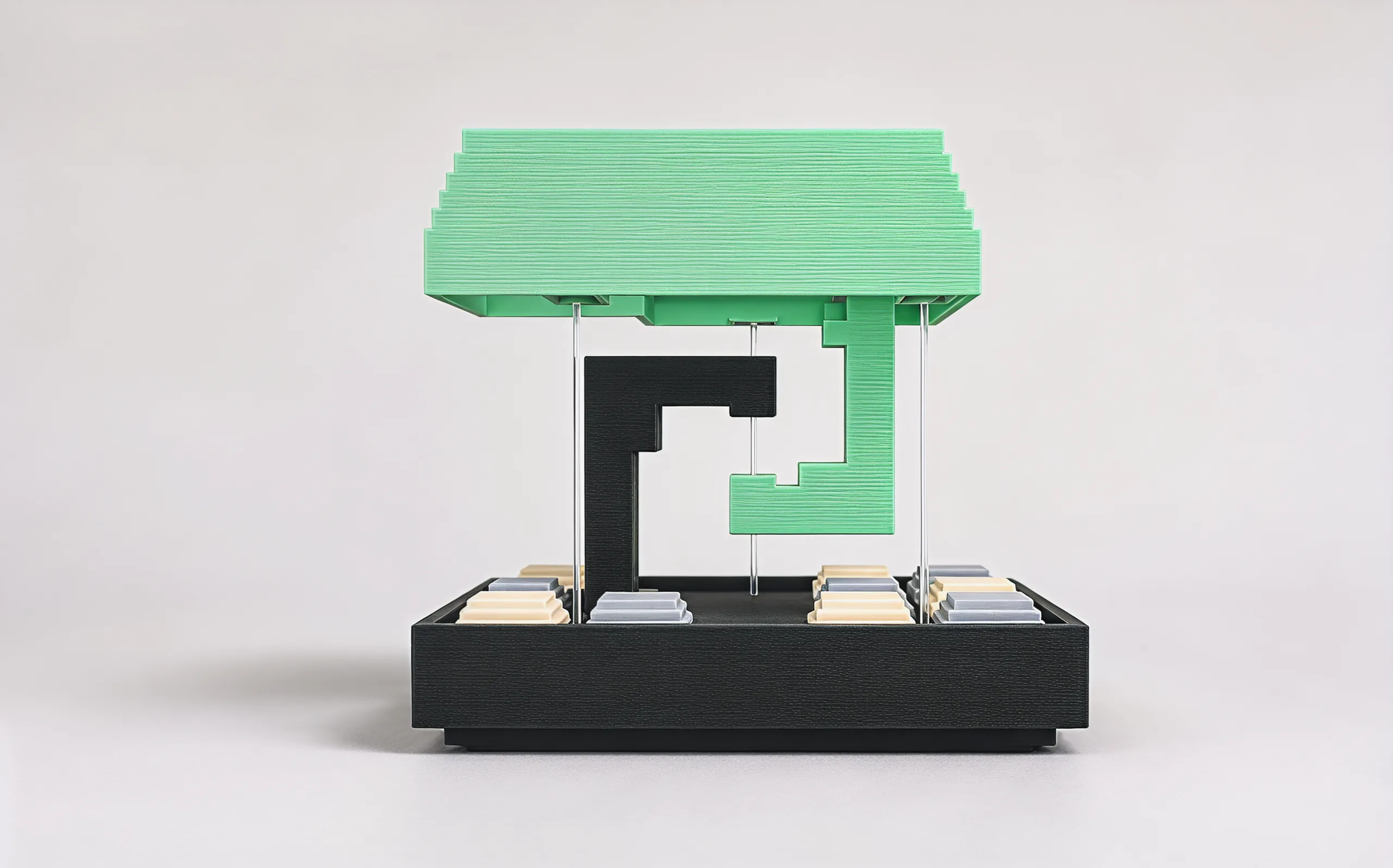
A charcoal hook rises from the base and curls over. A mint hook drops from under the key and curls under it. They lock together with about 5/16 in of air between them.
One short line holds it up.
A clear line about 0.02 in thick runs from the tip of the mint hook up to the tip of the charcoal one. The key hangs from it.
Three lines keep it level.
Then 3 more clear lines run from the base up to pads under the key and pull down at its edges, so it hangs level instead of tipping. Small pegs in the sides of the base keep them taut.
Walk around it.
From the front the gap is plain: two hooks, one inside the other, with nothing between them but air. Nothing on it moves, and there are no batteries, magnets or electronics in it.
Up close
About 3.9 in wide, 3.1 in deep and 3.7 in tall, and 2.6 oz. Small enough to sit beside a keyboard, under a monitor or next to a laptop, where it will look permanently mid-keystroke.
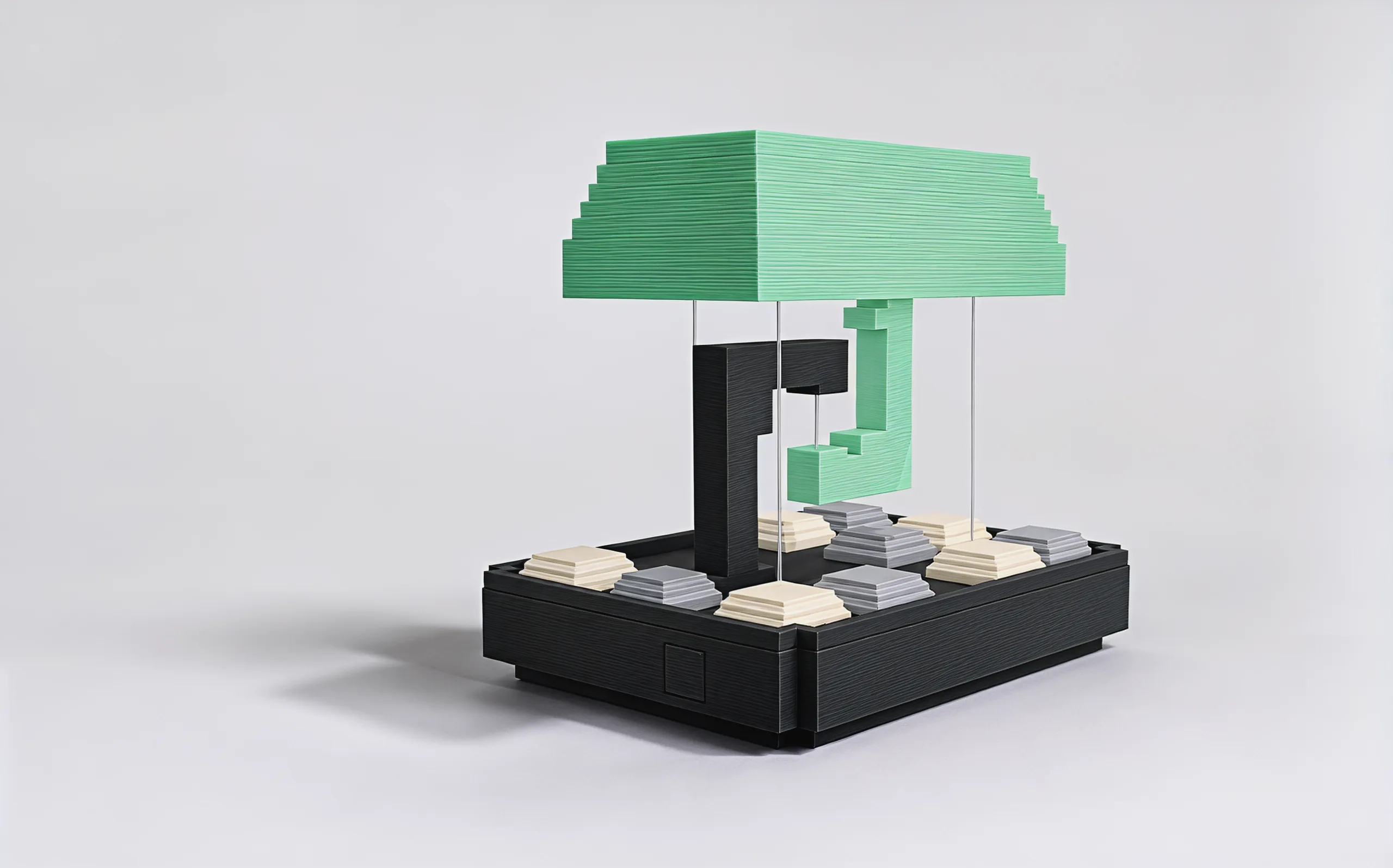
It hangs. It doesn't stand.
Nothing props the key up from below. It hangs from the short line in the middle, while the 3 lines at the rim pull its edges down so it stays level.
Pull up in the middle, pull down at the edges: that balance is called tensegrity, and it is why the two hooks can interlock without ever touching.
Enter Key Desk Sculpture
The key you press all day, caught mid-press.
One sculpture, 19 pieces in it
- 1
- Enter key in mint, with its dark pixel arrow and the hook beneath it
- 1
- charcoal keyboard base with its own hook
- 10
- mini keys, 5 cream and 5 grey
- 4
- clear nylon lines, 1 in the middle and 3 at the rim
- 3
- tuning pegs in the sides of the base
Specs
- Size
- 3.9 × 3.1 × 3.7 in (W × D × H)
- Weight
- 2.6 oz
- Air between the hooks
- About 5/16 in
- Lines
- Clear nylon, about 0.02 in thick
- Colours
- Mint key, charcoal base, cream and grey mini keys
- Held up by
- The lines alone: no magnets, no glue
- Power
- None: no batteries, no electronics
- Moving parts
- None
Good to know
Is it really floating?
No magic and no magnets. The key hangs from a short clear line between the two hooks, and 3 more clear lines keep it level. The lines are thin and clear, so from a step back the key looks like it floats.
Does it need batteries or power?
No. There are no batteries, no magnets and no electronics in it, and no glue holds the key up.
Does anything move?
No. It is a still sculpture: the key keeps its just-pressed pose.
How big is it?
About 3.9 in wide, 3.1 in deep and 3.7 in tall, and it weighs about 2.6 oz. It fits beside a keyboard or under a monitor.
What are the lines made of?
Clear nylon, about 0.02 in thick.