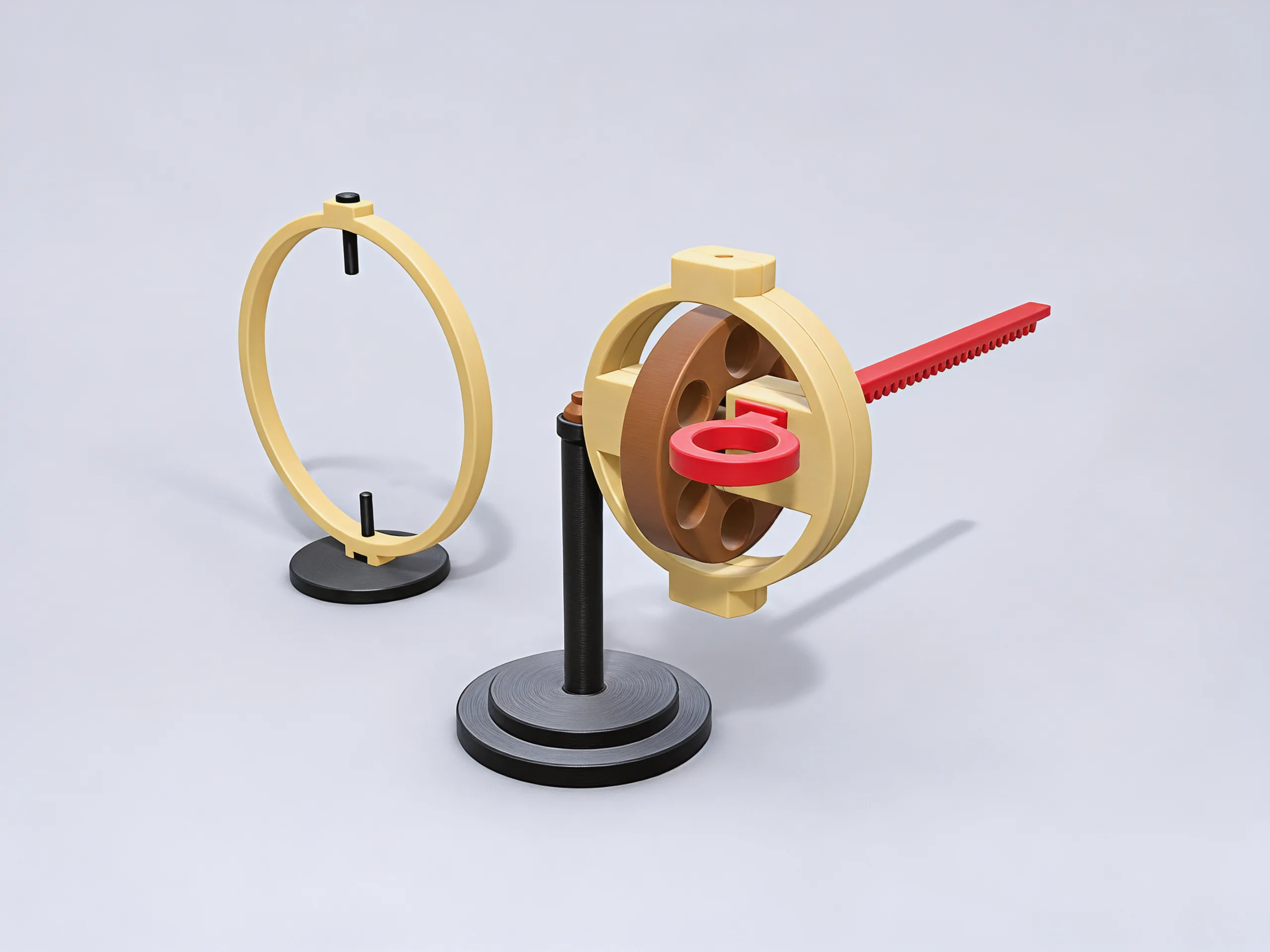
Gyroscope Physics Kit
A spinning wheel that sits sideways on a post and simply refuses to fall.
The kit
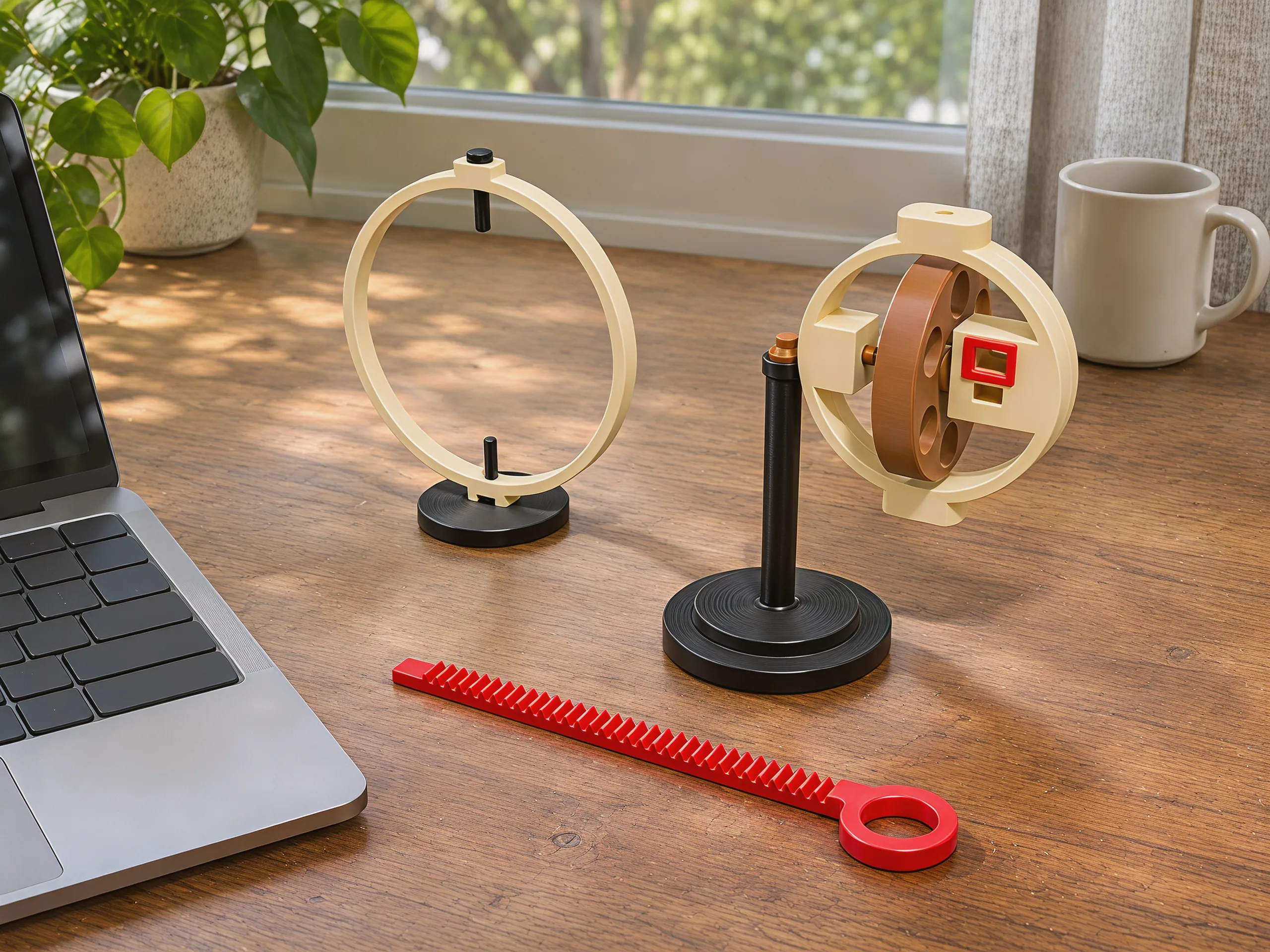
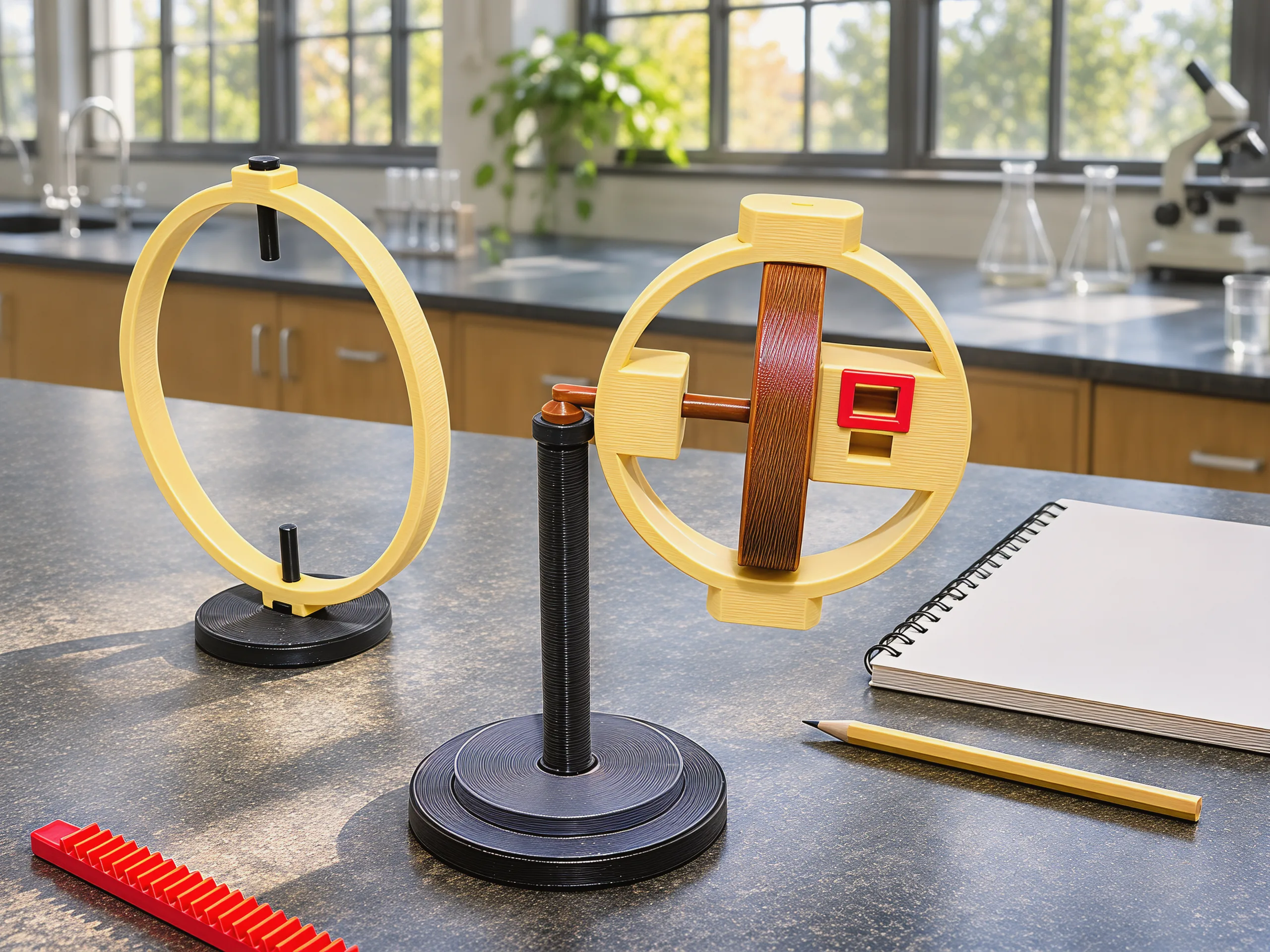
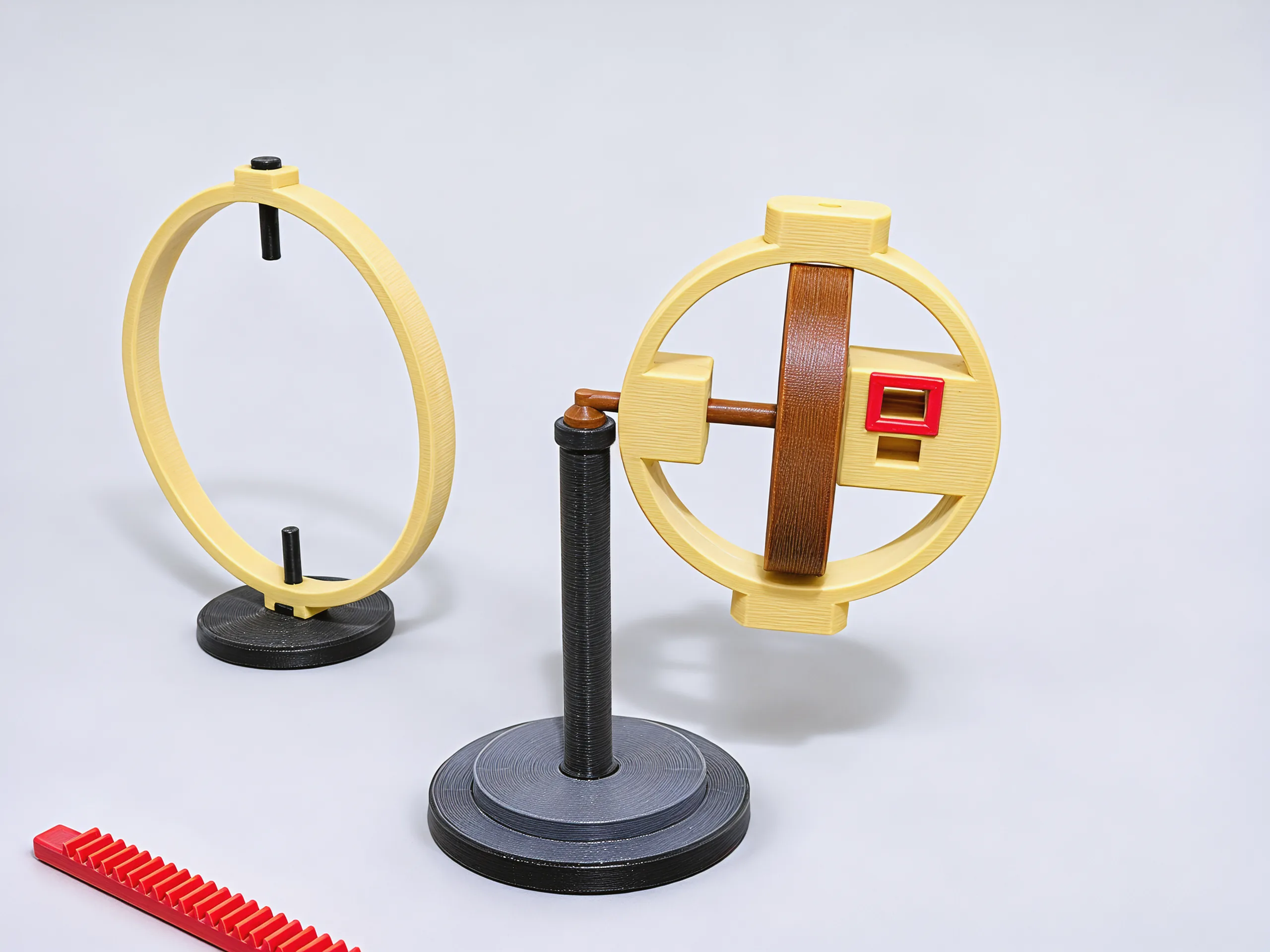
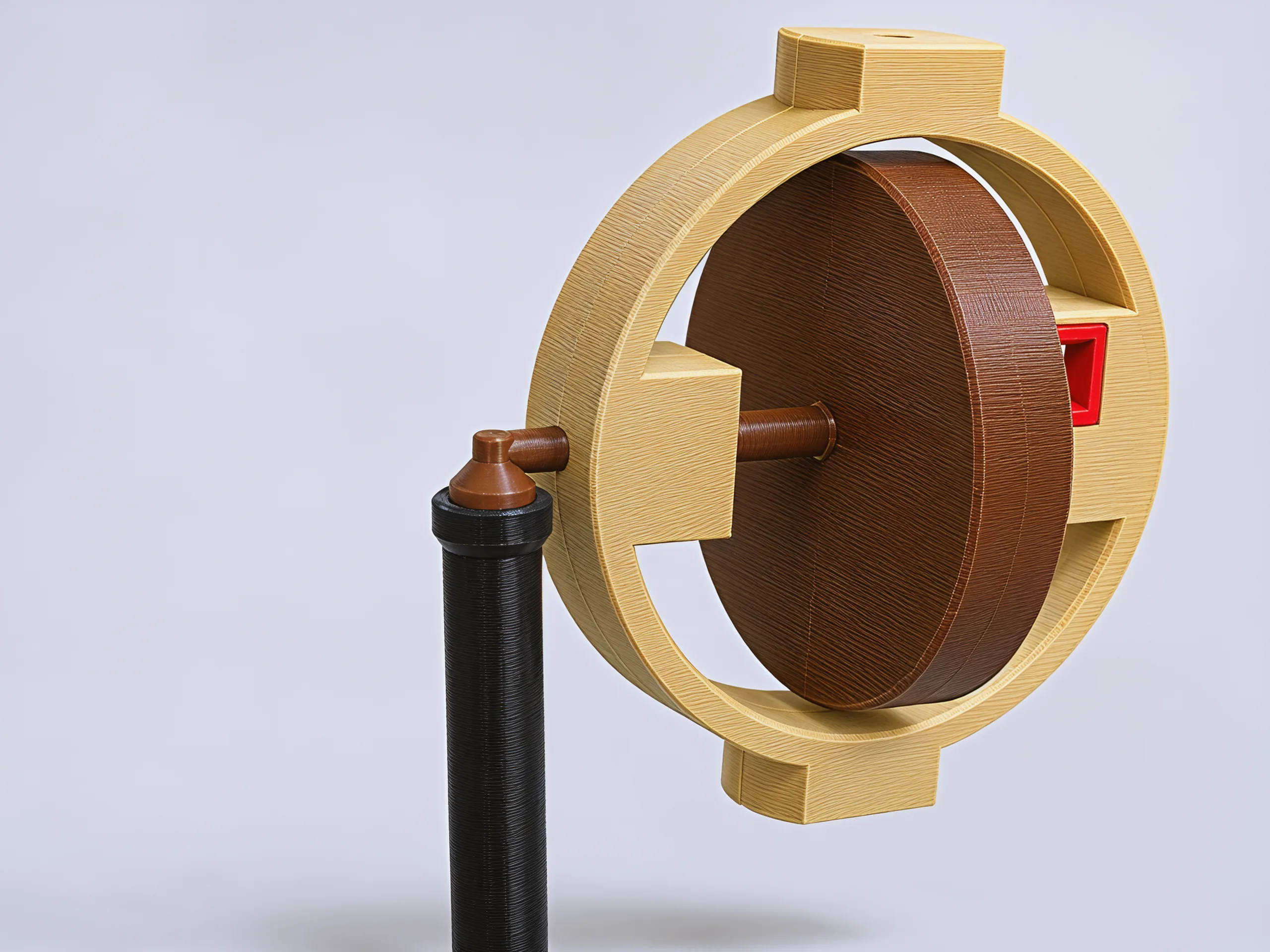
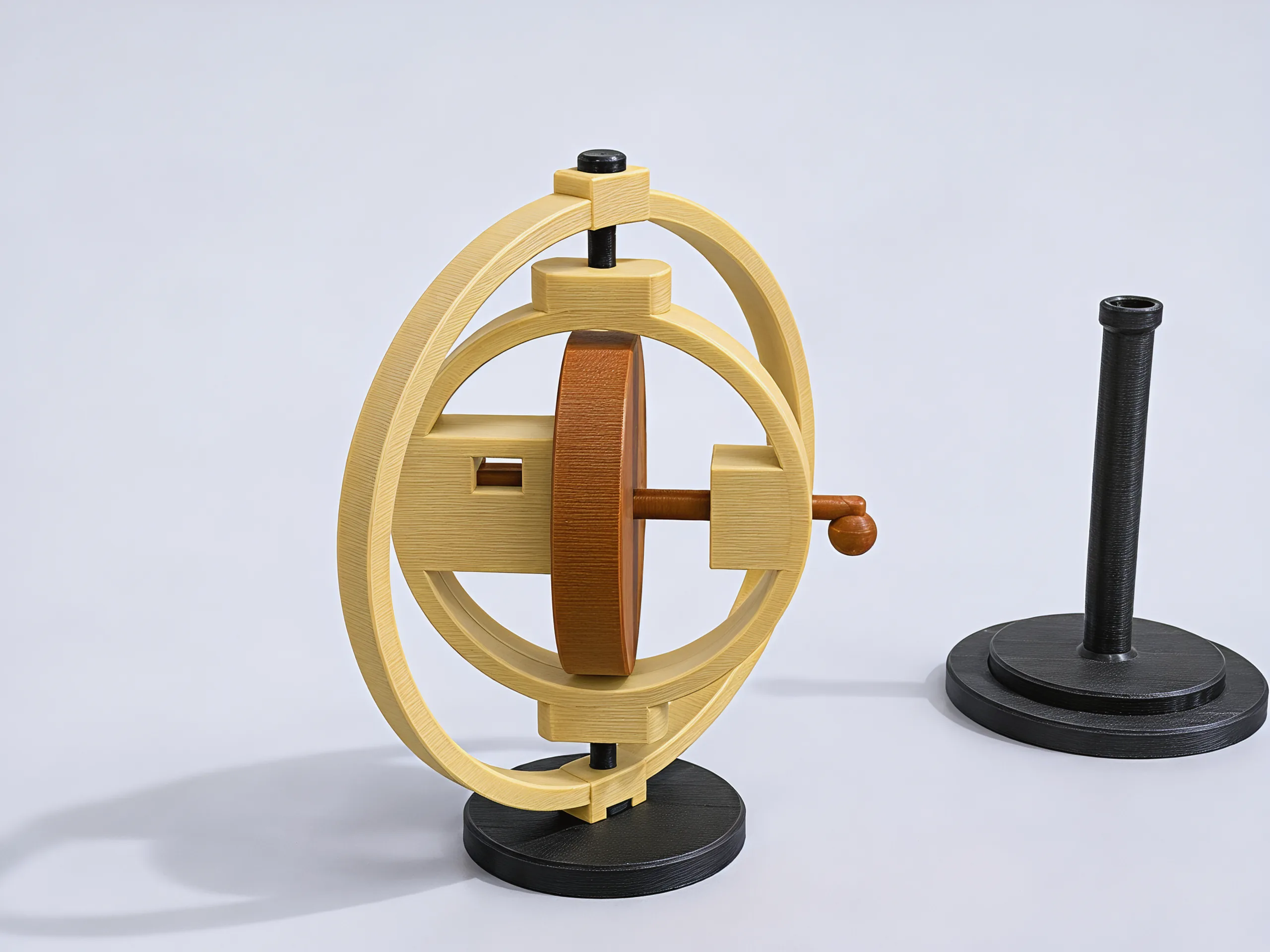
A gyroscope in a cream cage, a navy tower to balance it on, a gimbal ring to hang it in, and the red rip-cord that sets it spinning.
Thread the rip-cord
Hold the cage and push the rip-cord into the red slot, teeth first, until the finger loop meets the collar.
A straight gear
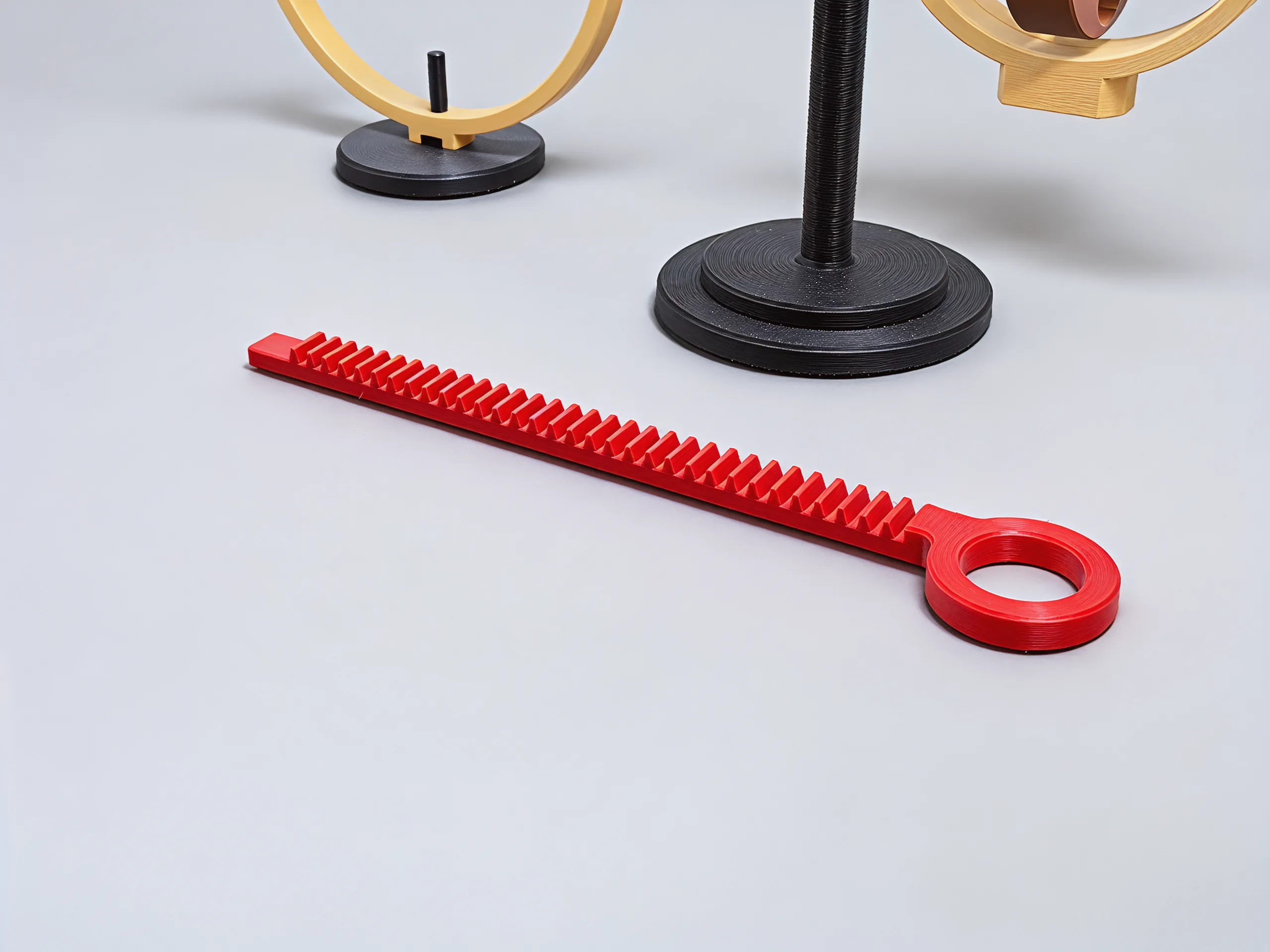
Inside, the cord's 32 teeth sit on a 9-tooth pinion on the axle. The rip-cord is a gear rolled out flat.
Yank
Hook a finger in the loop and pull it straight out, fast. Every tooth that passes turns the pinion, and the flywheel is left spinning.
Precession
Set the nub in the tower's cup and let go. The cage doesn't drop: it swings slowly round the post, drooping lower as the wheel slows.
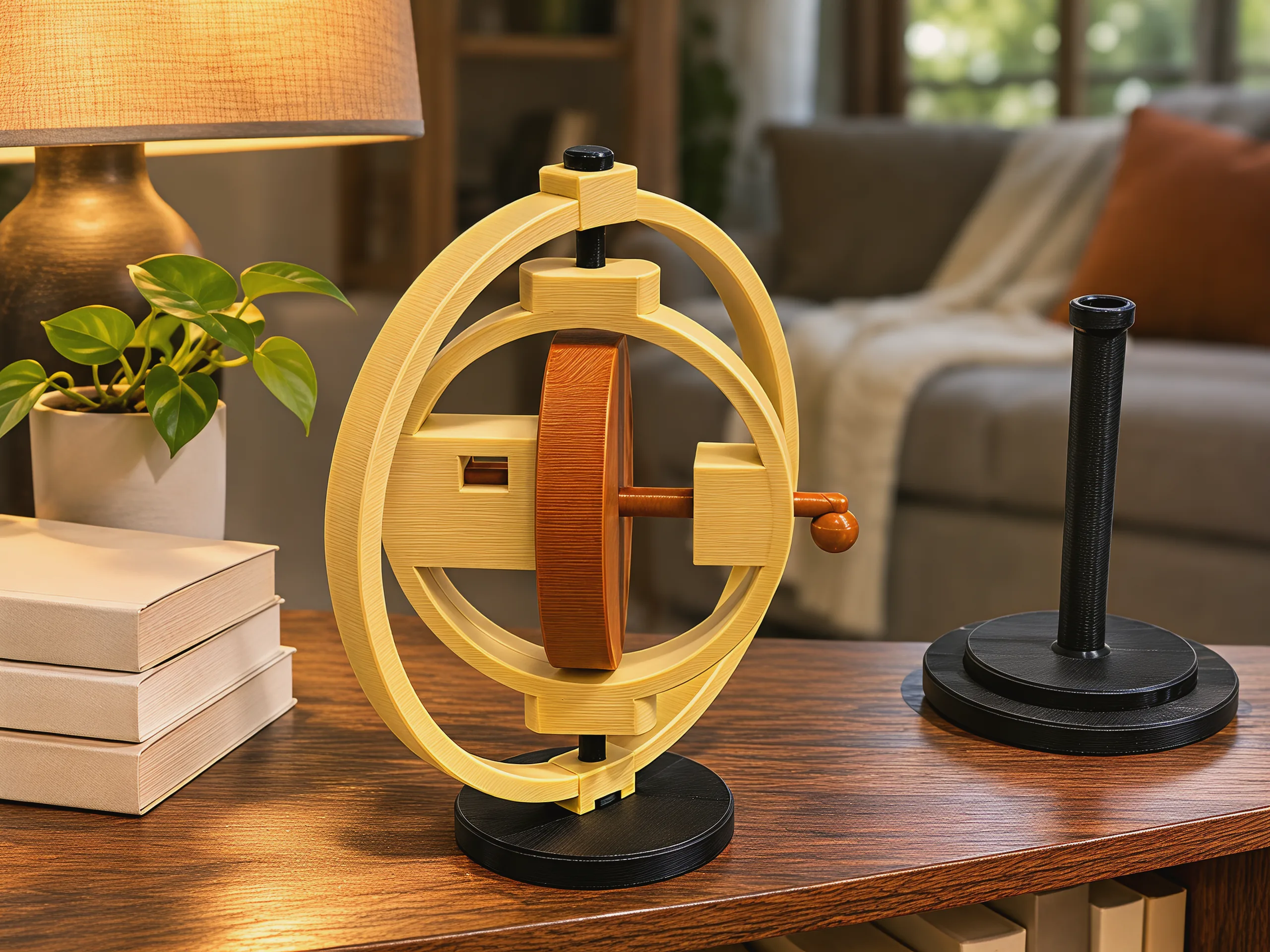
The gimbal
Hang the cage in the ring and turn the base. The ring turns with your hand; the spinning wheel keeps pointing the same way.
Put away
When the wheel coasts to a stop, the cage goes back on the tower and the cord lies flat beside it, ready for the next pull.
What's on the table
Push the toothed rip-cord through the cage and yank it out: its teeth spin a small gear on the axle, and the heavy flywheel keeps going on its own.
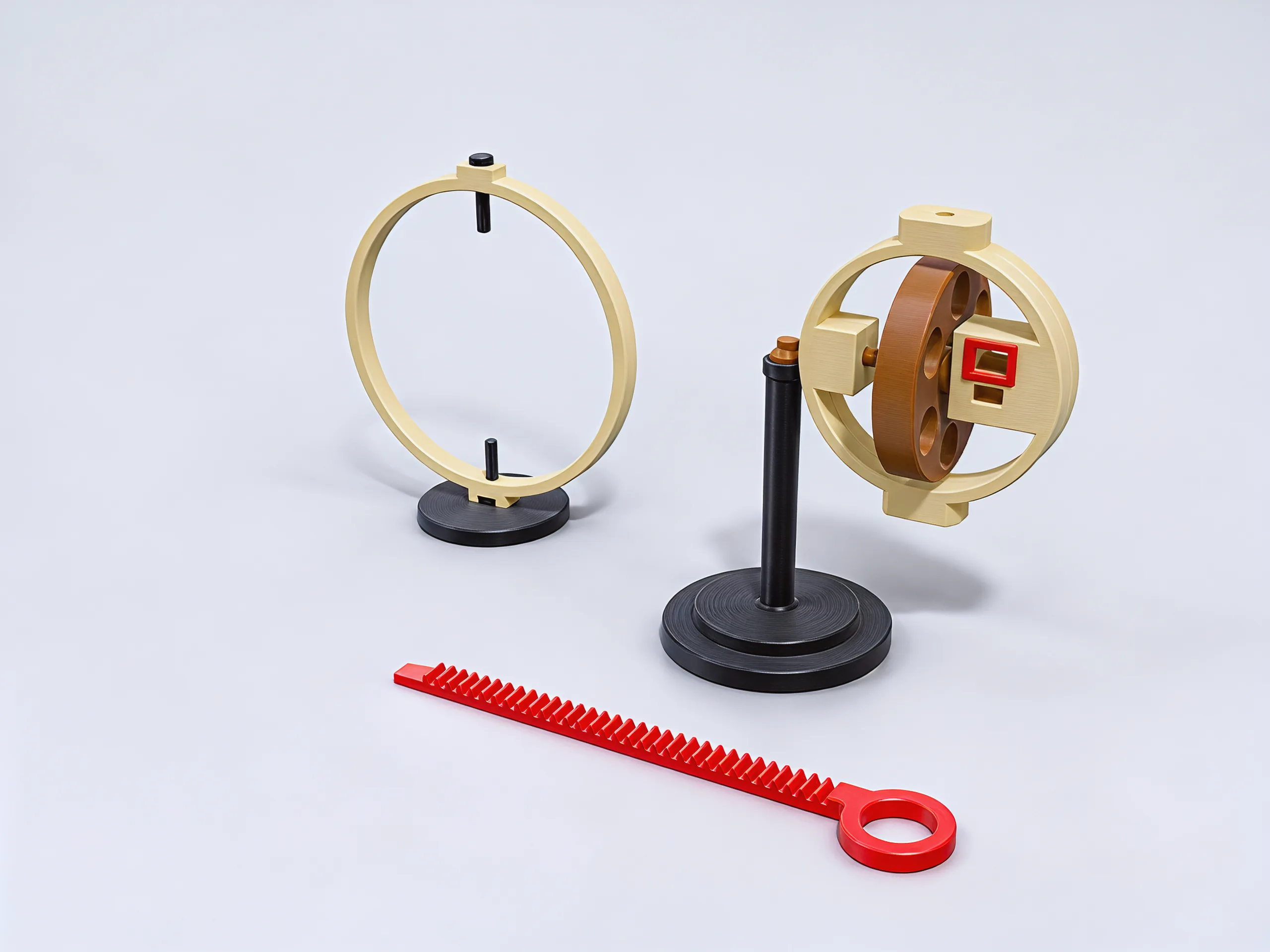
The gyroscope
A brass-brown flywheel, 2.9 in across, spinning on its axle inside a cream cage with a red slot for the cord.
The tower
A navy post 4.2 in tall with a cup on top. The ball-shaped nub on the cage sits in it and pivots freely.
The gimbal
A cream ring 5.4 in across on a navy foot. The cage hangs inside it between two pins, free to turn.
The rip-cord
A red strip 8.0 in long with a finger loop at one end and a row of gear teeth along it.
For curious kids, science classrooms and anyone who wants to feel a gyroscope push back against their hand.
Up close
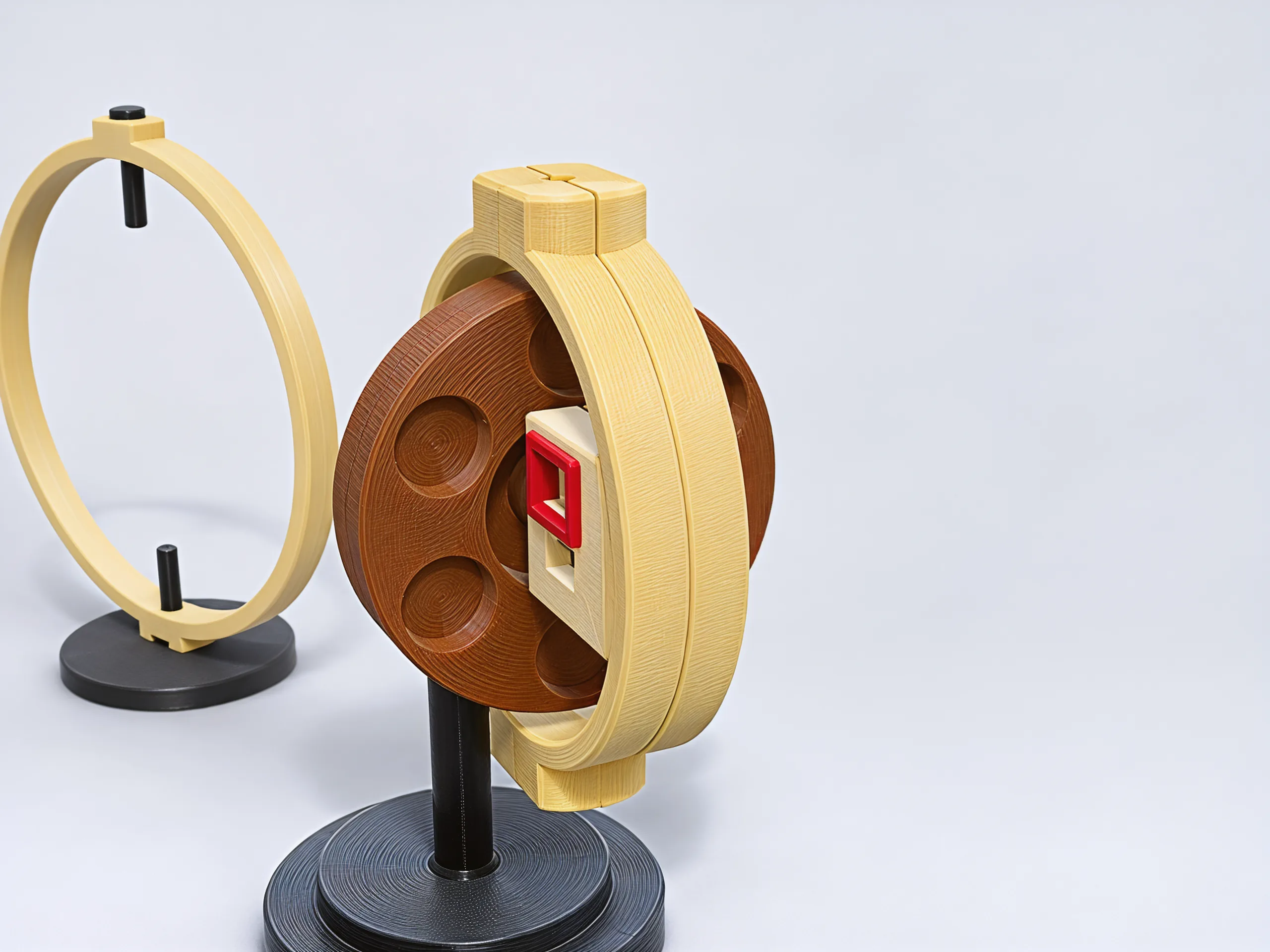
Why it doesn't fall
Weight pulls the free end of the cage down. A still wheel would tip and drop. A spinning one turns that downward pull into a sideways swing, so the cage circles the post instead. That swing is called precession.
In the gimbal there is nothing to push against at all. Turn the foot and the ring turns too, but the spinning wheel keeps its axle pointing where it was.
Gyroscope Physics Kit
A rip-cord gyroscope, a tower and a gimbal: two classic experiments on one desk.
12 pieces in the box
- 1
- flywheel
- 2
- axle halves, one with the pinion
- 2
- cage halves
- 1
- slot collar
- 1
- balance nub
- 1
- tower
- 1
- gimbal ring
- 1
- top pin
- 1
- gimbal foot
- 1
- rip-cord
- Laid out
- 12.7 × 7.5 × 6.5 in
- Weight
- 5.0 oz
- Flywheel
- 2.9 in across, 6 rim pockets
- Drive
- 32-tooth rip-cord on a 9-tooth pinion
- Rip-cord
- 8.0 in long
- Tower
- 4.2 in tall
- Gimbal ring
- 5.4 in across
- Material
- PETG
Good to know
Does it need batteries?
No. Your pull on the rip-cord is the only power. The cord's teeth spin the pinion, and the heavy flywheel carries on by itself.
What is it made of?
PETG, in cream, brass-brown, navy and red.
Can I make it spin longer?
The flywheel has 6 pockets in its rim sized for M8 flat washers, 2 in each. Washers aren't part of the kit. If you add them, fill every pocket: a part-filled wheel shakes.
What are the two experiments?
On the tower, the spinning gyroscope circles the post instead of falling, and droops lower as it slows; the cup lets it tilt about 25°. In the gimbal, you turn the base and the wheel keeps pointing the same way.
How do I launch it again?
Push the rip-cord back into the red slot, teeth first, until the loop meets the collar, hold the cage (or the ring, in the gimbal), and yank.