Flip-Jet GT Launcher
Press the red tab. The car somersaults off the paddle.
From tab to somersault
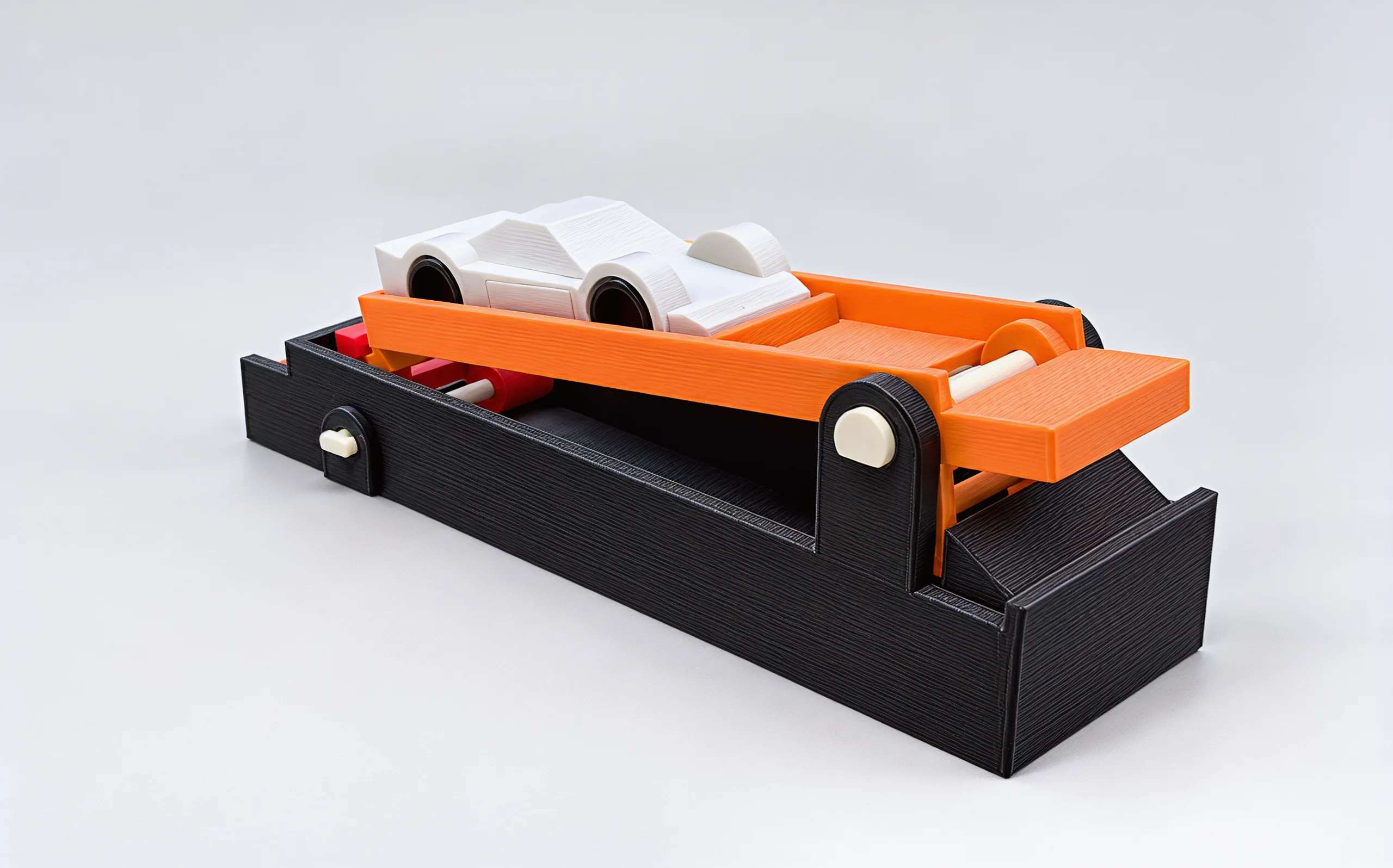
Loaded
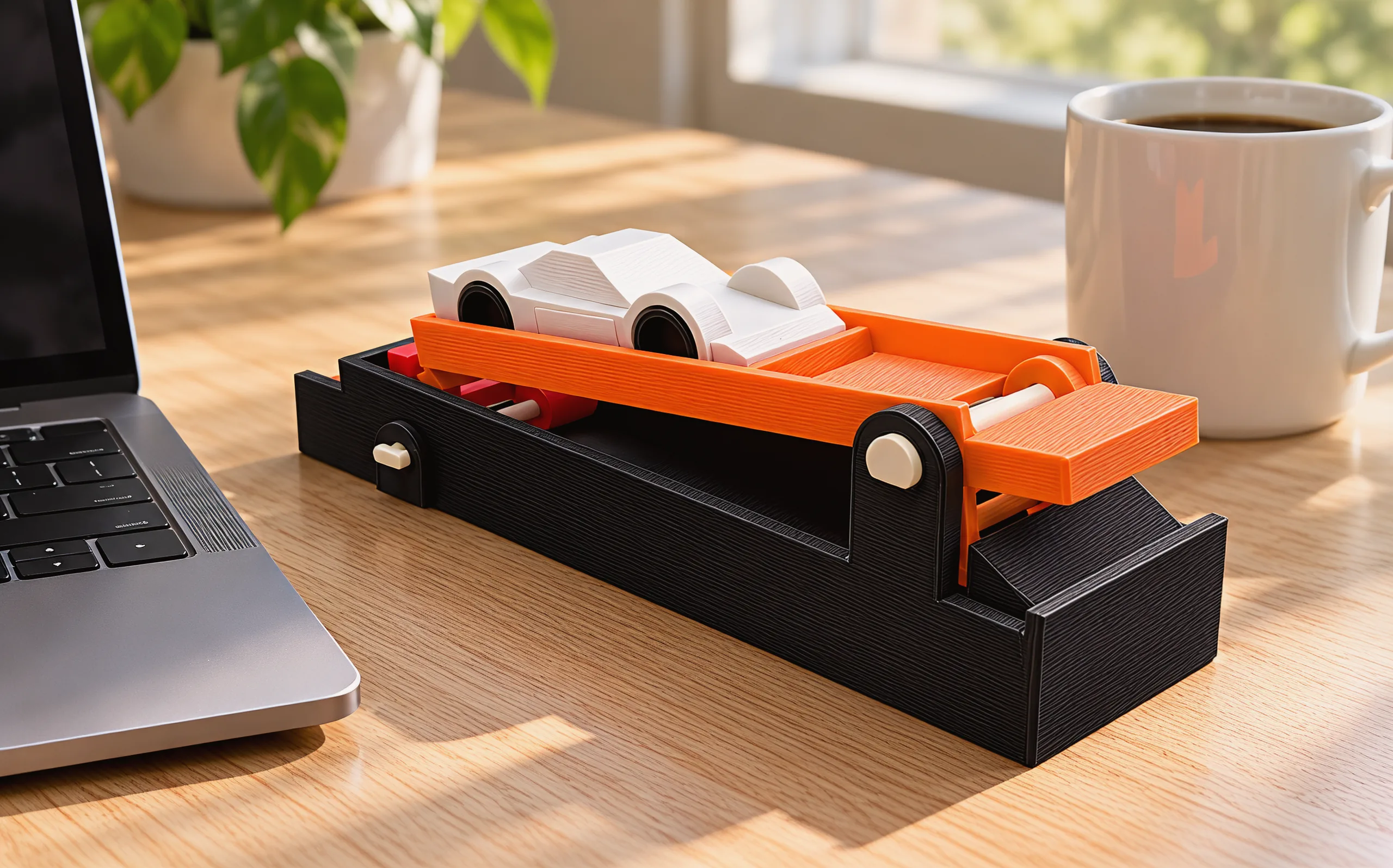
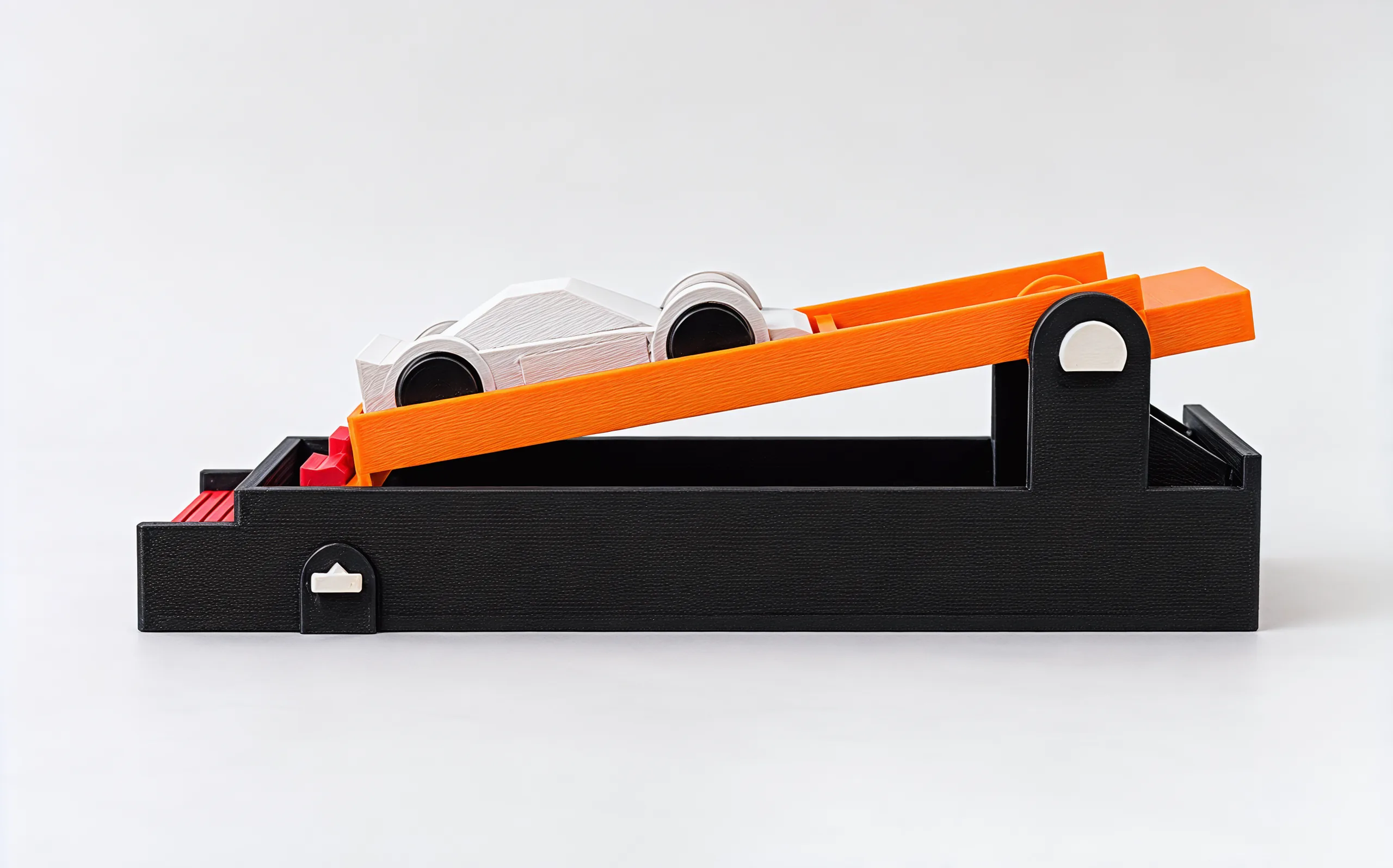
The silver GT car rides the orange paddle, nose toward the front. Everything that moves sits out in the open.
One pin carries the paddle
The paddle swings on a single pale pin near the front of the base. A rubber band stretched between paddle and base is the only engine on board: no motor, no batteries.
Held by a latch
At the back, the red trigger's latch sits over the paddle's tail. Until it moves, the paddle cannot rise at all.
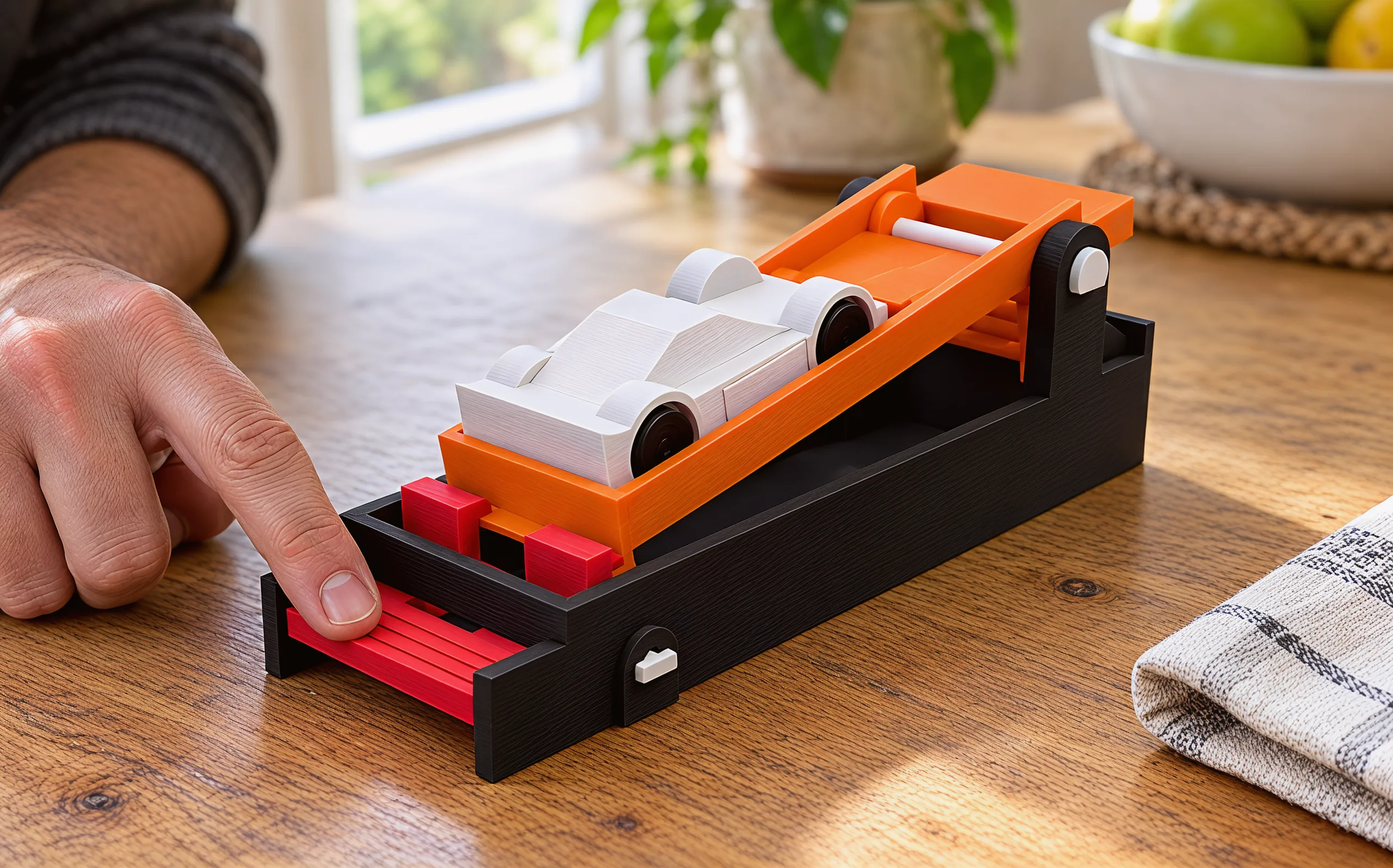
Press the red tab
Push down on the slatted tab. The trigger rocks back 12° on its own pin and the latch swings clear of the paddle.
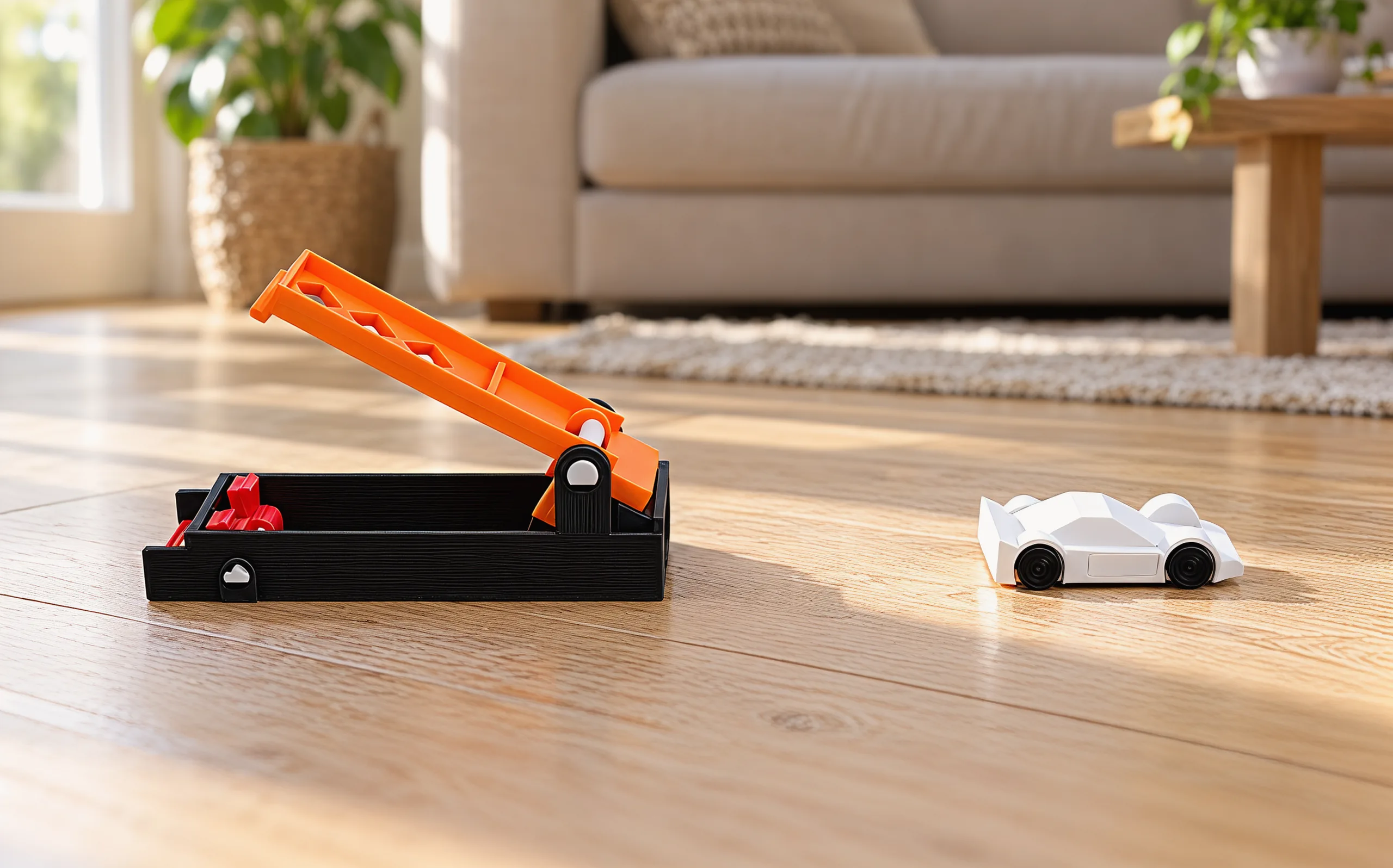
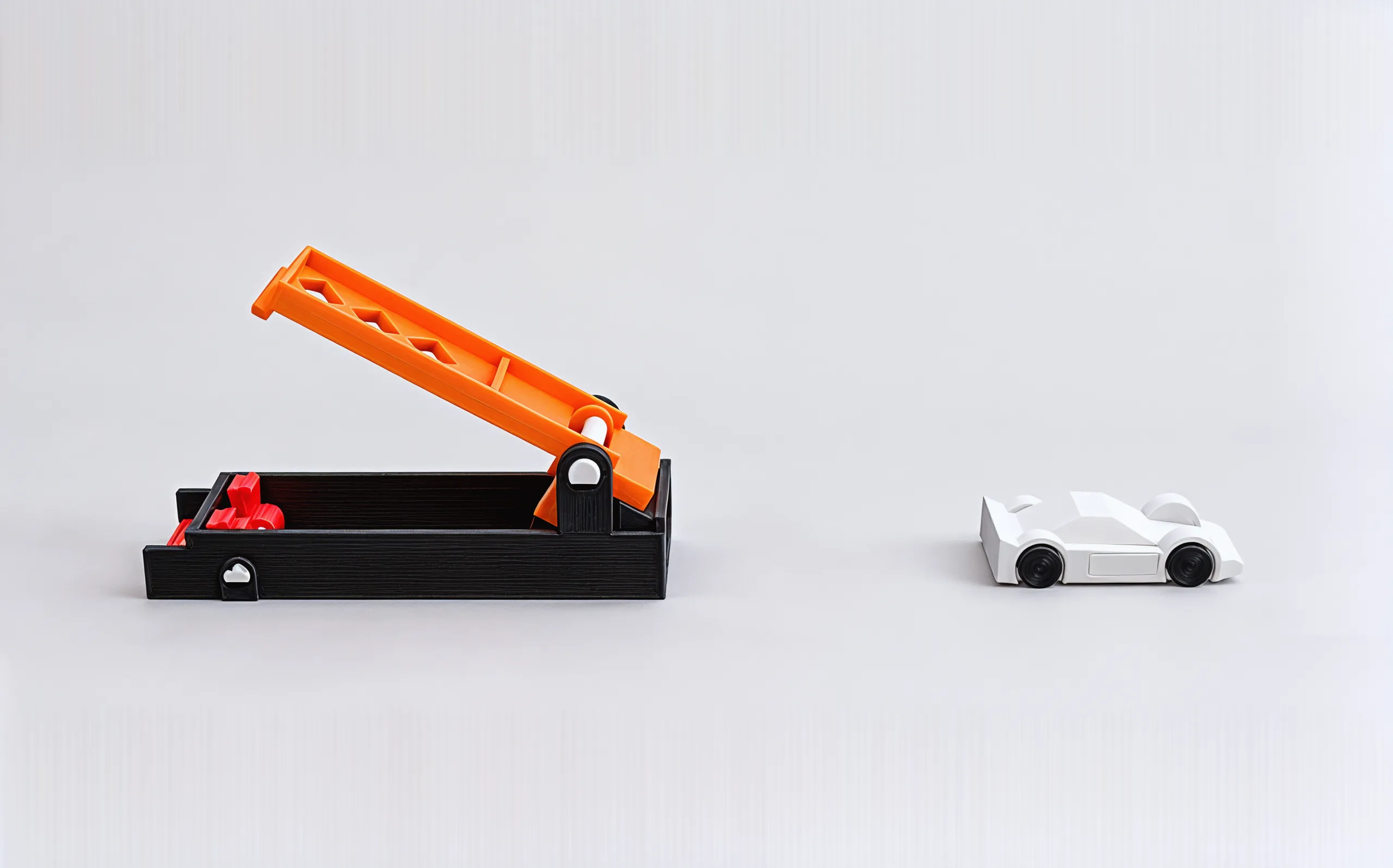
Up 40°, then stop
The band snaps the paddle up until its front end lands on a stop built into the base. The paddle halts there. The car does not.
Over it goes
Still turning with the paddle's swing, the car somersaults forward and comes down ahead of the launcher.
Up close
The launcher is 7.1 × 2.4 × 2.3 in, about the footprint of a TV remote, and the car riding it is 3.0 in nose to tail. Small enough to live on a desk; big enough that the flip reads from across the room.
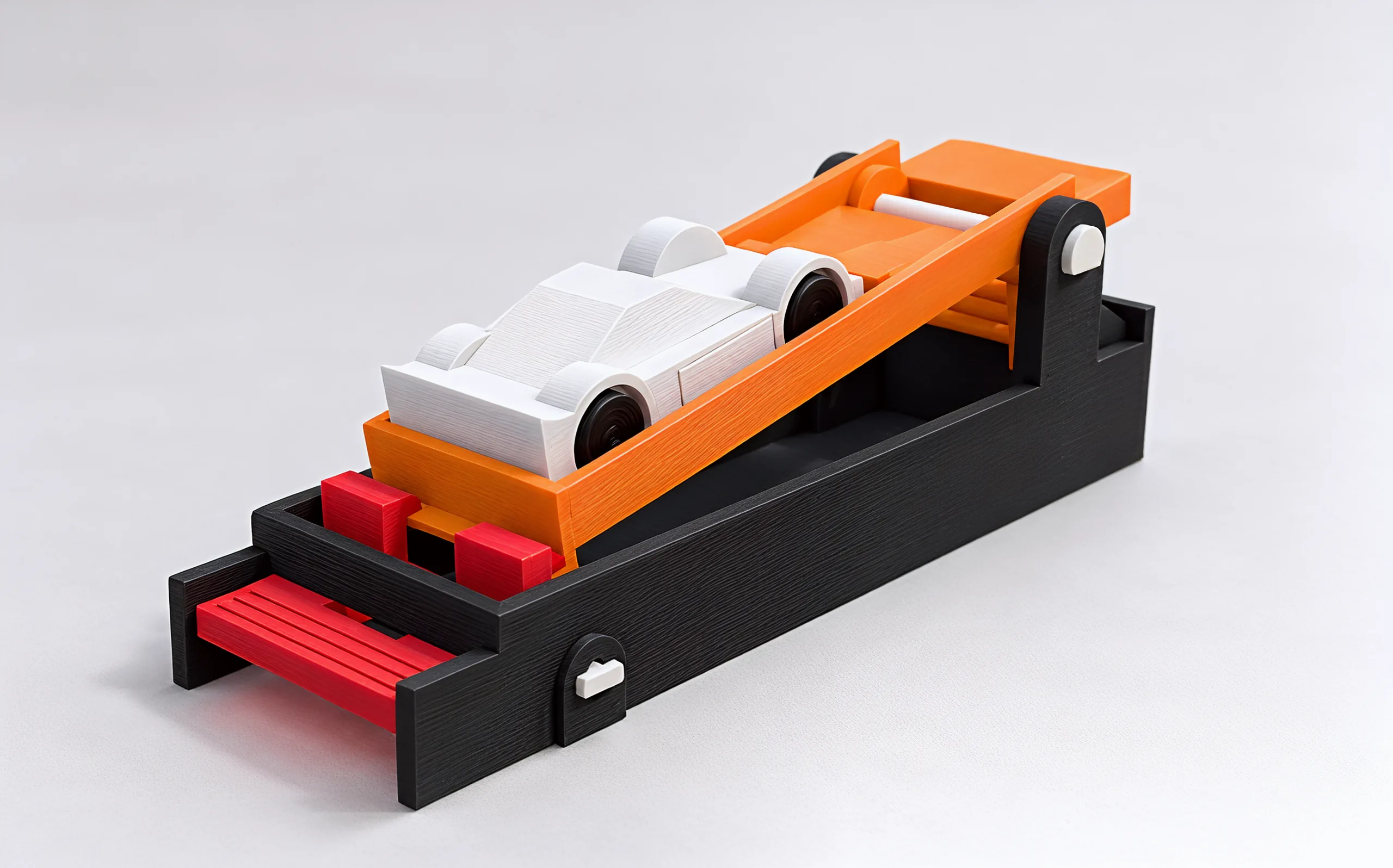
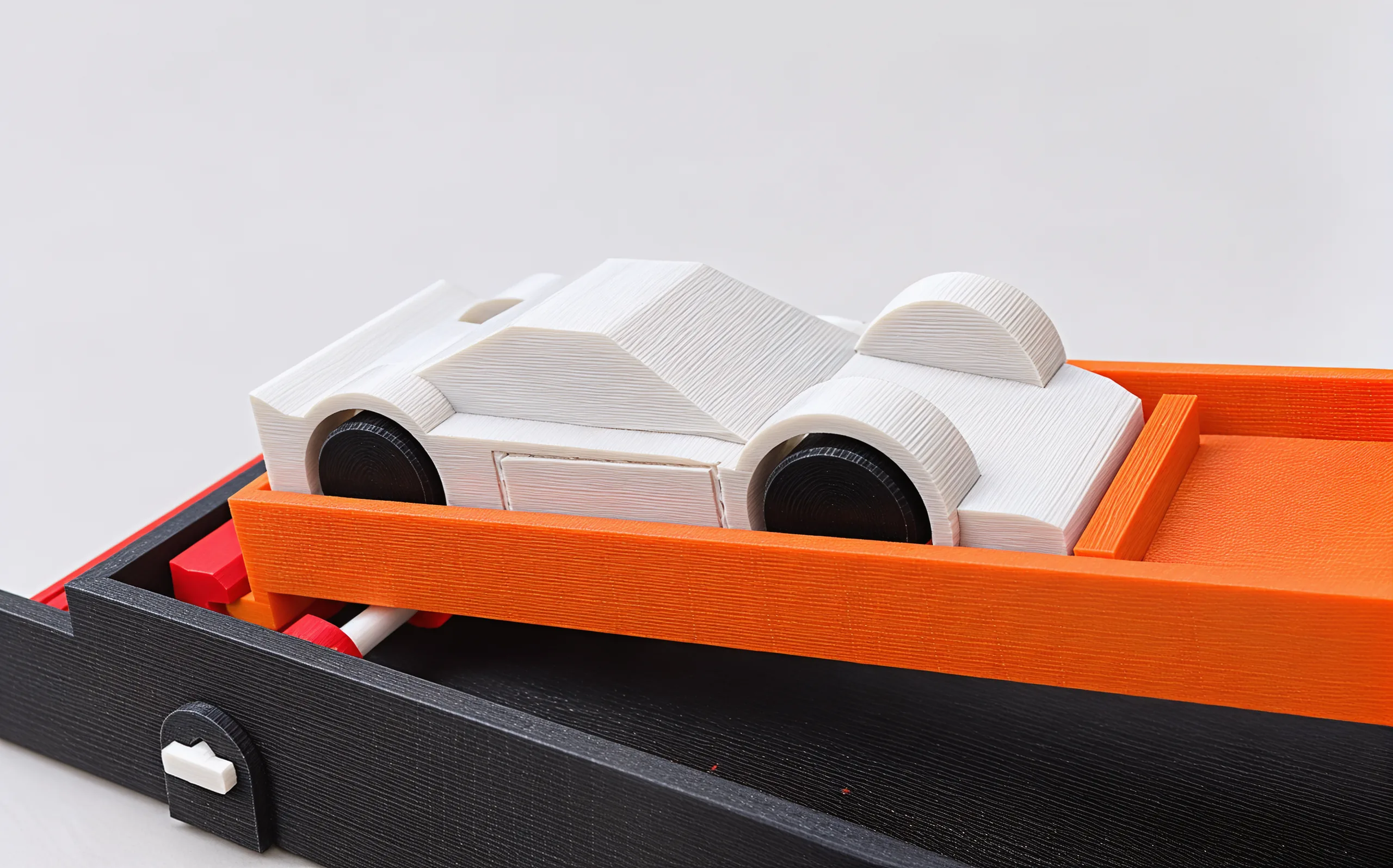
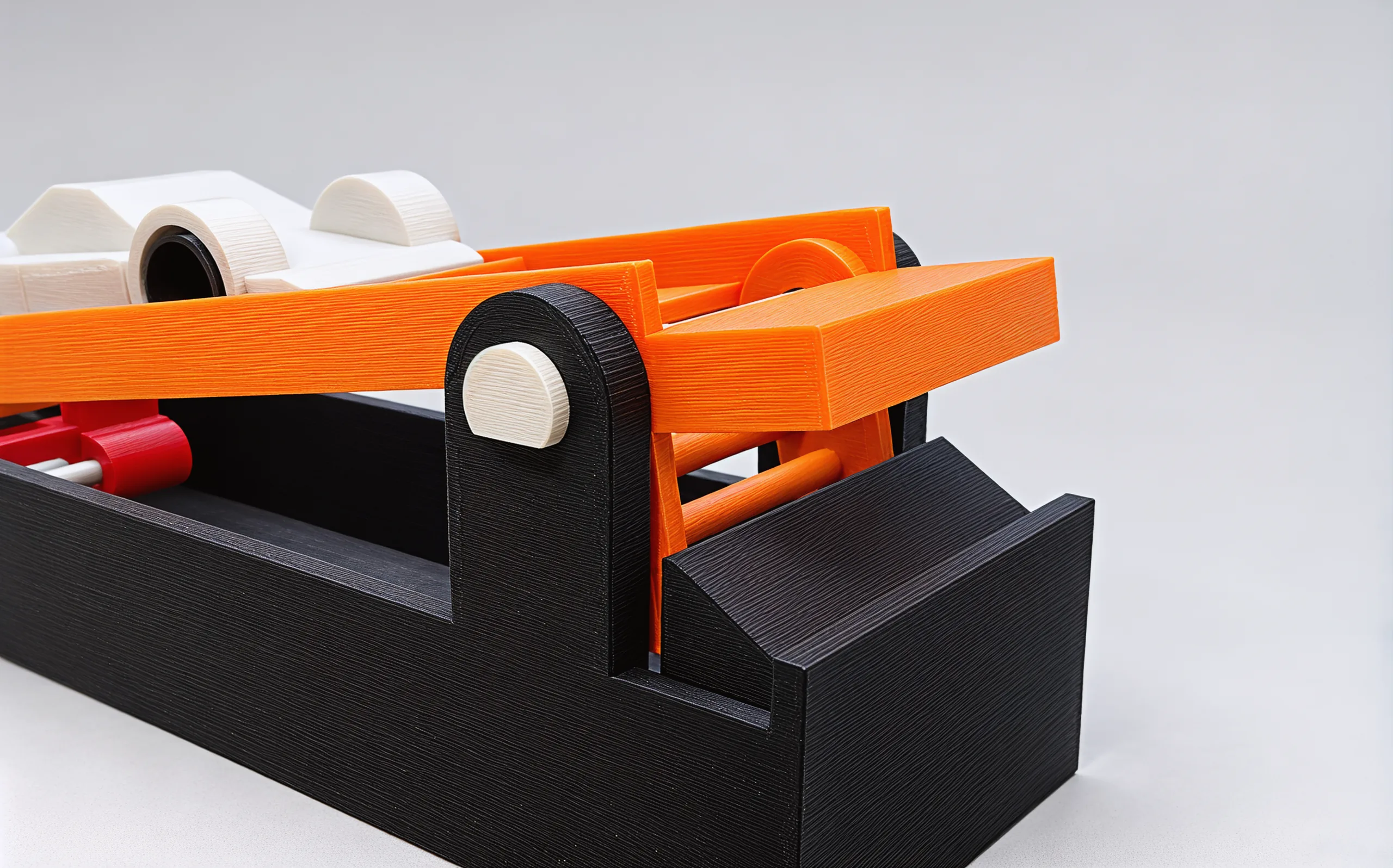
The paddle stops. The car keeps turning.
That is the whole trick. The paddle and the car turn together about the pivot until the paddle hits its stop at 40°. The car is not fixed to it, so it leaves with the paddle's spin still in it and goes over nose-first: a forward somersault rather than a lob.
- Load. The car sits on the paddle while the red trigger's latch holds the paddle's tail down.
- Press. The tab at the back rocks the trigger and the latch lets go.
- Stop. The paddle swings 40° and lands on the stop; the car flies on, turning.
Flip-Jet GT Launcher
A launcher and its car, in the box.
- 1
- launcher: charcoal base, orange paddle, red trigger and two pale pivot pins
- 1
- wedge GT car, silver
- 4
- black wheels for the car
- Launcher
- 7.1 × 2.4 × 2.3 in
- Car
- 3.0 × 1.3 in
- Weight
- 3.9 oz
- Paddle swing
- 40°, pivot to stop
- Powered by
- A rubber band; no batteries, no electronics
- Material
- PLA
- Ages
- 6 and up
Good to know
Does it need batteries?
No. There are no electronics in it at all. A stretched rubber band stores the throw, and the red trigger decides when it goes.
How do I launch the car?
With the car on the orange paddle and the paddle held down by the trigger's latch, press the red tab at the back. The paddle swings up 40° onto its stop and the car flips off ahead of the base.
What is it made of?
PLA, with no glue. The paddle and the trigger each turn on a pale pivot pin, and the car rolls on its 4 black wheels.
What age is it for?
Ages 6 and up. It has small parts, and the car is thrown, so never aim it at anyone's eyes or face.
How big is it?
The launcher is 7.1 × 2.4 × 2.3 in and the set weighs 3.9 oz. The car is 3.0 in from nose to tail.