Boulder raised, feet braced.
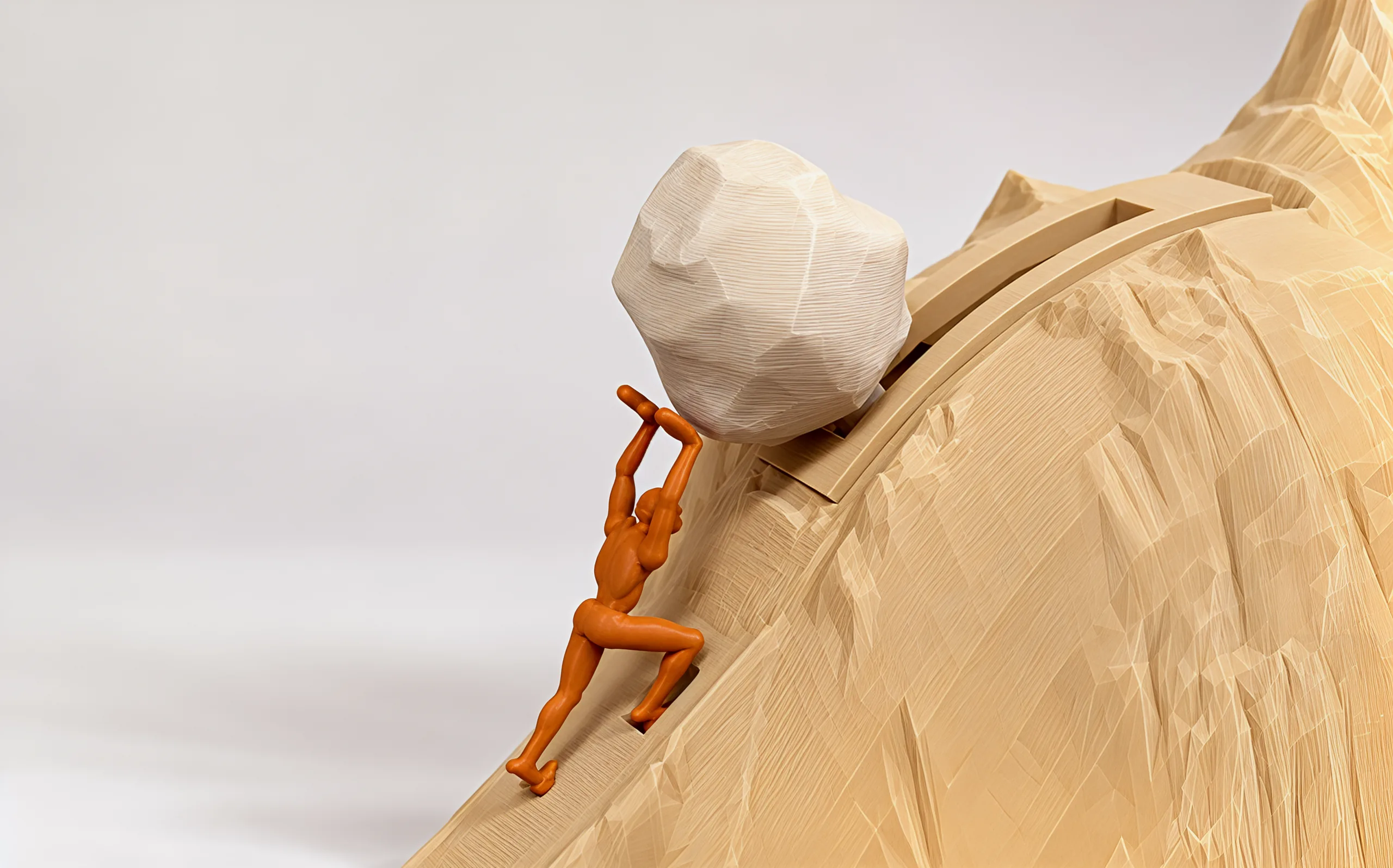
Sisyphus stands 1.2 in tall on a ledge below the trail, the boulder resting just above his palms. This is where it always ends up.
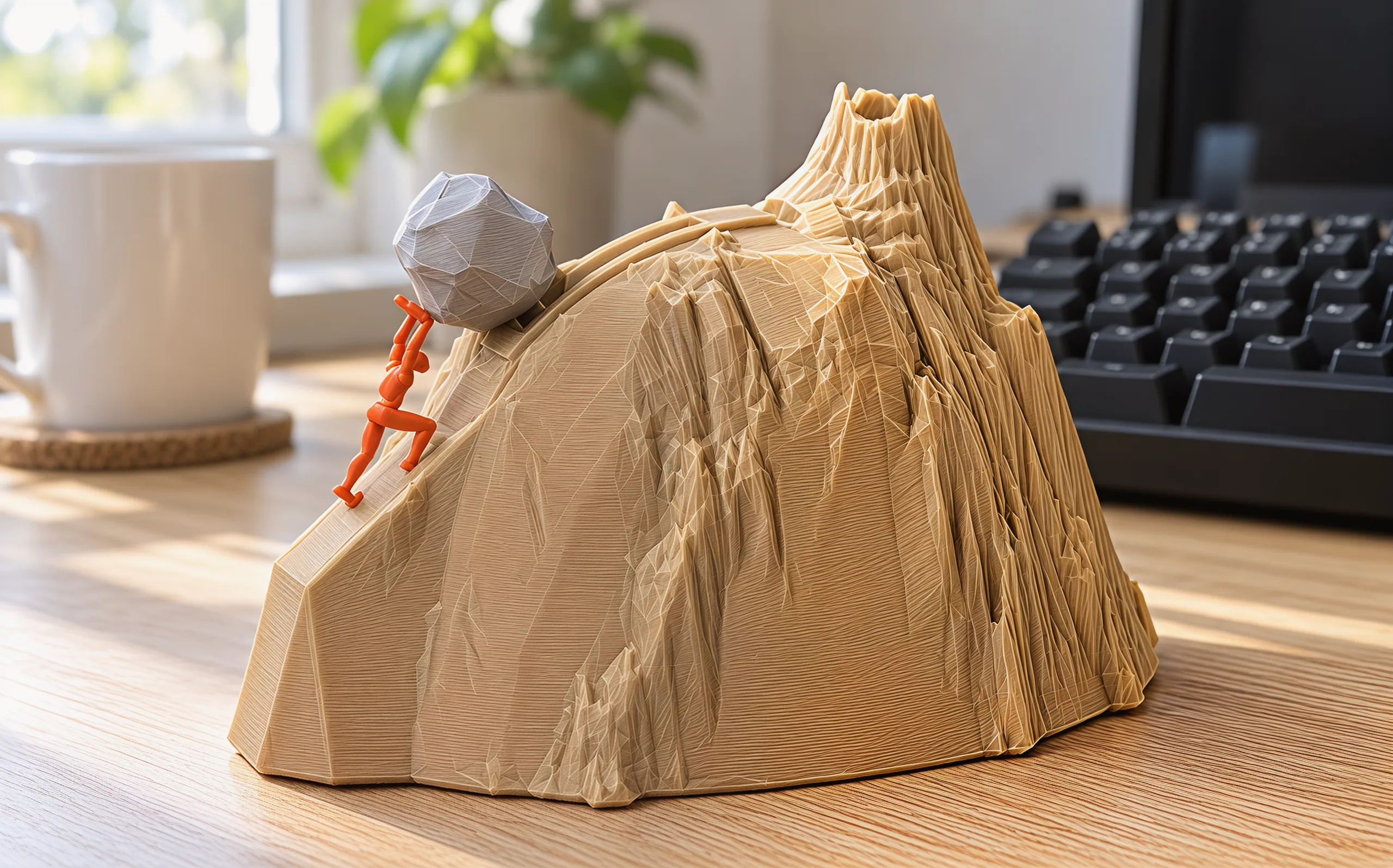
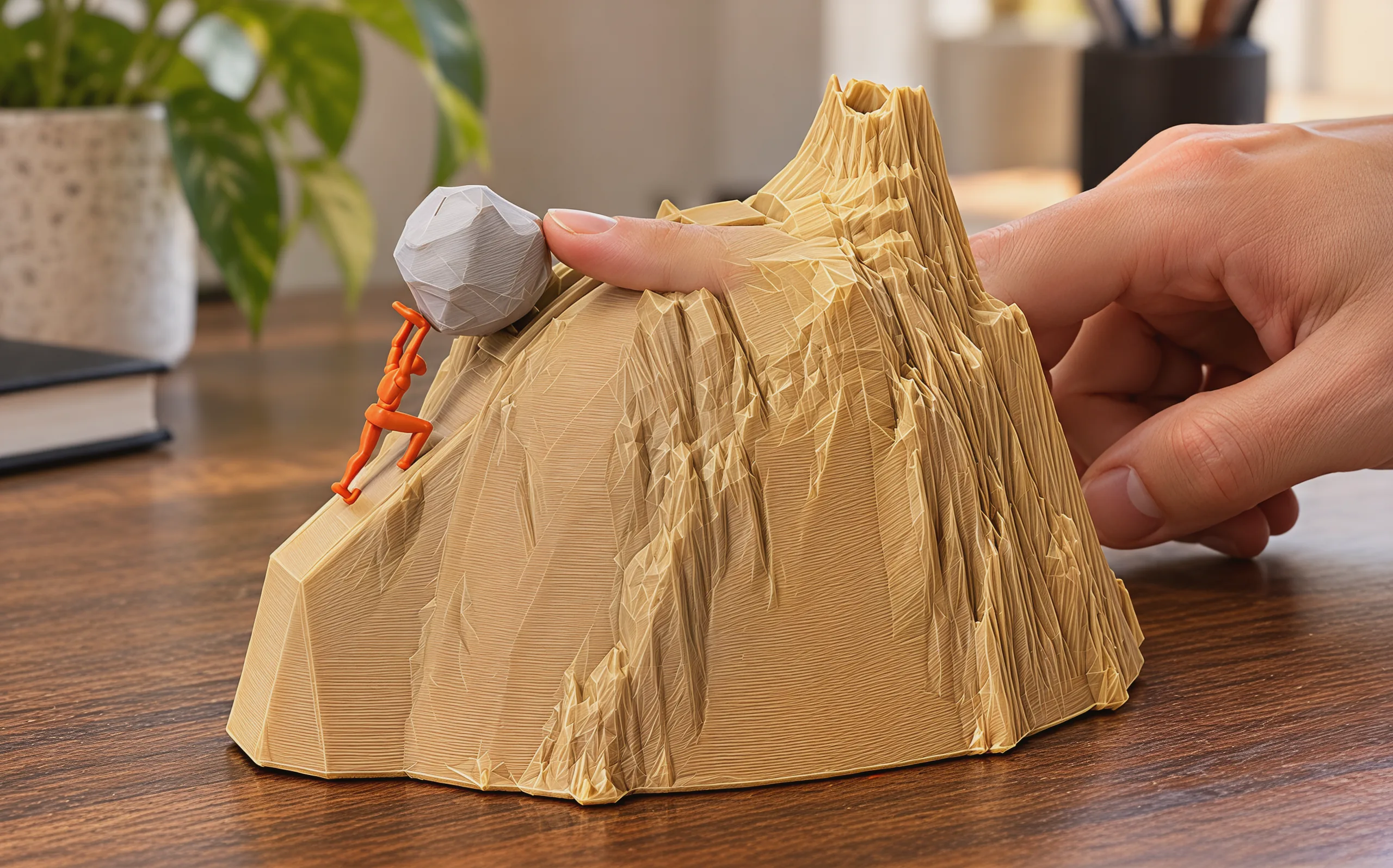
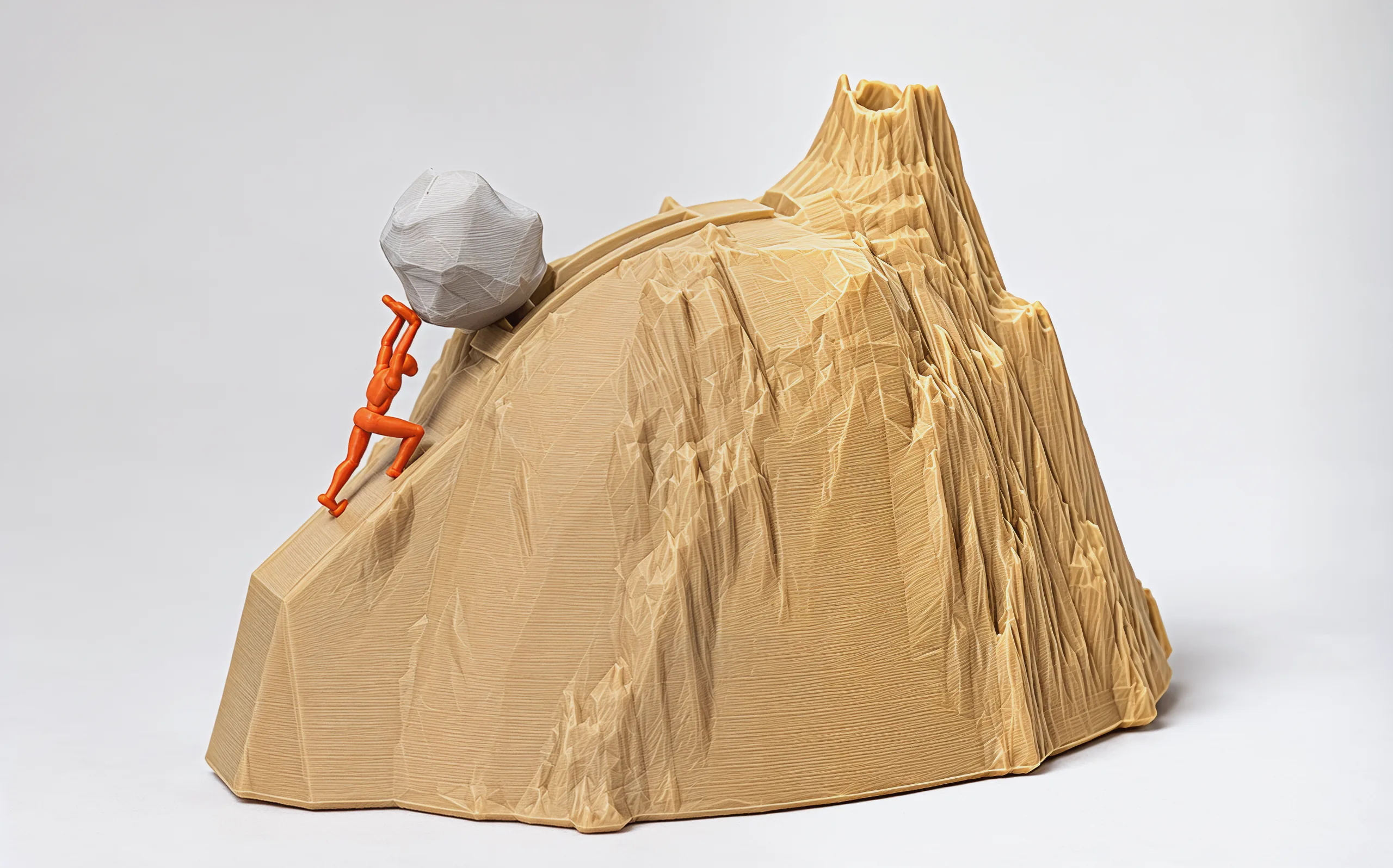
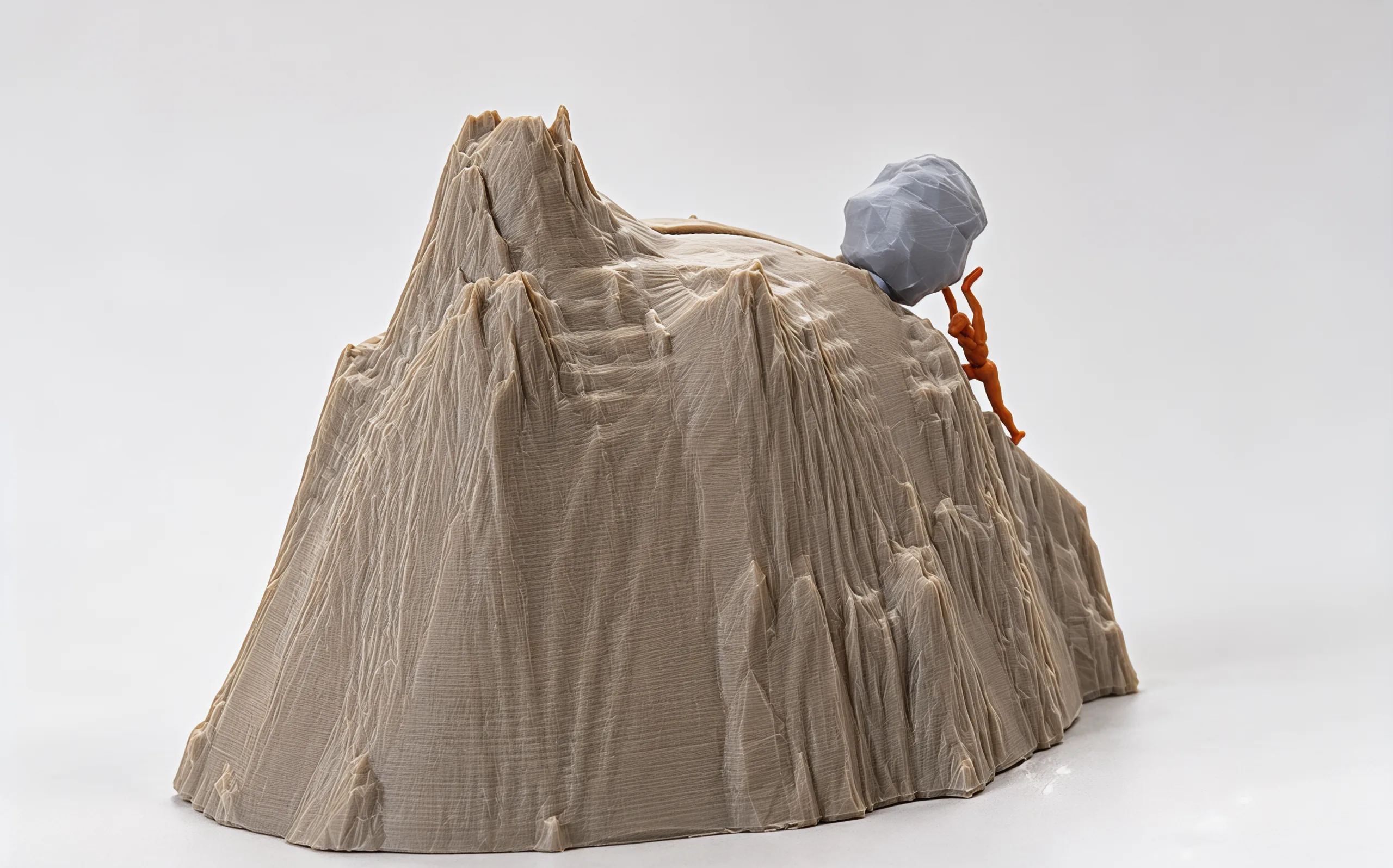
Push his boulder up the trail. Let go, and it rolls back into his hands.
Sisyphus stands 1.2 in tall on a ledge below the trail, the boulder resting just above his palms. This is where it always ends up.
Push the boulder and it rides up the trail on a 28° arc, 1.0 mm clear of the rock the whole way, so it never scrapes.
A stop catches it just before the point where it could balance. Let go anywhere along the way and it starts back down.
The mountain is hollow. The boulder sits on the tip of an arm that pivots on an axle below it, so its weight always leans downhill.
Let go and the arm swings down, slowly near the top and faster as it falls, the way a real boulder would roll.
The arm lands on a stop in the base, not on him, and the boulder settles just off his raised hands. Push it again. He is ready.
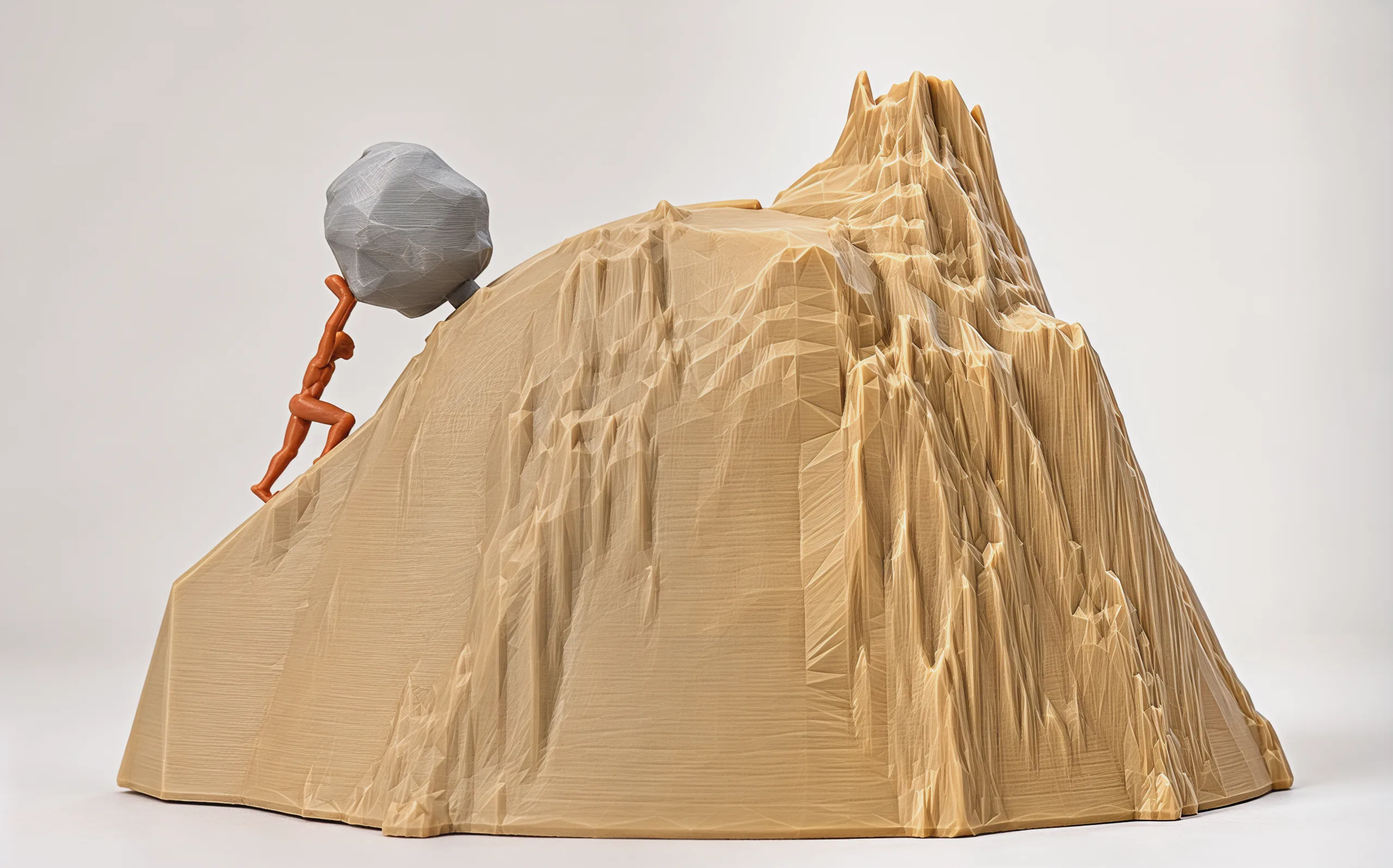
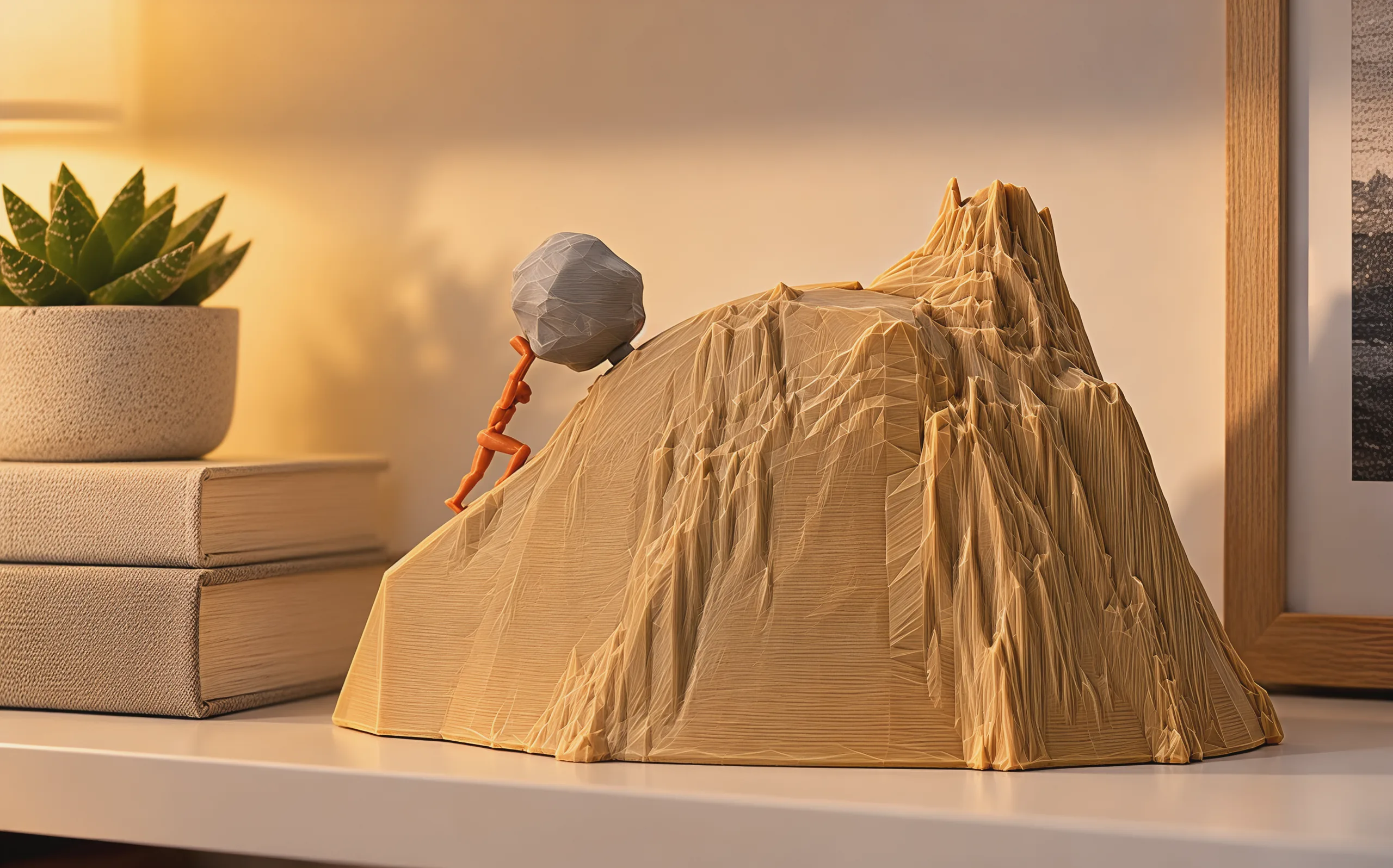
6.3 × 3.7 × 3.9 in and 4.1 oz, small enough for the corner of a desk or a shelf you pass every day. That is the point: it sits within reach, and a finger finds it between one thing and the next.
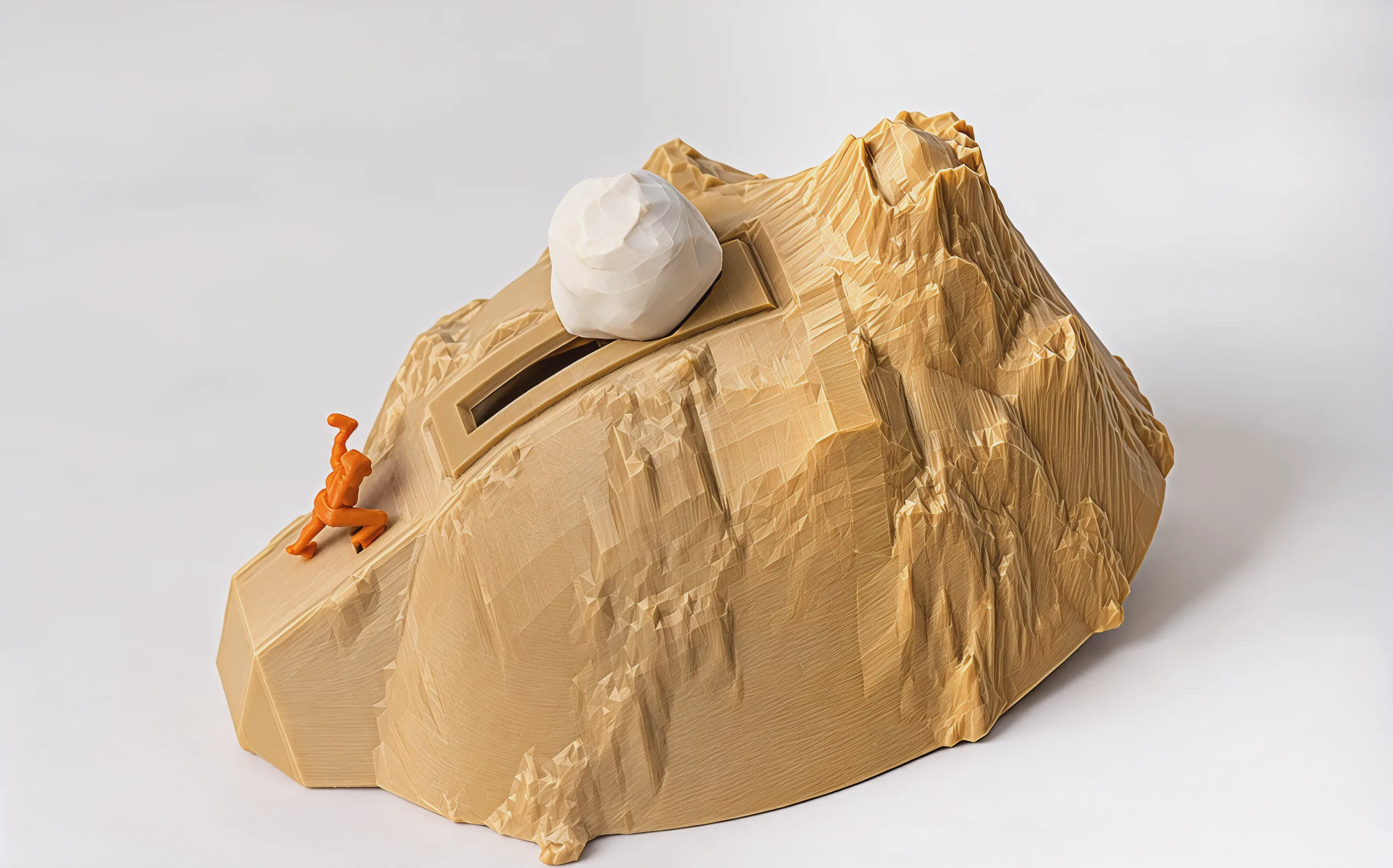
The crest of the trail is a circle drawn around the hidden axle, so the boulder keeps the same 1.0 mm gap over the rock for all 28° of its climb.
The axle sits below the boulder, so its weight never stops pulling it back toward him: hardest at his hands, gentlest near the summit, where a stop keeps it from ever finding its balance.
Drag the boulder up the trail, then let go.
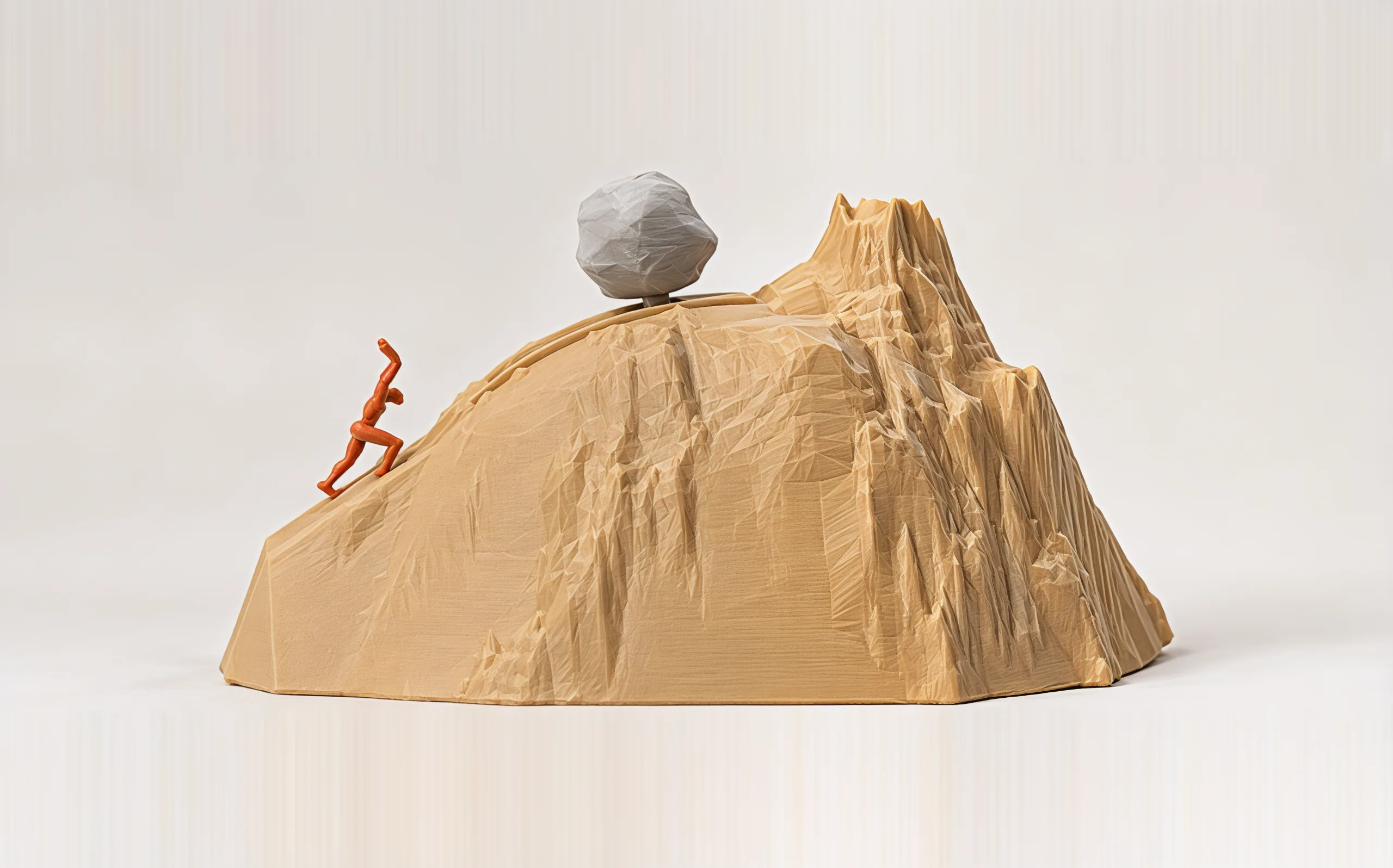
One mountain, one man, one boulder, and a swing arm you never see.
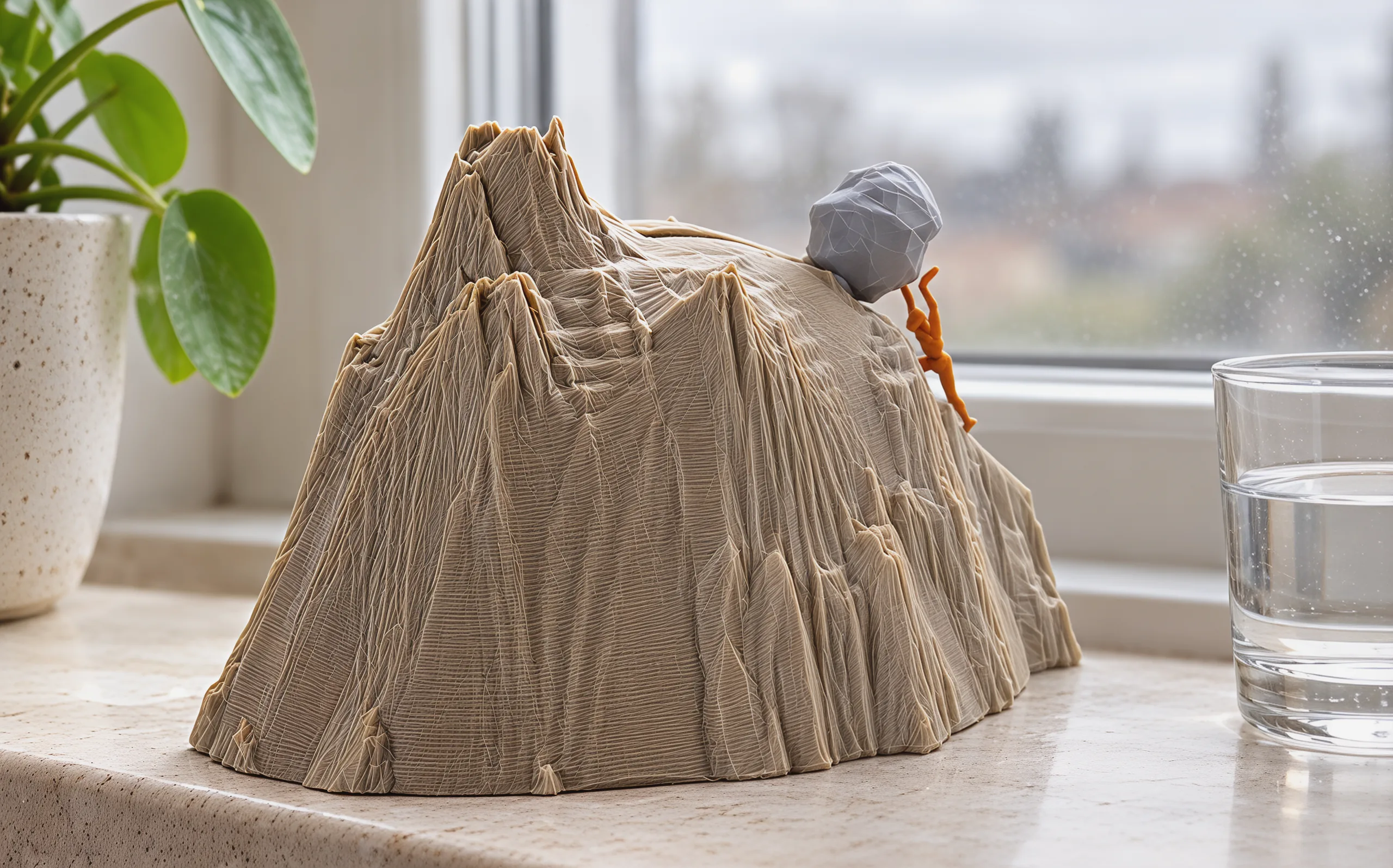
No. Nothing in it is powered. Your finger sends the boulder up, and gravity acting on the hidden swing arm brings it back.
No. It is held on the tip of the swing arm inside the mountain, and two stops on the base limit it to 28° of travel, from his hands to just short of the summit.
No. The arm comes to rest against a stop on the base, so the boulder settles just off his palms and he never takes the knock.
PLA. It measures 6.3 × 3.7 × 3.9 in and weighs 4.1 oz, sized for a desk or a shelf.