Moon Landing 1969 Model
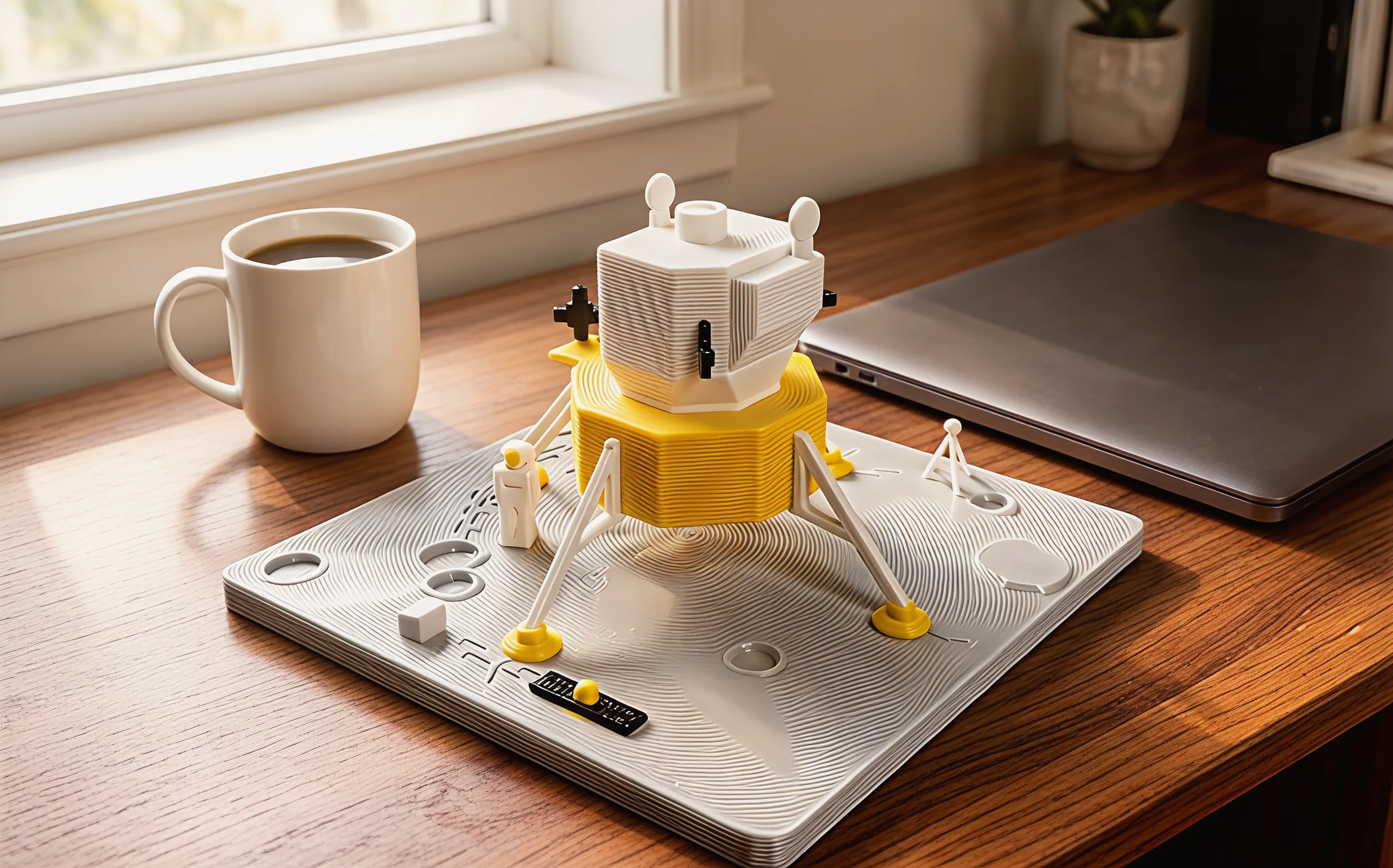
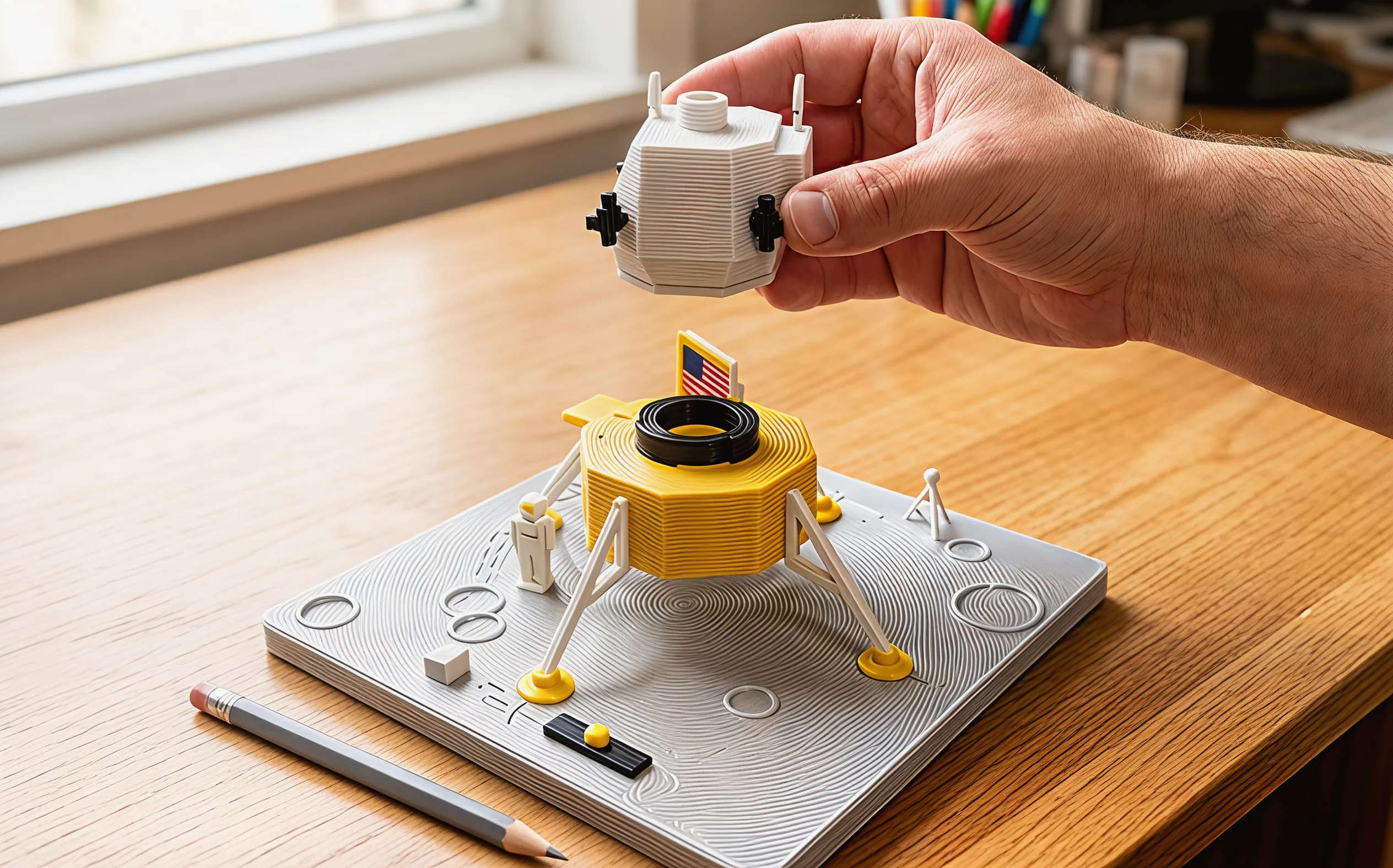
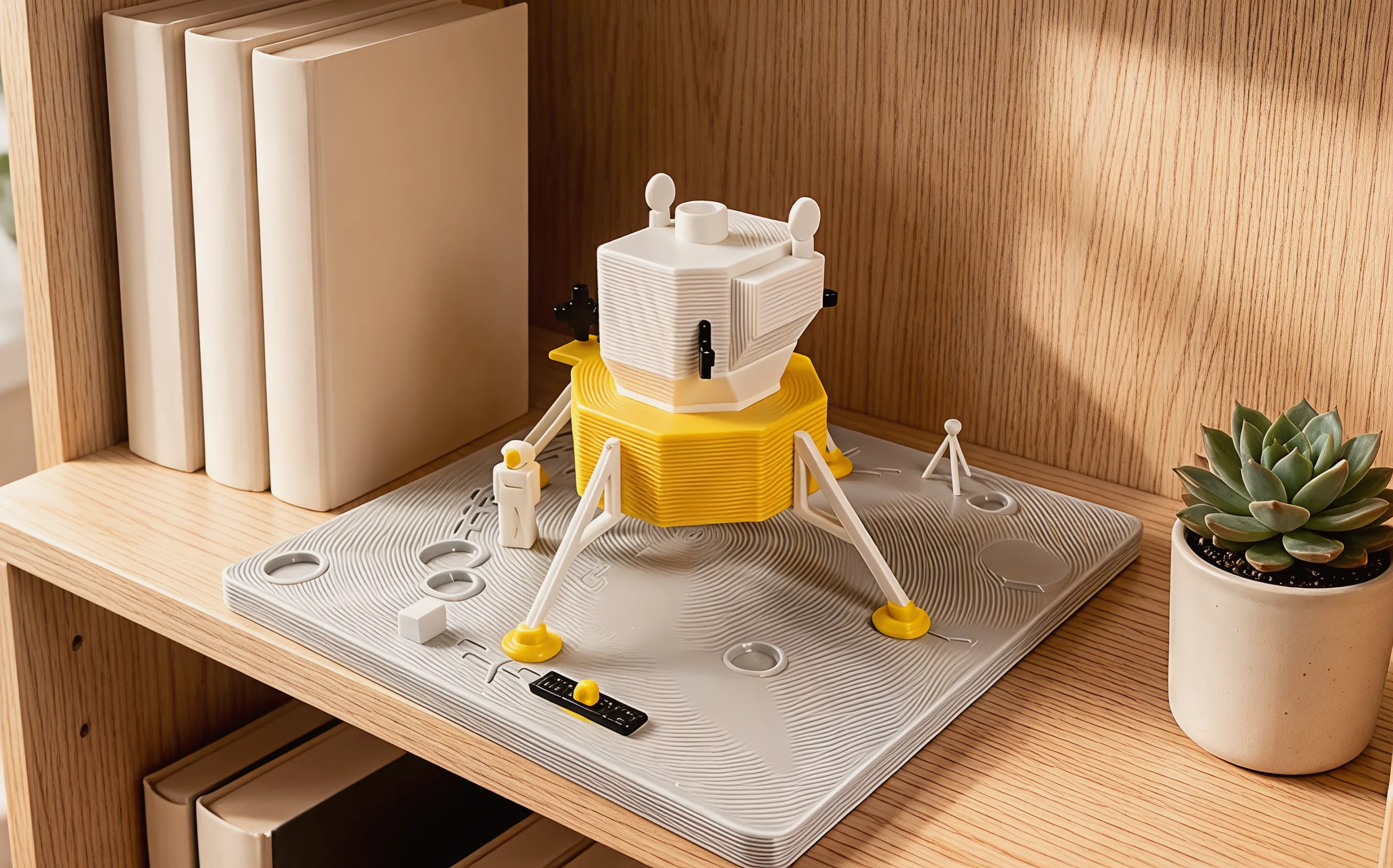
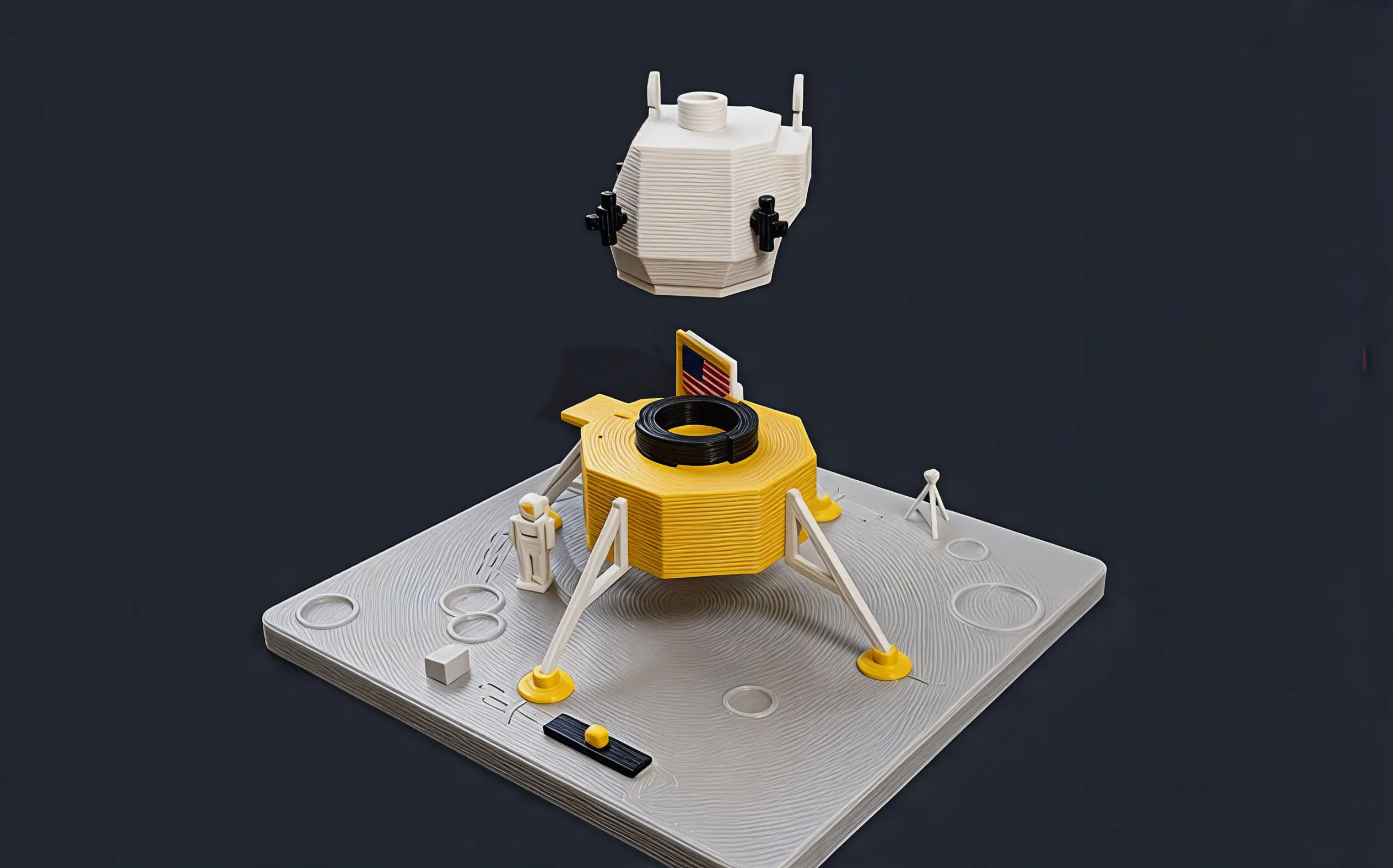
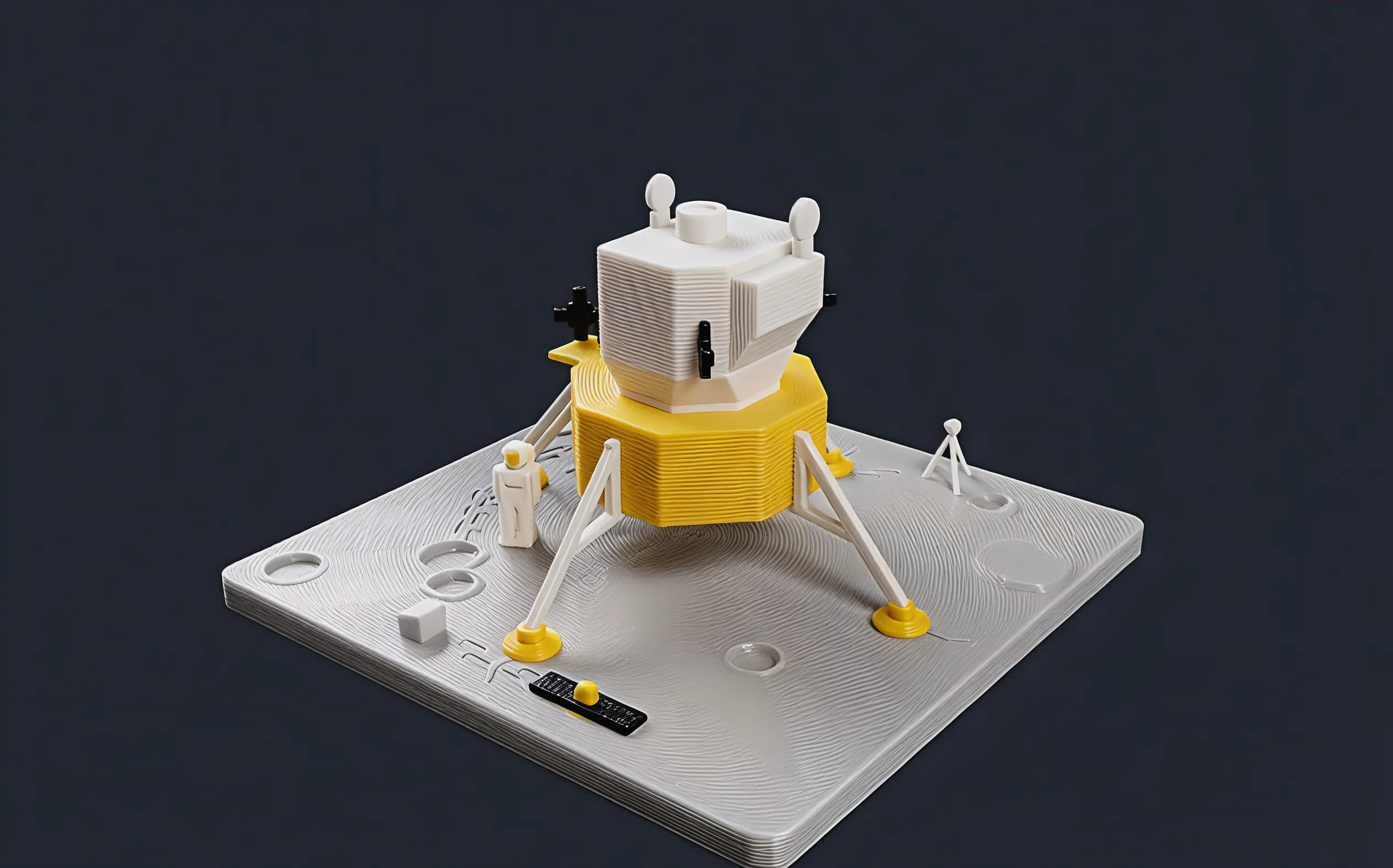
The Apollo 11 landing site at 1:48: the lunar module, two astronauts, the flag and four experiments on a cratered base. The top half lifts off.
Tranquility Base, 20 July 1969
A lunar module set down on the Sea of Tranquility, and two astronauts walked on the Moon for about two and a half hours. This is that ground at 1:48.
Gold below, on four splayed legs
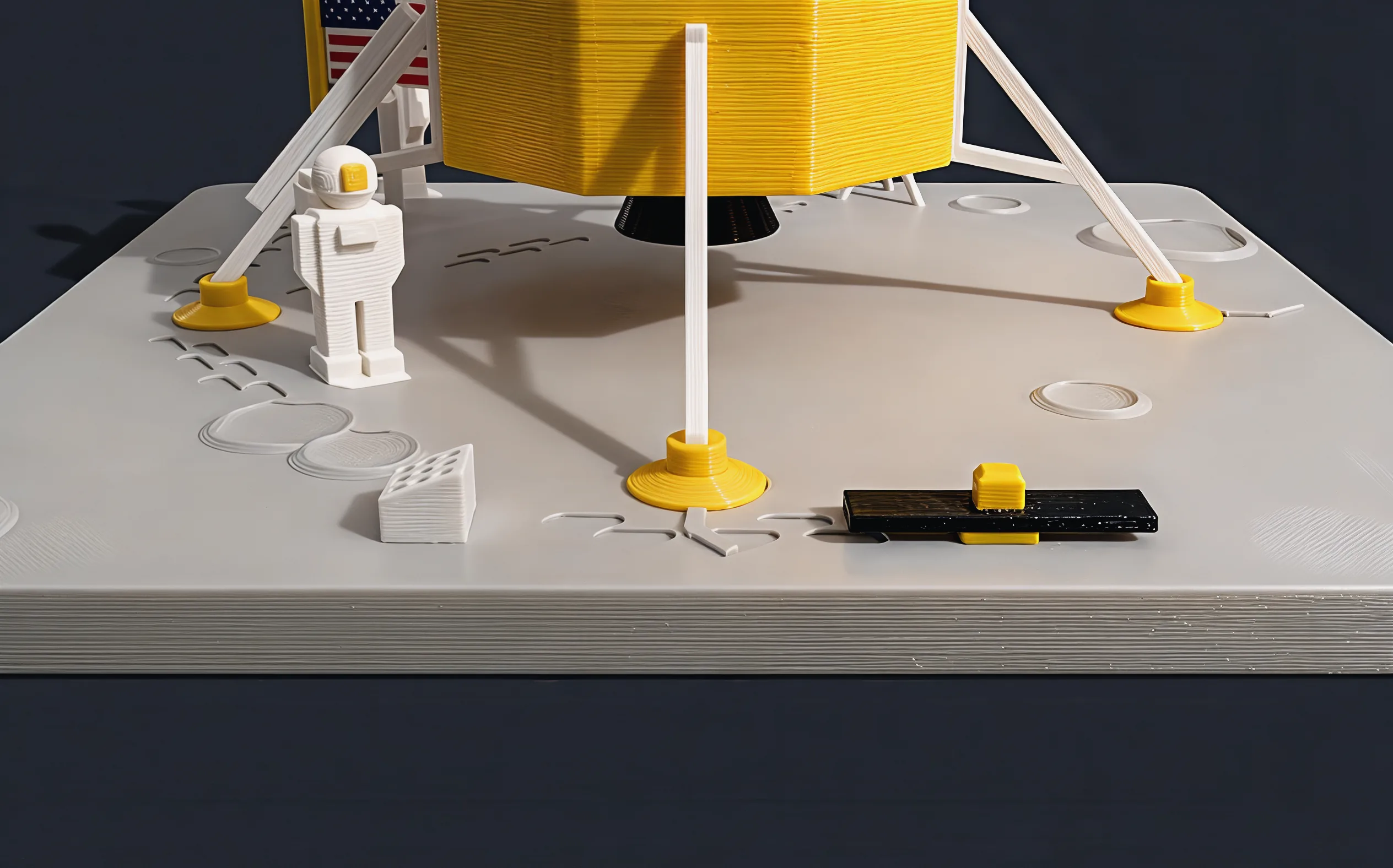
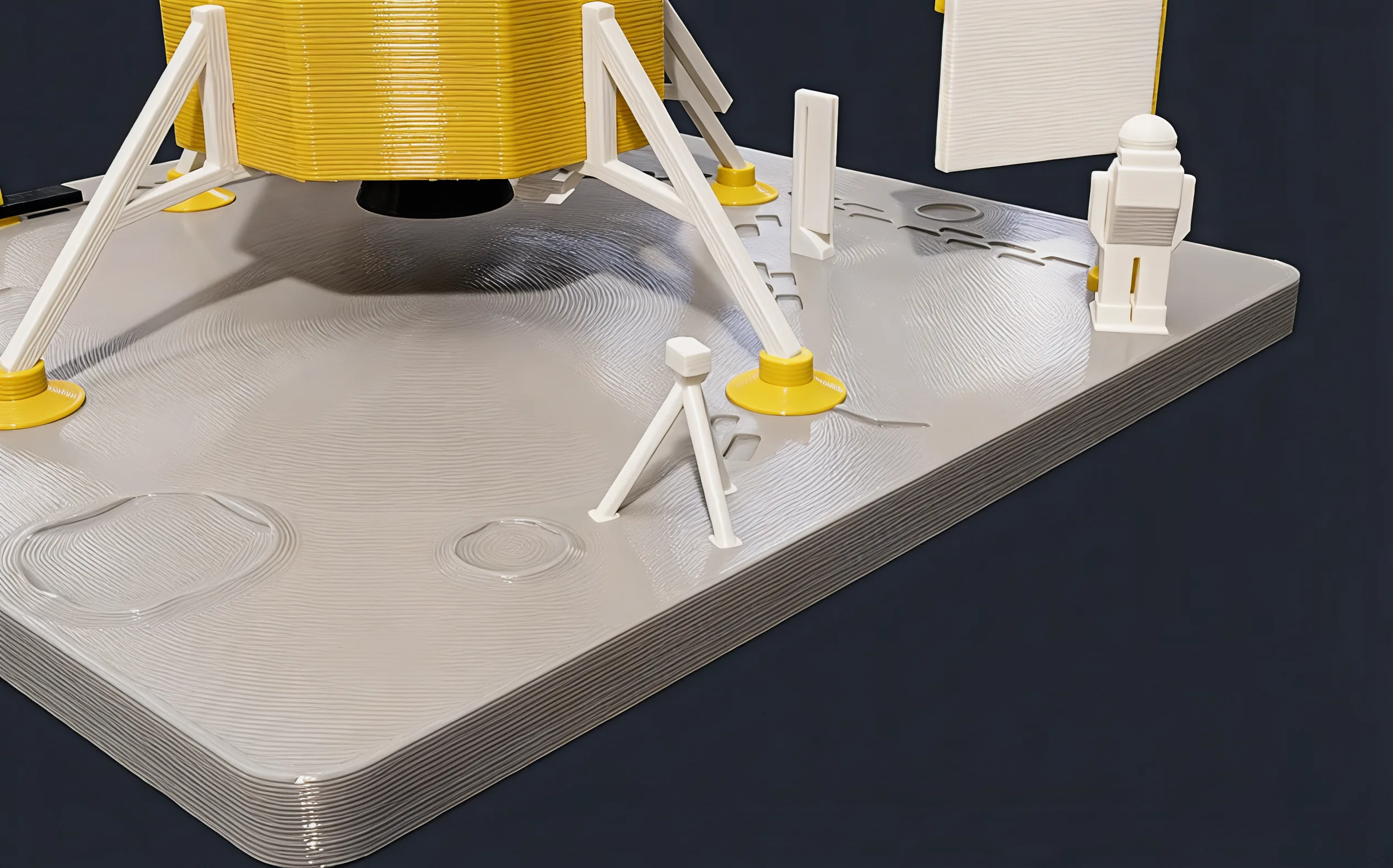
The descent stage stands on round footpads. A ladder runs down one leg, and an astronaut walks out from its foot.
A flag, and the gear they set out
One astronaut stands by the flag. Around the lander sit a laser reflector, a seismometer, a solar wind collector and the TV camera.
Turn the top 32°
Three lugs inside the silver ascent stage lock it to the black collar. Turn it 32° counter-clockwise and they line up with three slots.
Lift it straight up
After 7 mm the lugs clear the collar and the ascent stage comes free. The descent stage stays on its legs, as it stayed on the Moon as the launch pad.
Lower it and turn it back
Set the ascent stage on the collar and turn it clockwise until it stops. The lander is whole again.
Everything where they left it
Each piece stands where the crew set it down around the lander. Pick one to find it on the base.
The gold descent stage on four legs, the silver ascent stage on top. The top half lifts off.
The ladder runs down the leg by the porch; the walking astronaut is a few steps from its foot.
Red and white stripes with a navy canton on a gold pole, the second astronaut beside it.
A grid of mirrors aimed back at Earth. The real one is still used to measure the distance to the Moon.
A gold body between two black solar panels, set out to listen for moonquakes.
A sheet of foil on a pole that caught particles streaming from the Sun.
The camera on its tripod, set out on the far side of the lander from the ladder.
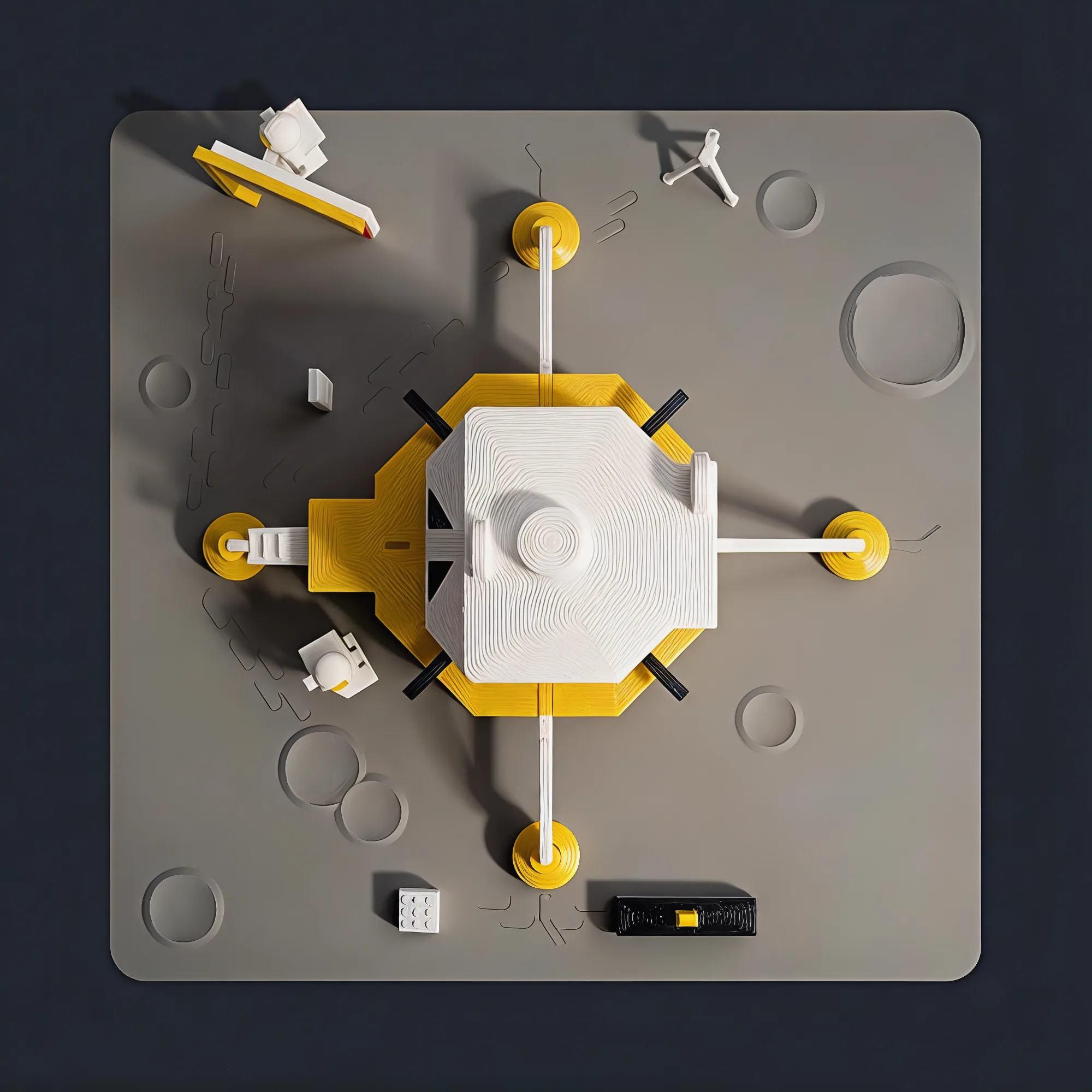
Up close
Made for a desk, a shelf or a study: 9.8 × 9.8 × 6.0 in and 15.9 oz, a collector's model of the first landing for ages 14+.
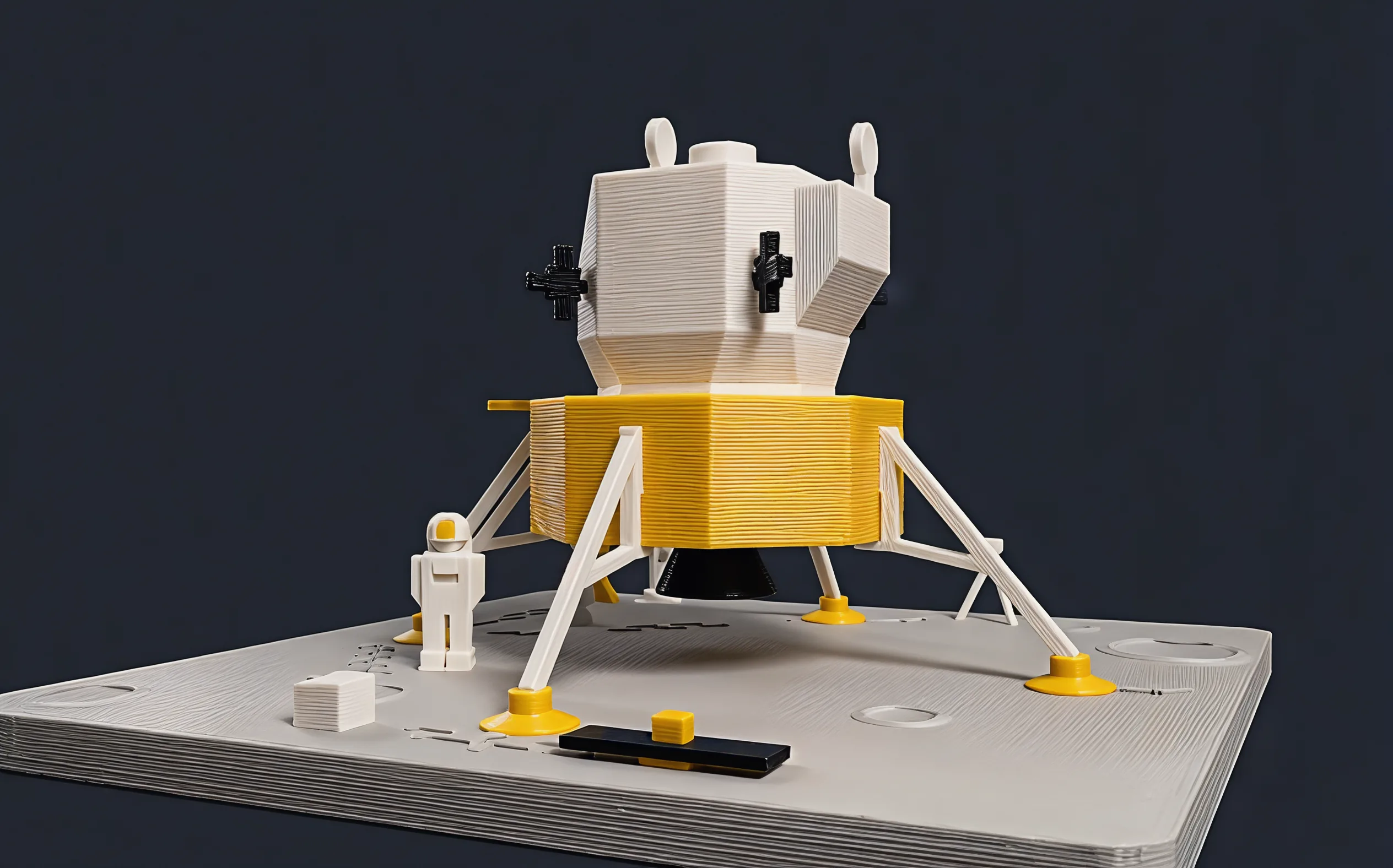
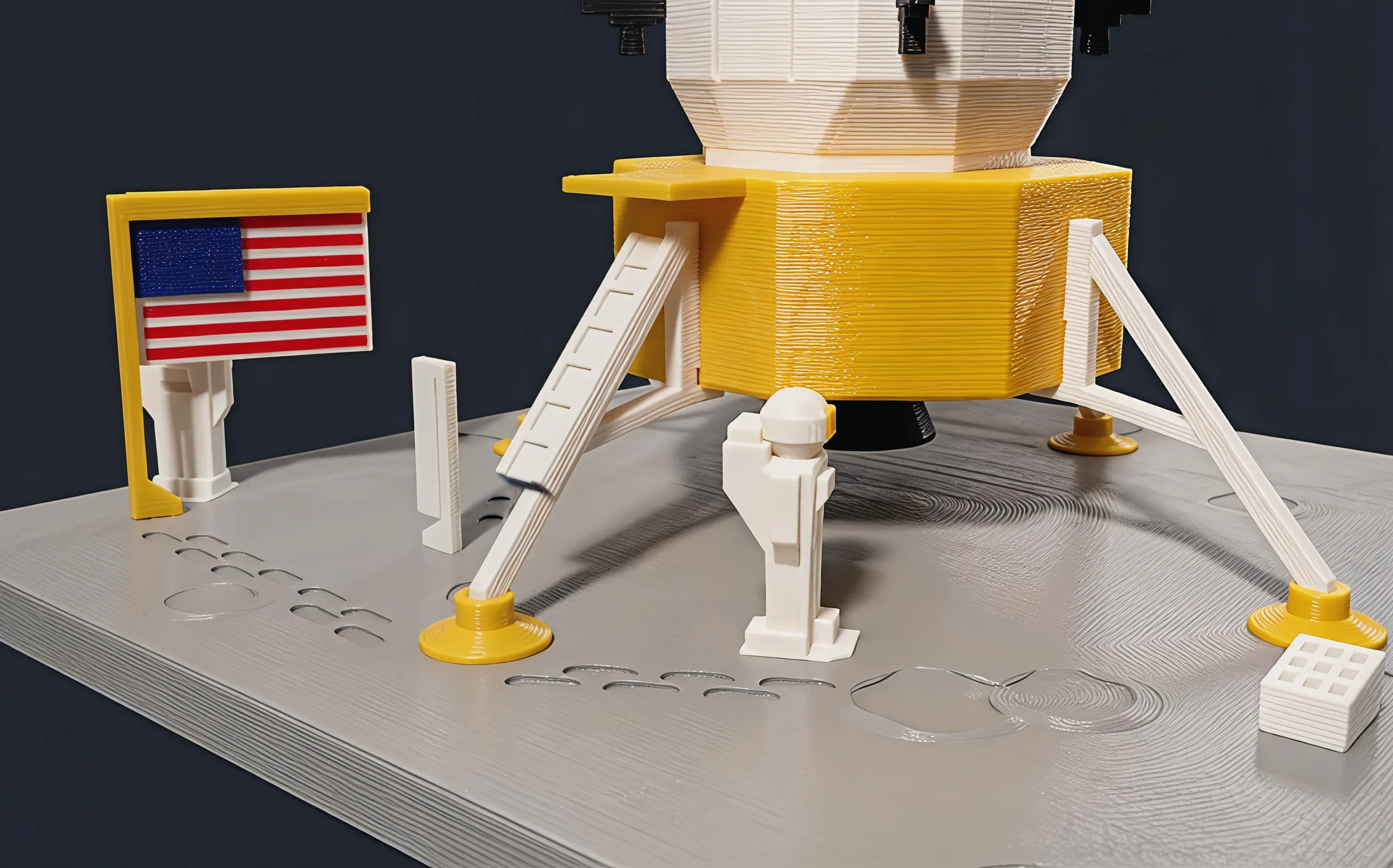
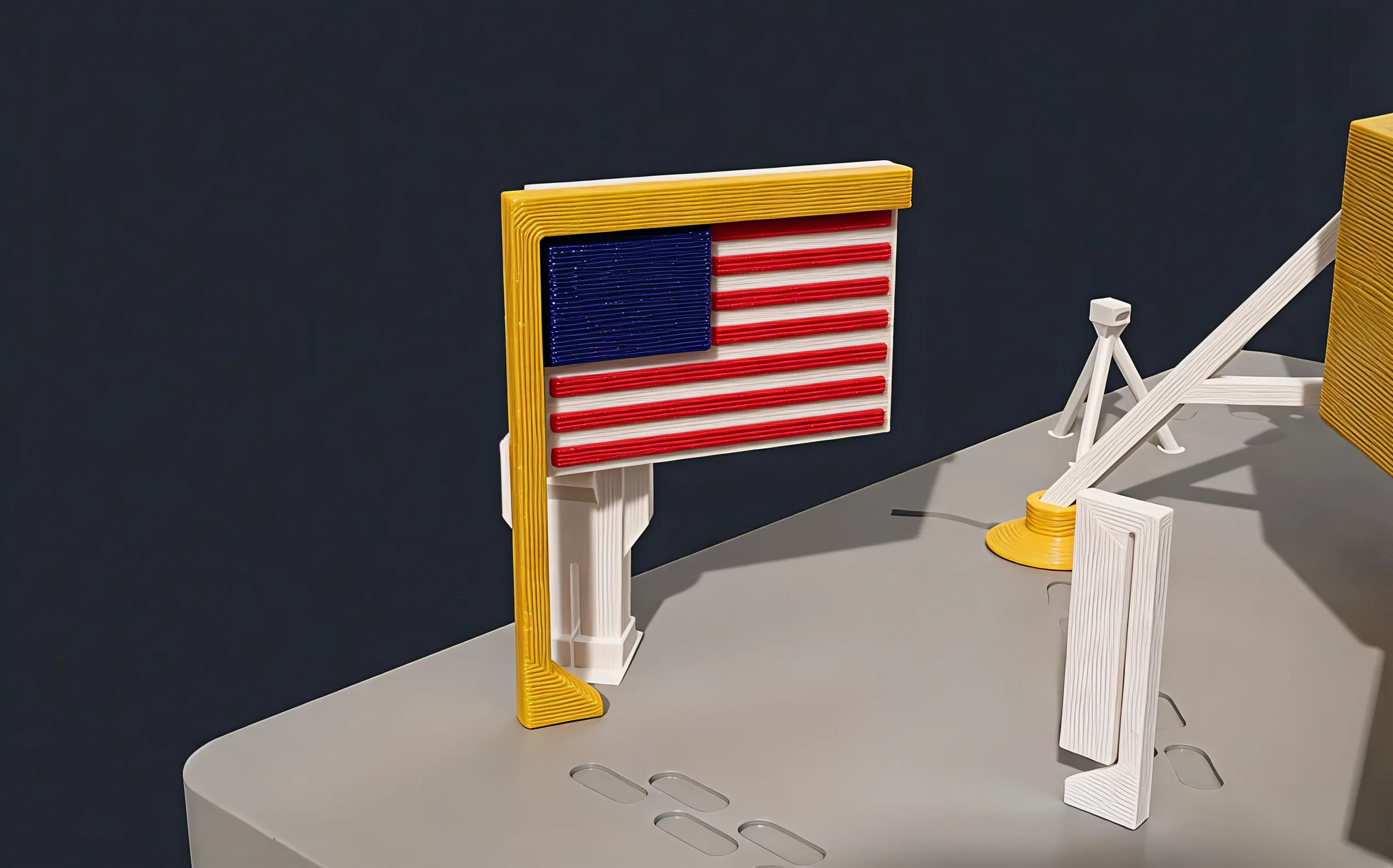
Ten pieces of the landing site, on one base
- 1
- cratered base with bootprint trails
- 1
- gold descent stage on four legs, with its ladder
- 1
- silver ascent stage that turns and lifts off
- 2
- astronauts, one walking and one standing
- 1
- flag on its pole
- 4
- experiments and equipment: laser reflector, seismometer, solar wind collector, TV camera
- Size
- 9.8 × 9.8 × 6.0 in (W × D × H)
- Weight
- 15.9 oz
- Scale
- 1:48
- Material
- PLA in 7 colours
- Top stage
- Turns 32°, lifts free after 7 mm
- Age
- 14+; small parts, not for children under 3
- Handling
- Lift by the base, never by the lander
Good to know
How does the top come off?
Turn the silver ascent stage 32° counter-clockwise until it stops, then lift it straight up. To put it back, lower it onto the black collar and turn it clockwise until it locks.
Is it a toy for children?
No. It is a collector's model for ages 14+ with small parts, and it is not for children under 3.
How should I pick it up?
By the base, never by the lander. The ascent stage lifts off, so a model held by its top can come apart in your hand.
How big is it?
9.8 × 9.8 × 6.0 in, width by depth by height, and 15.9 oz. It is built at 1:48 scale.
Is it an official NASA product?
No. It is not affiliated with or endorsed by NASA.