Qin Mausoleum
A sealed emperor's tomb that opens with a 30° twist.
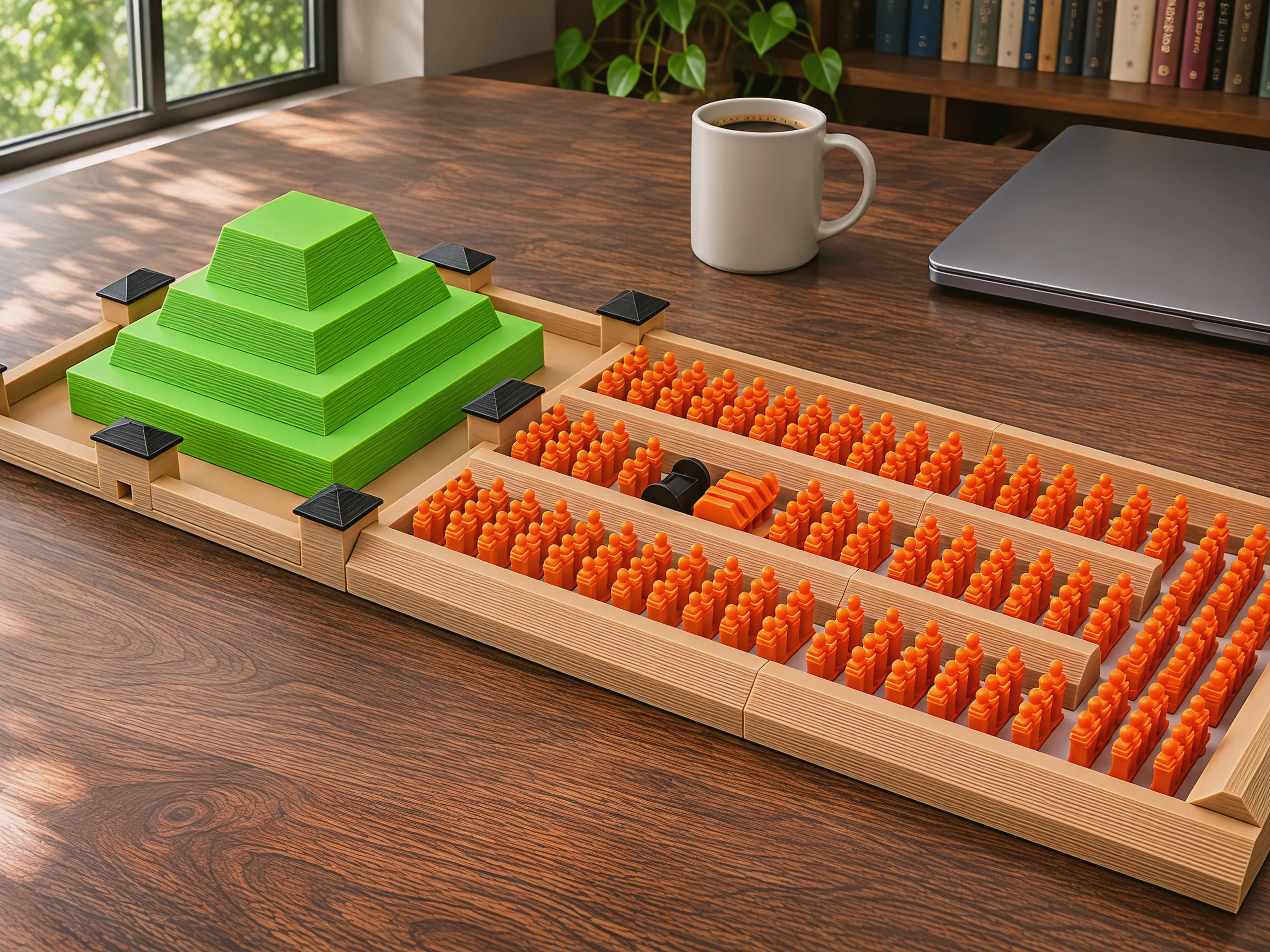
Closed on my desk next to the coffee. Nobody guesses there's a palace under that hill.
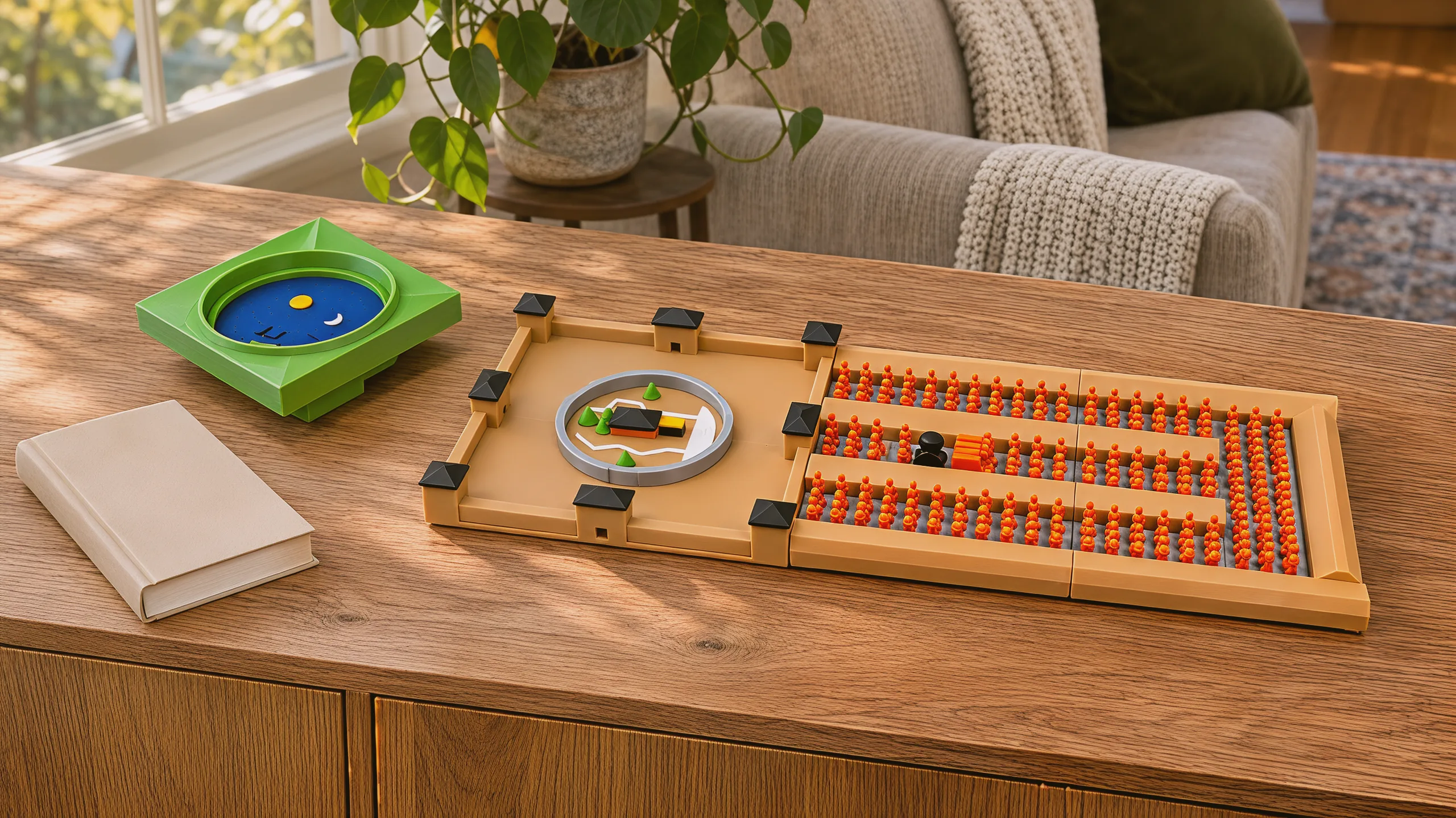
Lid off on the sideboard, sky side up, so whoever walks past sees all of it.
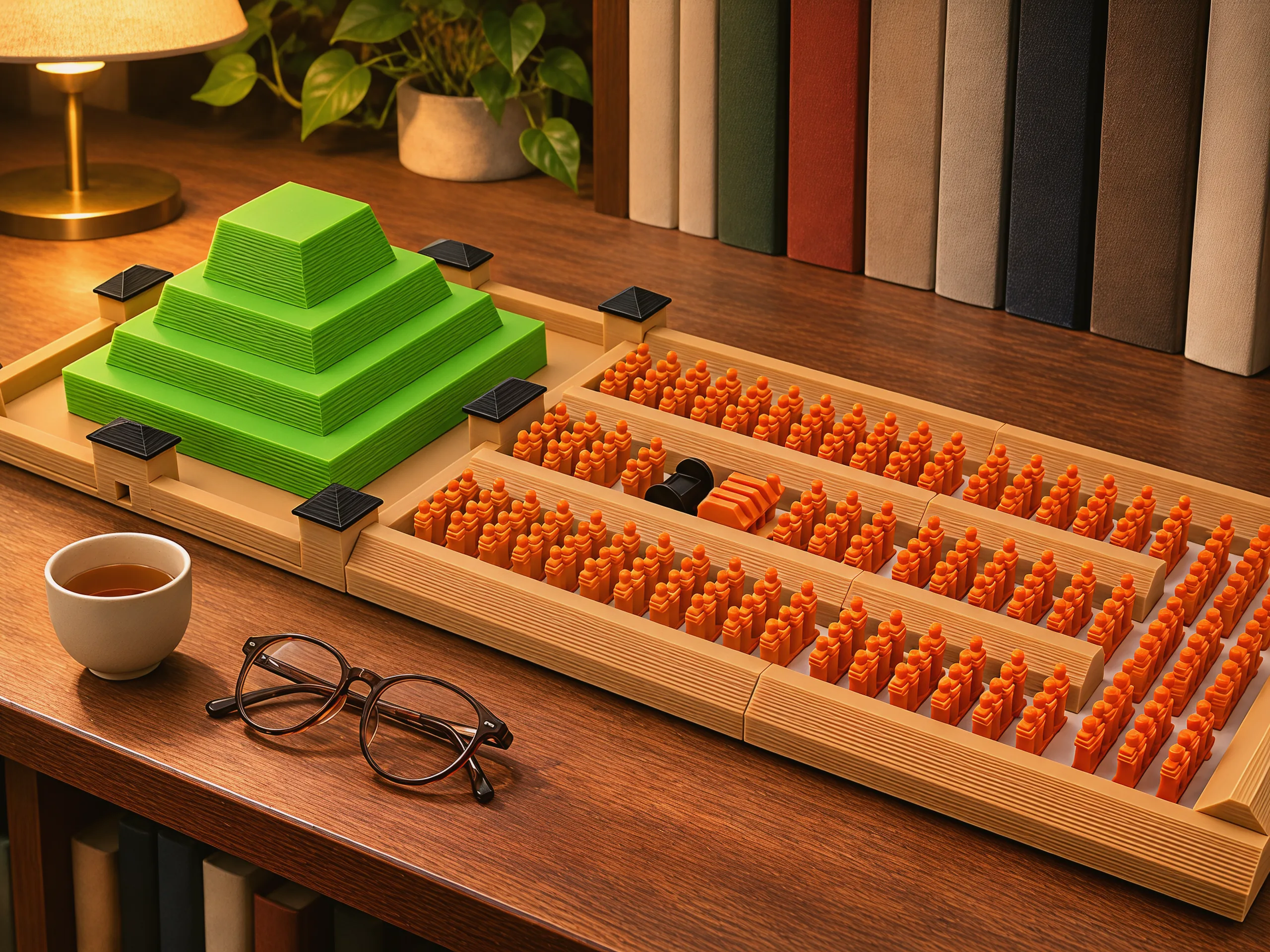
Back on the shelf with my tea and glasses, sealed again.
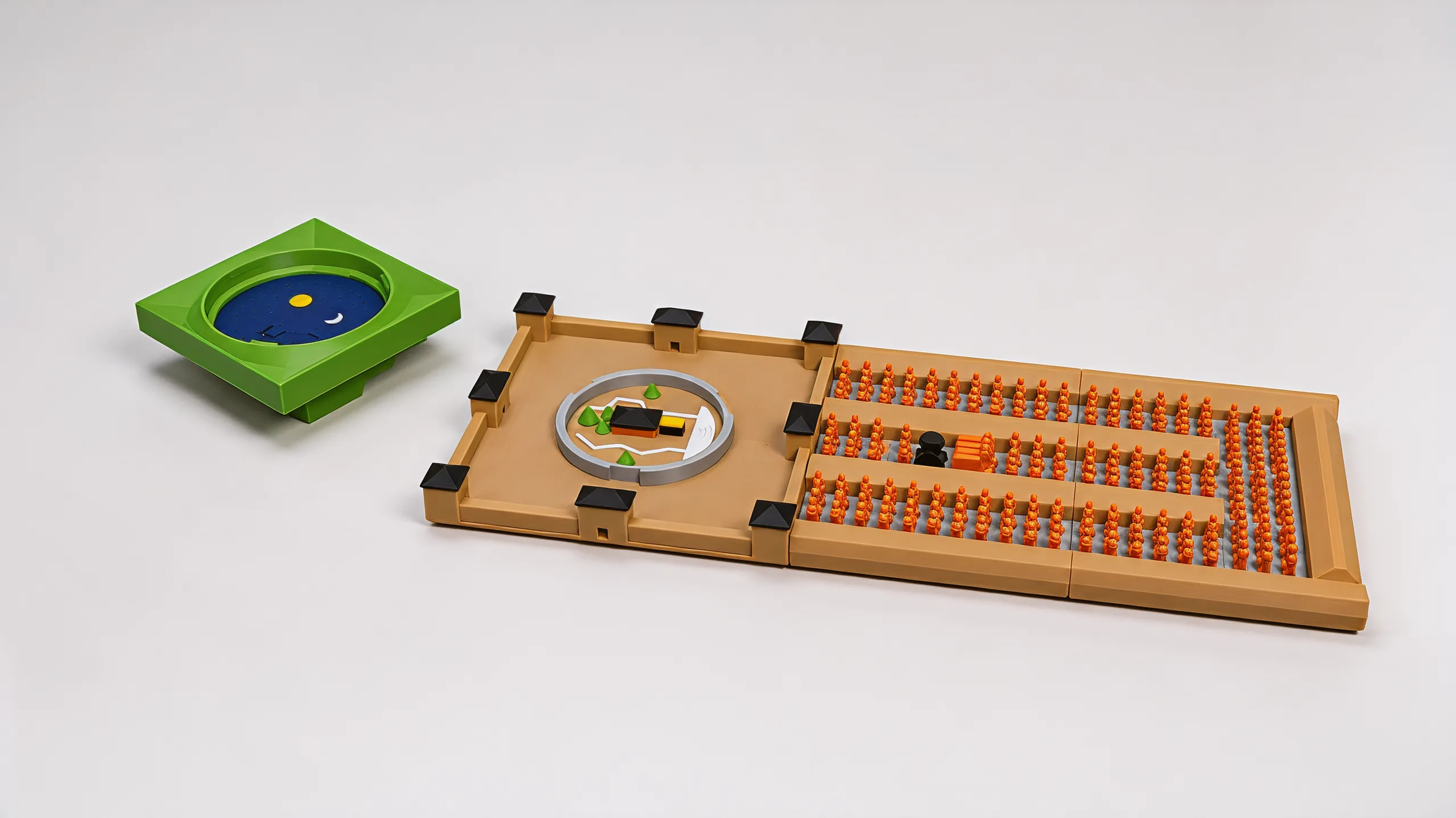
Everything out: the lid to the west, the palace in the middle, the army to the east.
Sealed
Buried in 210 BCE under a man-made hill at Lishan, the First Emperor's tomb has never been opened. This one sits closed: a stepped green mound inside its walls.
Twist
The mound sits on a bayonet ring. Turn it 30° and it comes free. Nothing to glue, nothing to unscrew.
Lift
Lift it straight up, clear of the corner towers. The palace is underneath.
The palace
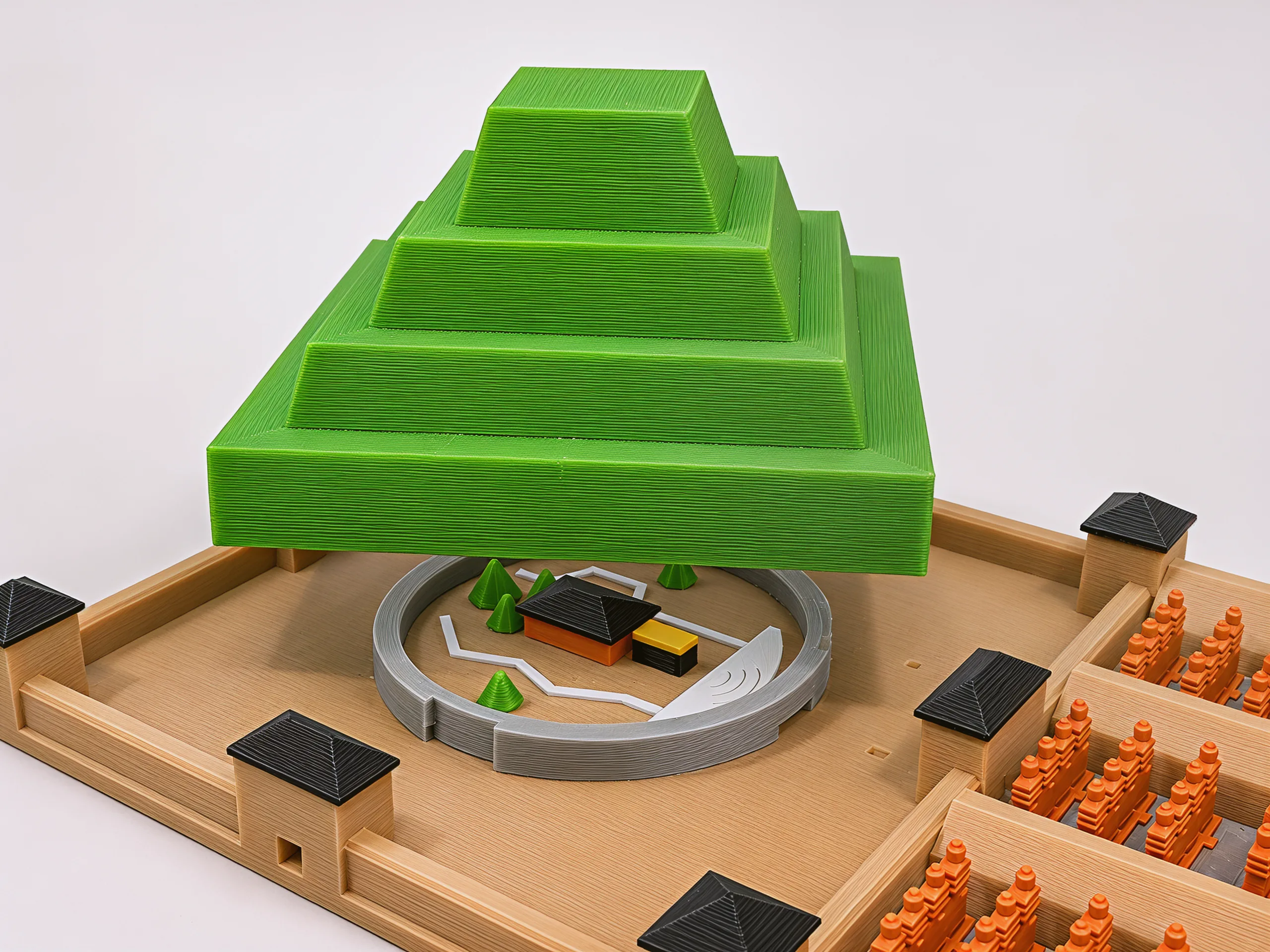
The historian Sima Qian wrote of rivers of mercury running to a sea. Here they are in silver, around the hall, the coffin and 5 mountains.
The sky
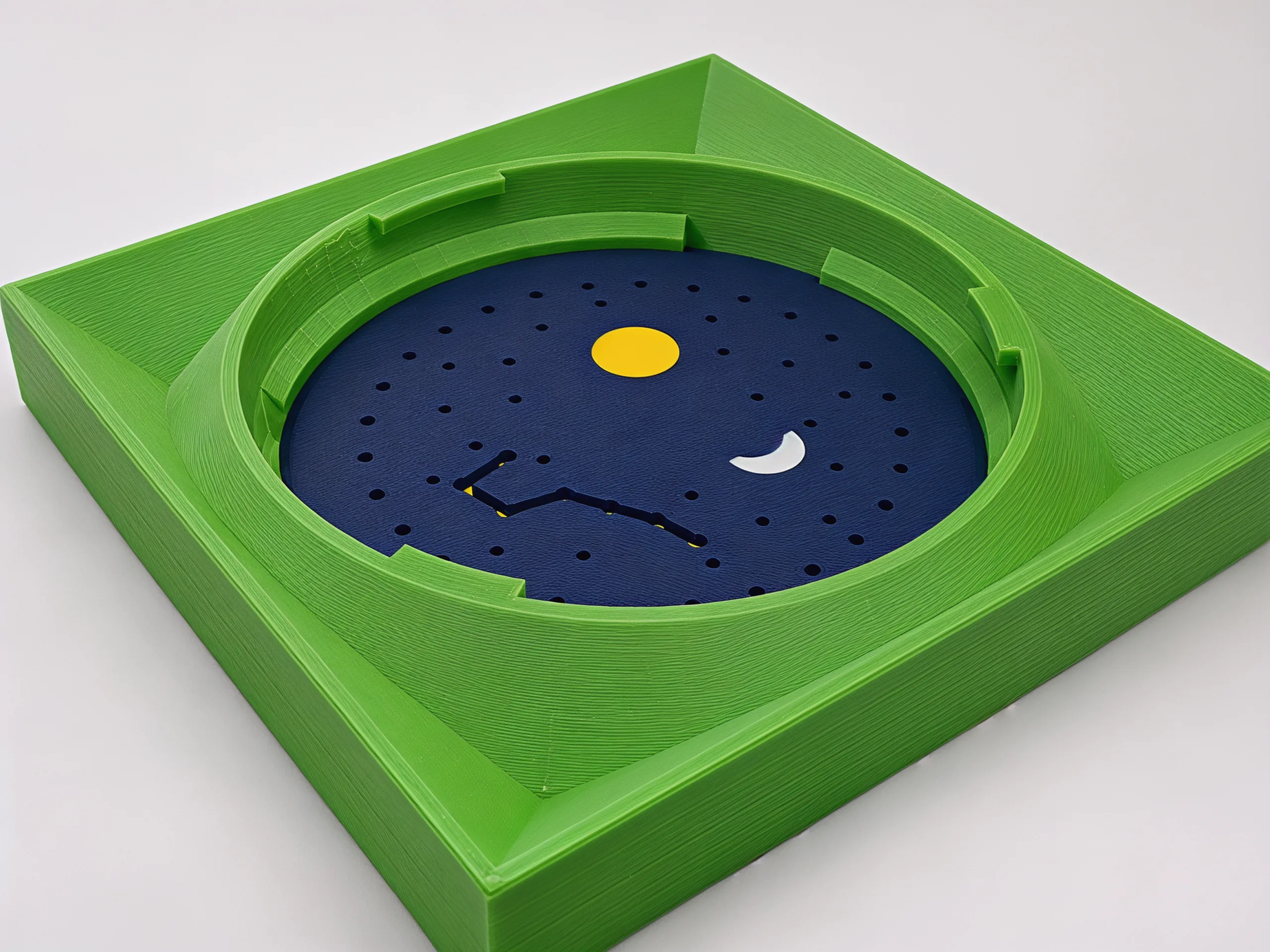
Turn the lid over and set it down. Its underside is the painted heaven: a night sky with the sun, the moon and the stars.
The army
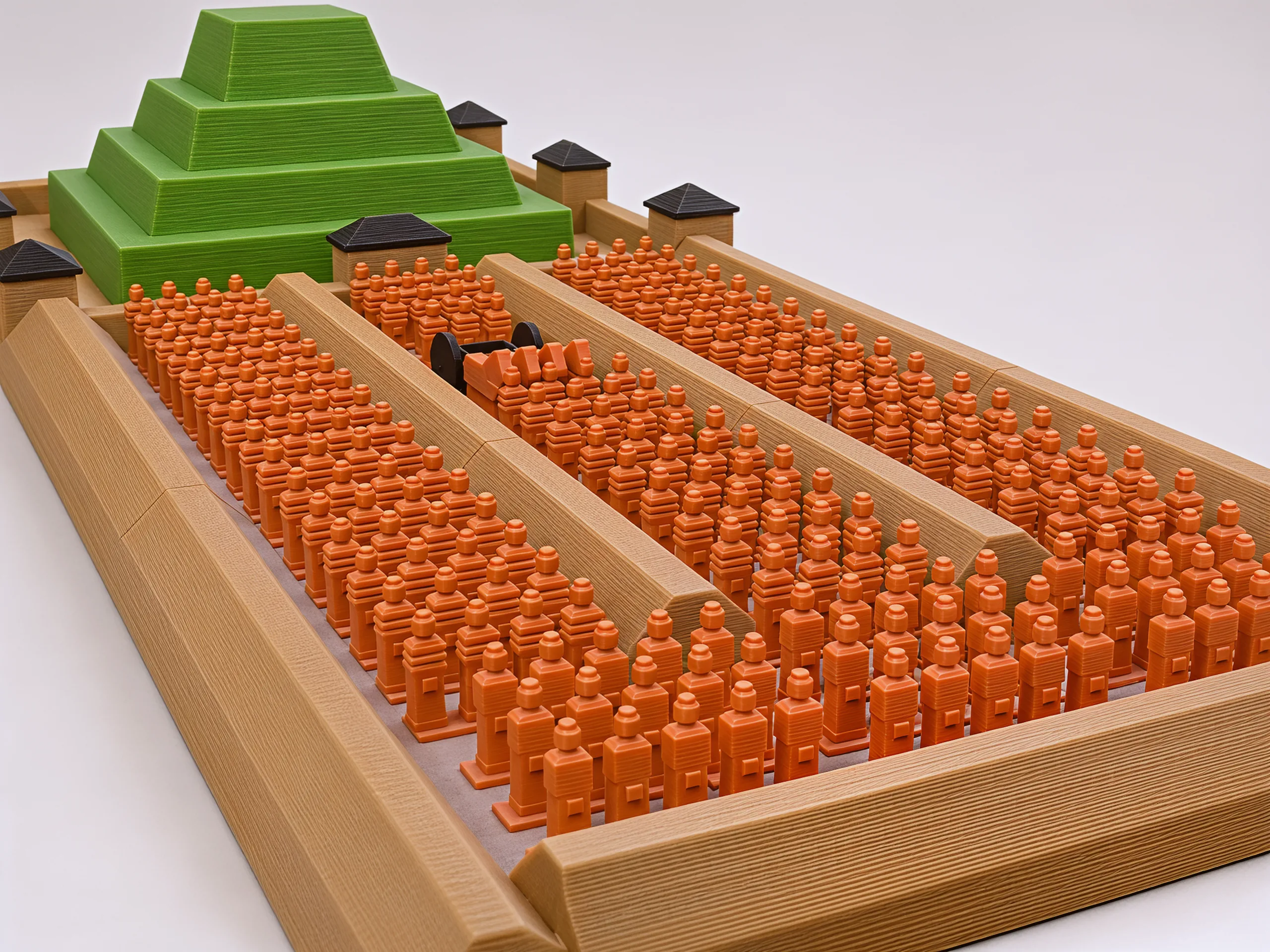
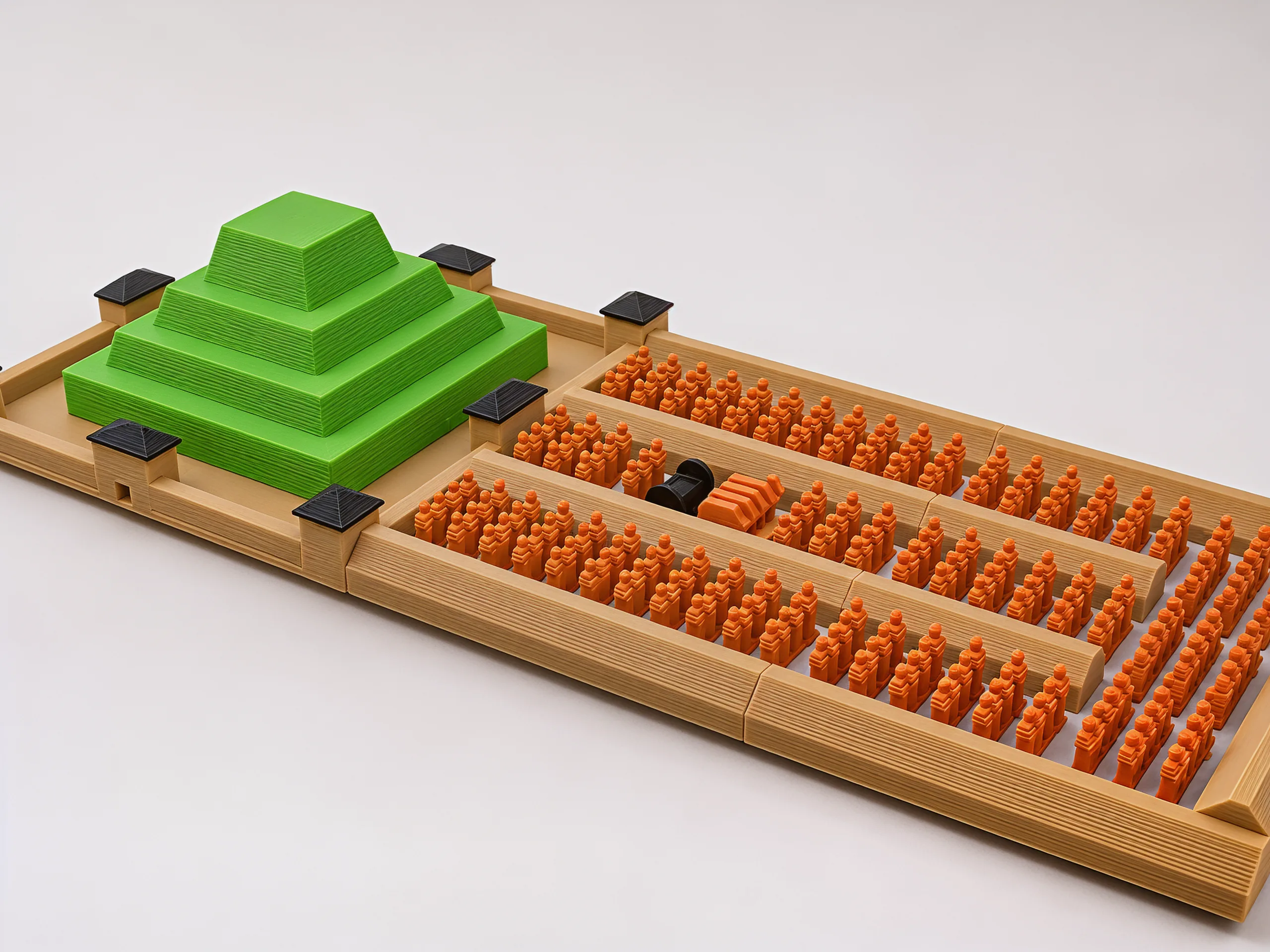
East of the walls, on 2 interlocking 1:80 tiles, 232 soldiers, a chariot and 4 horses face east, as the real army did when it was found in 1974.
Closed again
Set the mound back on its ring and turn it 30° the other way. The tomb is sealed until the next time someone asks.
Everyone in it, at the same scale
Each piece below is drawn at the same size, so a soldier stands next to a gatehouse the way it does on the table. A soldier is about 1 in tall.
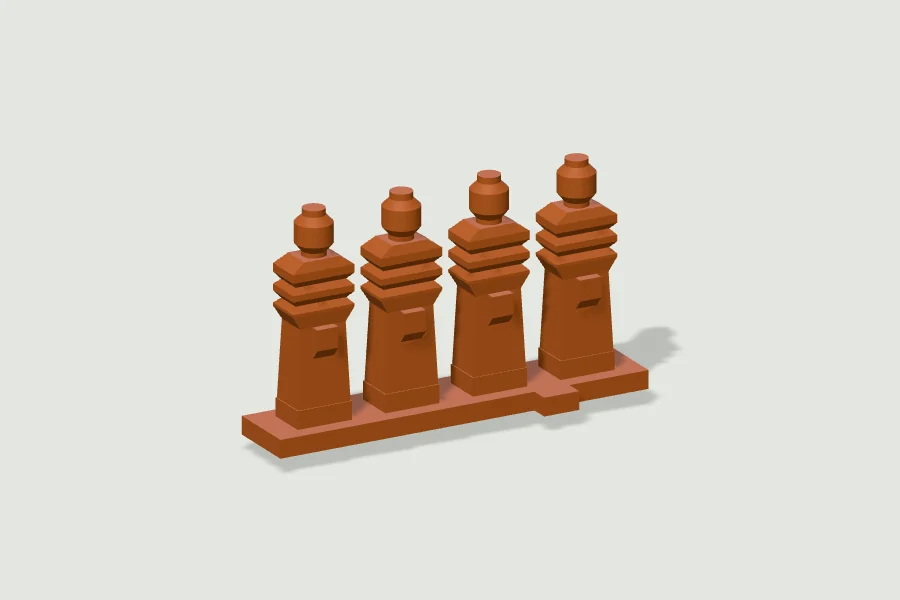
The infantry. 184 soldiers in armour, standing in ranks.
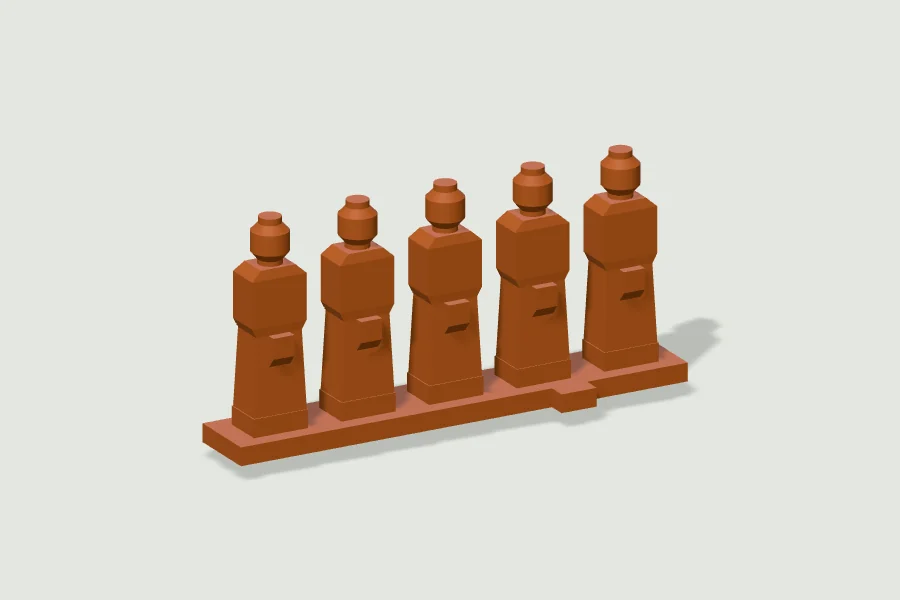
The vanguard. 45 soldiers without armour, out in front.
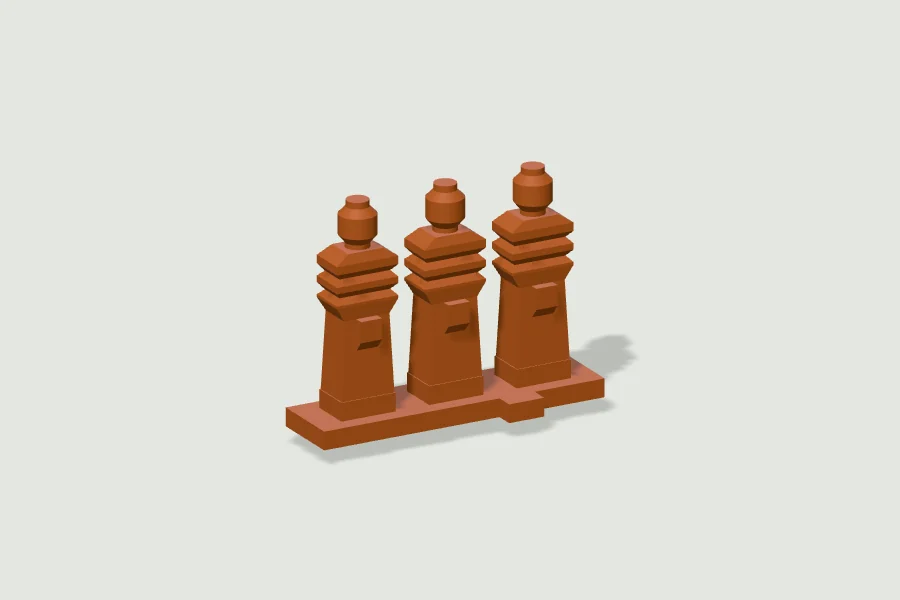
The crew. 3 soldiers who ride behind the horses.
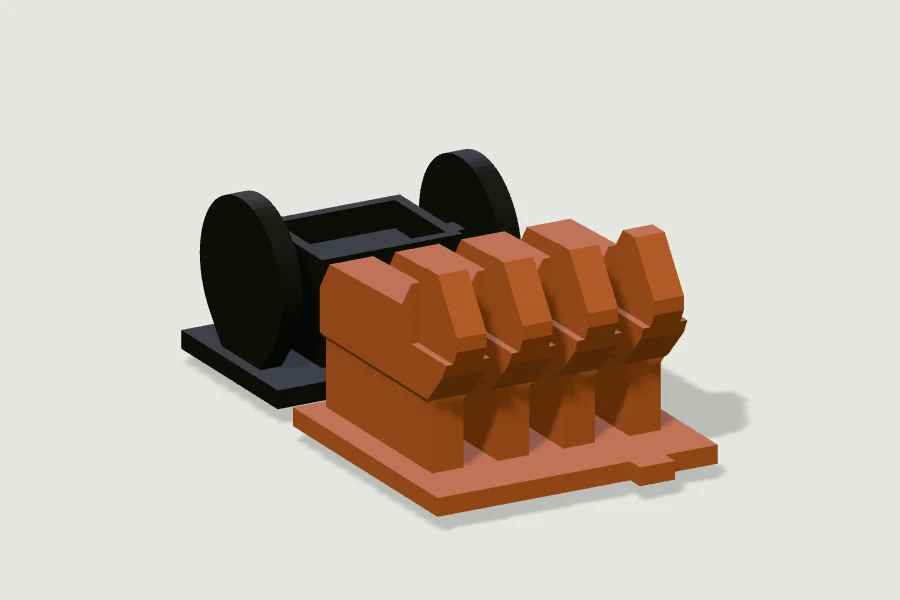
The chariot. 1 chariot with its team of 4 horses.
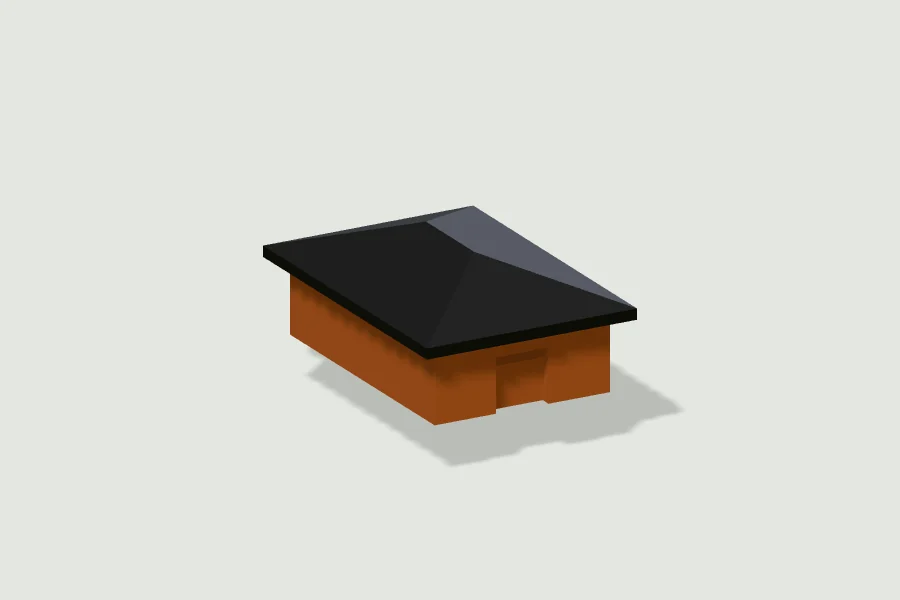
The hall. The emperor's hall at the centre of the palace.

The coffin. Black, with a gold lid, beside the hall.
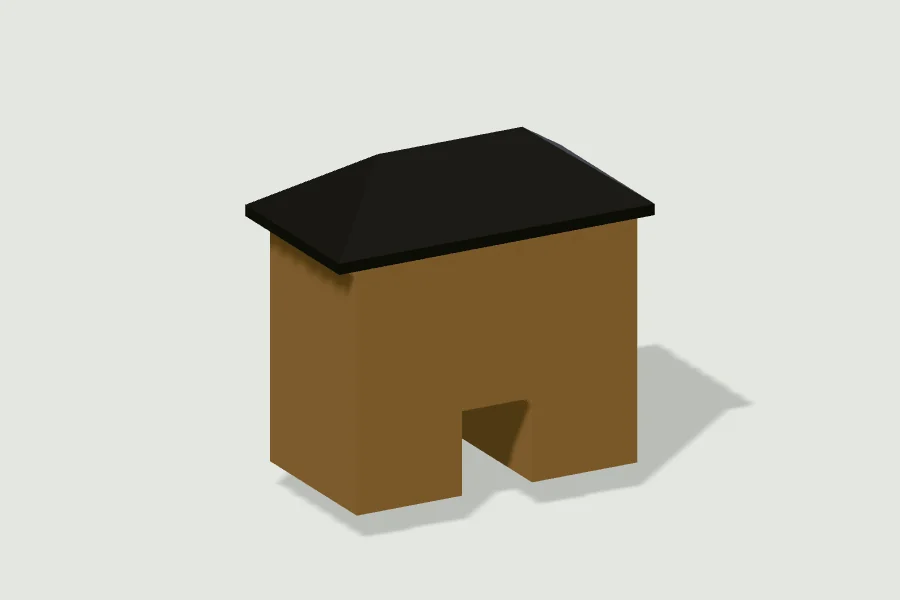
A gate. 4 of them, in the middle of each wall.
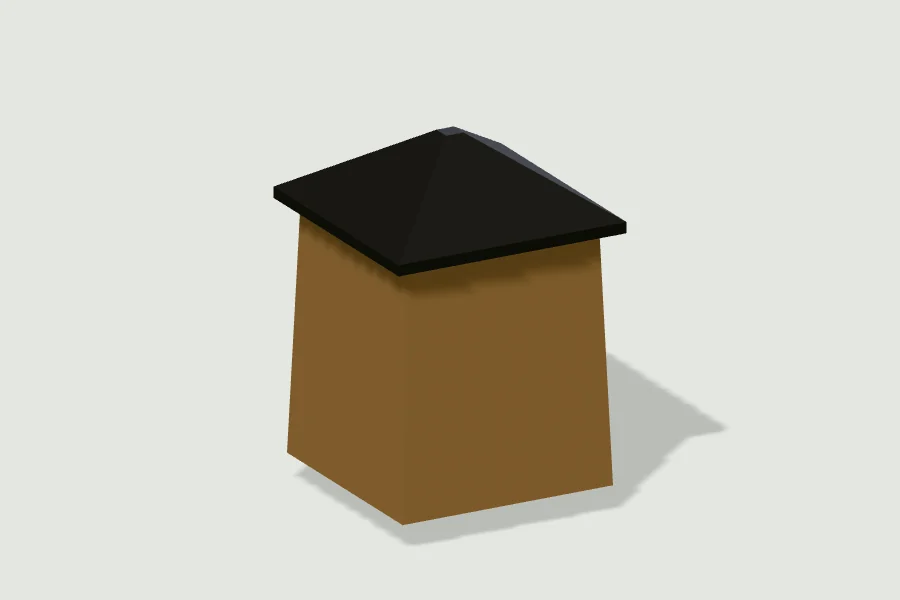
A tower. 4 of them, on the corners.

A mountain. 5 of them inside the palace ring.
Up close
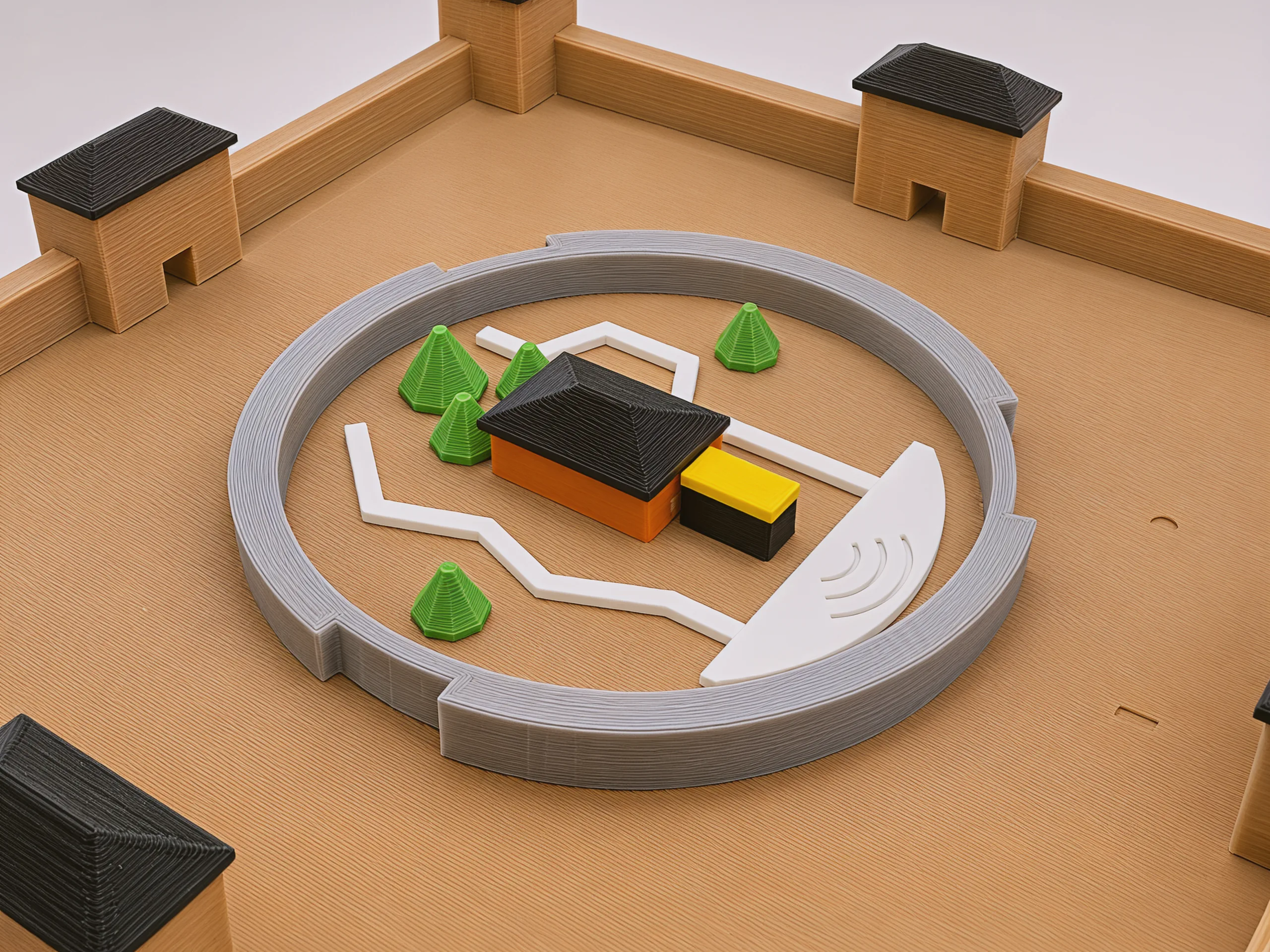
The site, from above
The mound sits on a bayonet ring. Turn it 30° and it comes free; lift it and the palace is underneath. Turn the lid over and the sky is on its underside. To close it, set it back and turn it the other way.
A stepped hill 6.3 in square and 3.5 in tall. It twists off and lifts away, and carries the sky on its underside.
The hall and the coffin inside a grey ring, with 2 silver rivers running to a sea and 5 mountains around them.
A walled square 9.8 × 9.7 in across, a gate in each side and a tower on each corner.
232 soldiers, a chariot and 4 horses on 2 interlocking tiles, 14.1 in long, facing east.
Made for a desk or a shelf: closed most days, opened when someone asks what it is. It is a collector piece for ages 14 and up, with small parts, so keep it away from children under 3.
Qin Mausoleum
The First Emperor's sealed tomb at desk scale, with the palace, the sky and the army inside.
232 soldiers, and the tomb they guard
- 232
- terracotta soldiers: infantry, a vanguard and a chariot crew
- 1
- chariot, with its team of 4 horses
- 2
- interlocking army tiles
- 4
- gatehouses, in the walls of the square
- 4
- corner towers
- 5
- mountains in the palace, with the hall, the coffin, 2 rivers and a sea
- 1
- stepped mound lid, with the sky on its underside
Specifications
- Size
- 23.9 × 9.8 × 3.6 in, long by deep by tall
- Weight
- 2.6 lb
- Mound
- 6.3 in square, 3.5 in tall
- Opens
- a 30° twist, then lift
- Army
- 232 soldiers at 1:80, each about 1 in tall
- Colours
- 8
- Age
- 14 and up; small parts, not for children under 3
- Handling
- lift by the tray, never by the lid
Good to know
What is under the lid?
The palace Sima Qian described: a hall, the coffin, silver rivers running to a sea and 5 mountains, inside a ring. The lid itself carries the sky on its underside, with the sun, the moon and the stars.
How does it open and close?
The mound sits on a bayonet ring. Turn it 30° and lift it off. To close, set it back on the ring and turn it 30° the other way.
How should I pick it up?
By the tray, never by the lid. The mound is made to come off, so let the tray take the weight.
Why do the soldiers face east?
The real army does. Farmers digging a well found it in 1974, rank after rank, standing guard to the east of the tomb. These 232 stand the same way.
Who is it for?
Anyone who keeps history on the desk. It is a collector piece for ages 14 and up. It has small parts, so it is not for children under 3.