Rainbow Bridge 虹桥
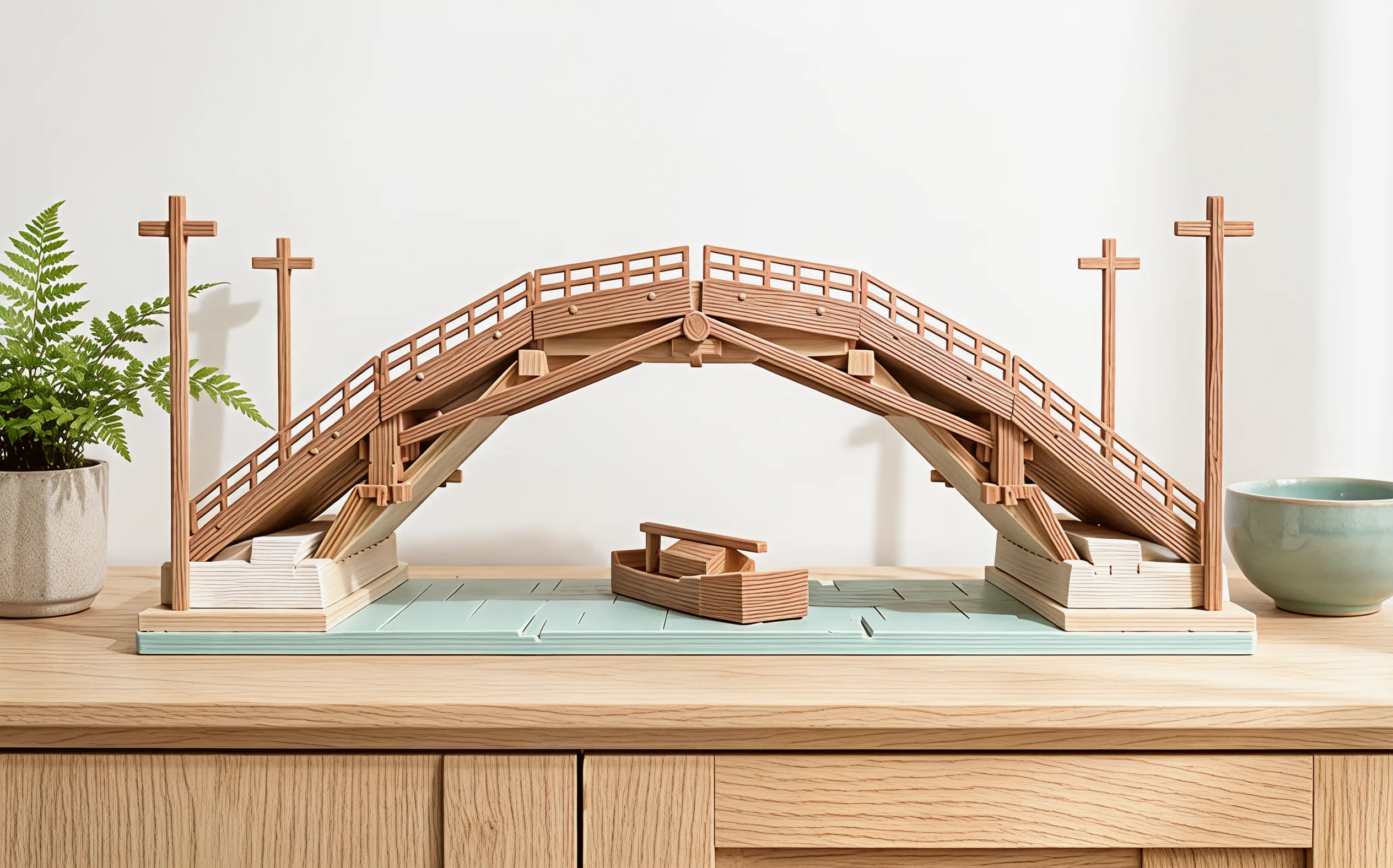
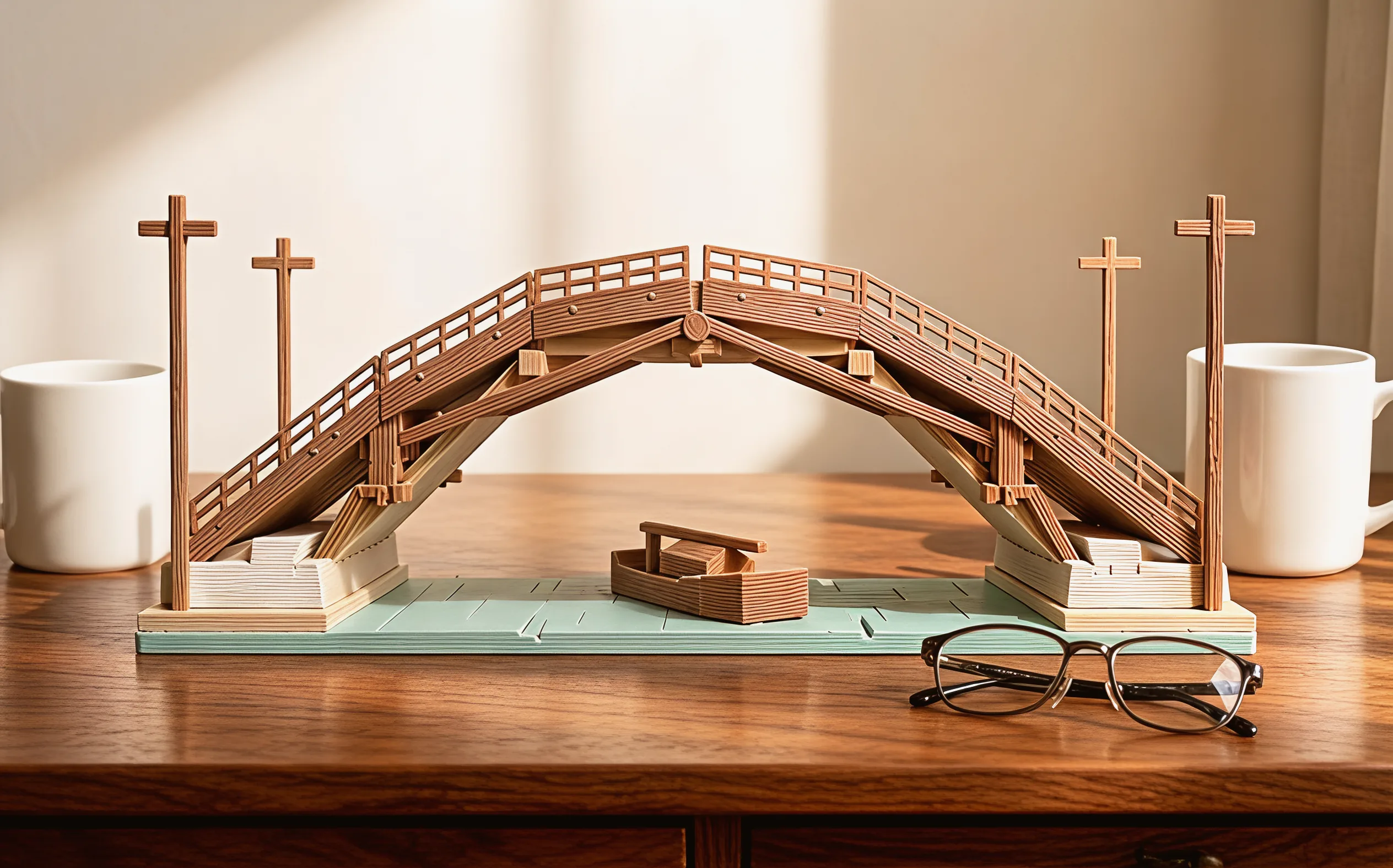
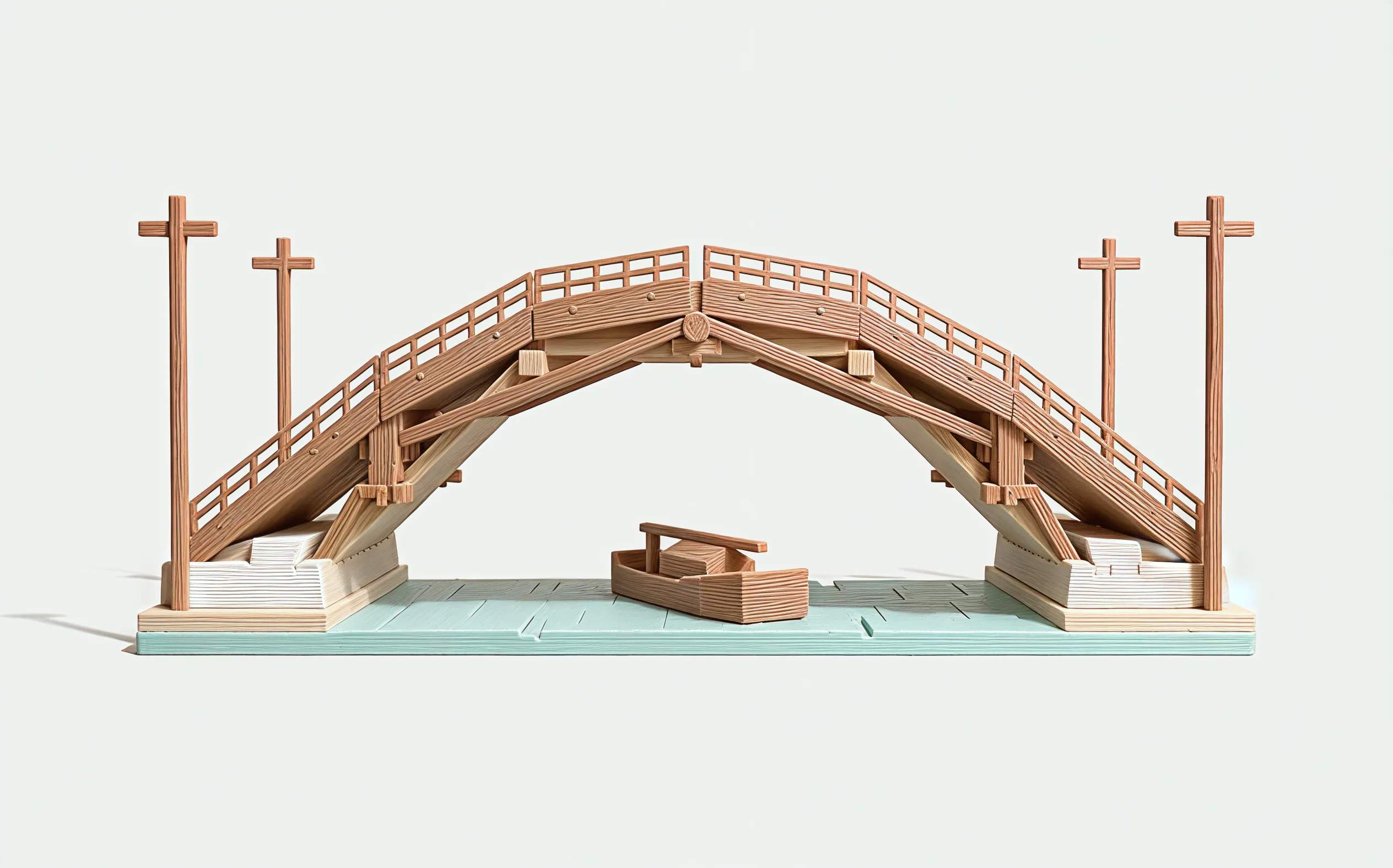
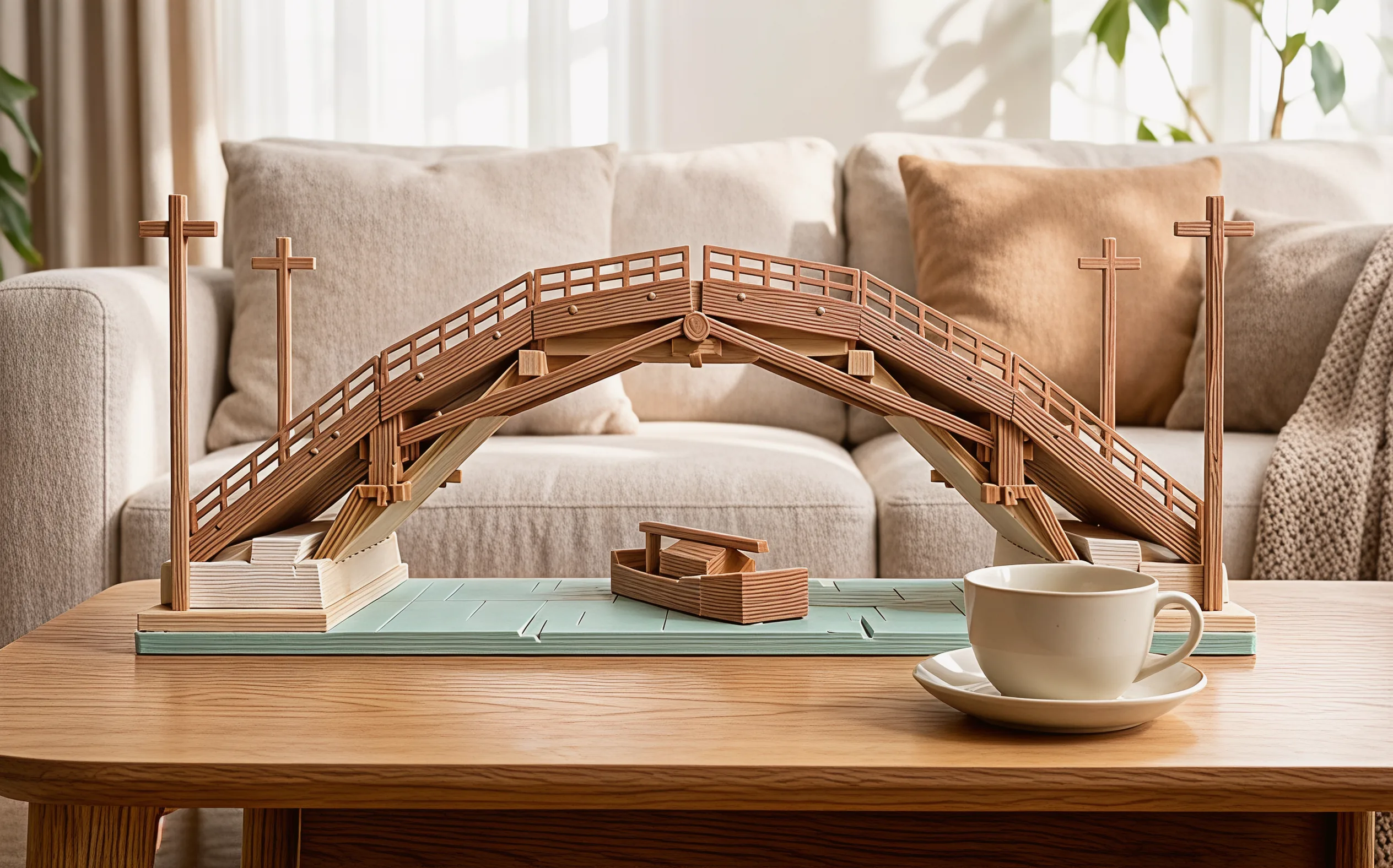
A 1:80 model of the Rainbow Bridge from the Qingming scroll: one timber arch over its own river, made only of straight logs.
A river and two frames
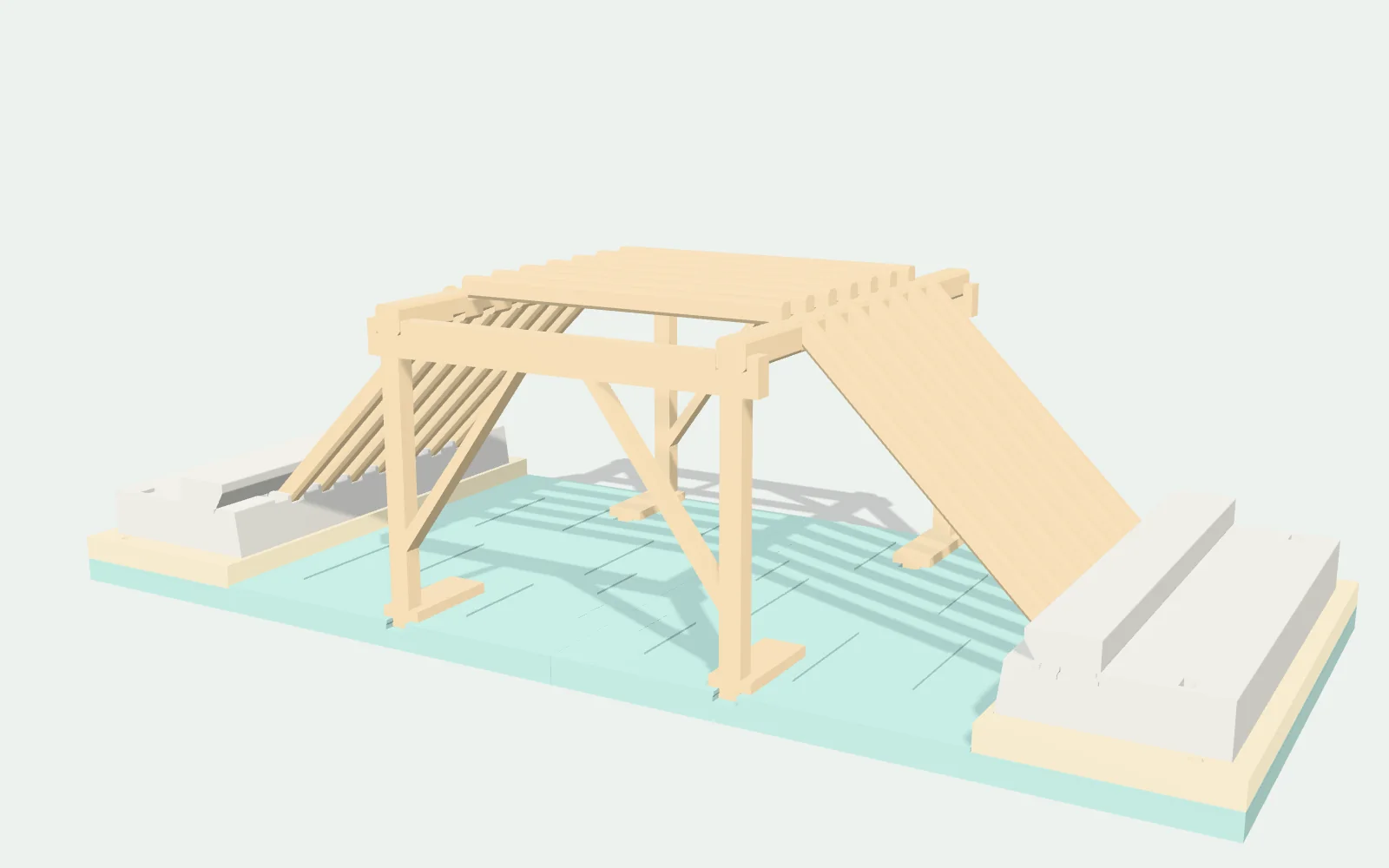
Stone banks on a river, and a pair of timber frames across it. The frames are scaffolding: they carry the arch only while it rises.
The oak system
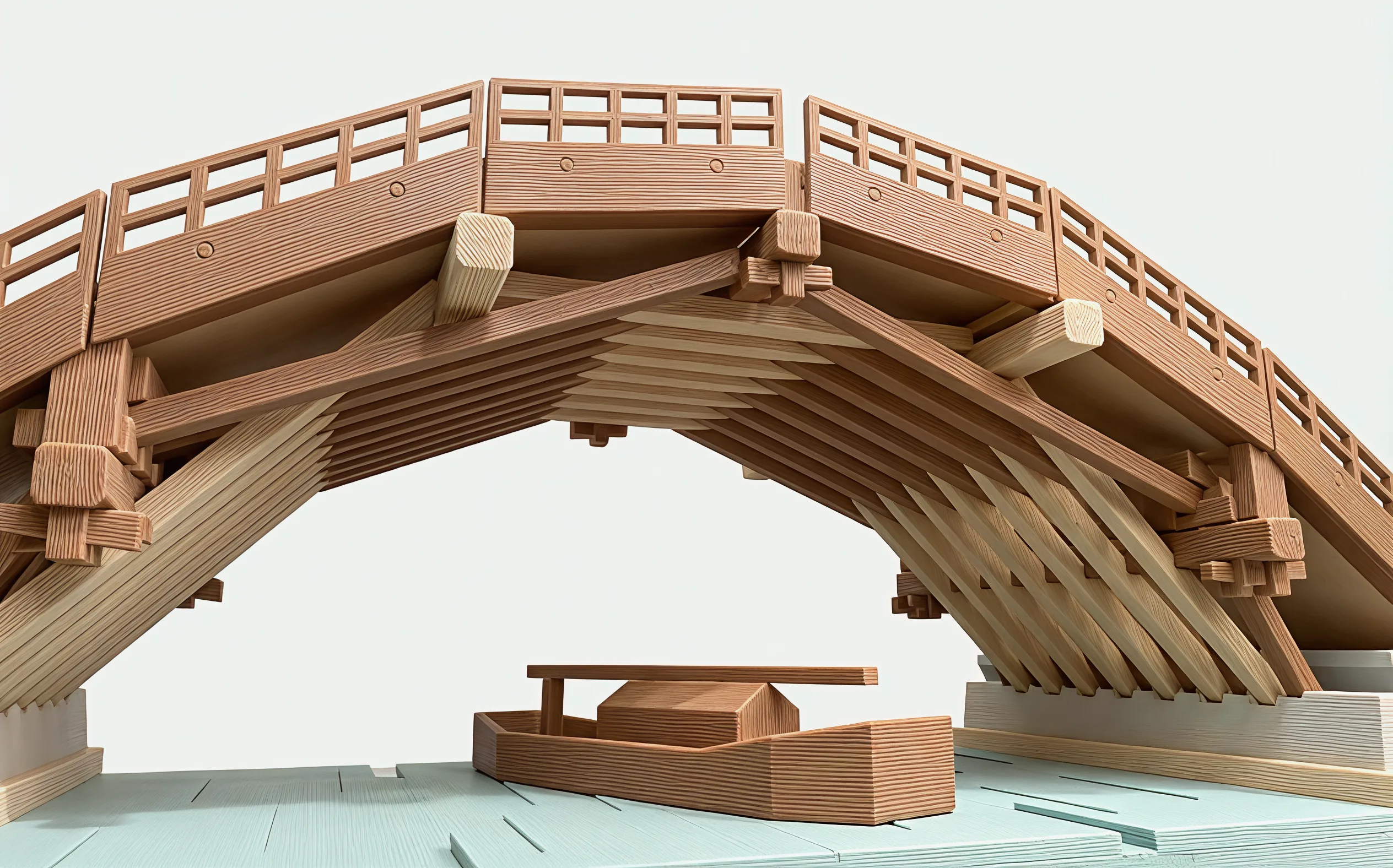
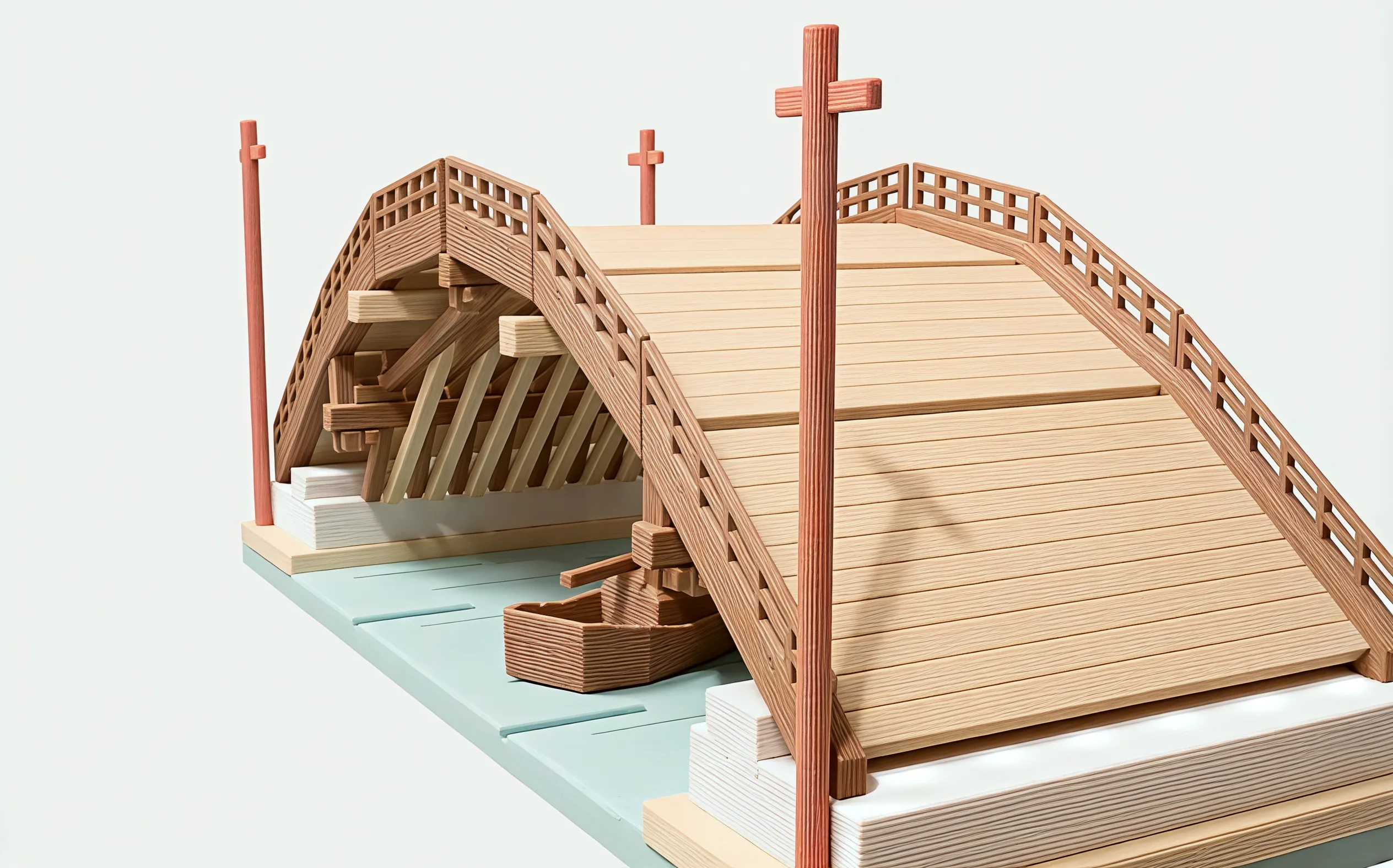
7 oak ribs of equal straight logs rest on the frames: a slope up from each bank and a level run over the water.
Crossbeams on the oak
Walnut crossbeams sit on the oak, one on each slope and one at the crown. The second system will bear on them.
The walnut system
8 walnut ribs thread between the oak: each crown log runs up through one crossbeam, under the next and into the crown beam. Key bars, pins and wedges lock their feet.
The deck
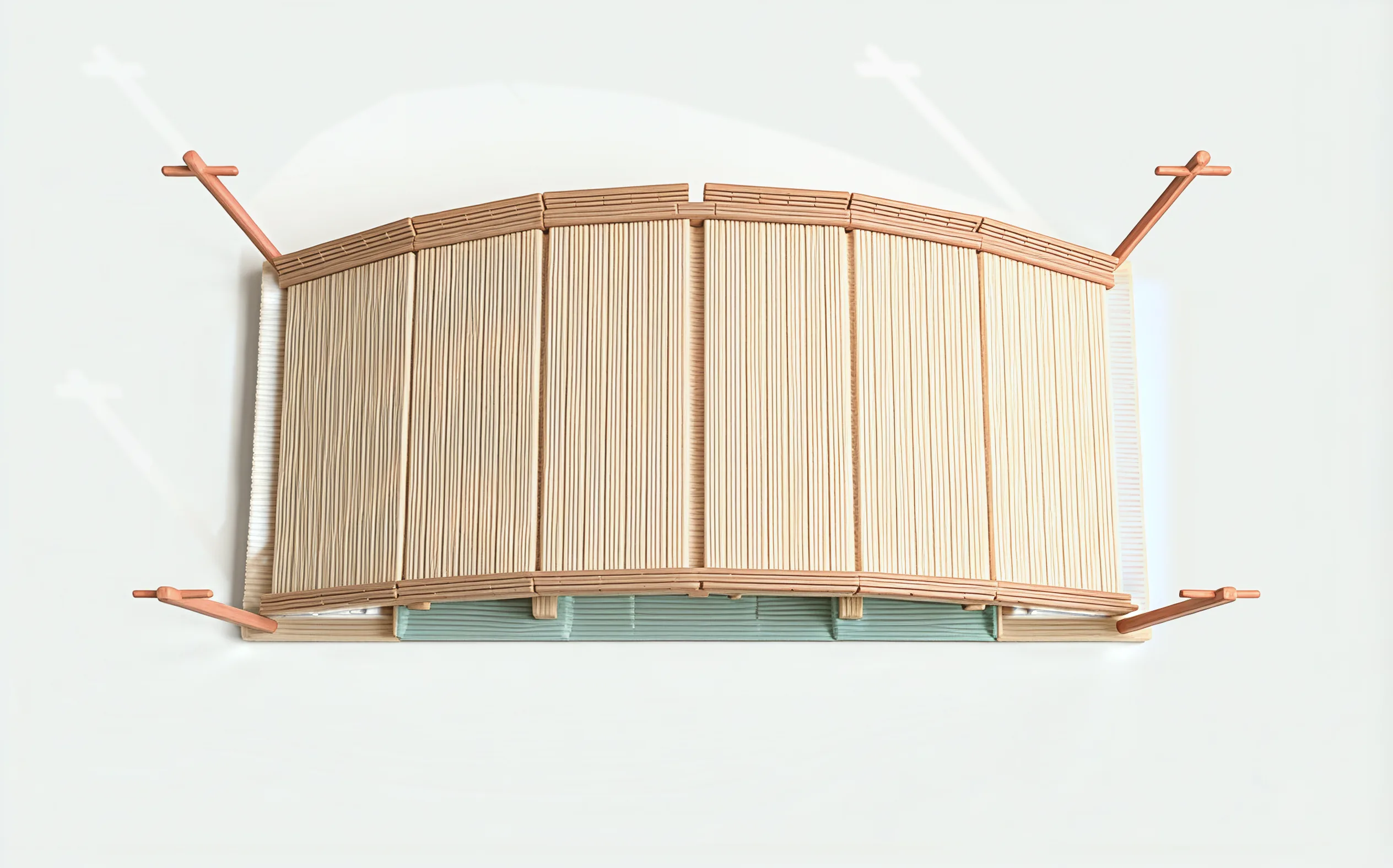
4 stringers, 6 deck panels and 12 railing panels tie the two halves together. The crown wedges are the last pieces in.
It stands on its own
The frames slide out along the river and nothing props the arch any more. The poles and the boat finish the scene.
A press on the crown
A 10 N press moves the crown about 1.85 mm, and it holds. It would take 7.5 times that press to bring the arch down.
Up close
Made for a desk or a shelf, seen side-on at eye level the way the scroll shows it: 13.8 × 5.9 × 5.7 in, a little longer than a keyboard is wide.
Two arches that cannot stand alone
Two log systems, oak and walnut, run through each other's crossbeams. Each holds the other up, and neither stands without it.
Oak
7 ribs of equal logs, 21 logs in all. Alone it needs the scaffold.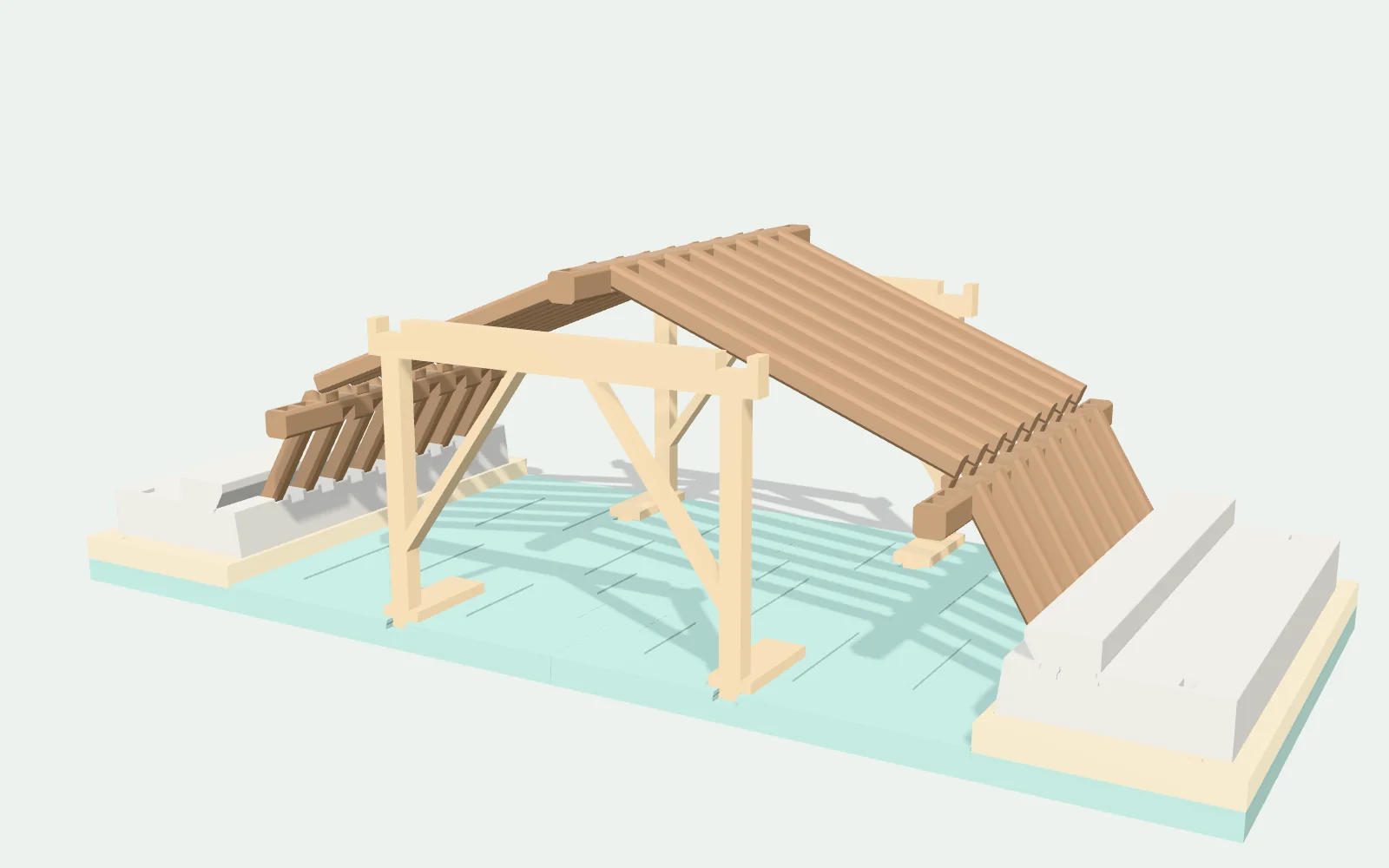
Walnut
8 ribs of crown logs on foot logs, 32 logs in all. Alone it needs the scaffold too.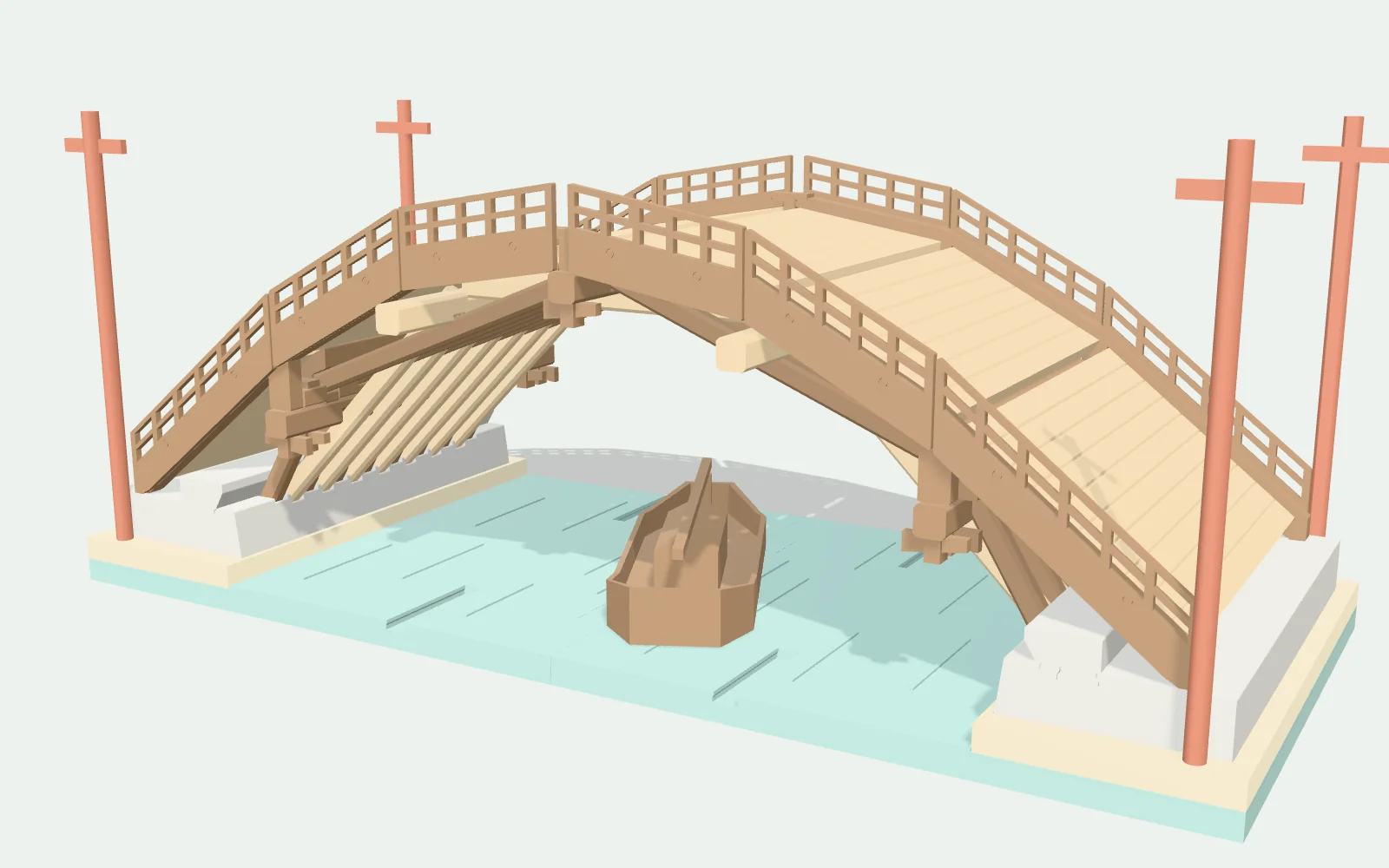
Woven
15 ribs, alternating across the width. The frames come out and the arch stands.Only straight logs. The curve is made of short straight runs meeting at 5 crossbeams, as the Song carpenters built it 66 ft (20 m) across.
Each system bears on the other. Take away the bearing of either system on the other's crossbeams and a 10 N press brings the arch down.
Locked, not glued. 2 key bars, 4 key pins and 10 wedges hold the log ends. There is no glue and no metal anywhere in it.
One bridge, 116 pieces
The Rainbow Bridge of the Qingming scroll at 1:80, in PLA.
- 21
- oak logs
- 32
- walnut logs, 16 crown and 16 foot
- 5
- crossbeams
- 16
- locks: key bars, key pins and wedges
- 24
- deck pieces: stringers, panels, railings, crown clips
- 10
- river, banks and stone abutments
- 6
- poles, the boat and its mast
- 2
- scaffold frames
- Size
- 13.8 × 5.9 × 5.7 in
- Weight
- 27.5 oz
- Span
- 9.8 in, a 66 ft river crossing at 1:80
- Crown height
- 4.2 in above the river
- Pieces
- 116, in 27 shapes
- Material
- PLA, in an oak tone and a walnut tone
- Joints
- woven, keyed and wedged; no glue, no metal
Good to know
What is it?
The Rainbow Bridge from Zhang Zeduan's Qingming scroll, at 1:80: a single timber arch with no pier in the water, over a river with its boat and the tall poles that stand at its ends in the painting.
What is it made of?
PLA. The oak system is a pale wood tone and the walnut system a darker one, so each can be followed through the weave.
What holds it together?
The logs themselves. Each joint is a seat, notch, key, peg or wedge, and the arch stands because its two log systems bear on each other's crossbeams. There is no glue and no metal.
How sturdy is it?
A 10 N press on the crown moves it about 1.85 mm and it holds; it would take 7.5 times that press to bring it down. It is a display piece: once it stands, nothing moves.