Turn the wheel
Press a fingertip on the rim and the treadwheel turns, winding the cord onto the drum on its axle. Every turn lifts the stone 28.3 mm.
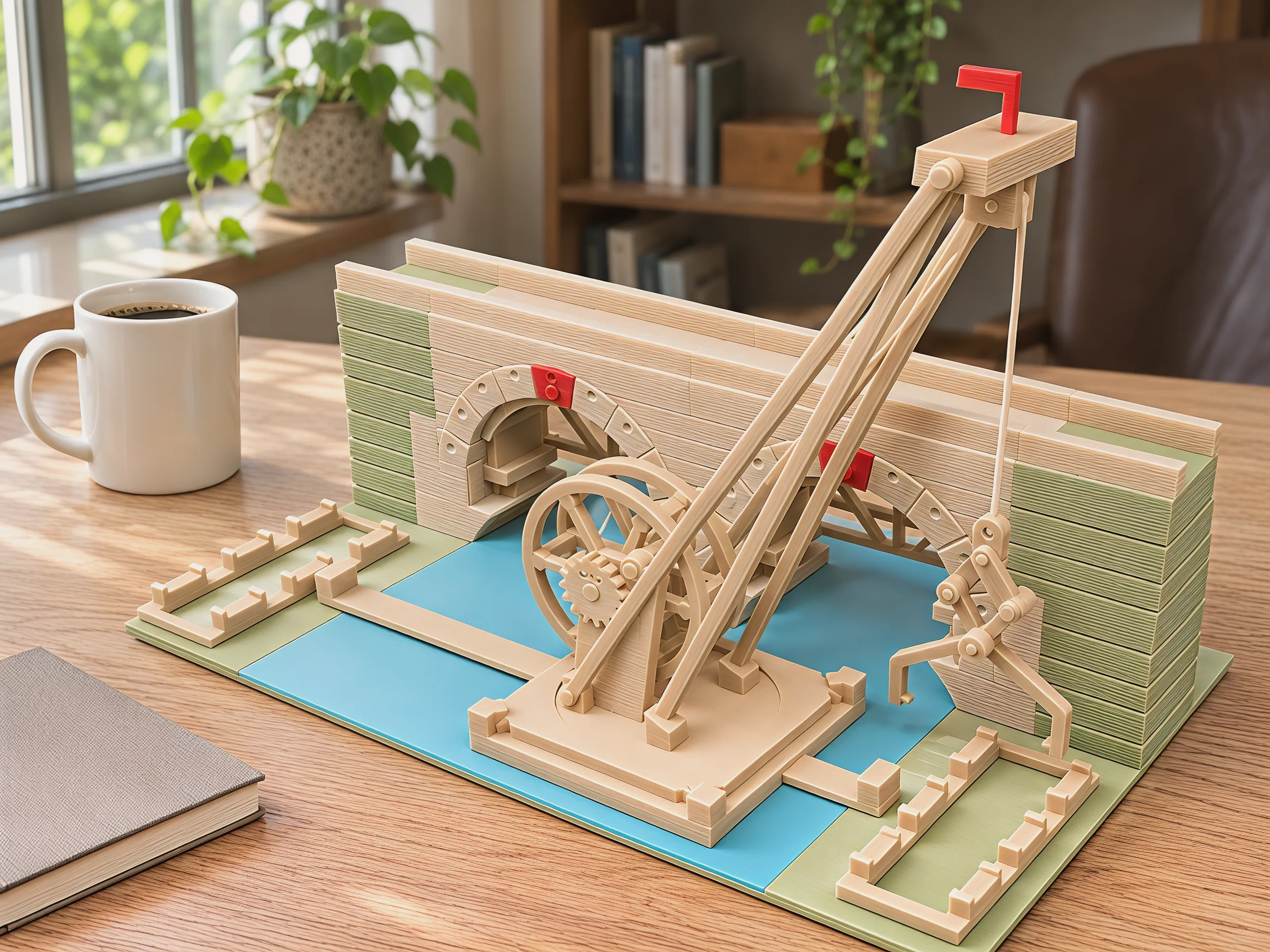
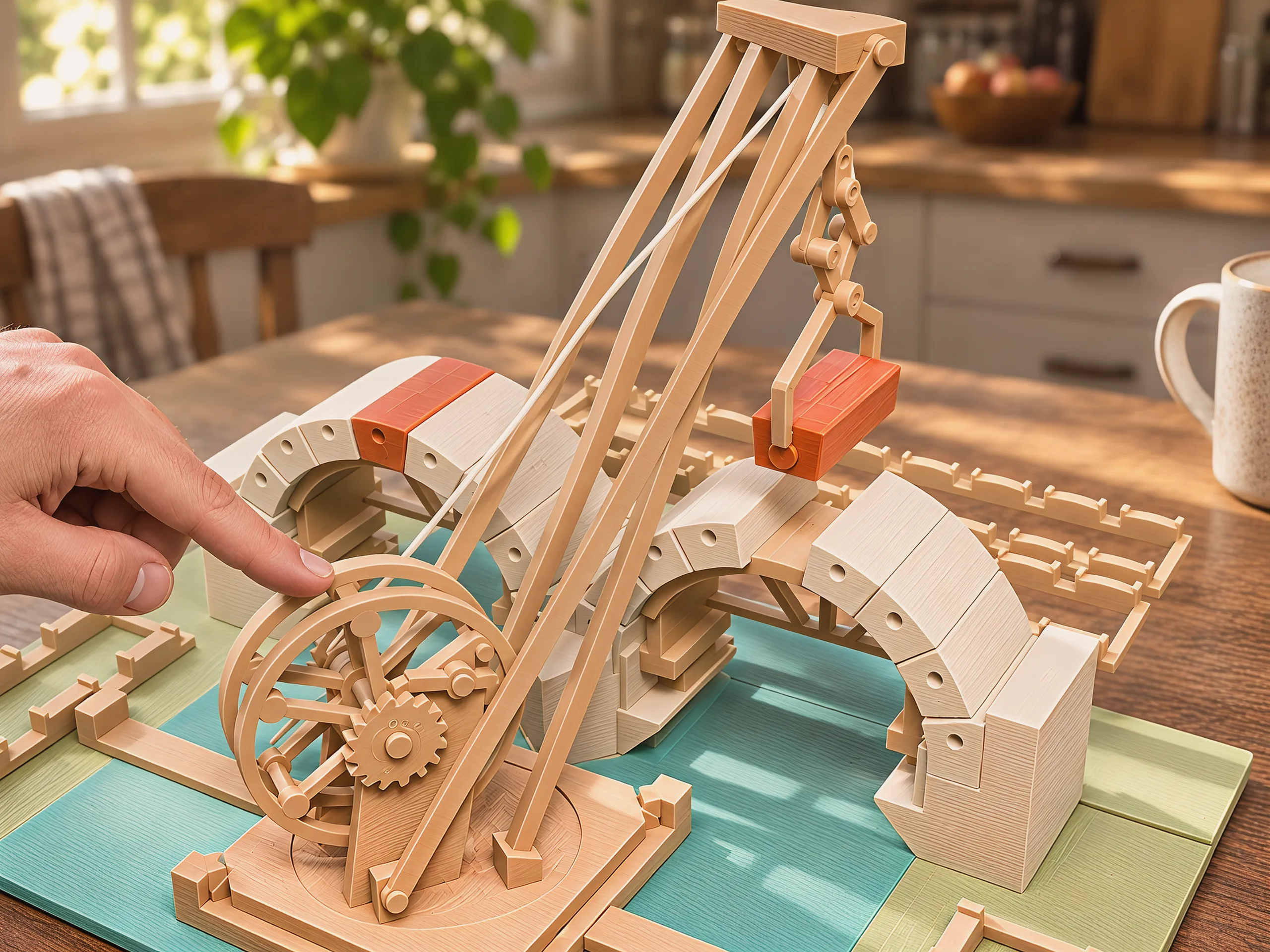
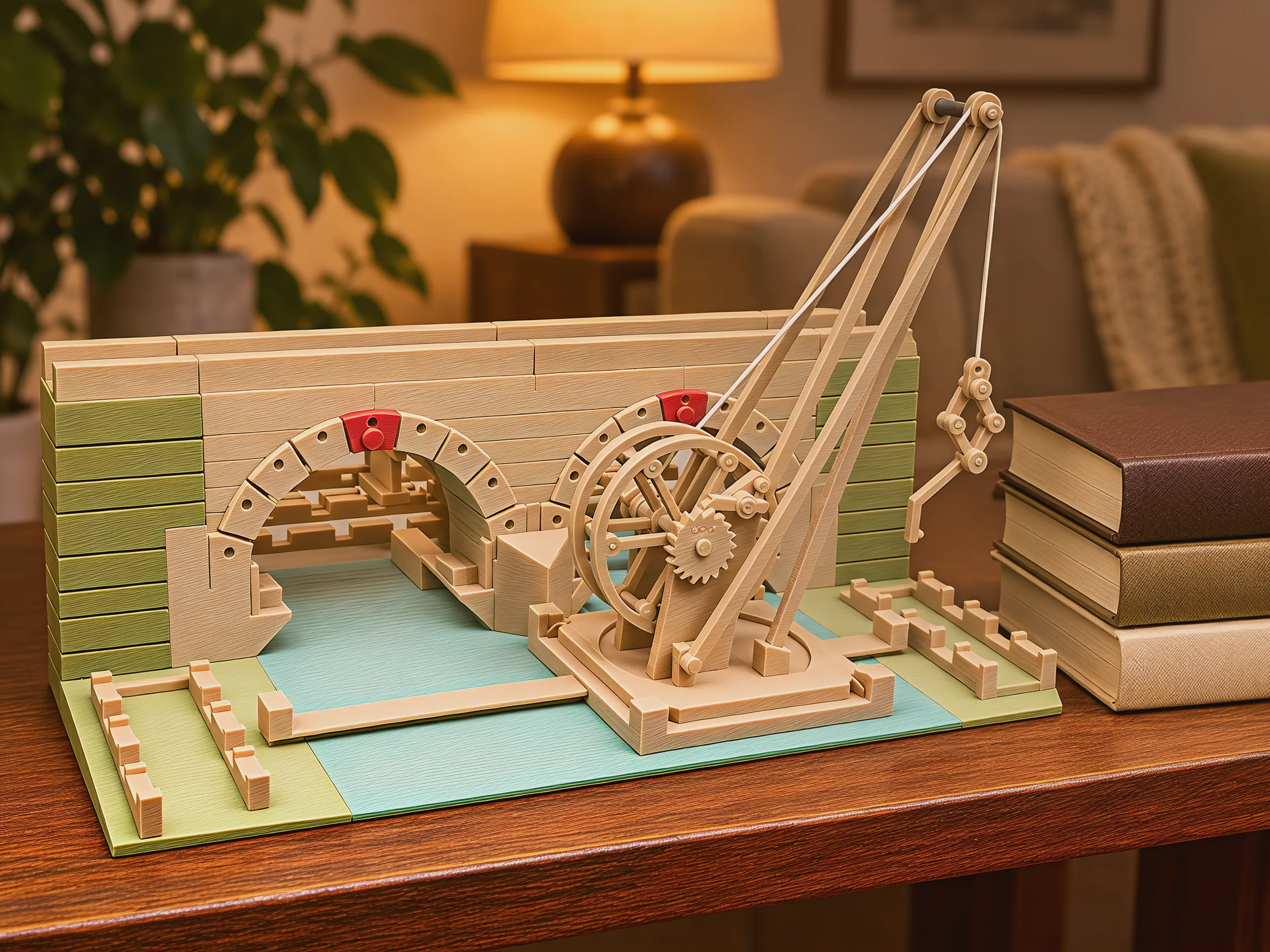
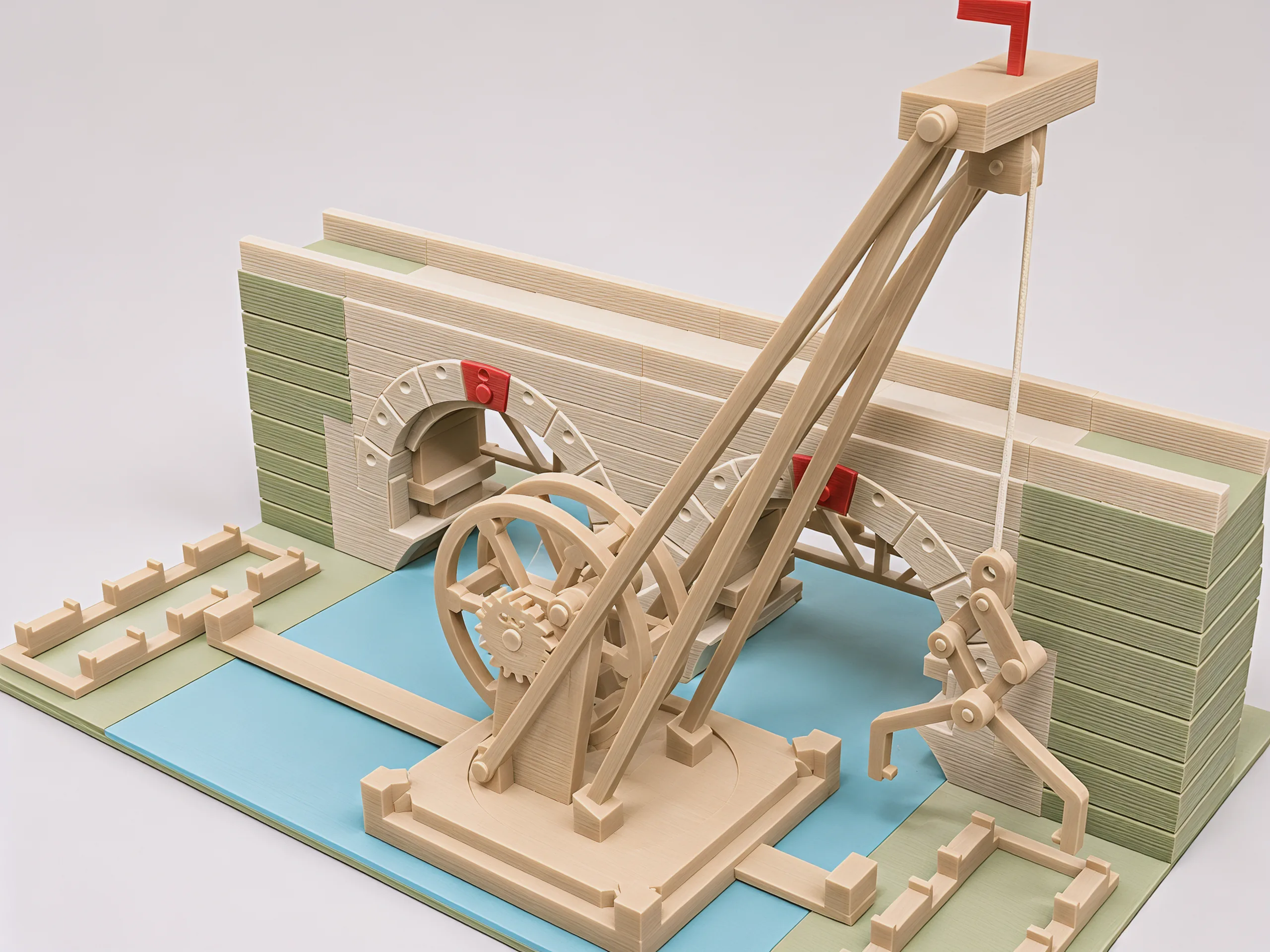
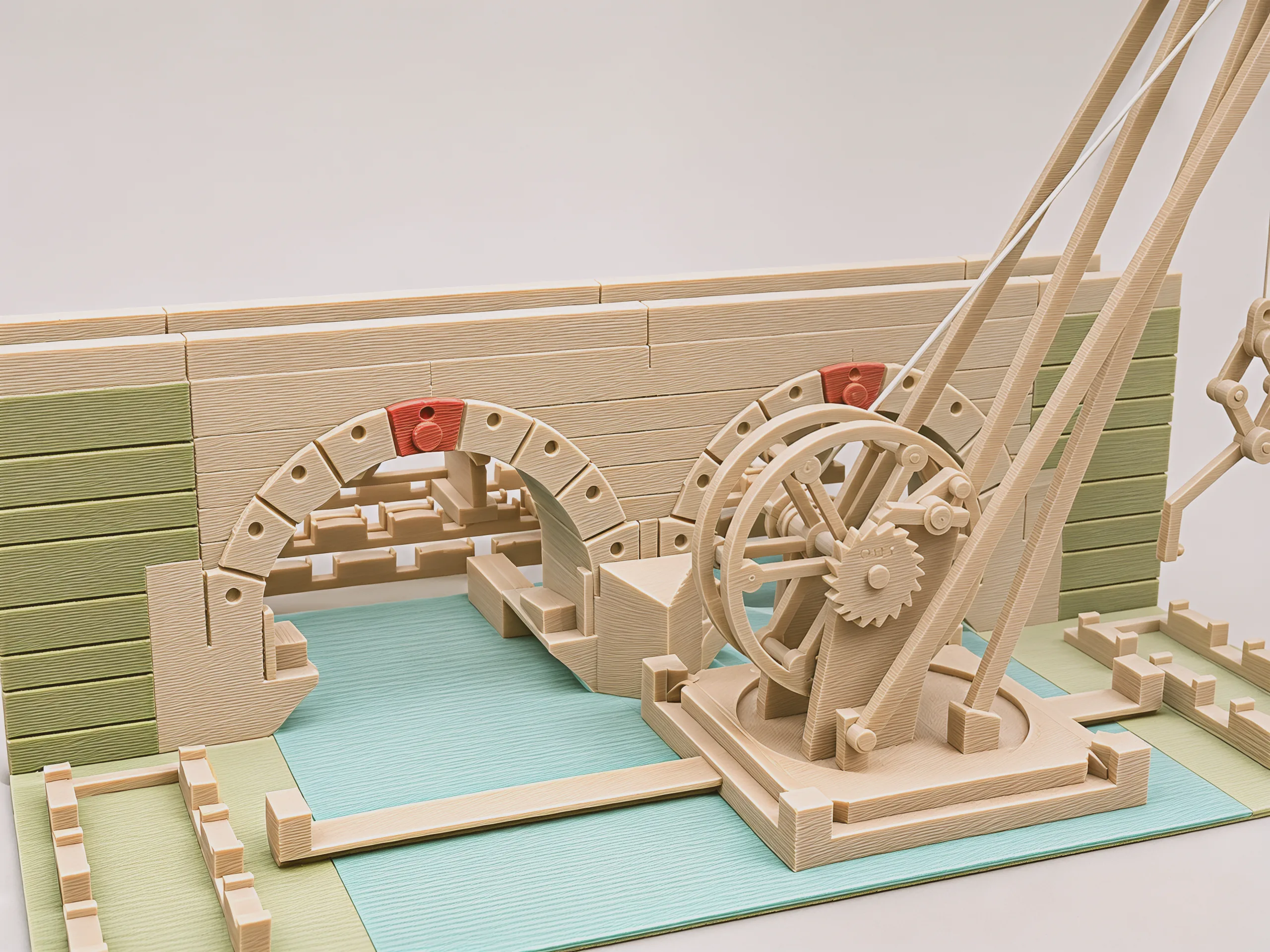
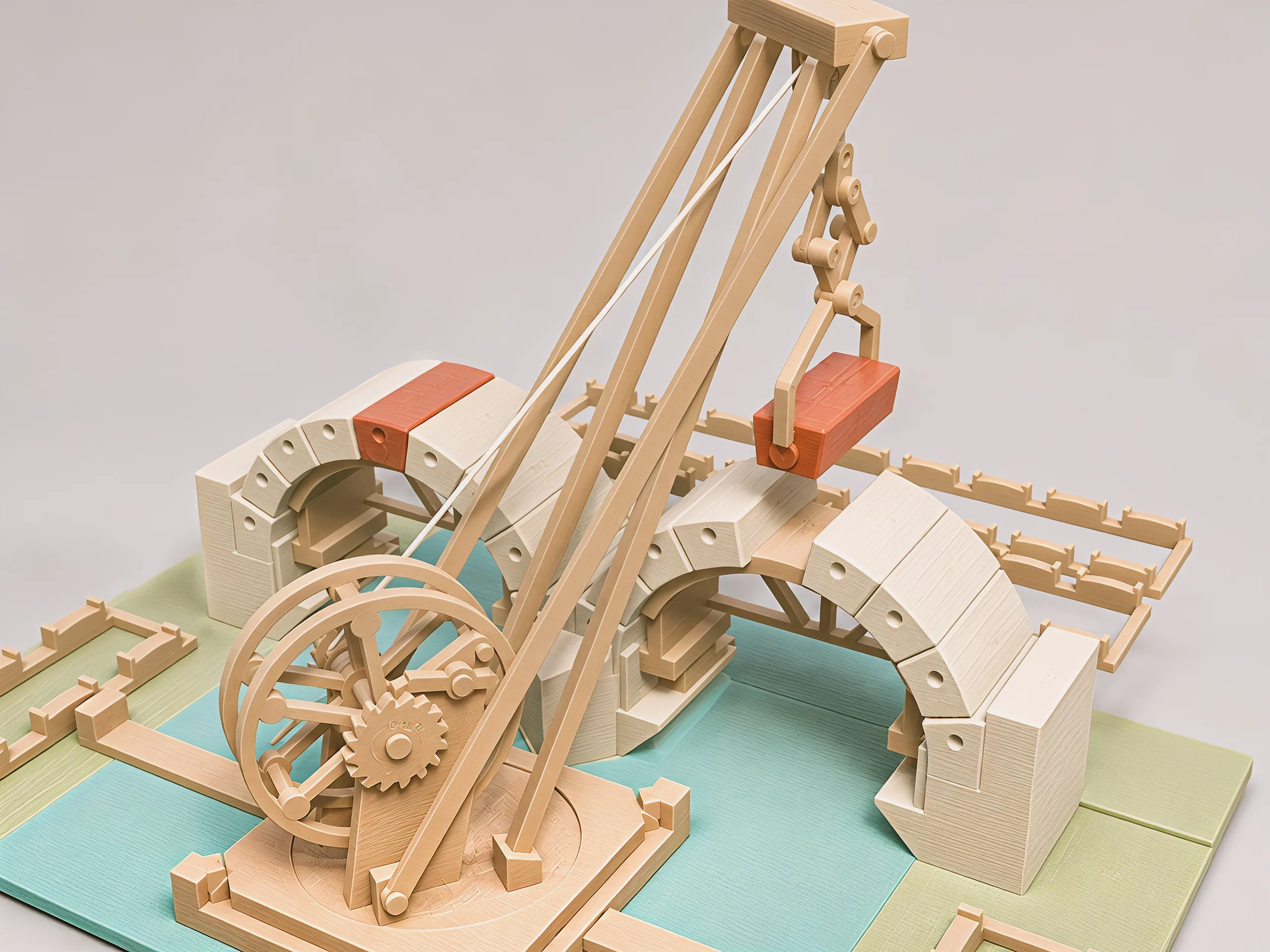
A Roman treadwheel crane that raises its own two-arch stone bridge, one stone at a time.
Press a fingertip on the rim and the treadwheel turns, winding the cord onto the drum on its axle. Every turn lifts the stone 28.3 mm.
A gravity pawl drops into the ratchet once per tooth, 16 clicks a turn, 1.77 mm each. Let go and the stone stays where it is.
Scissor tongs take the stone by its two lifting holes, a Roman mason's trick. The lift pulls the arms shut, so the pins hold it rather than friction.
The crane slews on its turntable and rolls along the bank on its rail, carrying the keystone 95 mm out over the crown.
Flip the pawl up, lower the red keystone into the last gap and open the tongs by hand. Then the walls, the deck and the parapets go on.
Tap the drift with the mallet: each folding wedge slides 10 mm, the centering drops 2 mm and pulls out, and both arches stand alone.
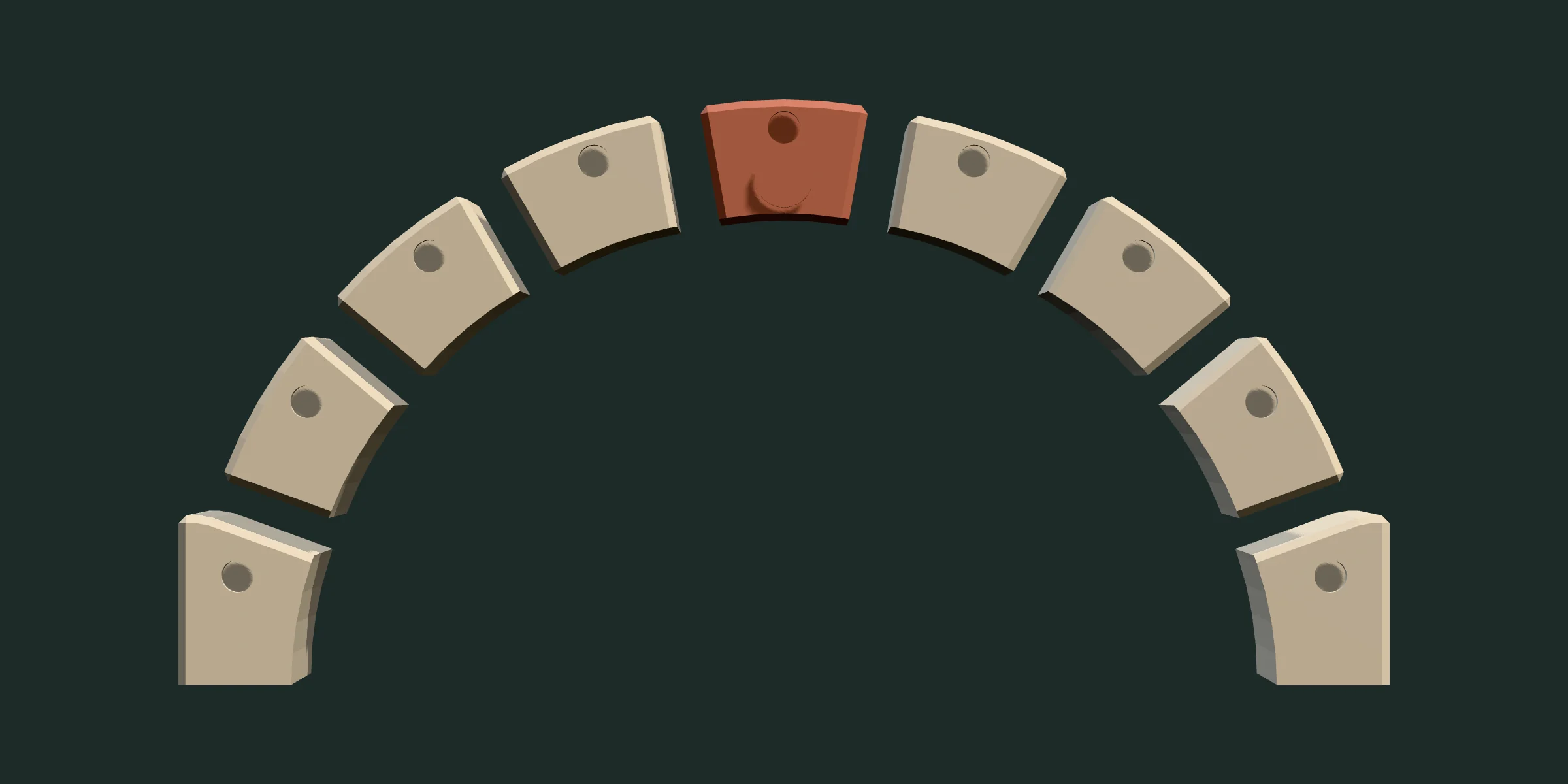
Each arch is 9 stones. Every one is drilled with its pair of lifting holes straight above its centre of weight as it sits in the arch, so the holes wander from stone to stone, and each stone leaves the tongs already tilted to its seat.
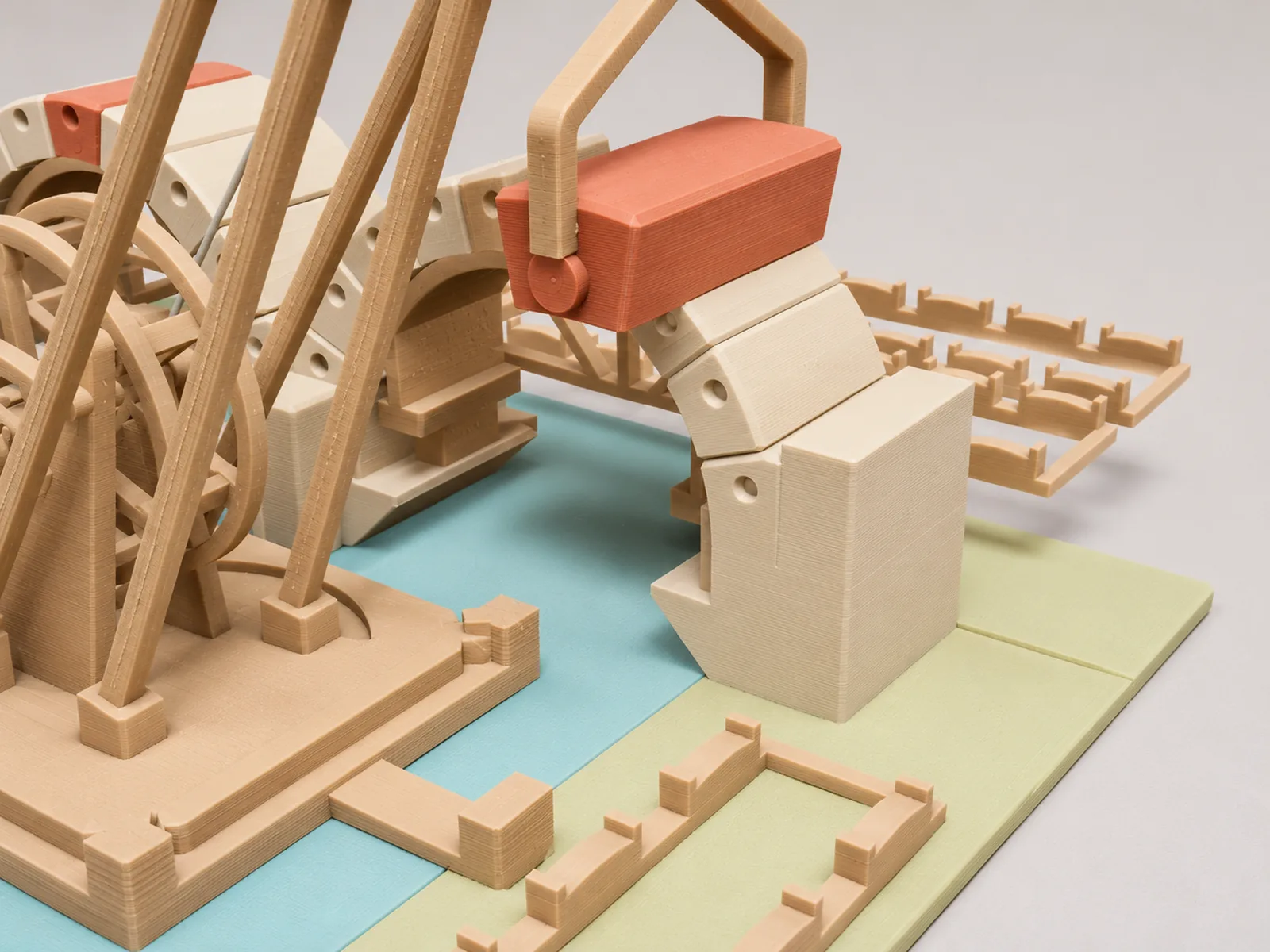
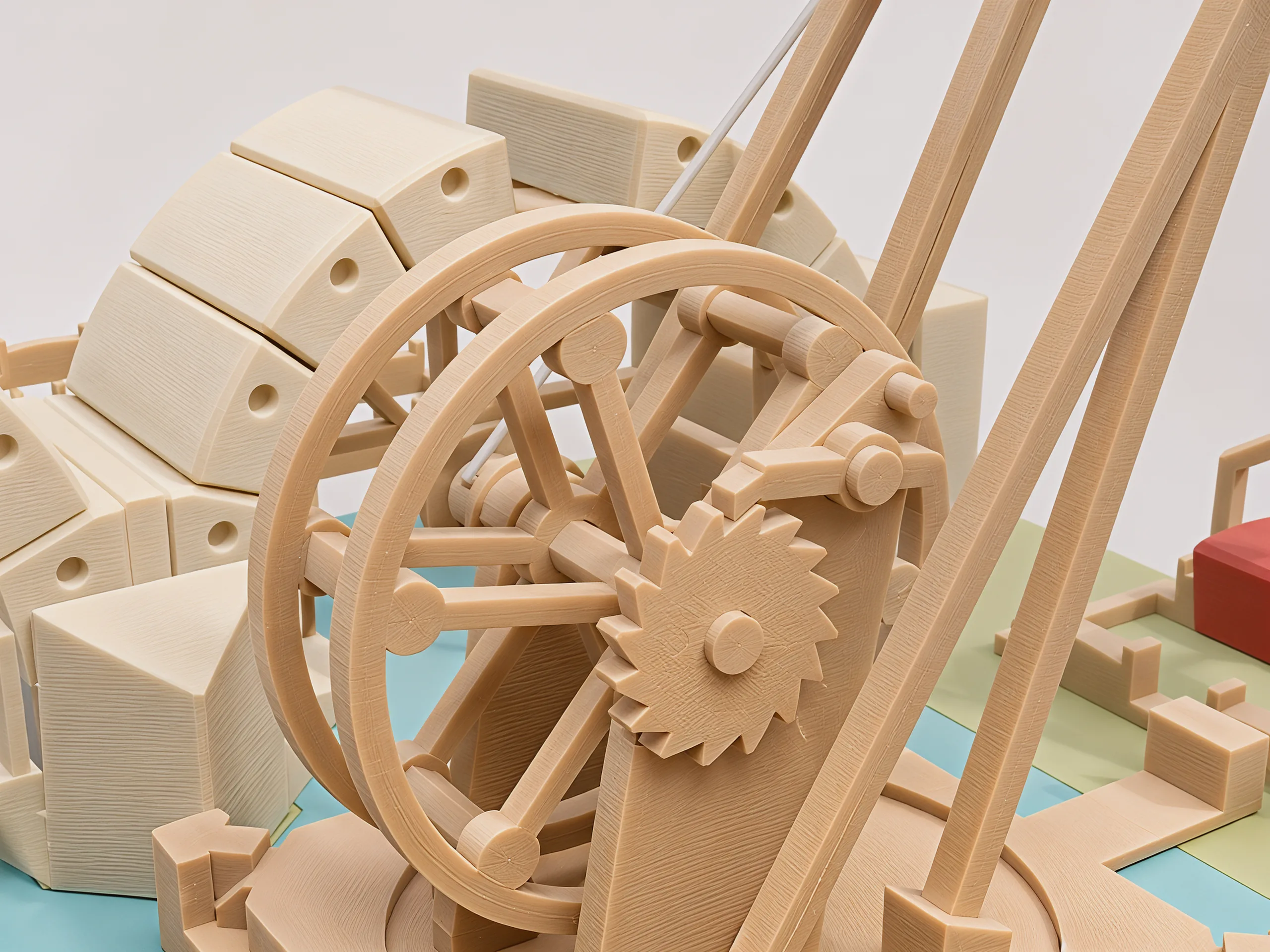
Built for two players or two teams around one table: race to raise an arch, then strike the centering together and watch the bridge hold itself up.
Yes. A fingertip turns the treadwheel, the cord winds onto its drum and the tongs rise 28.3 mm per turn. The pawl holds the load at every click, so you can let go mid-lift.
A length of thin cord, about 1.0 mm thick, for the hoist. It is not one of the 99 pieces. Nothing else: no glue, screws or springs.
Once the keystone is in, the ring locks. Drive the folding wedges and the centering drops 2 mm and slides out from under; the stones carry each other, as they did on Roman bridges.
11.8 × 7.5 × 8.1 in with the crane standing, and 2.0 oz. Each arch spans 3.1 in, a 4.8 m Roman span at 1:60.
Yes. With the centering out, slide each lower wedge back by hand, set the centering on its upper wedges and load the pallet again.