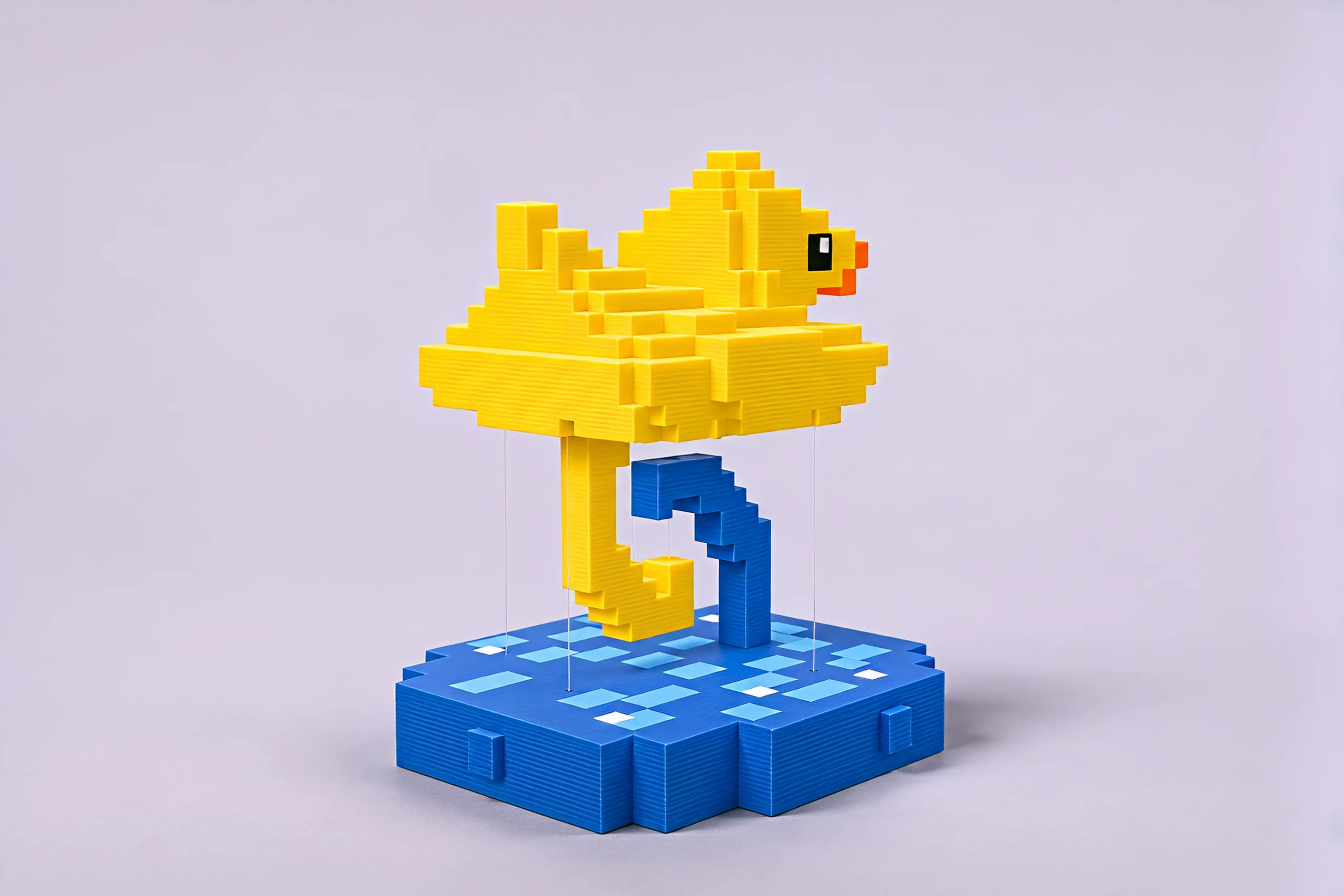
Rubber Duck Debugger Desk Sculpture
Explain the bug to the duck. It floats on four thin lines and hears you out.
A duck, floating.
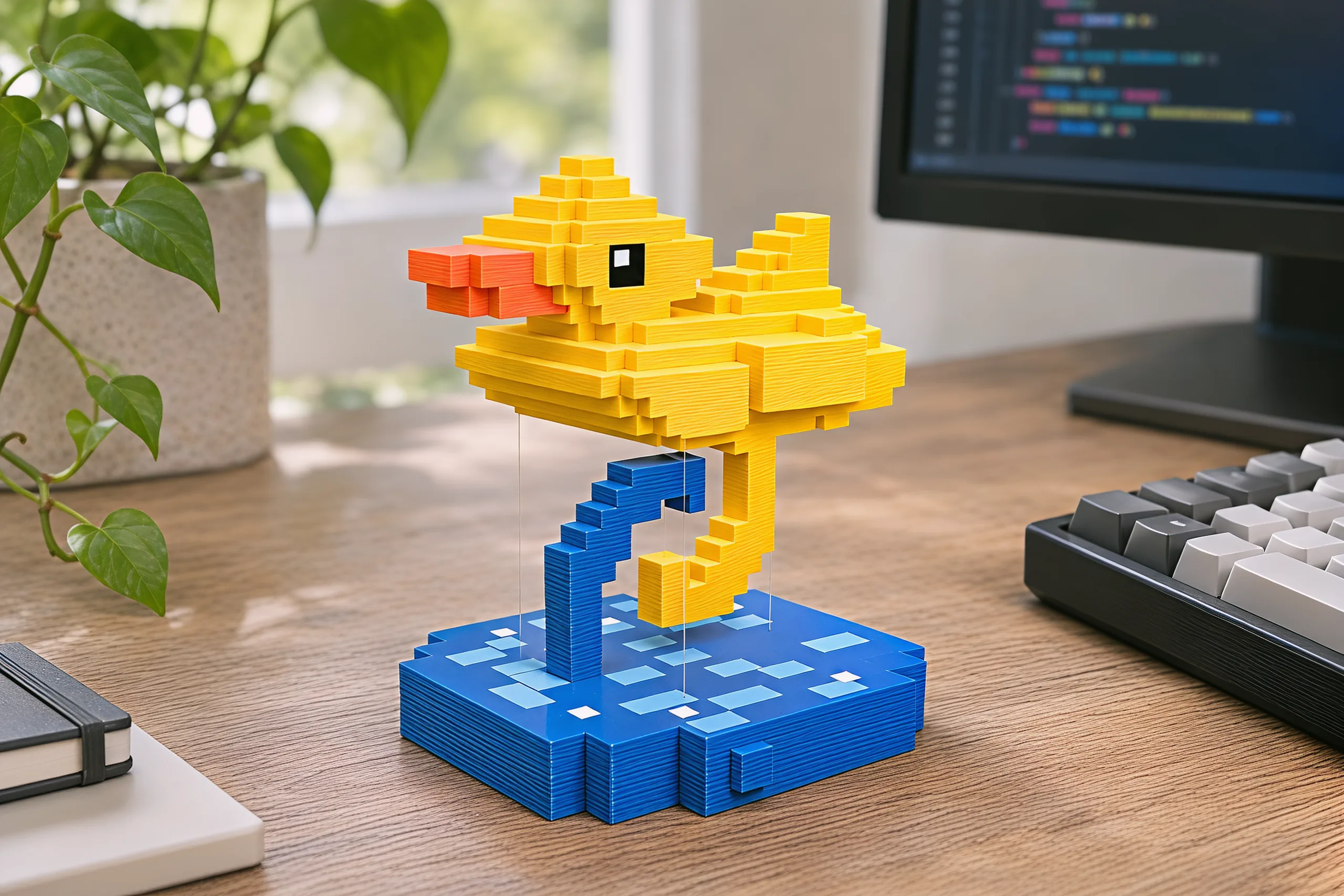
A yellow voxel duck hangs in the air over a stepped blue puddle. It rests on nothing solid: two hooks and 4 thin clear lines do the work. No batteries, no magnets, no glue.
Two hooks that never touch.
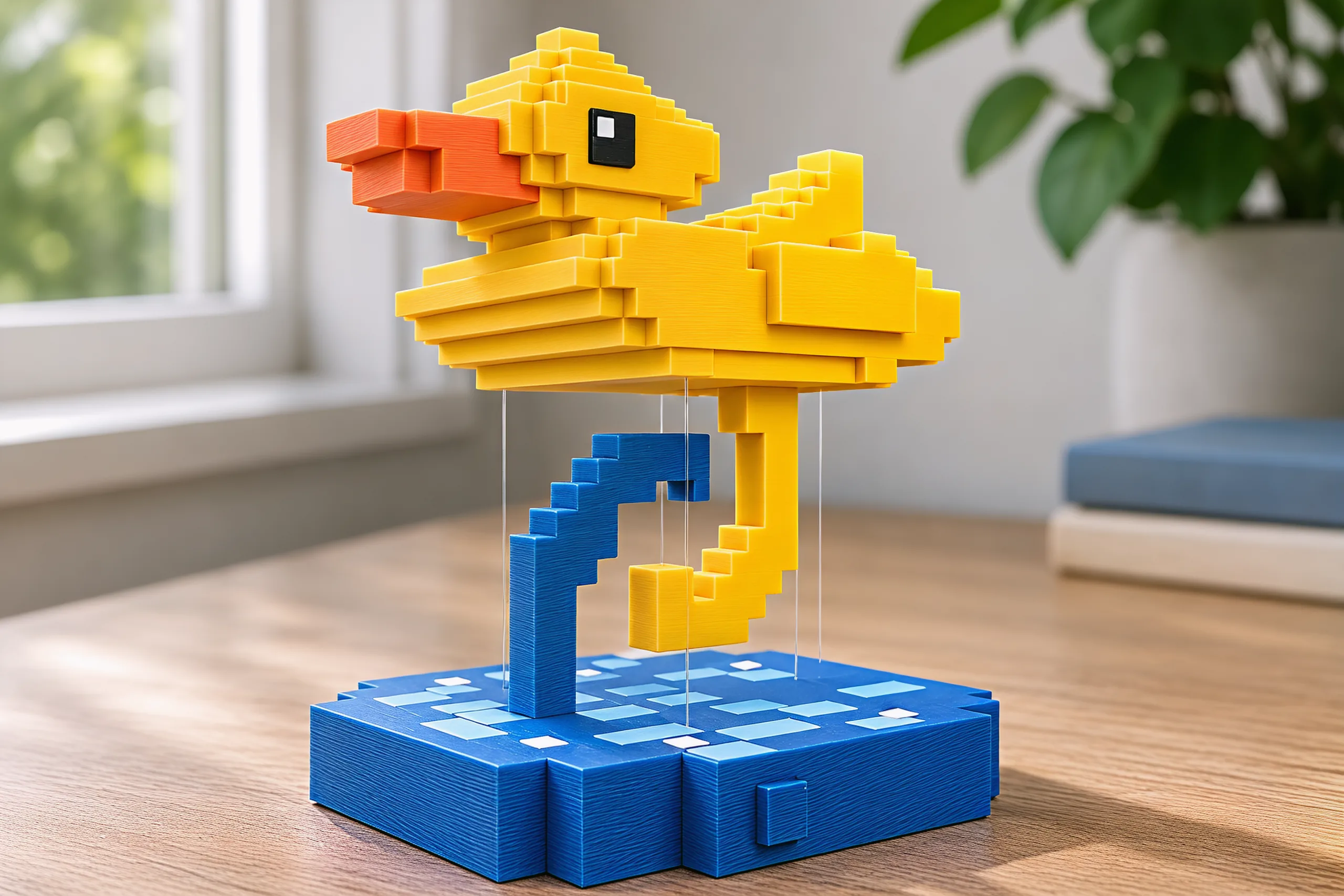
The blue hook rises from the puddle and curls over. The yellow hook drops from the duck's belly and curls under. One short clear line joins their tips, and the duck hangs from it, about 5/16 in of air between the two.
Three lines hold it level.
3 more clear lines run from the duck's belly down to the puddle, drawn taut by 3 tuning pegs in the side of the base. The centre line pulls up, the rim lines pull down, and the duck stays put.
Look through the gap.
Get low and you can see straight between the hooks. The only thing that crosses that gap is the short centre line.
Nothing moves.
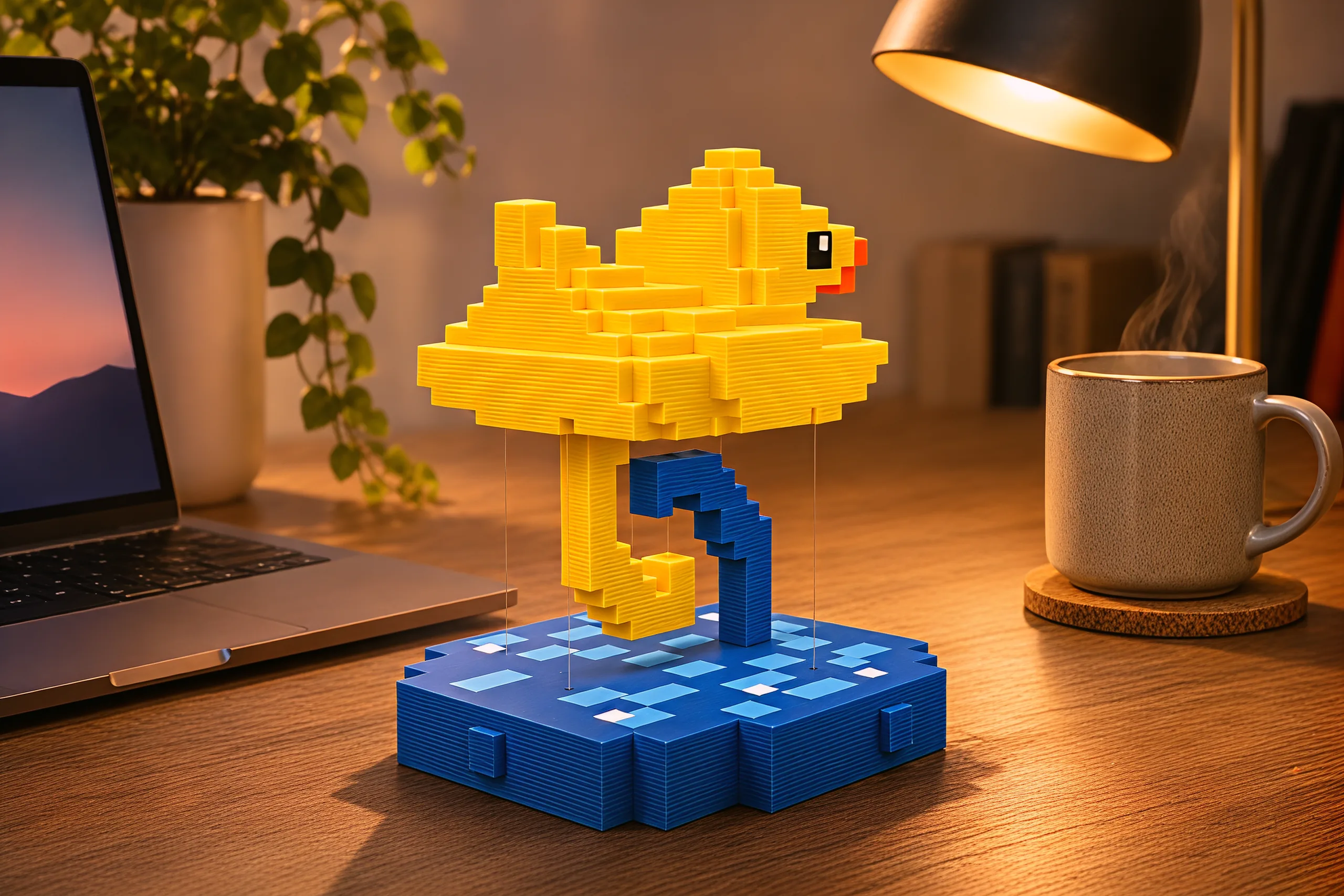
It's a still sculpture. Walk around it and it reads from every side: duck, hooks, lines, puddle.
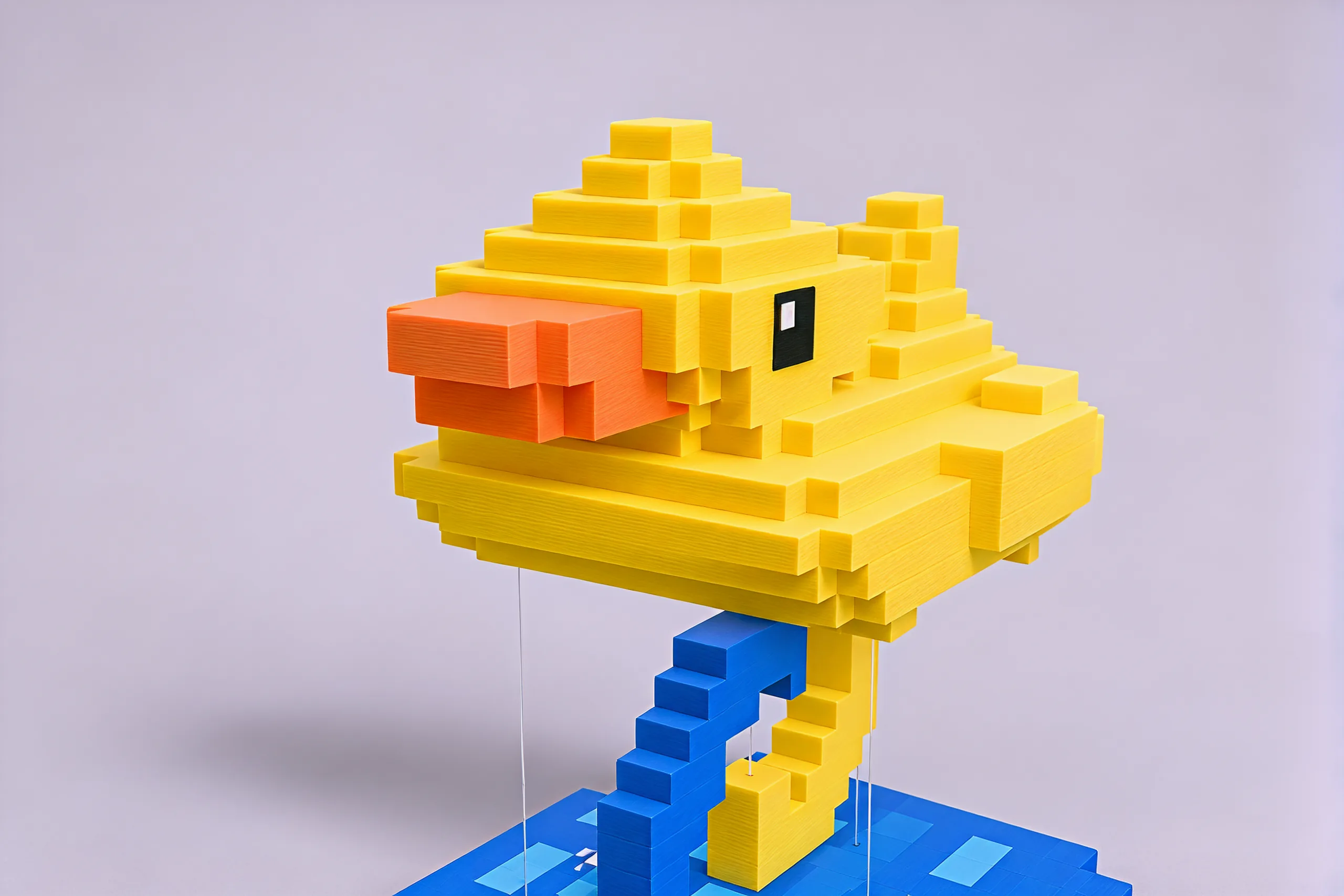
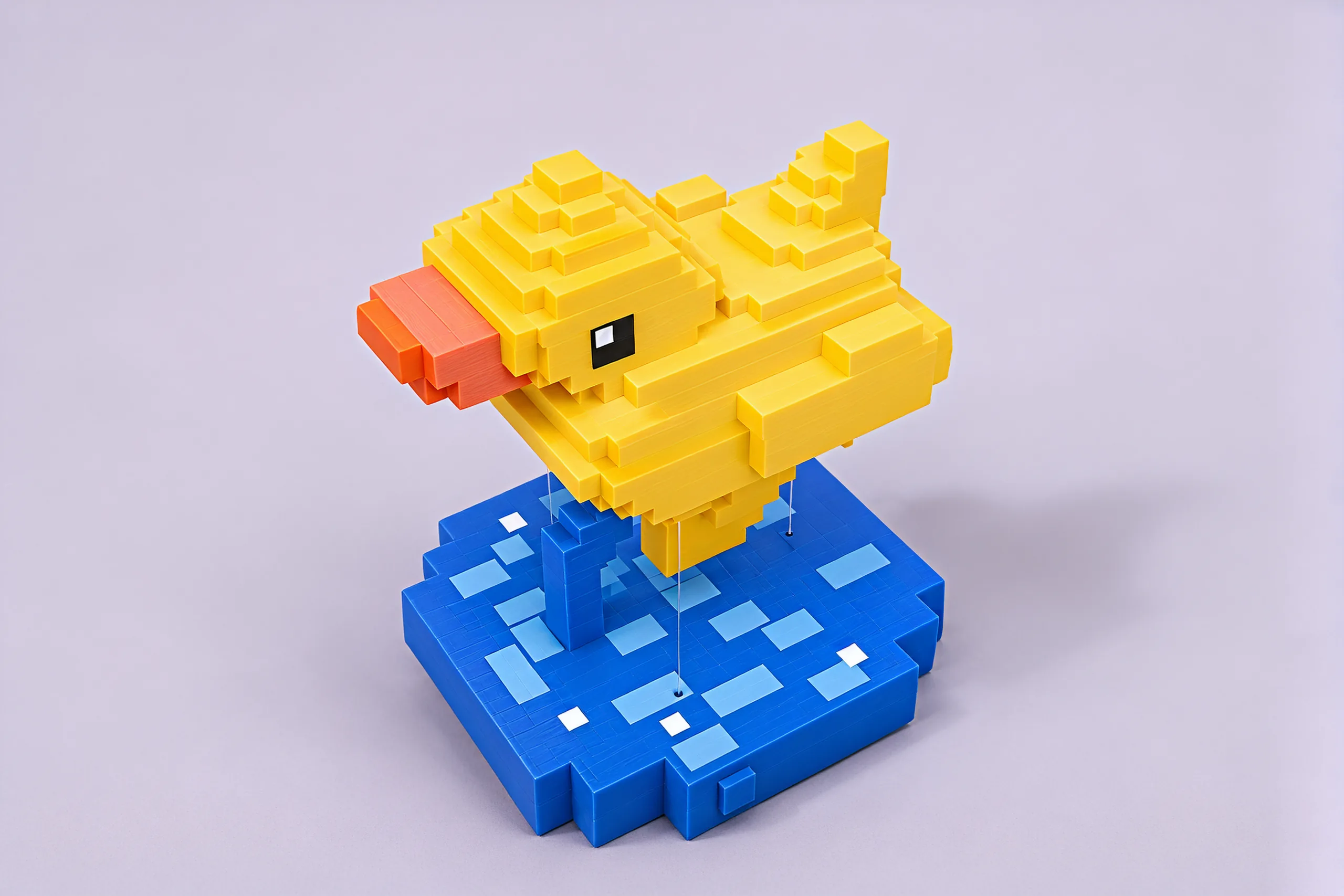
Up close
4.3 in wide, 3.8 in deep and 4.9 in tall. It sits beside the keyboard, under the monitor, wherever you look when the build breaks.
Why a duck?
Rubber duck debugging: when code won't behave, you explain it to a duck, line by line, out loud. Somewhere around the third line you hear yourself say the thing that's wrong. The duck takes the credit. This one waits on your desk for the next bug.
It hangs from a hook it never touches.
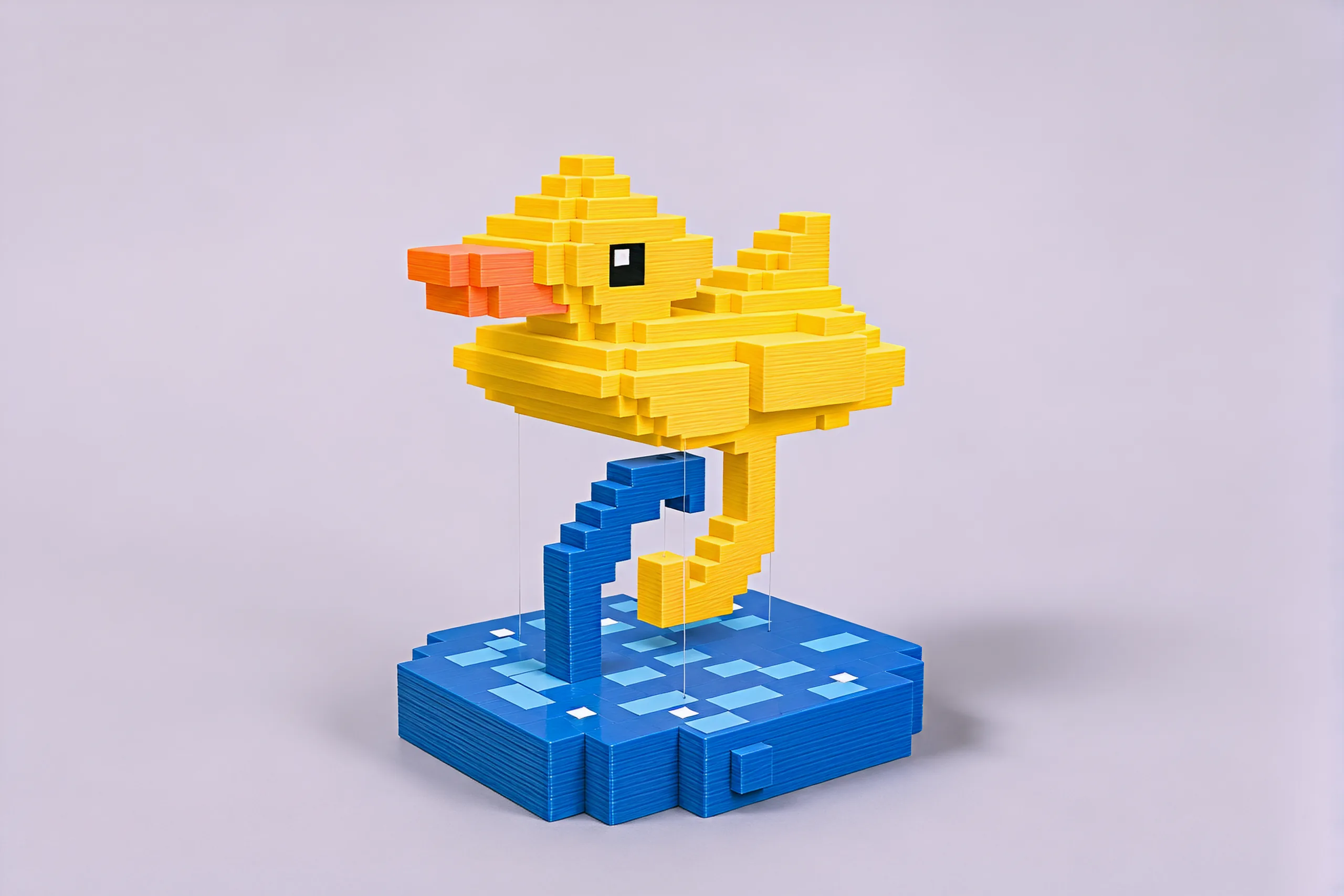
Seen straight from the side, the trick is plain. Pick a part to light it up.
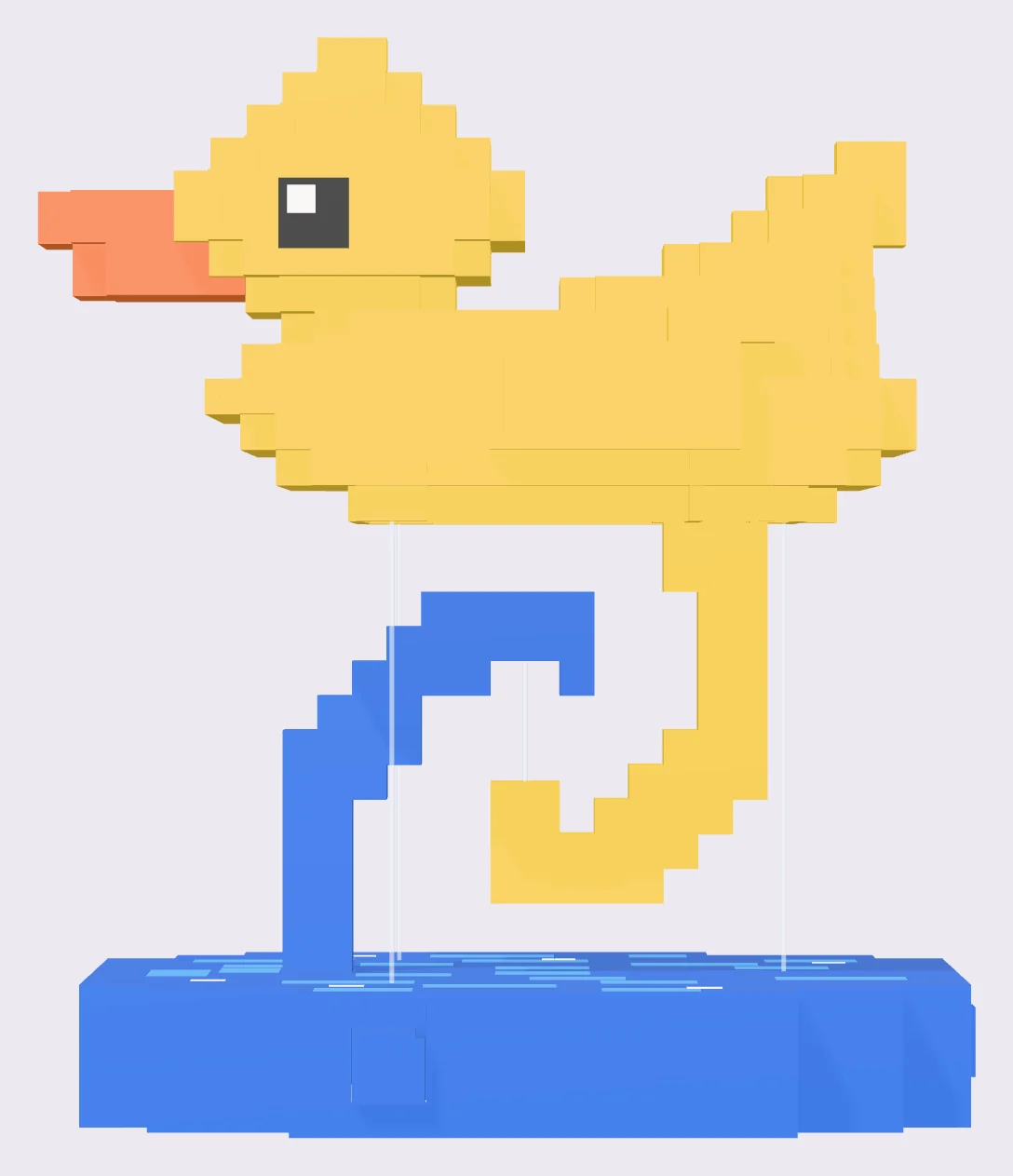
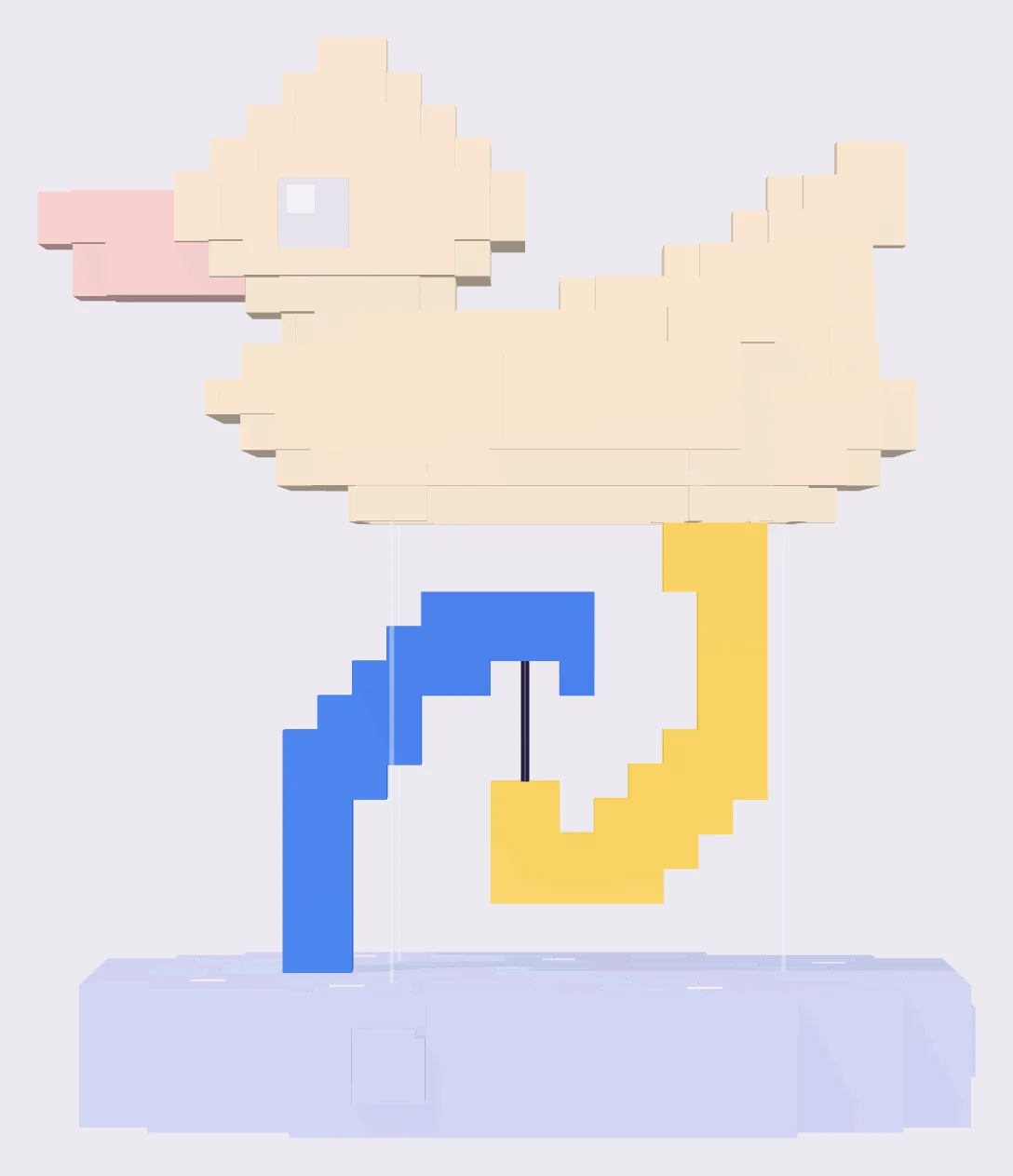
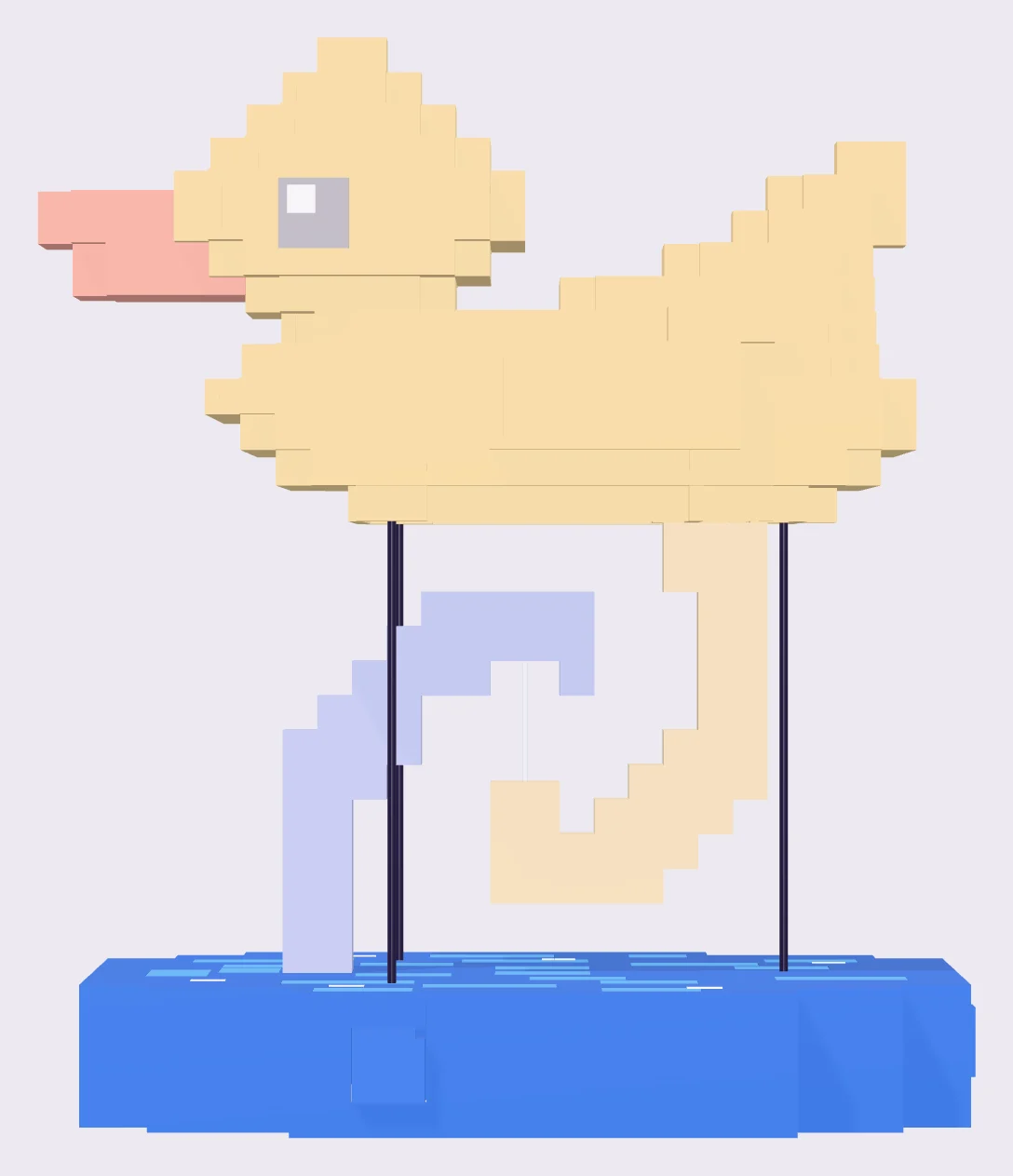
The duck and the puddle never touch. Each carries a hook, and the hooks pass each other with about 5/16 in to spare.
The duck's hook tip sits below the base hook's tip. One short clear line between them carries the duck, so it hangs from the hook it never touches.
Hanging alone, the duck would tip. 3 rim lines tie its belly to the puddle at three points, pulled taut by 3 tuning pegs, so it stays level.
Rubber Duck Debugger Desk Sculpture
A voxel desk sculpture held up by tension alone.
One duck, one puddle, 4 clear lines.
- 1
- yellow voxel duck with its hook
- 1
- blue pixel puddle base with its hook
- 4
- clear nylon lines
- 3
- tuning pegs in the base
- Size
- 4.3 × 3.8 × 4.9 in (W × D × H)
- Weight
- 2.7 oz
- Gap between the hooks
- about 5/16 in
- Lines
- clear nylon monofilament, about 0.02 in thick
- Colours
- duck yellow, bill orange, black and white eyes, royal blue, light blue, white
- Finish
- matte plastic with stepped voxel edges
- Power
- none: no batteries, no electronics
- Held by
- line tension: no magnets, no glue
Good to know
How does the duck float?
On lines, not magnets. The duck hangs from one short clear line between the tips of two hooks, one rising from the puddle and one dropping from the duck. 3 more lines run from its belly to the puddle and keep it level. The two hooks never touch.
Does it need power or batteries?
No. There are no batteries, no electronics, no magnets and no glue in it.
Does it move?
No. It's a still sculpture. The duck stays where the lines hold it; nothing spins or bobs.
How big is it?
4.3 × 3.8 × 4.9 in (width × depth × height), and it weighs 2.7 oz.
What is rubber duck debugging?
A programmer's habit: explain your broken code, line by line, to a rubber duck. Saying it out loud usually shows you the mistake. The duck never interrupts.