A solar system for one desk.
The Sun, eight planets and Pluto, each on its own arm, all turning round one post. Keep scrolling to fly in.
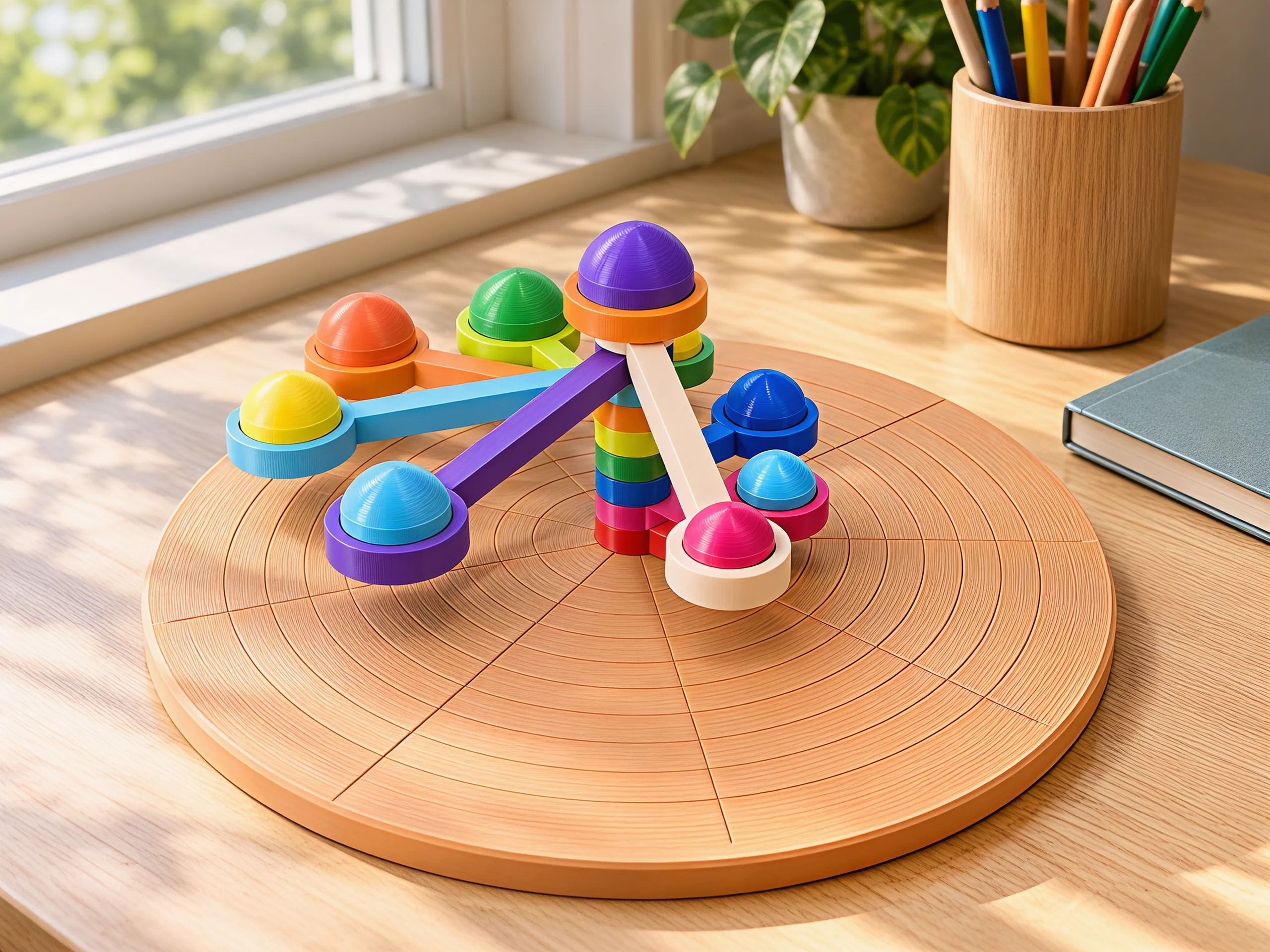
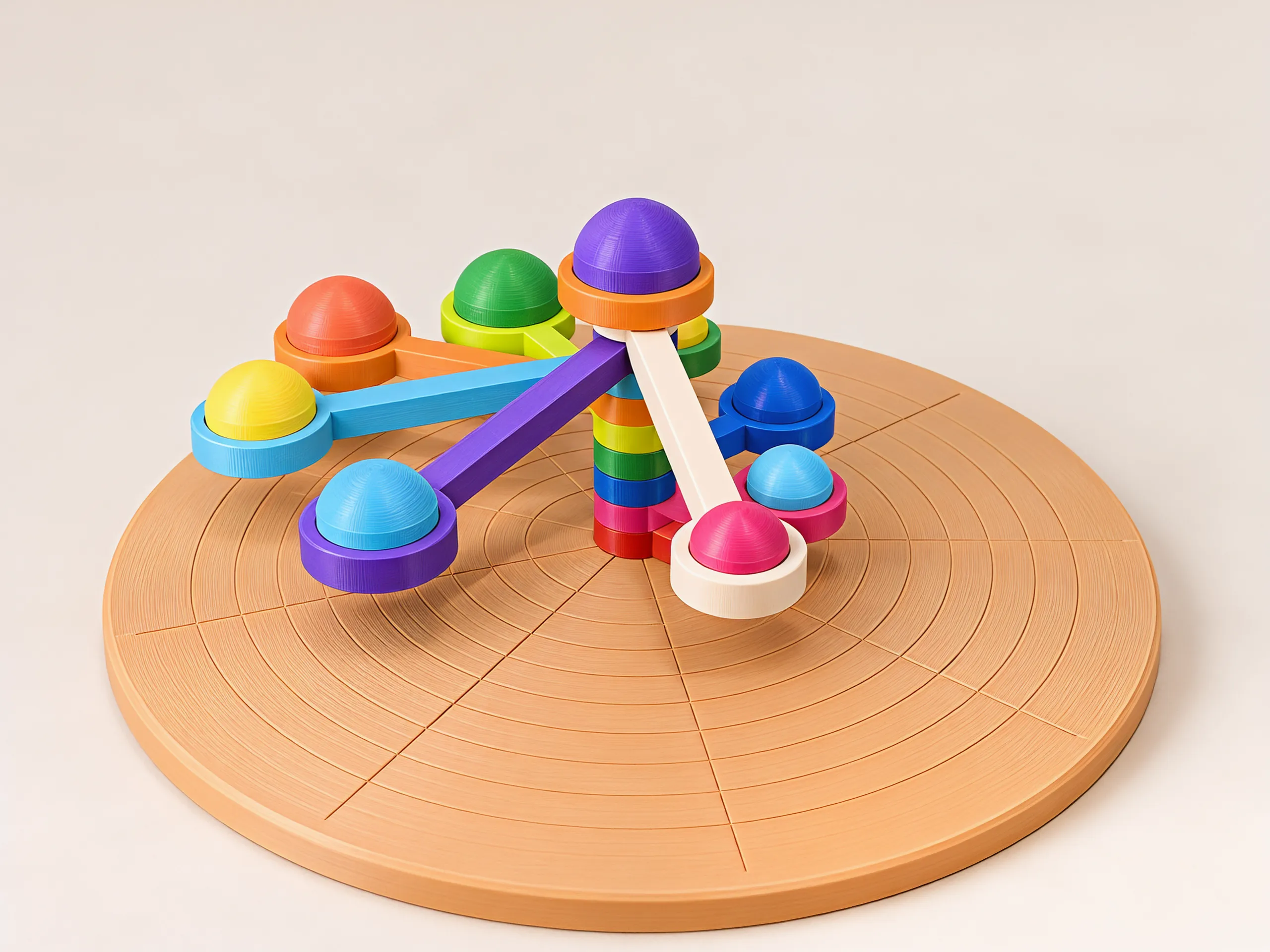
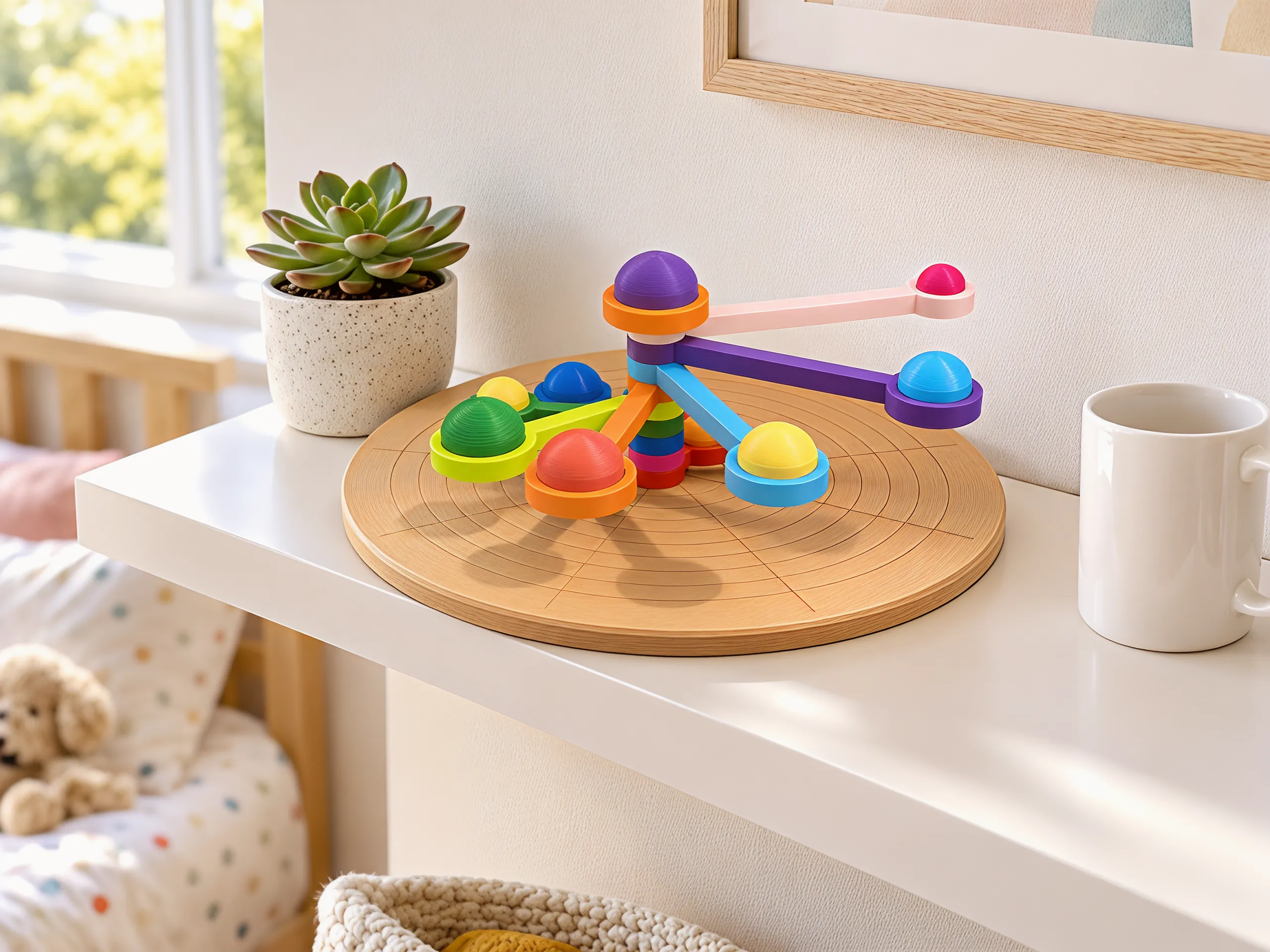
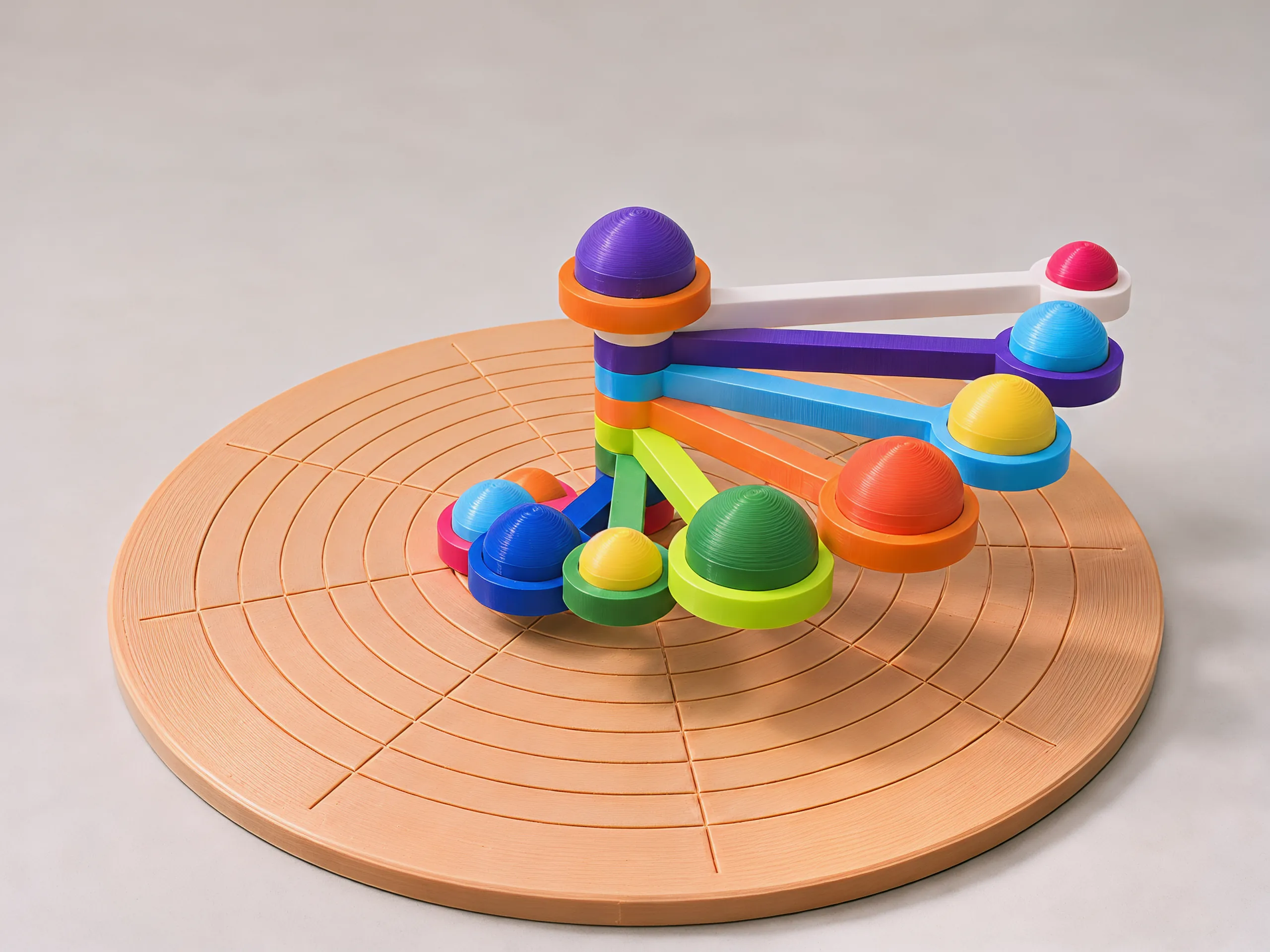
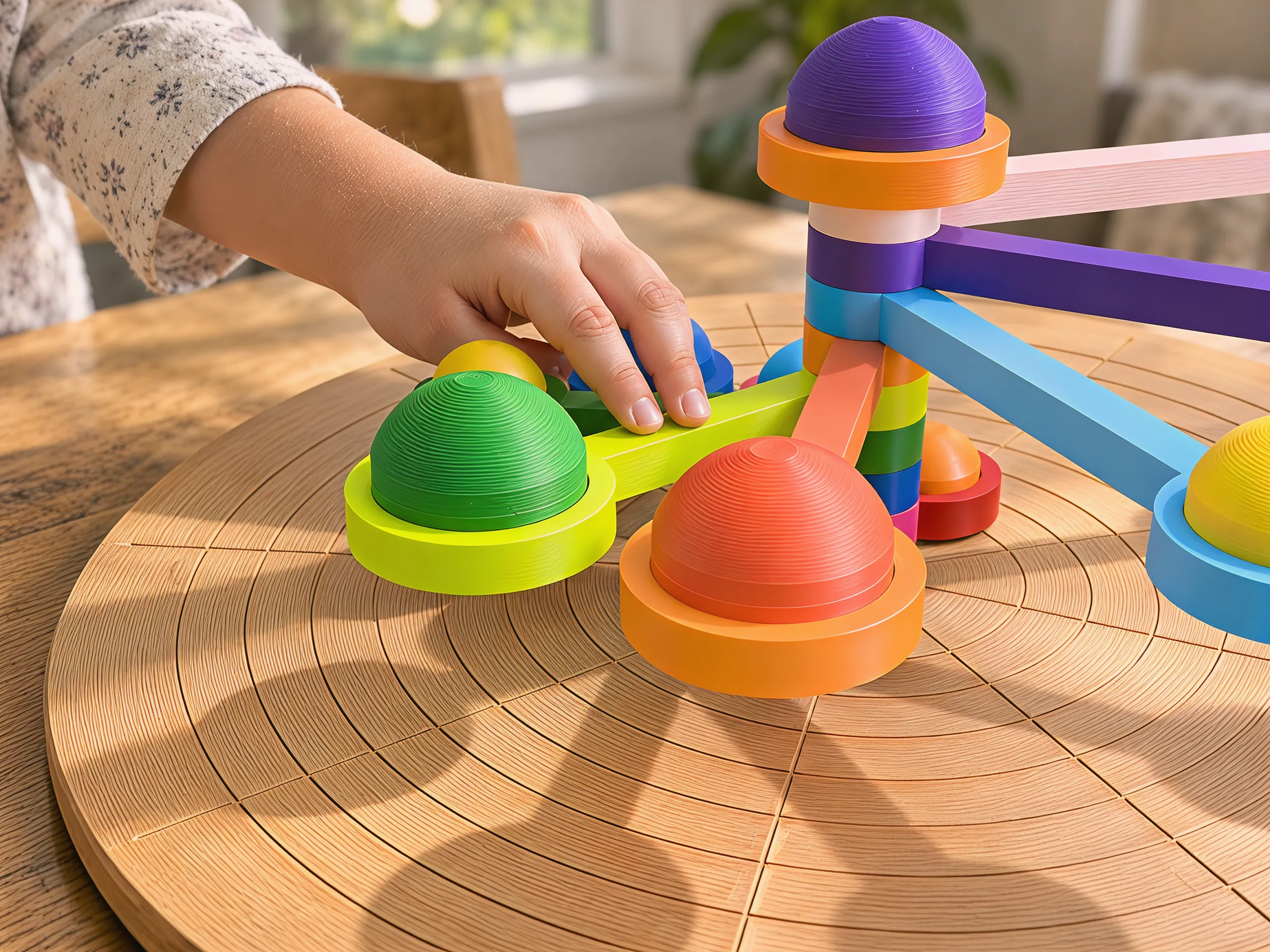
Swing every planet round its own ring. They never fall out of order.
The Sun, eight planets and Pluto, each on its own arm, all turning round one post. Keep scrolling to fly in.
9 grooves run round the plate, from 1.9 in across for Mercury to 7.6 in for Pluto, crossed by 9 spokes 40° apart. Every planet sits right over its own ring.
Spread out here so you can see the stack: each arm is a ring round the centre post, one step higher than the arm below, with the Sun on top.
The top arm has nothing above it, so it swings nearly all the way round its ring, passing over every other planet.
Each planet sits at the height of the arm above it, so none can slip past another. Pluto gathers Neptune, then Uranus, and so on down to Mercury, always in order.
Fan them out again, outermost first, and each planet lands back over its own ring. Any arrangement works, and Mercury always stays first.
Jupiter is the biggest planet in the set and Mercury and Pluto the smallest, as in the sky. Every one is its own colour, on an arm of another. Drawn here at true size relative to each other; pick one to read it.
A purple dome 0.98 in across on an orange collar, capping the post above every arm.
An orange dome 0.59 in across on the lowest arm, over the innermost ring, 1.9 in across.
A sky-blue dome 0.75 in across on a pink arm, over a ring 2.6 in across.
The one blue dome on a blue arm, 0.79 in across, over a ring 3.3 in across.
A yellow dome 0.63 in across, smaller than Earth, on a green arm over a ring 4.0 in across.
The biggest planet in the set: a green dome 0.98 in across on a yellow-green arm, over a ring 4.7 in across.
An orange-red dome 0.94 in across with a band round it, on an orange arm over a ring 5.4 in across.
A yellow dome 0.83 in across on a sky-blue arm, over a ring 6.1 in across.
A sky-blue dome 0.79 in across on a purple arm, over a ring 6.9 in across.
A pink dome 0.59 in across on the cream top arm, over the outermost ring, 7.6 in across.
9.1 × 9.1 × 3.3 in and 6.9 oz: about the footprint of a dinner plate, light enough to carry from the desk to the shelf with one hand.
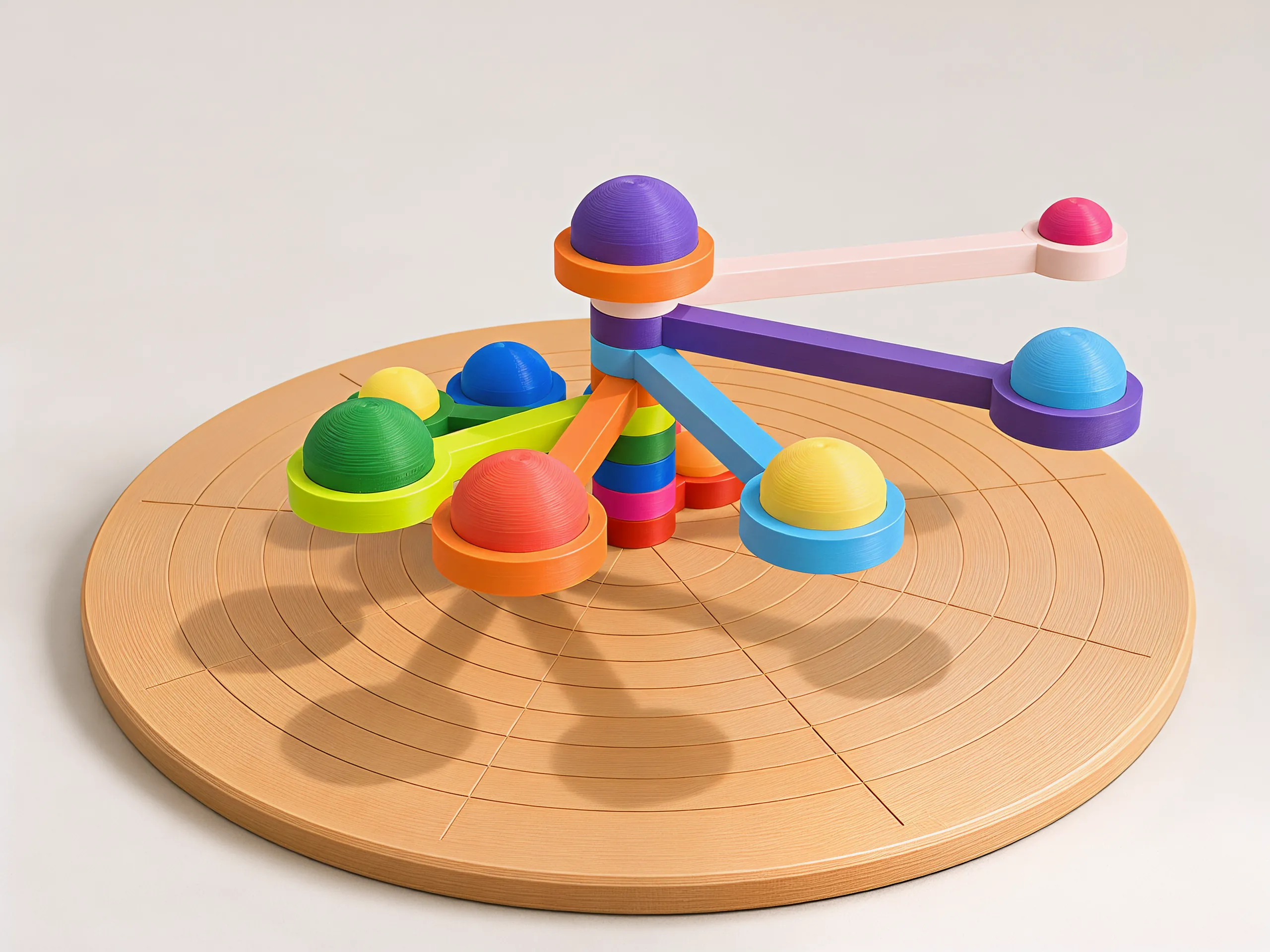
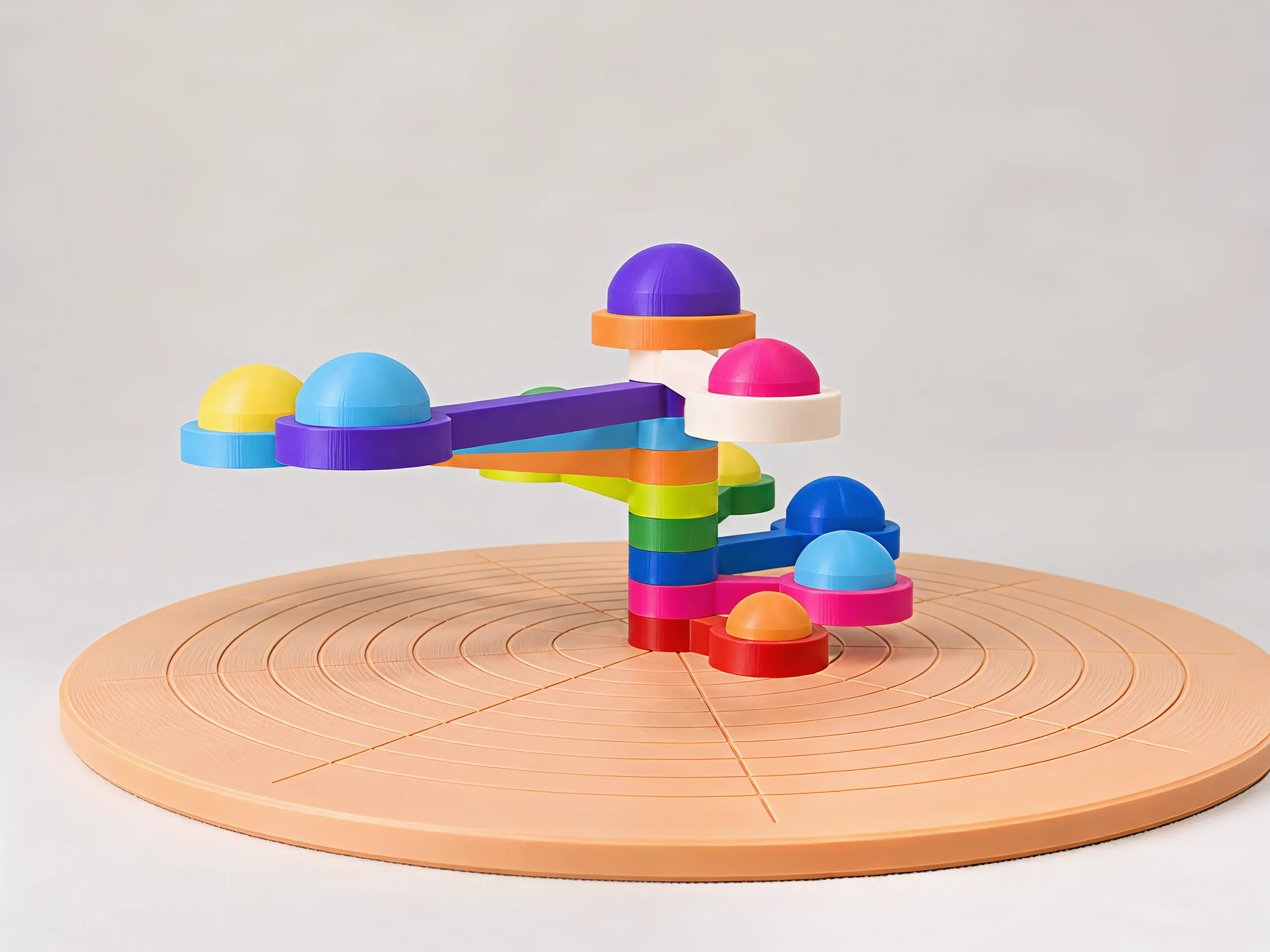
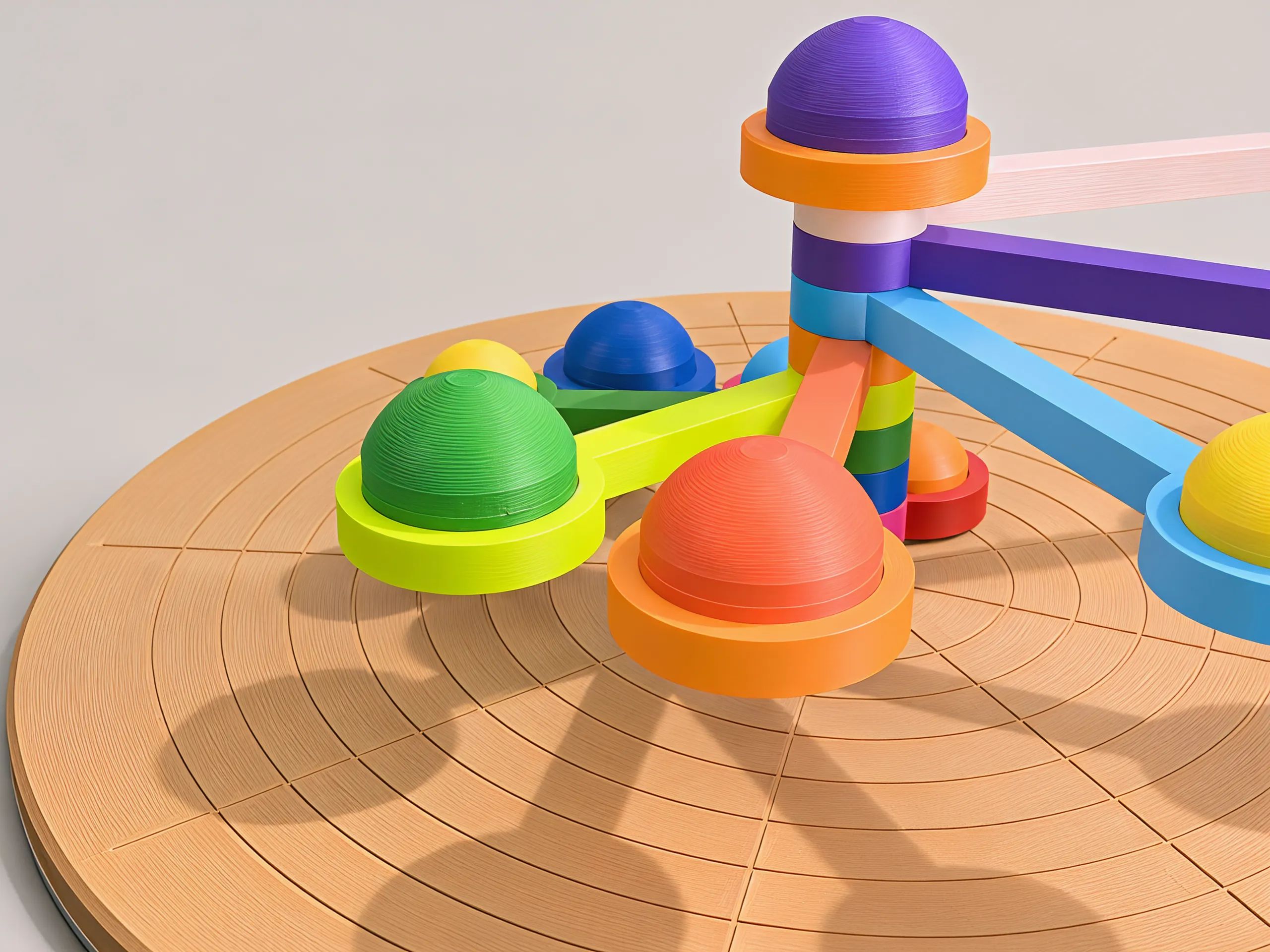
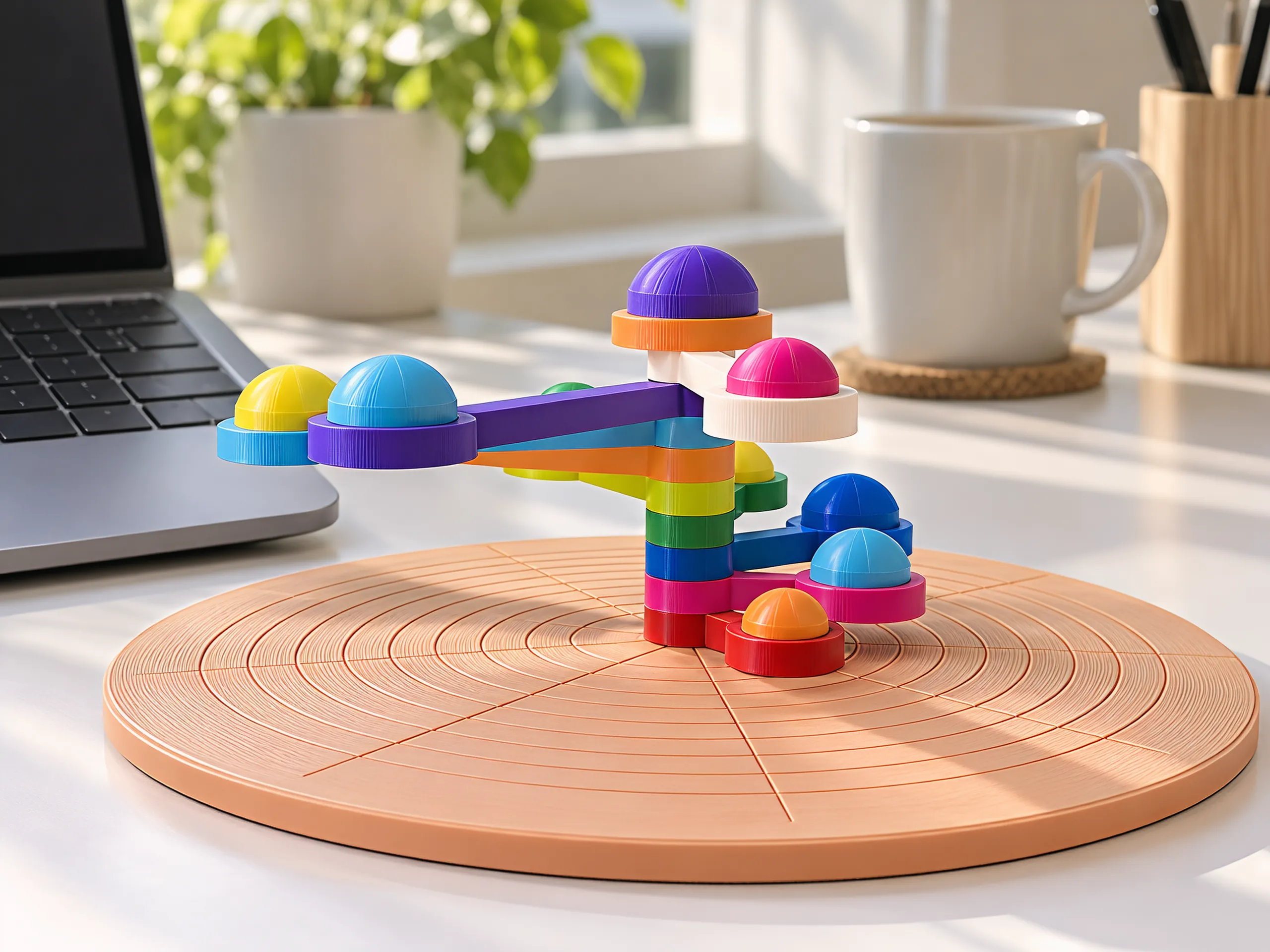
The arms climb the post one step at a time, and each planet's dome stands as tall as the arm above it. So a planet can swing up to its neighbour's arm but never under it: whatever you do, the order runs Mercury, Venus, Earth, Mars, Jupiter, Saturn, Uranus, Neptune, Pluto.
Try it on the plate here. Drag the slider to swing Pluto's arm: one way it rides over the others, the other way it pushes them round in a line.
20 pieces, one sky to set.
No. Nothing in it is powered. Every arm turns by hand round the centre post.
No, and that is on purpose. Each dome stands at the height of the arm above it, so the order always runs from Mercury to Pluto. Pluto's arm, the top one, swings nearly all the way round over the others.
9.1 × 9.1 × 3.3 in and 6.9 oz. The plate is 9.1 in across and the Sun sits 3.3 in up, so it suits a desk, a shelf or a classroom windowsill.
PETG plastic. The plate is tan, and each arm and dome comes in its own colour, so the ten bodies are easy to tell apart.
Each planet sits on the arm whose tip reaches its own groove: Mercury on the lowest, shortest arm, Pluto on the top, longest one, and the Sun on the very top of the post.