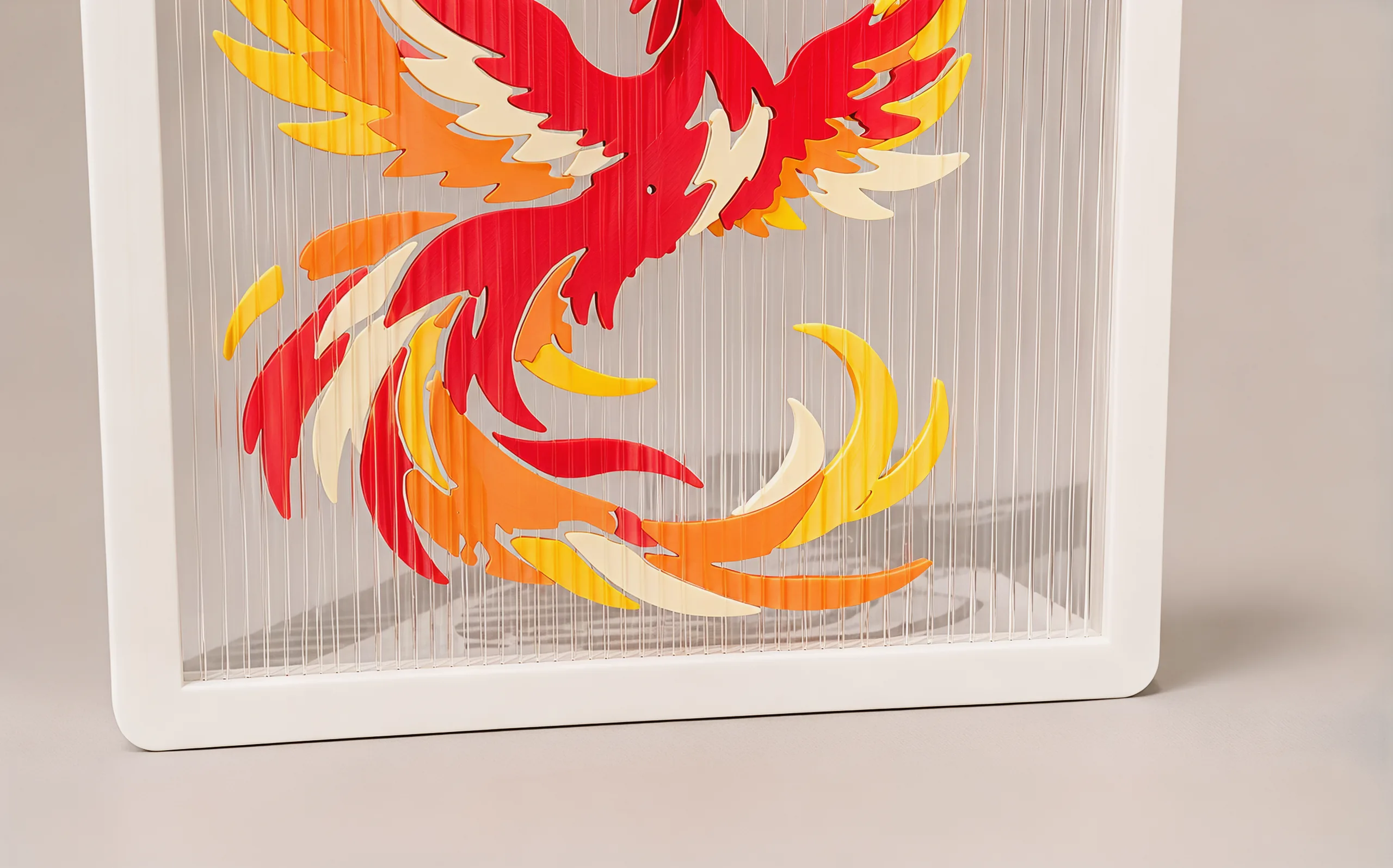
String Art Phoenix
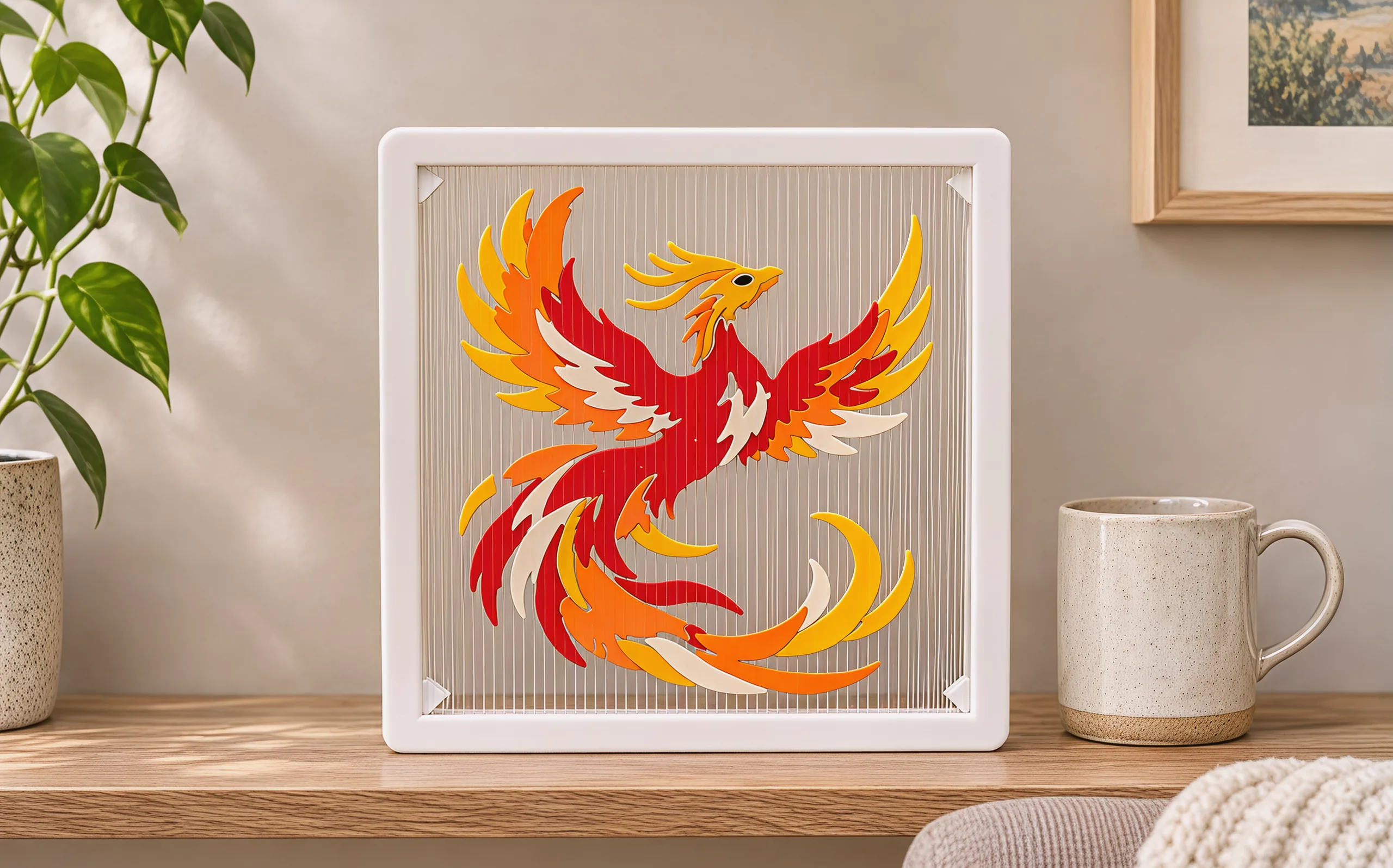
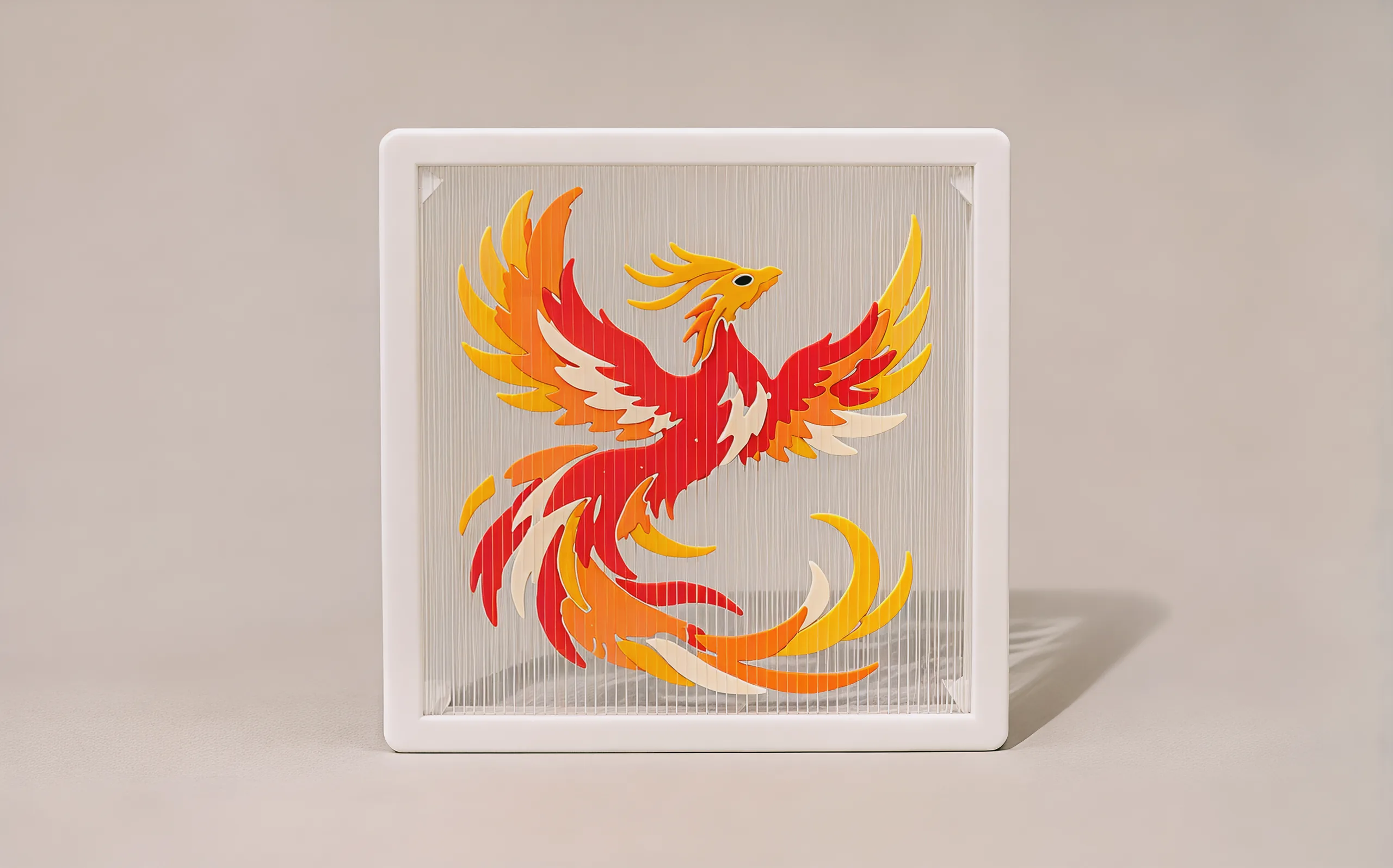
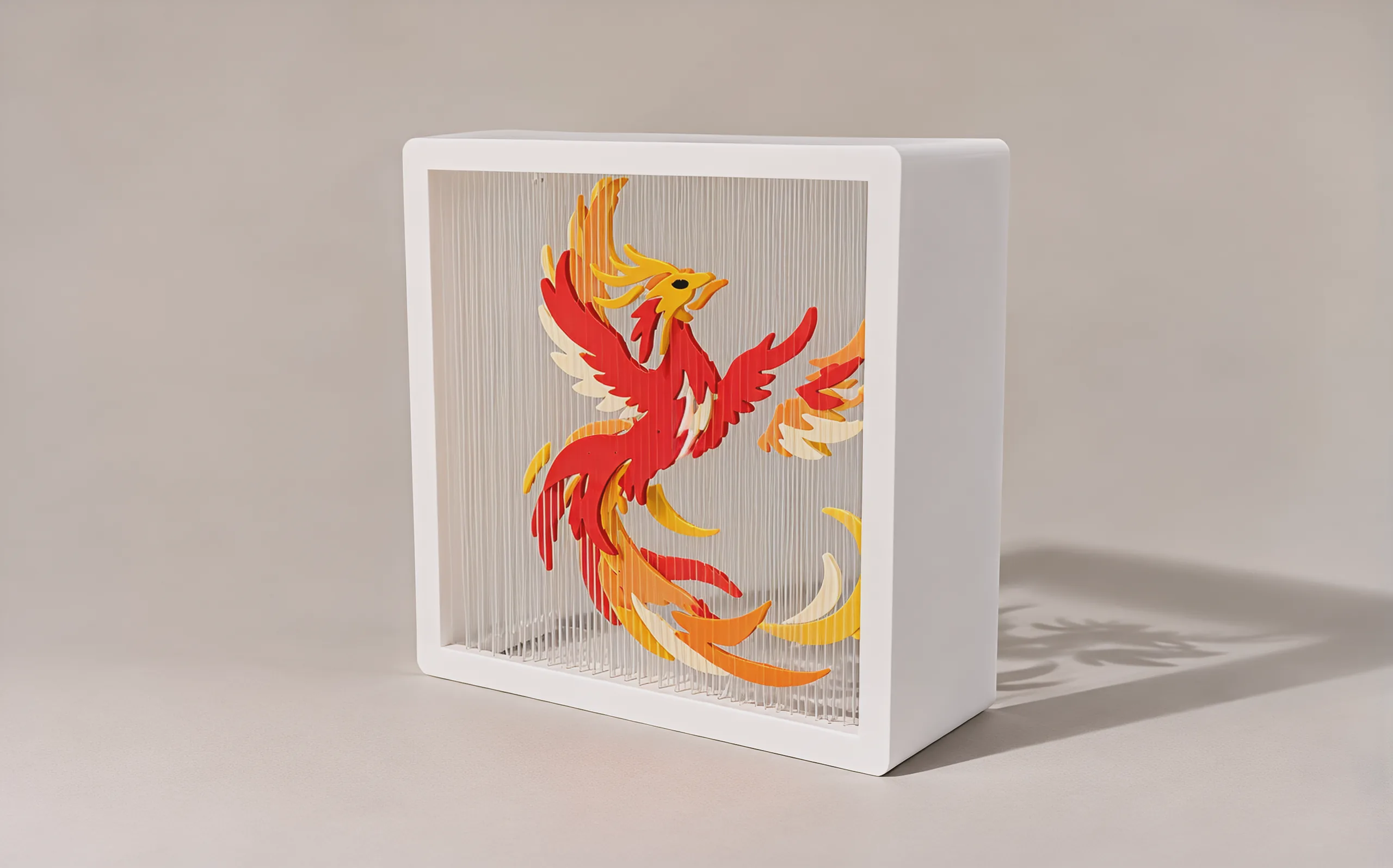
Eight layers of clear strings. Stand in front of them and they become one bird.
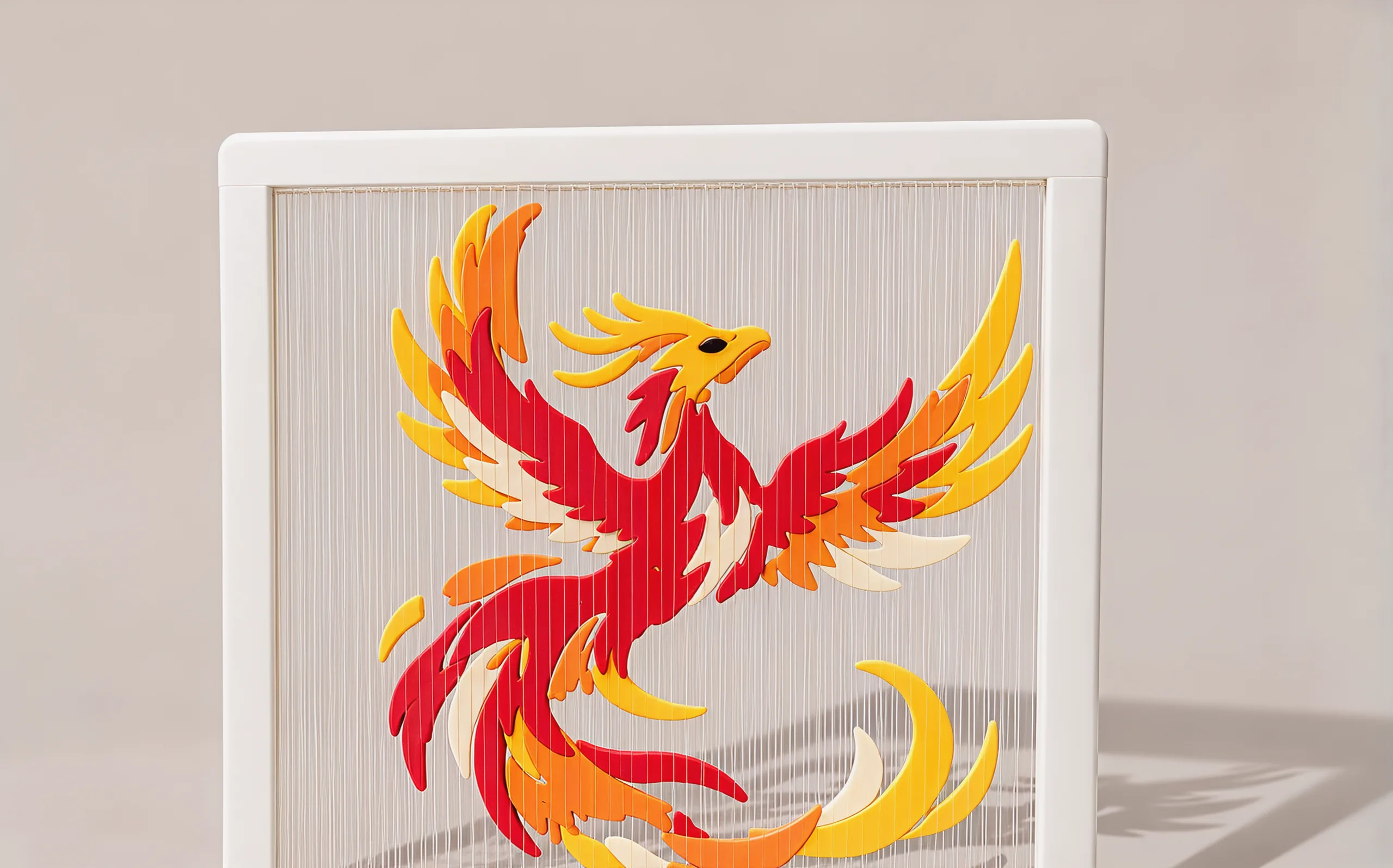
Straight on, it is one bird.
A phoenix rising: wings raised in two fans, a golden crest, a long tail curling right along the bottom.
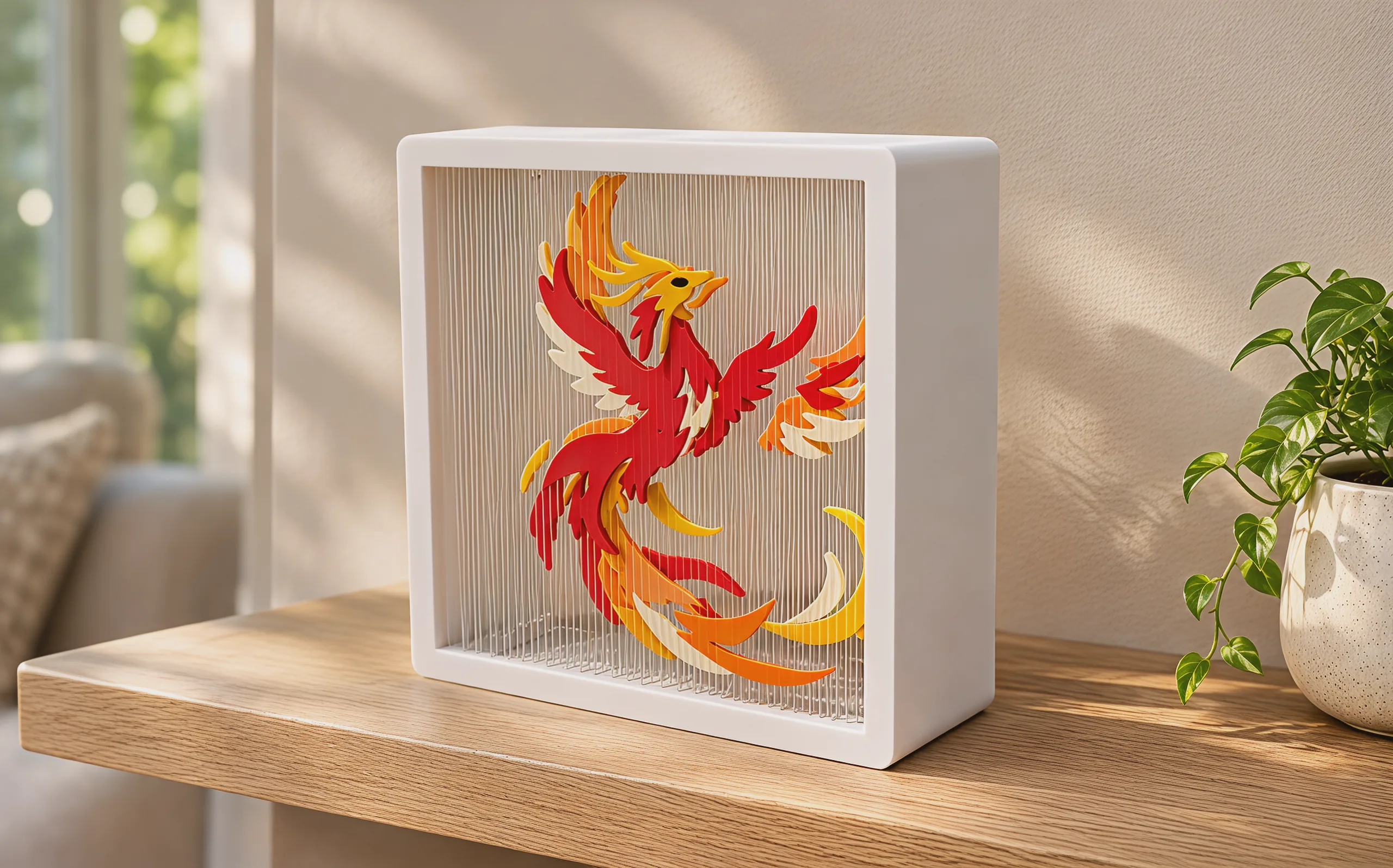
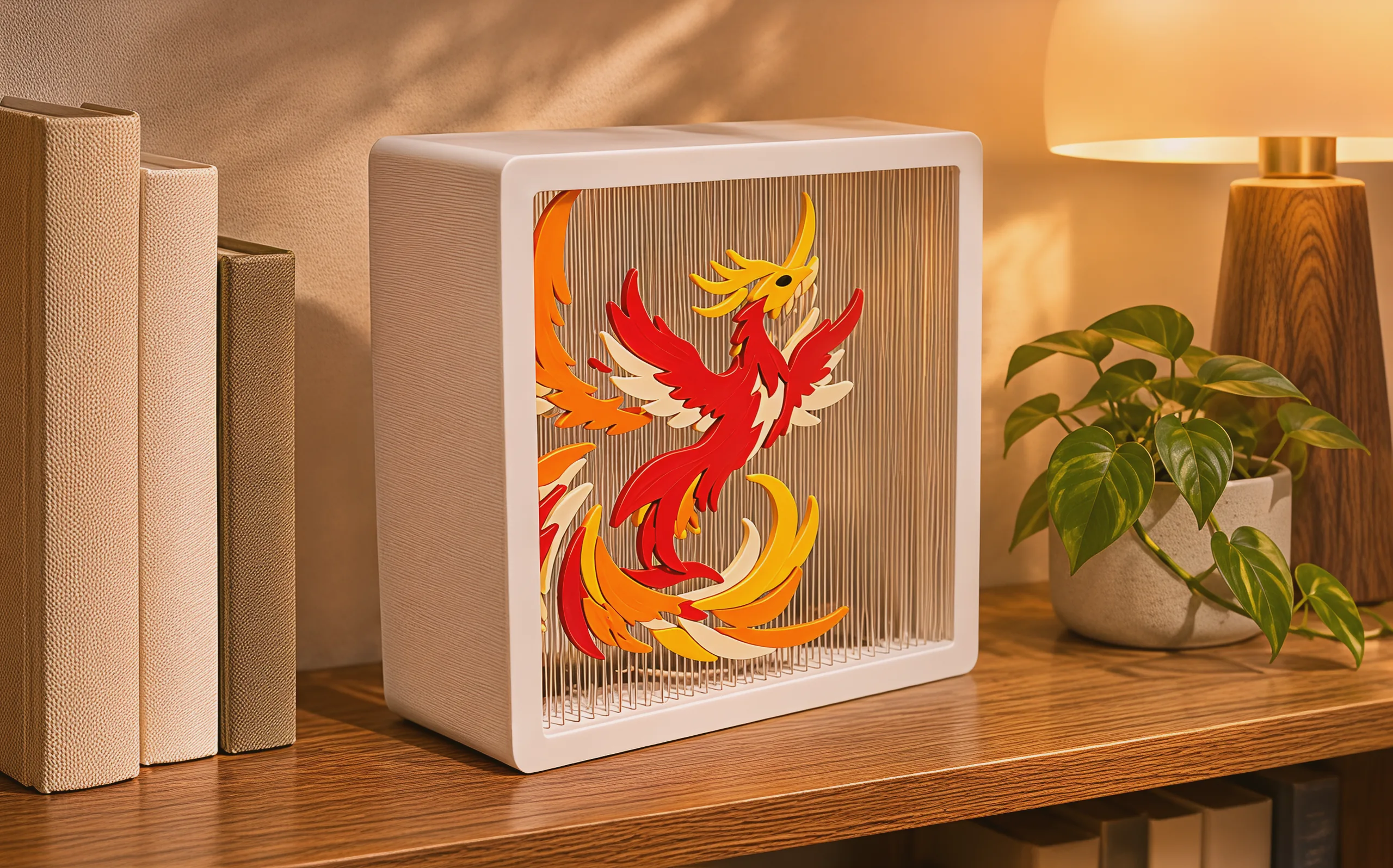
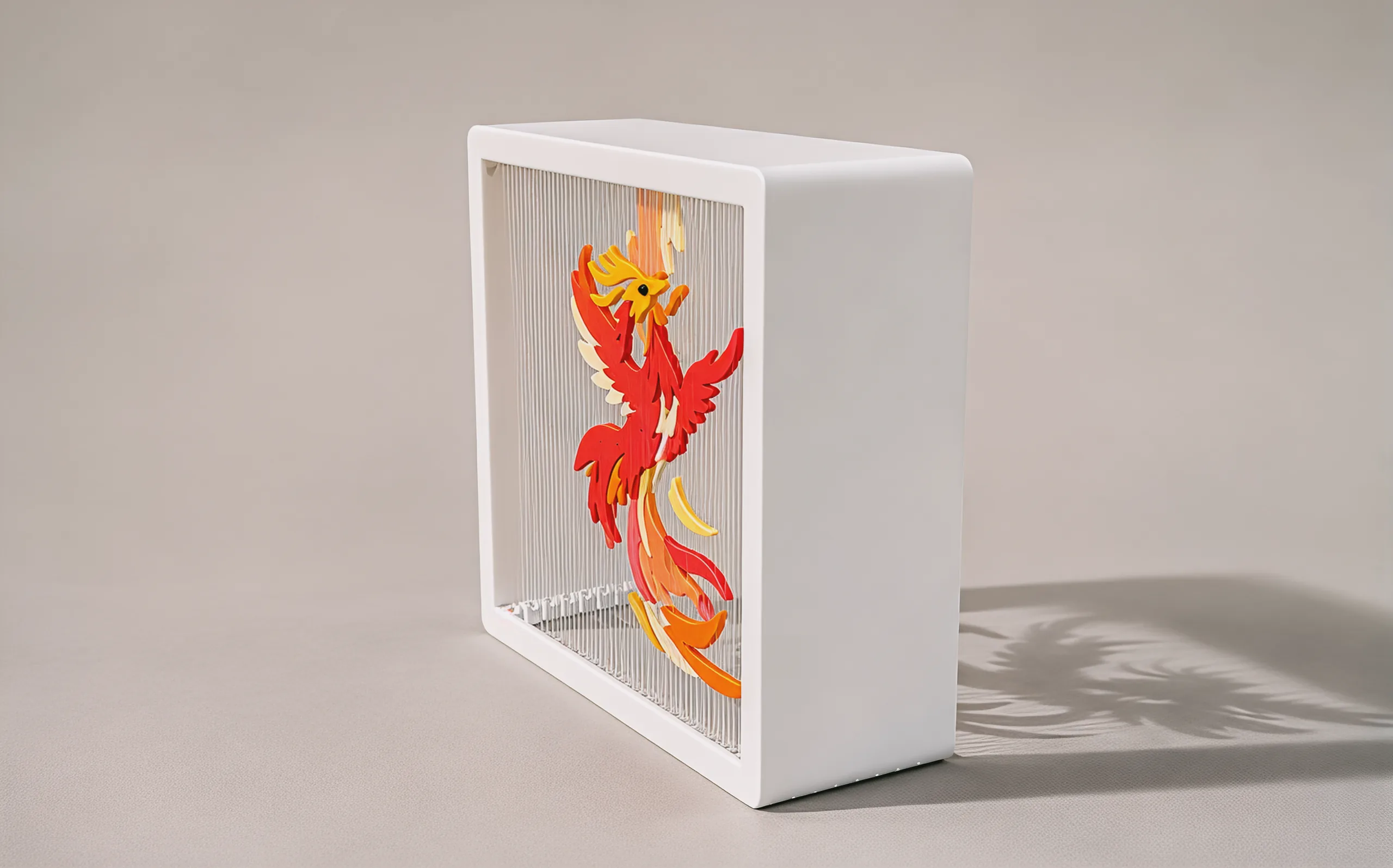
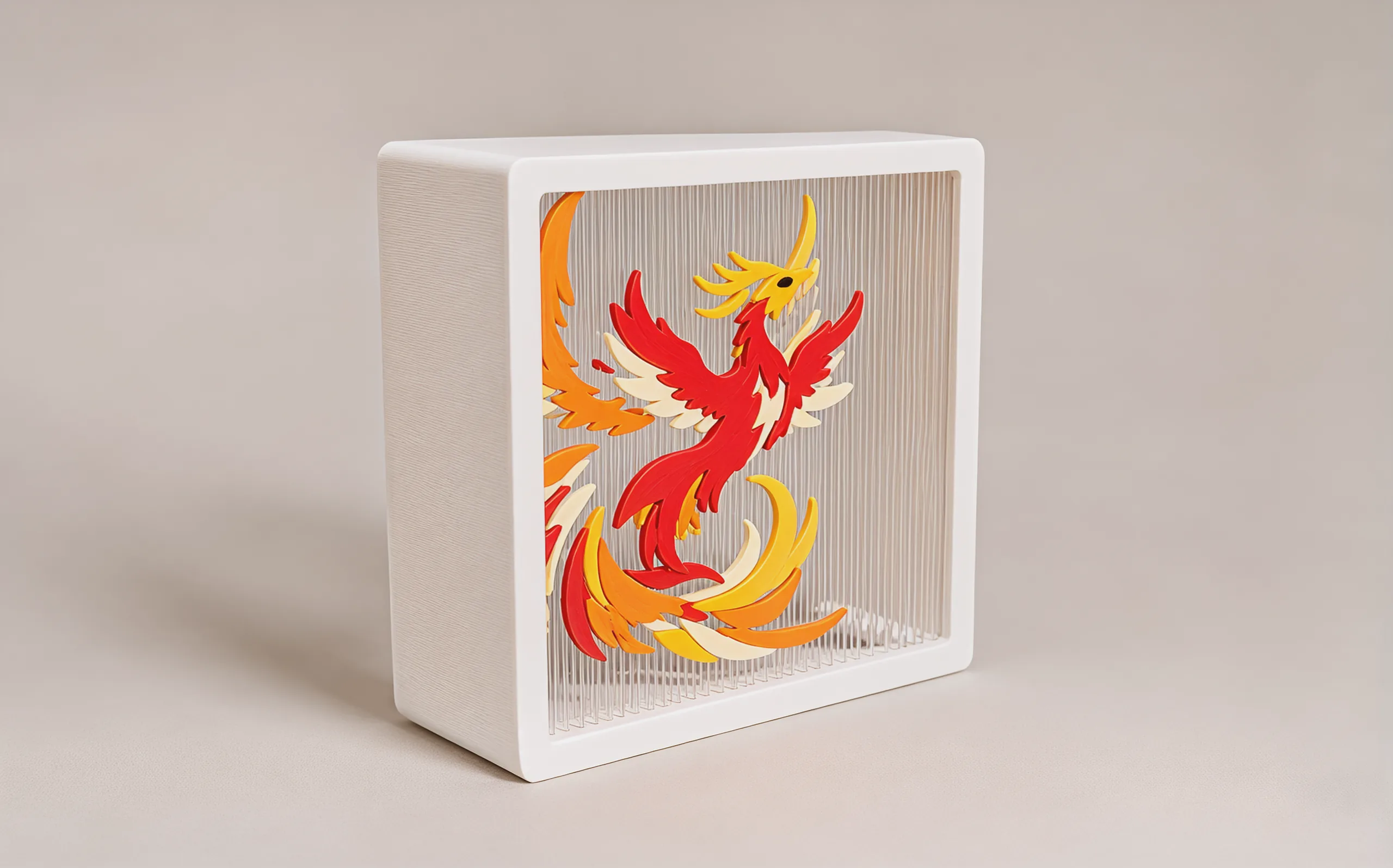
Step to one side.
The bird comes apart. Each feather floats at its own depth, behind the strands in front of it.
Eight layers deep.
From an angle you can count them: eight strung slides, one behind the other, in a frame 2.8 in deep.
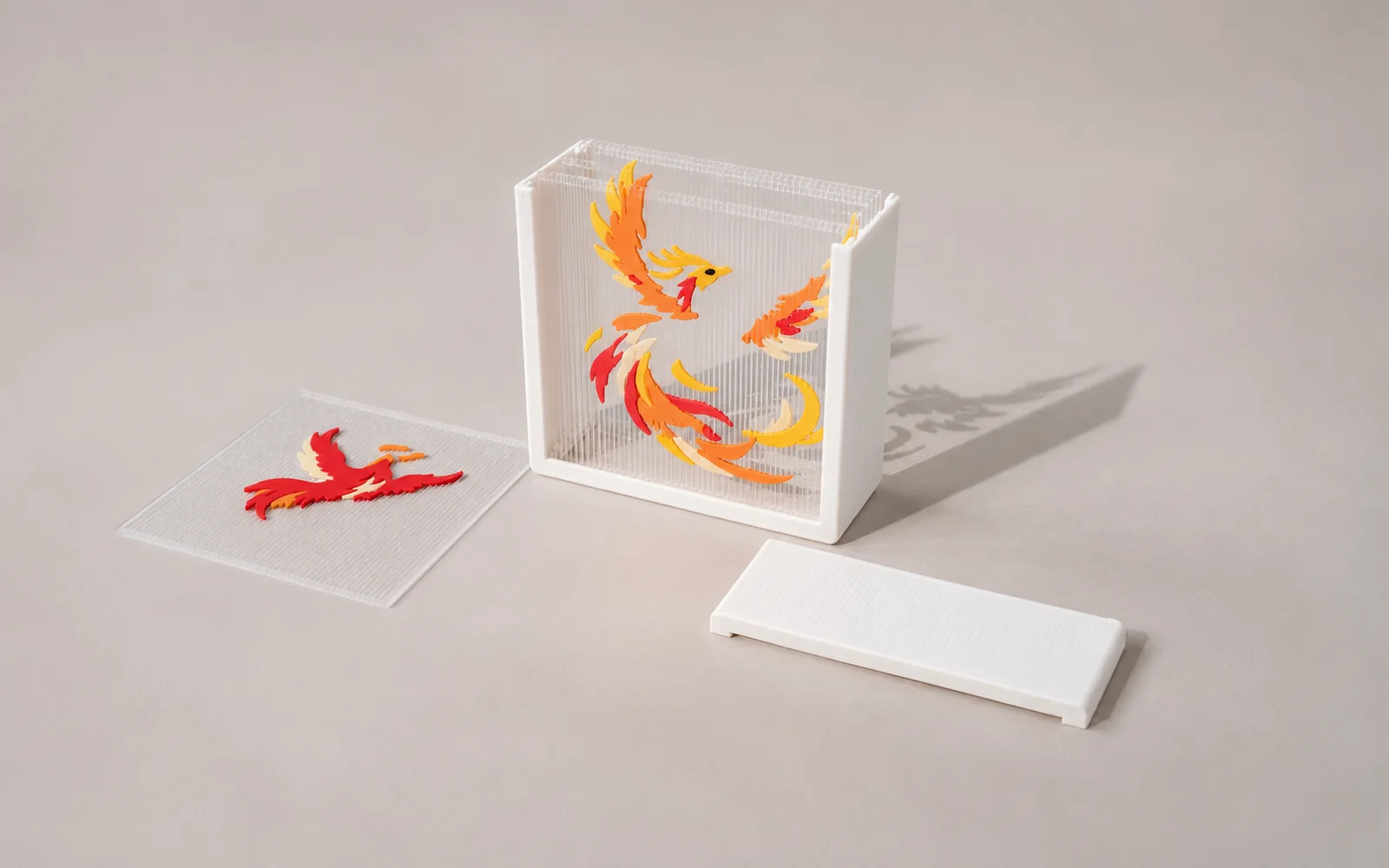
The top bar lifts off.
It sits across the tops of all eight slides and holds them in their slots. Lift it straight up and they are free.
Eight slides, front to back.
Pulled apart, each slide carries only part of the bird: the head and eye at the front, gold wing tips at the back.
One slide out.
With the bar off, any slide lifts straight up out of its slot, and goes back in the same way.
Bar on. Whole again.
Sit the bar back on top, stand in front of it, and the eight layers line up into one phoenix.
Eight slides. Each one holds part of the bird.
Every slide is a thin clear rim strung with straight vertical strands about every 1/8 in, and flat colour pieces sit on the strands. On its own, a slide is a scatter of feathers. Here they are in order, front to back.
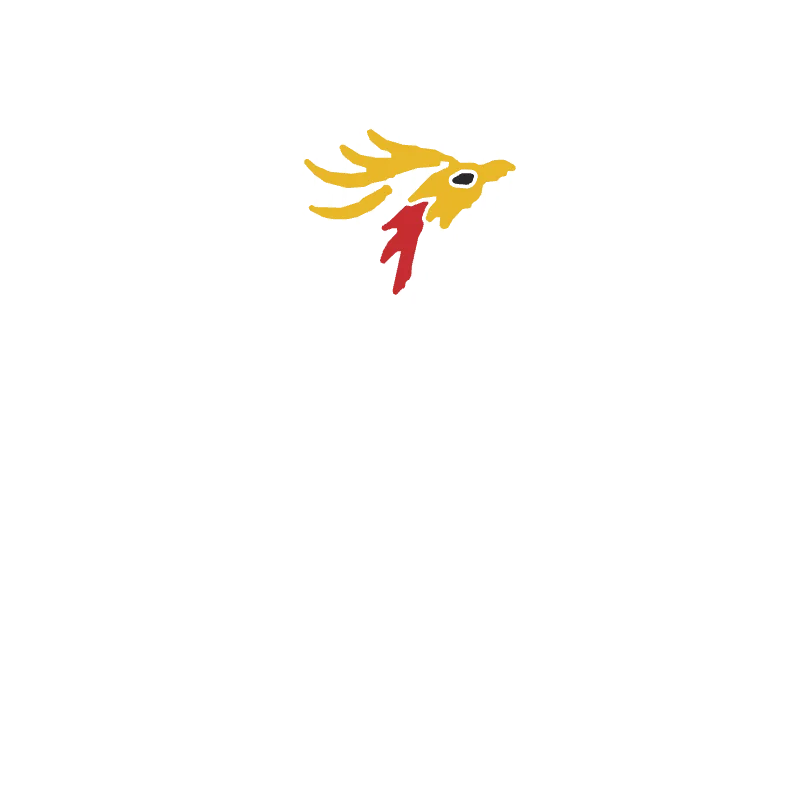
The head
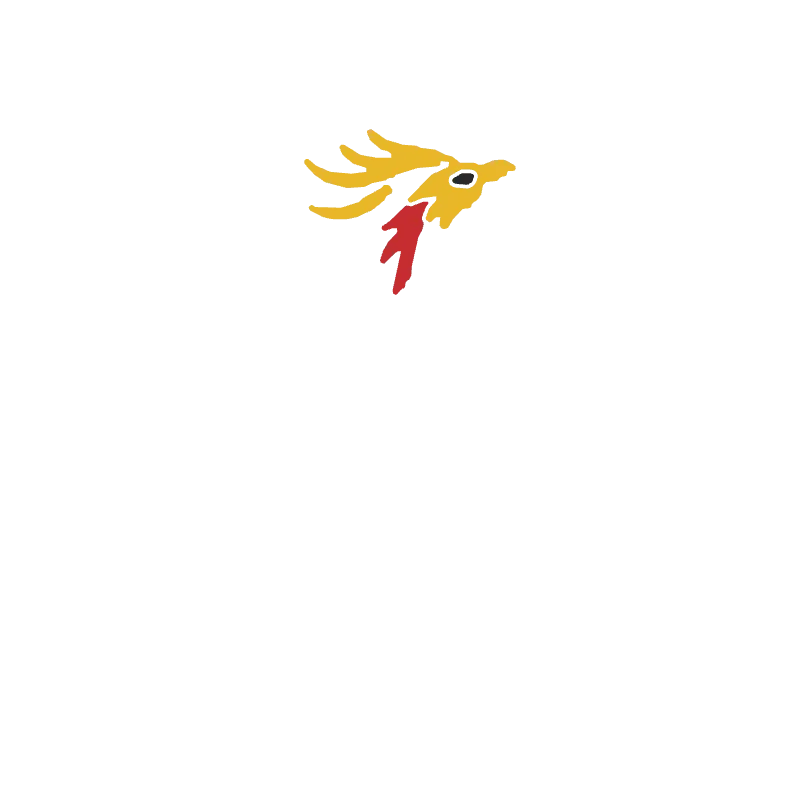
Golden crest, red throat and the one black eye. It sits at the very front.

The body
Red breast and both red wings, flecked with cream and orange.

The low sweep
Orange, cream and gold feathers along the bottom edge.
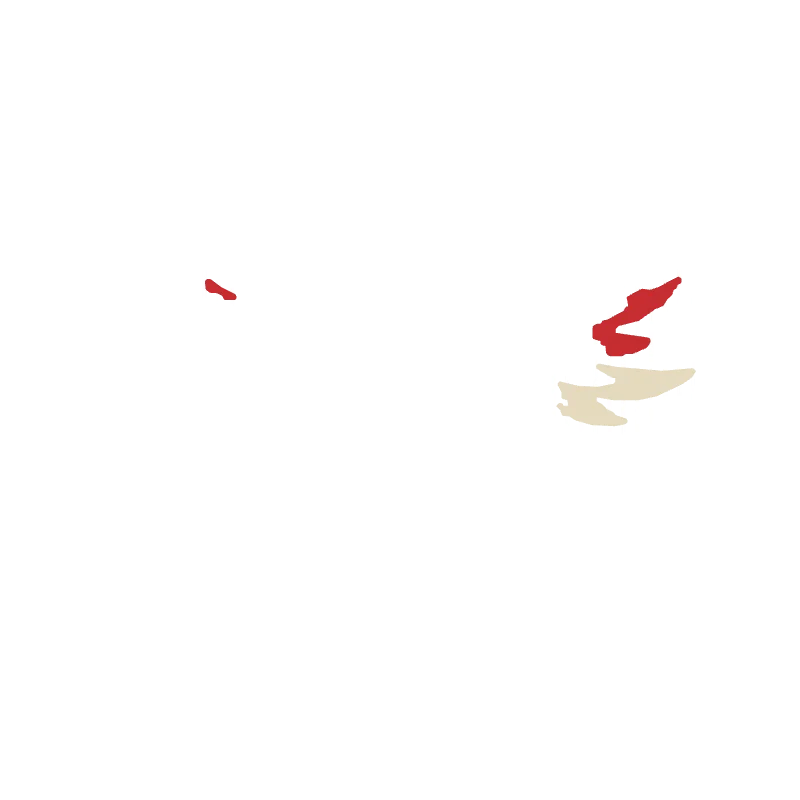
Wing accents
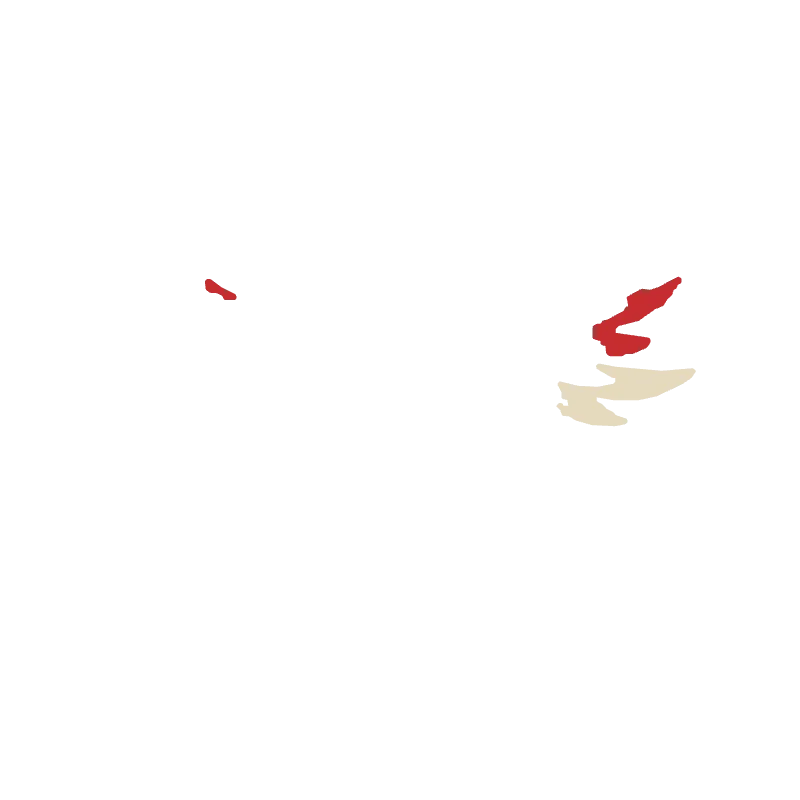
A few red and cream feathers under the right wing.

The tail root
Red, orange and gold tail feathers fanning down at the lower left.

The orange band
The orange middle of both wings, with a long cream tail strip.

The gold curl
Gold left-wing feathers and the tail's curl at the lower right.
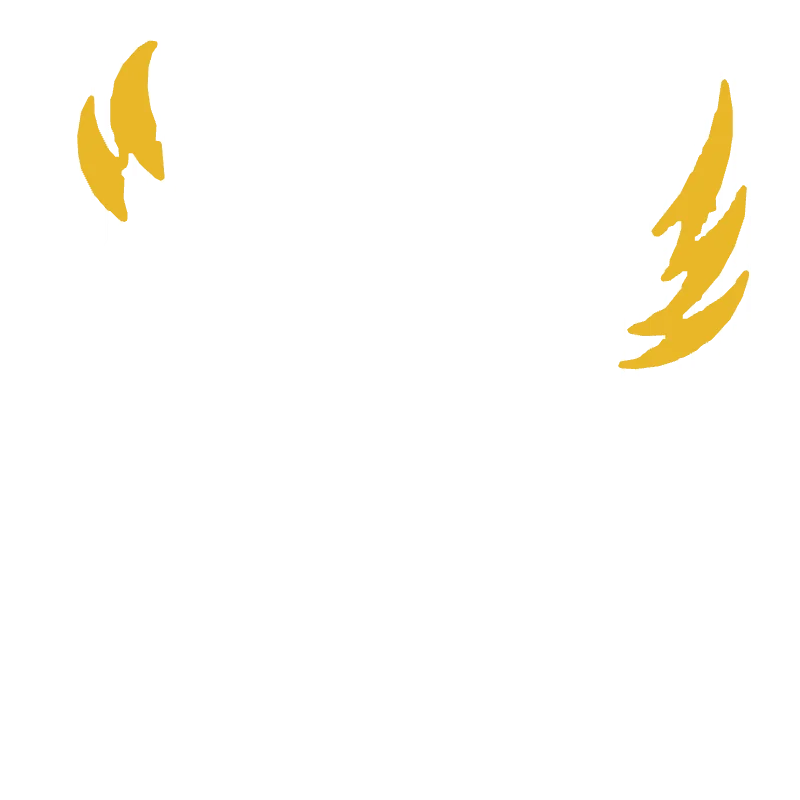
The wing tips
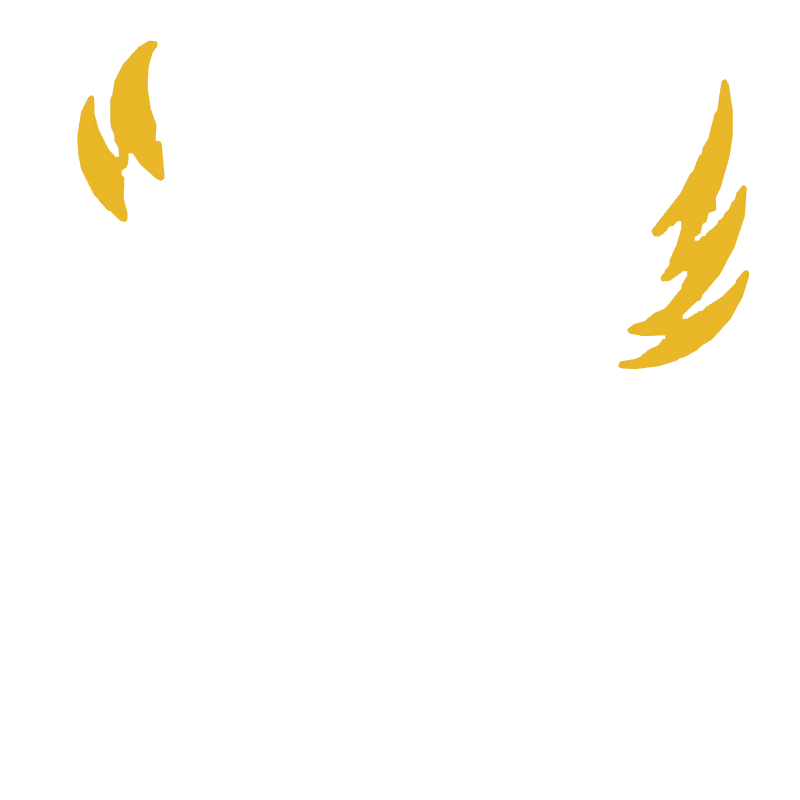
The highest gold tips of both wings. It sits at the very back.
Up close
A picture you can see the wall through.
It stands on its own on a shelf or a desk, 7.1 in wide, 7.1 in tall and 2.8 in deep, and weighs 8.2 oz. The frame is open at the front and the back, so whatever is behind it shows between the strands.
Stand in front, and it lines up.
The phoenix is drawn across eight planes. Stand straight in front of it and every feather lands where it belongs. Move to one side and the planes slide past each other, and the bird breaks into its layers.
Drag the slider to add the slides one at a time, starting at the back.






String Art Phoenix
A phoenix made of strings, for a shelf or a desk.
Ten pieces, one picture.
- 8
- strung slides, each carrying part of the phoenix
- 1
- matte white frame, open at the front and the back
- 1
- top bar that sits on and holds the slides
- Size
- 7.1 × 2.8 × 7.1 in (wide × deep × tall)
- Weight
- 8.2 oz
- Slides
- 8, strands about every 1/8 in
- Colours
- four feather colours (red, orange, golden yellow, cream) and a black eye
- Strands
- clear translucent plastic
- Frame
- matte white, rounded corners, stands on its own
- Power
- none: no light, no batteries
Good to know
Does it need batteries or a plug?
No. There is no light, no battery and no switch. It is a picture made of strings and flat colour pieces, and it looks its best in ordinary room light.
What is it made of?
Plastic throughout: a matte white frame and top bar, clear translucent strands and slide rims, and flat matte feathers in red, orange, golden yellow and cream, with one small black eye.
How do the slides come out?
Lift the top bar straight off. Each slide then lifts straight up out of its own slot. Lower it back into the same slot, and sit the bar back on top to hold all eight in place.
Where does it go?
On a shelf or a desk: it stands on its own, 7.1 in wide and 2.8 in deep. Put it where you will see it straight on, which is where the phoenix is whole. From the side you see the layers instead.
Can you see the strings?
Yes. The strands are thin and clear, so you see through them to the wall behind, but you can still see them. That is part of the look: a picture made of strings.