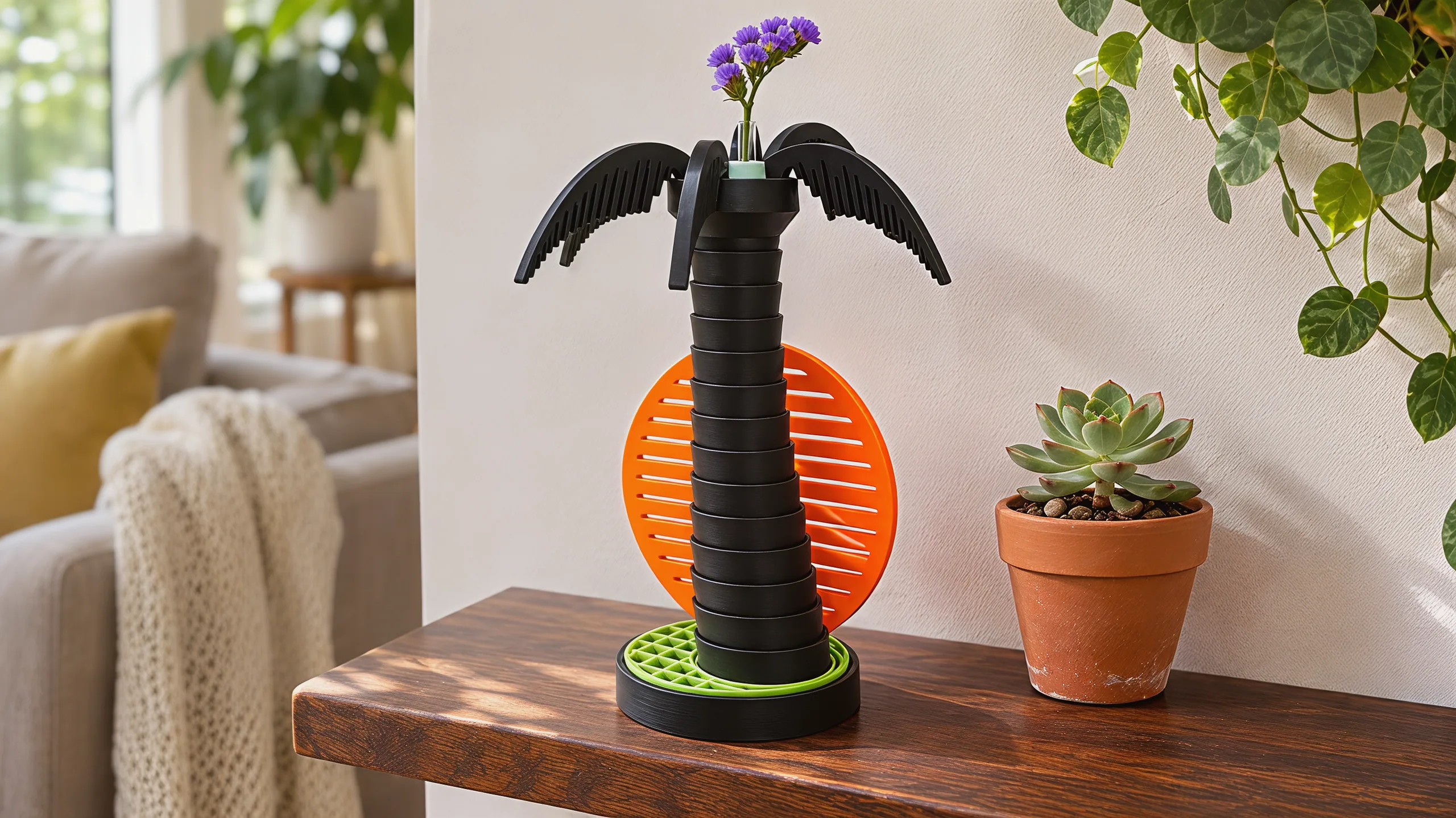
Synthwave Palm Bud Vase
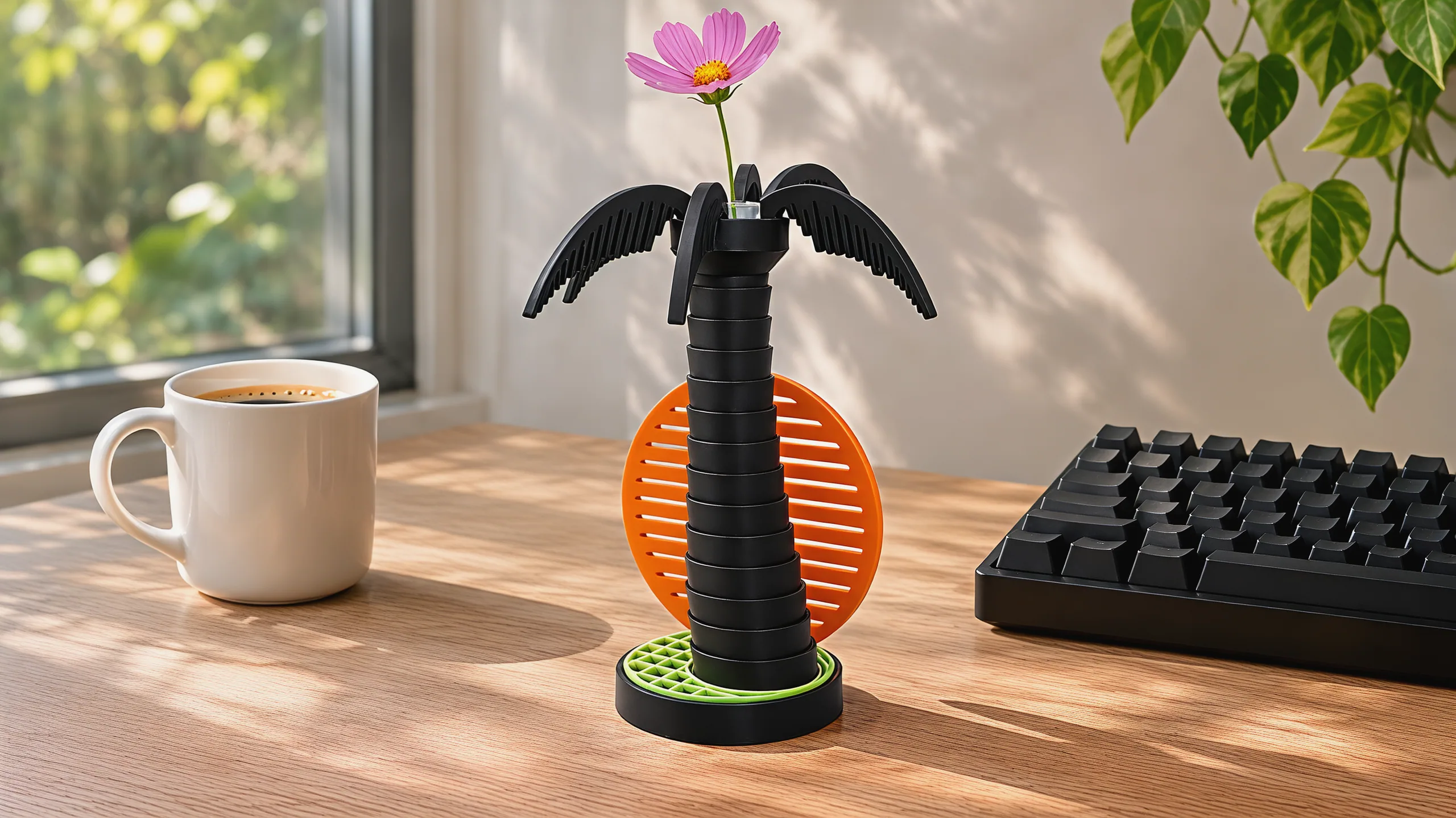
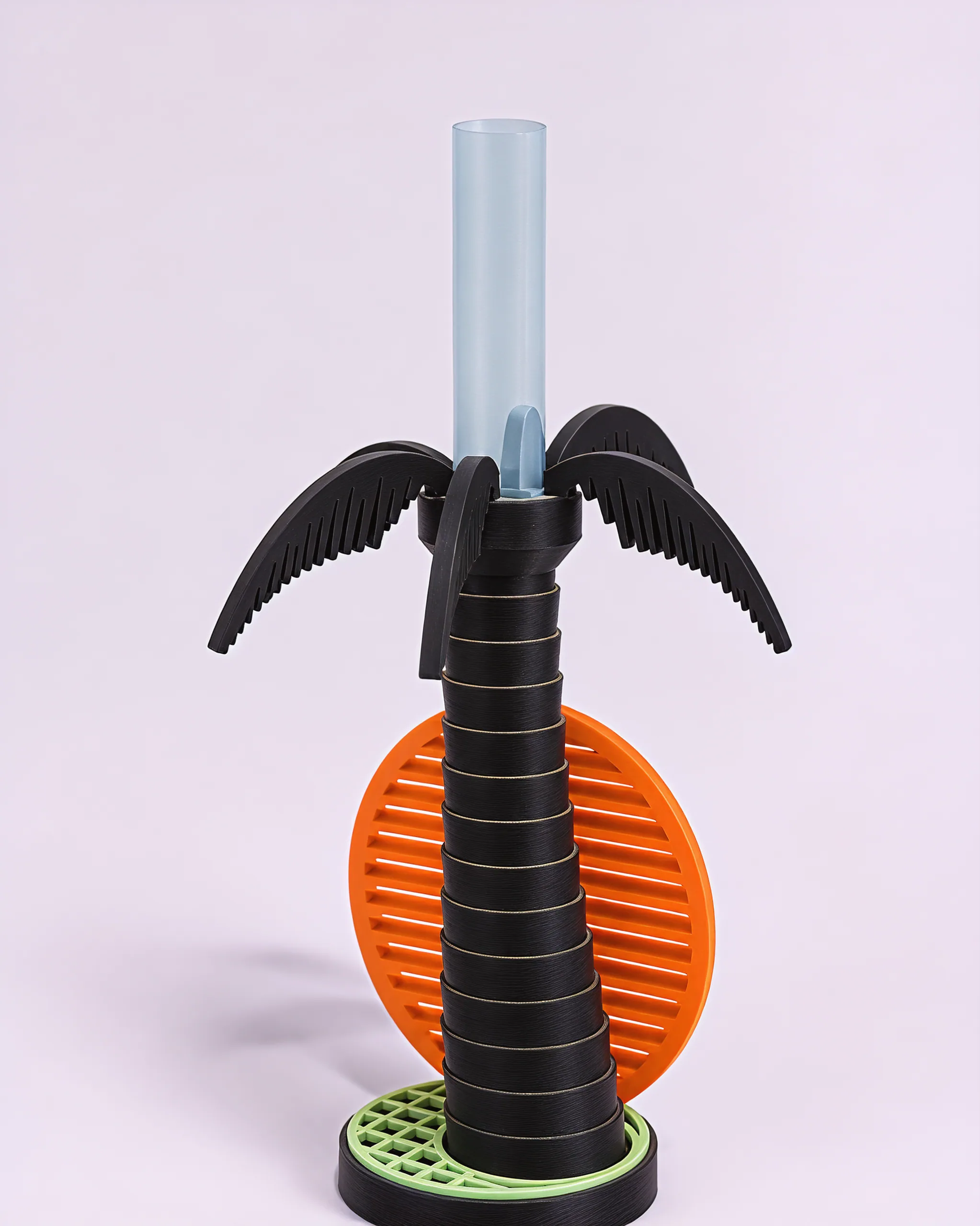
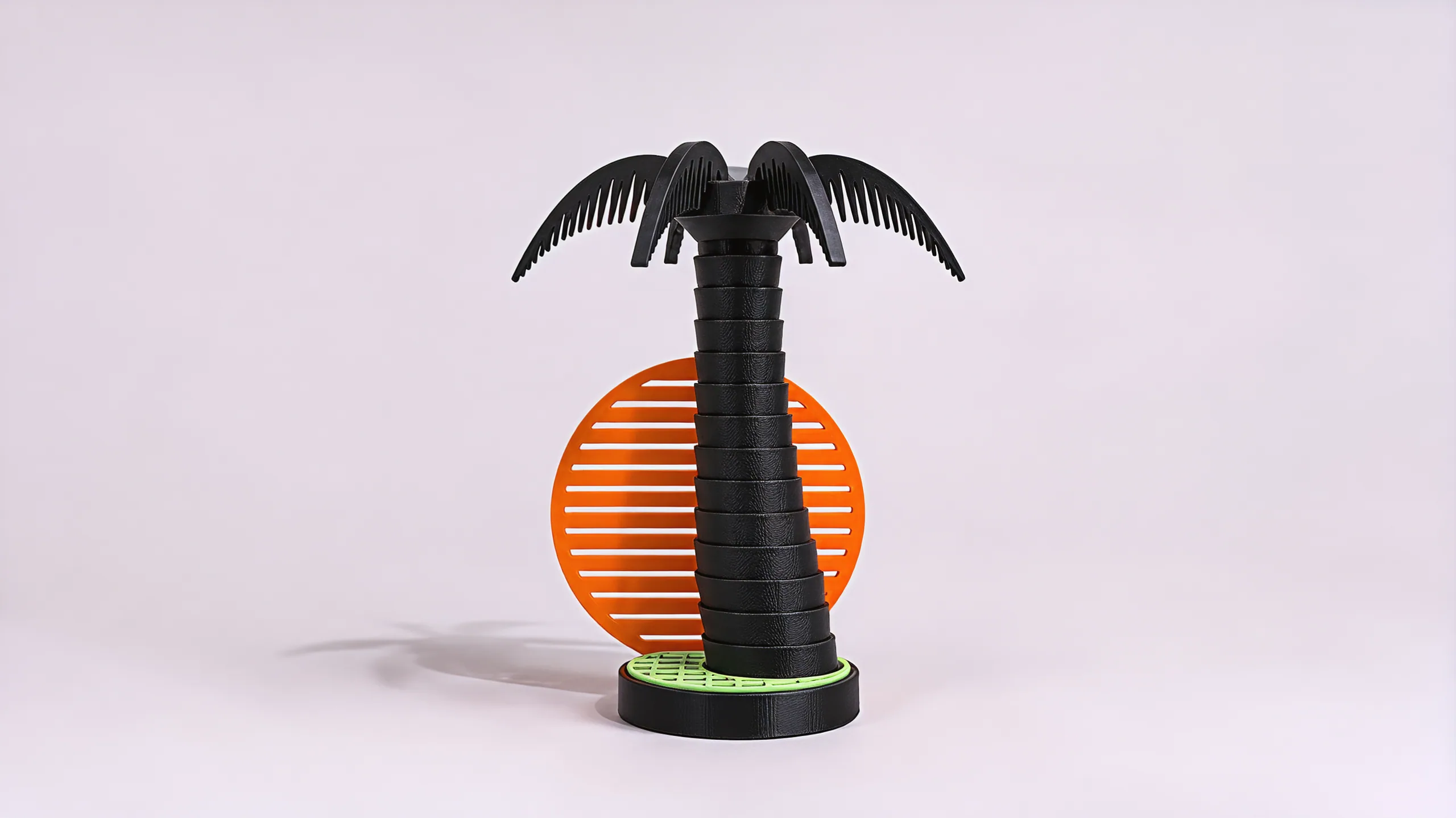
A black palm against a striped amber sun, standing on a grid that glows after dark. It holds one to three stems.
The whole sunset
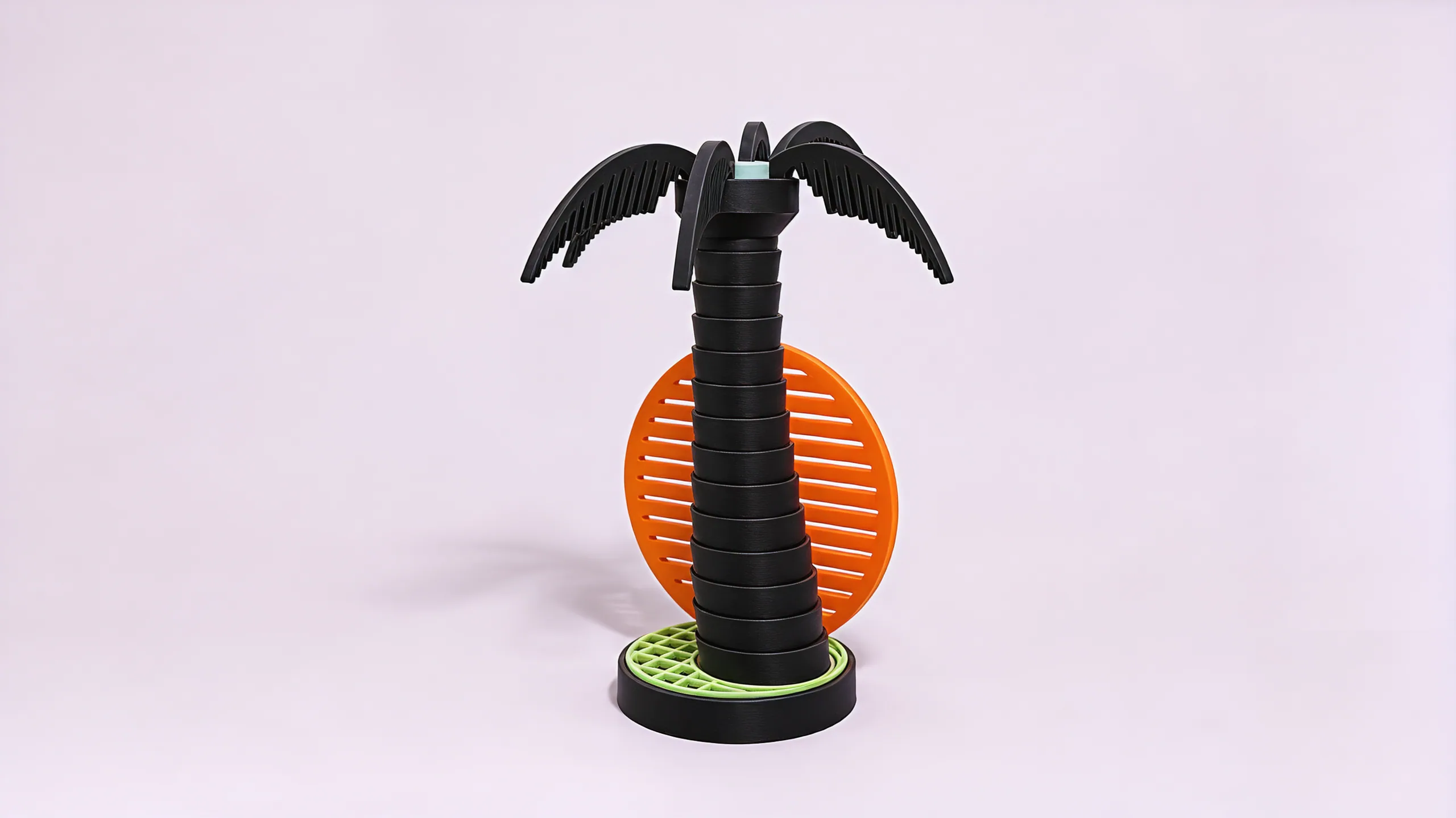
A grid running to the horizon, a striped sun sinking into it, one palm in front. That poster, made solid and 8.7 in tall.
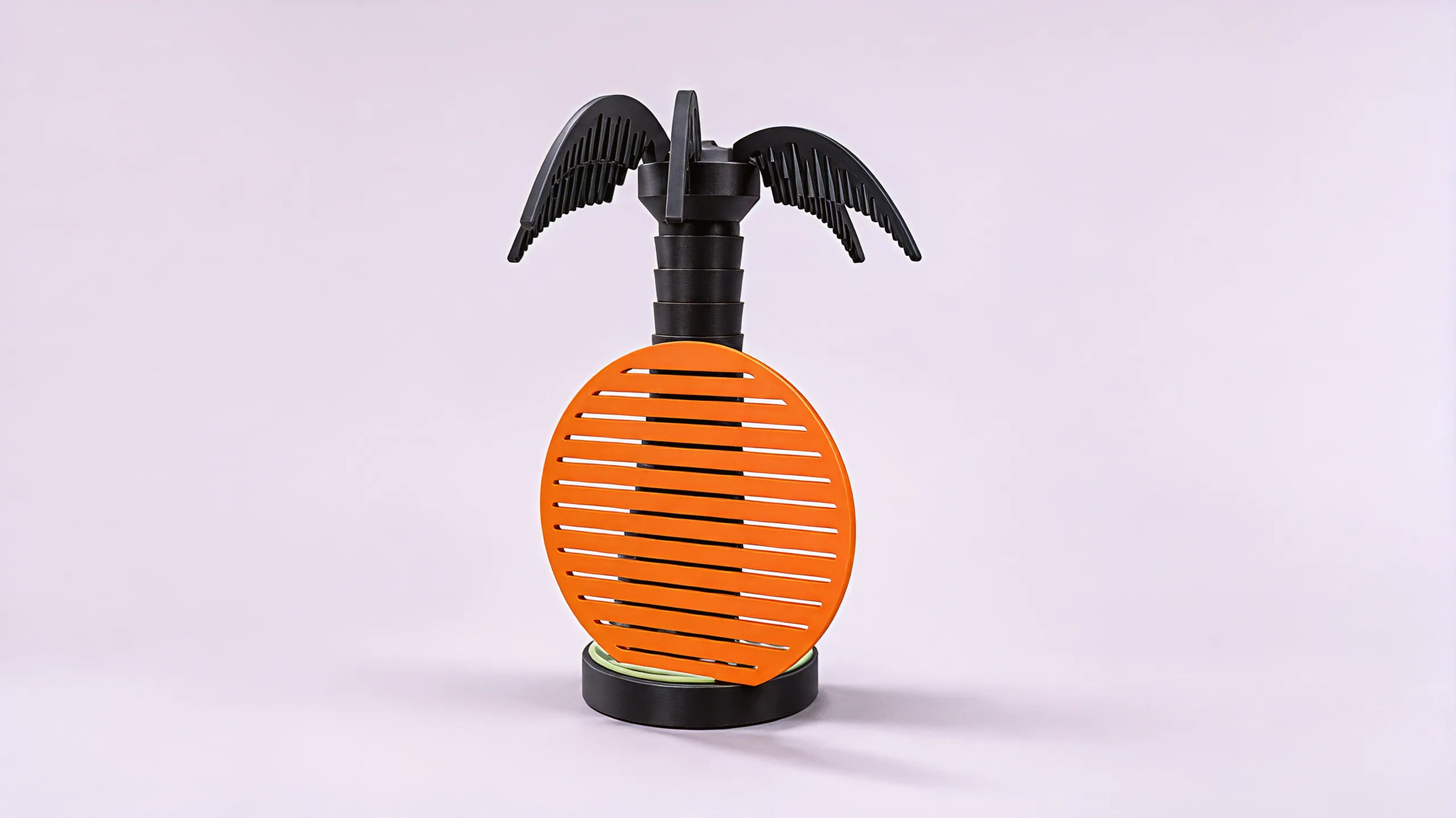
A sun with slats
The sun stands behind the palm, 4.9 in across, cut into the stripes every synthwave sun has. Light comes through it in bars.
The grid underfoot
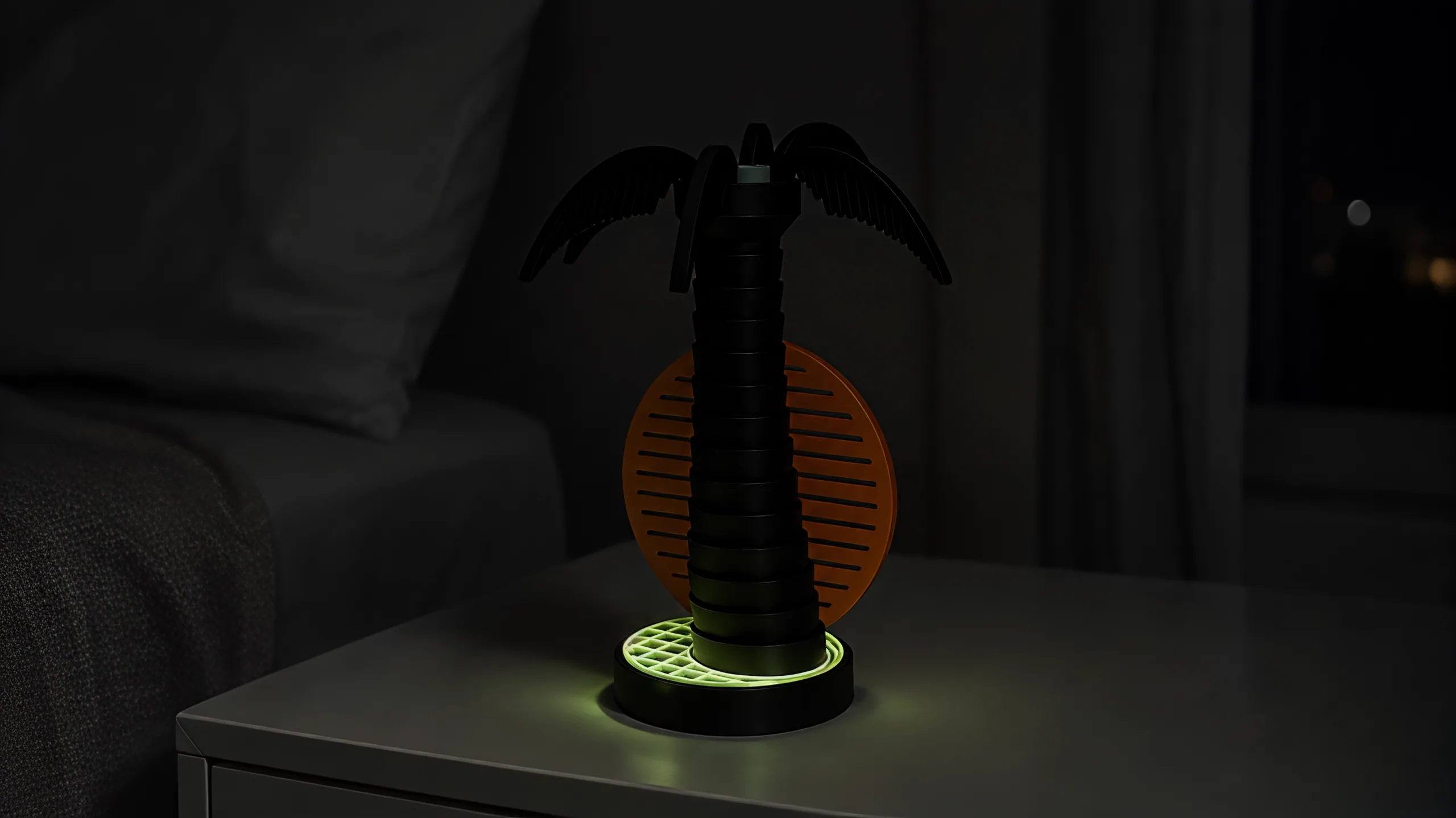
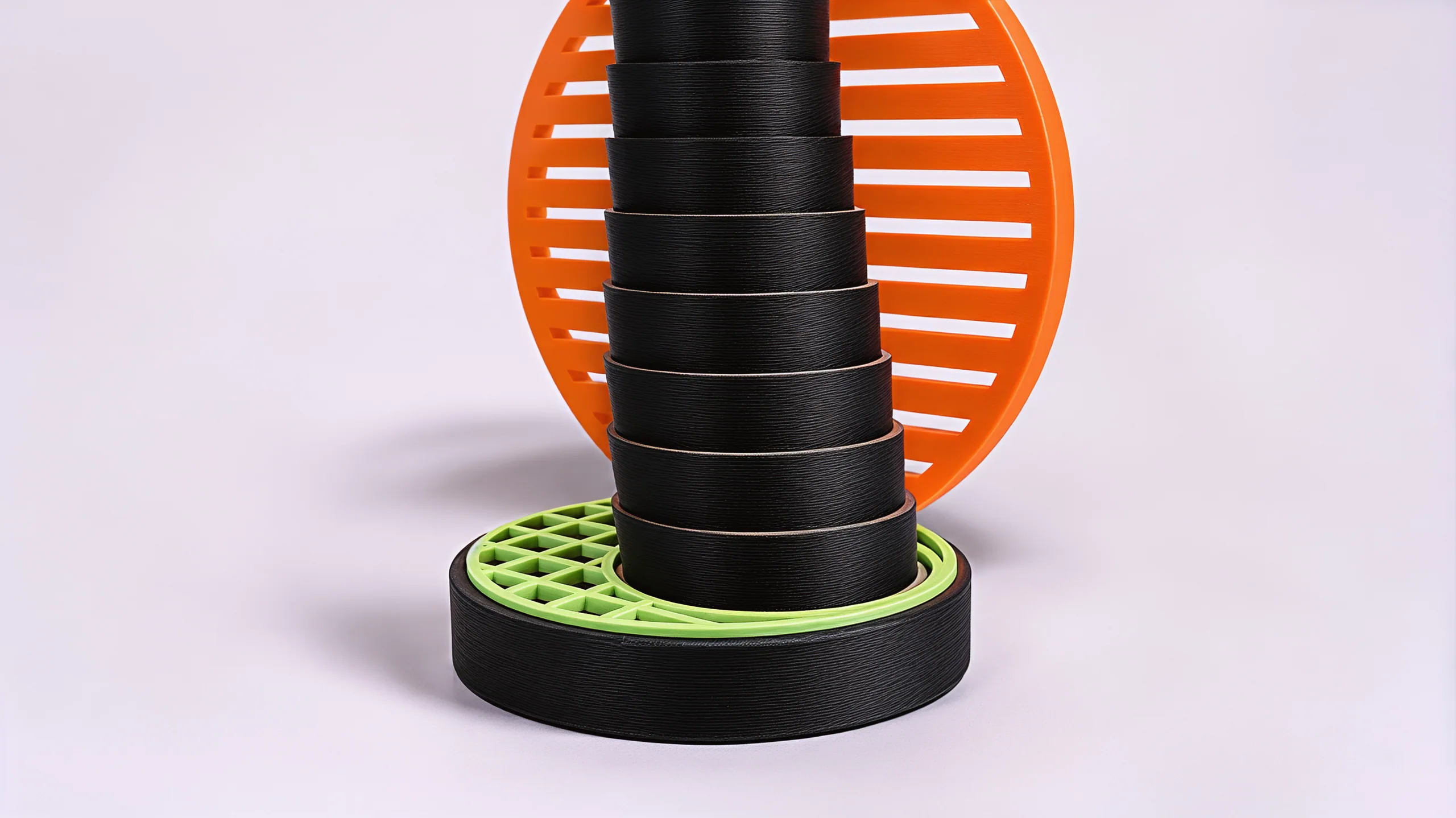
The black base is 3.5 in across, and the raised green grid on top is the floor the sun sets into. It is also the part that glows.
Ringed trunk, 6 fronds
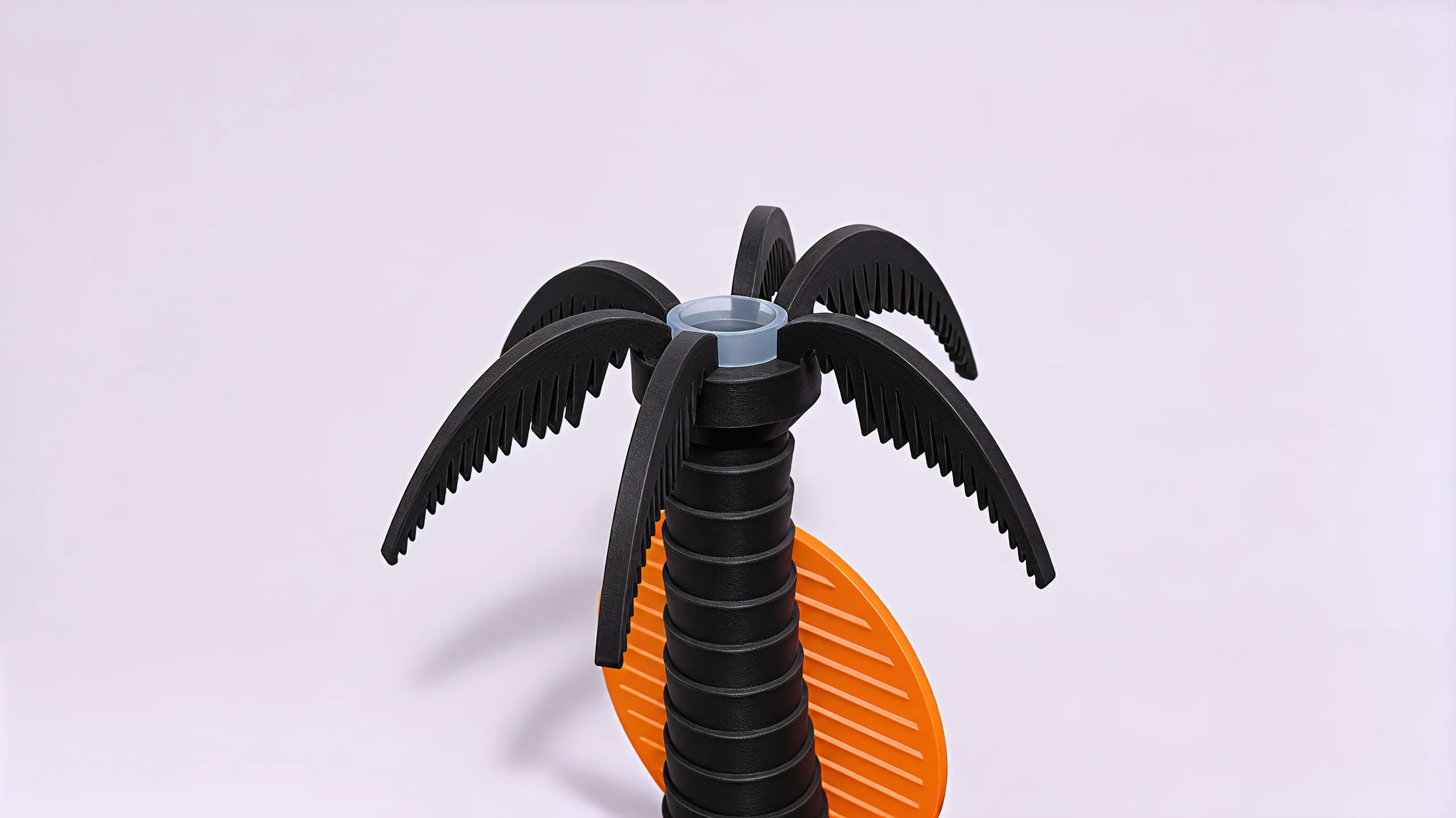
The trunk climbs in rings from a swollen, curving foot. Up top, 2 fronds reach up and 4 arc out low.
Water lives in the tube
A 25 × 150 mm test tube drops straight down the trunk. Fill it, add a stem, lift it out to rinse.
Lights out
The room lights went out and nothing here is plugged in. The grid gives back the light it soaked up.
Up close
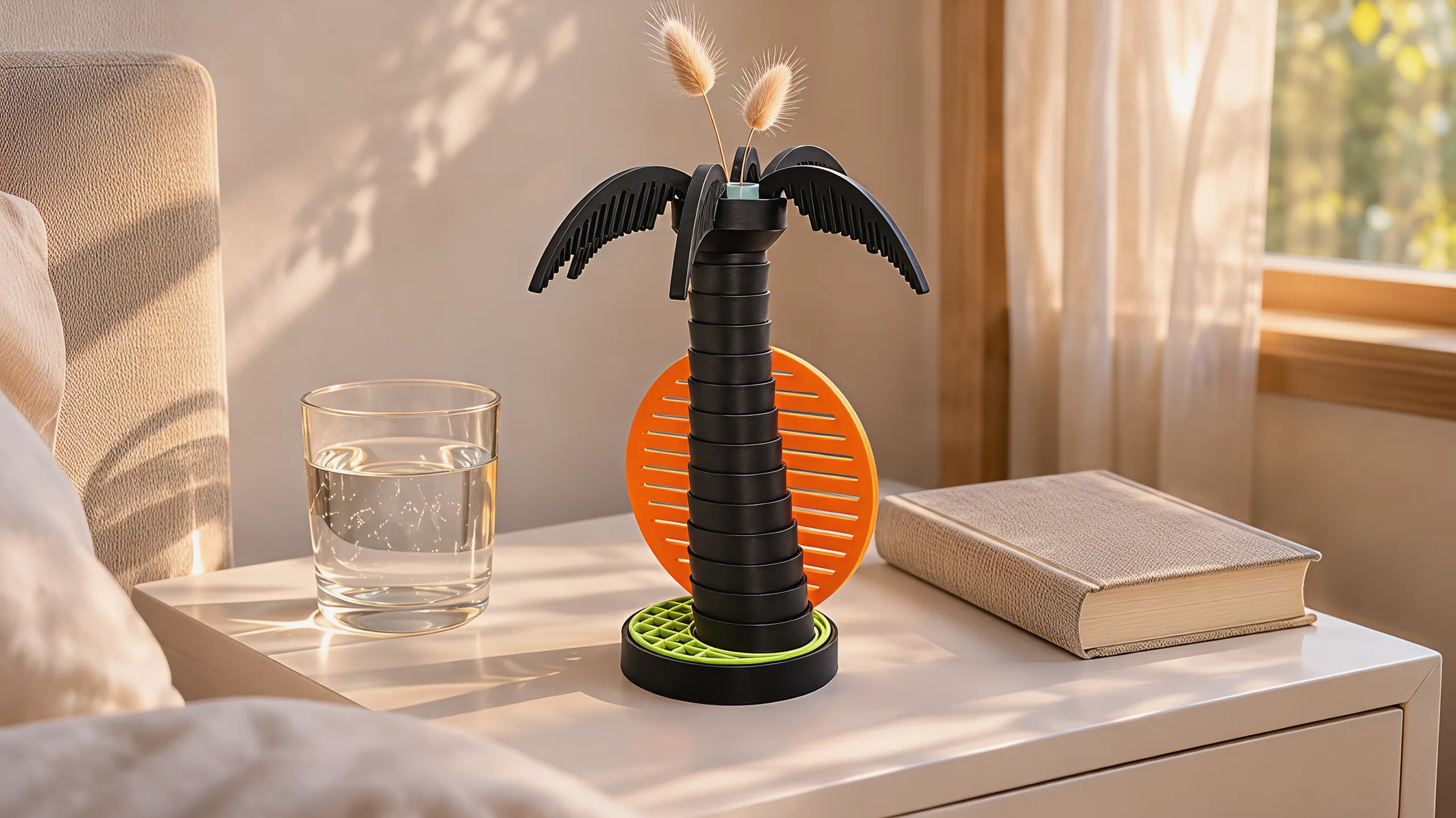
8.7 in tall on a 3.5 in base, it takes the corner of a desk, a shelf or a nightstand, and holds one to three slim stems.
The water never touches the palm.
Inside the trunk is a straight bore for a 25 × 150 mm test tube. It sits 5.7 in deep, with its lip just above the crown, so you fill it and add a stem without the water reaching the print.
When the water needs changing, lift the tube out by the lip, rinse it and drop it back. The trunk around it is a second wall: a drip stays inside.
It is a standard test tube size, so a spare of the same size drops straight in.
Synthwave Palm Bud Vase
One palm, 6 fronds, one striped sun, and a grid that glows.
- 1
- black base with a raised glow-in-the-dark grid
- 1
- ringed palm trunk with a curving foot and a bore for the tube
- 1
- translucent amber sun, cut into stripes
- 6
- black fronds, 2 high and 4 low
- Size
- 6.7 × 5.9 × 8.7 in (W × D × H)
- Base
- 3.5 in across
- Weight
- 6.3 oz
- Made from
- PLA
- Holds
- one to three stems
- Water
- in a 25 × 150 mm test tube inside the trunk
- Glows
- the base grid, after time under a lamp or daylight
Good to know
Does the water touch the printed palm?
No. The water stays in a 25 × 150 mm test tube that drops into the trunk, and the trunk around it is a second wall.
How does the grid glow?
The grid on the base is glow-in-the-dark. It charges under a lamp or in daylight and gives that light back once the room goes dark. There are no batteries, no bulbs and no switch.
How many flowers does it hold?
It holds one to three slim stems, standing in the test tube at the top of the trunk.
What is it made of?
PLA: black for the base, trunk and fronds, translucent amber for the sun, and a glow-in-the-dark green for the grid.
How do I clean it?
Lift the test tube out by its lip, rinse it and drop it back in. The water never sits in the palm, so the tube is the only part that needs washing.