Chrome draws it solid.This one is only the edge.
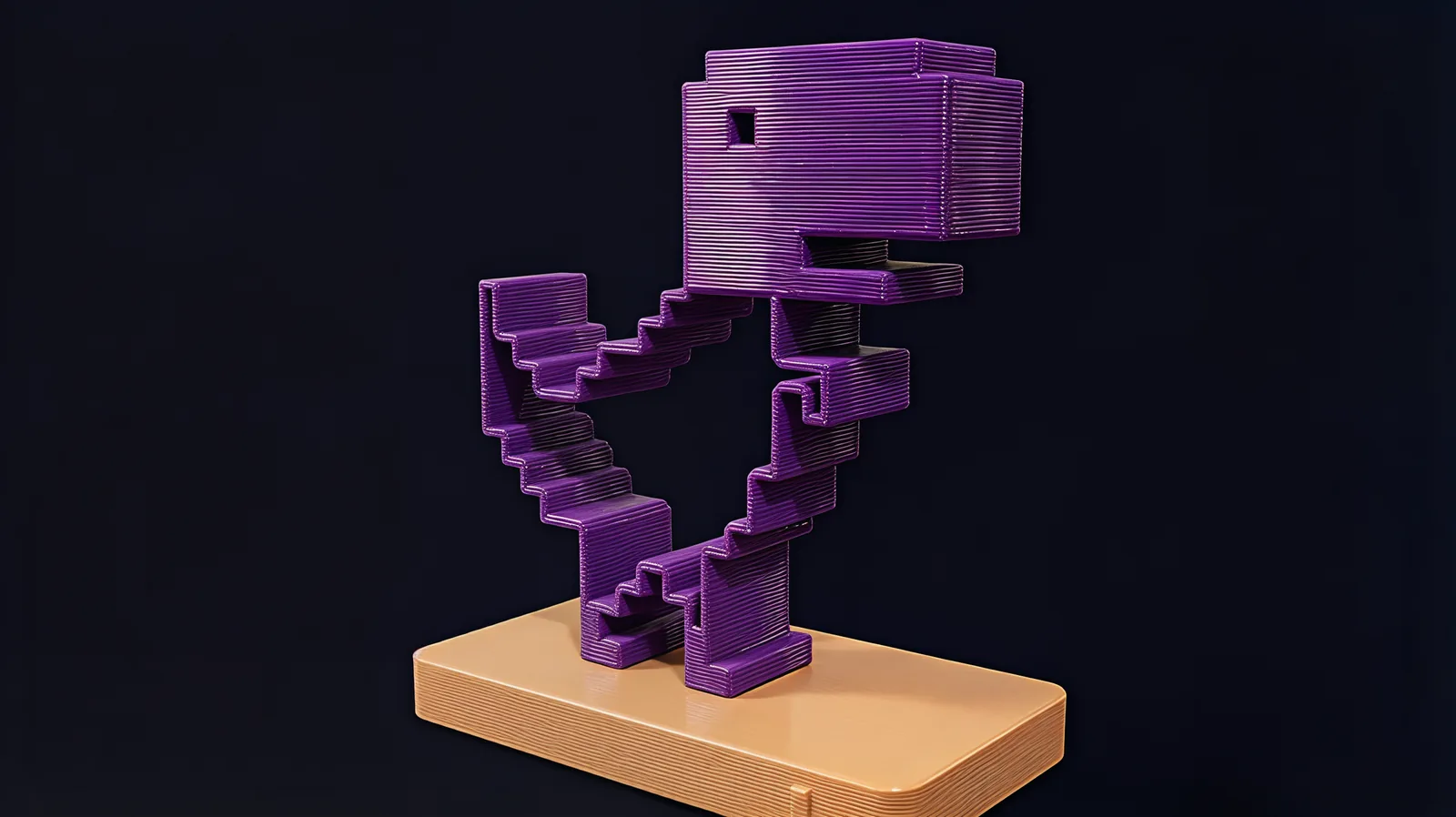
The browser’s offline dinosaur, printed 9.8 in tall with the fill taken out. What is left is a 2.8 mm ribbon of PETG tracing the sprite’s staircase the whole way round — and a lamp in the plinth, firing up through the gap where the fill used to be.
- 9.8 intall, desk to head
- 2.8 mmribbon, all the way round
Scroll to run it
Straight on, it is the sprite: 20 × 22 pixels, 10 mm to a pixel, nothing rounded off.
Turn it and the sprite has a back — 2.0 in of it, the same section the whole way through.
The head is the only solid block in the object. The eye is one pixel, taken straight out.
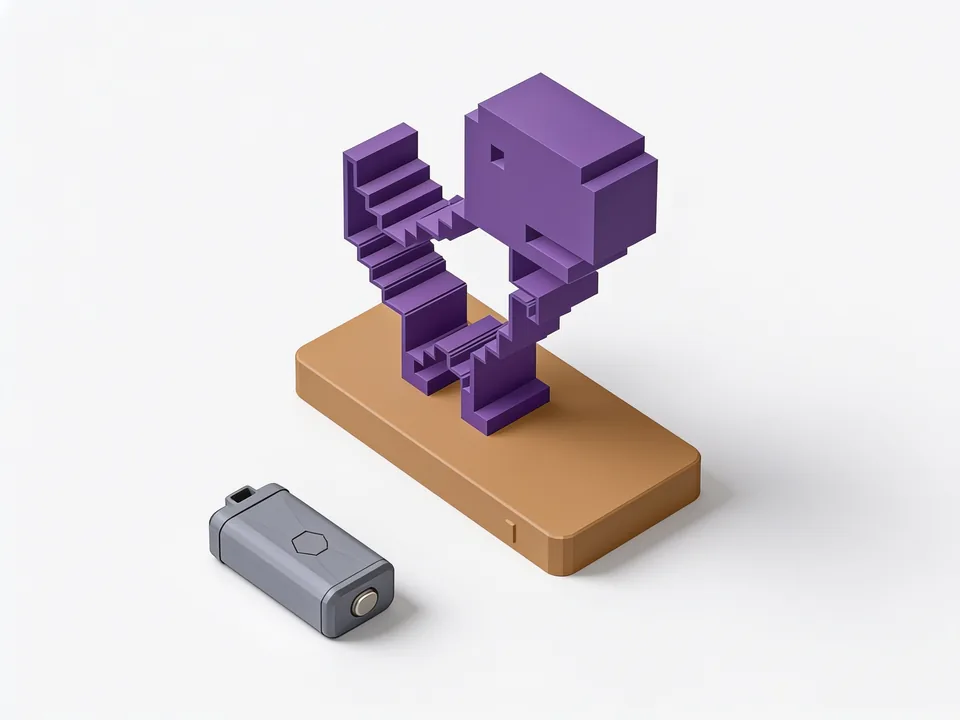
Apart on its one axis: the figure, the plinth, and the cap that closes the battery well.
The assembly is 2 pegs, 6 mm across, 8 mm down into the plinth, with 0.1 mm to spare.
The puck sits under the plinth. A 14 mm shaft carries its light up between the figure’s legs, into the part of the drawing that is not there.
Everything lands on a 10 mm grid
A sprite is a grid of squares on a screen. Printed, it is the same grid at 10 mm a square, so every step in the outline is a step you can put a fingernail in — and nothing anywhere on the figure sits off it.
- 10 mmone pixel, and the grid everything lands on
- 2.8 mmthe ribbon the body is drawn with
- 6.2 mmsockets, 8 mm deep, for 6 mm pegs
- 14 mmlight shaft, 12 mm up to the top face
- 45 mmbattery well, 12 mm into the underside
- 51 mmcap, flush with the underside when it is shut
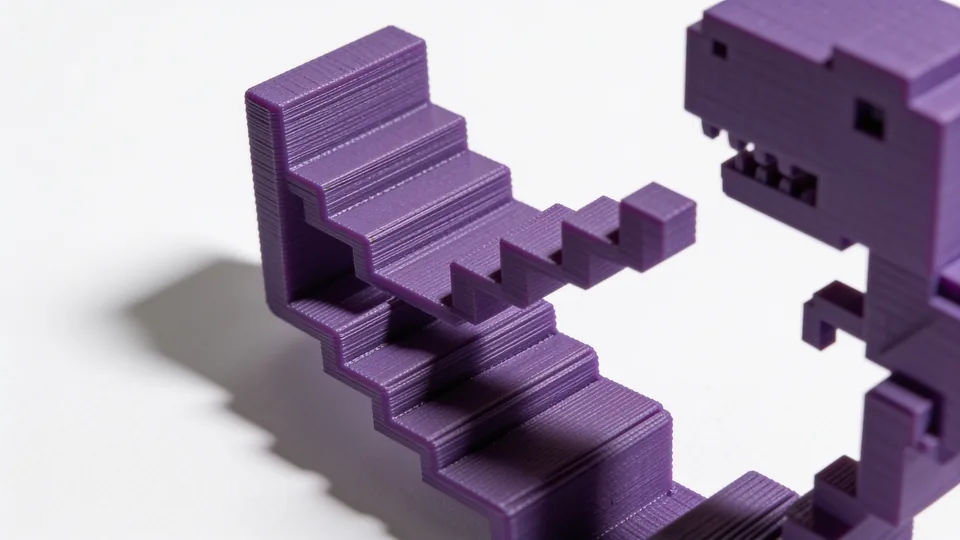
Close up, every step is there
Up close the steps stop being pixels and start being plastic — the same staircase, in PETG.
Weighed and measured
PETG, no screws and no glue. In daylight it reads as the sprite; after dark it reads as the light coming through it.
- Overall
- 8.7 × 4.8 × 9.8 in
- Weight
- 6.7 oz
- Material
- PETG
- Grid
- 10 mm a pixel