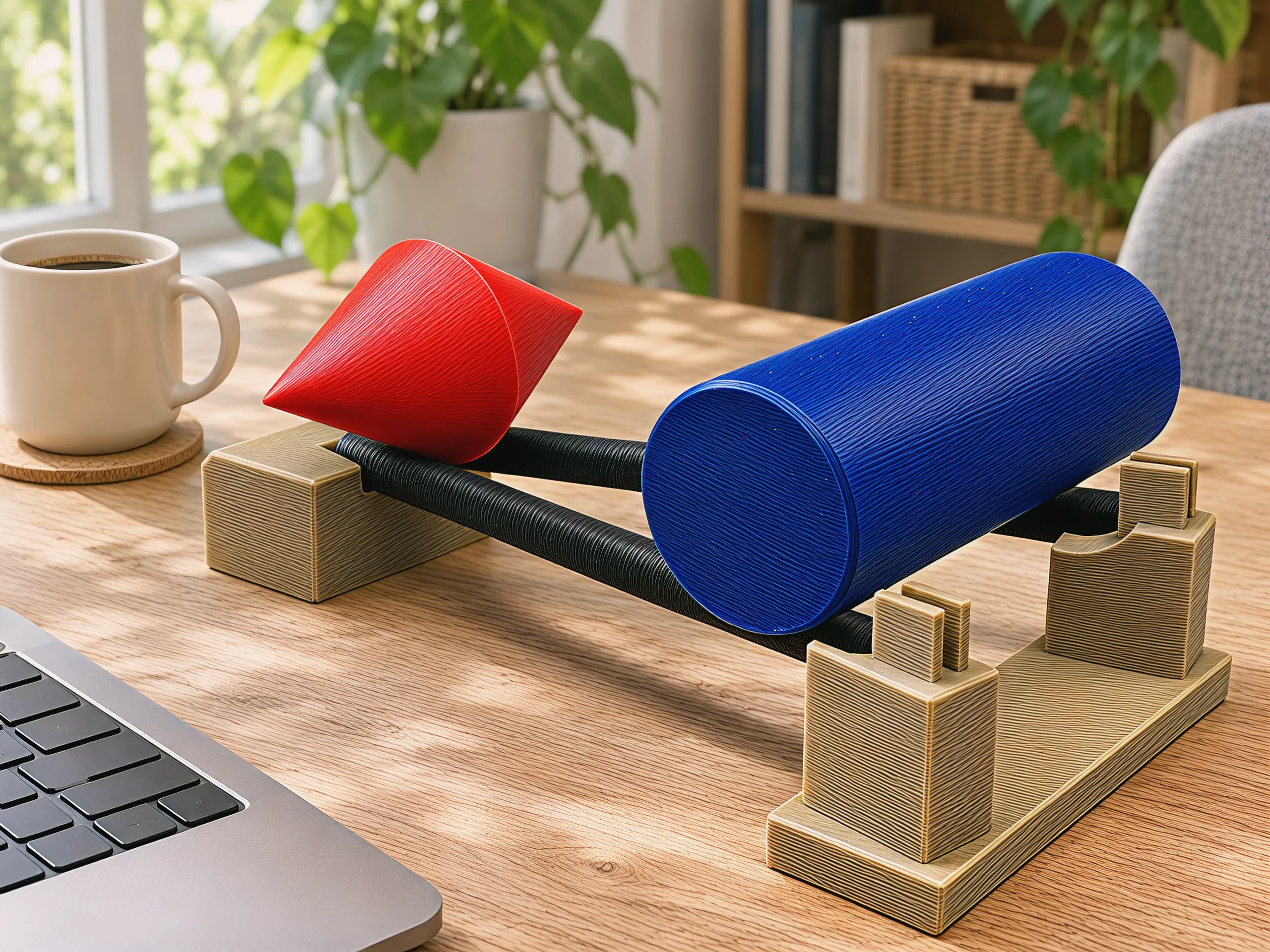
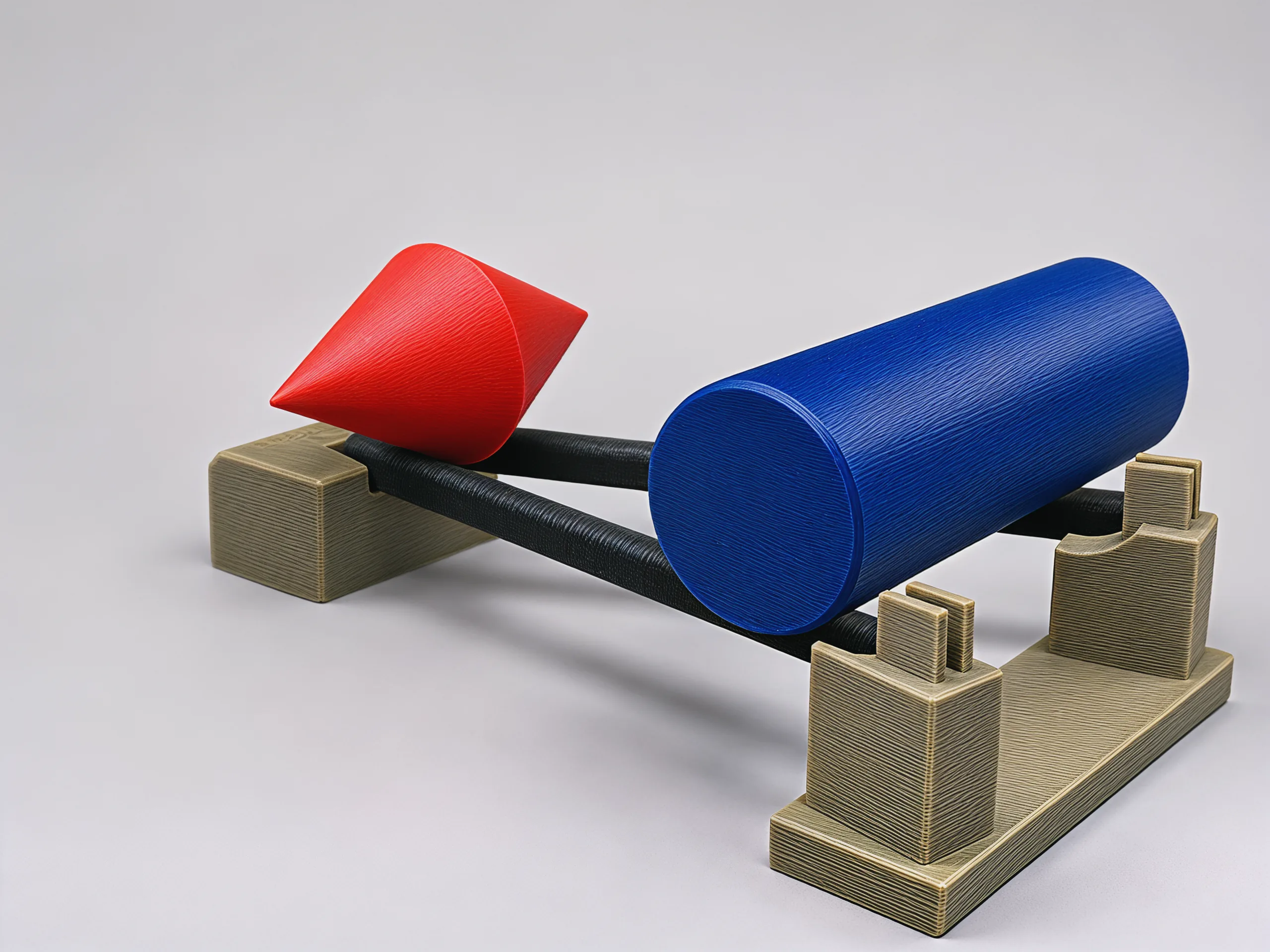
Uphill Double Cone
A double cone that rolls up its own track, while a plain cylinder rolls back down.
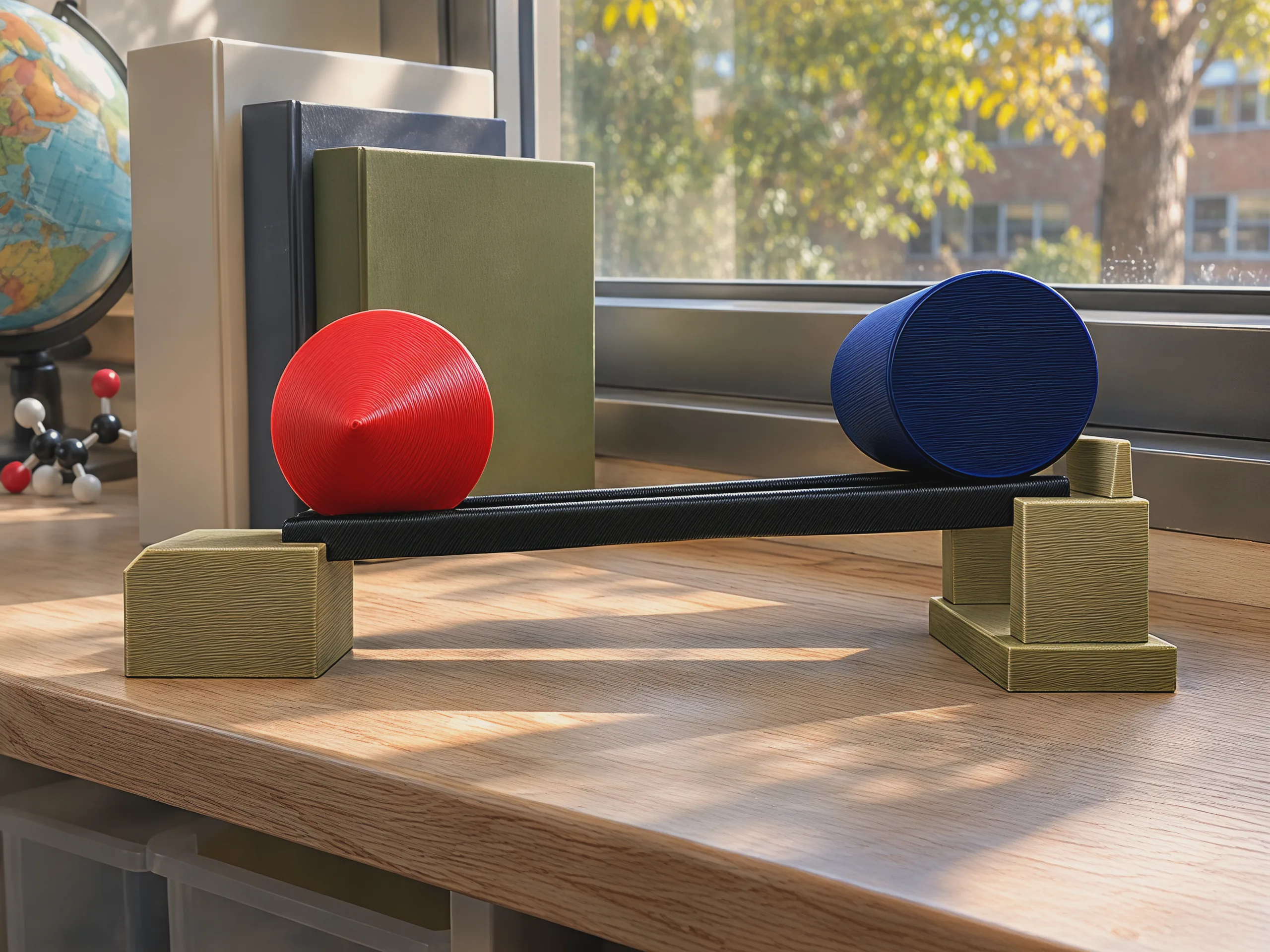
Set it up. The cone goes in the low, narrow end marked START HERE. The cylinder waits at the high end.
The cylinder first. Let it go and it rolls down the slope, the way anything round should.
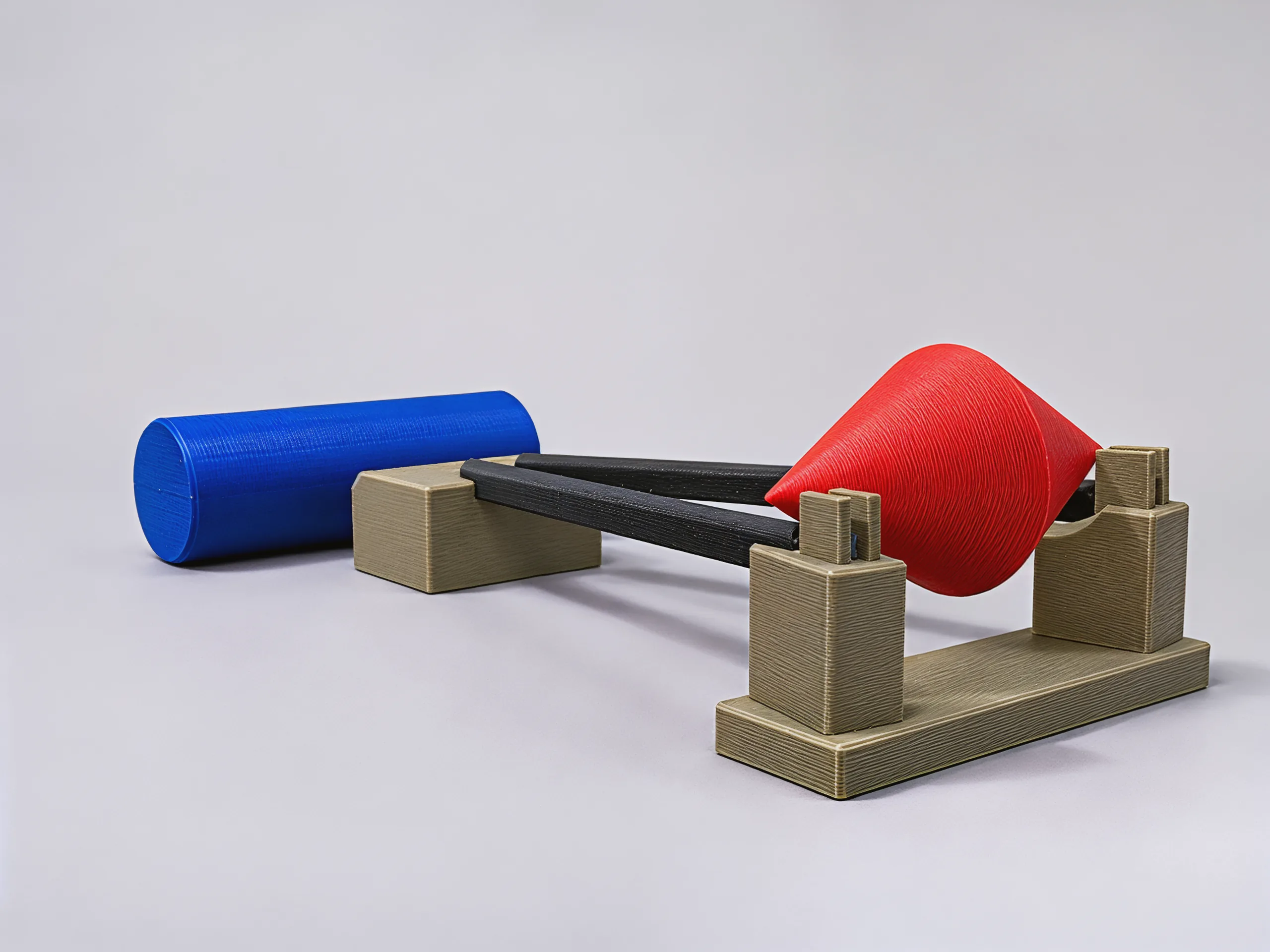
Lift it off. Set the cylinder on the table and the track is the cone’s alone.
Now let go of the cone. It rolls the other way, 6.6 in up the rails, and stops between the posts at the top.
From the side. The rails climb 0.40 in, but its centre ends 0.24 in lower than it started. The dashed line is where it began.
Carry it back. Put the cone at START HERE and the cylinder at the top, and it climbs again. Nothing to wind, nothing to charge.
Up close
10.3 × 5.5 × 4.0 in and 7.8 oz, about the footprint of a hardcover book.
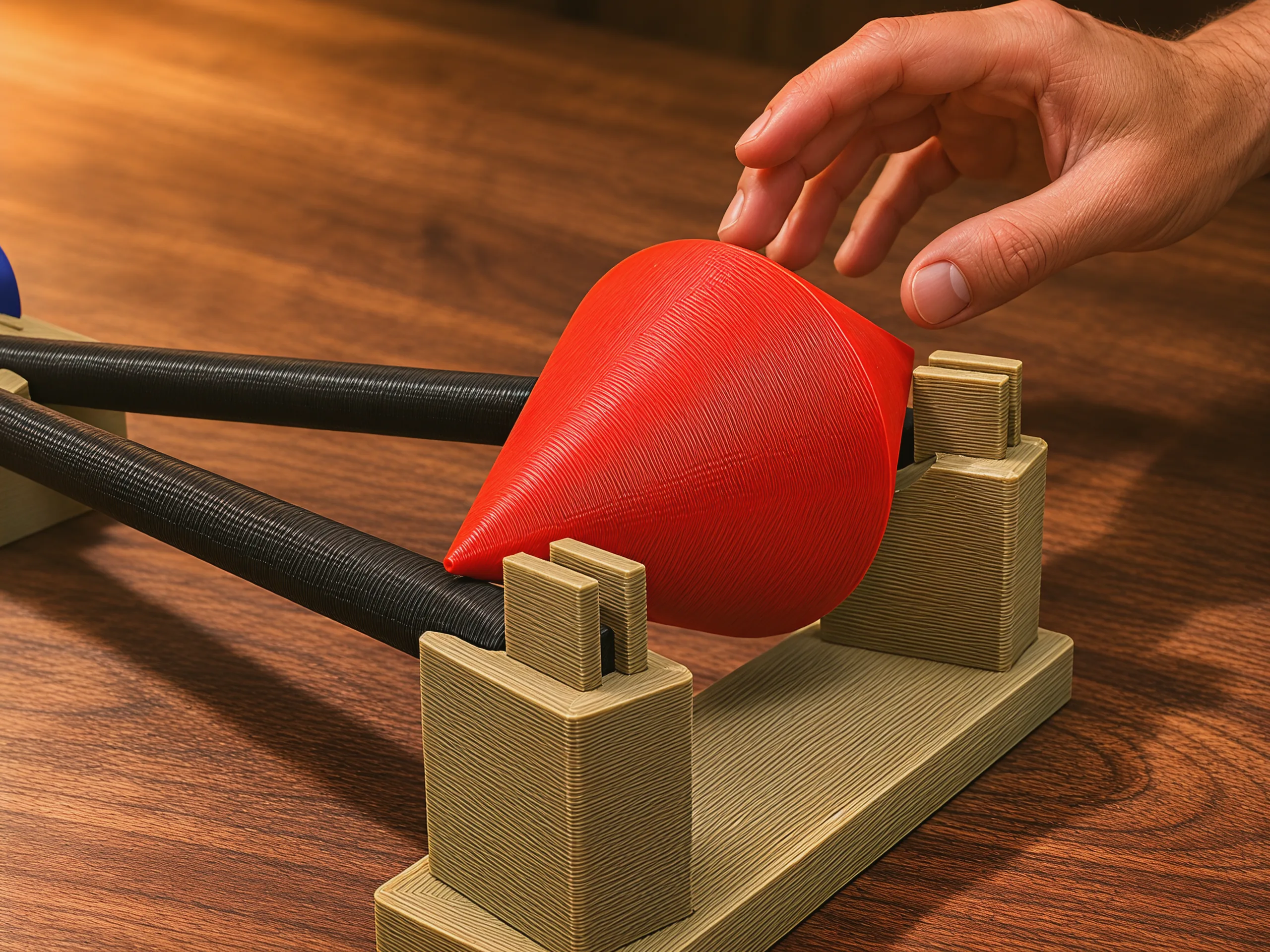
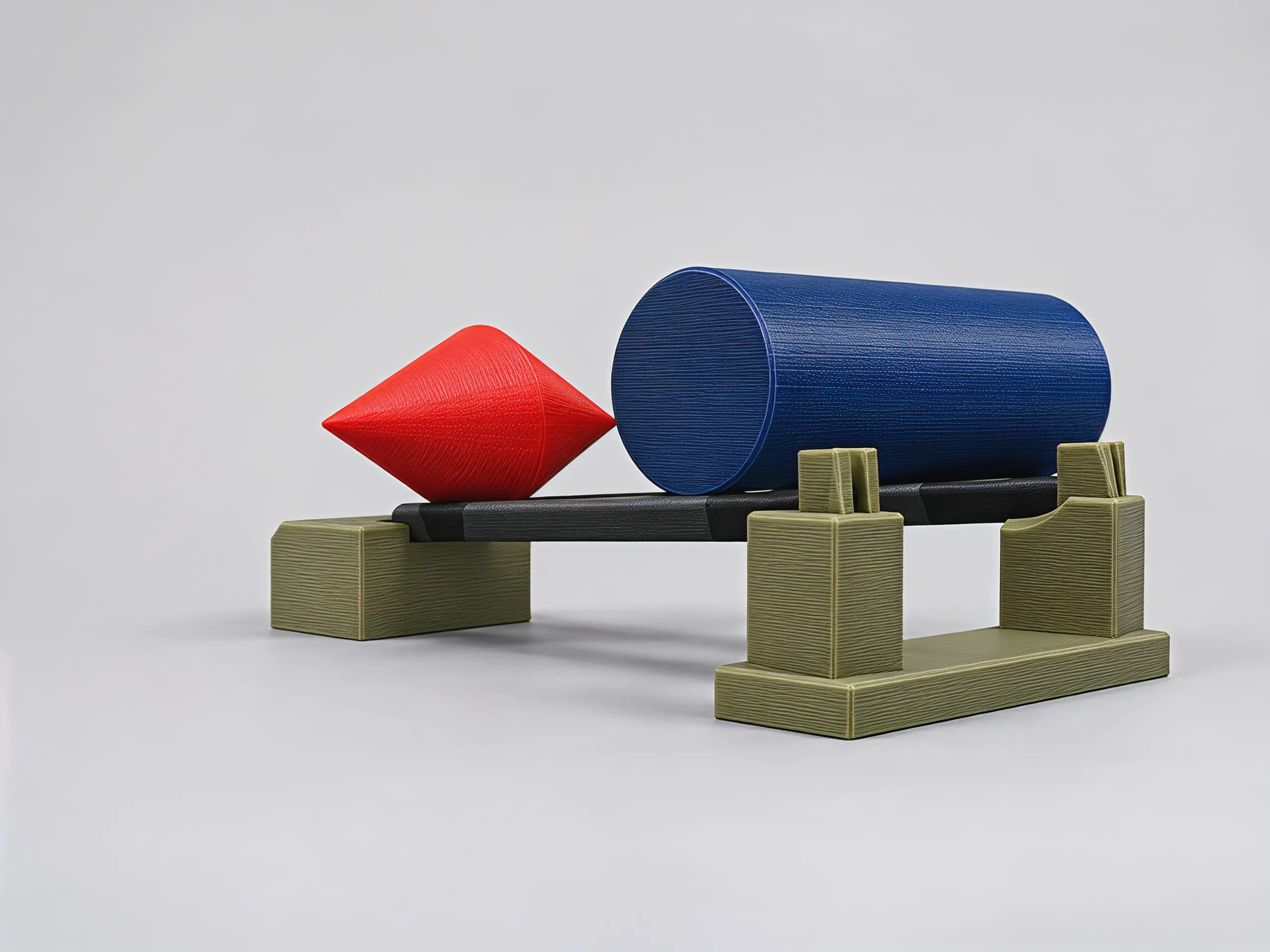
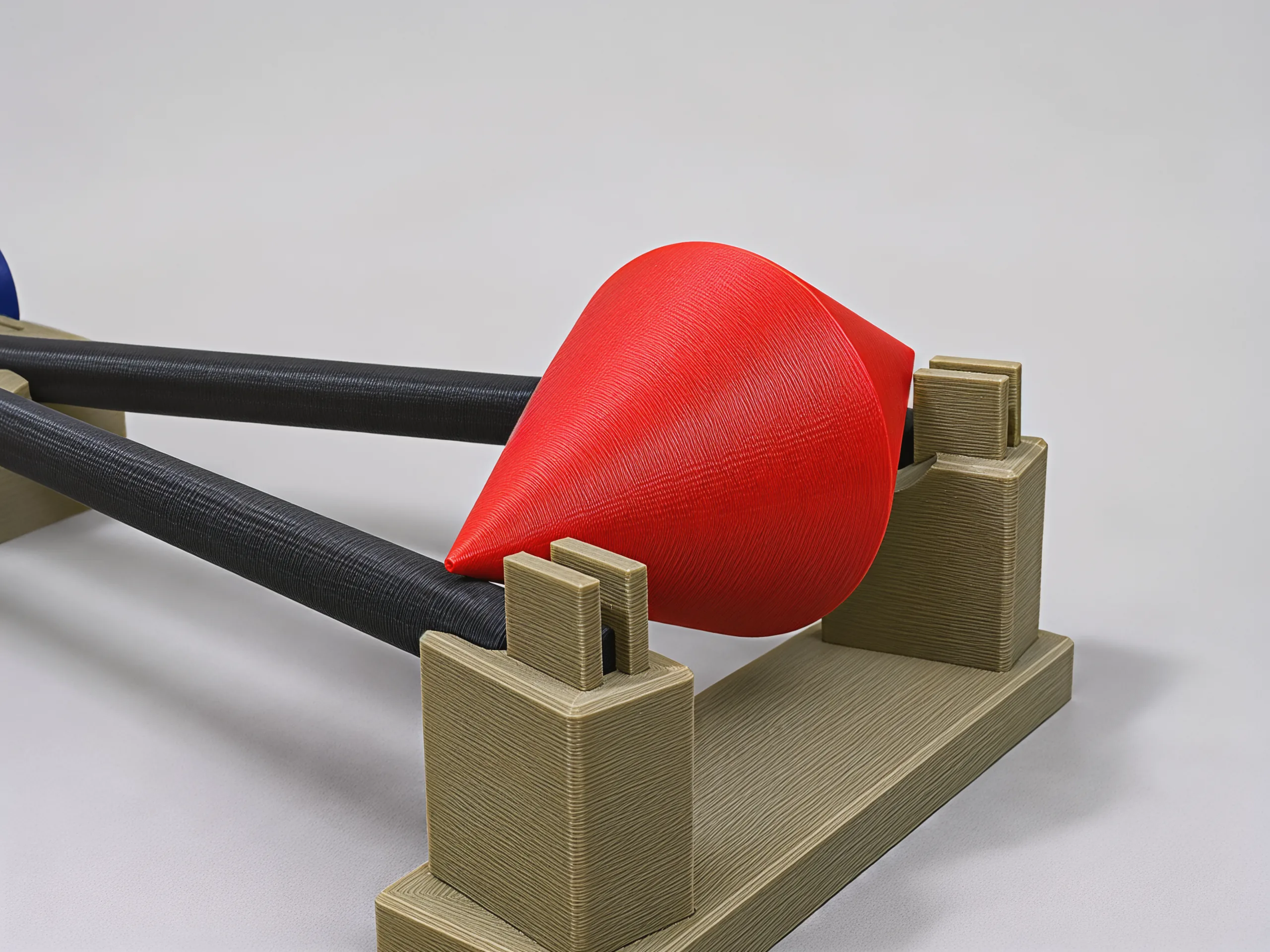
It sits on a desk, a shelf or a classroom bench, ready for whoever asks why the cone goes the wrong way.
It is rolling downhill the whole time.
The two rails spread from 0.8 in apart at the start to 3.9 in at the top. As they part, the cone settles deeper between them, onto its thinner ends. The rails rise 0.40 in under it, but its centre drops 0.24 in, so gravity pulls it up the slope.
The cylinder is the same width all along, so it cannot sink: it rides the rails and rolls down like a ball would. The explanation is engraved under the high stand.
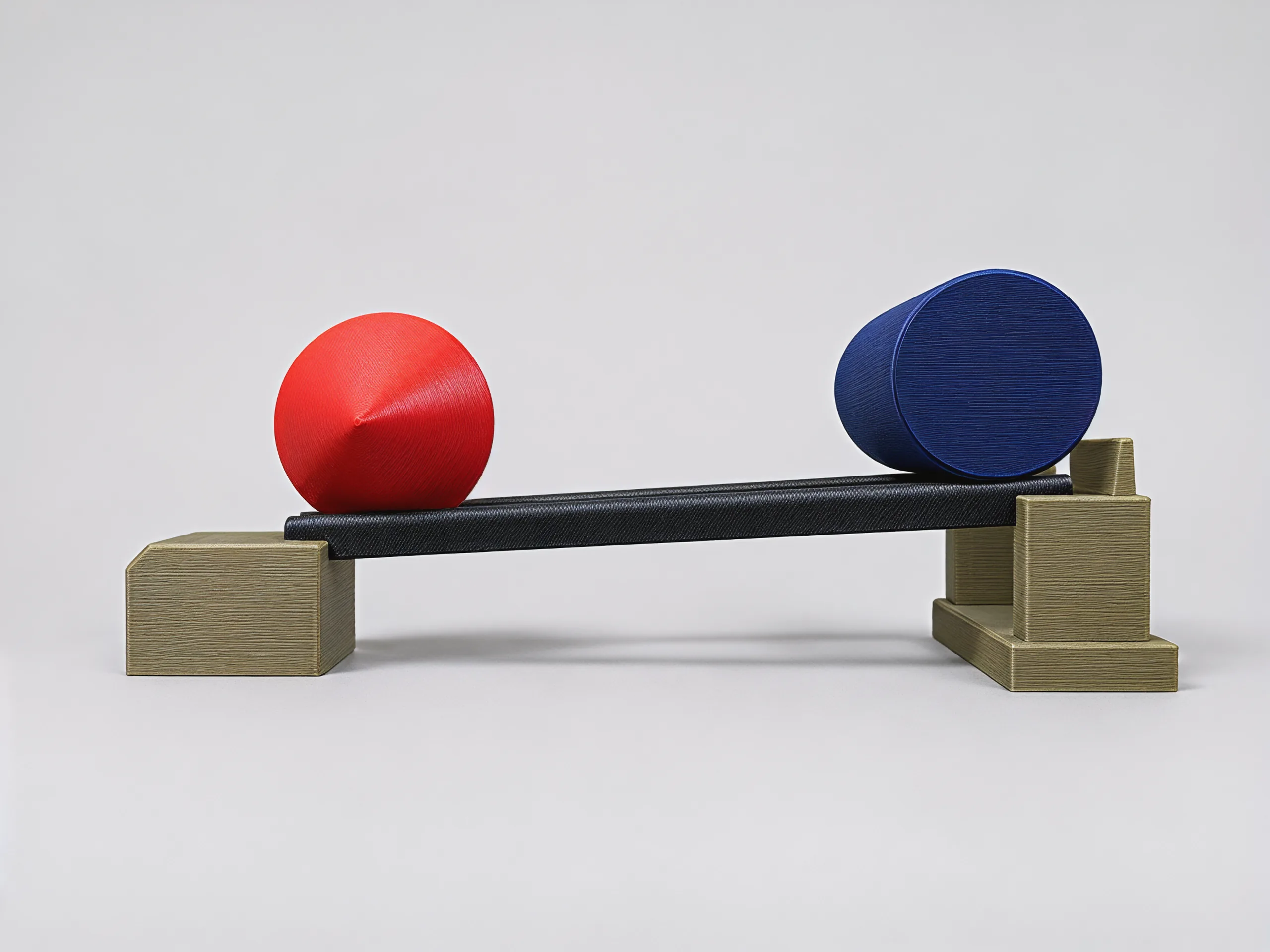
- where its centre started
- the path its centre takes
Three things in the box.
- 1
- orange double cone
- 1
- blue cylinder, the control
- 1
- track: two rails from a low START HERE block to a high stand
| Size | 10.3 × 5.5 × 4.0 in (261 × 140 × 101 mm) |
|---|---|
| Weight | 7.8 oz |
| Double cone | 2.4 in across, 4.6 in tip to tip |
| Cylinder | 2.0 in across, 5.5 in long |
| The climb | 6.6 in along rails that rise 0.40 in |
| Cone’s centre | drops 0.24 in (6.2 mm) on the way up |
| Material | PETG |
| Power | None. Gravity does it. |
Good to know
Does it need batteries or a motor?
No. There is nothing inside the cone and nothing to wind. Gravity is the only thing that moves it.
How can the cone roll uphill?
It only looks uphill. The rails spread apart as they rise, so the cone sinks between them: the track climbs 0.40 in while the cone’s centre falls 0.24 in. The same explanation is engraved under the high stand.
What is the blue cylinder for?
It is the control. Put it on the same rails and it rolls down, which shows the track really does slope up toward the high end.
How big is it?
10.3 × 5.5 × 4.0 in and 7.8 oz. The double cone is 2.4 in across and the cylinder 2.0 in.
What is it made of?
PETG, in four colours: an orange cone, a blue cylinder, grey rails and sand-coloured supports.