The keel comes first
Two cradles take the weight, and the keel settles into them: one long backbone that rises into a stem at each end, bow and stern.
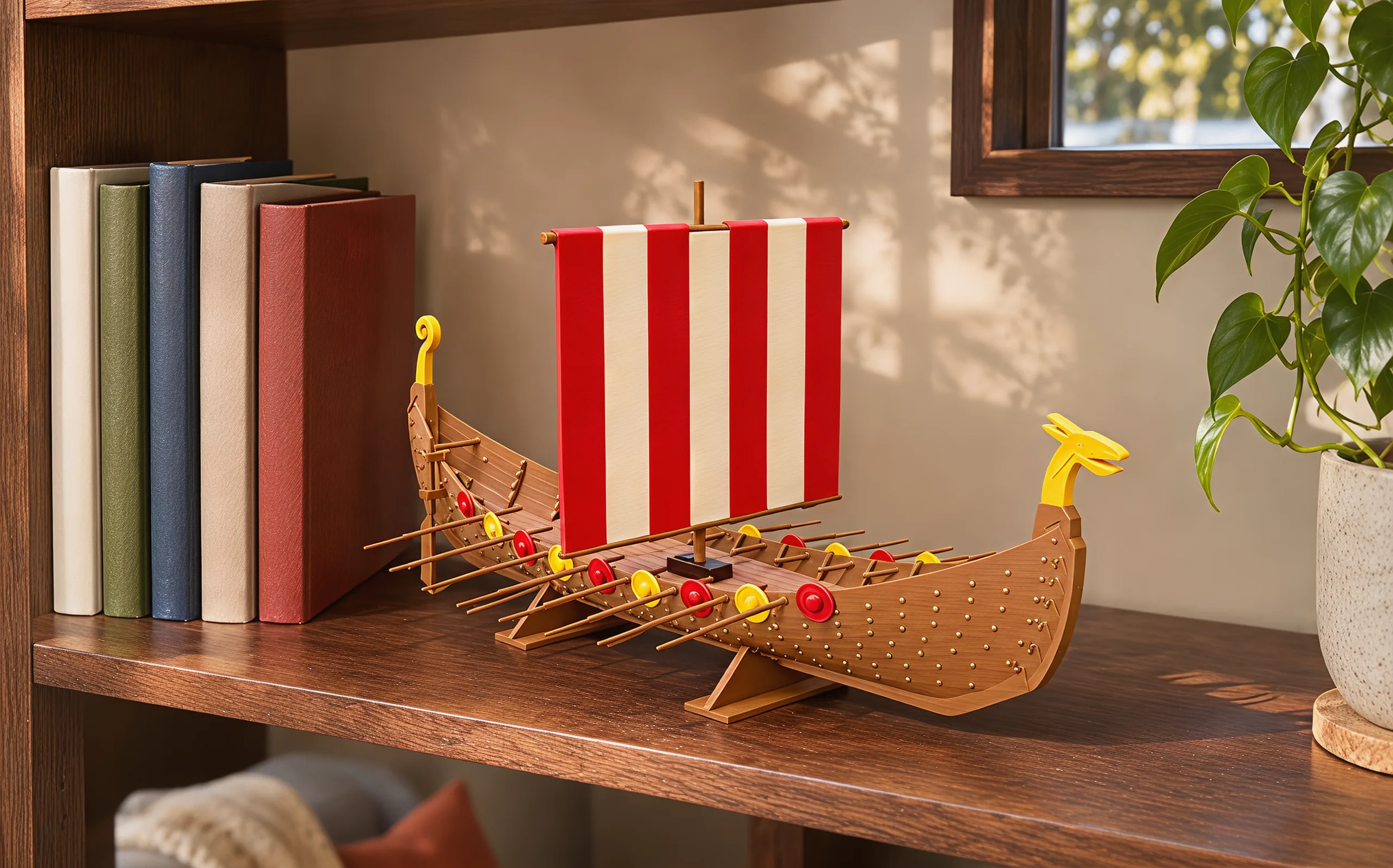
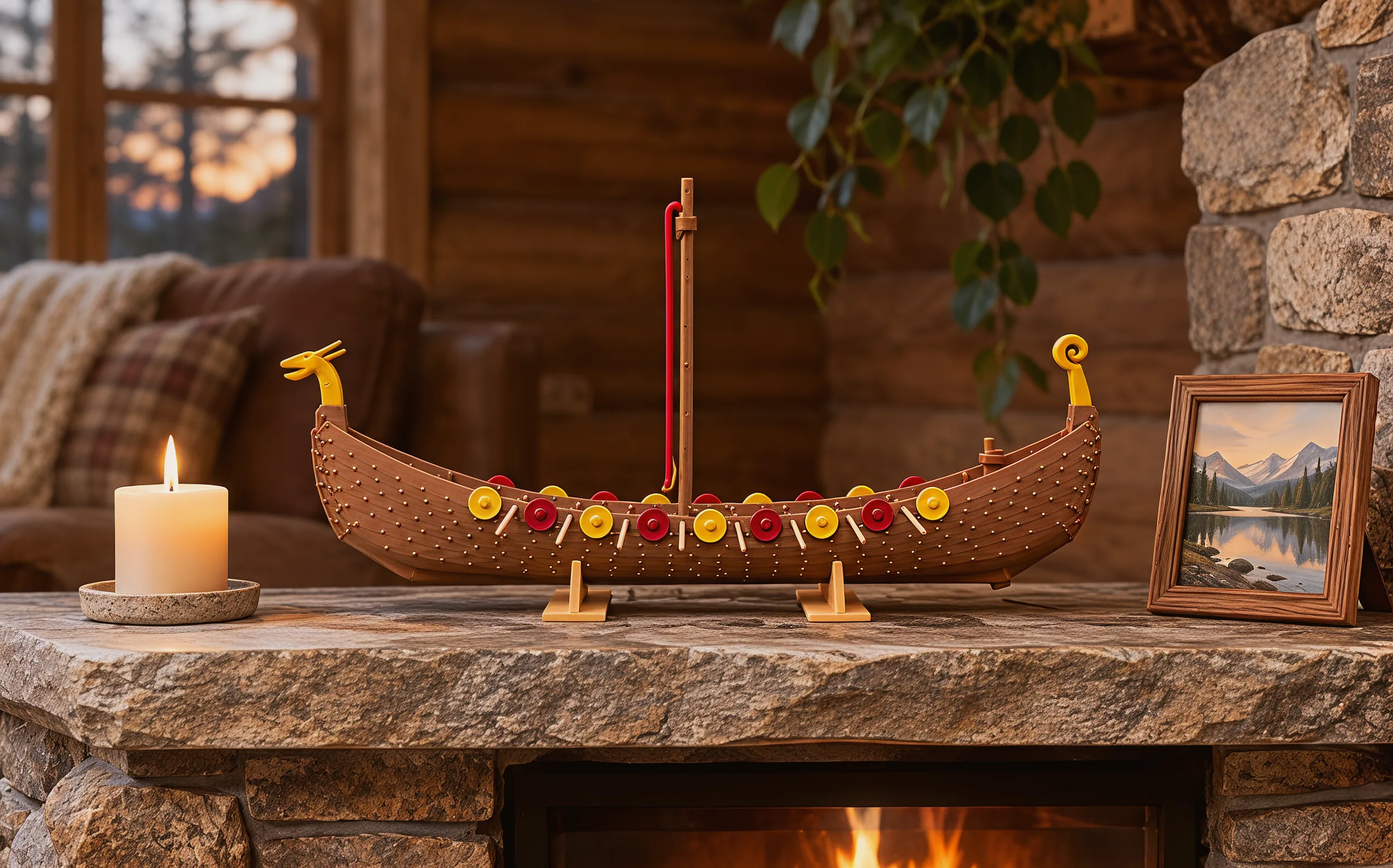
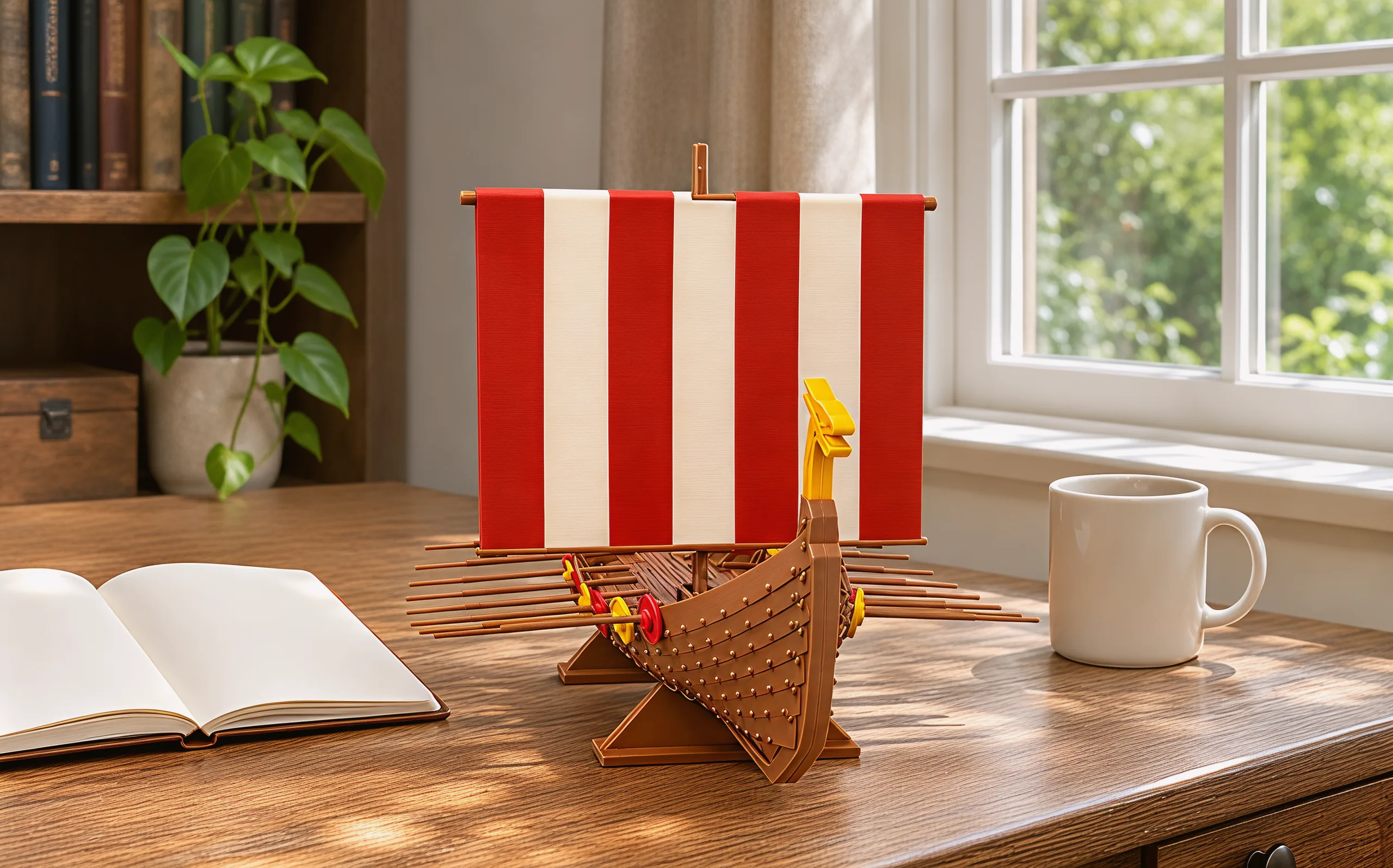
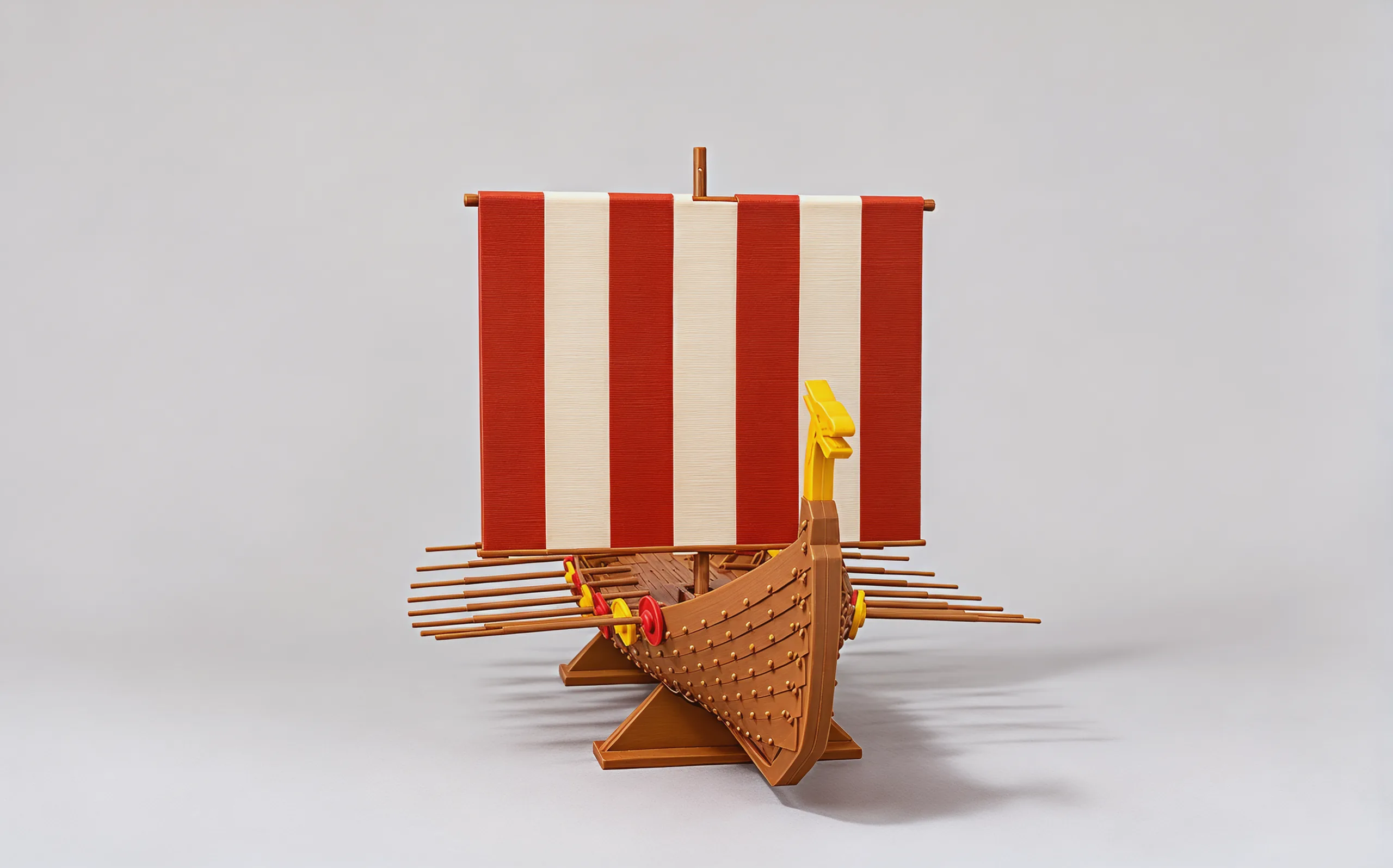
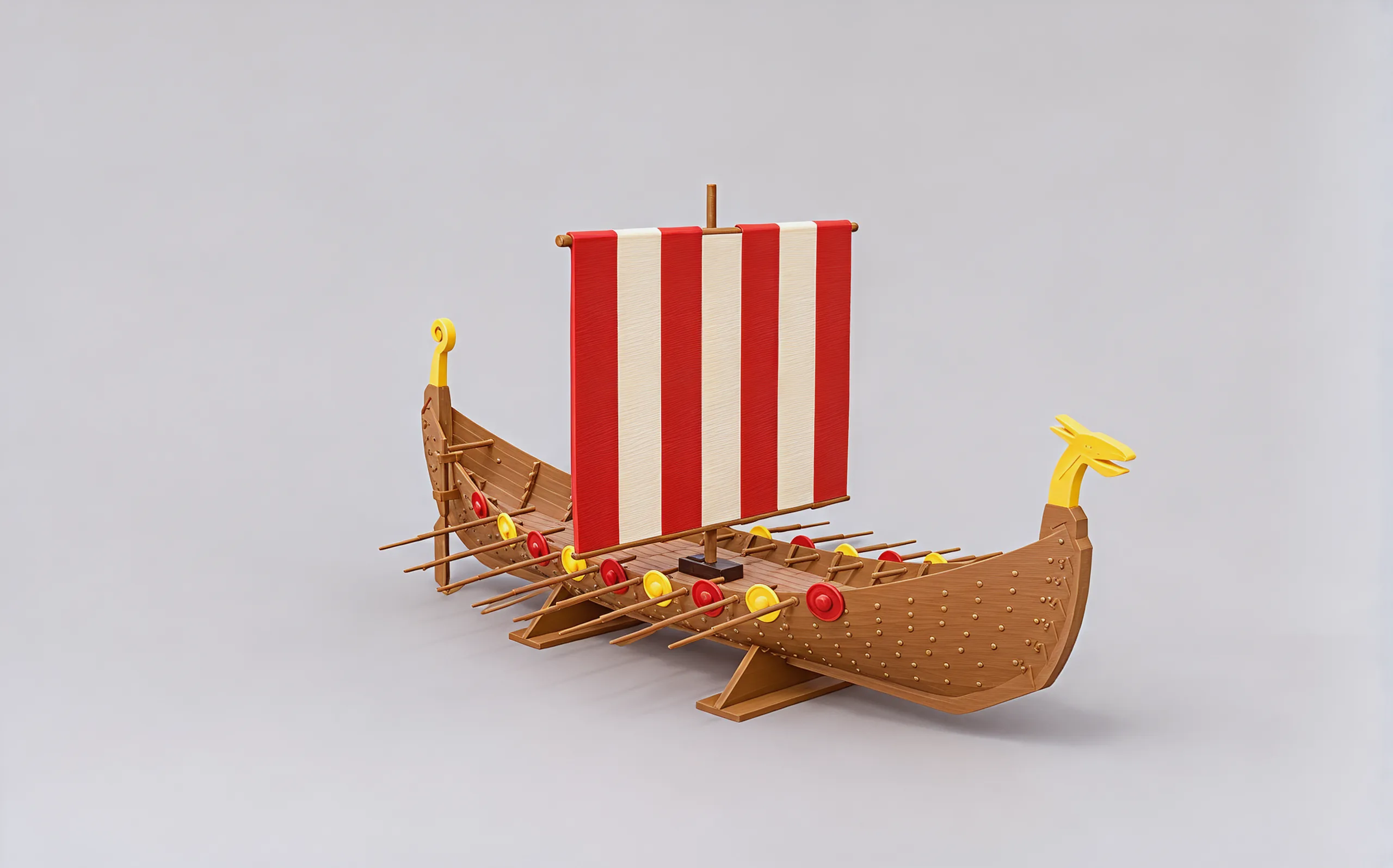
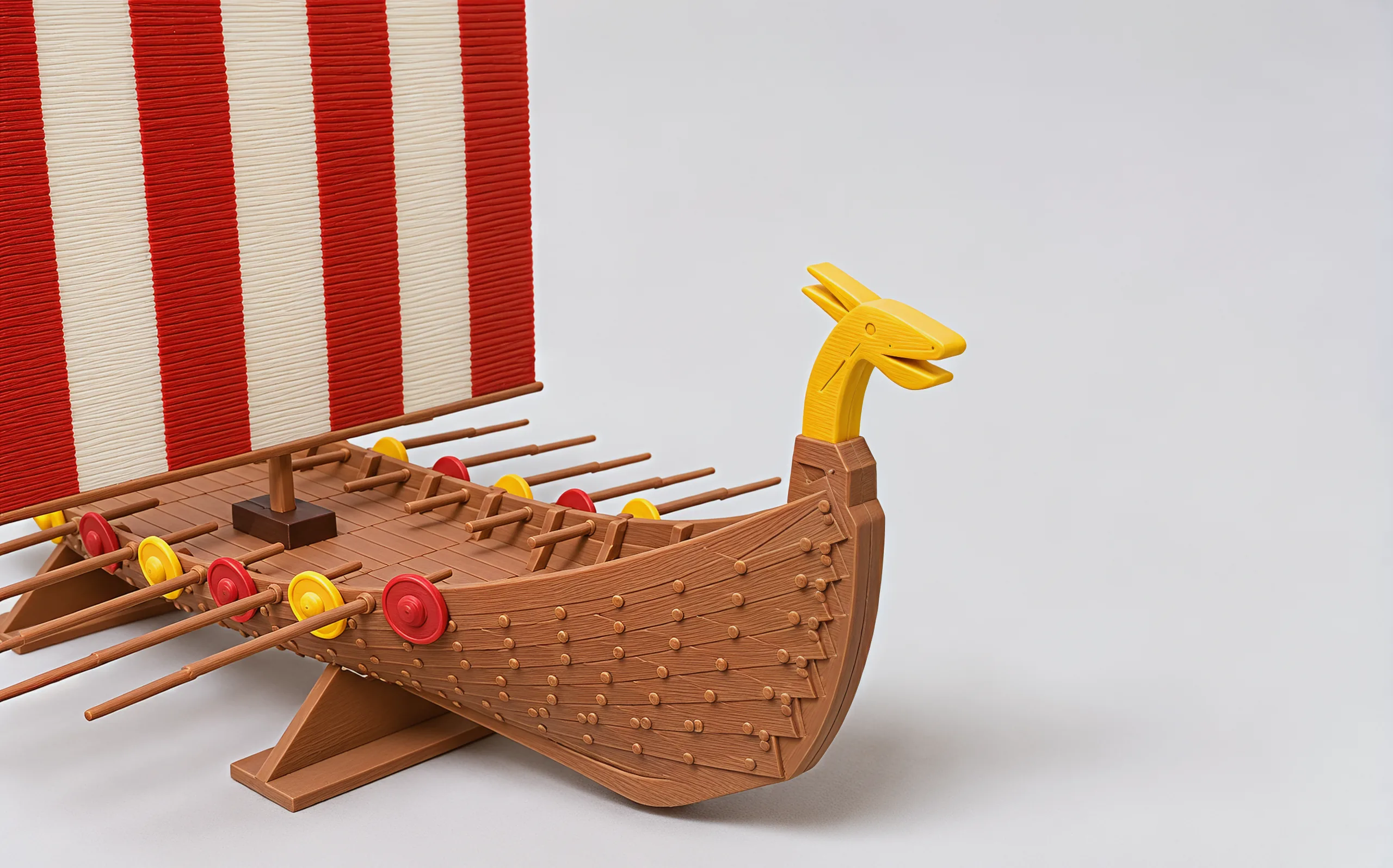
A model longship after the Gokstad ship, about 1:53: a lapped clinker hull 17.2 in long, 18 shields on the rail, 16 oars out and a red-and-white striped sail, standing on two cradles.
Two cradles take the weight, and the keel settles into them: one long backbone that rises into a stem at each end, bow and stern.
The 11 frames drop onto their own stations along the keel, working out from the middle. Then the keelson runs over them and 11 floorboards lie across the beams.
8 rows of strakes a side, the lowest first. Each one laps over the row below, tucks under its rivet heads and slides 2.4 mm down the side to lock.
18 shields hang along the top strake, yellow and red in turn, and 16 oars run out through their ports. The dragon head and the spiral tail close over the stems.
The mast steps in leaning 20° aft, swings upright about its heel, and a lock block drops in behind it to hold it there.
The yard settles across the mast and the 7 sail strips hang from it. The steering oar on the starboard quarter still swings 30° either way on its tiller.
A longship is a few kinds of thing, many times over. This is one of each, on its own.
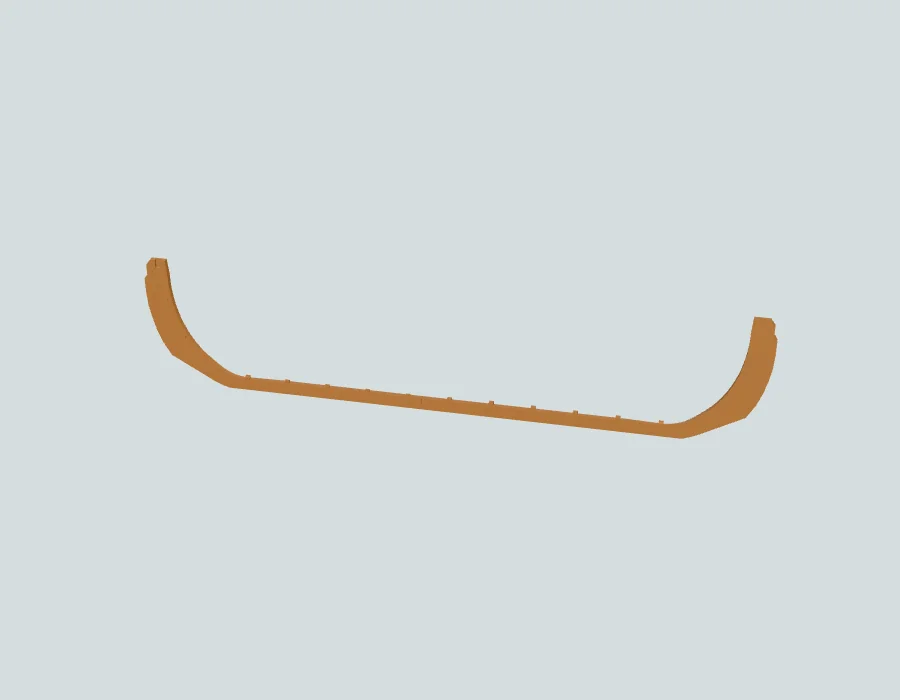
The backbone, rising into the bow and stern stems.
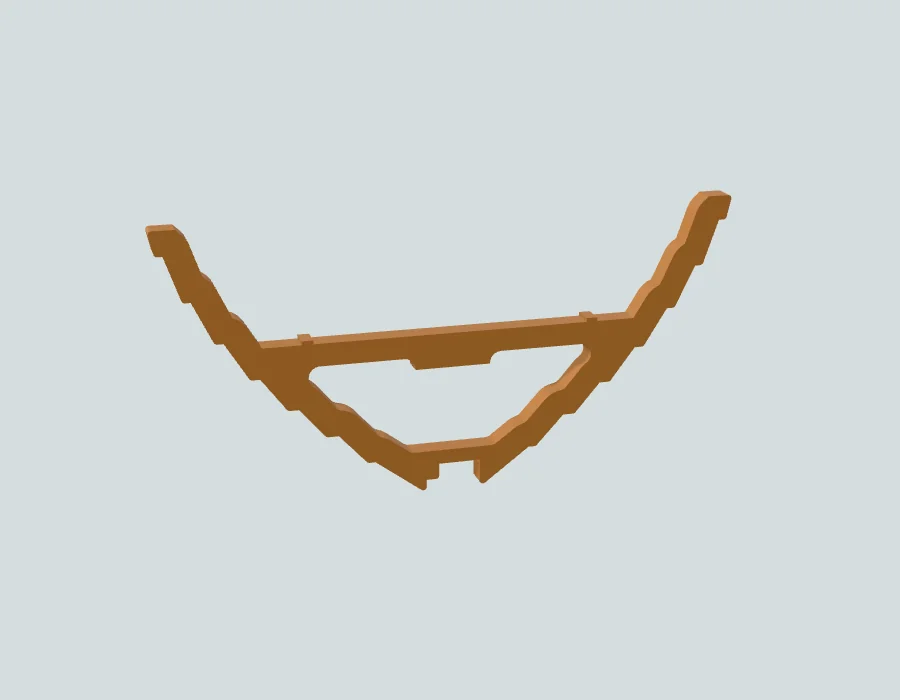
11 ribs, each with a crossbeam, stepped for the strakes.
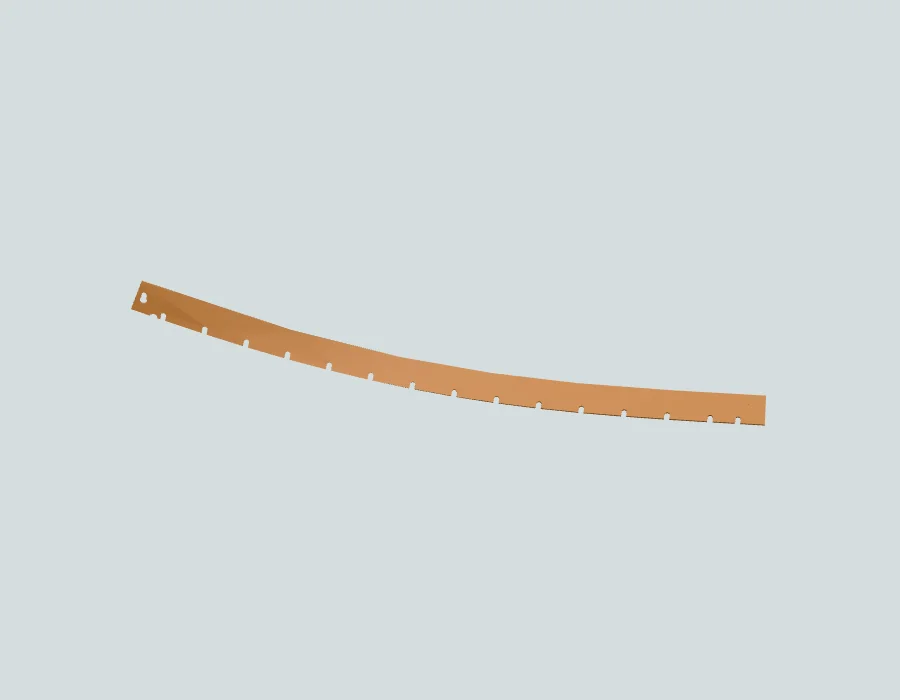
32 planks, 8 rows a side, rivet heads along each.

18 of them, 9 yellow and 9 red.
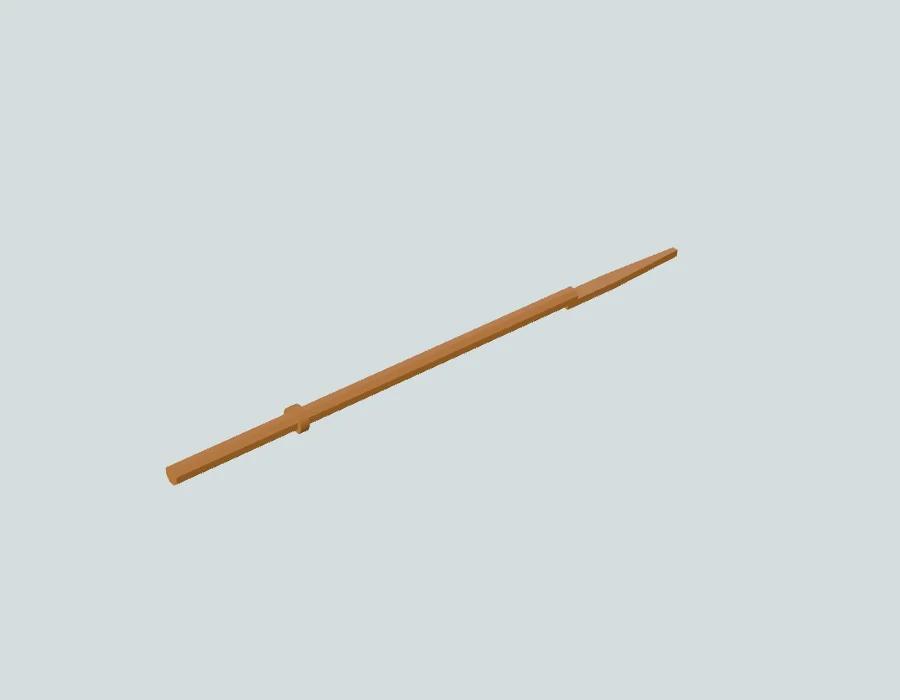
16 oars, 8 a side.
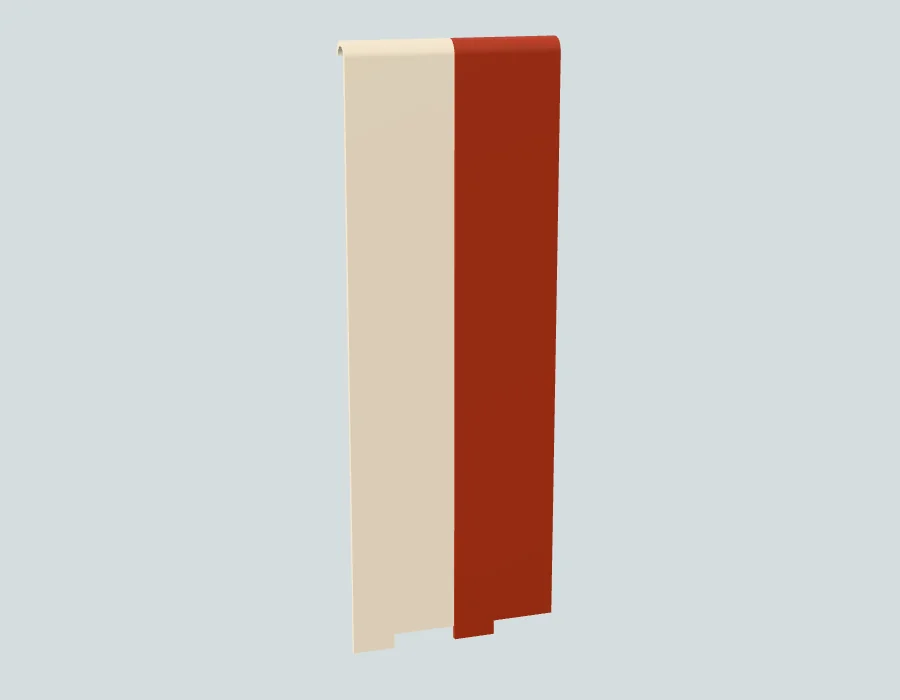
7 strips: 4 red, 3 off-white.
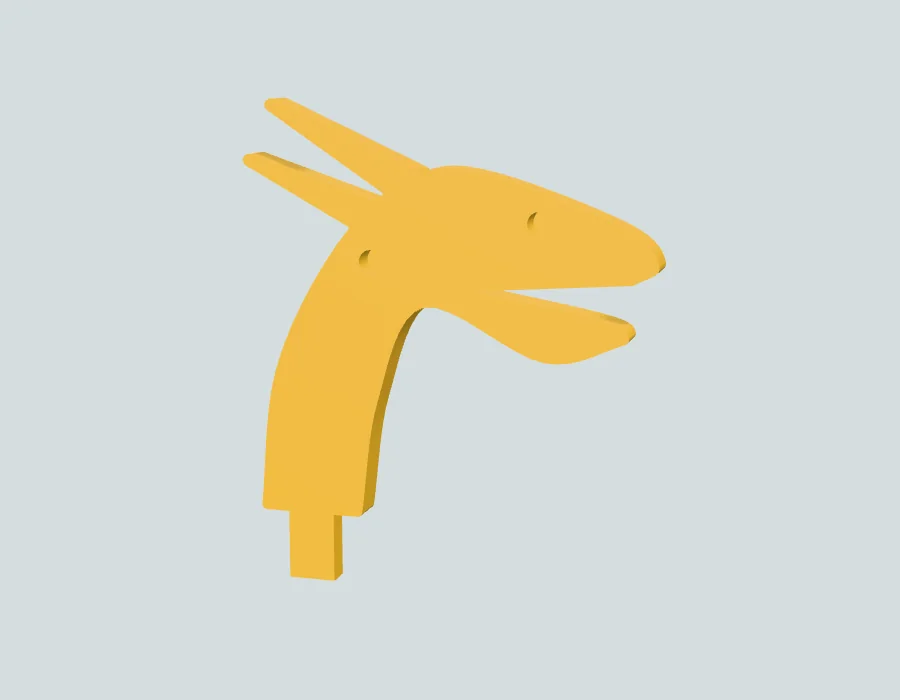
On the bow stem, mouth open.

On the stern stem, curled in on itself.
For a bookshelf, a desk or a mantel: a ship to stand and look at, with a steering oar you can still swing.
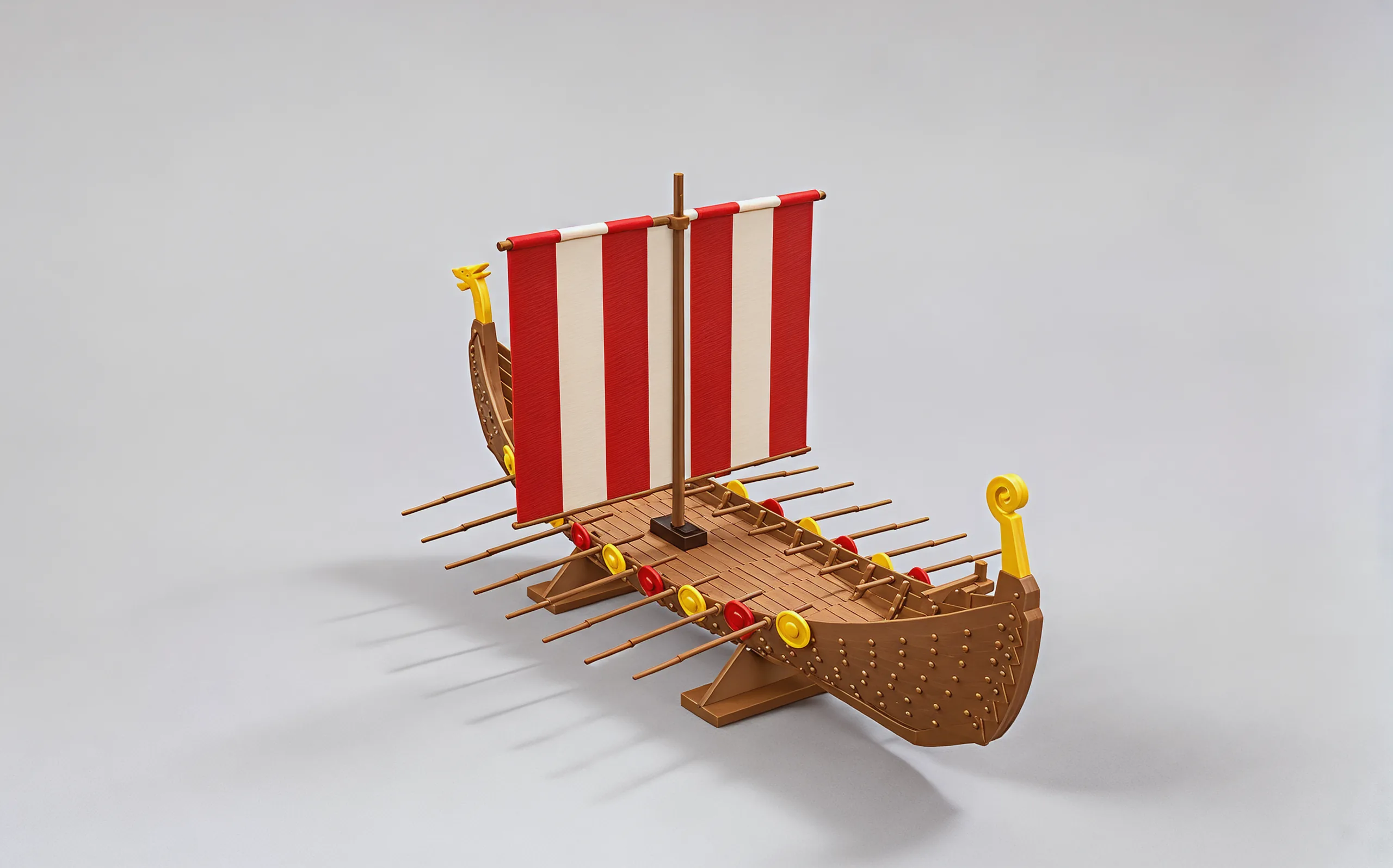
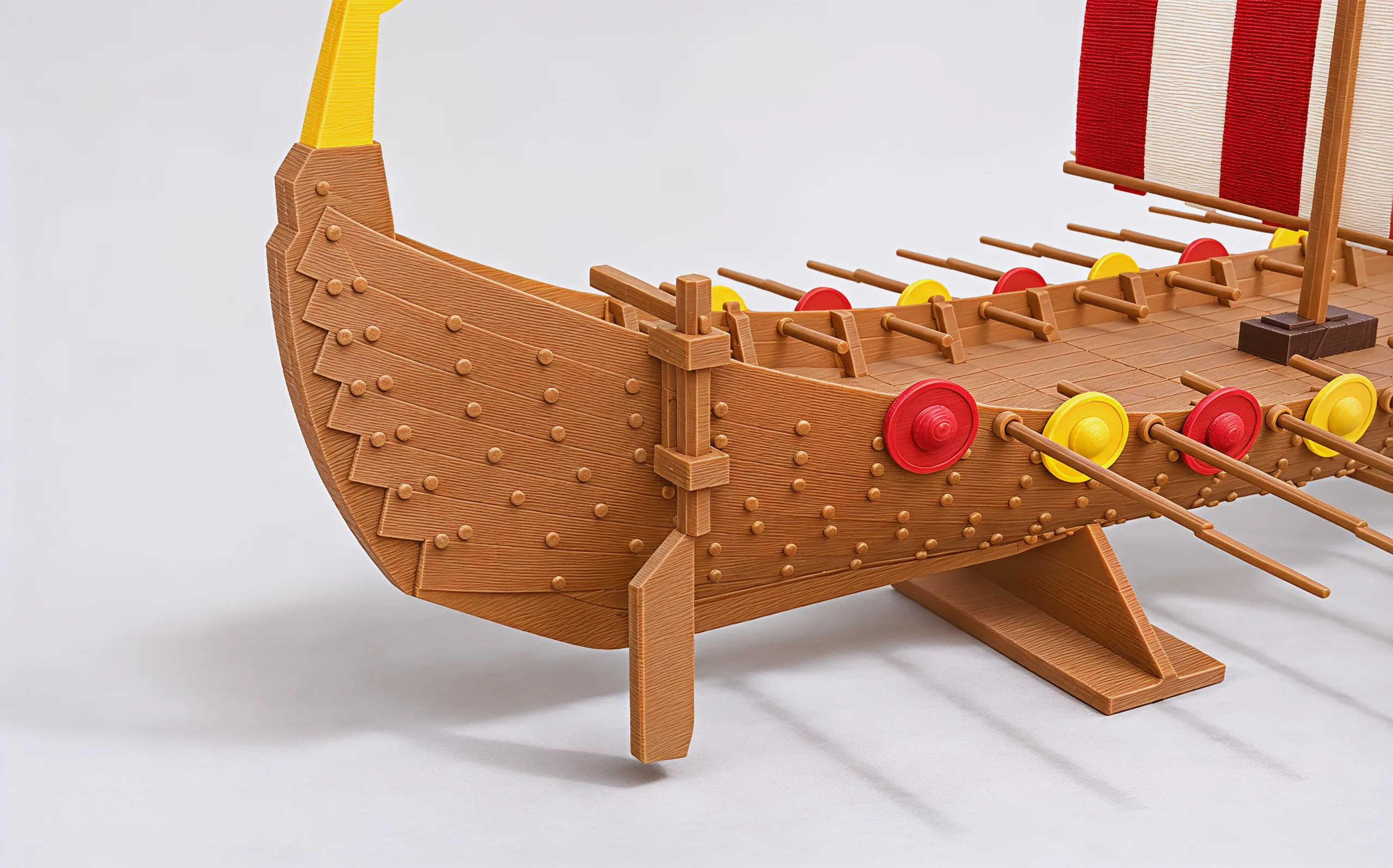
That is what clinker means. Every strake laps over the top edge of the row beneath it, slips its lip under that row's rivet heads and slides 2.4 mm down the side, where the heads hold it. 8 rows a side, garboard to sheer, make the stepped hull you see from outside.
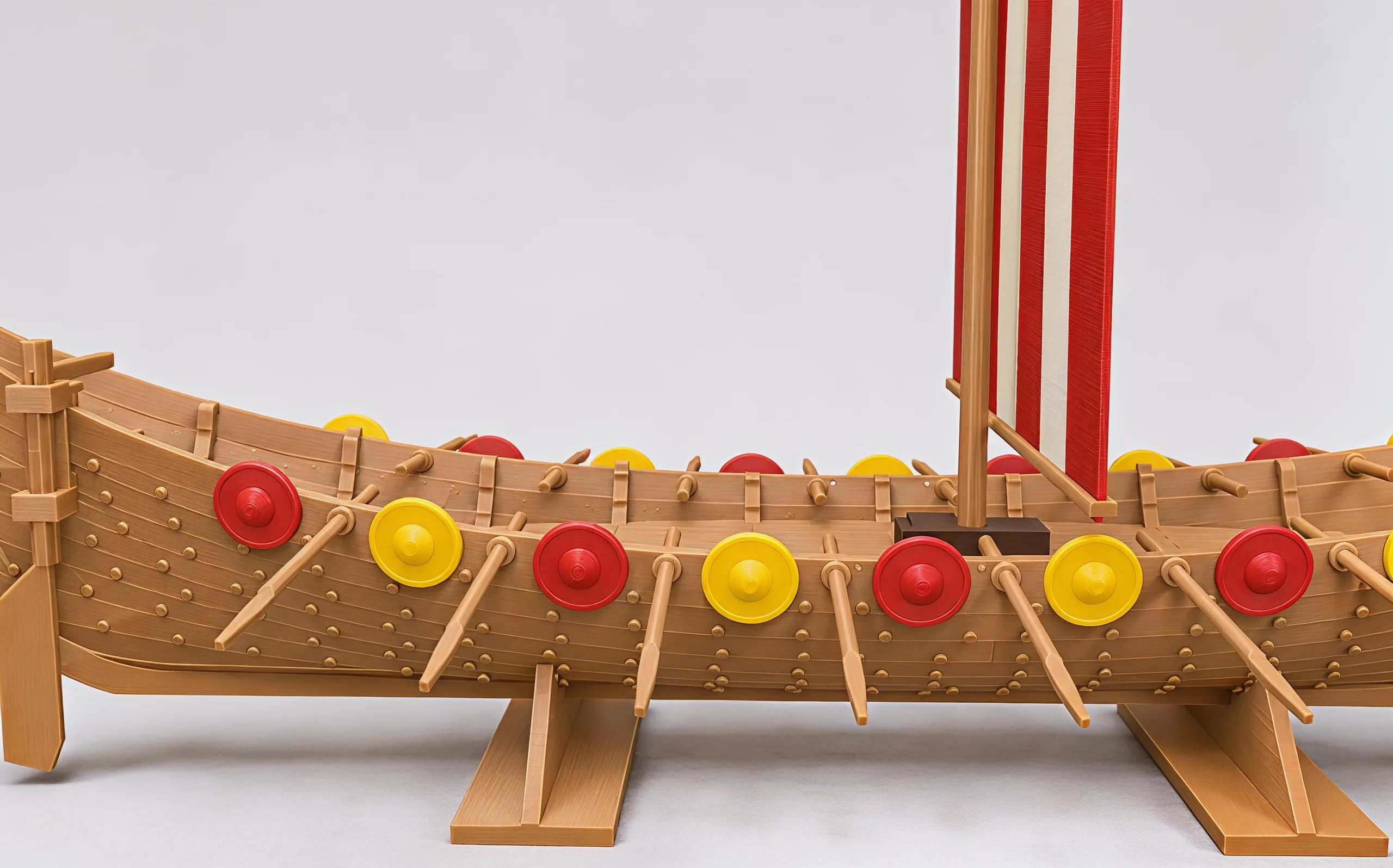
A clinker-built longship after the Gokstad ship, plank on plank, with its striped sail set.
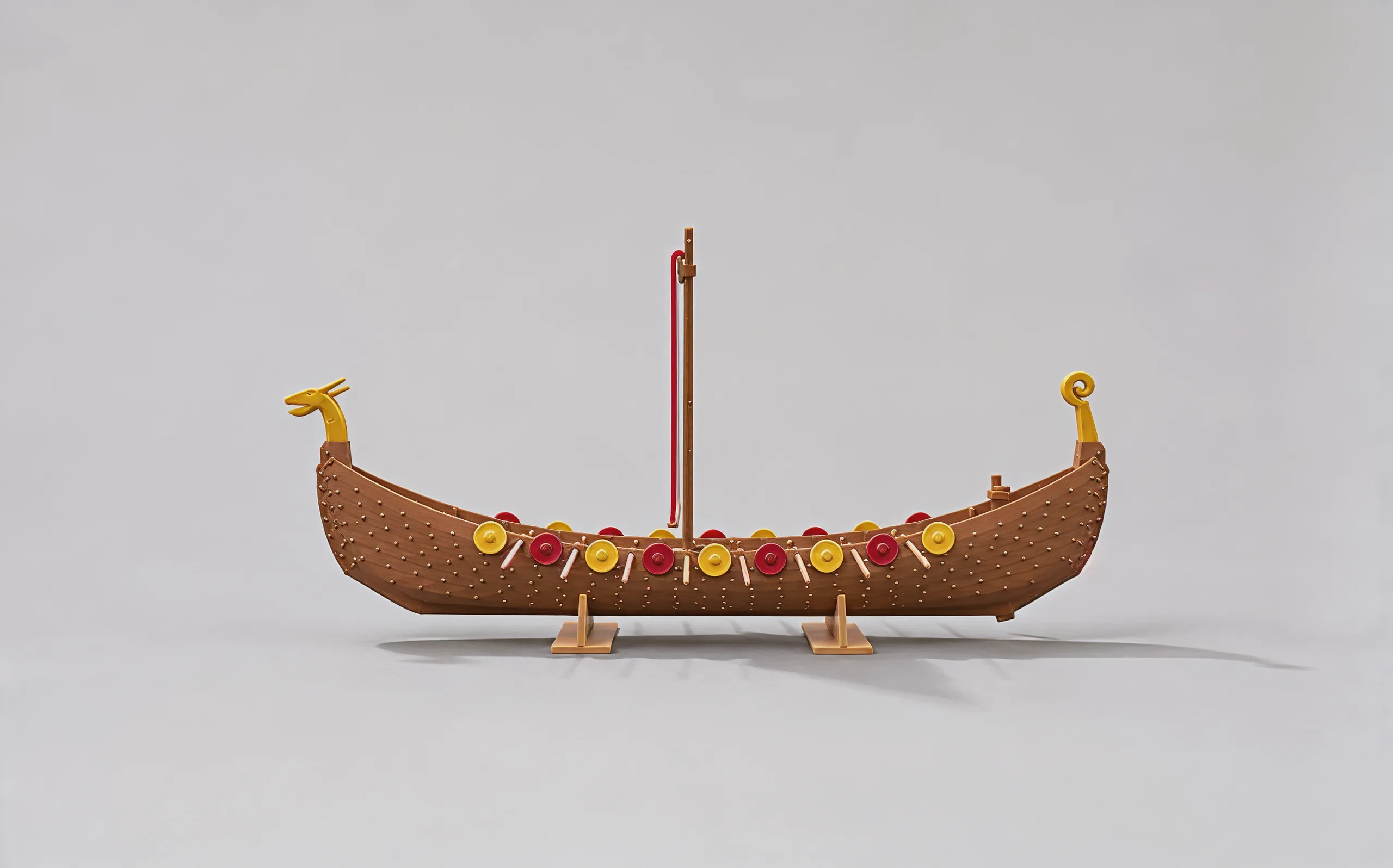
It needs a shelf about 9.8 × 4.2 × 1.1 in: long, deep and tall, in that order, with the oars run out. The hull alone is 17.2 in long and 3.5 in across.
Two things. The steering oar turns 30° either side on its tiller, and the mast pivots at its heel from a 20° lean to upright, where a lock block holds it.
The stays and shrouds take about 2 m of thin cord, which is not included. The ship stands and the mast locks without them.
The proportions follow the Gokstad ship, a 23.24 m longship from Norway, at about 1:53. The hull is clinker-built like the original: overlapping strakes over frames standing on a keel.