Made for open air.
A biplane 7.1 in from tip to tip and 1.6 oz in the hand. Scroll and fly in close.
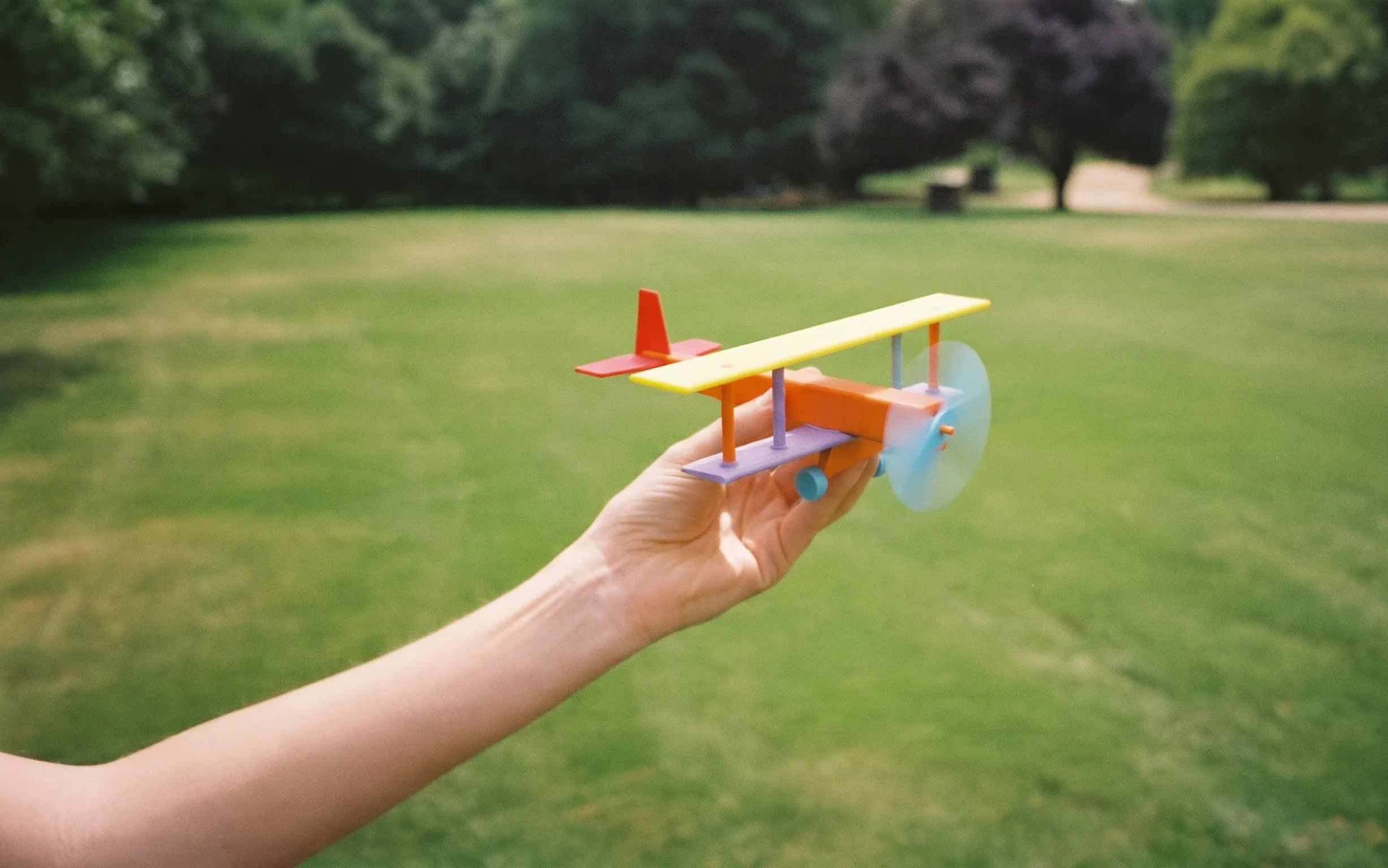
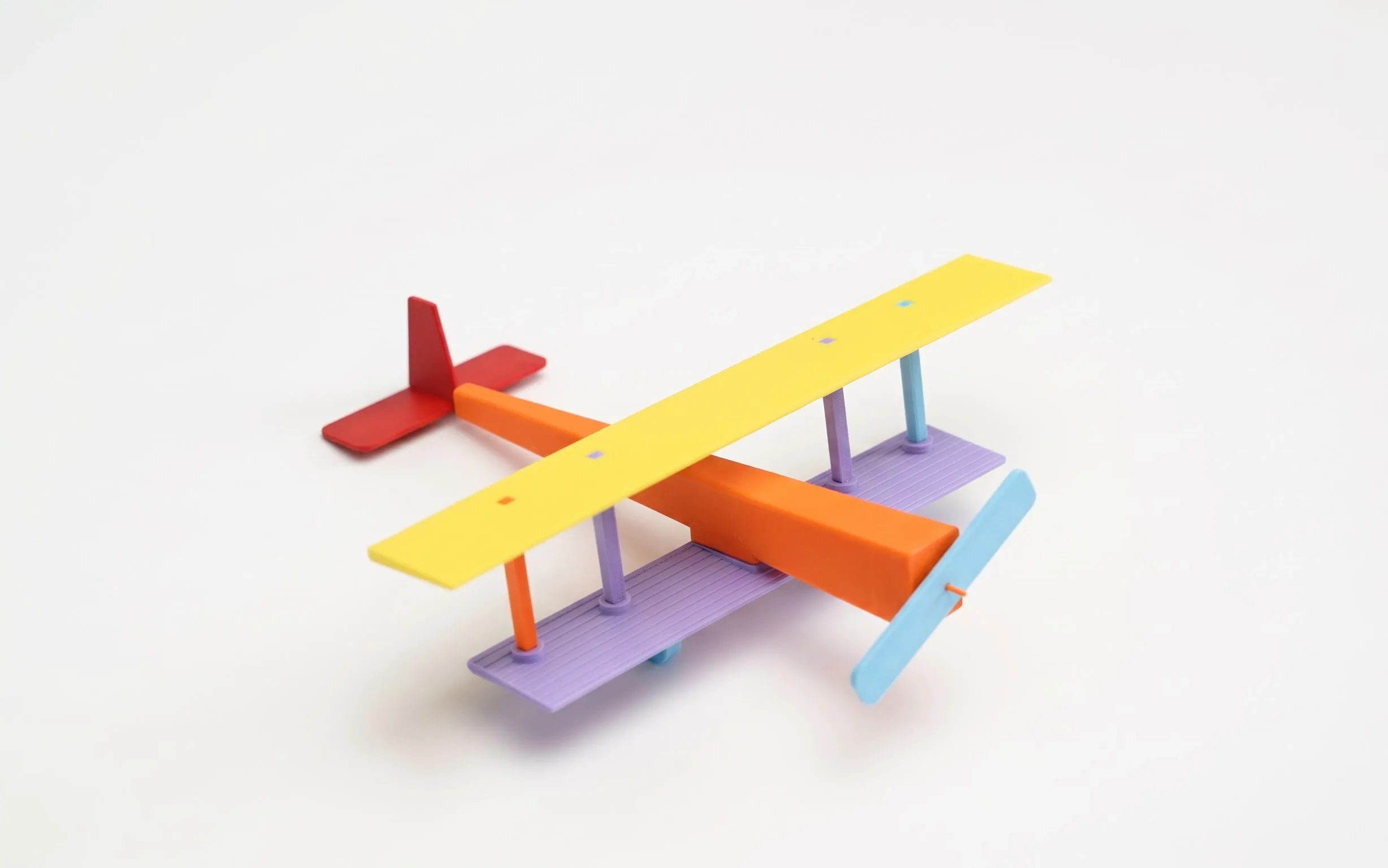
A pocket biplane you wind by the propeller and launch from your hand.
A biplane 7.1 in from tip to tip and 1.6 oz in the hand. Scroll and fly in close.
The fuselage is a hollow tube from the nose to the tail. A twisted rubber band runs inside it and turns the propeller.
Turn the 2.4 in propeller with a fingertip. Every turn twists the band inside the fuselage a little tighter.
The band unwinds through the nose and spins the propeller, which pulls the plane forward out of your hand.
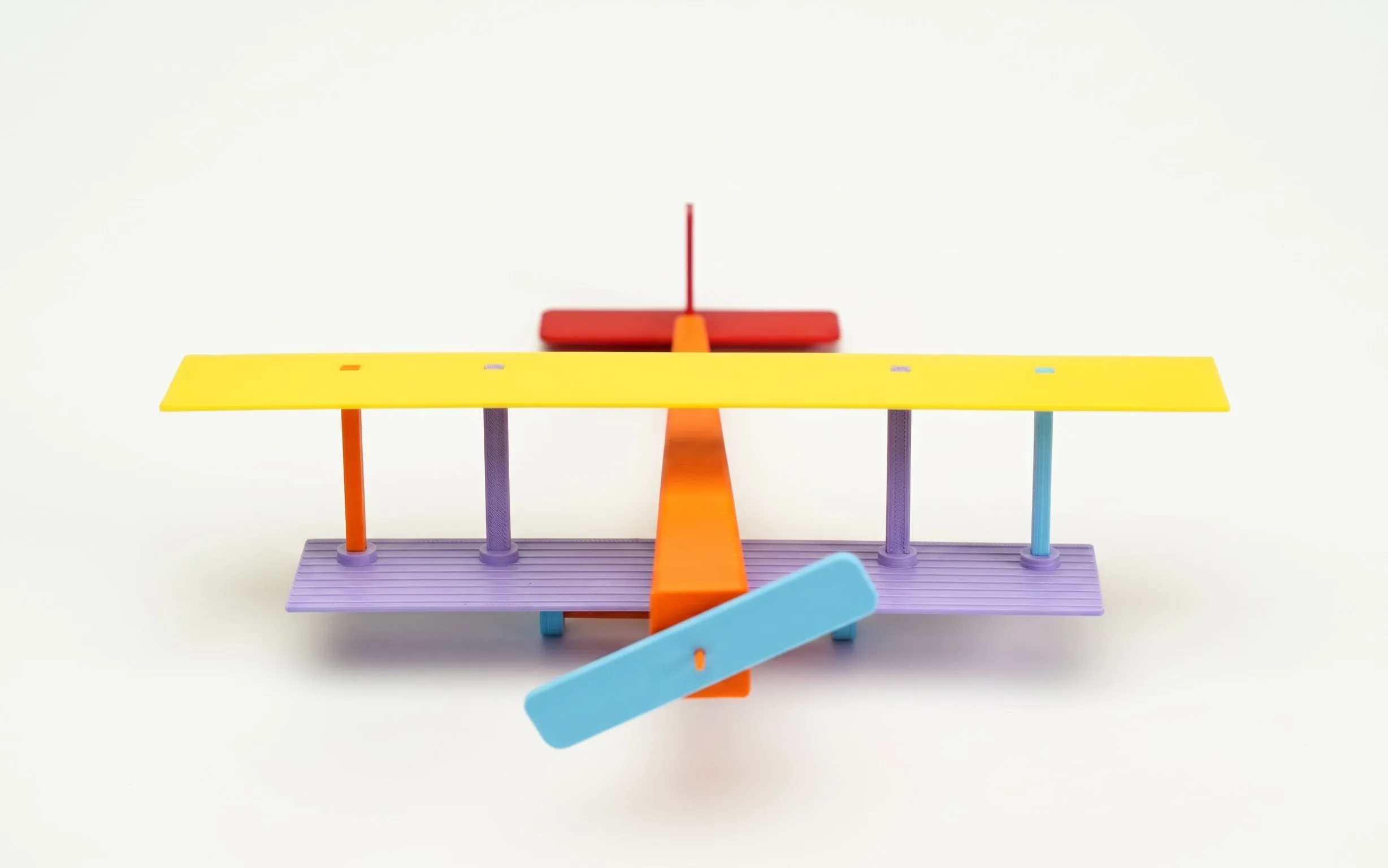
The upper wing spans 7.1 in, the lower one 5.5 in. Each strut plugs into a seat on both wings and holds the pair parallel, 1.2 in apart.
When the band has run down, the fin and the stabilizer hold a straight, level glide back to the grass.
Laid out side by side at their true sizes, the way they sit in the plane. Pick one to see what it does.
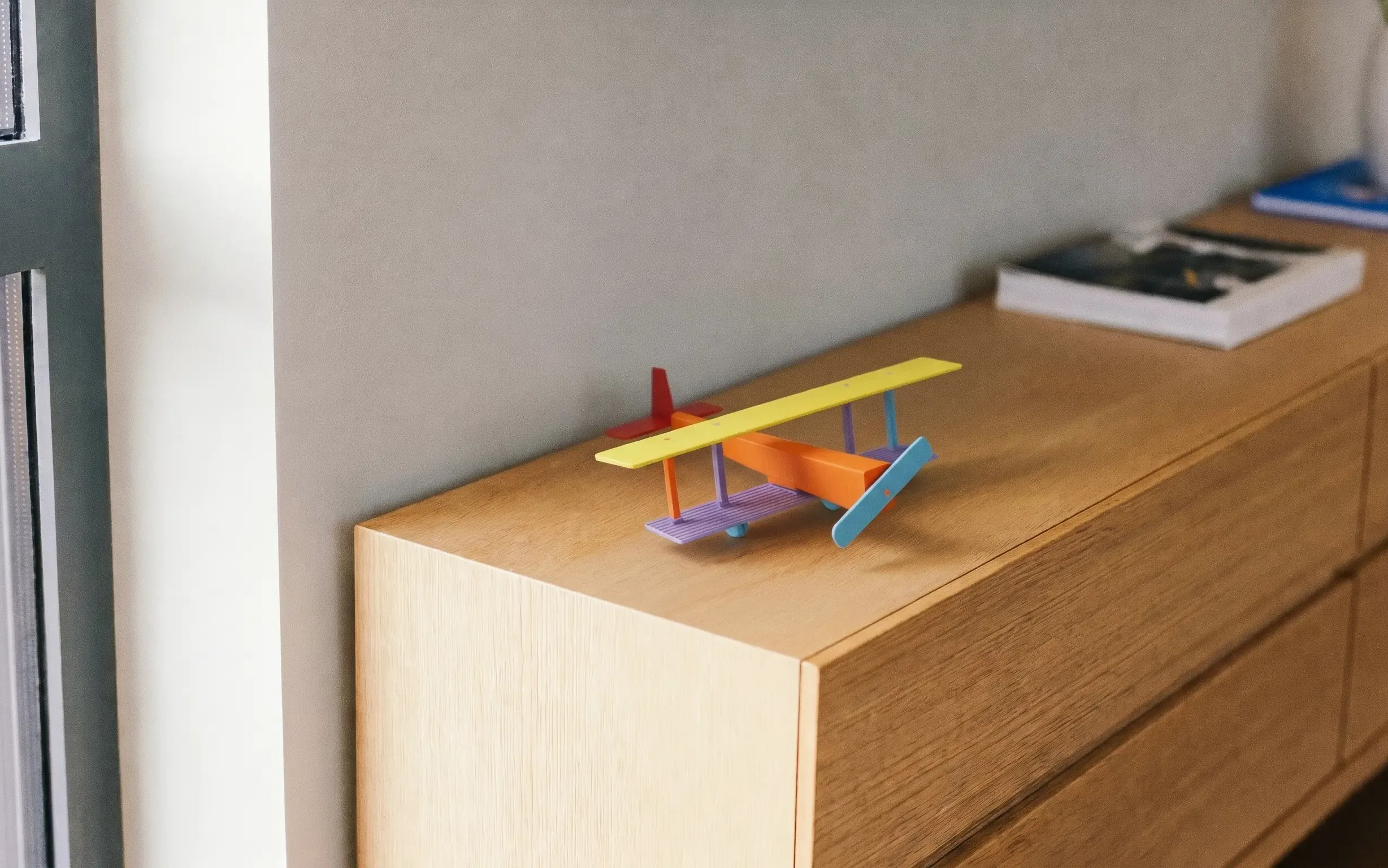
6.1 in from the propeller to the tail, 7.1 in across and 1.6 oz: it fits on an open hand. Fly it on the lawn, then park it on a desk or a shelf until the next flight.
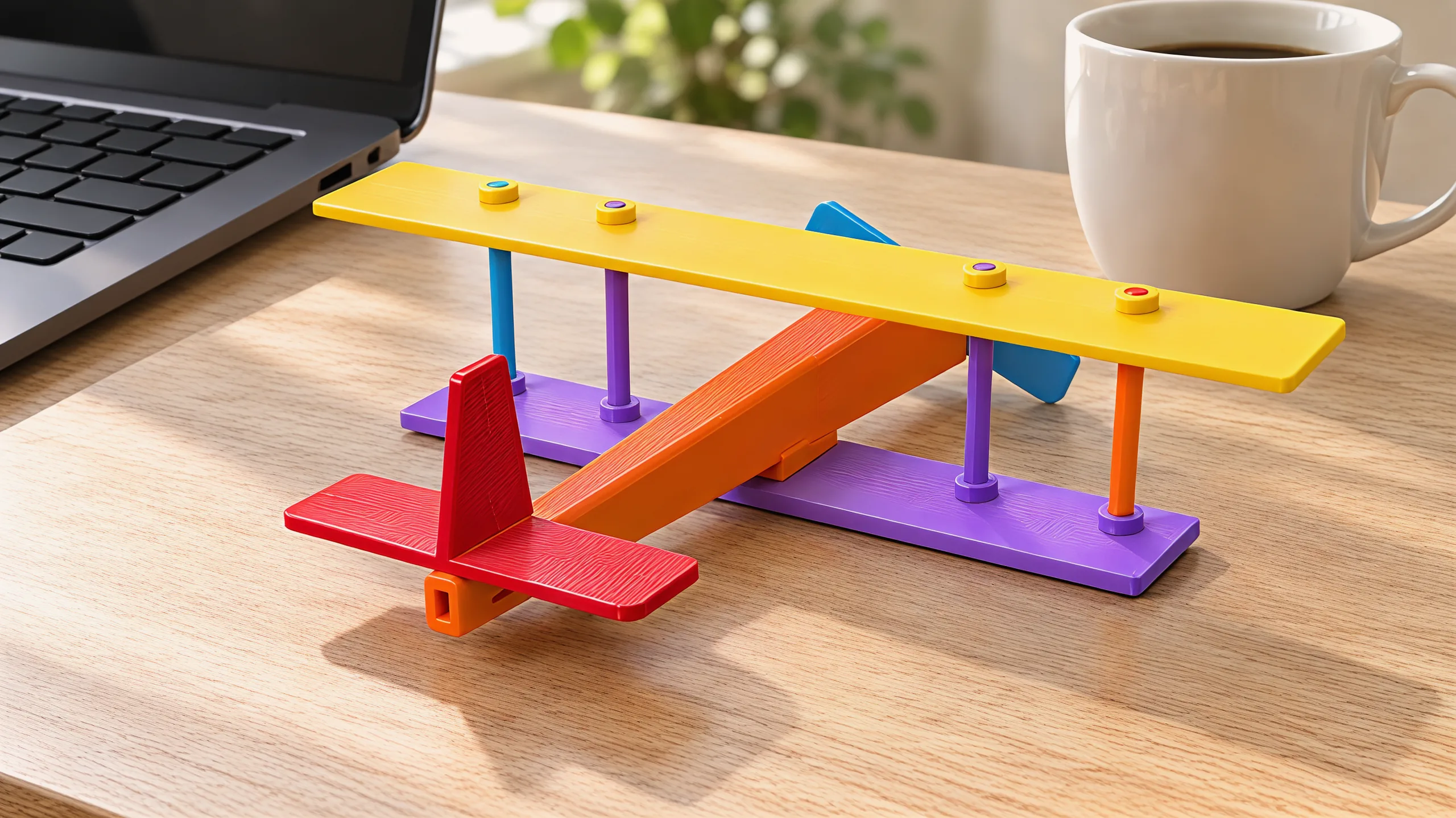
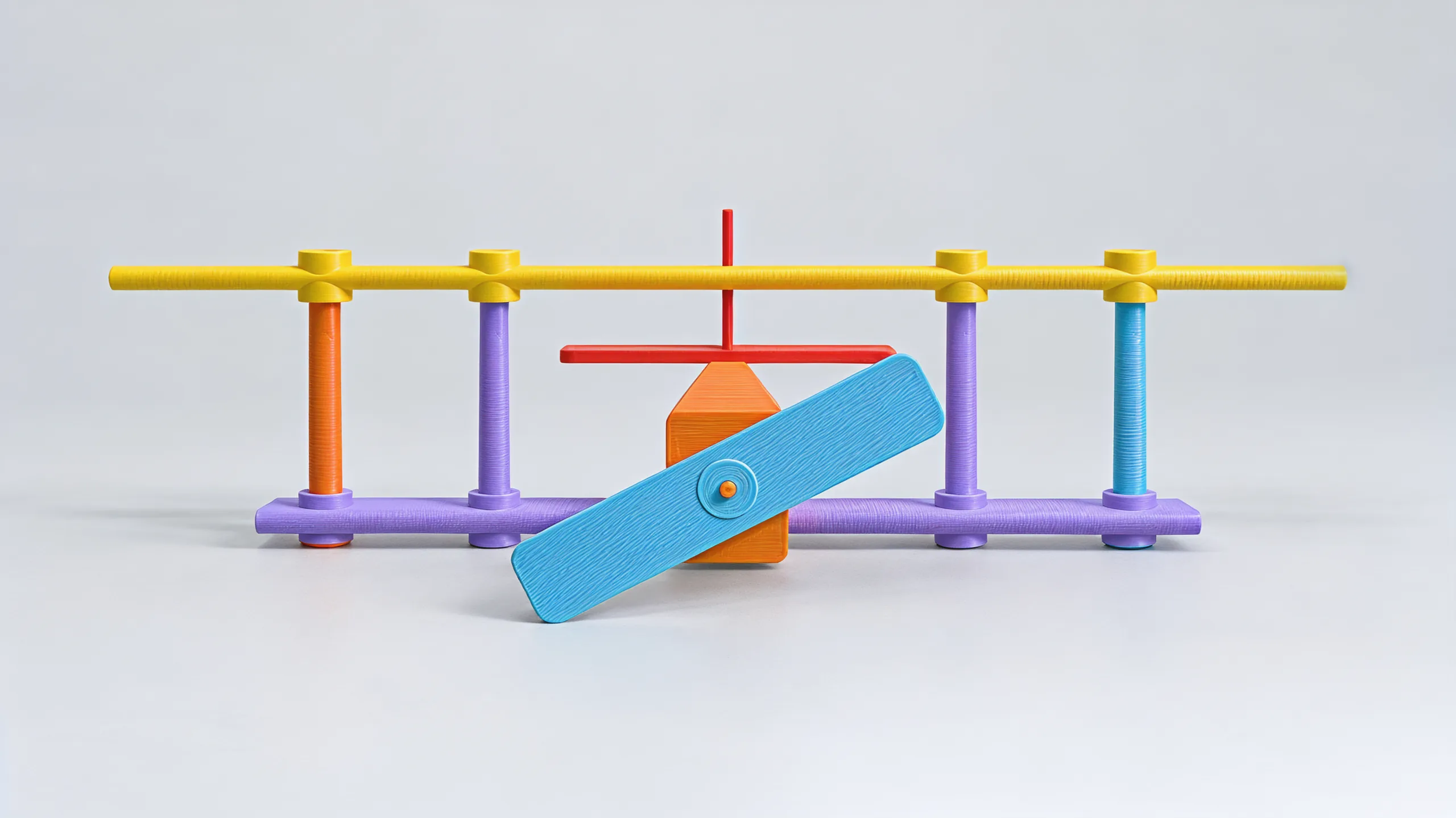
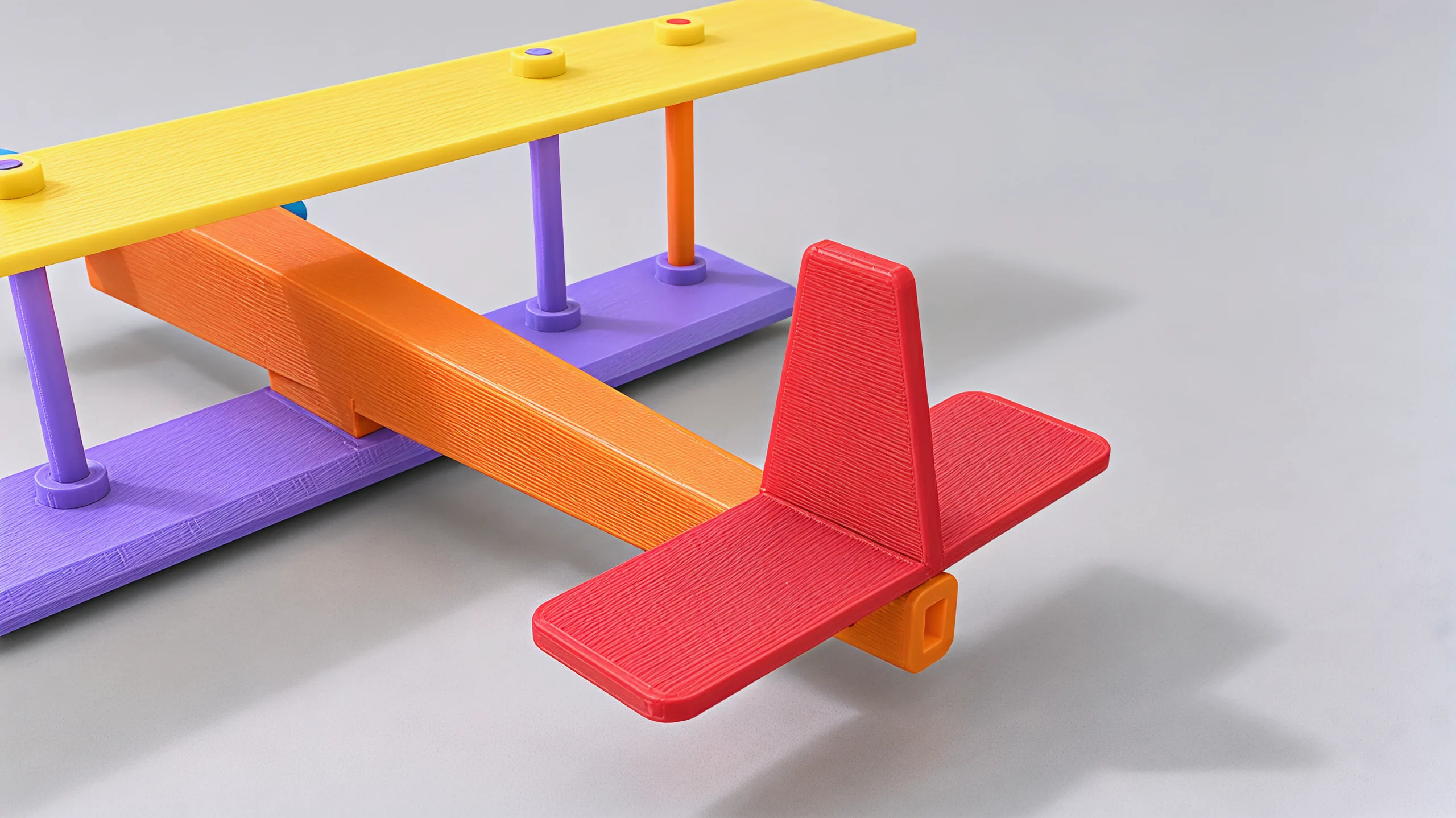
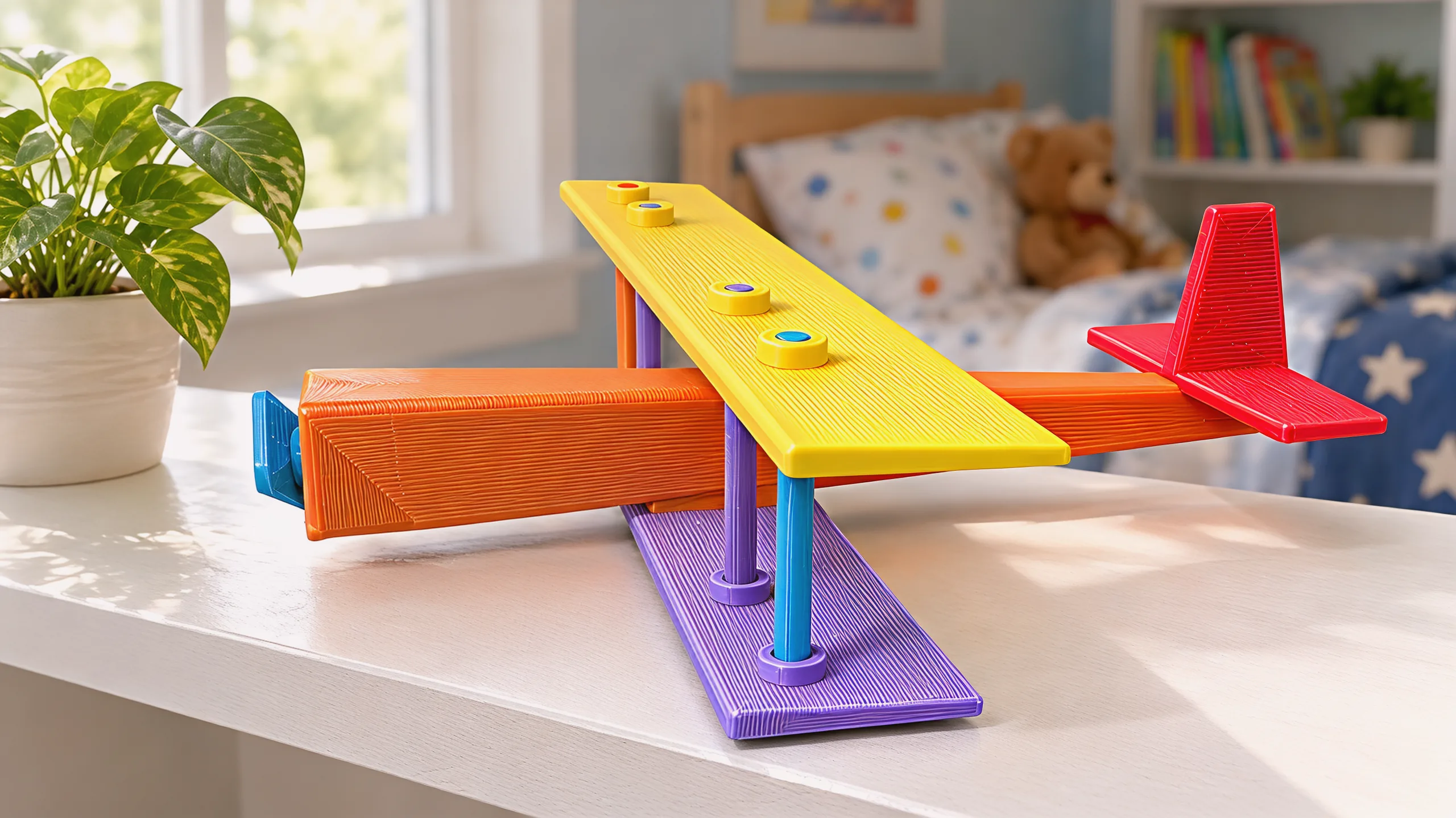
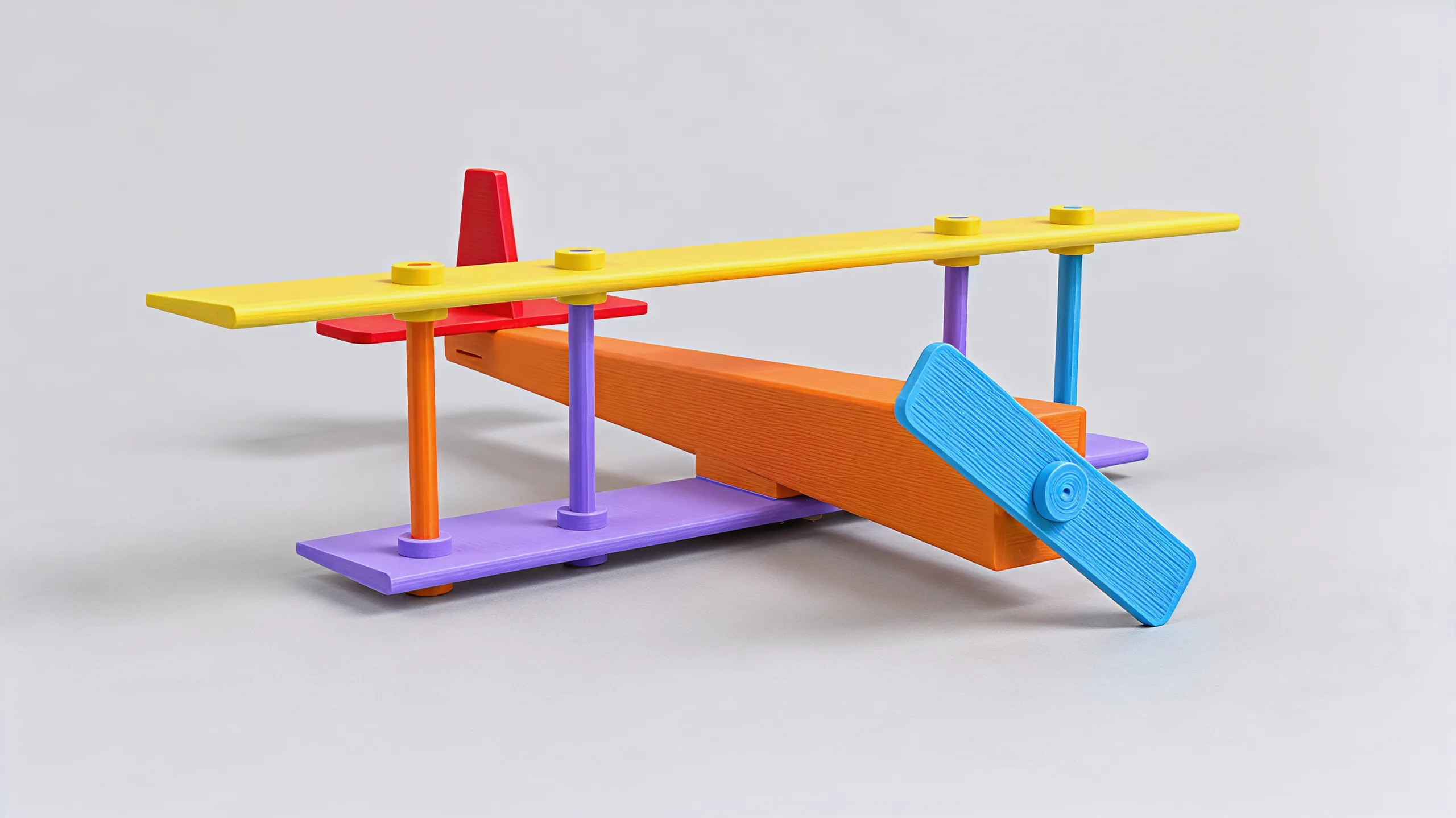
Everything that moves this plane goes in through your fingertip. Cut it down the middle and the whole drive is in view: a propeller on the nose, a hollow body behind it, a tail to steer.
Turn the propeller round and round with one finger. It sits on the fuselage's own centerline, so the twist runs straight down the hollow body.
Keep a finger on the propeller and hold the plane under the wings. The twisted band waits inside the fuselage until you let go.
Release the propeller and launch the plane forward, level, by hand. The band unwinds and the 2.4 in propeller pulls.
Once the band has run down, the 2.4 in stabilizer and the upright fin keep the plane pointing straight while it glides down.
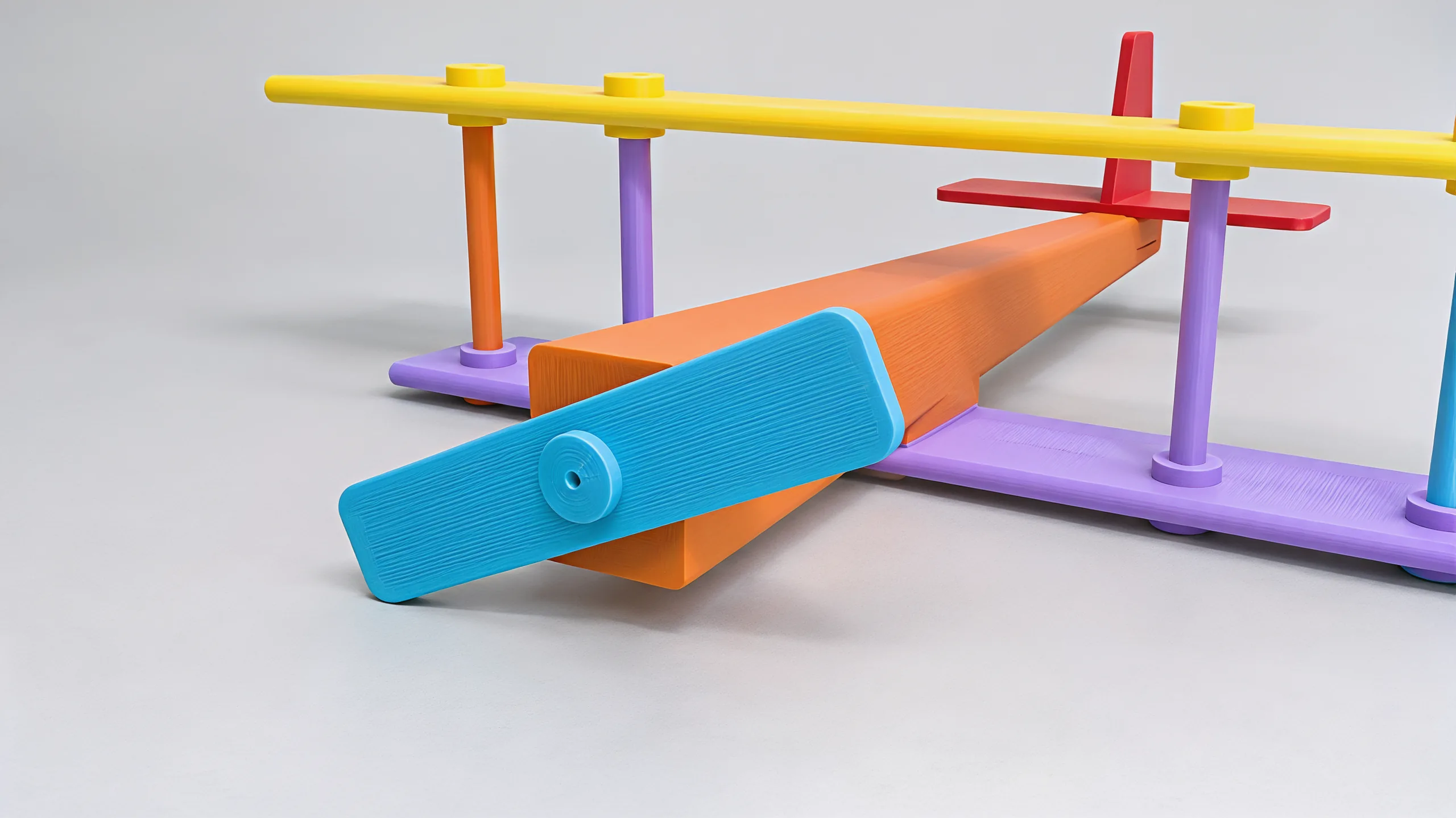
Nine pieces in the box, one hand-launched flier.
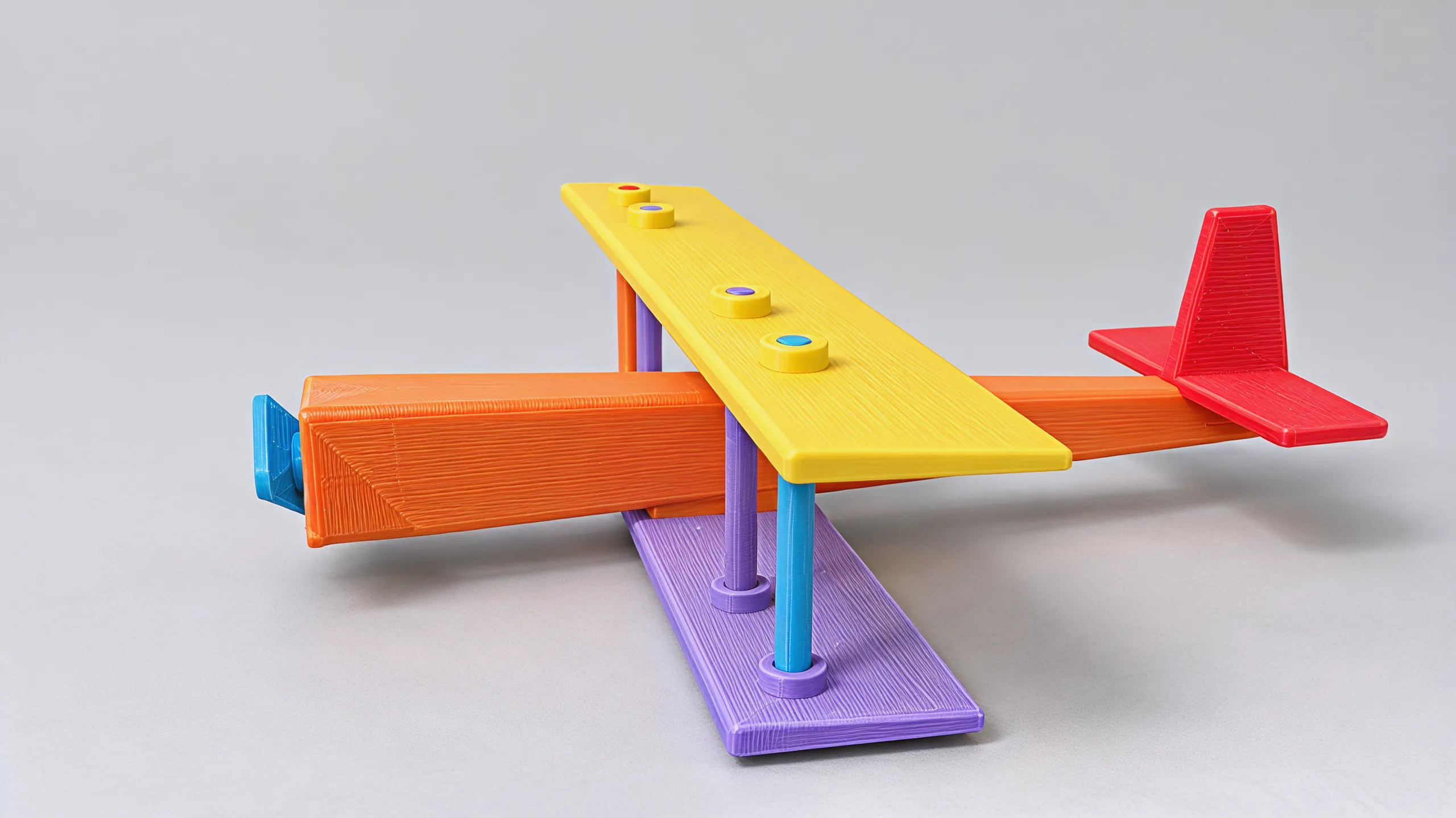
No. There is no battery, no electric motor and no switch. A twisted rubber band inside the fuselage turns the propeller: wind the propeller, hold it, and let go.
On a park lawn, in a backyard or down a hallway. Launch it by hand, level, and let the propeller pull it into a short glide. Between flights it sits on a desk or a shelf as a model.
6.1 in from the propeller to the tail and 7.1 in across the upper wing. The whole plane weighs 1.6 oz.
Nine pieces, all PETG: the fuselage, the upper and lower wings, the propeller, the tail and 4 struts.
The tail. Its fin and horizontal stabilizer keep the glide straight after the rubber band has unwound.