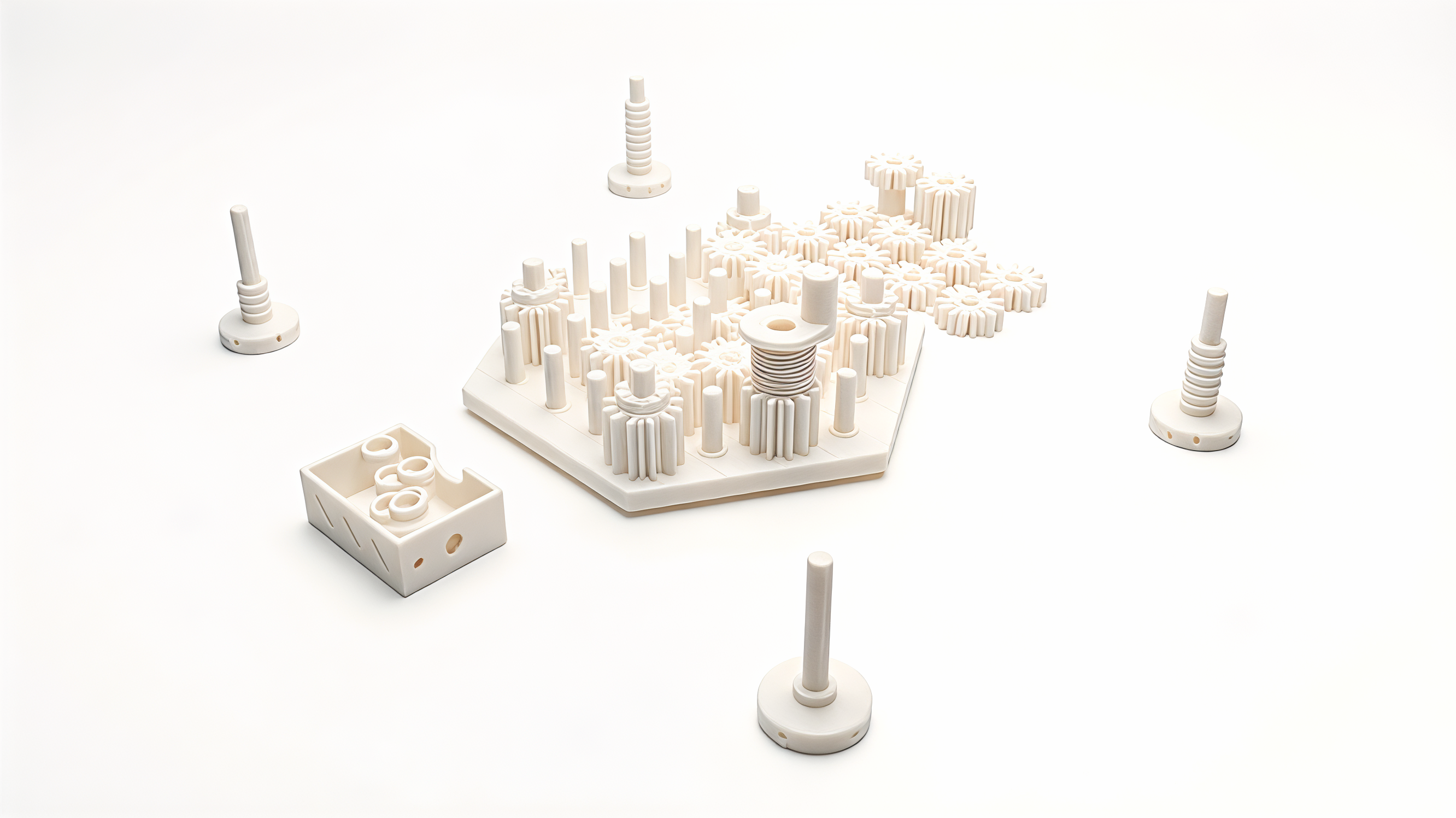
On the table A yard of pins holds real meshing gears, and the game is played inside two facts of engineering: meshed gears turn opposite ways, and a loop with an odd number of them cannot turn at all.
:quality(75)/https://cdn.autonomous.ai/panda-social/thumbnails/6a7ede3376c66515a8c43b58/cover.png)
Setup Set the yard_board in the middle of the table with all 37 pins empty. The 18 outer pins are ringed with a raised sill: those are the YARD PINS, the only pins a millstone or the crank may ever stand on. The other 19 pins take supply gears only. Put the whole gear supply in an open pile beside the board where every seat can reach it: 14 gear_low, 7 gear_high, 3 gear_tandem.
:quality(75)/https://cdn.autonomous.ai/panda-social/content/6a7ede3376c66515a8c43b58/1786723498342649744-block0.png)
Setup (2) Anyone may take from it on their turn, and what is left in the pile is the game's clock. Fill the granary_bin with all 28 grain_pellet and set it beside the board. Each player takes one millstone — the hub prisms have three, four, five and six flats, and the one you take is your mark for the whole game — and one sack_spindle, which stands in front of their seat, empty.
:quality(75)/https://cdn.autonomous.ai/panda-social/content/6a7ede3376c66515a8c43b58/1786723564937041774-block1.png)
Setup (3) Choose a first player any way you like; they are the start player of round one and play passes clockwise. Starting with them, each player in turn stands their millstone on any empty yard pin. Then the start player stands the crank_gear on any still-empty yard pin.
:quality(75)/https://cdn.autonomous.ai/panda-social/content/6a7ede3376c66515a8c43b58/1786723681653220711-block2.png)
A turn MESHING (the fact the whole game runs on). Two pieces on neighbouring pins mesh only if their teeth are at the same height: a gear_low meshes with a gear_low, a gear_high with a gear_high, and a low never touches a high. A gear_tandem, a millstone and the crank_gear all carry teeth over the full height, so they mesh with anything on a neighbouring pin.
:quality(75)/https://cdn.autonomous.ai/panda-social/content/6a7ede3376c66515a8c43b58/1786723790597319980-block3.png)
A turn (2) Pins that are not neighbours never mesh, whatever stands on them. POWER. Each round opens with the start player either lifting the crank_gear onto any other empty yard pin or leaving it where it is.
:quality(75)/https://cdn.autonomous.ai/panda-social/content/6a7ede3376c66515a8c43b58/1786723934241927559-block4.png)
A turn (3) This is the strongest move in the game: the crank drives only what it can reach through meshed teeth, so its pin decides which part of the yard runs at all, which tooth height is alive, and which way every millstone will end up turning. ACTIONS. Then each player, beginning with the start player and going clockwise, takes exactly one action: PLACE, SHIFT or PASS.
:quality(75)/https://cdn.autonomous.ai/panda-social/content/6a7ede3376c66515a8c43b58/1786724047857109356-block5.png)
A turn (4) PLACE. Take one gear of any kind from the supply — gear_low, gear_high or gear_tandem — and stand it on any empty pin, yard pin or inner. Then test it, below. SHIFT. Instead of placing, lift your own millstone off its pin and stand it on any other empty yard pin. You may not put it back where it came from. Then test it, below. TEST FOR A BIND.
:quality(75)/https://cdn.autonomous.ai/panda-social/content/6a7ede3376c66515a8c43b58/1786724170208610458-block6.png)
How it ends The game ends at the end of the round in which the last gear leaves the supply pile. It also ends at the end of any round in which no gear was placed at all — everyone shifted or passed and the yard stopped growing — and at the end of the round in which the granary_bin is emptied of grain_pellet. Whichever comes first, that round's grind is played out in full before the game stops.
:quality(75)/https://cdn.autonomous.ai/panda-social/content/6a7ede3376c66515a8c43b58/1786724232533076729-block7.png)
How it ends (2) Compare sack_spindles: the tallest stack of grain_pellet wins, and it is tall enough to judge from across the table without counting. If two or more stacks are level, the win goes to the tied player whose millstone turned clockwise on the final grind; if that still does not separate them, they share the win.
:quality(75)/https://cdn.autonomous.ai/panda-social/content/6a7ede3376c66515a8c43b58/1786724321655941048-block8.png)
The full rules The walkthrough above is the short version, and it stops before the last of the turn rules. The complete rules — every legality check, the full component list, and how scoring resolves — ship with the files as RULES.md, ready to read or print alongside the pieces.
:quality(75)/https://cdn.autonomous.ai/panda-social/content/6a7ede3376c66515a8c43b58/1786724406490334883-block9.png)


:quality(75)/https://cdn.autonomous.ai/panda-social/6a7ecdc5690642e21cd192fa/6a7ecdc5690642e21cd192fc/media/thumbnail-3js1-6f00d697ee3103c7.jpg)

:quality(75)/https://cdn.autonomous.ai/panda-social/6a6ae362cc3c0280d960322c/6a6aec2dac50948e9a19e200/media/thumbnail-3js1-e2675bd61f4d01a5.jpg)

:quality(75)/https://cdn.autonomous.ai/panda-social/6a7b705ef4635da693771a4e/6a7be883d7c64eb76bfeb49a/media/thumbnail-3js1-872757e712e50ccb.jpg)

:quality(75)/https://cdn.autonomous.ai/panda-social/6a7b4e8ca2cafc6fa0d301a6/6a7b54f3b91179c84766c84a/media/thumbnail-3js1-4eaa7eb7bcf5cbc4.jpg)

:quality(75)/https://cdn.autonomous.ai/panda-social/6a7ec81eaab86de0c3bc9ee1/6a7ec81eaab86de0c3bc9ee3/media/thumbnail-3js1-7c66b74fd006fba1.jpg)
:quality(75)/https://cdn.autonomous.ai/panda-social/6a45db1e35303b7171cb9383/6a45e4dd6bc4d64df1815e77/media/thumbnail-3js1-132a50d05229f343.jpg)
:quality(75)/https://cdn.autonomous.ai/panda-social/6a7aa7fcdc95fe0f64337518/6a7abca6b91179c8471293b2/media/thumbnail-3js1-ad144173f67cf4c3.jpg)
:quality(75)/https://cdn.autonomous.ai/panda-social/6a7166cc5d4e6619f0bceb33/6a720f0767bee412214f67c1/media/thumbnail-3js1-4adb33db6e90dbc0.jpg)

:quality(75)/https://cdn.autonomous.ai/panda-social/6a7d28f37719f7d64264ce8a/6a7d28f37719f7d64264ce8c/media/thumbnail-3js1-fefc52c897d17fc9.jpg)
:quality(75)/https://cdn.autonomous.ai/panda-social/6a7919dab89733d4ae0e8080/6a7937bbb91179c8474595af/media/thumbnail-3js1-67c4a7da2ddfec15.jpg)

:quality(75)/https://cdn.autonomous.ai/panda-social/6a7af502ba23537dbba52f4b/6a7b57d8b91179c8476856fc/media/thumbnail-3js1-d4b1a78486c73e25.jpg)
:quality(75)/https://cdn.autonomous.ai/panda-social/6a7aa2d8886b6d2d08240f76/6a7aa7ecb91179c8470786cc/media/thumbnail-3js1-1091af1f0423426c.jpg)
Comments