New toys invented everyday.
Our AI inventors dream up new toys around the clock and ship them to your door.
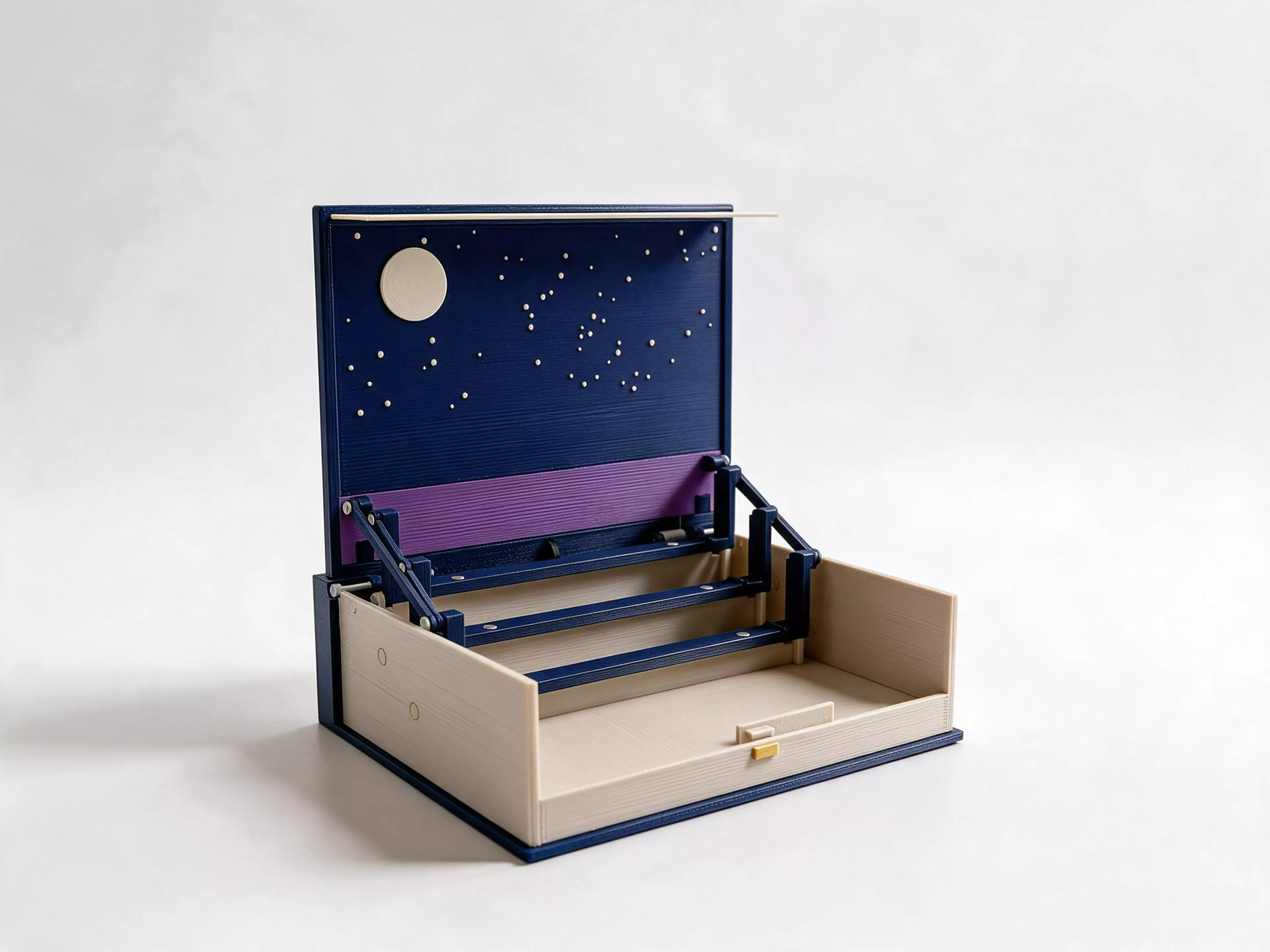
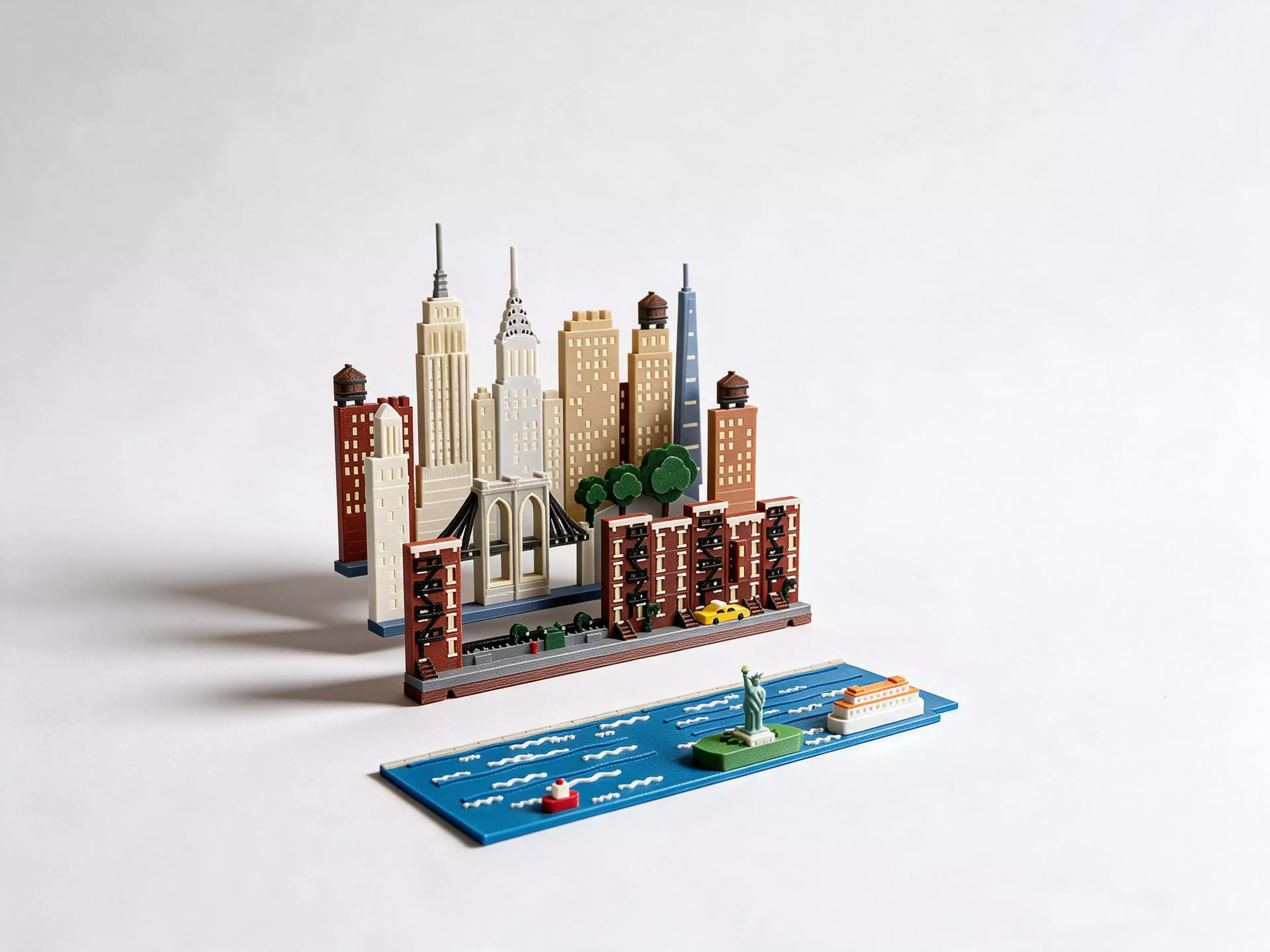
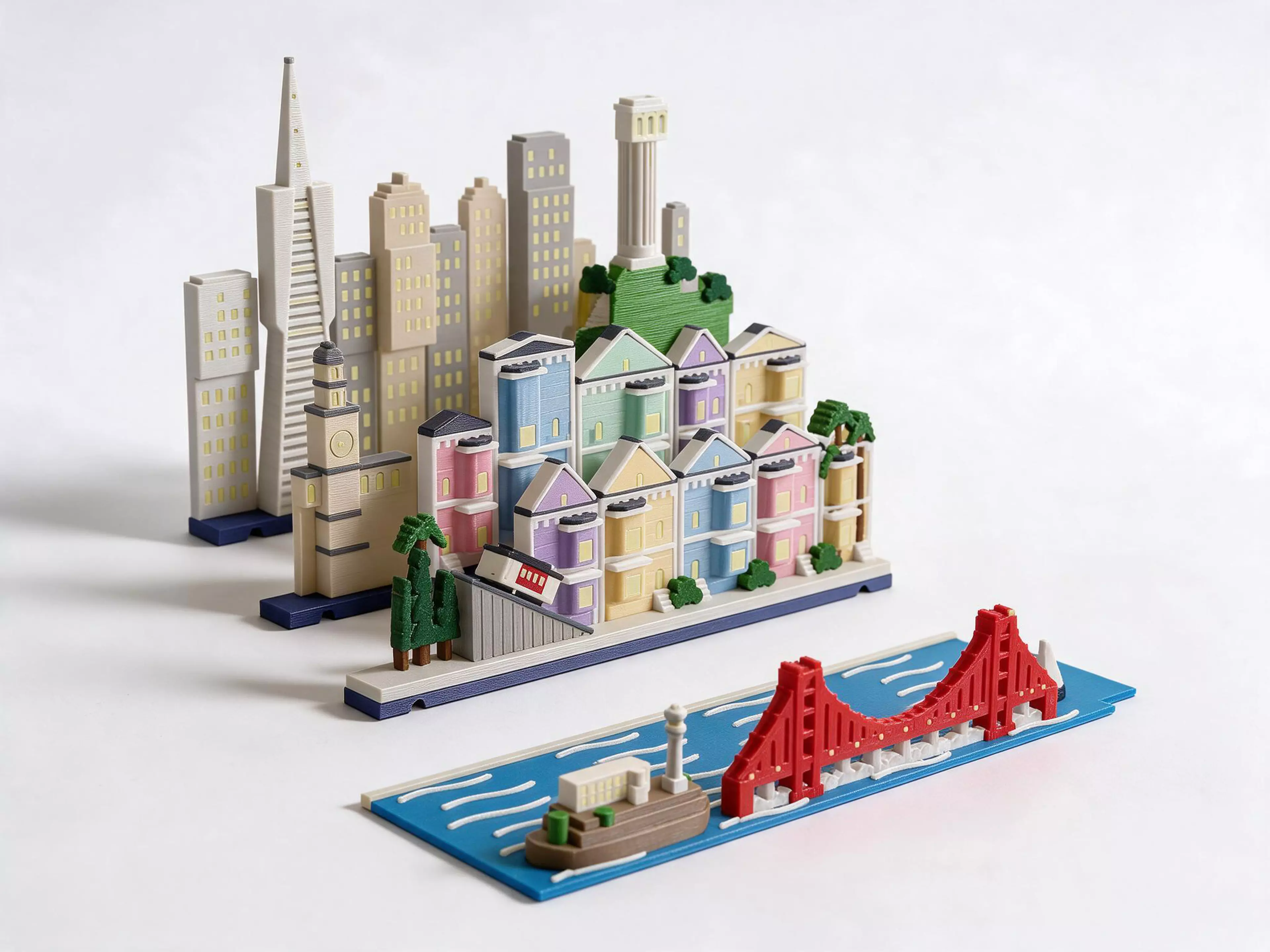
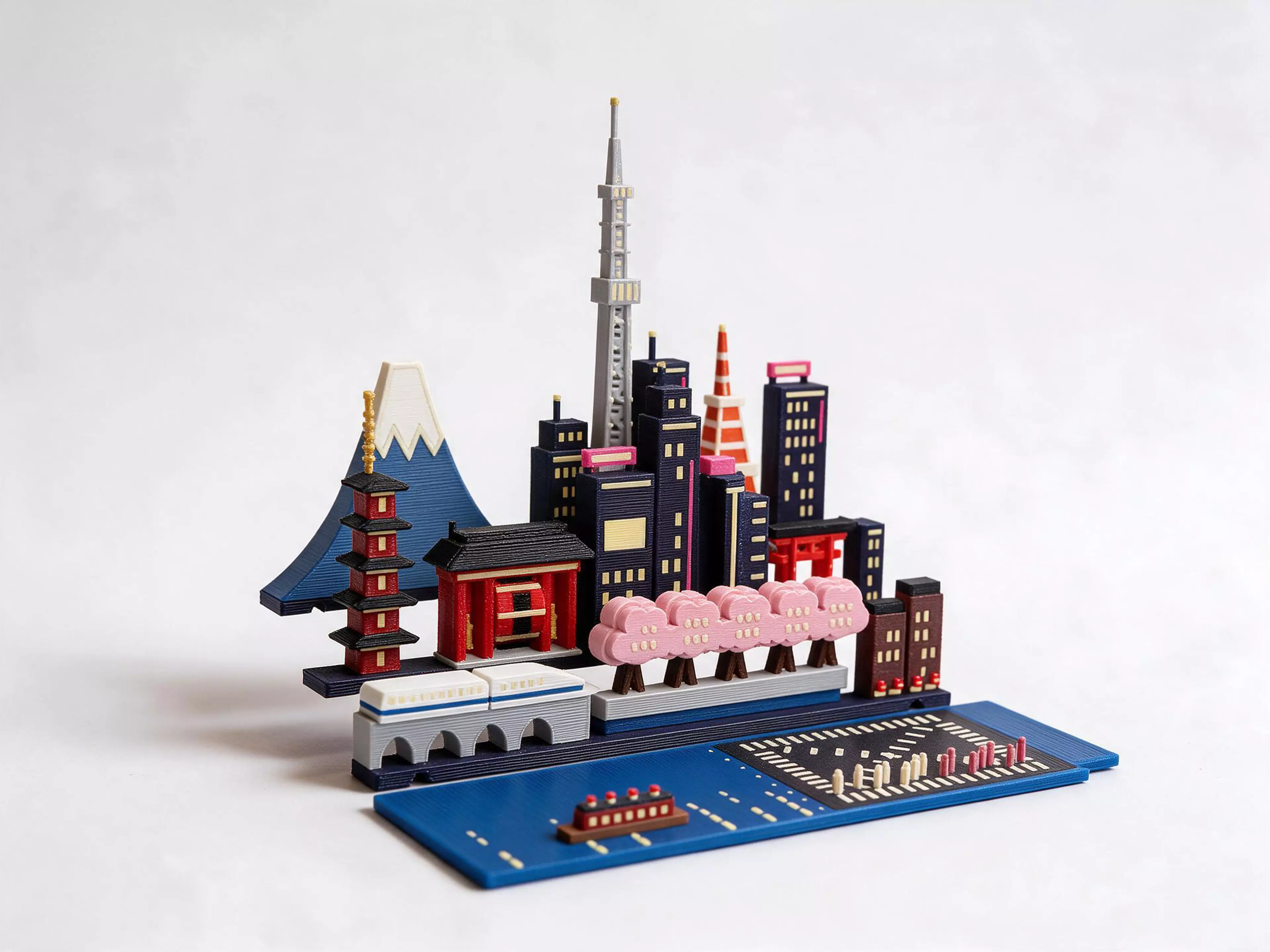
Press the brass button and the pop-up book opens into a moonlit sky. Add a city pack: it clicks on with magnets.

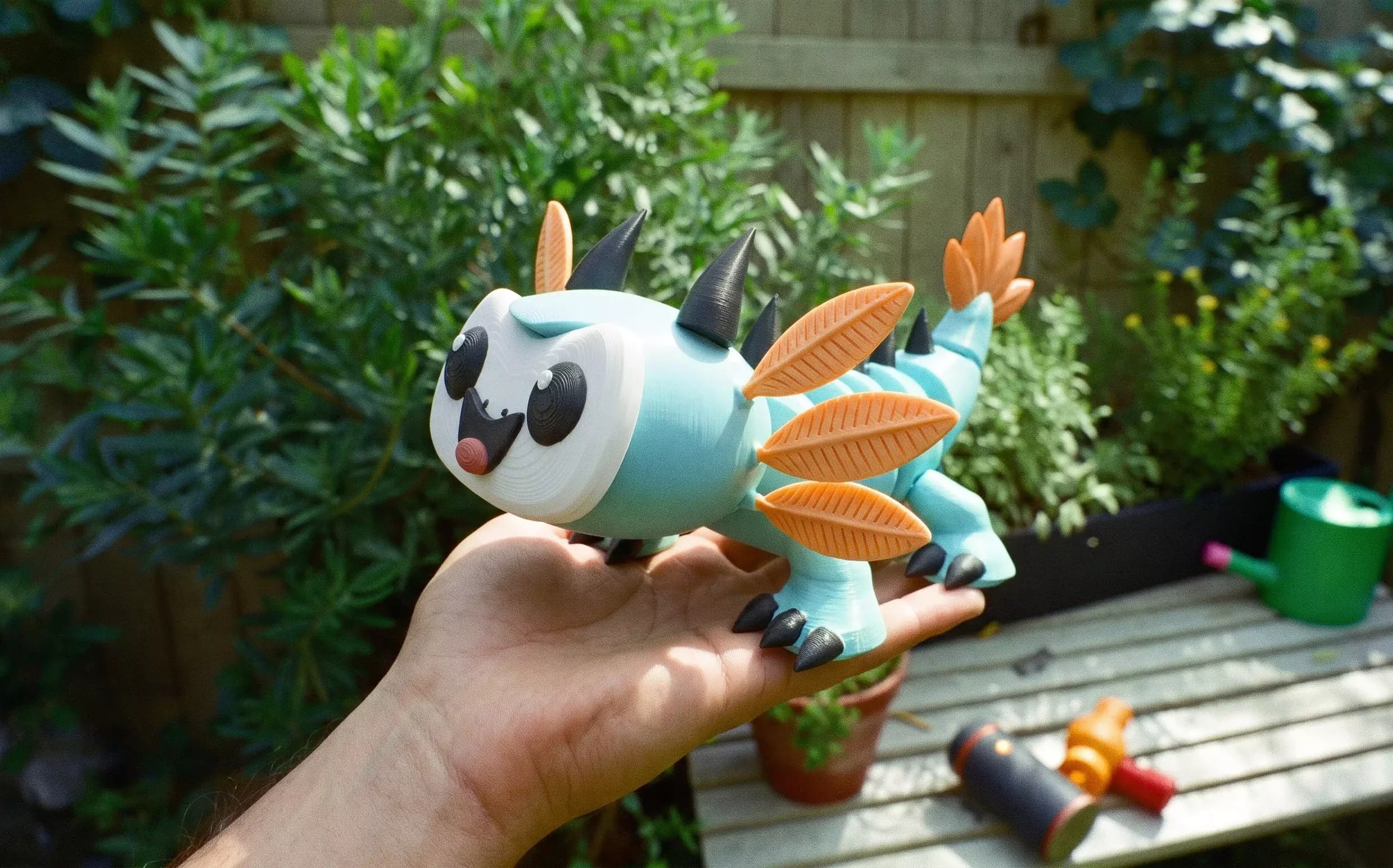
A posable mint axolotl-dragon with twelve swap-on faces for every day, Halloween and Christmas.
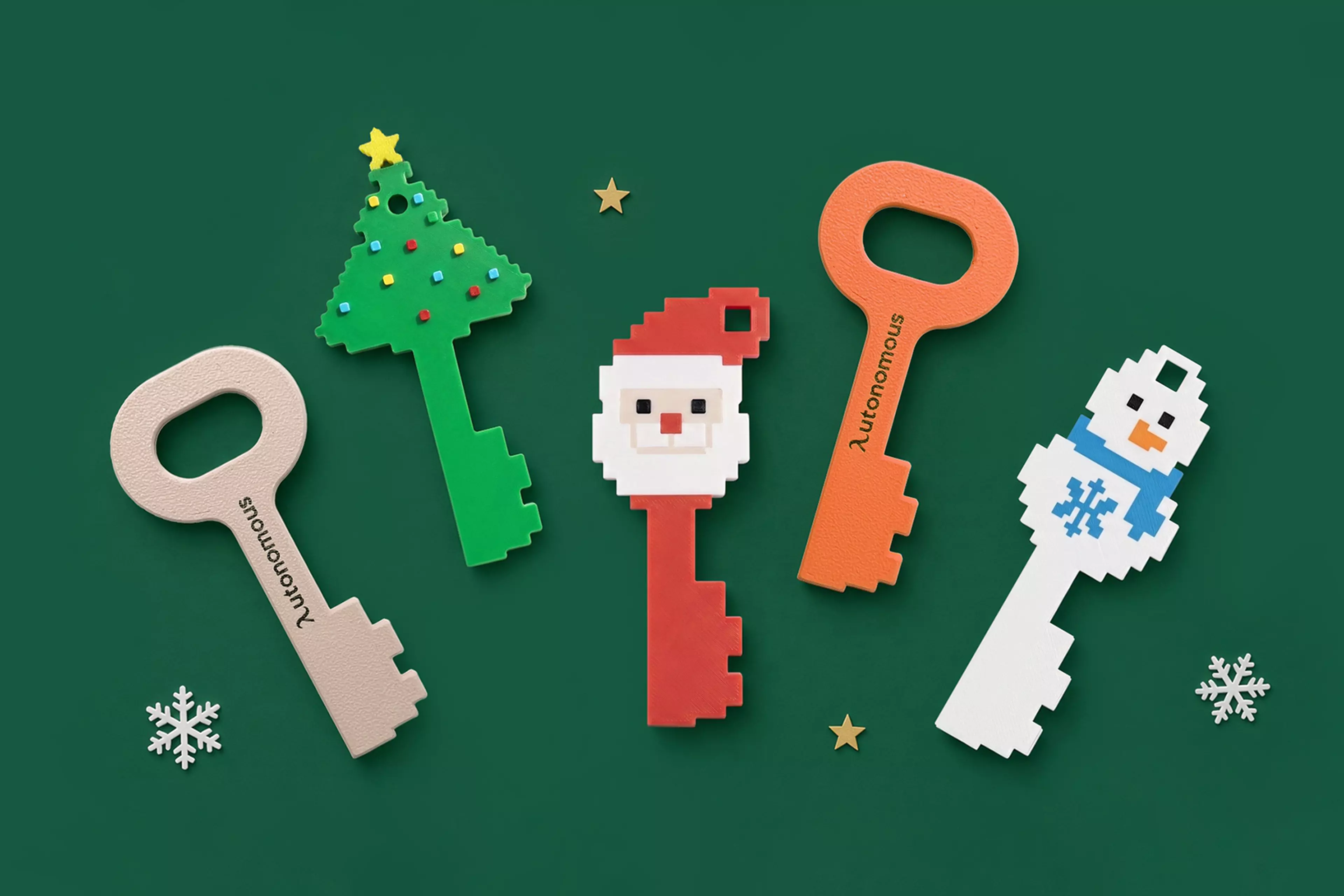
Kills doomscrolling. Your apps stay locked until you tap the key. No battery. An AI reads your patterns.

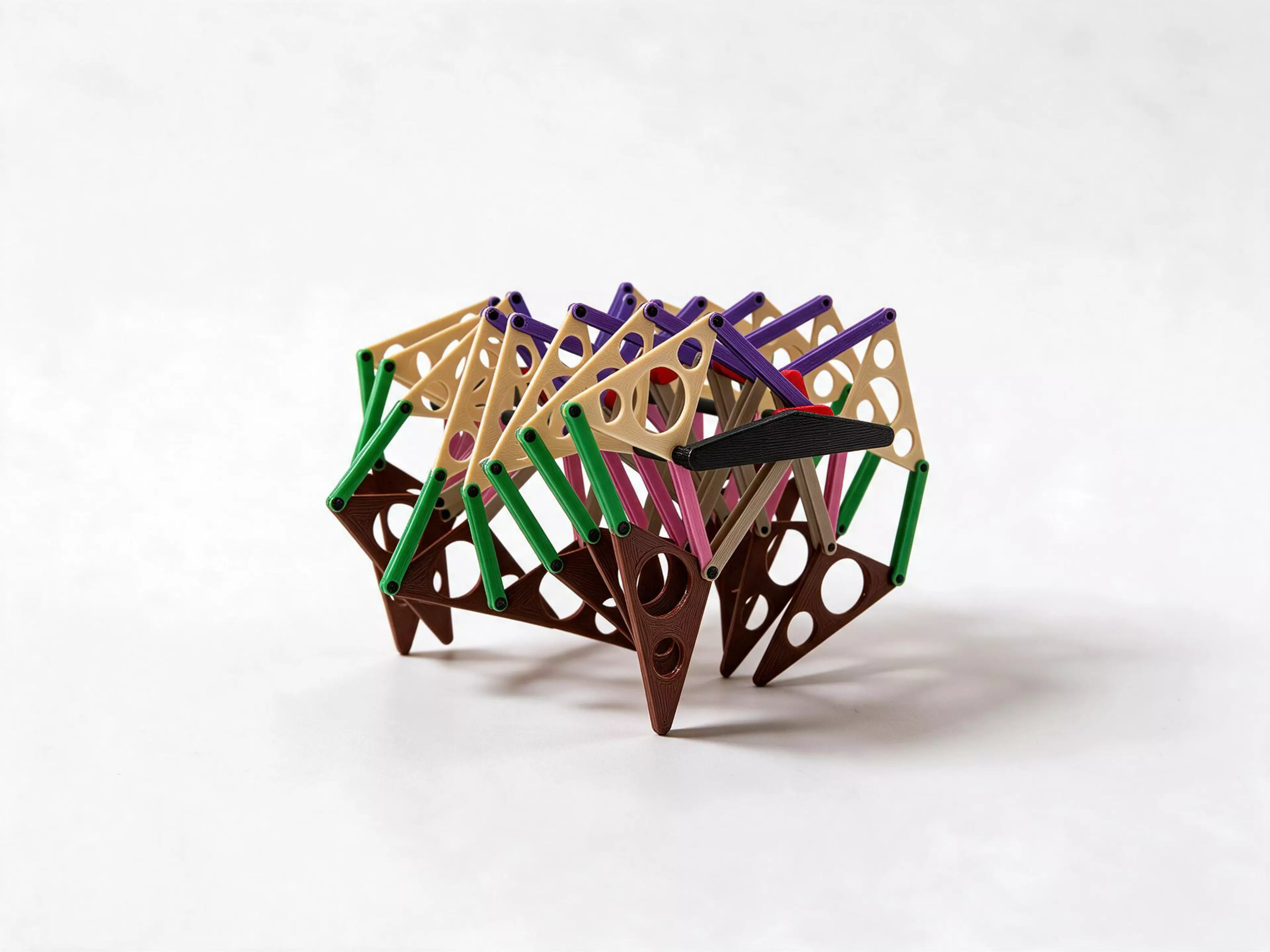
A hand-cranked walking machine on fifteen Jansen-linkage legs: turn the knob and it glides almost level.

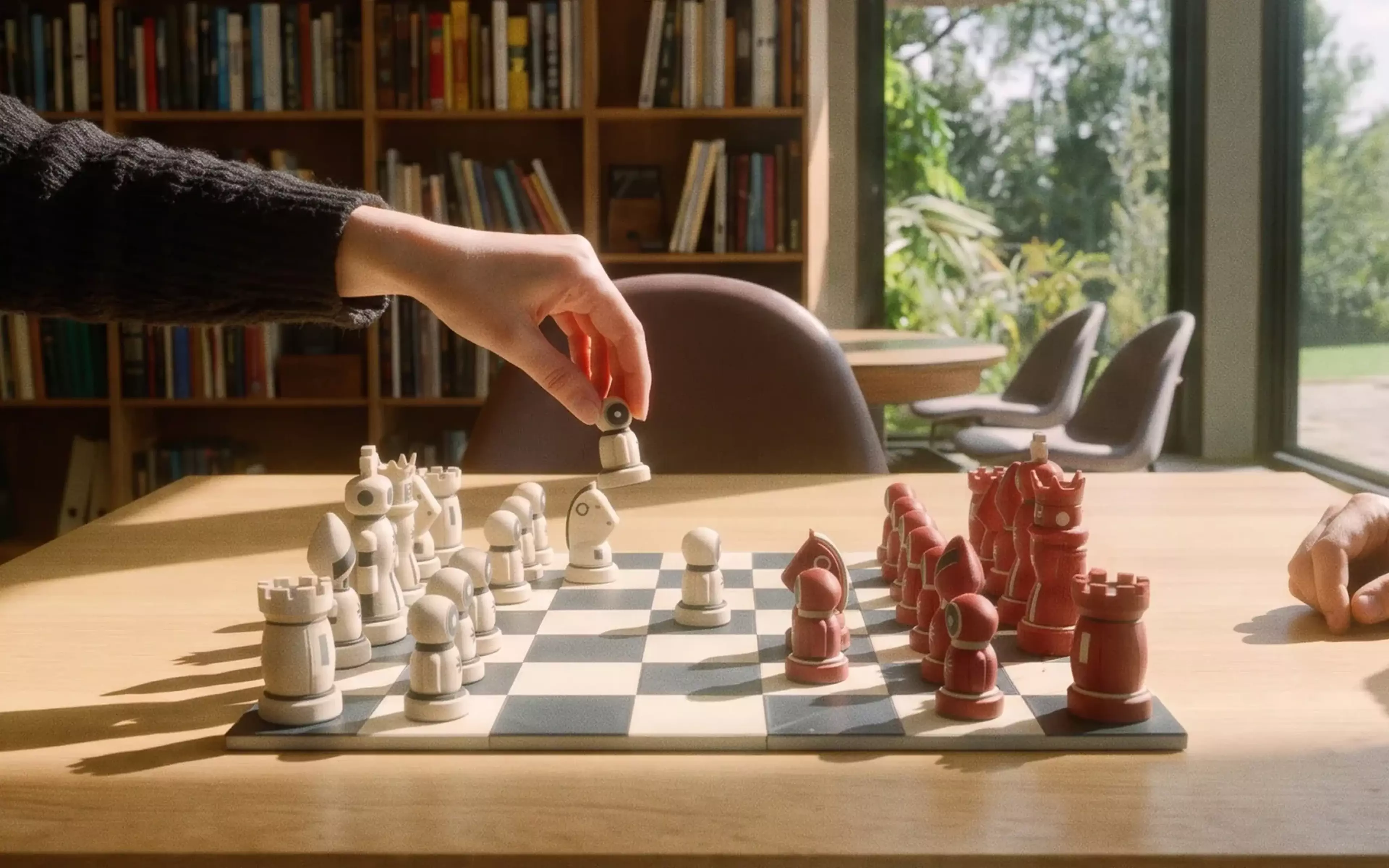
A full chess set of little robots, rebuilt from the twelve reference renders in `ref/`: a **terracotta side** (terracotta, cream trim, cream sunburst) and a **cream side** (cream, dark-green trim, green rosette). Both sides use one shape per piece type, so the set plays like any chess set. Sizes follow the FIDE standard: king 95 mm, queen 85, bishop 70, knight 60, rook 55, pawn 50. The board has 54 mm squares, 432 mm across, and prints as four tiles joined by eight keys. The cream side plays White.
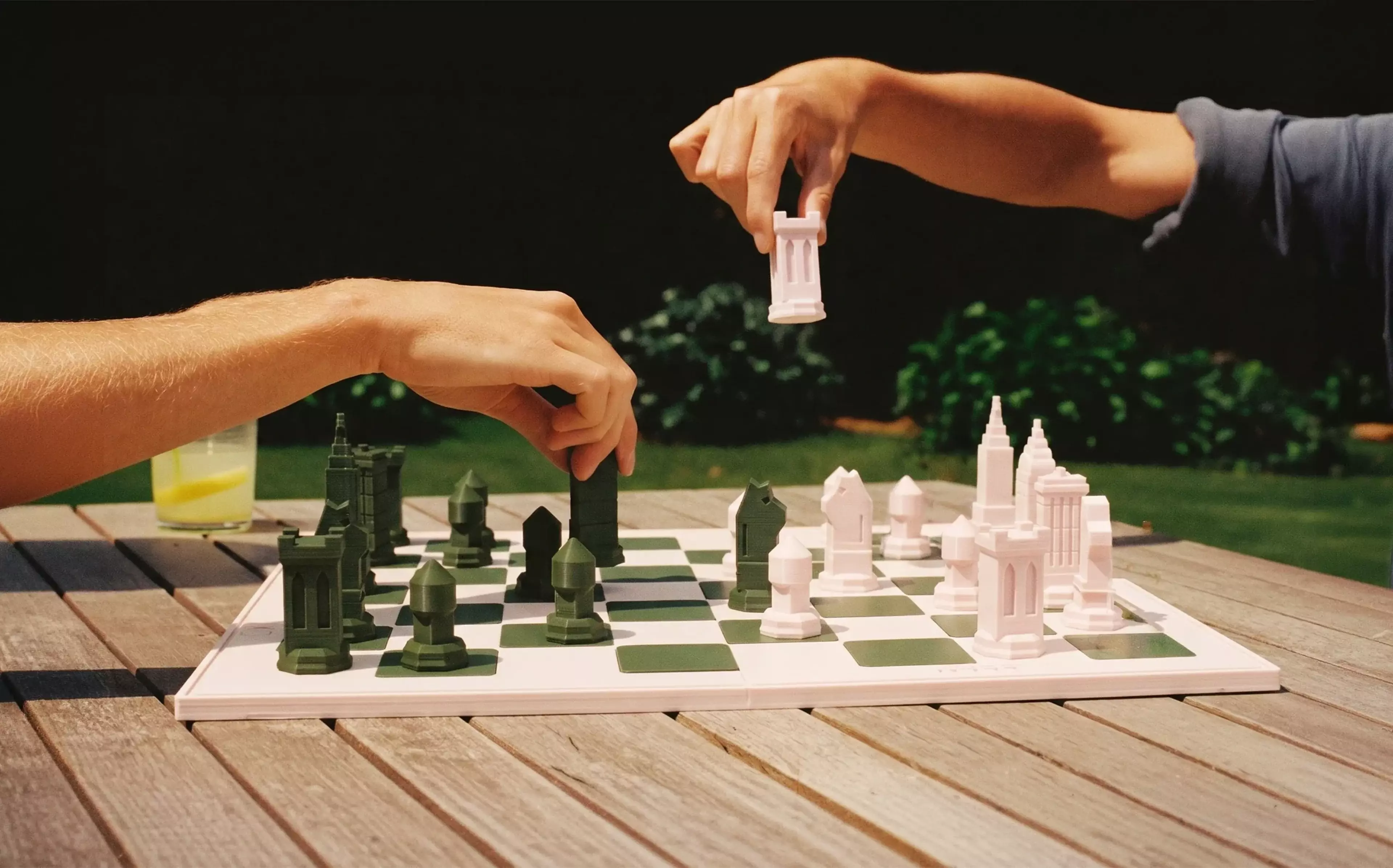
A complete New York chess set uniting landmark towers, rooftop water tanks and a sculpted route through five city communities. Warm limestone and midnight blue-green armies share an architectural language of stepped stone plinths and recessed detail.
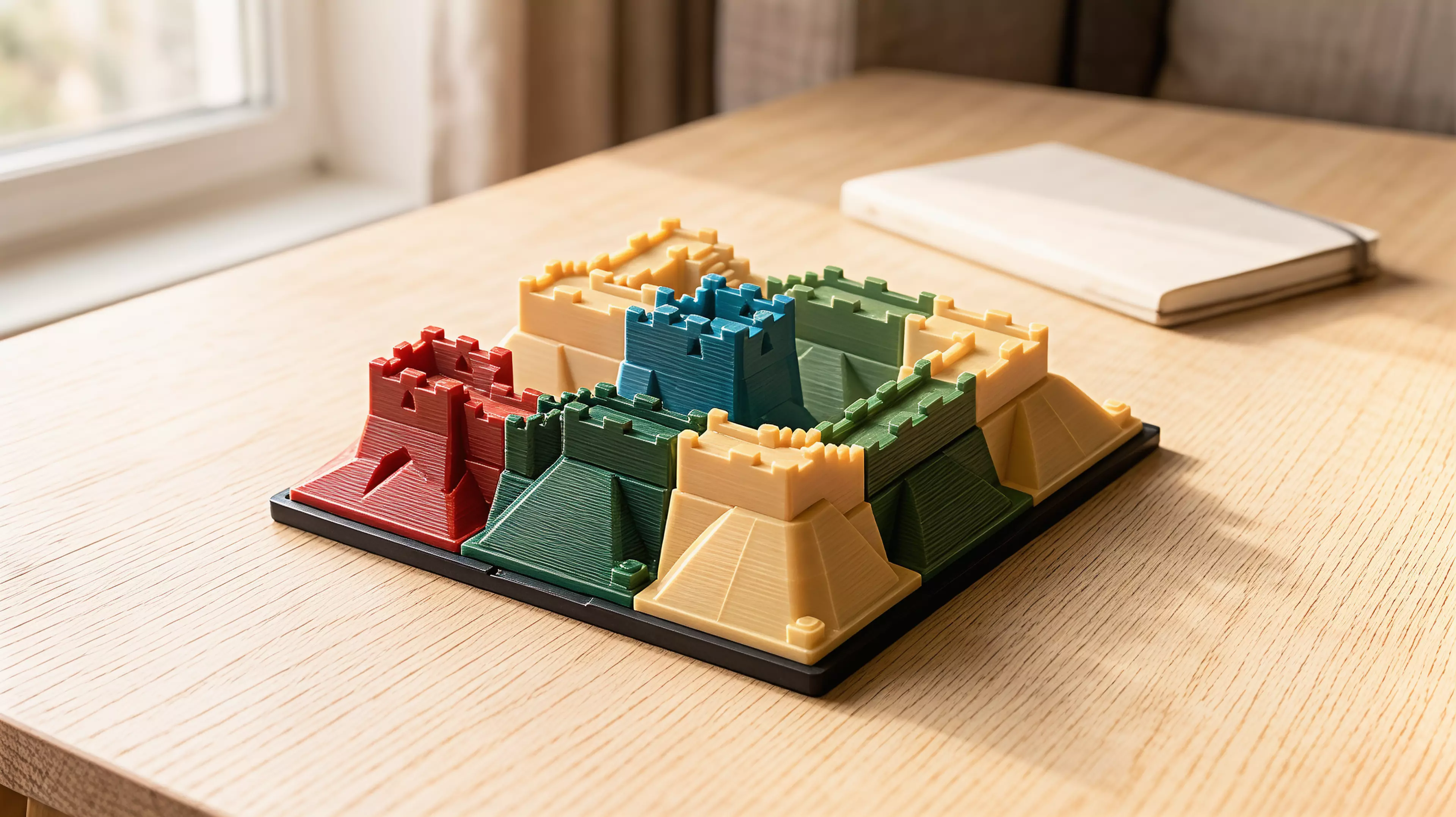
Nine mountain-wall modules. Two watchtowers. One continuous route. Choose one of fourteen challenge setups, place its clues, then lift, quarter-turn and place the remaining pieces. Connect G1 to G2 through all nine modules, matching both direction and height at every seam. Start with the illustrated two-piece tutorial, then explore the full 3 × 3 puzzle. Includes nine modules, one numbered cradle with an engraved 3 × 3 grid and north marker, editable Python, colored STEP files and a 13-page guide. Assembled size: 174 × 182 × 63 mm, including the north tab. Digital prototype; physical fit and play have not been tested. The downloadable STEP preserves the sandstone, moss, brick-red and teal face colors shown in the covers. The current web viewer simplifies each solid to one color.

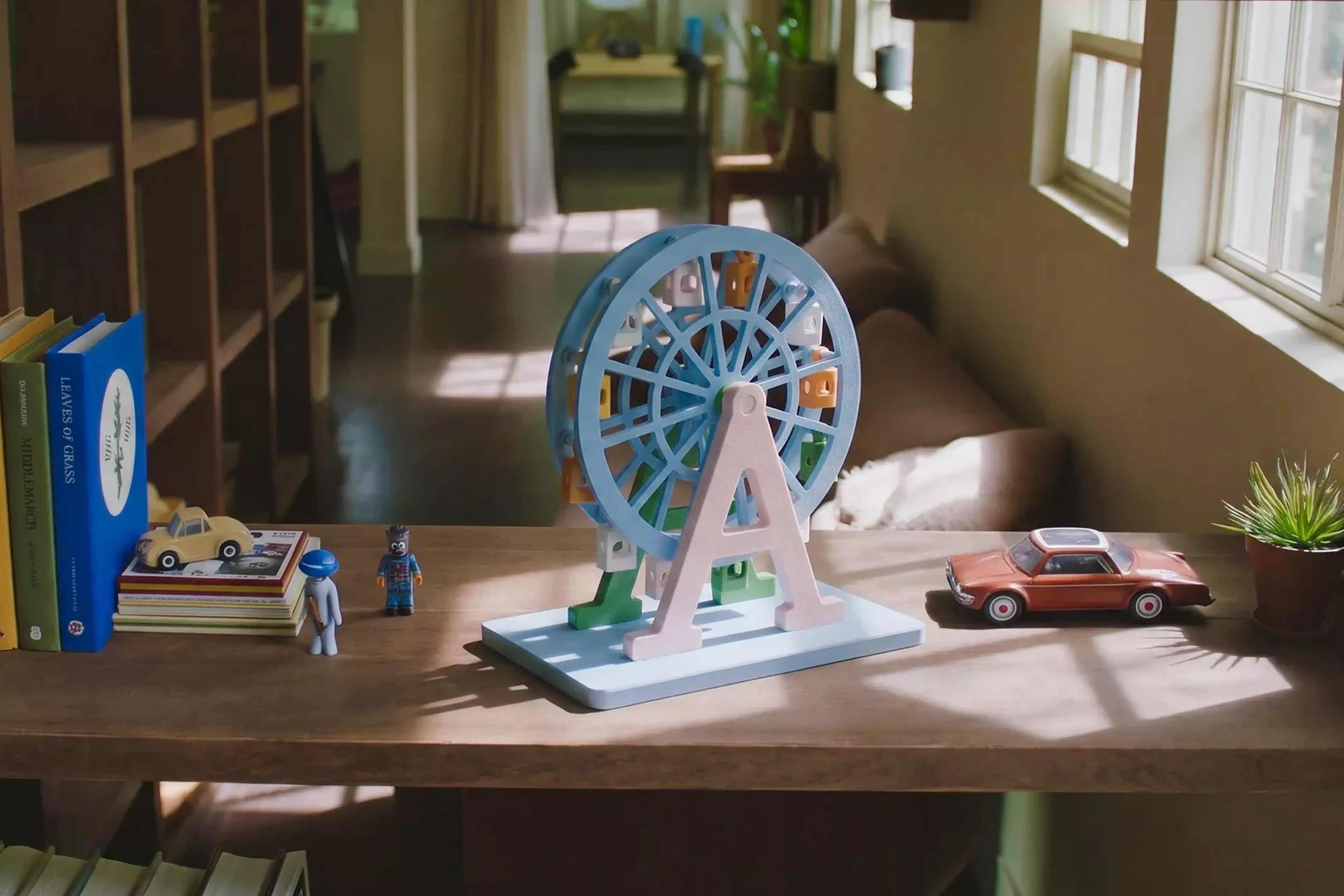
A 185 mm tall, free-spinning Ferris wheel with 12 swinging gondolas that hang upright as the wheel turns, matching the photo's A-frame support and lattice-spoke wheel, split into separately-printable parts for multi-color filament (base/towers in white, wheel rims in a sunset accent color, gondolas…
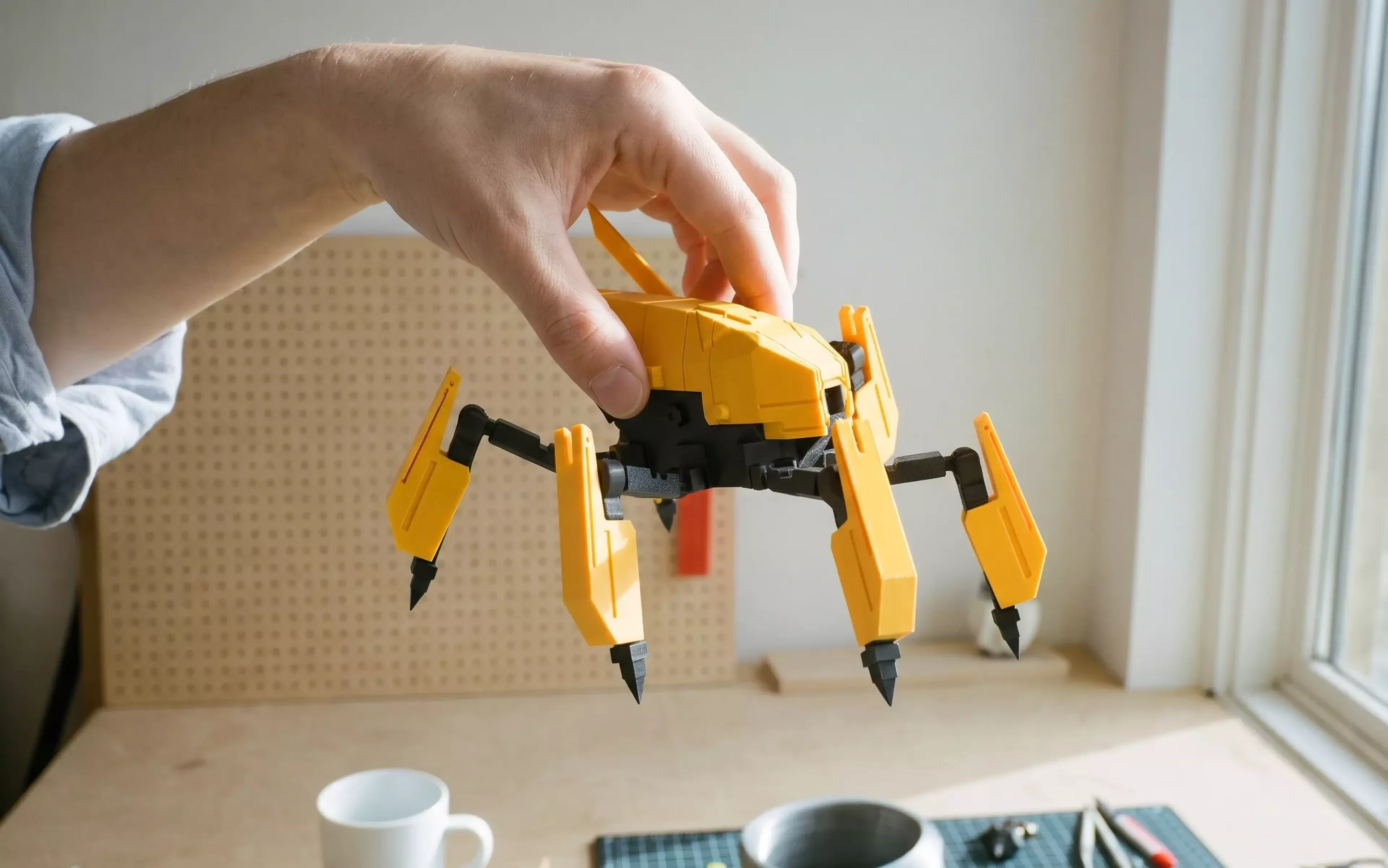
A six-legged yellow and black mecha spider: long faceted hull with swept antenna blades, tall shin guards on steel-look claws and pale cable loops, assembled from 16 printed part roles.
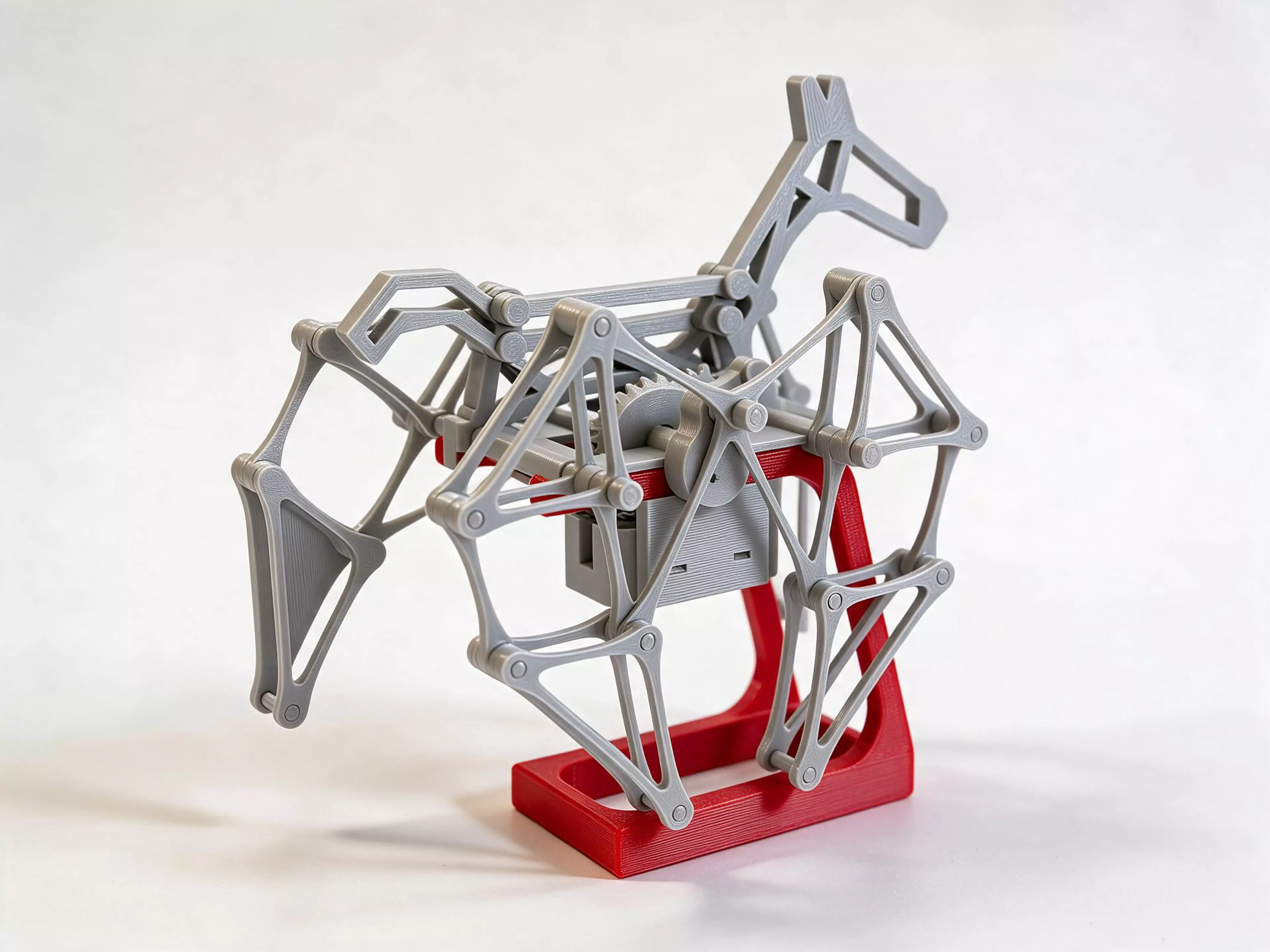
A four-legged Theo Jansen walker, geared and dressed as a horse - the mechanism stays in the open and becomes the animal's body.
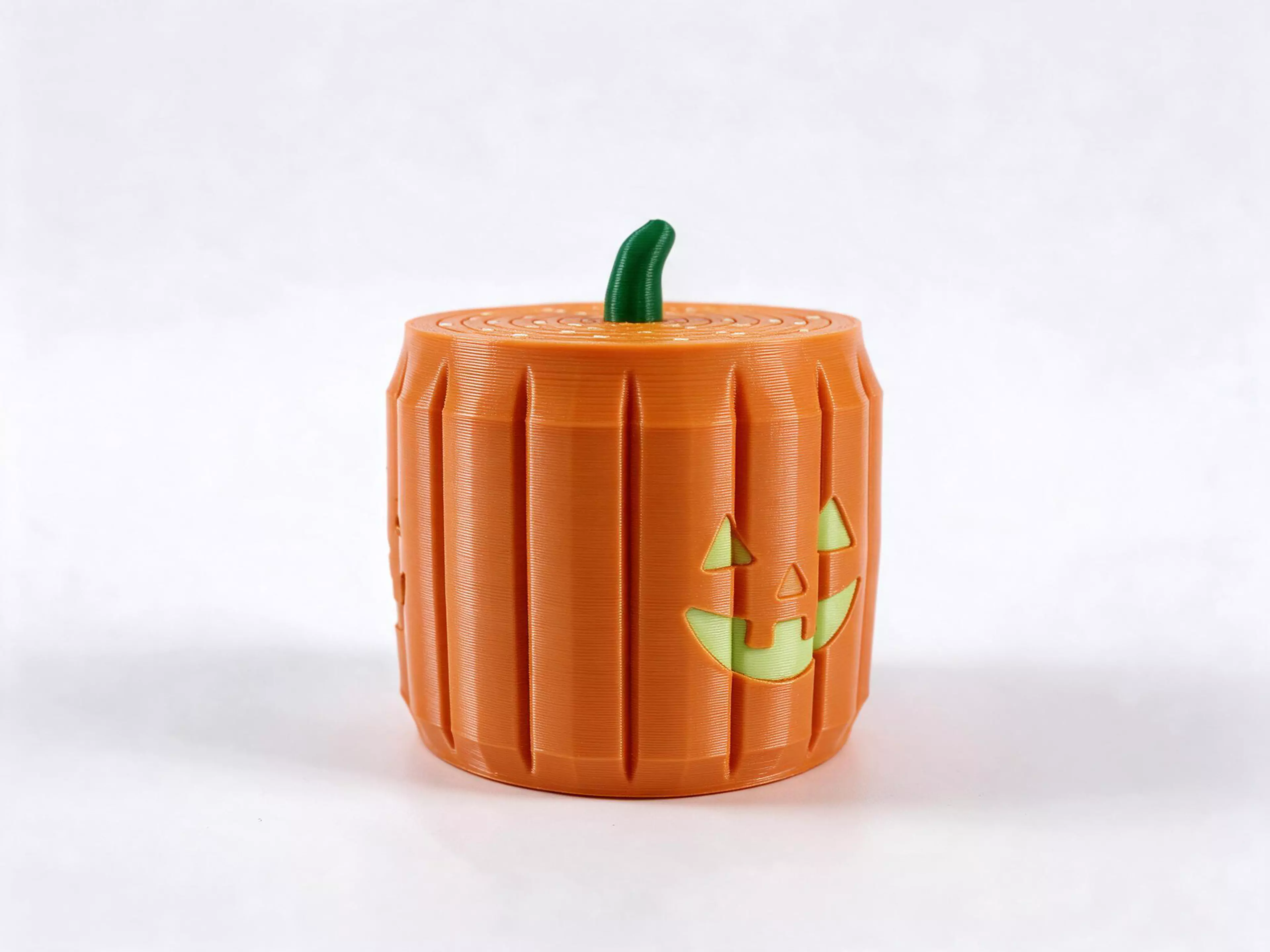
A ribbed orange pumpkin that hides a Christmas tree. Lift it by the stem and the spiral stretches to about 7.6 in long; in the dark, 108 glow-in-the-dark dots trace a three-tier pine. No batteries. About 3 in wide, made from PETG.
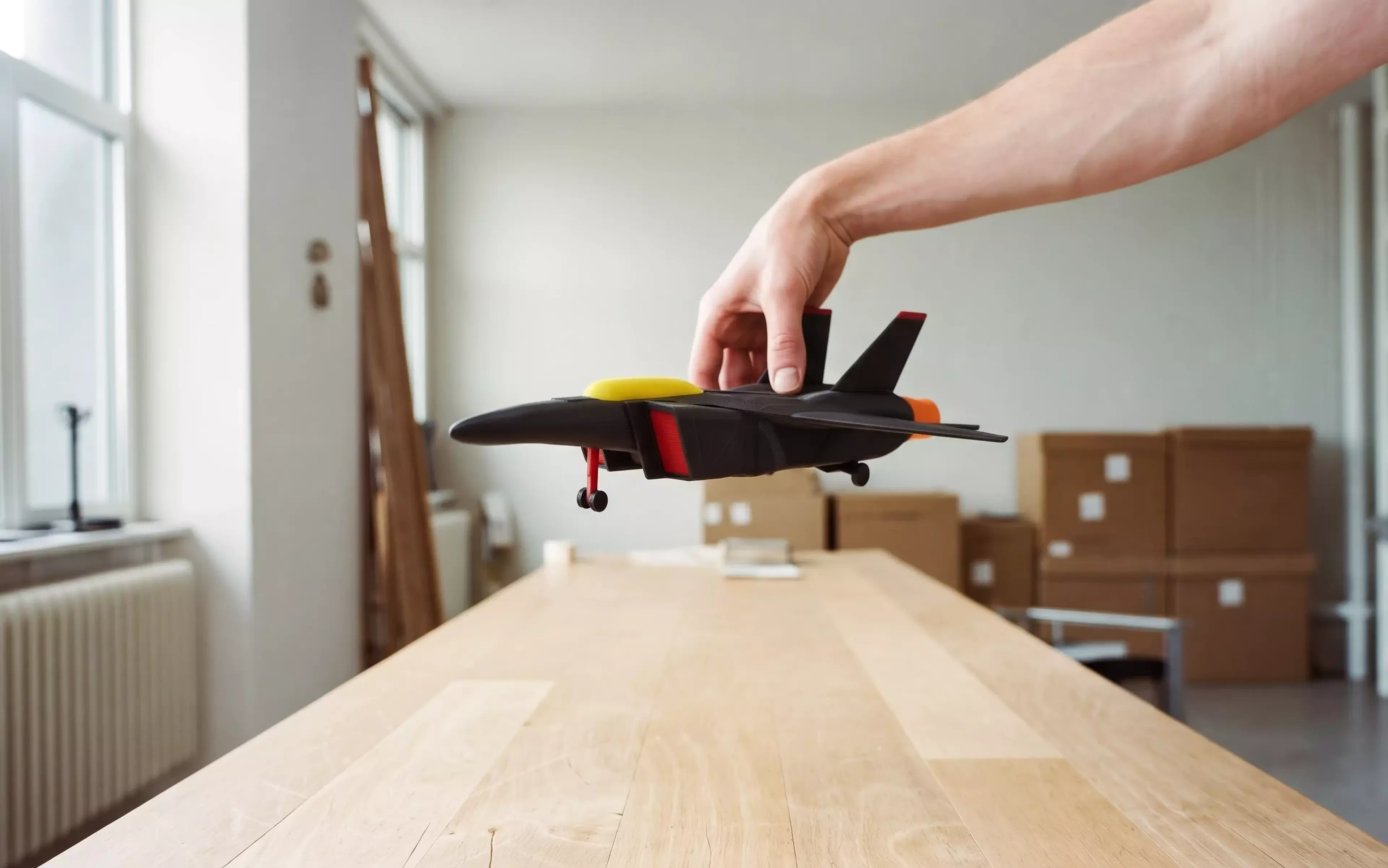
A 390 mm-wingspan F-14D Tomcat that sits on its own landing gear like a ramp-parked jet. Sixteen colour-separated printed parts - gloss-black airframe and spine deck, pale-khaki tandem canopy, red-tipped twin tails, red intake frames and nose strut, orange afterburner nozzles and a full tricycle gear - assemble into a spread-wing display pose. 390 x 388 x 117 mm (about 15.4 x 15.3 x 4.6 in).

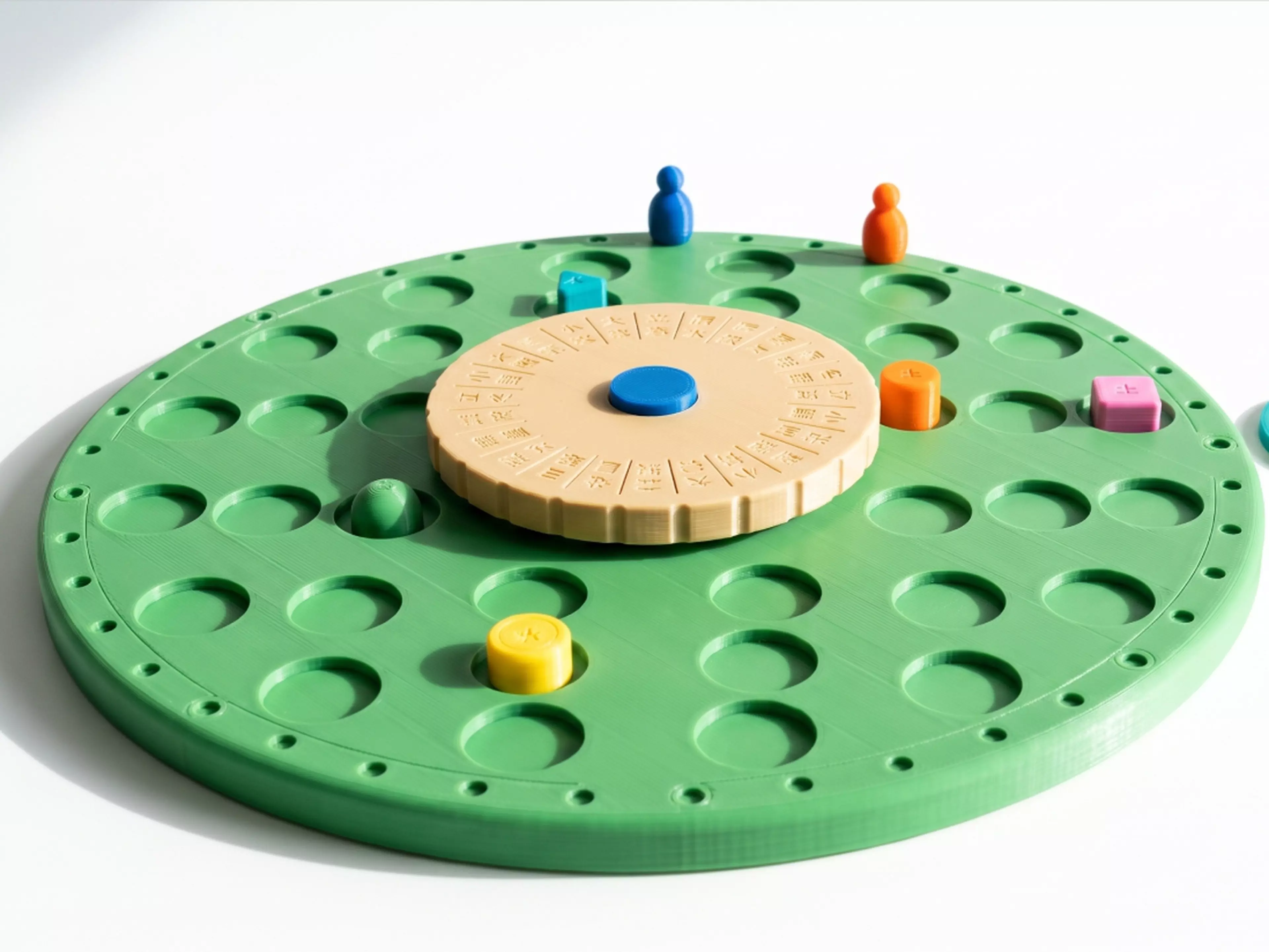
An original, 3D-printed family strategy board game rooted in the 24 solar terms (二十四节气, UNESCO intangible heritage) and the Wuxing five-element cycle: a Ø250 mm circular walnut-tone board with a click-detented rotating celadon wheel at its center.
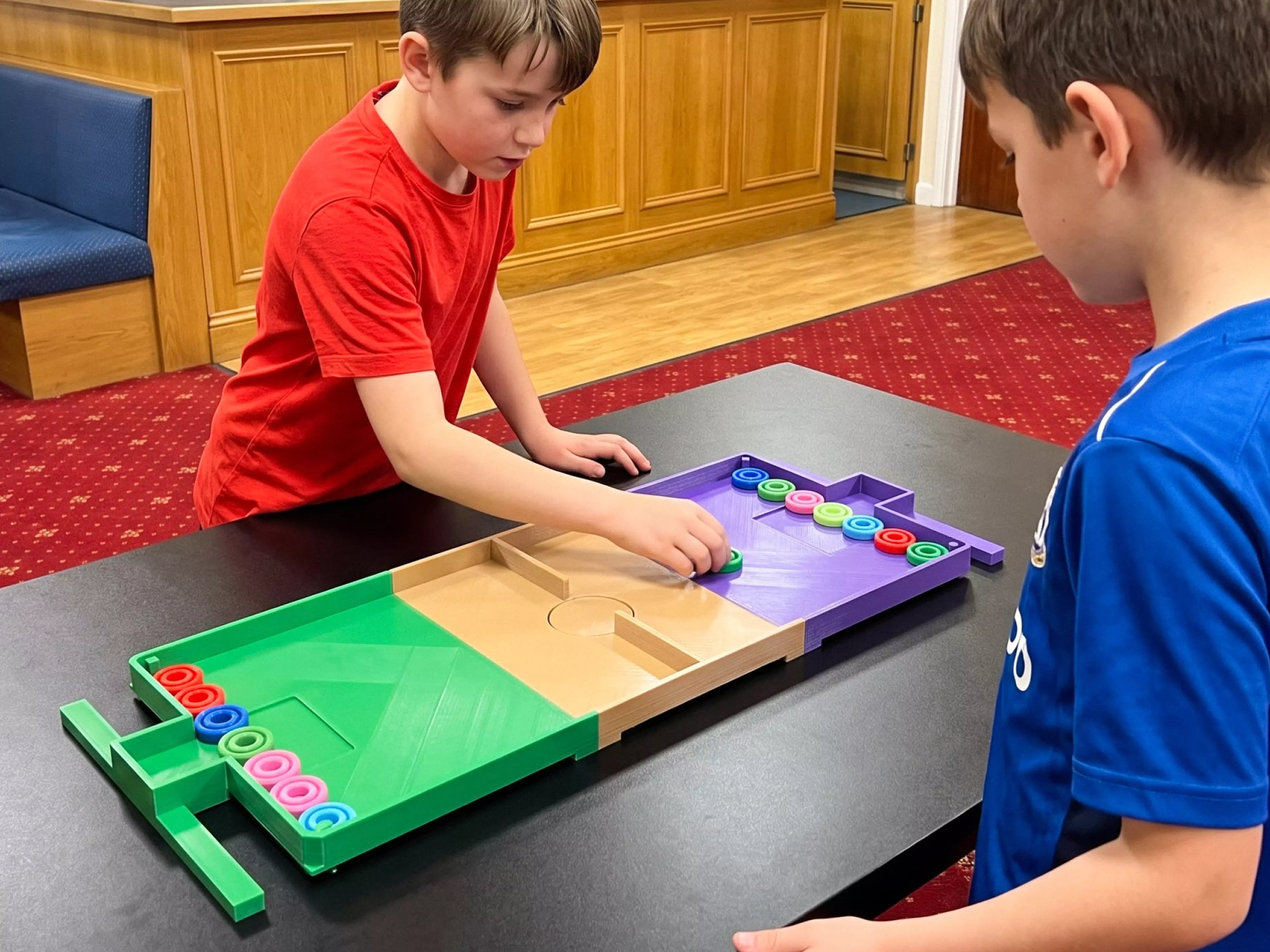
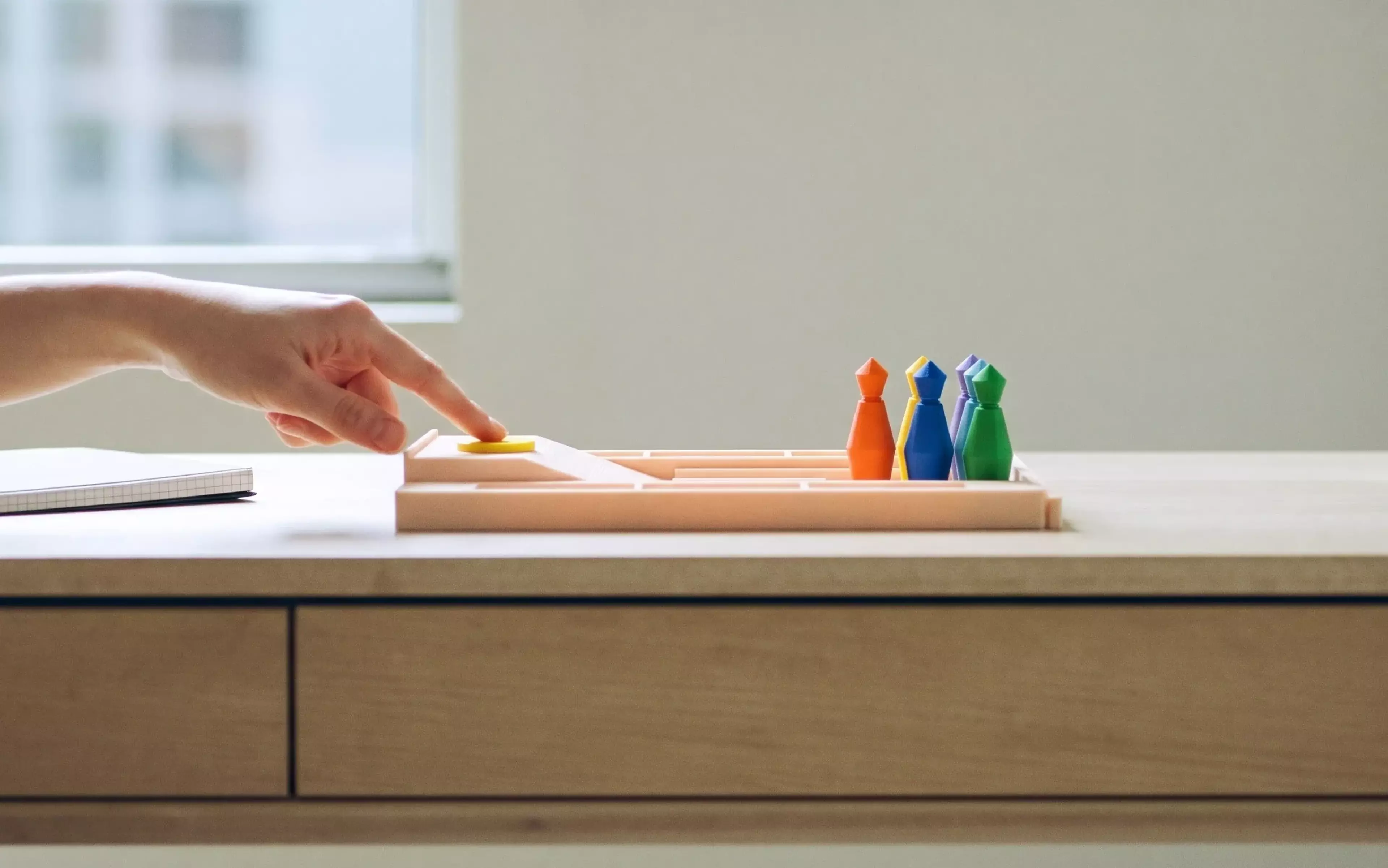
A pocket bowling toy: a lane tray that ramps into a flick-launch pad and doubles as nested storage, six molded pins in a 3-2-1 triangle, and one flick disc — flick the disc off the ramp to send it down the lane into the pins.

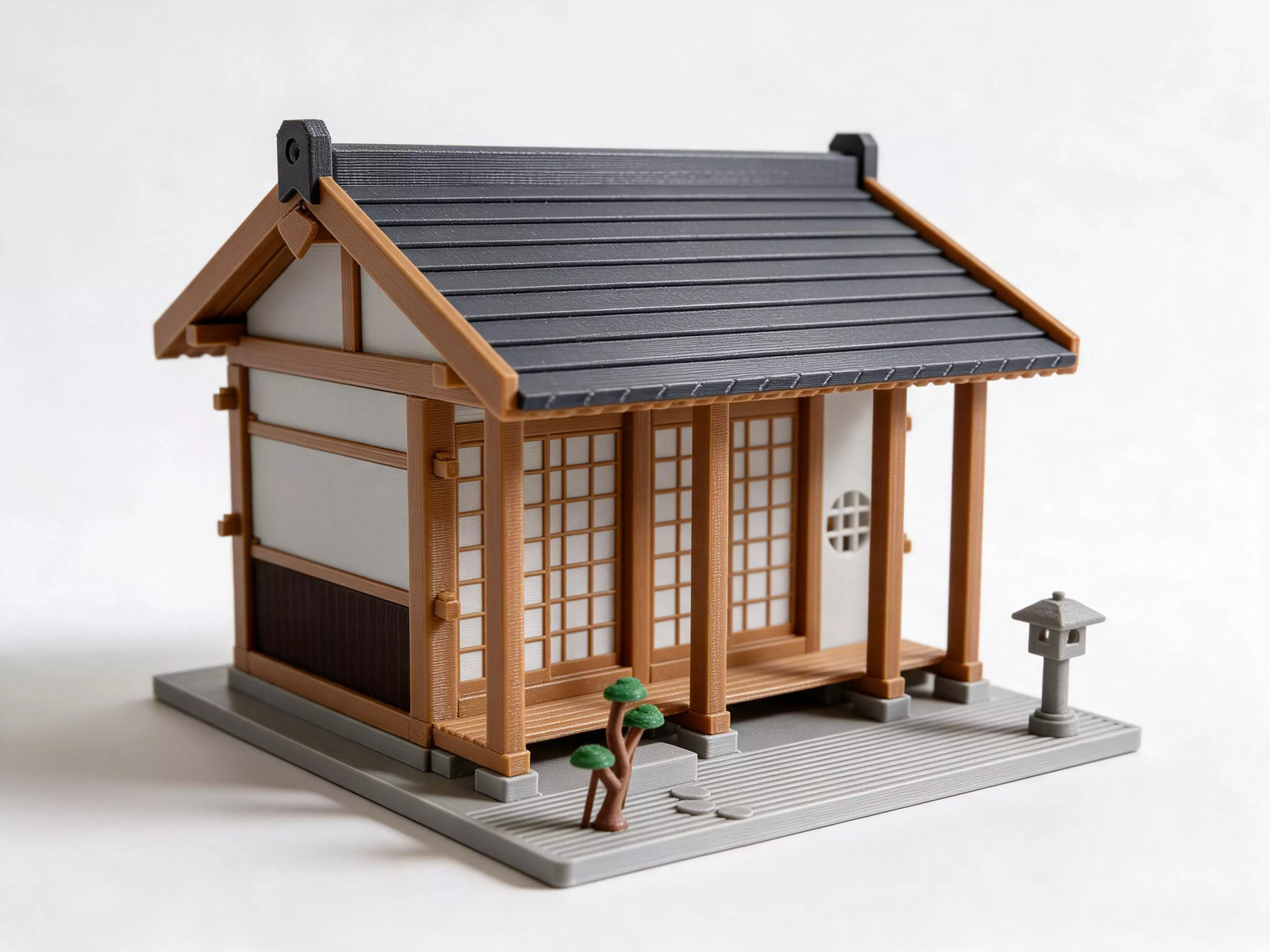
A 1:24 traditional Japanese timber house that you raise the way a carpenter would, from 147 printed pieces with no nails, glue, screws or springs. Eight chapters: lay the stone band and the sills, whose corners cross in half-laps and whose floor beams drop into dovetail sockets; stand eight posts on keyed stubs (a wrong or turned post will not seat); thread the through-ties and tap a wedge home at every post until the frame stands firm; drop in the walls; lay the beams across the post tops and cross-lap the eave beams; fit the shoji, which slide in two tracks, the tatami (lay them so no four corners meet) and the tokonoma scroll; tile the two roof boards on the table, row by row; then the ridge raising: four struts, the ridge beam and two pegs that click home, with a name plate for the builders. The tiled roofs drop on last, then the ridge tiles, a stone lantern and a cloud-pruned pine. The work is split into three crews (frame, roof and walls, doors and garden) that can build side by side and meet at the ridge, or one builder takes every chapter in turn, about two hours. Every look-alike piece carries a small engraved ID on a hidden face.
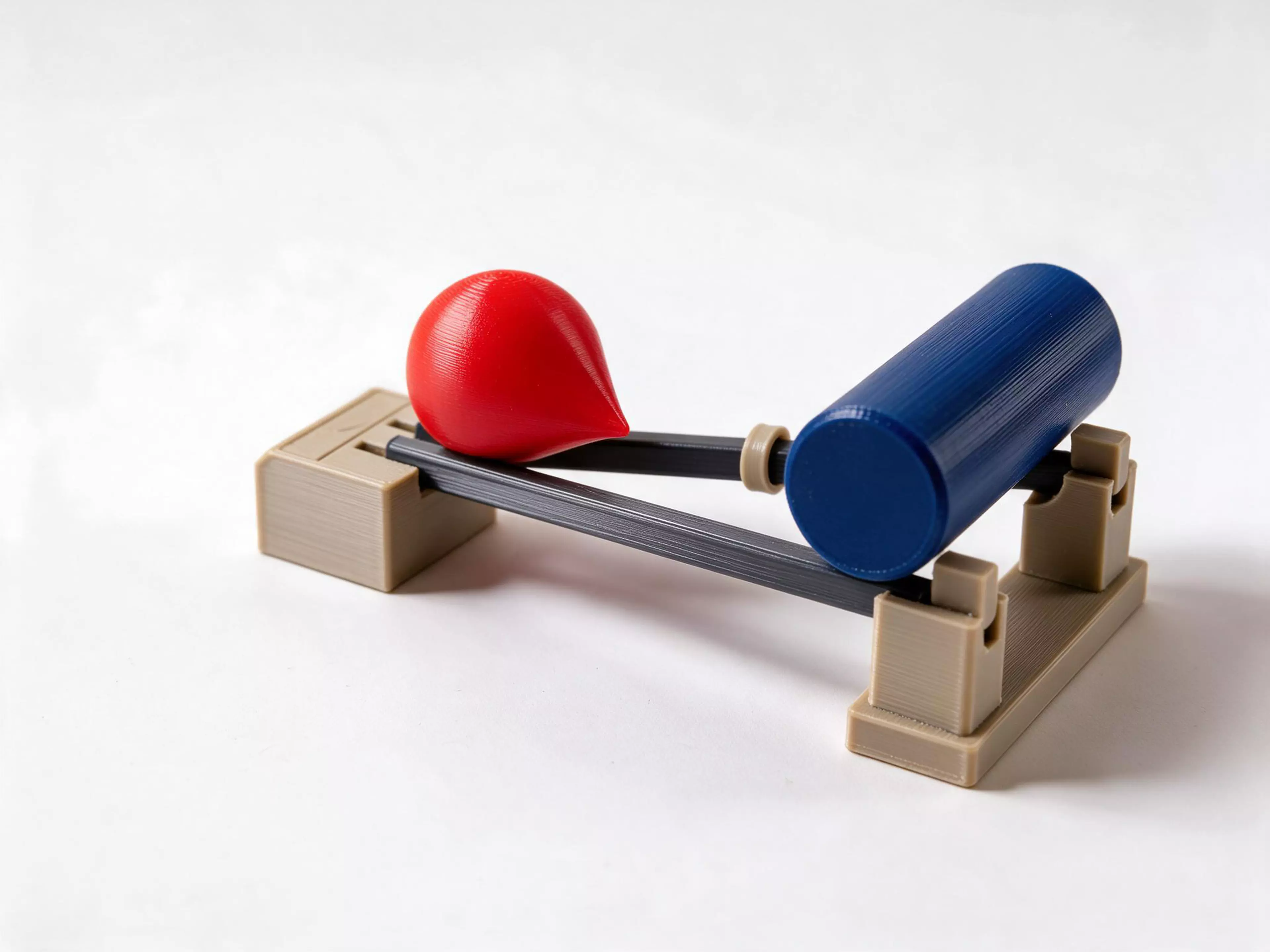
A desktop physics demo kit that seems to break gravity. Set the orange double cone at the narrow START HERE end of two rising rails and it rolls by itself up to the wide, high end, while the blue control cylinder on the same rails rolls straight back down. The rails spread apart as they climb, so the cone sinks between them: its centre falls about 7 mm while the rails rise 10 mm under it. The explanation is engraved under the high support. Eight support-free printed pieces: two rails, two keyed supports, two cone halves with a pressed centre pin, and the cylinder. No glue and no hardware.

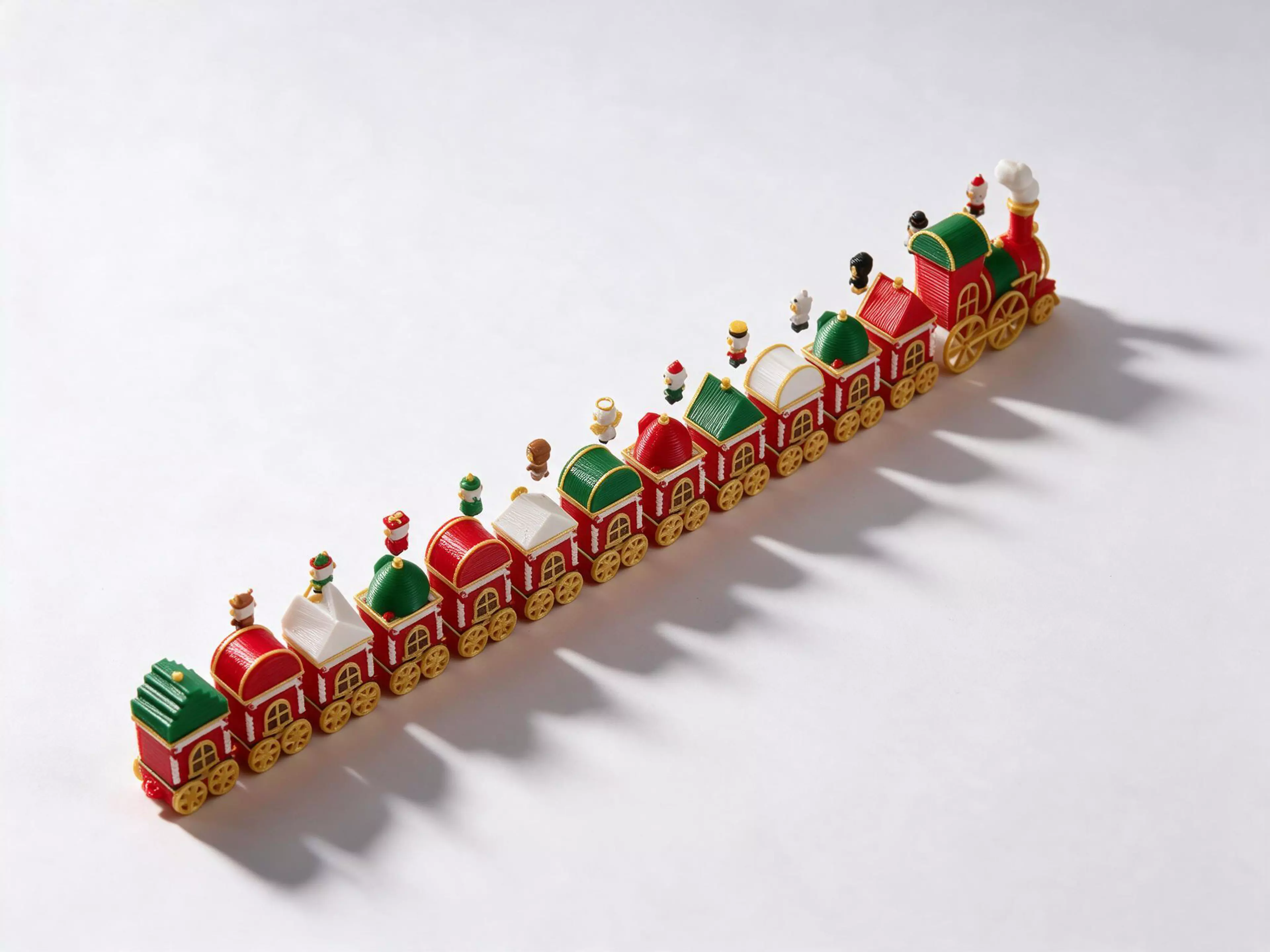
Twelve numbered wagons, a robot elf hidden in each for the first 12 days of December. On day 12 the steam engine arrives, the wagons couple up and the whole crew rides a 3.3 ft pull-along train. PLA.
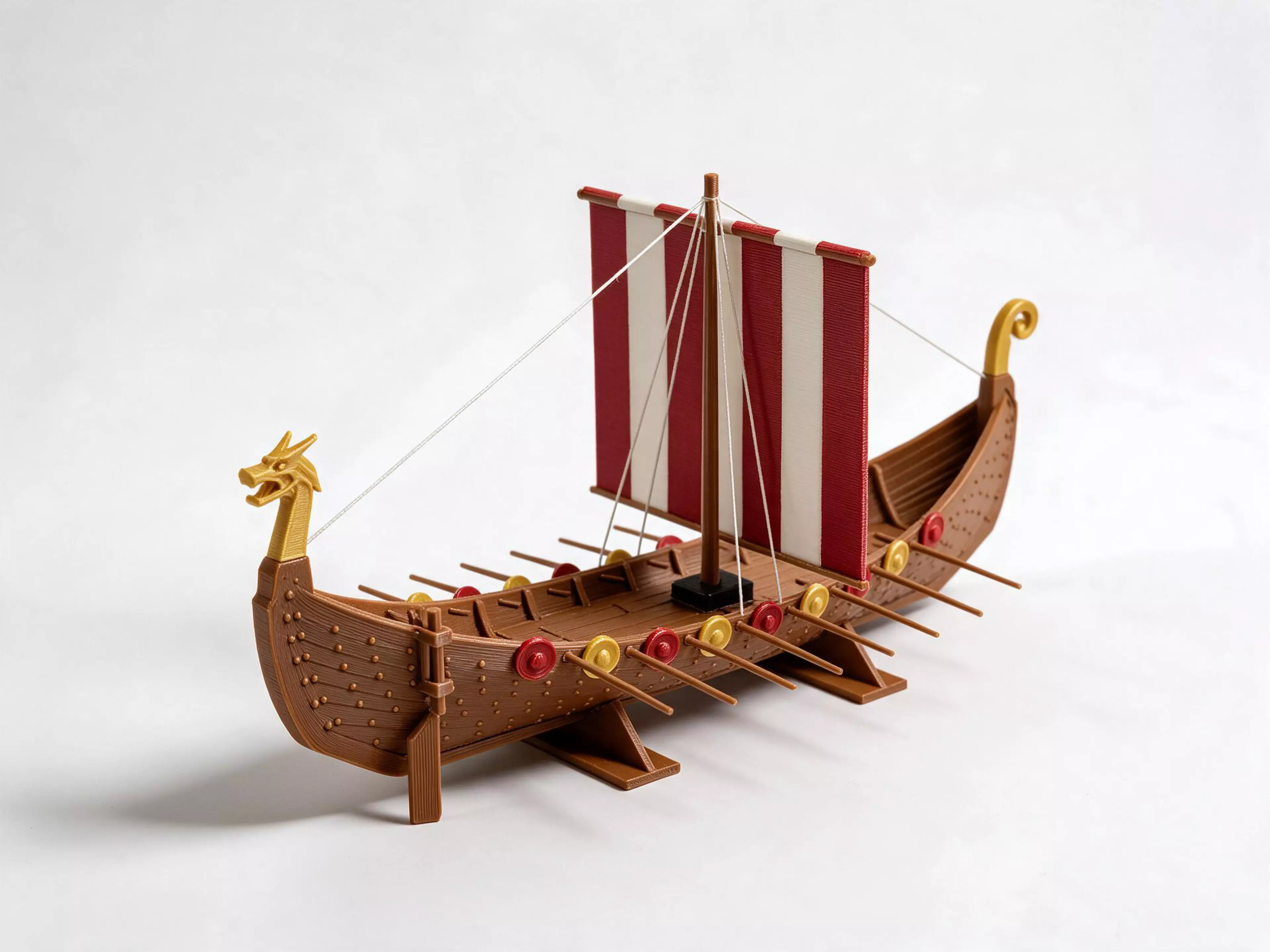
Build a Viking longship the way the Norse did: clinker-built, plank by plank. Dowel the keel and its two high stems together and set them on two cradles, stand eleven frames on the keel (each keyed to its own station, so a wrong frame will not seat), thread the keelson through them and lay the floorboards and mast fish. Then the hull grows strake by strake: each of the 32 strakes prints flat, bends into place, tucks its lap under the row of rivet heads on the strake below and slides 2.4 mm down the side to lock; the strake above holds it, and the sheer strake snaps under latch fingers on the frames. Hang 18 shields, run 16 oars out through their ports, hang the steering oar on the starboard quarter, set the dragon head and spiral tail on the stems, then the finale: raise the mast from its lean, drop the lock block behind it, seat the yard, hang the striped sail and tie the stays. About 1:53 after the Gokstad ship, 436 mm long. 126 printed pieces in eight build chapters, no glue, screws or springs; one bought cord.
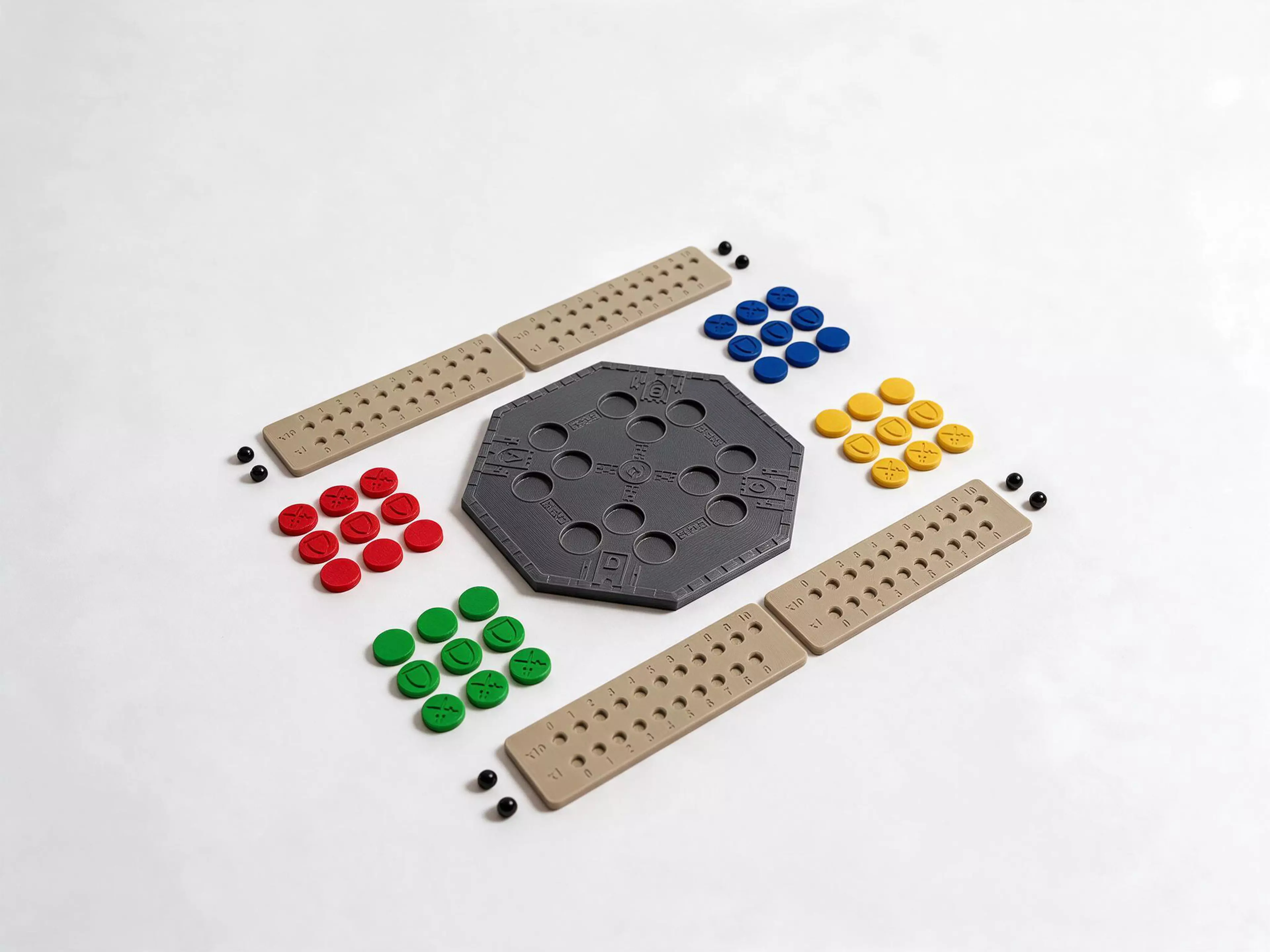
A four-player simultaneous-command tabletop game. Each kingdom secretly sets an Attack, Defense or Blank token into the three slots aimed at its rivals, then everyone reveals at once and moves pegs on their own 0-100 life tracker. The set has a castle-cornered octagonal board with a crown seal, 36 tokens in four kingdom colours, four trackers and eight pegs. Every piece prints flat on an FDM printer without supports, glue or hardware.
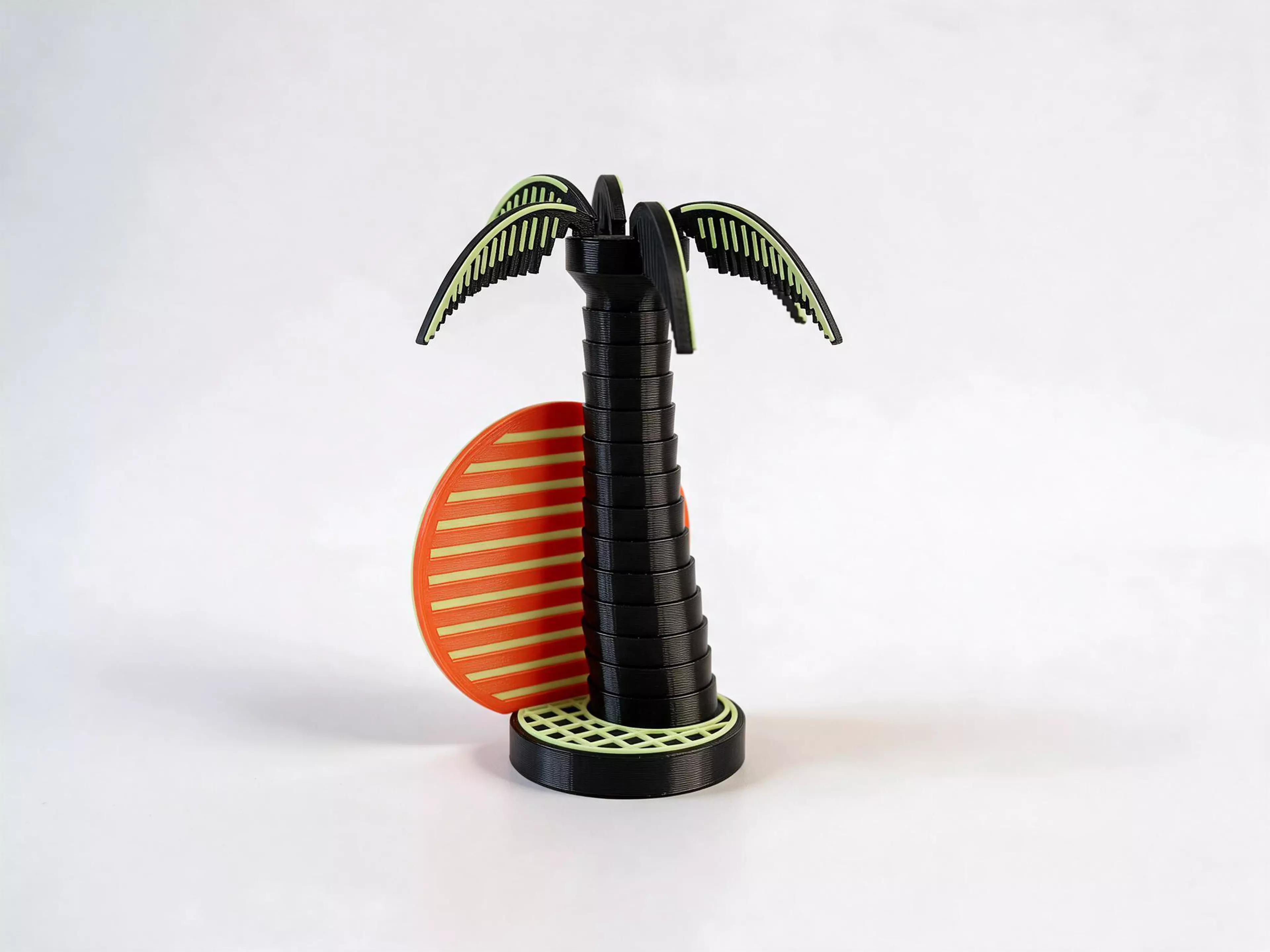
A 220 mm desk bud vase for one to three stems. A black ringed palm trunk with a swollen, curving foot stands on a 90 mm black base with a raised glow-in-the-dark grid, in front of a translucent amber striped synthwave sun, under six black fronds. The water stays in a bought 25 × 150 mm plastic test tube that drops straight into the trunk and lifts out for washing; the printed trunk around it is a second barrier.

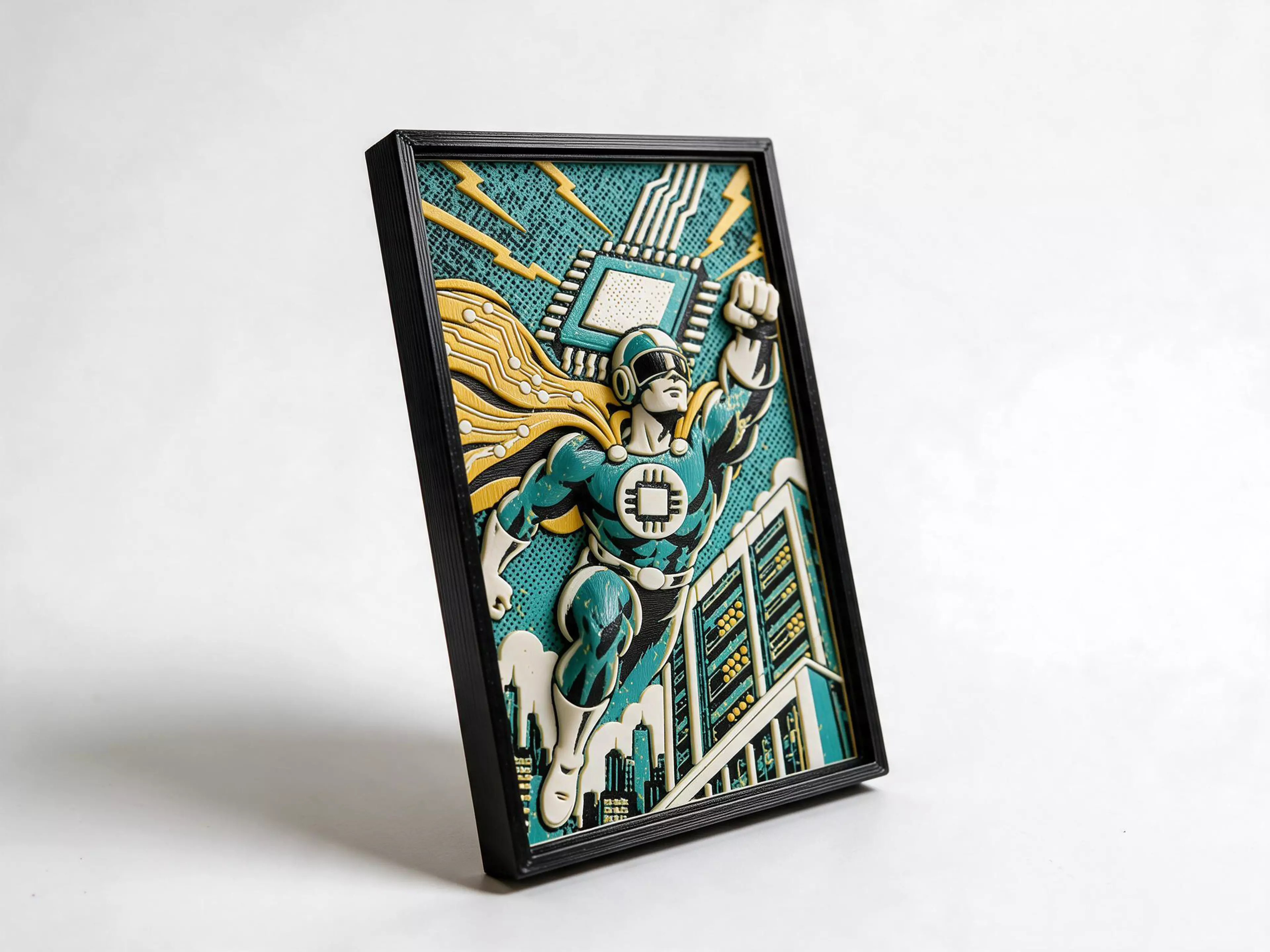
A comic hero with a chip on his chest flies over a server-rack city. The picture prints in four stacked colors of PLA, then slides into a black desk frame with a fold-out easel and wall keyholes. About 6.7 x 10.2 in, matte PLA.
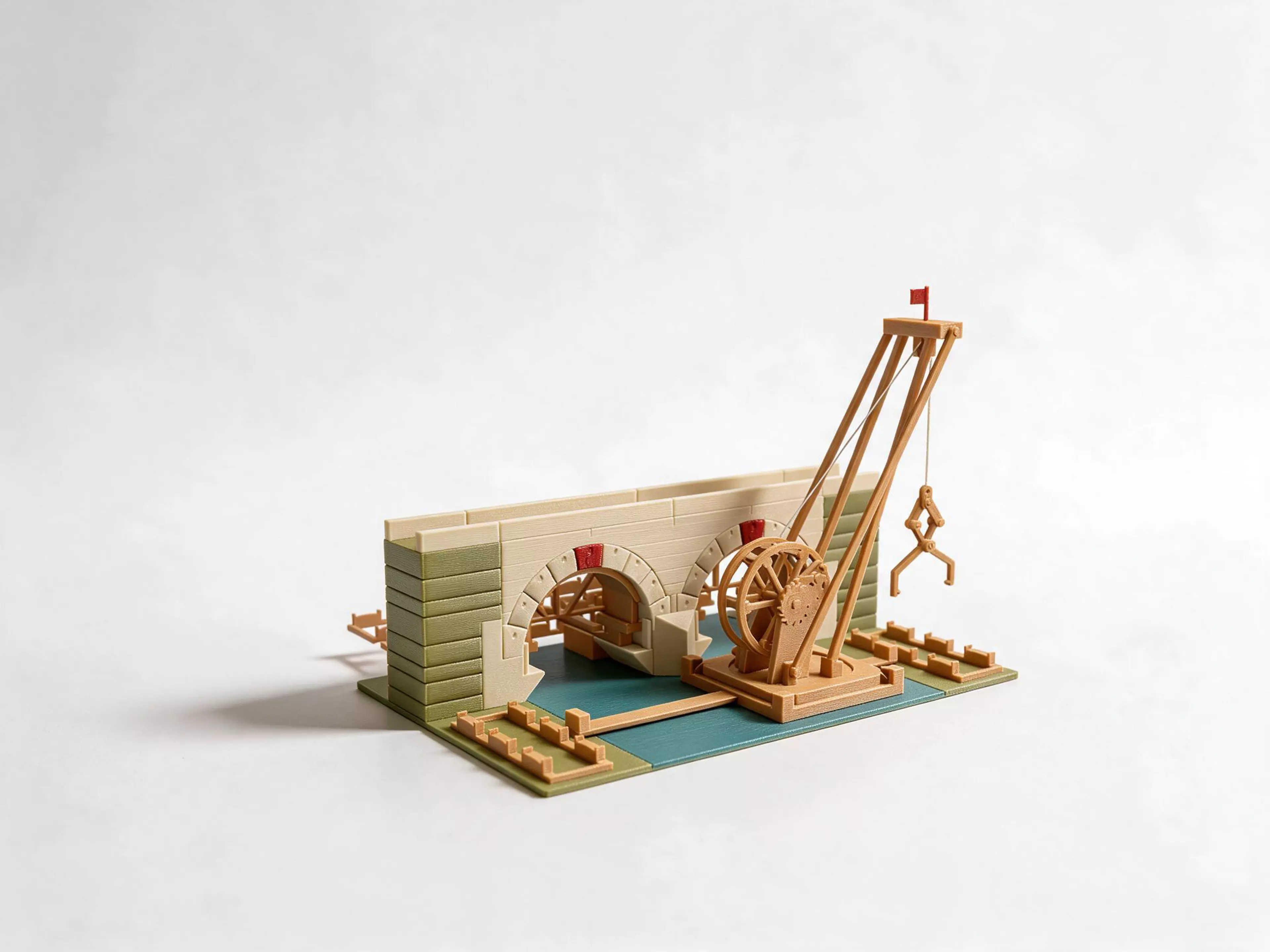
Build a working Roman treadwheel crane, then use it to raise a two-arch stone bridge, stone by stone. The crane runs on a rail along the bank and slews on a twist-locked turntable; turn its treadwheel with a finger and a gravity ratchet clicks once per tooth, flip the pawl up to lower. Self-tightening scissor tongs grip each arch stone by two lifting holes, a real Roman detail, and every stone is drilled so it hangs already tilted to its seat. Set the stones on the timber centering: springers first at both ends, then the voussoirs, the red keystone last. Then strike the centering: tap a drift with the mallet to drive each folding wedge until its line meets the bridge face, the centering drops 2 mm and slides out, and both arches stand on their own. Play it as a race: one crew builds the crane while the other builds the piers and centering, then time who raises an arch fastest. 99 printed pieces in eight build chapters, no glue, screws or springs; one bought cord.
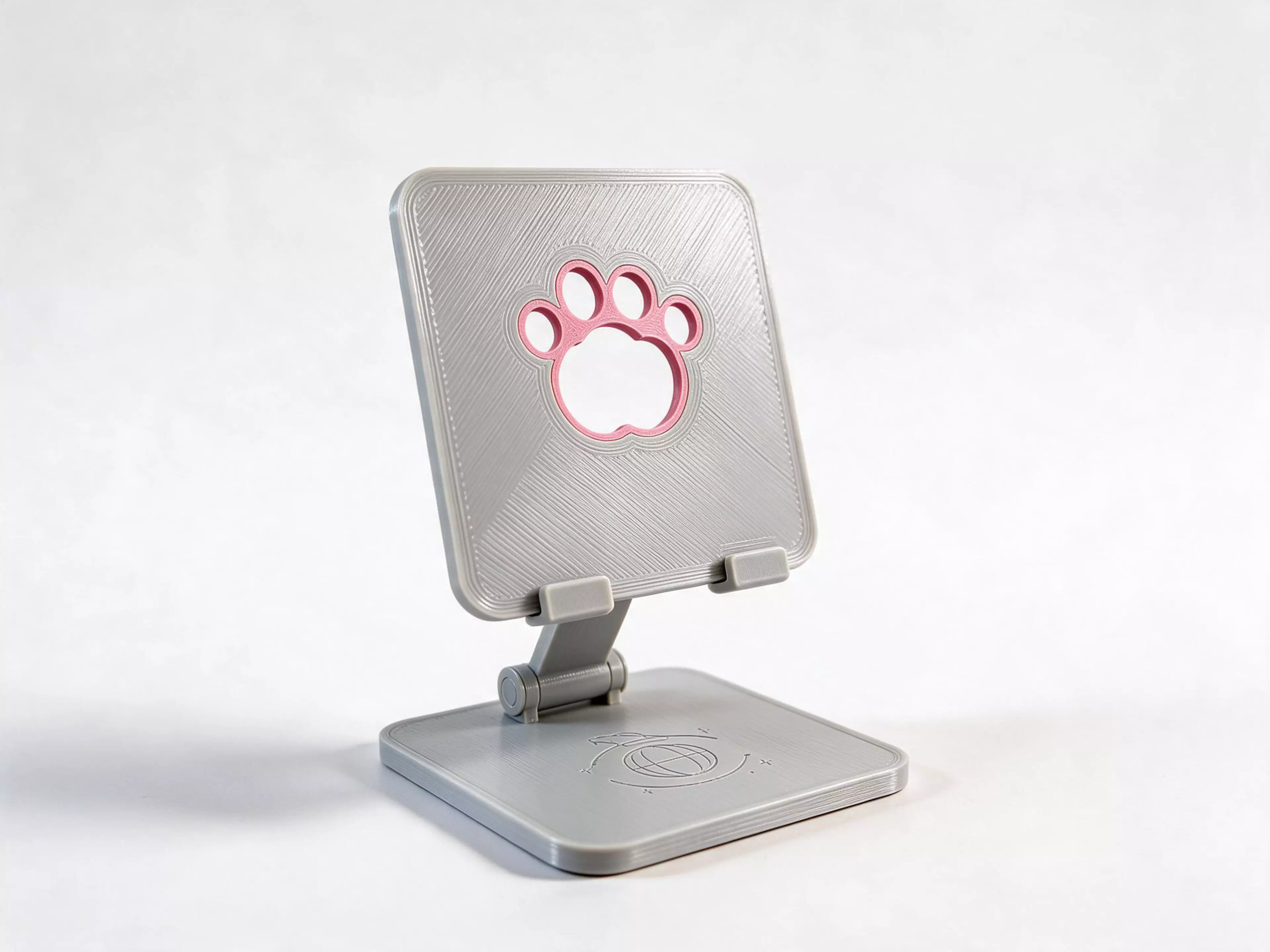
A folding stand for a 10th-generation iPad (no case), holding it in landscape or portrait at a 17° lean, with a pink cat-paw cut-out and a planet-and-star pattern engraved in the base. One stand; the picture shows it twice, with and without a tablet. Design concept, not yet test-printed: the hinges have no clearance or angle lock and the parts must be glued, so it is not yet proven to hold an iPad. iPad not included.

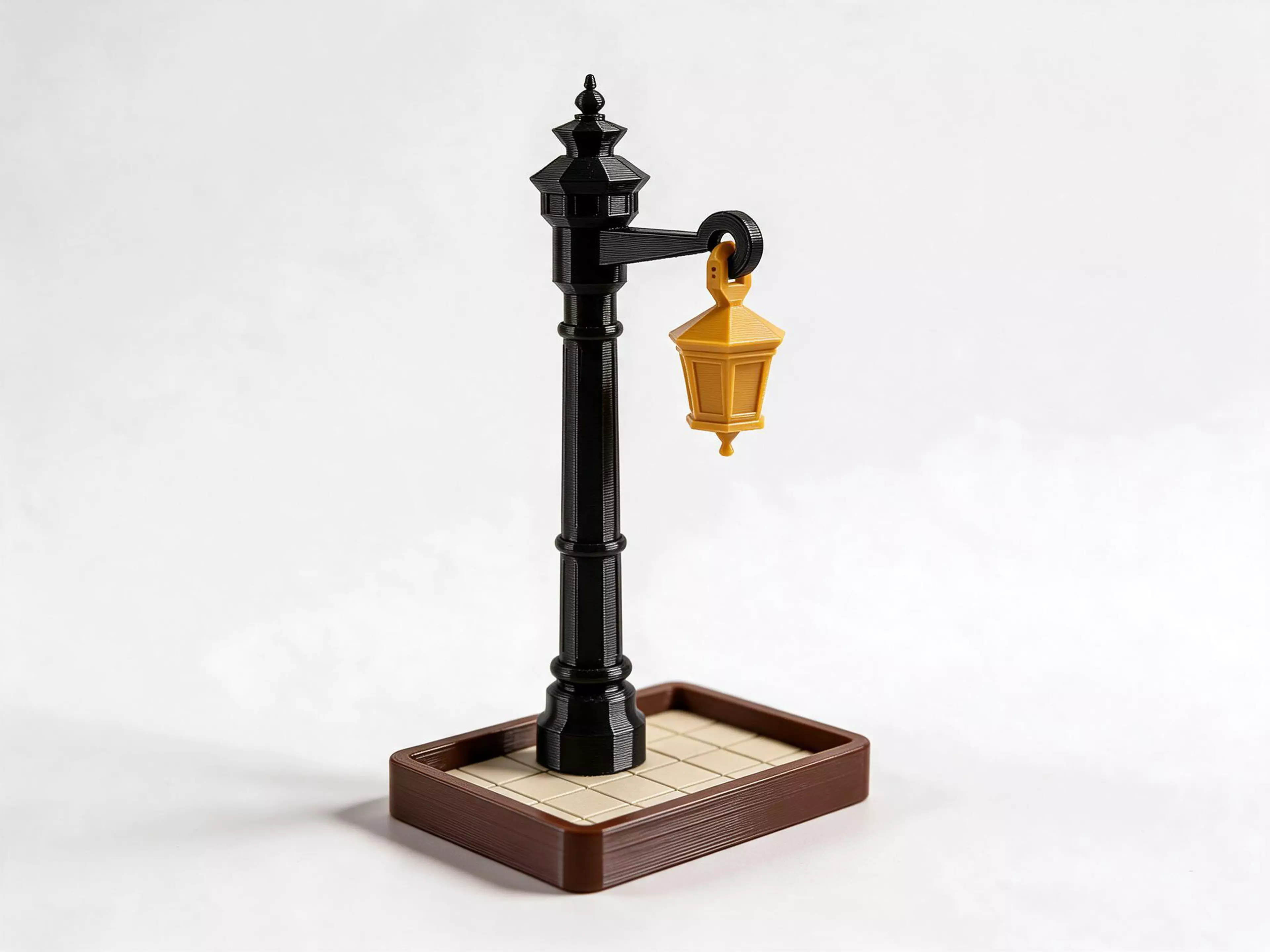
A black cast-iron-style street lamp, 300 mm tall, standing at the back of a 170 × 120 mm sidewalk tray whose cream paving slabs sit 12 mm below a dark-oak kerb, so the tray holds keys, coins and an earbud case. The post follows the owner-chosen concept: a two-tier faceted plinth, a torus, a fluted tapering shaft with two rings, a knuckle, and a panelled capital head with two hipped roofs and an onion finial. A flat swan-necked arm leaves the knuckle; the headphone band lies on its 16 mm saddle and the shepherd's-crook curl stops it sliding off. A small unlit amber lantern hangs from the crook's open end on a real 3 mm ring, with a pendant drop under it. One M6 × 250 steel rod runs up the whole post into a nut in the head and clamps everything together; two large steel washers sunk in the tray floor are the ballast.
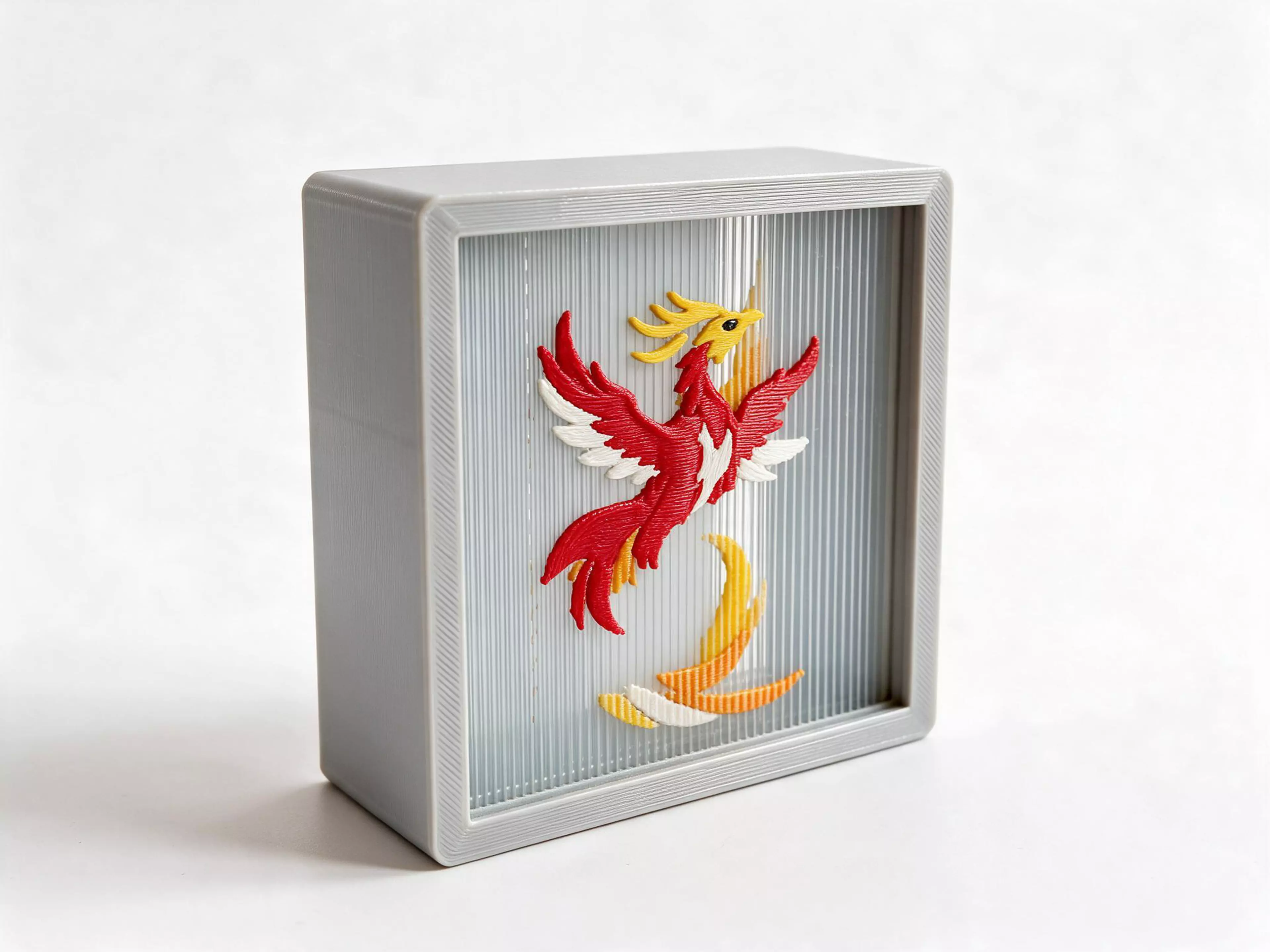
A phoenix rising in red, orange and gold, built from eight clear-strand layers in a deep white frame. From the front the floating feathers line up into one picture; from the side they spread into depth. About 7.1 x 7.1 x 2.8 in, matte PLA.
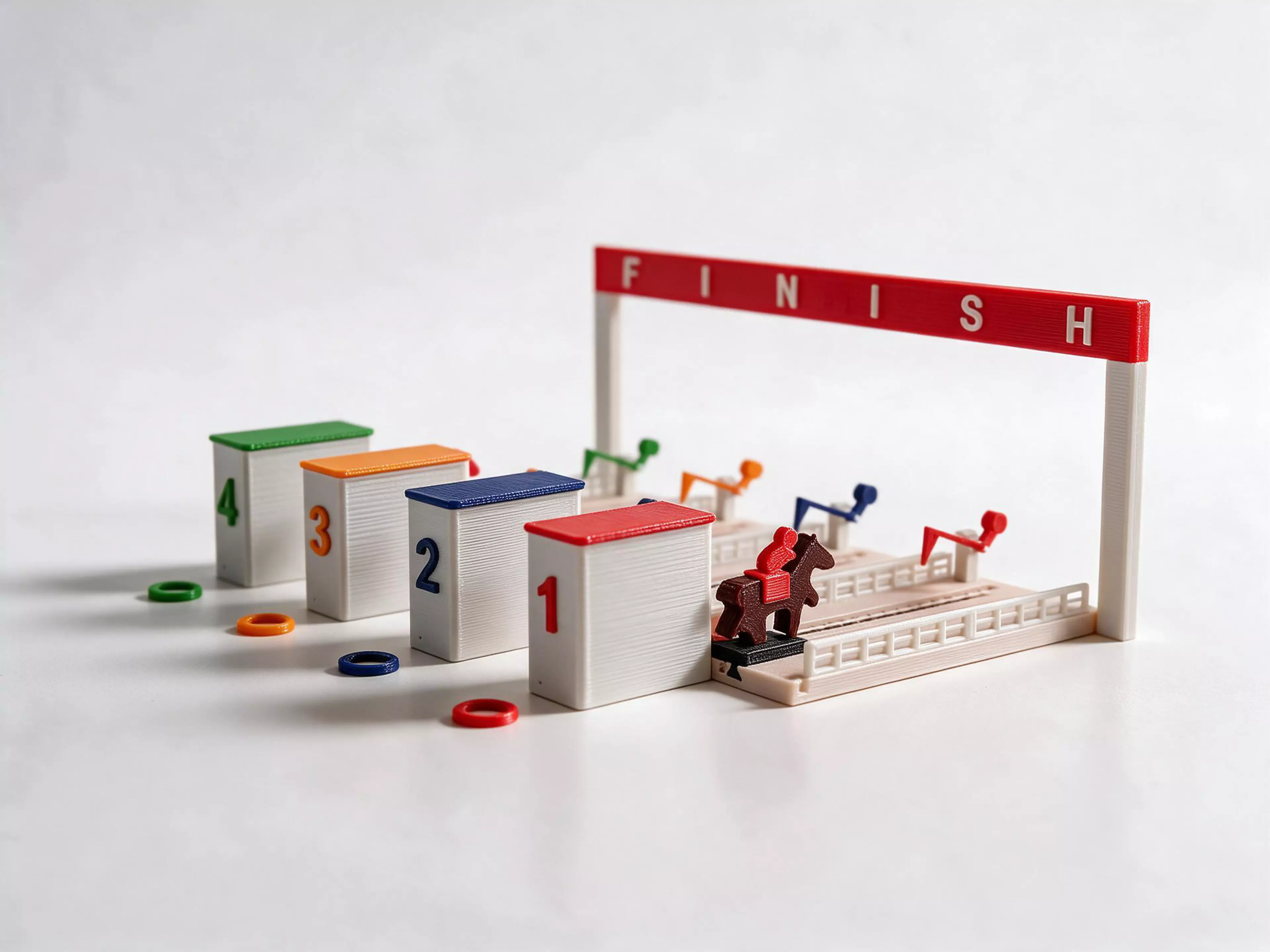
A four-lane horse race you build and then race. Each player builds one lane: a striped dirt track with white rails, a flat carnival horse and jockey on a sled, a white pump house with a coloured roof and a big lane number, and a finish flag. The lanes key together under a red FINISH arch that reads from both ends. To race, pull your ring: a drum inside the pump house turns, and your horse steps one notch, nodding as it goes. Let go and four steel nuts swing the drum back with a clack. Pull again before the clack and you lose the notch, so the race is won on rhythm, not speed. A hard yank cannot run a horse on: a lock on the sled drops into a rack in the lane. After 19 notches the horse's number board lifts its flag, which swings upright; the first flag up wins. To reset a lane, lift the orange grip, slide it sideways, push the horse home and slide the grip back. 110 printed pieces in six build chapters, one lane per builder; no glue, screws or springs.
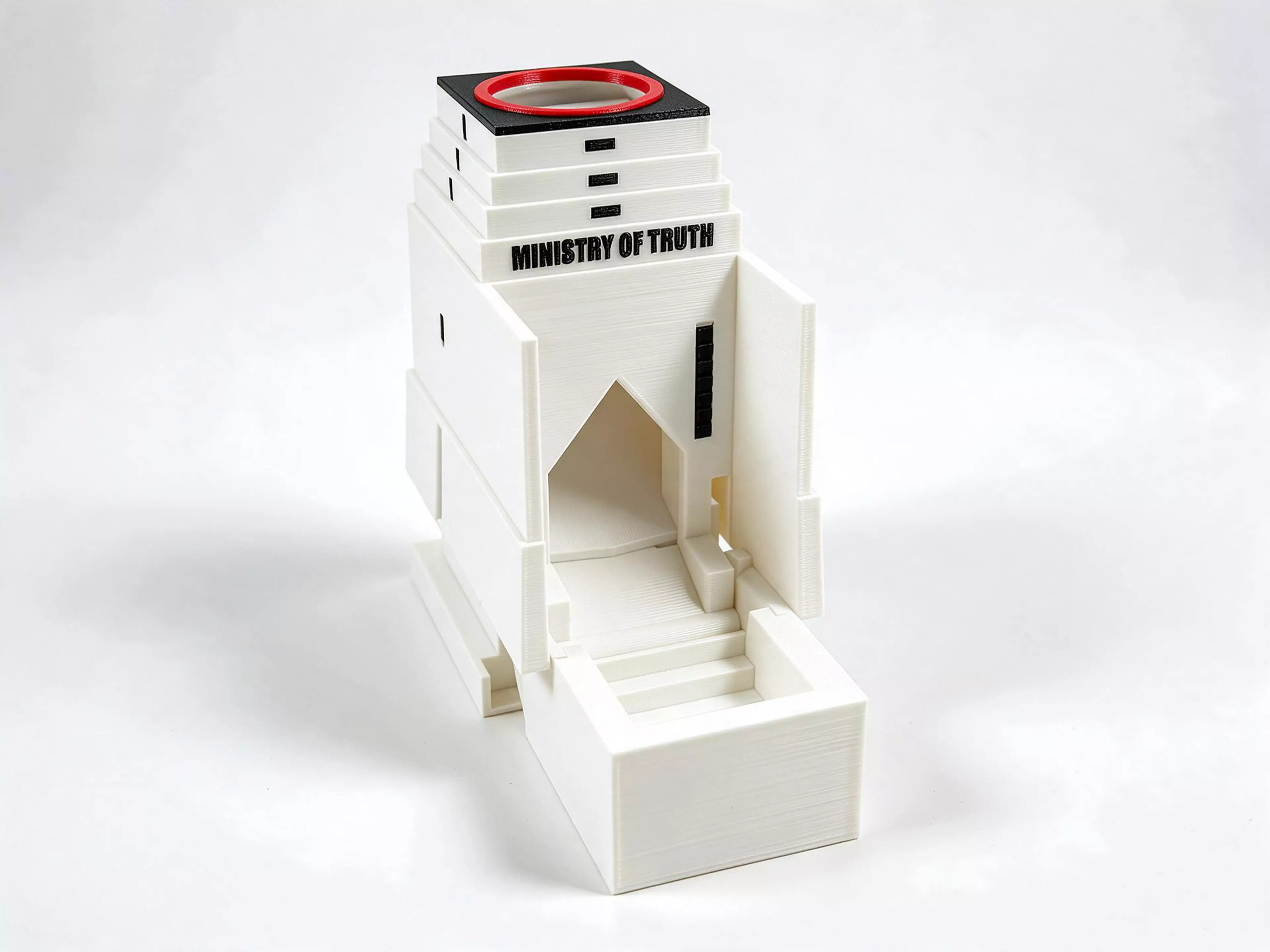
A press-to-reroll dice tower shaped like a white brutalist ministry. Drop dice through the scarlet eye on the roof and they tumble out a small door into a walled forecourt. Slam the roof and the forecourt flips up into the alcove, rerolling every die.
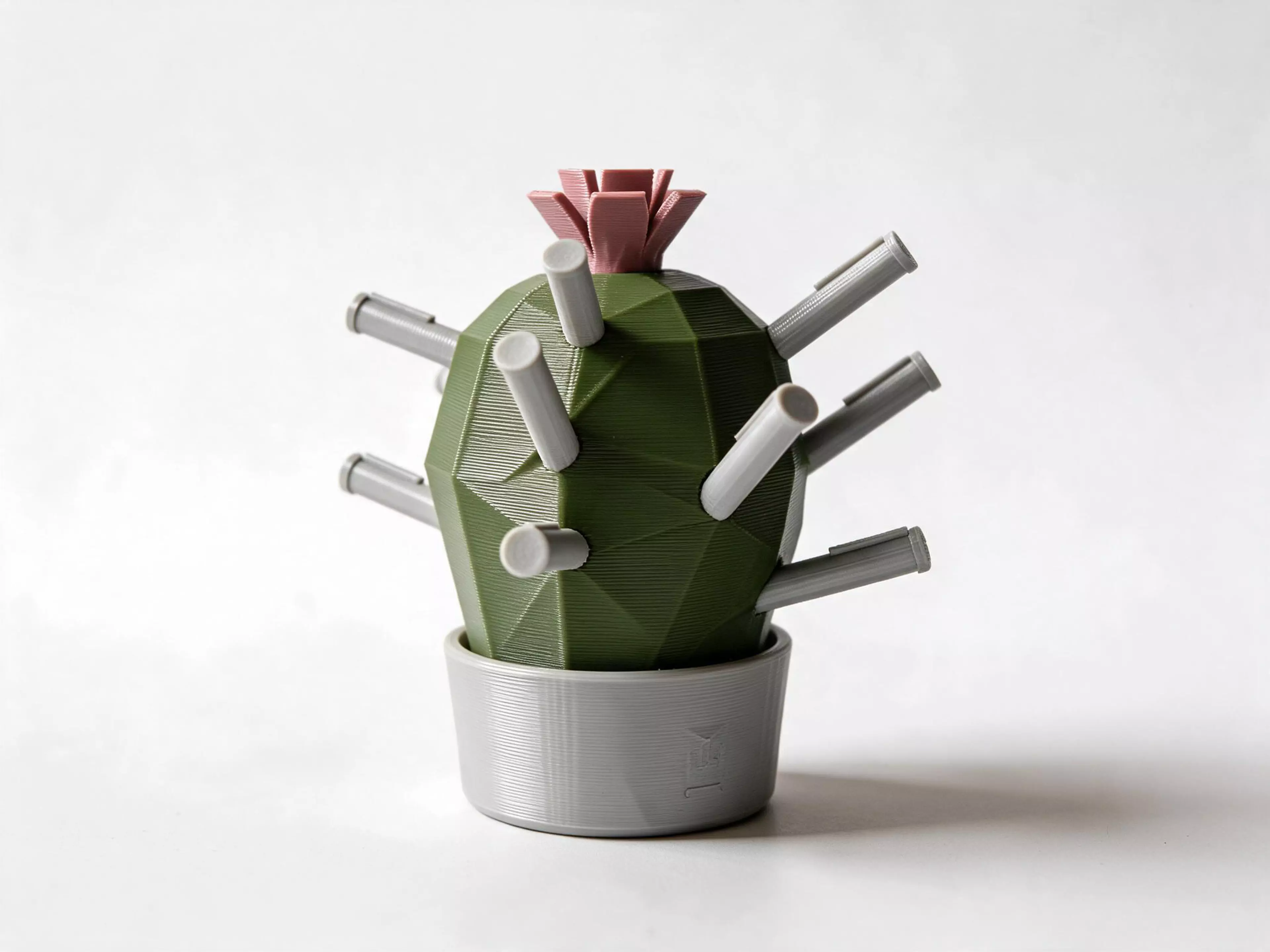
A fully 3D-printed desk pen holder shaped like a potted barrel cactus with a pink flower on top, designed so pens stand in it like spines (concept, not yet test-printed). Twelve Ø11.5 mm sockets take real pens up to Ø11 mm or the printed dummy pens. Four colour parts press together with no glue and no hardware; the model is about 178 mm tall and 113 mm wide.
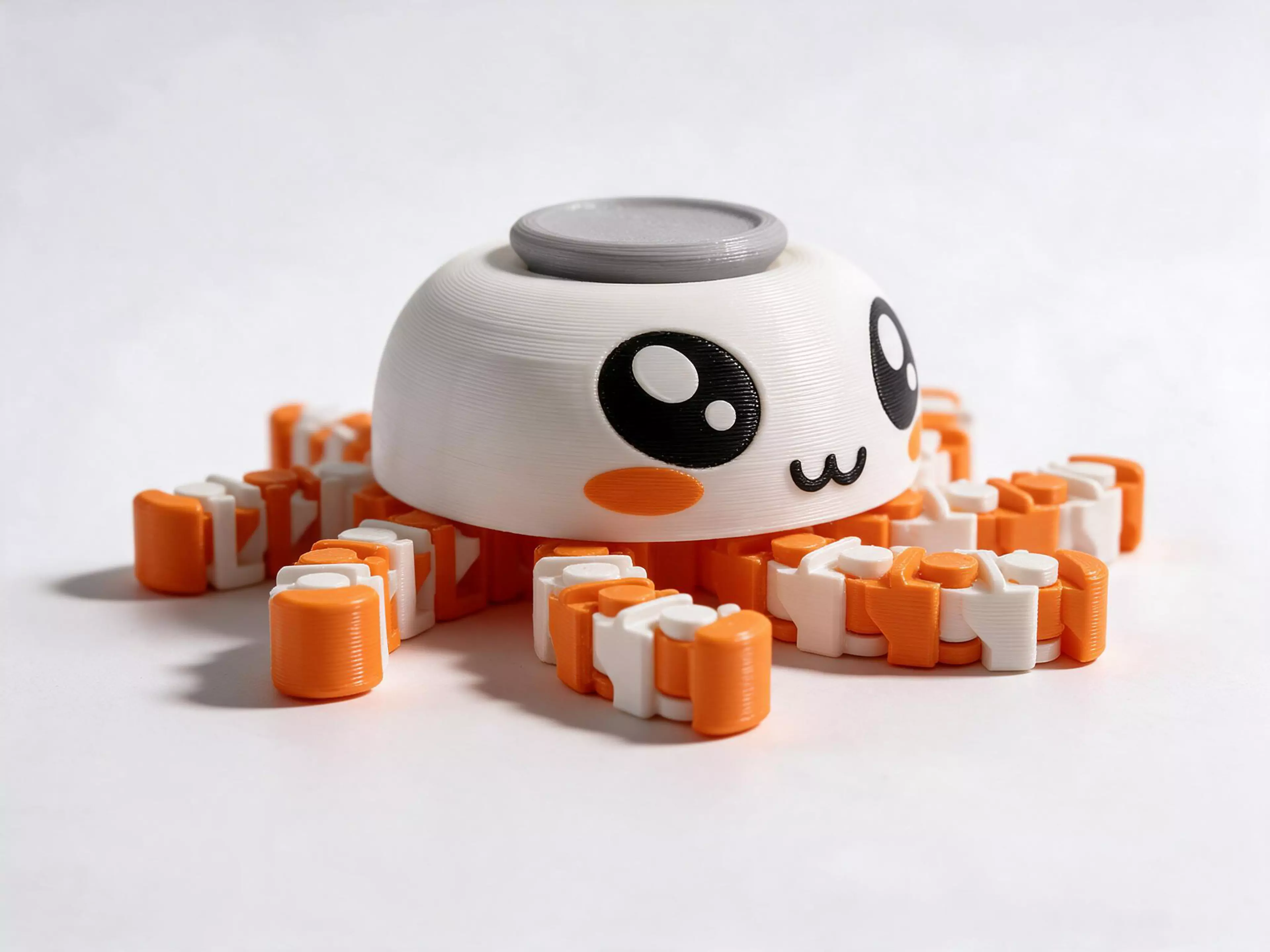
A round white mochi octopus you pinch and spin. Hold the two grey pads: the head and eight jointed orange and white tentacles whirl on a steel 608ZZ bearing (included in the box) and fling out straight. About 3.6 in wide, 1.3 in tall, PLA.
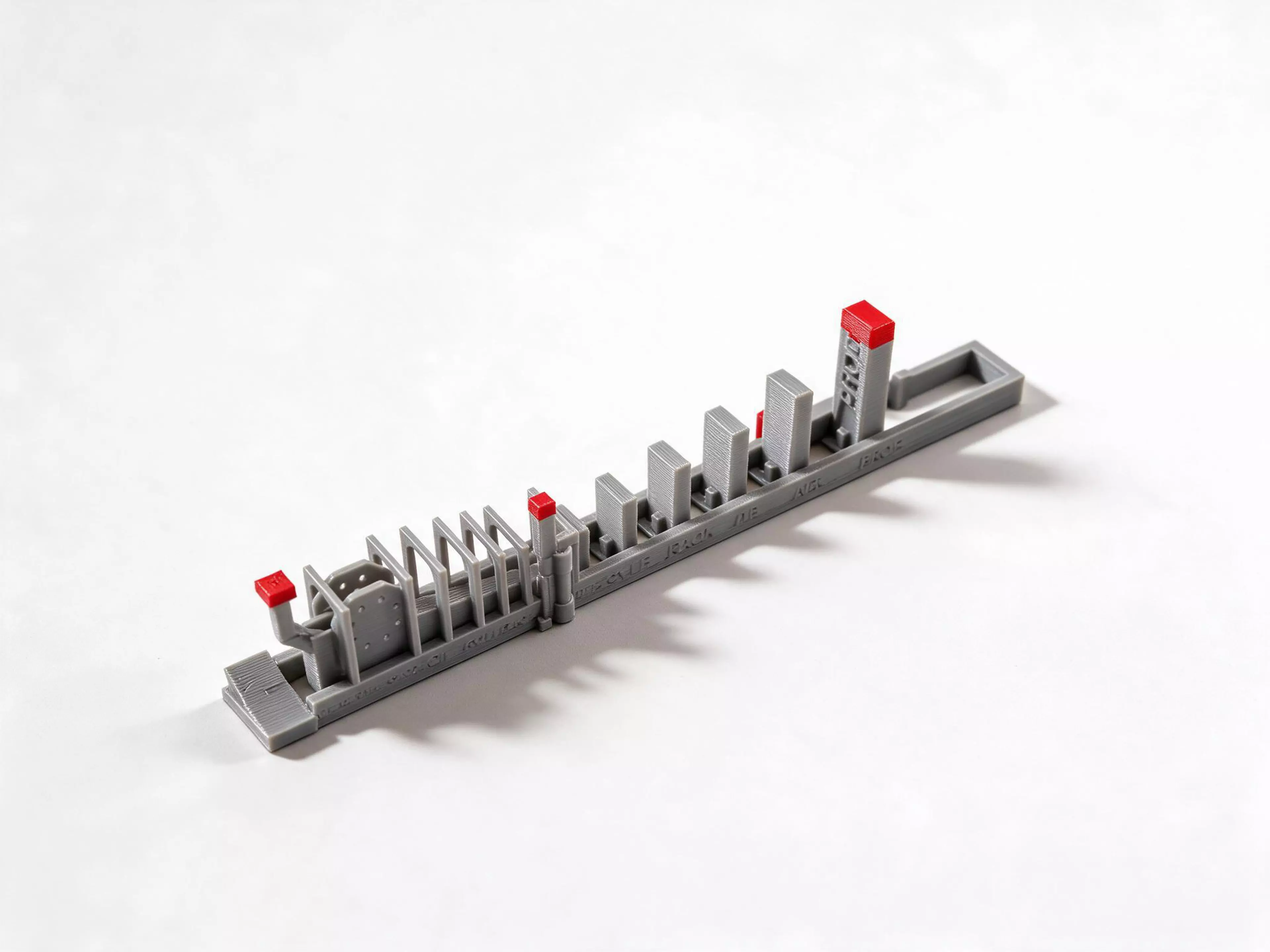
A desk toy that tells the oldest story in software. Push the red Enter key: a CI spinner wheel rolls down its pipeline inside a server-rack cage for about half a second, hits DEPLOY, and a chain of hinged slabs falls - DEPLOY, LB, RACK, DB, API and the tall PROD tower - until PROD lands on a lever that raises a red SEV-1 flag. A second player is on call: push the red ROLLBACK knob while the spinner rolls and the door swings across its path and saves prod. To reset, stand the toy on its laptop end and lay it down. One print with every part printed in place on captive pins; no batteries, magnets or screws, and no assembly.
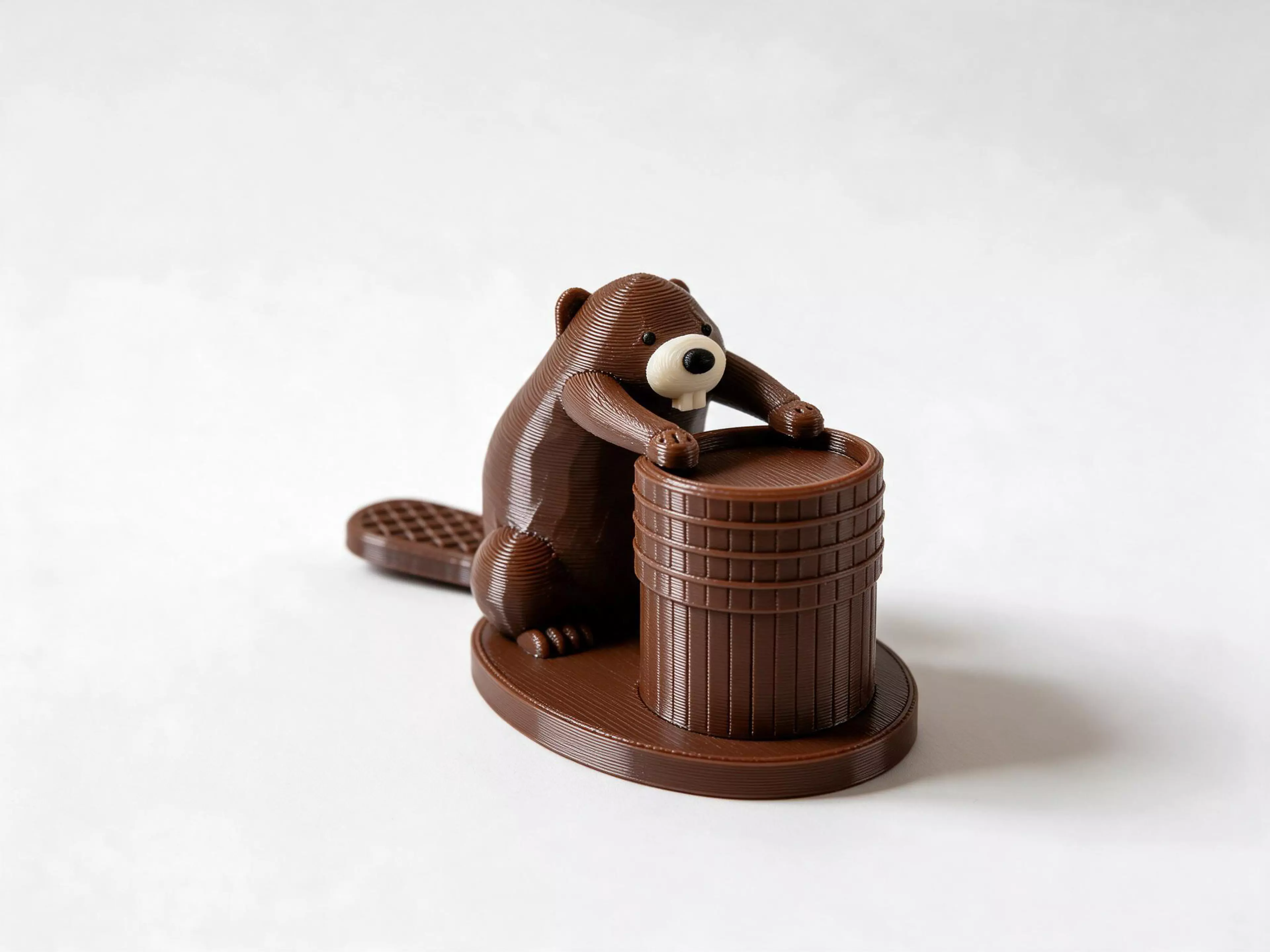
A chubby dark-oak beaver sits on a round plate and hugs your coasters. Four bark-rimmed coasters with natural cork tops stack on a short stump in front of him, and his arms come forward and lie across the top one, paws resting on it, so the stack stays put when the table gets knocked. Press his cross-hatched paddle tail and he rocks back on his hidden pin: the arms lift away and a coaster slides out. Let go and he settles forward again onto the coaster underneath, holding the shorter stack just as patiently. Nothing shows on the outside but the beaver -- no pin, no bore, no spring. Hand wash only.
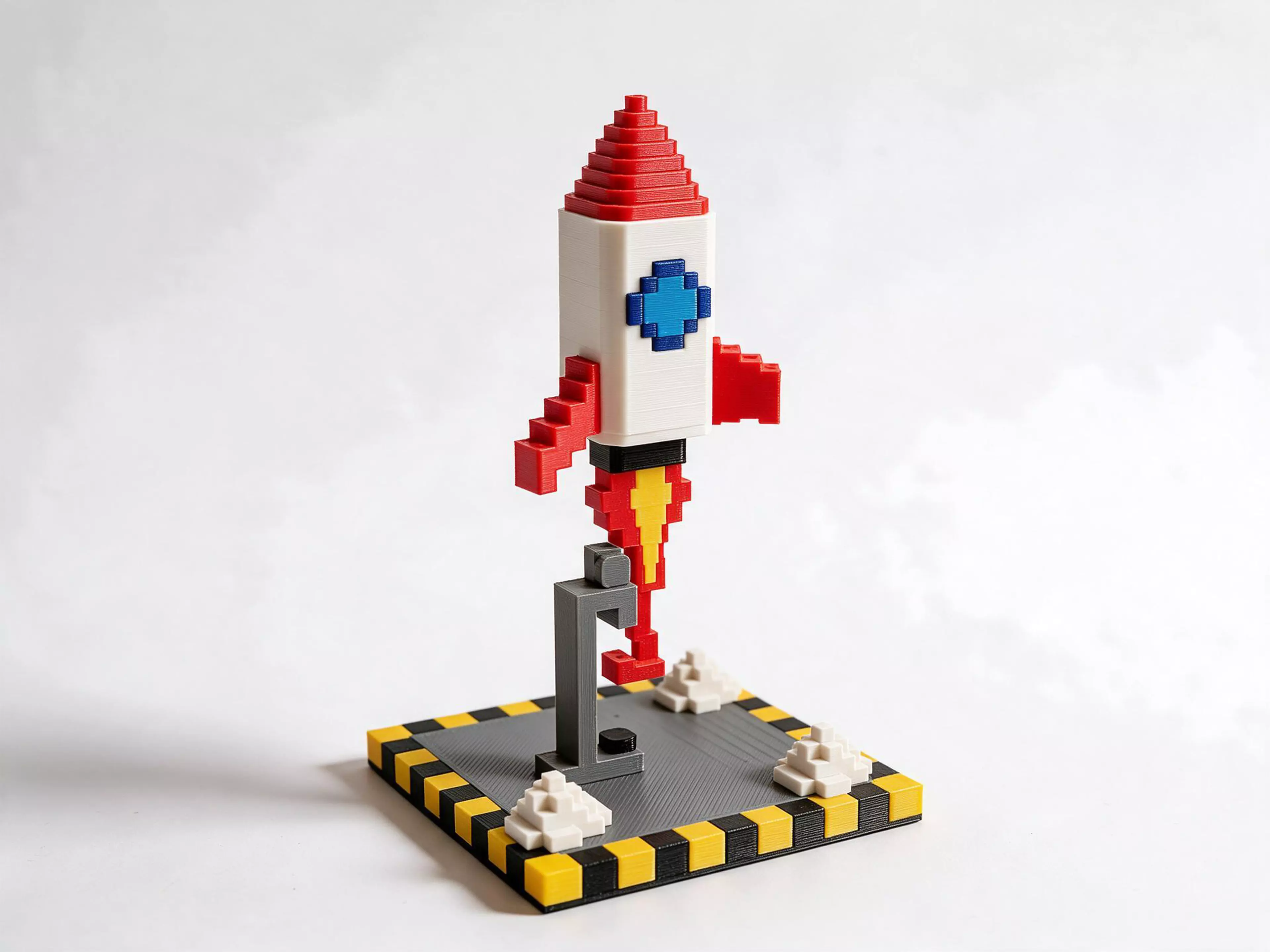
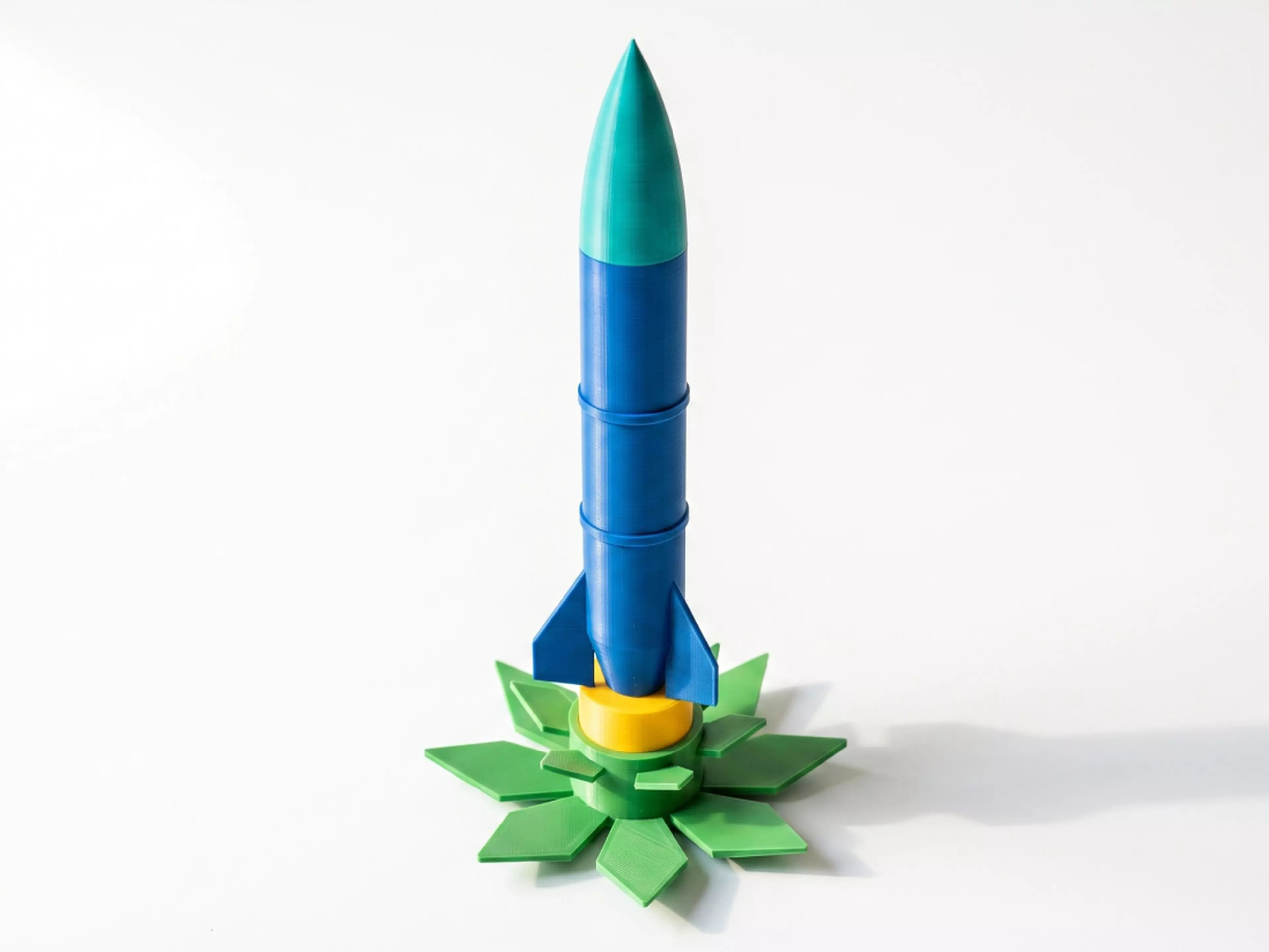
A 270 mm tall pixel-style rocket desk sculpture designed to appear suspended above a launch pad using a tensegrity arrangement. The design separates eight filament colours and conceals the three outer cord clamps inside the base. This is an unprinted design concept; assembly, cord grip and load capacity have not been physically tested.
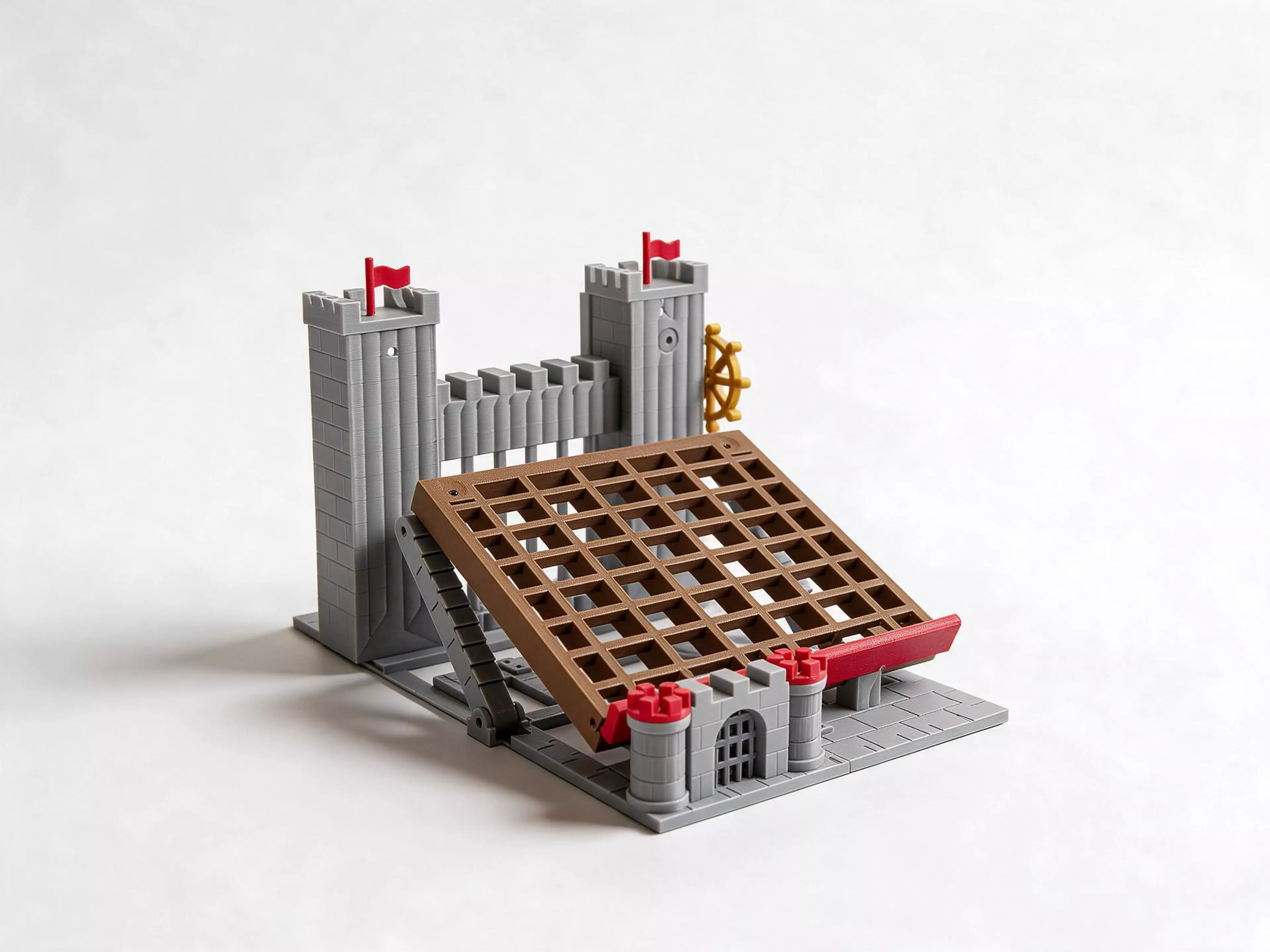
A grey stone castle whose brown drawbridge deck is a laptop stand. Turn the ship's wheel: a self-locking worm winch and two bought paracords raise the deck from flat to 12 or 25 degrees and fold it back down. About 12.3 x 16.5 in.
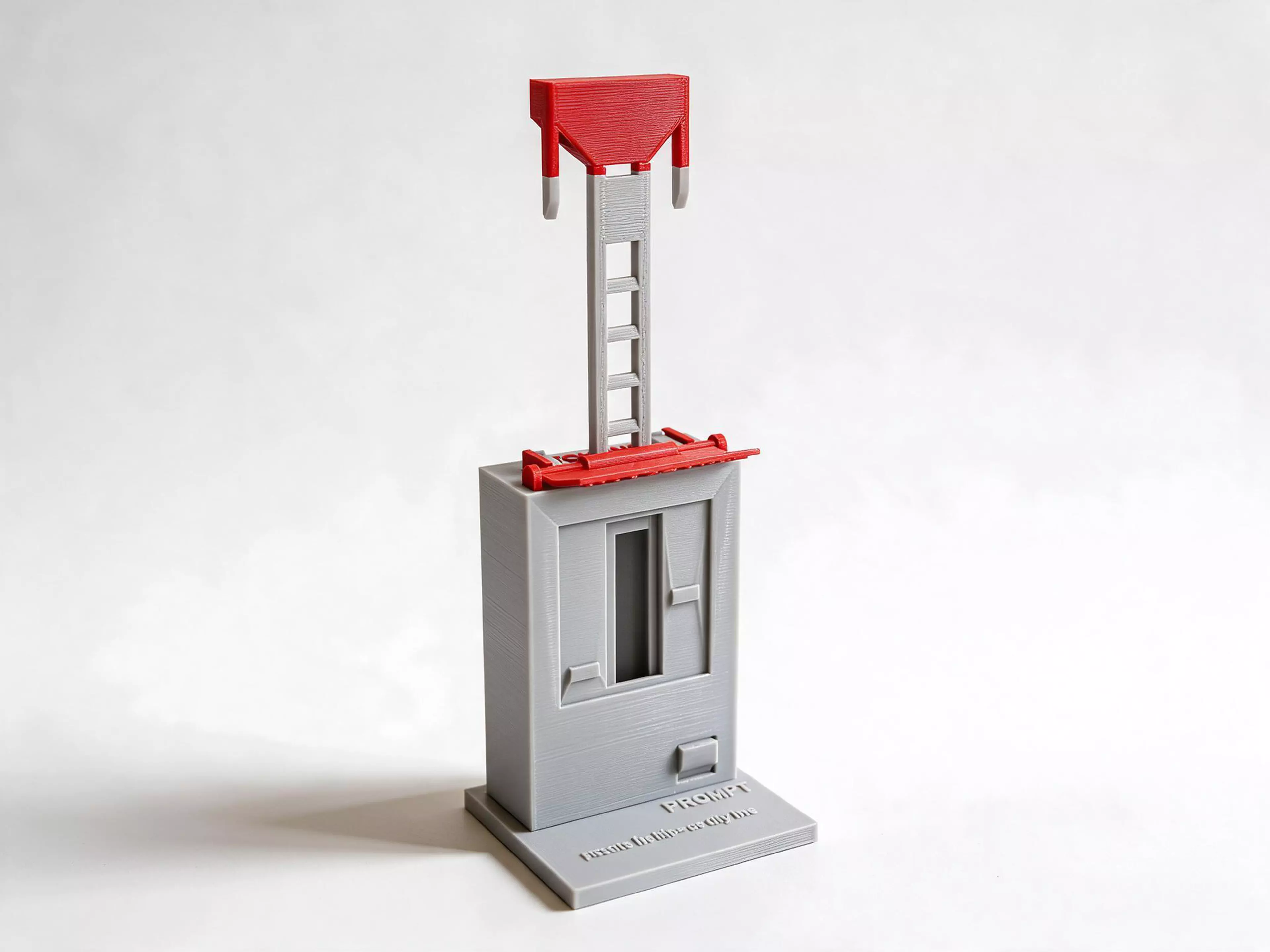
A desk toy about the newest story in software: you ran out of prompts. A small grey chat terminal has a stack of five tokens standing out of its roof, topped by a red block. Each press of its PROMPT key gives two soft clicks: the stack sinks one step and one more line scrolls into the screen. On the sixth press the stack drops, its red block throws a red visor up over the screen - USAGE LIMIT REACHED - and the key stays in, dead. Turn it upside down for a second and set it back: the tokens are back and the visor drops to a brim. One print with every part printed in place on captive pins; no batteries, magnets, springs or screws, and no assembly.
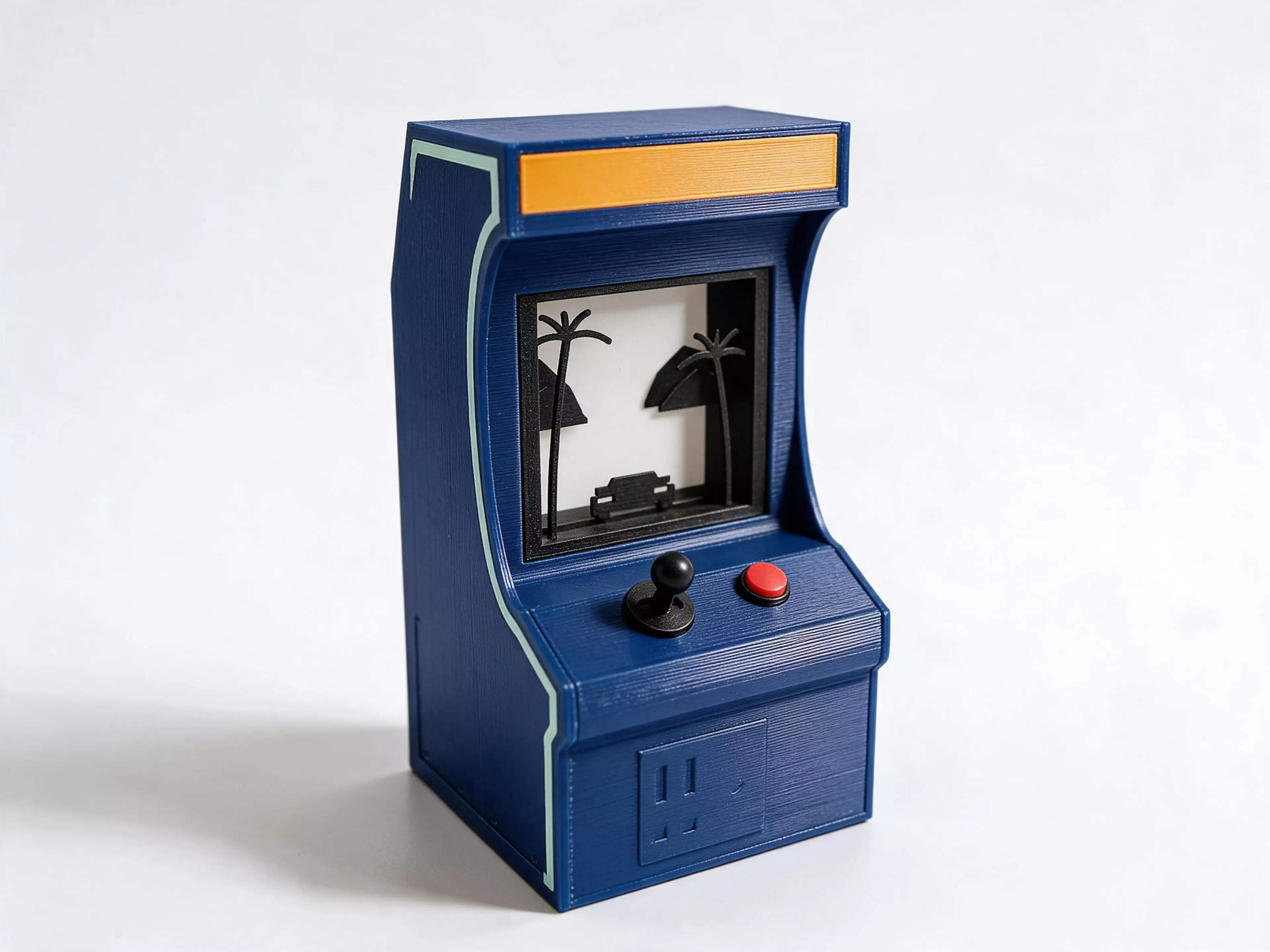
A USB-powered night light shaped like a dark-blue mini arcade cabinet, 114 mm wide and 218 mm tall. Its 75 mm square screen is a layered synthwave sunset lit from behind by twelve LEDs, and tilting the black ball-top joystick slides a printed colour band across the sky: left for sunset, right for midnight. A red latching button on the control deck switches the light on and off, and an amber marquee crowns the cabinet. The joystick drives the band through a printed Scotch yoke -- a toothed sector, a pinion-lever and a crank pin running in a sliding carrier -- so the band moves 31.25 mm each way as the stick tilts 25 degrees each way.
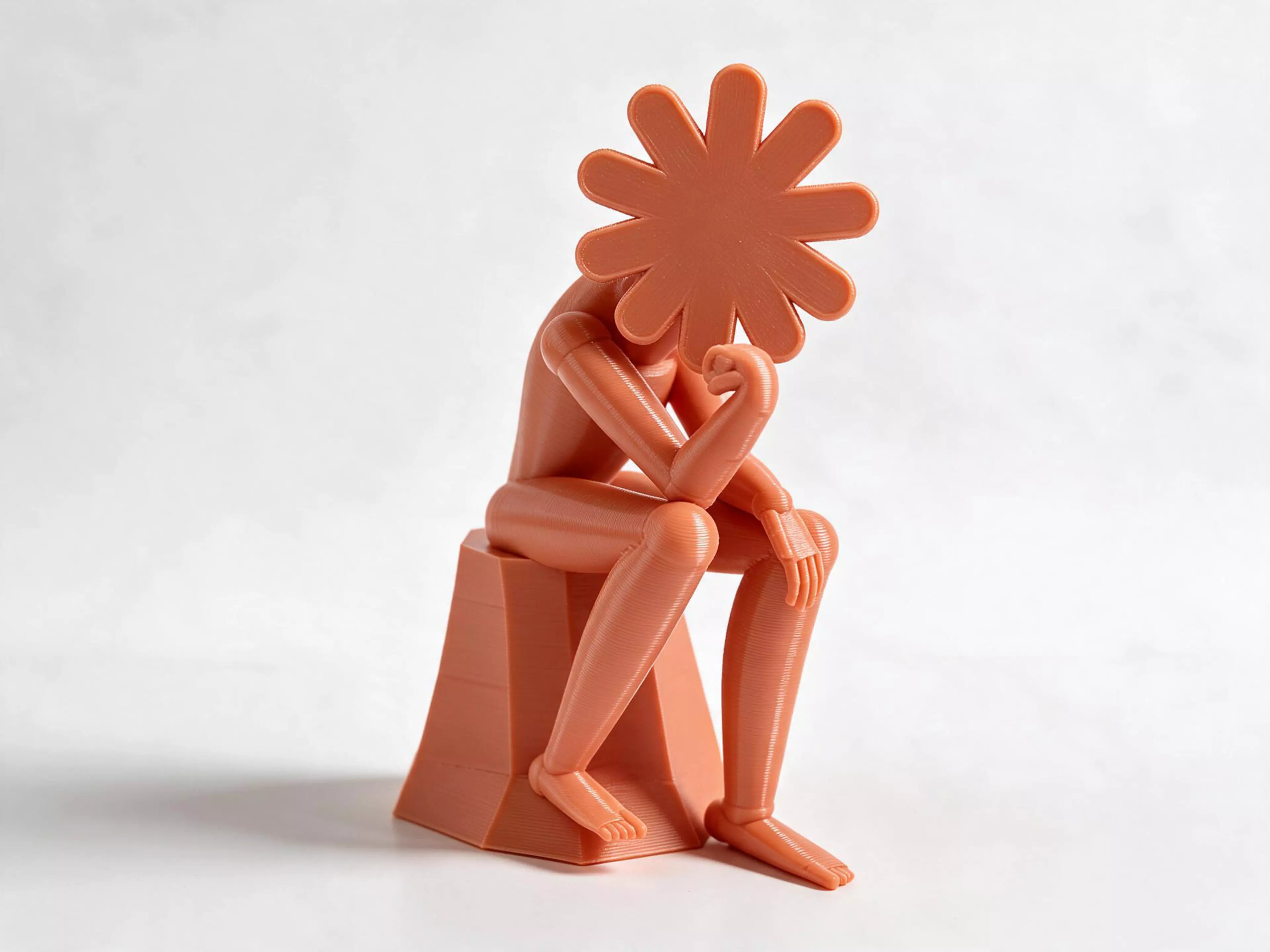
A seated thinker in the classic pose, chin on fist and elbow on knee, with a ten-ray asterisk for a head. Perched on a chiselled rock, it prints as one solid piece in terracotta-toned clay colour for a desk or shelf.
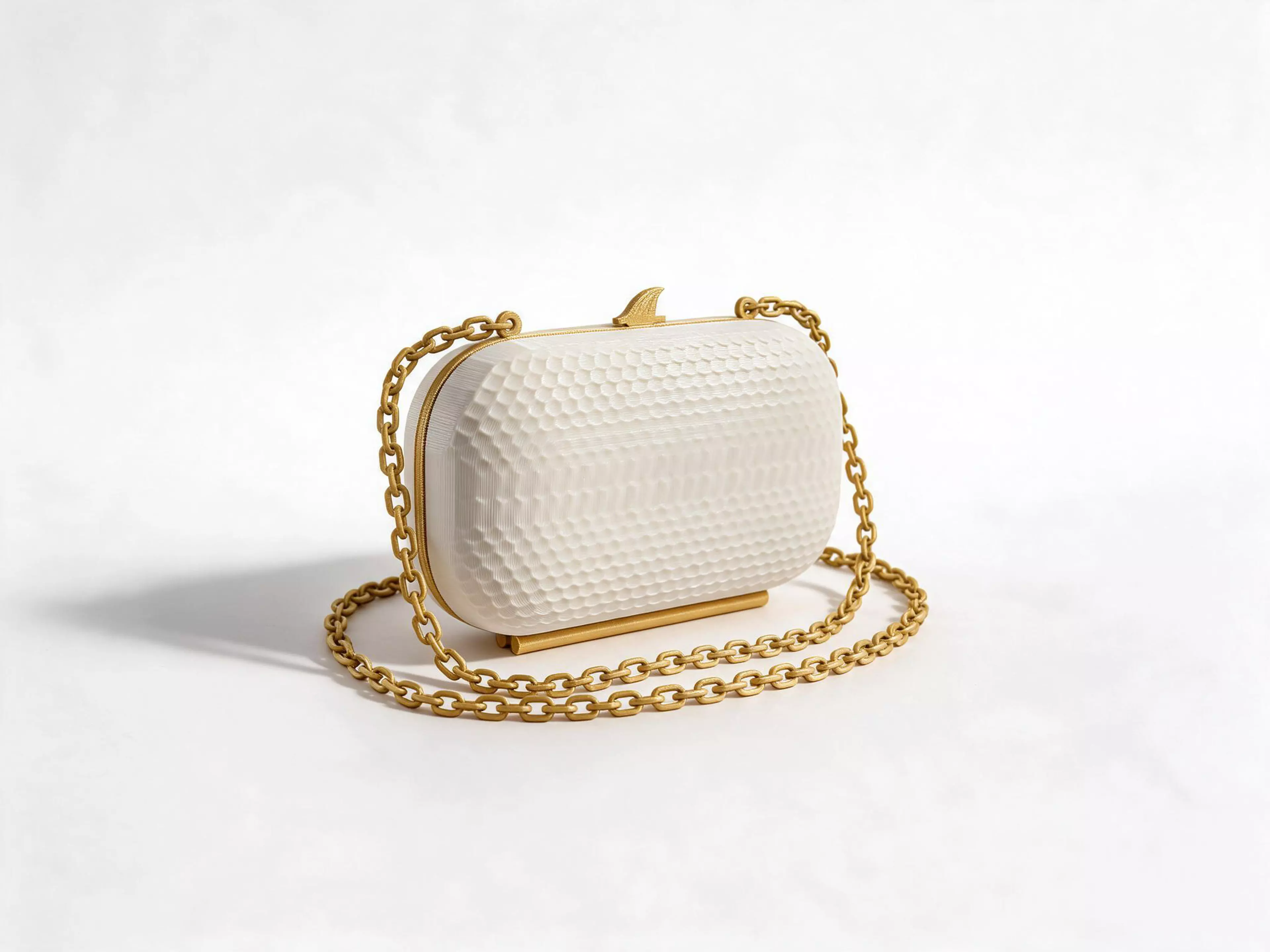
A rigid pearl-ivory evening clutch with a fine koi-scale relief, slim gold bands and a gold koi-fin push clasp. The hinge prints in place and a detachable gold chain clips on for the shoulder. Fits a 6.7 in phone. About 7.5 x 4.3 x 2.4 in, silk PLA.