


ErgoChair Ultra 2
Tailbone Pain From Sitting? You're Sitting On The Wrong Bone
Sharp pain at the base of your spine after sitting all day? The chair isn't the problem. Two minutes of adjustments fixes what cushions can't.
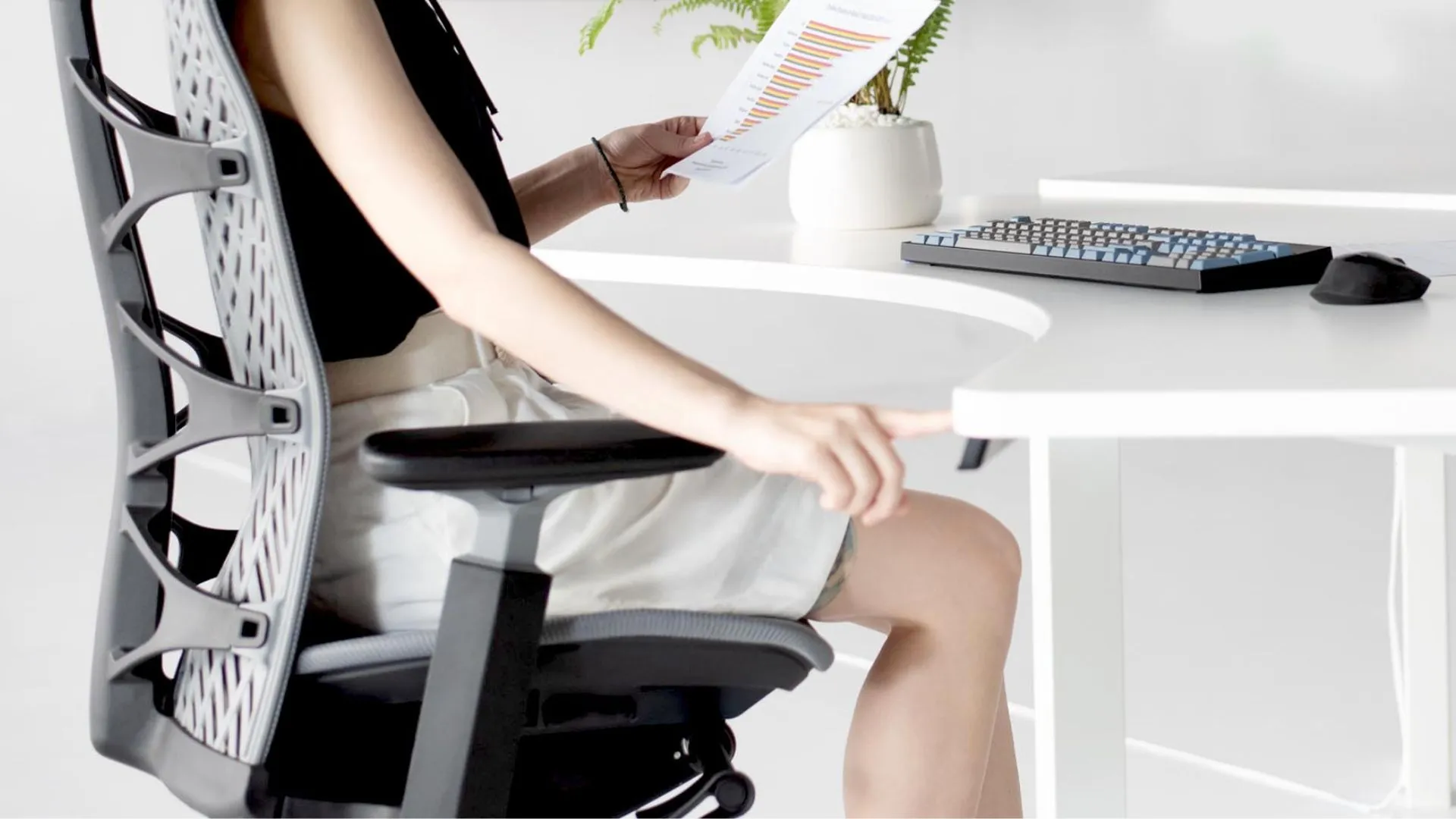
You've been running agents, shipping code, deep in the work all day. Ten hours in this chair, and that sharp ache at the base of your spine keeps showing up around hour seven. You've tried cushions. You swapped in a $1,000 chair last month. The ache shows up anyway.
Here's the strange part. Put your palms under your butt and press up. Feel those two hard bony points? Those are the bones built to carry your weight when you sit.
The one that's hurting isn't one of them.
So why does it hurt?
Your tailbone was never built to hold you up.
Your tailbone hurts because you've been putting weight on it for years, even though it wasn't designed for that.
The tailbone is three to five small fused vertebrae at the very bottom of your spine. No padding. Not built to hold weight. It's basically a leftover from when humans had tails.
When you slouch or sink into a soft seat, your pelvis rolls back. The tailbone tips down and presses into the chair instead of your sit bones. Hold that for hours and the tissue inflames. That's the sting.
Cushions and expensive chairs don't fix it. They change what's under you, not the shape. If the shape is wrong, the tailbone keeps taking the load.
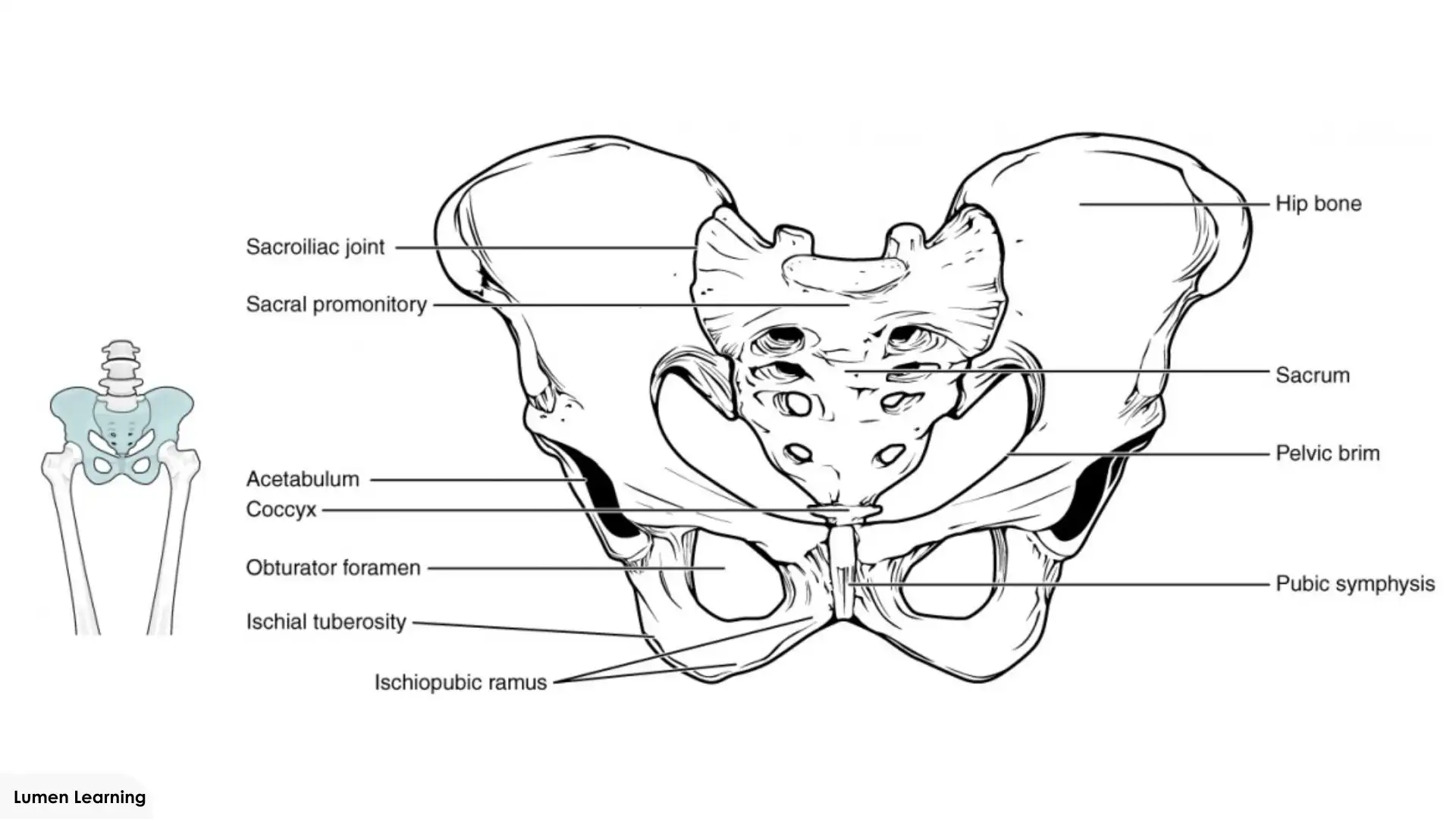
The two bony points labeled "ischial tuberosity" are your sit bones. The one labeled "coccyx" is the tailbone.
2-minute audit on the chair you already own.
Before you do anything else, run this. It takes two minutes and tells you exactly what's wrong.
Step 1 of 4
Find your sit bones.
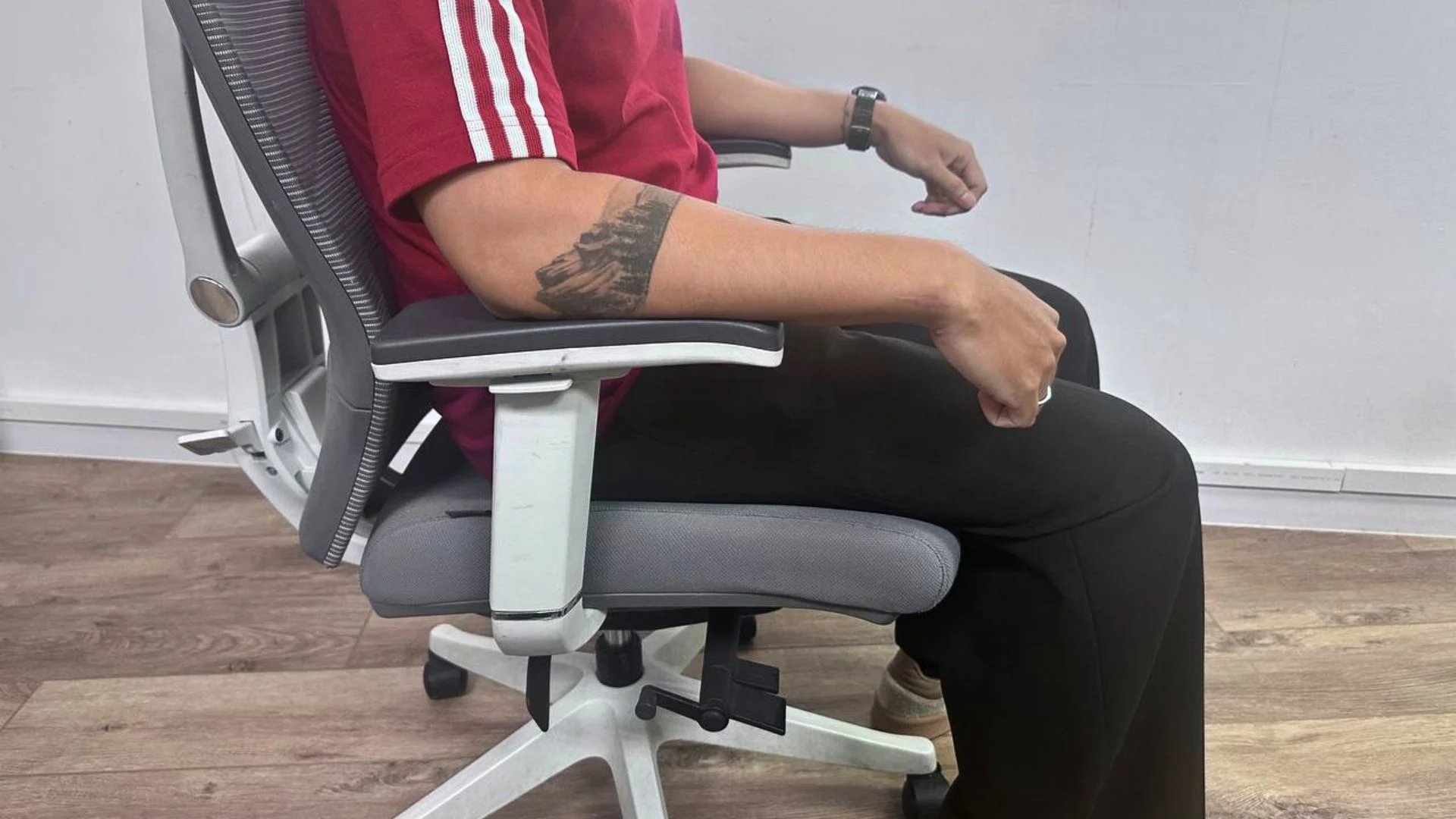
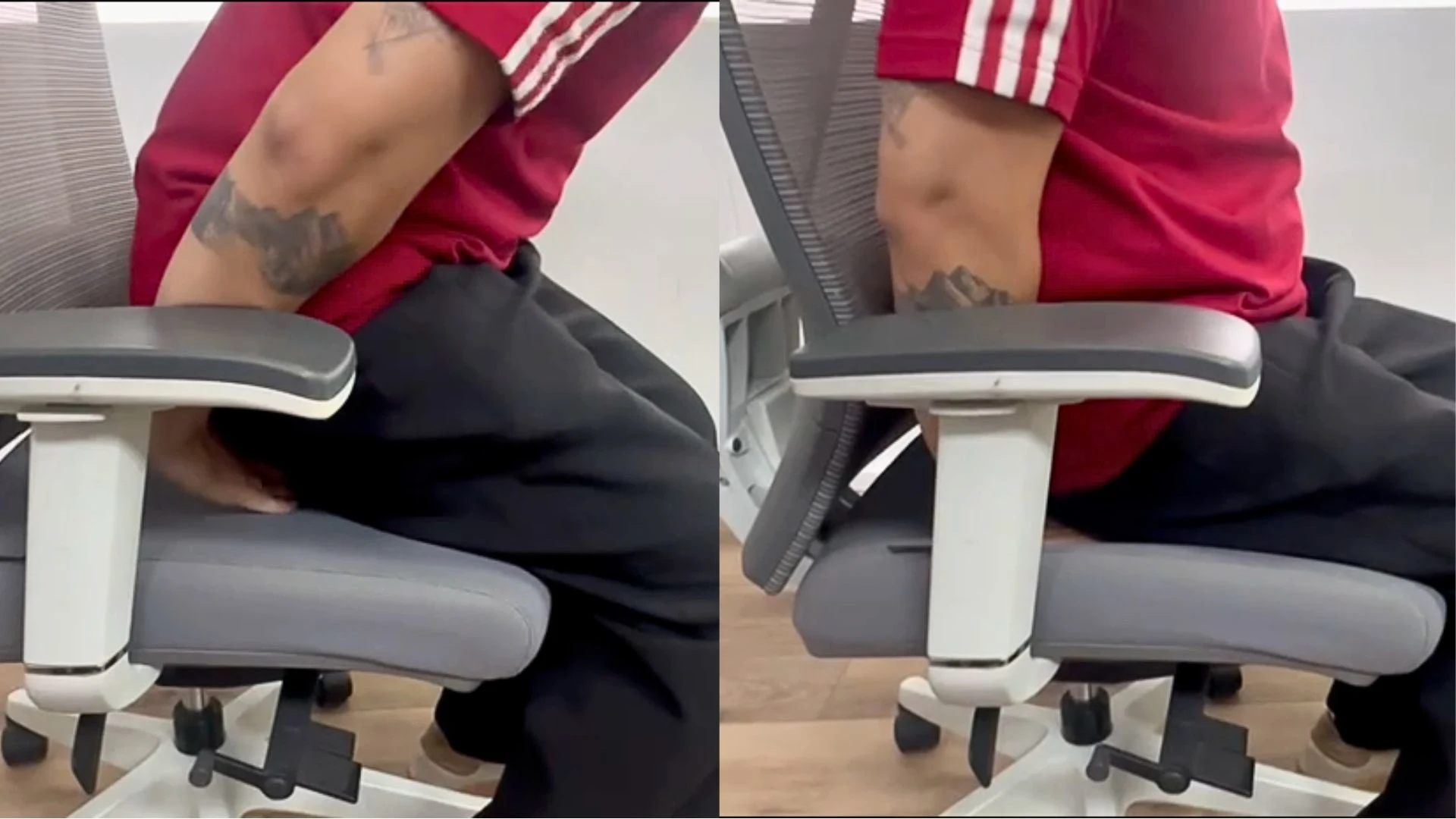
- Step 1: Sit forward on the edge of your chair. Feet flat.
- Step 2: Slide your palms under your butt, knuckles down, palms facing up.
- Step 3: Press your weight down onto your hands.
- Step 4: Feel for two hard bony points pressing into your palms. Those are the sit bones. That's where your weight should be going when you sit.
When it's not the chair.
If you've run the audit, made the changes, and the pain still shows up the same way after two or three days, the chair isn't the variable anymore.
A few signals worth paying attention to:
- The pain wakes you up at night, or hurts when you're lying down.
- It started after a fall, a hard landing, or a recent childbirth.
- It gets worse over weeks instead of better.
- Pain shoots down your leg, or you feel numbness in the area.
- Going to the bathroom hurts.
None of these are chair problems. Get a regular doctor to take a look. If the pain feels muscular or pelvic, a physical therapist who specializes in pelvic floor will usually know more than a GP. You don't need a specialist right away. You just need someone to rule out the things a chair can't fix.