The 10 Best Affordable Home Office Chairs

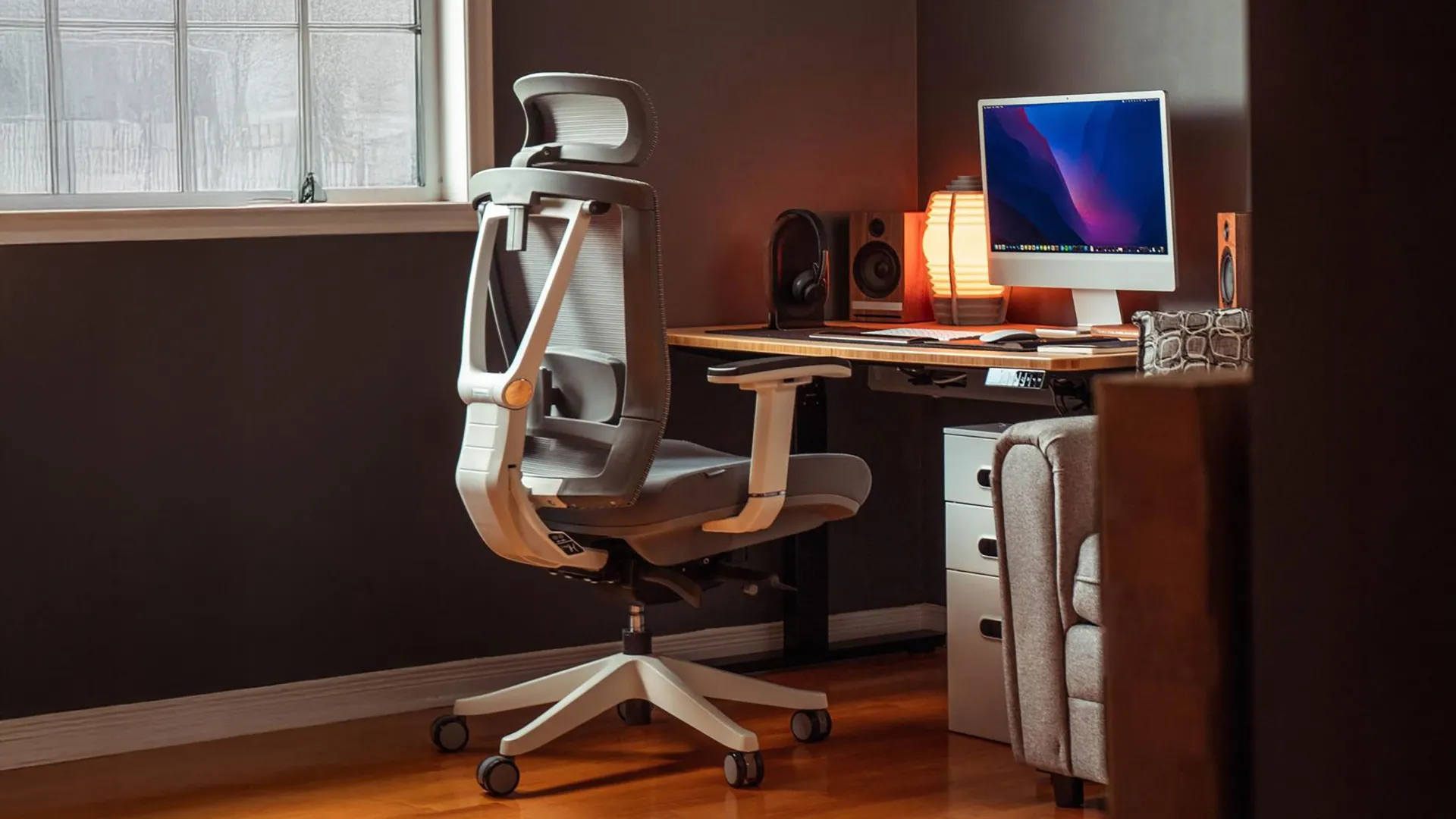
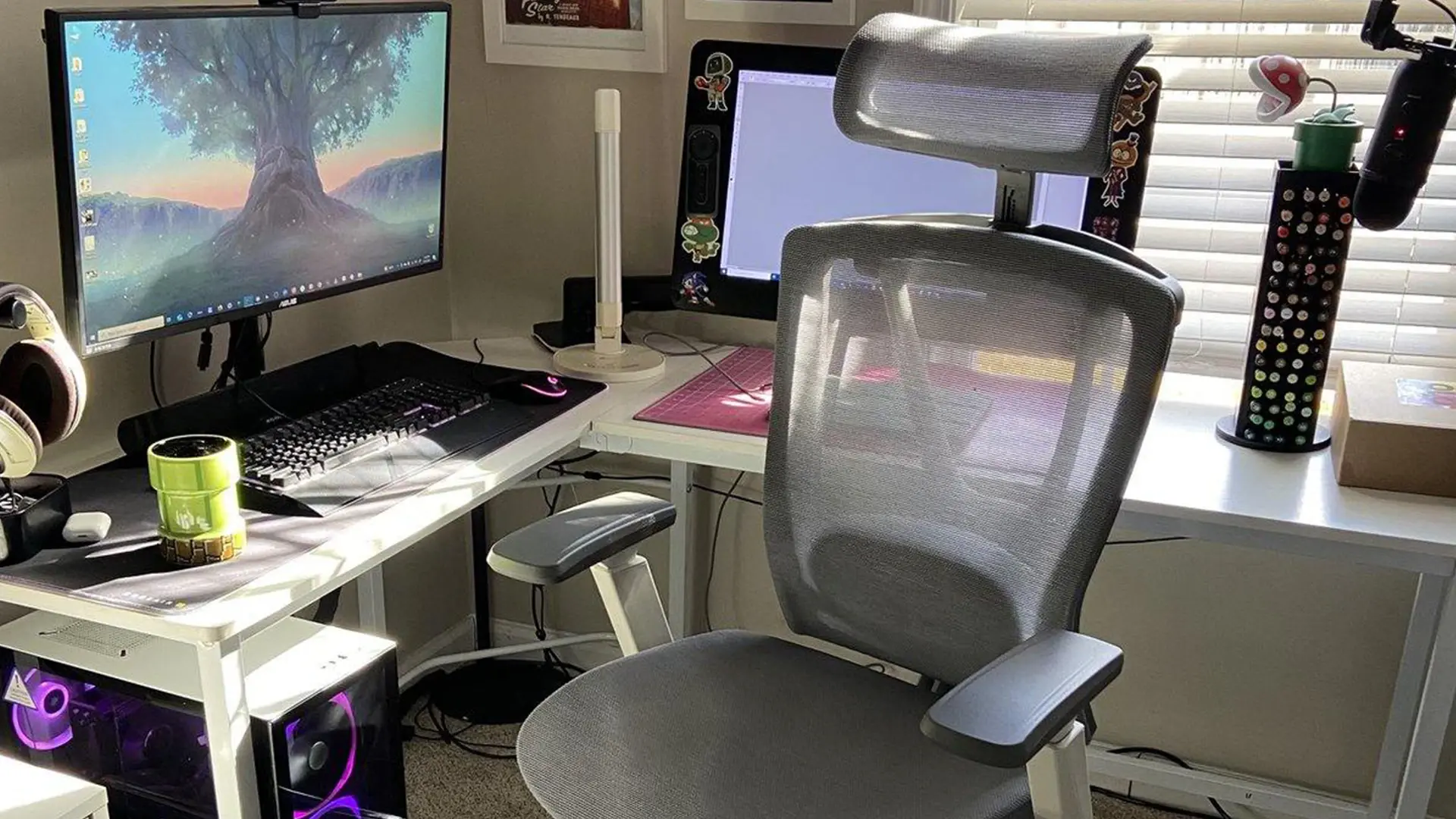
A home office chair has a harder job than an office one. It has to fit a room that was not designed around it, usually a spare bedroom, a landing, or a corner of the living room. It has to look acceptable in a space you also relax in. It has to roll on whatever floor you already have. And when it breaks, nobody from facilities is bringing a replacement.
That is the lens for this list. Every chair below is judged on what a home office actually demands: whether it tucks away when the room needs to be a room again, whether it survives carpet, whether you can assemble it alone, and whether you can sit in it for a full workday. Prices run from around $58 to $499, because an affordable home office chair means something different when you sit in it two hours a day than when you sit in it eight.
The Top 5 at a Glance
Yaheetech | NEO CHAIR | OFIKA | HBADA J1 | ErgoChair Core | |
Price | ~$58 | ~$85 | ~$80 | ~$100 | $299 |
Capacity | 300 lb | 250–300 lb | 400 lb | 250 lb | 242.5 lb |
Mesh back | ✓ | ✓ | ✗ | ✓ | ✓ |
Adjustable lumbar | ✓ | ✓ | ✗ | ✗ | ✗ |
Headrest | ✓ | ✗ | ✓ | ✗ | ✓ |
Flip-up arms | ✓ | ✓ | ✗ | ✓ | ✗ |
Seat depth adjust | ✗ | ✗ | ✗ | ✗ | ✓ |
Multi-year warranty | ✗ | ✗ | ✗ | ✗ | ✓ |
Best for | Tight budget | Under $100 | Larger frames | Small rooms | Full days |
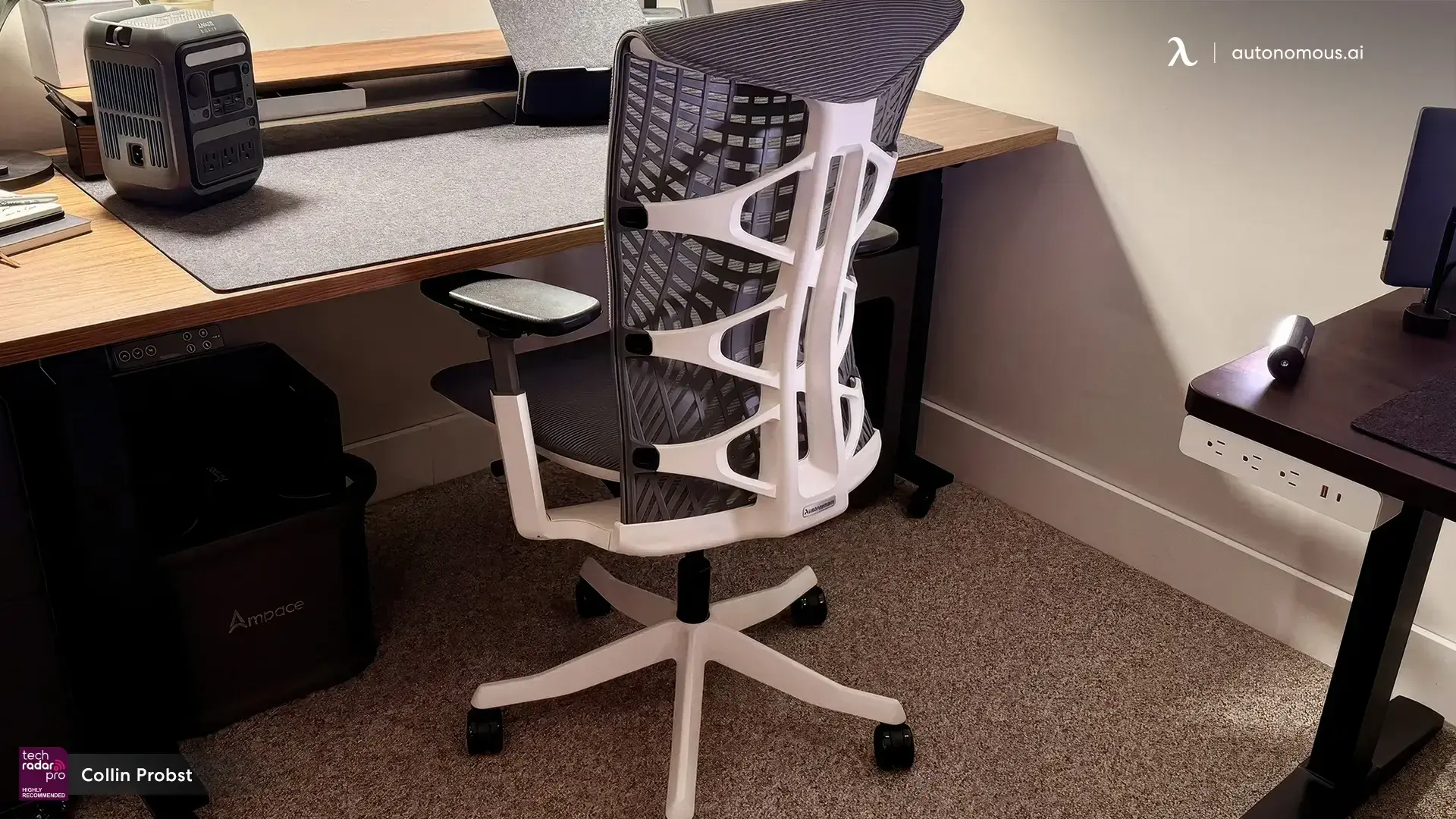
The 10 Best Affordable Home Office Chairs
1. Yaheetech Ergonomic Office Chair, around $58
For the cheapest chair here, the Yaheetech gets the home-office basics right in a way that matters more than the price suggests. The flip-up armrests are the feature to care about: fold them vertical and the chair slides fully under a desk, which is the difference between a spare bedroom that still works as a bedroom and one permanently given over to work.
The adjustable headrest earns its place during call-heavy days, when your neck starts asking for somewhere to rest. The mesh back breathes, and the wide foam seat holds its shape better than the price implies. At 300 lb capacity it suits most people. What you are not getting is a frame built for a decade, so treat it as a chair for a few hours a day rather than a full-time desk.
Pros
- Flip-up arms tuck it fully away
- Adjustable headrest at a rare price
- Mesh back breathes
- 300 lb capacity
Cons
- Light frame not built for constant daily use
- No positionable lumbar
- Thin padding next to pricier picks

2. NEO CHAIR Office Desk Chair, around $85
The NEO CHAIR is the best all-rounder under $100 for a home setup, largely because of the waterfall seat edge. That rounded front stops the seat pressing into the backs of your thighs, which is the thing that makes cheap chairs quietly unbearable by mid-afternoon.
The mesh back with lumbar support keeps your posture honest through back-to-back meetings, and the height, tilt, and armrest adjustments cover enough range that two people sharing a home office can both use it. The flip-up arms let it disappear under the desk, and the smooth casters make it easy to move between a desk and a side table in a cramped room.
Pros
- Waterfall seat reduces thigh pressure
- Adjustable lumbar
- Flip-up arms
- Enough adjustment range to share
Cons
- Seat foam is thin and compresses over a year
- Arms adjust in height only
- Light-duty frame
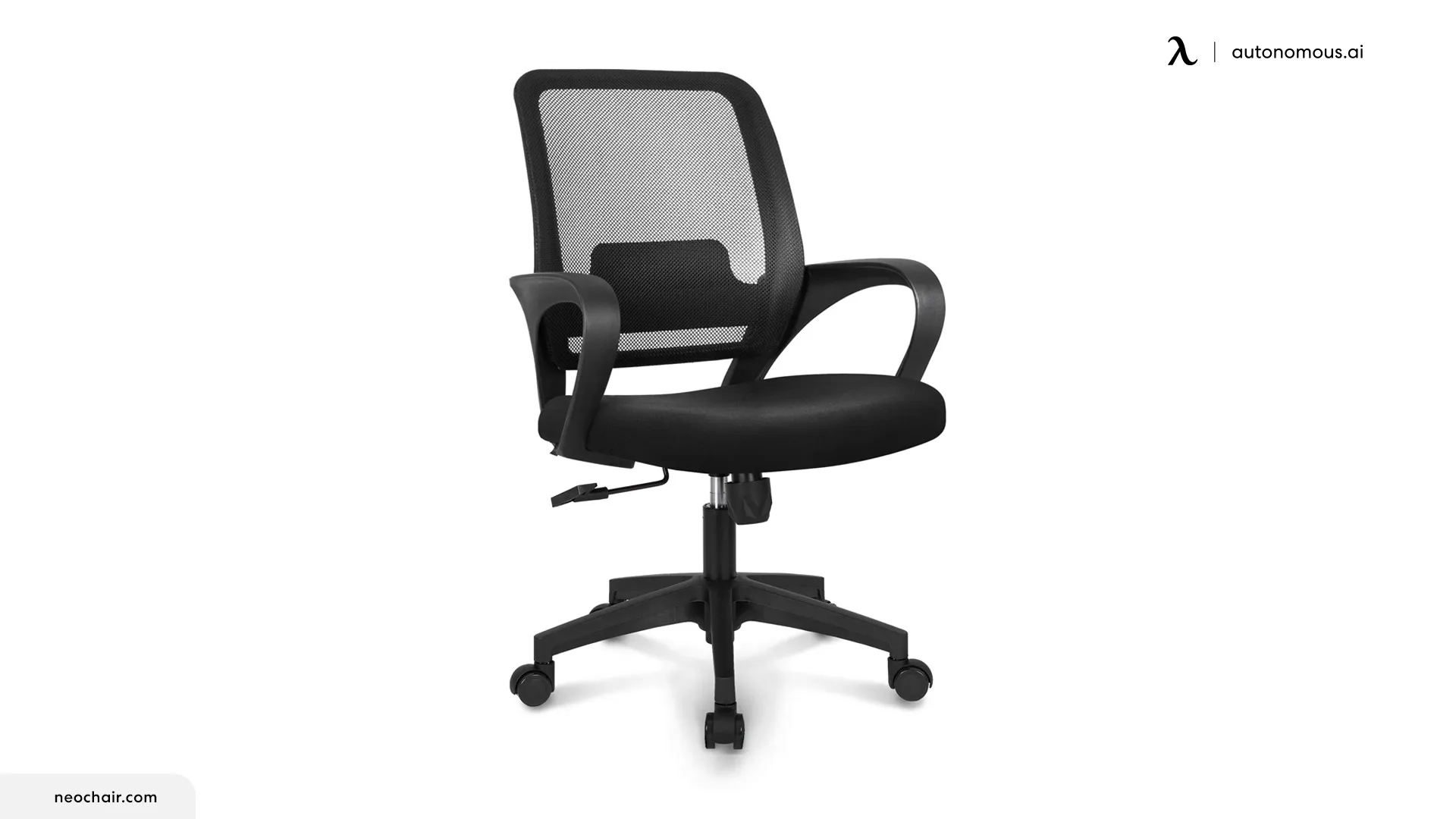
3. OFIKA Home Office Chair, Big and Tall, around $80
If a standard chair has ever felt like it was built for someone else, the OFIKA is designed around that problem. It carries 400 lbs, the highest capacity on this list, on a frame that stays planted rather than flexing when you shift your weight.
For a home office the leather finish is a real consideration rather than vanity. A chair in the corner of a living room gets seen by everyone who visits, and the executive look reads as furniture rather than office equipment. The high-back memory foam and segmented padding support spine and neck together, and it wipes clean, which matters in a room where coffee happens. The trade is heat: leather does not breathe like mesh, and a warm room in July will remind you.
Pros
- 400 lb capacity, the highest here
- Looks like furniture rather than office kit
- Wipe-clean surface
- Strong neck and spine support
Cons
- Leather traps heat on long sessions
- Bulkier footprint than the mesh picks
- Modest recline range

4. Synorla Office Chair, around $100
The Synorla suits a home office that doubles as something else, because it handles the shift between working and not working better than most. The 90 to 135 degree tilt is wide enough to sit upright for focused work and lean back properly when the day ends and the room becomes a room again.
The ergonomic backrest follows the spine's curve with adjustable lumbar support underneath, and the mesh back prevents the sticky-back feeling that ruins a long afternoon. Flip-up armrests handle the space problem, and assembly is straightforward, which matters when you are doing it alone on a bedroom floor.
Pros
- Wide 90 to 135 degree tilt for work and downtime
- Adjustable lumbar
- Breathable mesh
- Easy solo assembly
Cons
- Fabric seat is harder to spot-clean than leather
- 330 lb rating is a ceiling not a target
- No headrest

5. Oline ErgoAir Ergonomic Office Chair, around $110
The Oline ErgoAir is built for the home office that has to work on whatever flooring you already have. It rolls cleanly on both carpet and hardwood, which sounds trivial until you have dragged a chair across a rug for six months or listened to hard casters grind on a wooden floor above someone else's bedroom.
Beyond that it covers the fundamentals: a headrest, adjustable lumbar, breathable mesh back, and flip-up arms for small rooms. The 275 lb capacity is lower than several picks here, so check that against your own weight first. Over long sessions it produces noticeably less back fatigue than chairs at a similar price.
Pros
- Rolls well on carpet and hardwood
- Headrest and adjustable lumbar
- Flip-up arms
- Less back fatigue than similar-priced chairs
Cons
- 275 lb capacity is on the low side
- Modest padding
- Limited armrest adjustment

6. Sytas Ergonomic Desk Chair, around $130
The Sytas is where this list starts feeling like a proper chair rather than a good cheap one. The S-shaped backrest genuinely tracks the spine, which keeps the lower back comfortable through the long uninterrupted stretches home working tends to produce, since nobody interrupts you to walk to a meeting room.
The 90 to 120 degree tilt is smooth and stable rather than springy, the padded seat is thick without being soft enough to sink into, and the mesh keeps air moving. Flip-up arms mean it still slides under the desk, and the height range covers most of the improvised desks people work from at home.
Pros
- S-shaped backrest genuinely supports the lower back
- Thick but firm seat padding
- Smooth stable tilt
- Flip-up arms
Cons
- Heavier than the sub-$100 picks
- Lumbar is contoured rather than positionable
- Takes more floor space

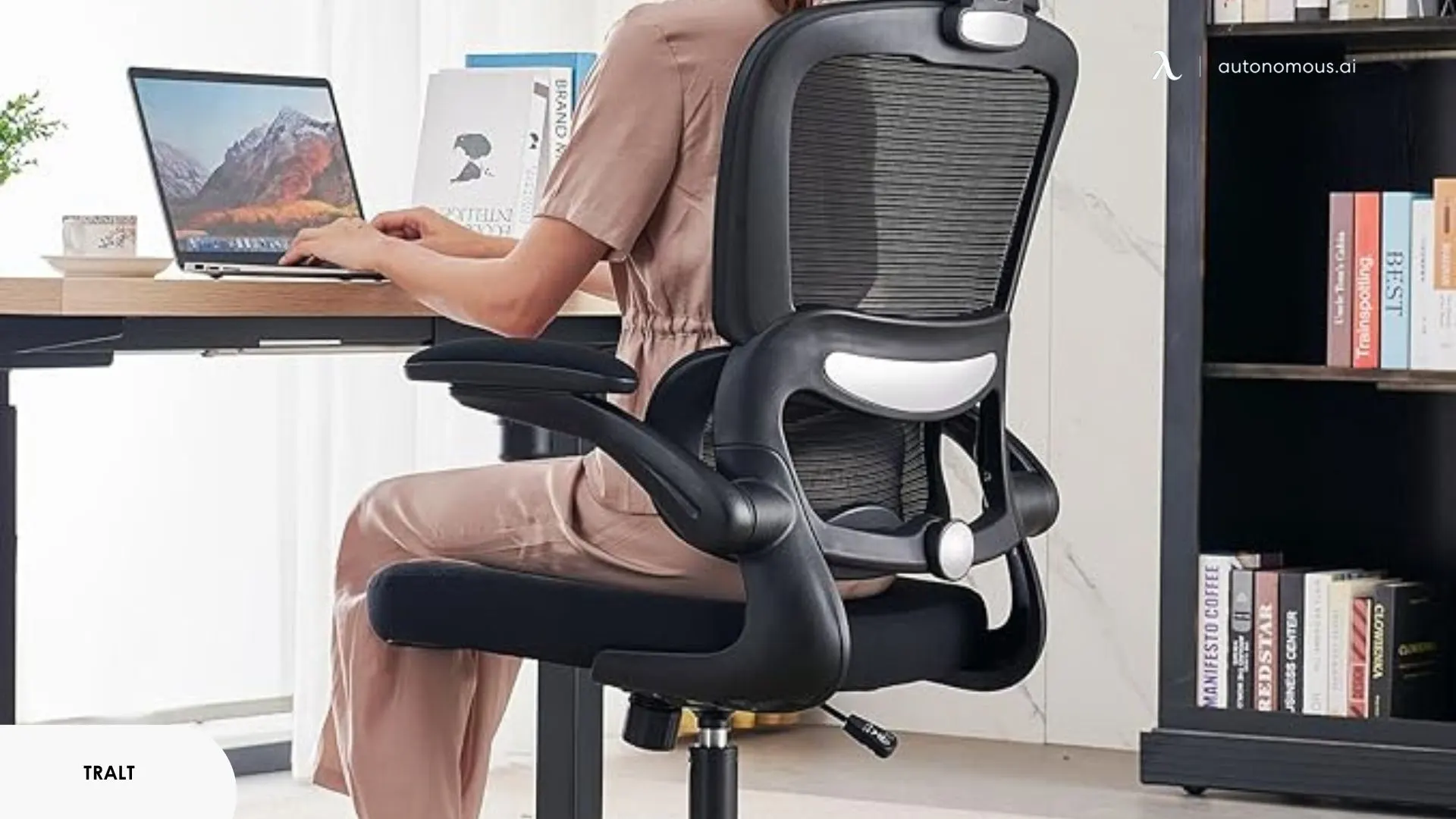
7. TRALT Office Chair, around $140
The TRALT feels more expensive than it is, and the 5-point metal base is why. Most chairs at this price use nylon, which is the component that starts creaking first. Metal stays quiet and stable, which matters more at home than in an open-plan office, because in a quiet spare room you hear everything the chair does.
It supports 330 lbs without wobble, the mesh back and spacious seat handle a full day of screen work, and the 90 to 120 degree recline lets you lean back between tasks. The silent casters roll well on hard floors, again a bigger deal at home where someone may be sleeping or working next door.
Pros
- 5-point metal base rather than nylon
- Genuinely quiet casters
- 330 lb capacity with no wobble
- Spacious seat
Cons
- Larger footprint than the compact picks
- Lumbar is not adjustable
- More involved assembly
8. HBADA J1 Adjustable Office Chair, around $100
The HBADA J1 is the answer when the room simply does not have the space. Flip the arms up and it disappears completely under a desk, and its compact frame does not visually dominate a small bedroom or a living room corner the way a high-backed executive chair does.
The seat height range of 16.5 to 19.5 inches is genuinely low at the bottom, which suits shorter users and the low tables people press into service as home desks. The high-density mesh flexes as you shift, the 120 degree tilt is enough to lean back for a break, and the casters stay quiet on hard floors. At 250 lbs the capacity is the lowest here, so it is a chair for smaller frames rather than a universal pick.
Pros
- Smallest footprint on this list
- Low 16.5 inch minimum seat height
- Quiet casters
- Flexible mesh back
Cons
- 250 lb capacity, the lowest here
- Narrow seat
- Not suited to larger users or all-day sitting

9. Autonomous ErgoChair Core, $299
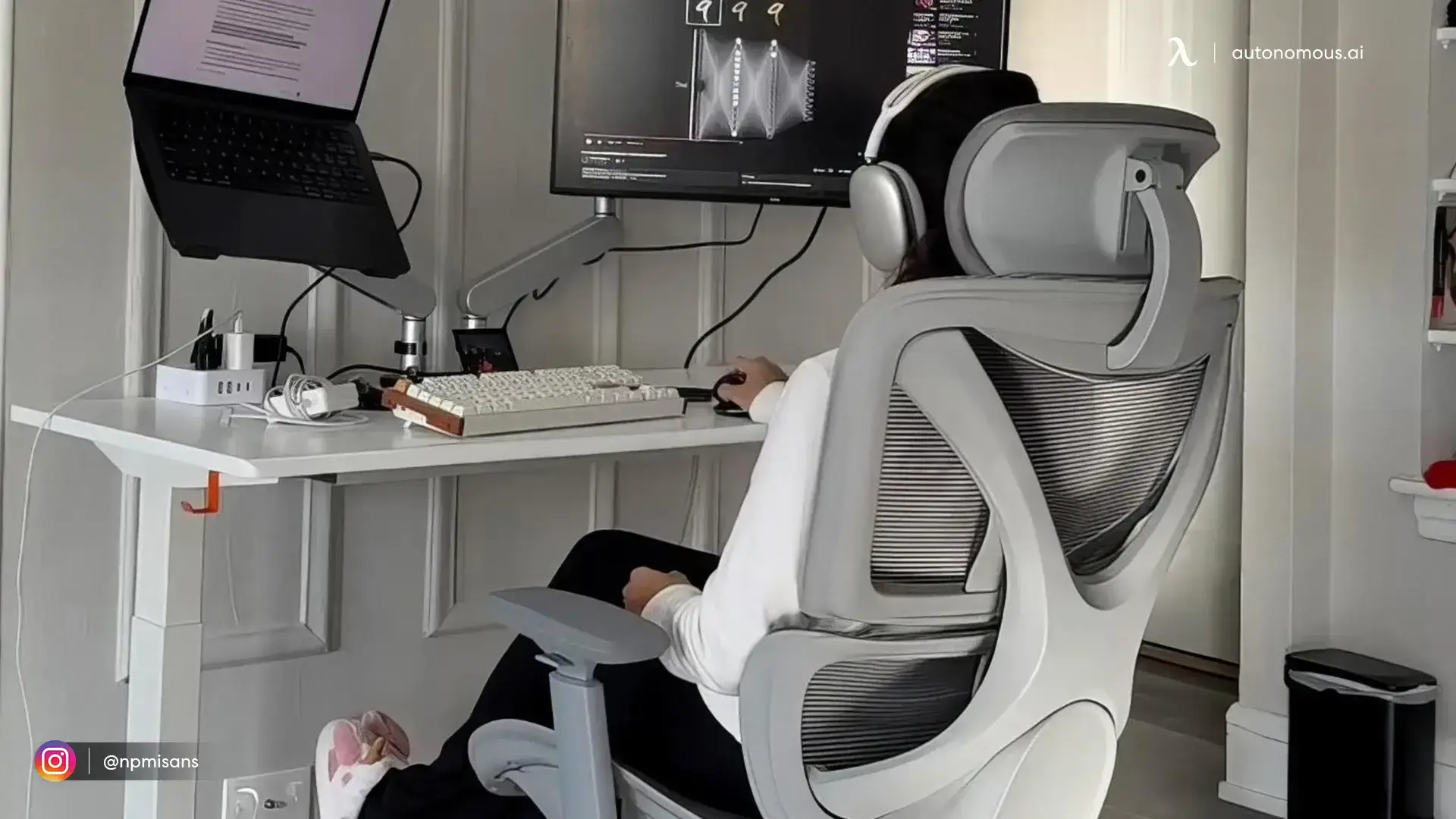
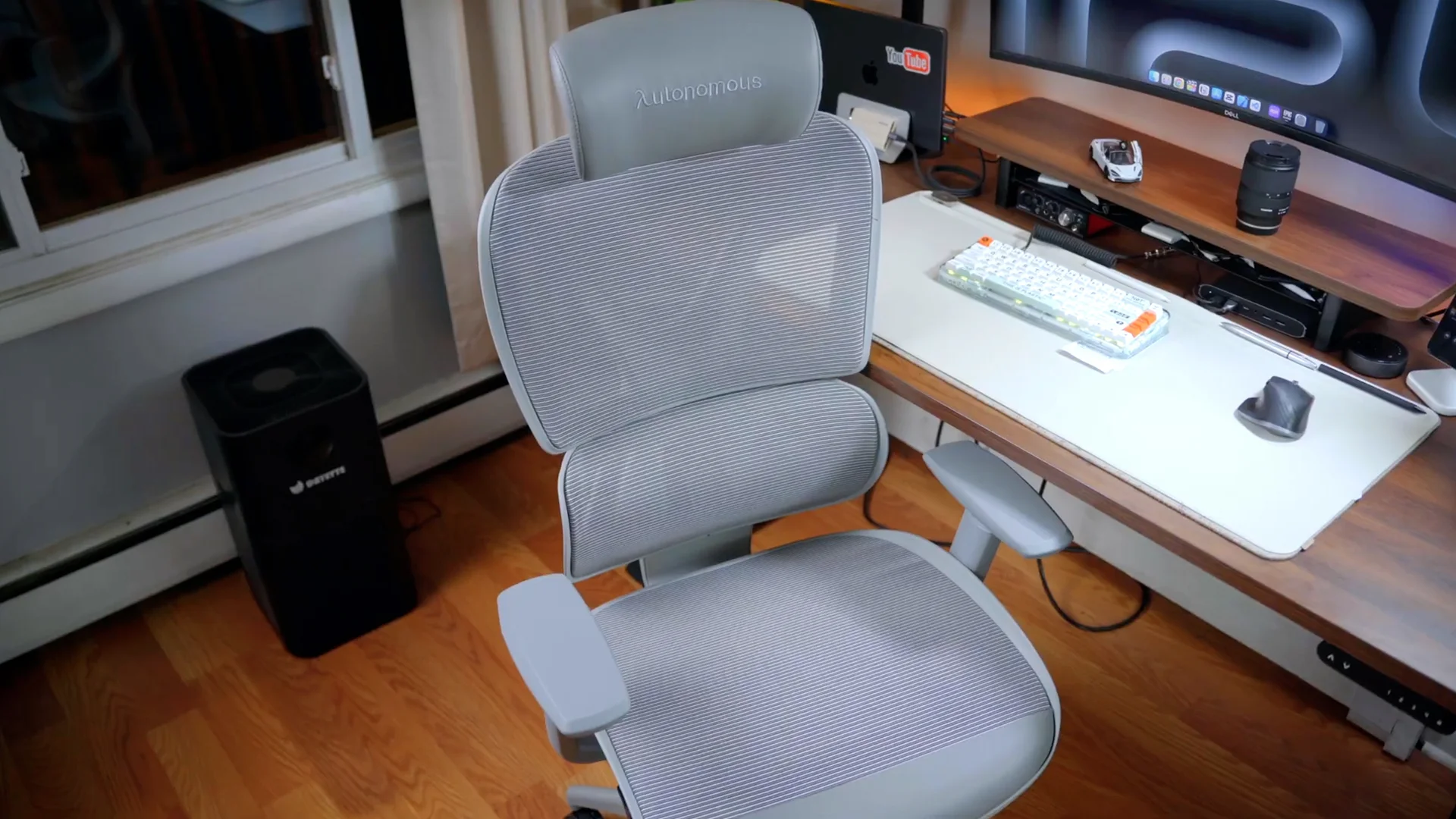
The ErgoChair Core is where this list stops compromising. Its split-back design supports the upper and lower back independently rather than pressing a single flat panel against your spine, which is what stops pressure building through hour six and seven of a day at home with no reason to get up.
The flexible mesh back moves with you as you lean forward to concentrate or ease back to think, so you are not fighting the chair into a posture. Its neutral tones and clean lines were designed for a room you also live in, which is the quiet reason it works better at home than a gaming-style chair does. Adjustable seat depth and height, 3D armrests, and a 2-year warranty put it well beyond anything cheaper here.
Pros
- Dual-zone back supports upper and lower spine separately
- Adjustable seat depth
- 3D armrests
- 2-year warranty
- Looks like furniture
Cons
- Several times the price of the sub-$100 picks
- 242.5 lb capacity
- More chair than a two-hour-a-day user needs
10. Autonomous ErgoChair Pro, $499
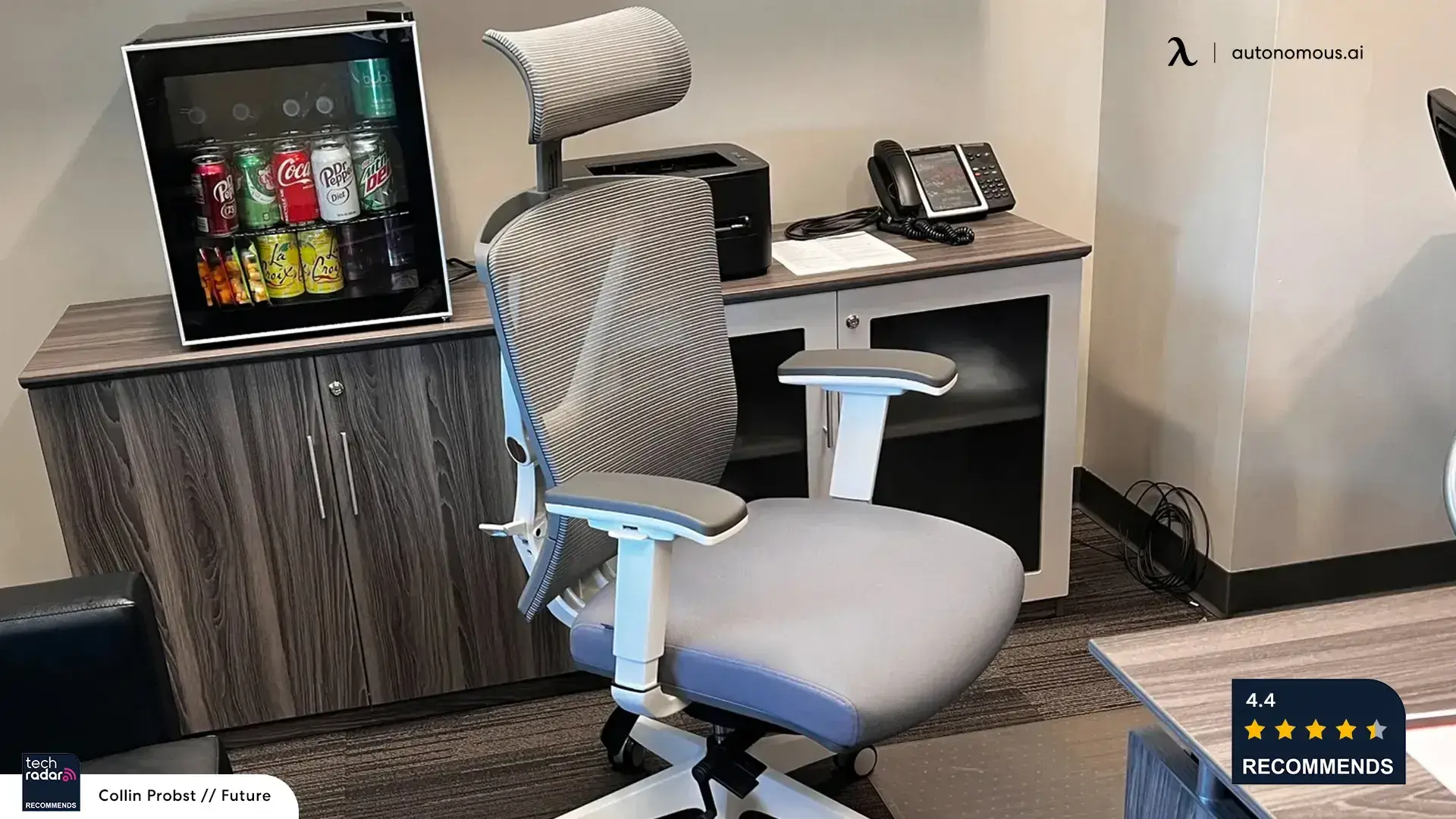
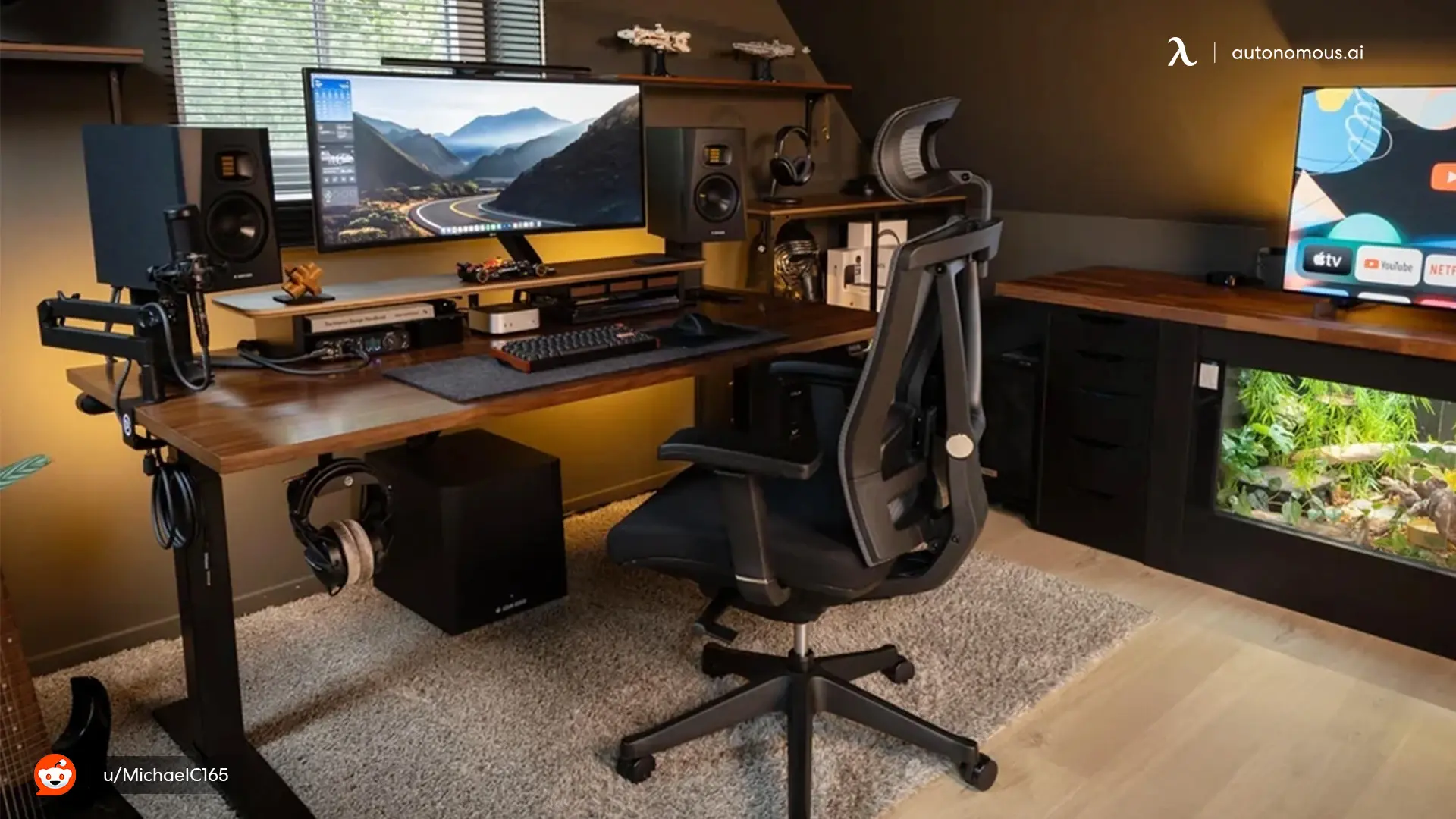
The ErgoChair Pro sits at the top of this list on price, and it earns its place on a different measure: what a chair costs per year rather than what it costs today. For anyone working from home full time, that maths lands somewhere the sticker price does not suggest.
A $60 chair replaced every eighteen months costs more across five years than one that never needs replacing, and you spend those five years worse supported. The Pro has nine independent adjustment points and a sliding lumbar you position to your own spine rather than hoping a fixed contour matches it. The synchro-tilt keeps your knees at a steady angle as you recline, and the lifetime frame warranty is the manufacturer betting on its own build in a way nothing else here does.
Pros
- 9 adjustment points
- Sliding lumbar you position yourself
- Synchro-tilt
- 300 lb capacity
- Lifetime frame warranty
Cons
- Well above an affordable budget
- More adjustment than a light user needs
- Longer initial setup to dial in
What a Home Office Chair Needs That an Office One Does Not
Four things separate a good home office chair from a good office chair, and none of them appear on a spec sheet.
A footprint that can disappear.
Most home offices are rooms doing two jobs. Flip-up armrests and a compact frame decide whether the room goes back to being a bedroom at 6pm, and it is the most consistently underrated feature at this price.
Casters matched to your actual floor.
Hard nylon wheels grind on hardwood and stick in carpet pile. If your chair lives on a rug, or above someone else's room, this matters more than an extra inch of padding. Aftermarket rollerblade-style casters fix it for under $25 if a chair you otherwise like gets this wrong.
Something you can stand to look at.
A chair in a living room corner is furniture whether you intended it or not, which is why gaming-style chairs so often get replaced within a year in shared spaces.
Assembly you can manage alone.
Nobody is helping you flip a chair upright in a spare bedroom. Chairs that arrive mostly built, or ship with the tools included, save an evening.
How to Choose an Affordable Home Office Chair
Match the price to your hours, not your ambition.
Two to four hours a day and the sub-$100 picks serve you genuinely well. Six or more and the seat foam becomes the limiting factor within a year, which is where the $130 to $300 range starts making sense.
Measure the room before the chair.
Check the height of the desk you actually own, the clearance behind it, and whether the chair needs to tuck away. A chair that fits your body but not your room gets resented daily.
Prioritise back support over padding.
Thick foam feels good in week one and flat by month eight. A supportive back and a firm seat age far better, which matters more at home where you are unlikely to replace a chair on schedule.
Treat weight capacity as a ceiling.
A chair loaded near its rating feels noticeably less stable, and stability is exactly what you notice in a quiet room.
For a wider view across price tiers, our guide to the best budget office chairs covers the full range, and if the room itself is still coming together, our home office setup ideas cover everything around the chair.
FAQs
What is the best affordable home office chair?
The best affordable home office chair balances a small footprint, breathable support, and a price matched to your hours. Under $100 the NEO CHAIR is the strongest all-rounder for a home setup, while chairs around $300 add adjustable lumbar support and warranties that suit full-time work from home.
How much should I spend on a home office chair?
Spend $60 to $100 if you work from home two to four hours a day, $100 to $200 for regular use, and $250 to $500 if working from home is full time. At home the replacement cost matters more than in an office, since you are the one buying the second chair.
Are inexpensive home office chairs comfortable enough for full-time work?
Inexpensive home office chairs are comfortable for a few hours a day but generally not for full-time work, because budget seat foam compresses within a year and fixed lumbar contours cannot be adjusted to your spine. For eight-hour days, a chair with positionable lumbar support is the better long-term buy.
What size chair fits a small home office?
A chair with flip-up armrests and a frame under about 26 inches wide fits most small home offices, since it can tuck entirely under the desk when not in use. Also check the minimum seat height, as low desks and repurposed tables often need a chair that drops below 18 inches.
Do I need a special chair for carpet or hardwood floors?
Standard nylon casters scratch hardwood and stick in carpet pile, so wheels matter more at home than in an office. Rollerblade-style polyurethane casters roll quietly on both surfaces and cost under $25 as an aftermarket swap if a chair you otherwise like comes with poor wheels.
Is a gaming chair a good home office chair?
Gaming chairs are usually a poor fit for a home office because their wide bases take up floor space, the padding traps heat, and the styling dominates a room you also live in. An ergonomic task chair generally supports long typing sessions better and blends into a shared space.
Can an affordable home office chair prevent back pain?
A well-chosen affordable home office chair can reduce posture-related back pain through lumbar support, correct seat height, and a tilt you can lock. It will not resolve pain from an underlying medical condition, so persistent or worsening pain is worth discussing with a doctor or physical therapist.
Conclusion
The best affordable home office chair is the one that fits your room as well as your body. If space is the constraint, the HBADA J1 or the flip-up arms on the Yaheetech matter more than any spec. If you are a larger user, the OFIKA carries 400 lbs at around $80, which nothing else here comes close to. Under $100 the NEO CHAIR is the most complete package for a home setup.
And if working from home is not a phase, run the maths before you buy cheap. A chair replaced twice costs more than one that lasts, and at home you are the one paying both times.