


Average Treadmill Speed by Age, Activity, and Fitness Level

Most adults walk at 3.5 to 4.5 mph, jog at 5 to 6.5 mph, and run at 6.5 to 8 mph on a treadmill, with each range easing down slightly every decade past 40. The chart below matches a speed to your age and activity in both mph and km/h. The charts assume a dedicated workout, though, so this guide also answers the question they never do: how to get any treadmill time when you sit at a desk all day.
Average Treadmill Speed by Age
Average treadmill speed by age ranges from about 2 mph for seniors walking to more than 8 mph for young adults running. The table shows typical ranges for each activity in both units.
Age Group | Walking | Jogging | Running |
Under 18 | 3.0 to 4.0 mph / 4.8 to 6.4 km/h | 4.0 to 6.0 mph / 6.4 to 9.6 km/h | 6.0 to 8.0 mph / 9.6 to 12.8 km/h |
19 to 40 | 3.5 to 4.5 mph / 5.6 to 7.2 km/h | 5.0 to 6.5 mph / 8.0 to 10.4 km/h | 6.5 to 8.0+ mph / 10.4 to 12.8+ km/h |
41 to 60 | 3.0 to 4.0 mph / 4.8 to 6.4 km/h | 4.5 to 6.0 mph / 7.2 to 9.6 km/h | 6.0 to 7.5 mph / 9.6 to 12.0 km/h |
61 to 75 | 2.5 to 3.5 mph / 4.0 to 5.6 km/h | 3.5 to 4.5 mph / 5.6 to 7.2 km/h | up to 6.0 mph / 9.6 km/h |
76+ | 2.0 to 3.0 mph / 3.2 to 4.8 km/h | not recommended | not recommended |
Speed eases down with age because maximum heart rate drops about one beat per minute per year after 30, and joints need more recovery time. These are typical recommended ranges rather than measured averages, so start at the lower end and adjust to how you feel.
Walking, Jogging, and Running Speeds
The three paces are set by effort, and the talk test tells them apart:
- Walking: 2.5 to 4 mph (4 to 6.4 km/h). You can talk or sing easily.
- Jogging: 4.5 to 6 mph (7.2 to 9.6 km/h). You can talk but not sing.
- Running: 6 to 8+ mph (9.6 to 12.8+ km/h). Talking gets hard, so use heart rate instead. Most runners target 70 to 85 percent of maximum heart rate, which the American Heart Association estimates as roughly 220 minus your age. Treat that as a rough guide, since it can be off by 10 to 20 bpm.
Adjusting for Fitness Level
Fitness matters more than age within these ranges. A trained 55-year-old often outpaces a sedentary 30-year-old. If you are just starting, begin 1.5 to 2 mph below your age range and build up; if you have trained consistently for a year or more, you can sit above it. One quick check: if you pass 85 percent of your maximum heart rate in the first five minutes, the speed is too high no matter what the chart says.
The Treadmill Question Desk Workers Should Actually Ask
Here is where the charts quietly break down for a lot of people. If you write code, design, or run a company, you are not really deciding between 6 and 7 mph. You are deciding whether you will get on a treadmill at all on a day of back-to-back meetings, and the honest answer is often that the dedicated session, at any speed, does not happen.
That reframes the useful question from "how fast should I run" to "how do I get movement into a day I spend sitting." Most of the difference in daily energy burn between an active and a sedentary person comes not from workouts but from everyday movement, which researchers call NEAT. When you sit from morning to night, that movement collapses toward zero, and no single fast run makes up for it. So for a desk worker, the most valuable treadmill speed is often the slowest one on the chart: a pace you can hold while working turns hours of sitting into hours of light movement, with no separate workout block required.
Treadmill Speed for Walking Pads and Under-Desk Treadmills
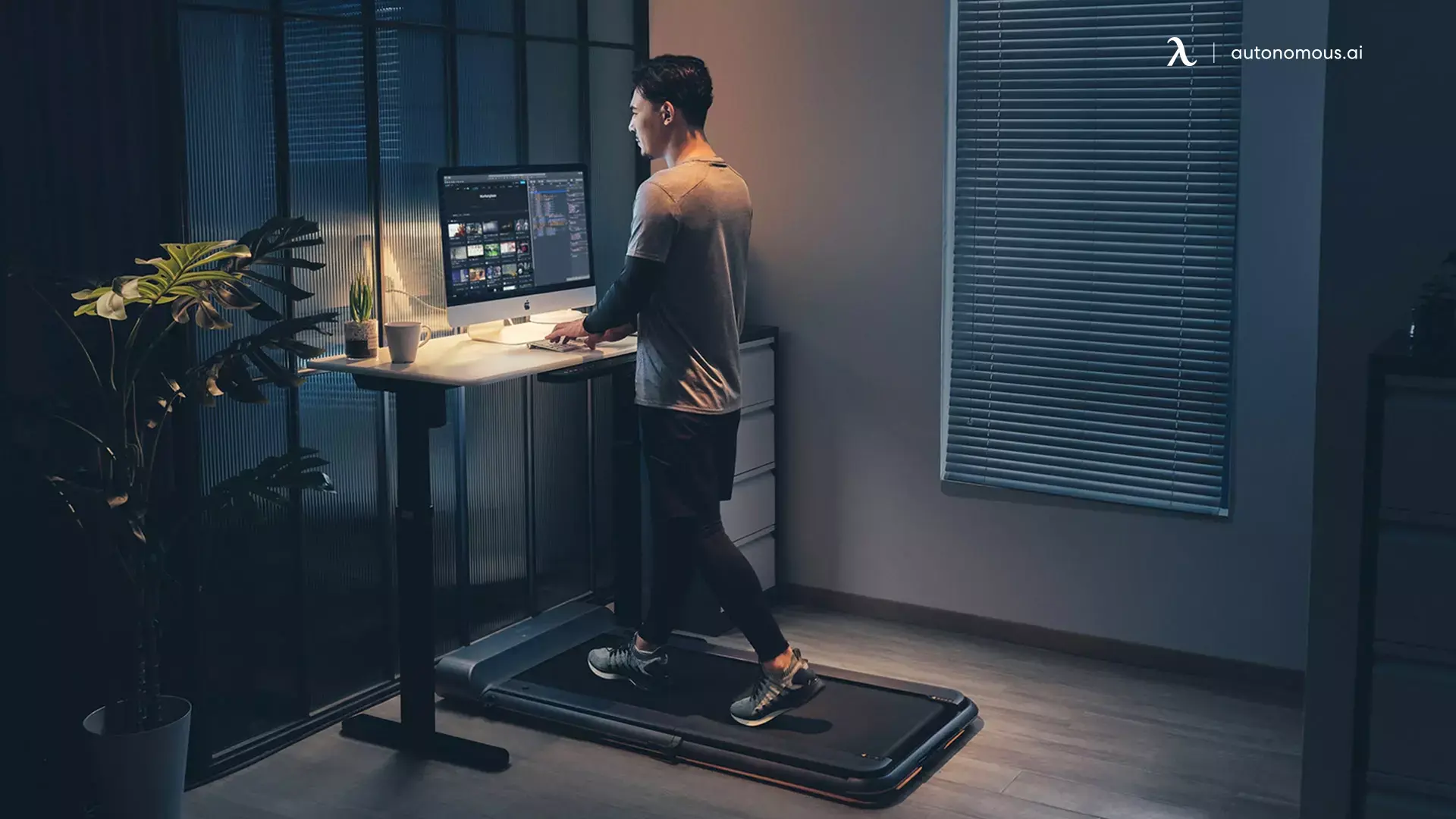
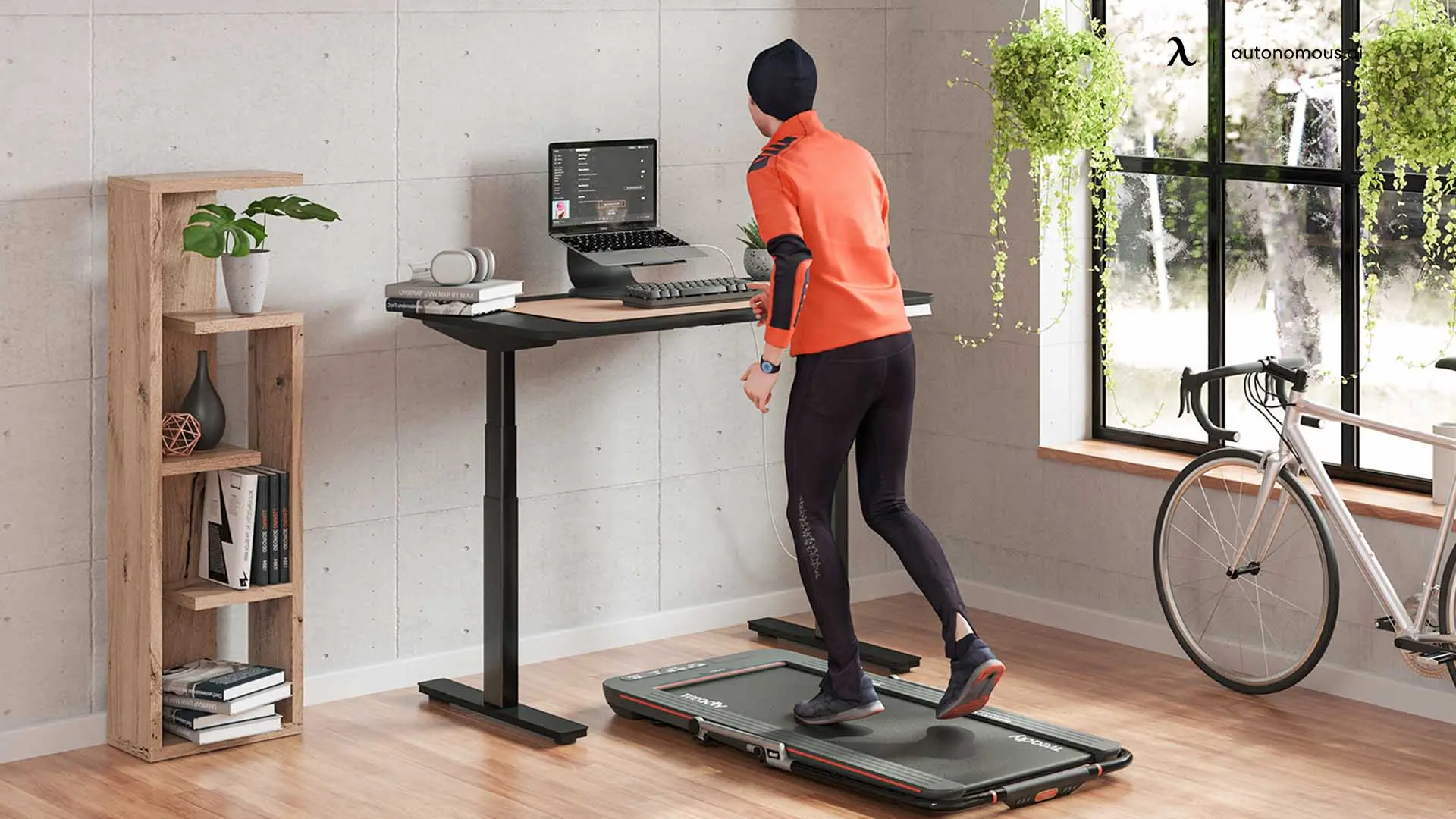
A walking pad or under-desk treadmill paired with a standing desk typically runs at 0.5 to 4 mph (0.8 to 6.4 km/h), with most people settling around 1 to 2 mph while working and 3 to 3.5 mph for a dedicated walk. The low range exists because walking while typing needs a pace where balance and focus stay intact, and above about 2 mph most people find their typing accuracy drops.
Use case | Recommended speed (mph) |
Typing or focused work | 1.0 to 1.5 |
Calls, reading, light tasks | 1.5 to 2.5 |
Dedicated walking session | 3.0 to 3.5 |
Compact under-desk units pair with a standing desk built for treadmill use and usually top out around 3.7 mph, enough for brisk walking but not jogging. The key is a desk that adjusts to your standing height so your posture stays neutral at walking speed, since a desk set too low undoes the benefit. A treadmill vs stairmaster comparison breaks down how the two stack up for low-impact office cardio.
Treadmill Speed to Pace Conversion Chart
Use this to translate treadmill speed into the pace you would see on a running watch.
Speed (mph) | Pace (min/mile) | Speed (km/h) | Pace (min/km) |
3.0 | 20:00 | 4.8 | 12:30 |
3.5 | 17:08 | 5.6 | 10:42 |
4.0 | 15:00 | 6.4 | 9:22 |
4.5 | 13:20 | 7.2 | 8:20 |
5.0 | 12:00 | 8.0 | 7:30 |
6.0 | 10:00 | 9.6 | 6:15 |
7.0 | 8:34 | 11.2 | 5:21 |
8.0 | 7:30 | 12.8 | 4:41 |
10.0 | 6:00 | 16.0 | 3:45 |
Treadmill pace runs about 5 to 10 percent easier than outdoors because there is no wind resistance, so add a 1 to 2 percent incline to match outdoor effort.
FAQs
What is a good treadmill speed for a 50-year-old?
A good treadmill speed for a 50-year-old is 3 to 4 mph for walking, 4.5 to 5.5 mph for jogging, and 6 to 7 mph for running. Drop to the lower end for joint issues, and use incline rather than speed to add intensity without impact.
What is a good treadmill speed for a 60-year-old?
A good treadmill speed for a 60-year-old is 2.5 to 3.5 mph for walking and 3.5 to 4.5 mph for jogging. Many older adults skip running and raise intensity with a 2 to 6 percent incline instead, which is gentler on the joints.
Does average treadmill speed differ for men and women?
Average treadmill speeds are similar for men and women at the same age and fitness level. Men tend to average slightly higher running speeds because of differences in average height and muscle mass, but walking and jogging ranges overlap almost entirely. Set your pace by fitness and the talk test, not by sex.
What speed is jogging on a treadmill?
Jogging on a treadmill is roughly 4.5 to 6 mph (7.2 to 9.6 km/h) for most adults. It sits between walking and running: you can still hold a short conversation, but not sing. If full sentences fragment, you have moved into running pace.
How fast does a walking pad go?
Most walking pads top out around 3.7 to 4 mph (6 to 6.4 km/h), which supports brisk walking but not jogging or running. That is the trade-off for the compact, fold-flat design meant for use under a desk.
Final Thoughts
Treadmill speed is a range that shifts with your age, activity, and training, and the chart above gives you a defensible starting point: pick your age row, your activity column, and begin at the lower end. The people who stay consistent are not the ones running fastest, but the ones moving at the right speed for their body, and for many desk workers that is a slow pace they can keep up all day.
References
- American Heart Association: "Target Heart Rates Chart" (maximum heart rate estimate and target zones). https://www.heart.org/en/healthy-living/fitness/fitness-basics/target-heart-rates
- Mayo Clinic: "Exercise intensity: How to measure it" (heart rate zones and perceived exertion). https://www.mayoclinic.org/healthy-lifestyle/fitness/in-depth/exercise-intensity/art-20046887