StairMaster vs Stepper: Differences and Which to Choose

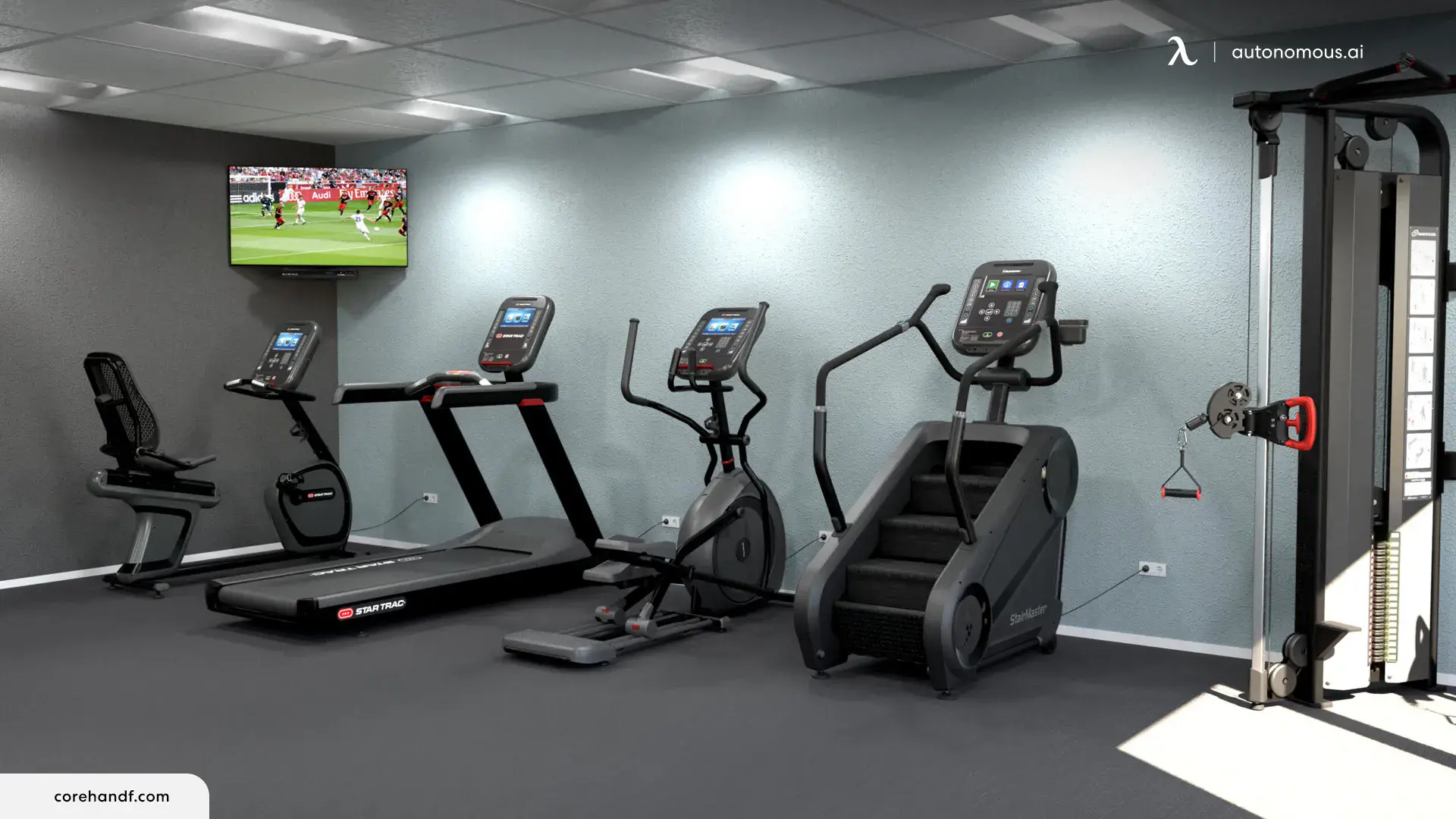
A StairMaster and a stepper both train the legs through repeated climbing motions, but they do not necessarily feel or work the same. A revolving-stair StepMill makes you step onto one moving stair after another; a mini stepper keeps your feet on two pedals that rise and fall. The difference changes your stride, workout pace, space requirements and what you should buy for home.
If you are comparing stepper vs StairMaster for cardio, the quick decision is this: choose a revolving-stair machine for continuous stair climbing in a gym, or a mini stepper for a compact home routine you can use consistently. Neither guarantees more weight loss or less knee pain. How hard and how often you exercise matters.
StairMaster vs. stepper: quick comparison
| Feature | StairMaster StepMill | Mini stepper |
|---|---|---|
| How it moves | Revolving staircase; lift each foot onto the next step | Two up-and-down pedals; feet stay planted |
| Typical session | Continuous climbing with machine-set pace | Short or longer stepping sessions at self-selected pace |
| Intensity | Can be vigorous; slow settings also available | Can be light to challenging, depending on cadence and range |
| Space | Large, heavy and needs overhead clearance | Compact; often stows away after use |
| Support | Handrails and controlled step-speed settings | Usually no handrails; some models have a support bar |
| Buying trade-off | Expensive equipment or gym access | More affordable; limited pedal travel and fewer controls |
Here, “StairMaster” means the revolving-stair StepMill people usually use at a gym. StairMaster is also a brand name; not every machine sold under that name uses revolving steps.
What is the difference between a StairMaster, StepMill and stair stepper?
StepMill describes the revolving-stair mechanism, while stair stepper describes a broader category of machines with independently moving pedals. The terms overlap in gym conversations, which is why searching for “StairMaster vs StepMill” can sound like comparing different machines when the StairMaster being discussed is itself a StepMill.
StairMaster StepMill: a moving staircase
On a StepMill, you repeatedly climb fixed-size steps as they rotate downward beneath you. You must lift your feet from one stair to the next. Machines such as the StairMaster 4G control climbing speed; their console reports steps and other workout metrics. On the 4G, the manufacturer lists 20 speed levels ranging from 24 to 162 steps per minute, a 54 × 29-inch footprint and a recommended 8-foot ceiling. These are model-specific figures, not a specification for every StairMaster.
This design is relevant if your goal includes continuous climbing, hill or stair endurance, and practicing a recognizably stair-like movement. It needs a suitable exercise area and careful attention when getting on and off the moving steps.
Stair stepper: two pedals, not a staircase
A full-size stair stepper often has two linked or independently moving pedals, upright handles and adjustable resistance. Each foot remains on its pedal. The machine can deliver demanding cardio, but it does not recreate the act of placing each foot onto a higher stair.
This distinction also prevents a brand-name mistake: StairMaster has made pedal-style stair climbers as well as revolving-stair machines. Compare the actual mechanism on the product page instead of treating “StairMaster,” “stair climber” and “stepper” as perfectly interchangeable labels.
Mini stepper: the portable home version
A mini stepper is a small two-pedal unit, commonly using hydraulic cylinders. You step up and down without moving across the room. Some include bands or a support handle; those additions do not change the basic pedal mechanism.
For a concrete example, the Sunny Health & Fitness Mini Stepper uses dual hydraulic cylinders, offers an adjustable step height and has an approximately 16 × 12.5-inch base. Its limited footprint helps with storage, but it is not the same movement or pace control as a commercial StepMill. Always check the specific model's weight limit, stability and instructions.

Which workout is harder: StairMaster or mini stepper?
A revolving-stair StairMaster often makes a sustained vigorous workout easier to organize, but a mini stepper can also be challenging. The actual intensity depends on your cadence, step height, resistance or speed, fitness level and how much of your weight you support through the handrails.
A StepMill sets a stair speed you must keep up with. A mini stepper usually lets you slow down or pause by changing your own stepping rhythm. This makes shorter bouts convenient, but it does not automatically mean you cannot raise your heart rate on it.
Use effort rather than the machine label to compare sessions. The CDC's talk test is practical: at moderate intensity you can talk but not sing; at vigorous intensity you can only say a few words before needing a breath. A brisk mini-stepper workout can feel harder than a very slow StepMill workout for the same person.

StairMaster vs. stepper for calories and weight loss
Neither machine wins for weight loss by default. A StepMill can help sustain a challenging workload, while a mini stepper can be easier to use frequently at home. Calories burned depend on duration, effort and body mass; long-term weight change also depends on eating habits and overall activity.
Do not compare calorie readouts as if two machines use the same measurement method. On-device numbers are estimates, particularly when your body weight or effort is not known accurately. Fitness trackers may distinguish active and resting calories, so compare equivalent figures rather than mixing workout energy with daily totals. For a separate explanation of assumptions and workout duration, the StairMaster calorie calculation uses body weight and intensity rather than a universal “calories per step” promise.
When deciding between the two, a useful question is not which one advertises the highest burn. It is whether you can repeat the activity at a suitable intensity for enough weeks to make it part of your routine.

Which muscles do a StairMaster and stepper work?
Both machines primarily involve the quadriceps, glutes, calves and other muscles that stabilize the hips and lower body. They differ more in movement pattern and range than in the basic list of muscles involved.
| Muscle or goal | What changes |
|---|---|
| Glutes and quadriceps | Both work them; a higher stair step or greater range can increase the demand |
| Calves | Both use ankle movement and lower-leg stabilization |
| Hamstrings | Help with hip and leg movement, but neither replaces targeted strength work |
| Core and balance | Help stabilize posture; support rails change balance demands |
| Upper body | Resistance bands add arm exercises, but do not make the stepper a substitute for strength training |
A mini stepper's shorter travel does not mean it never trains the glutes, and a StepMill's taller steps do not guarantee bigger muscle gains. For significant strength or muscle development, both work best alongside progressively loaded resistance exercises.
Which is easier on your knees and joints?
Neither a mini stepper nor a StairMaster is automatically safer for someone with knee pain. Both avoid the repeated landing impacts of running, but the motion still involves repeated hip, knee and ankle loading. Step height, pace, balance and existing symptoms all affect comfort.
A mini stepper often has a shorter pedal range, which some people may find more manageable. A StepMill provides handrails, but the continuous steps demand attention and coordination. Someone who cannot balance securely on a handle-free mini stepper may prefer a supported alternative despite its smaller footprint.
Start at a comfortable setting, use stable footwear, keep movements controlled and do not lean heavily on the rails simply to make a high setting feel easier. Stop if pain or instability develops. People with ongoing joint pain, recent injuries or recovery restrictions should ask their clinician which motion and range are appropriate before starting.
Mini stepper vs StairMaster at home: cost, room and noise
A mini stepper is usually more practical for a small home, while a StepMill makes sense only when you have the budget, floor space and ceiling clearance. A mini stepper can be stored after a session; a rotating stair machine normally remains installed in one location.
Plan the whole occupied space, not only the dimensions printed on the listing. A StepMill needs room for safe access, ceiling height while the user is on the elevated steps and a floor that supports the equipment. A mini stepper still requires level, nonslip flooring and enough clear space to recover your balance if you step off. The same space and storage checks apply when comparing other indoor fitness equipment for a small home.
Noise cannot be ranked by category alone. Hydraulic mini steppers can squeak or thump, and large stair machines contain motorized or mechanical systems. If sound matters in an apartment, check the exact model, flooring and maintenance needs rather than accepting an unconditional “silent” claim.

Which should you choose for your fitness goals?
Choose by how you will actually train, not by which machine looks harder in a gym video. These are practical starting points:
| Your situation | Better starting point | Reason |
|---|---|---|
| Apartment with little storage | Mini stepper | Small footprint and easy storage |
| Stair-climbing or hiking endurance | StepMill | Continuous, stair-like stepping |
| Short movement breaks at home | Mini stepper | Easy to fit into a daily routine |
| Structured gym cardio intervals | StepMill or full-size stair climber | Speed or resistance controls and handrails |
| Limited balance confidence | Supported equipment | A handle-free mini stepper may not be appropriate |
| Concern about impact or knee comfort | Individual fit first | Try an appropriate range and stop if symptoms appear |
If neither movement feels right, other equipment may be more appropriate. An elliptical and StairMaster comparison addresses a different motion pattern; a treadmill comparison is more relevant when walking or running is the goal.
How to start using either machine
Start with a pace and duration that let you maintain control and build gradually. The first workout is a check of the movement, not a test of how fast you can climb.
- Check the equipment. Confirm its stated user-weight limit, pedal or step condition, floor stability and any safety-stop instructions.
- Begin conservatively. Try a brief, manageable session on the lowest practical resistance or speed. Use support according to the machine's instructions.
- Keep posture controlled. Look ahead, place each foot securely, avoid extreme leaning and stop if you feel dizzy, painful or unsteady.
- Assess your effort. Use breathing and the talk test rather than relying only on a calorie estimate.
- Build gradually. Increase time, pace or step height one variable at a time as your fitness and confidence improve.
FAQs
Is a stair stepper the same as a StairMaster?
Not necessarily. A mini or pedal-style stepper keeps each foot on a moving platform, while a StairMaster StepMill has revolving stairs. StairMaster is also a brand that has sold different climbing mechanisms, so check the actual machine model.
What's the difference between a StepMill and a StairMaster?
A StepMill describes a revolving-stair exercise machine; StairMaster is a brand. Many StairMaster models are StepMills, so the terms can refer to the same equipment. A pedal-style stair climber is a different mechanism.
Can a mini stepper give you a workout like a StairMaster?
A mini stepper can raise your heart rate and work your lower body, but its pedals usually travel less than a revolving staircase. You can still train at a challenging effort; the movement and pace control are not identical.
Which burns more calories, a stepper or StairMaster?
It depends on your pace, duration, body weight and resistance. A StepMill may help sustain demanding climbing, but a hard mini-stepper session can expend more energy than an easy StepMill session. Neither machine has a universal calorie advantage.
Are mini steppers effective for cardio?
Yes. Repeated stepping can count as aerobic activity when it raises your breathing and heart rate enough. A mini stepper is especially practical for short home sessions; intensity and consistency matter more than its compact size.
Is a mini stepper better for beginners?
It can be, thanks to its compact size and self-paced motion. But many mini steppers lack handrails, so balancing may be harder. New users should choose equipment they can operate safely and start at a manageable effort.
What muscles does the StairMaster target?
A revolving-stair StairMaster mainly trains the quadriceps, glutes, calves and supporting lower-body muscles. Your step height, speed and posture affect the workload. It provides cardio and muscular endurance, but is not a replacement for full strength training.
Is a StairMaster better than step-ups?
Neither is universally better. A StepMill provides continuous controlled stair climbing, while step-ups on a secure platform let you choose the height, pace and repetitions. Step-ups require an appropriately stable surface and technique; the better option depends on your training goal.
Are mini steppers easier on the knees?
A shorter stepping range may feel more comfortable for some people, but it does not guarantee less joint stress. Both devices load the knees repeatedly. If you have symptoms or a recent injury, get individualized guidance before choosing a machine.
Can I use both a StepMill and a mini stepper?
Yes. A mini stepper may suit short sessions at home, while a StepMill can provide structured gym climbing. Using both is optional; pick a manageable workload and allow adequate recovery instead of adding sessions solely to chase higher calorie numbers.

Bottom line
A StairMaster StepMill is built for continuous climbing on revolving steps. A mini stepper uses shorter pedal strokes and fits into a much smaller space. Both can support cardio and lower-body endurance, but neither guarantees faster fat loss or is automatically the safest choice for sensitive knees.
Choose the machine whose movement, support, space requirements and difficulty let you exercise consistently. If your goal is stair-specific endurance, the StepMill has a clearer advantage. If you need accessible movement in a small home, a mini stepper may be enough.
References
- CDC. How to Measure Physical Activity Intensity. Talk test and relative exercise intensity.
- CDC. What Counts as Physical Activity for Adults. Aerobic exercise guidance.
- StairMaster 4G. Product dimensions, revolving steps and speed levels.
- Sunny Health & Fitness. Mini Stepper Specifications. Hydraulic pedals and adjustable step height.