The AI Robot Companies That Actually Matter in 2026

AI robot companies now range from billion-dollar humanoid makers to small teams building open robots for your desk. The money is enormous: humanoid startups alone raised about $8.6 billion in the first half of 2026, and the broader AI robotics market is on track to pass $33 billion by 2030.
That pace makes the field hard to follow, so this guide walks through the companies that matter, grouped by what they build, with a real note on each. Every company appears once, in the group it is best known for.
Consumer and companion robot companies
This is the corner most people can actually buy from, where robots are built to live on a desk or in a home rather than a warehouse. These companies trade raw power for personality, price, and openness, and it is the fastest-growing tier for everyday buyers.
1. Pollen Robotics
Pollen Robotics is the French team, now owned by Hugging Face, behind the open Reachy Mini and the walking Microduck. It has become the face of open-source consumer robotics: its robots run on public code, cost a few hundred dollars, and are meant to be taken apart and rebuilt.
The Microduck launch alone sold millions of dollars in its first week, which shows the appetite for cheap, hackable robots. For anyone who wants to learn or build rather than just own, Pollen is the first name to know.
2. Autonomous
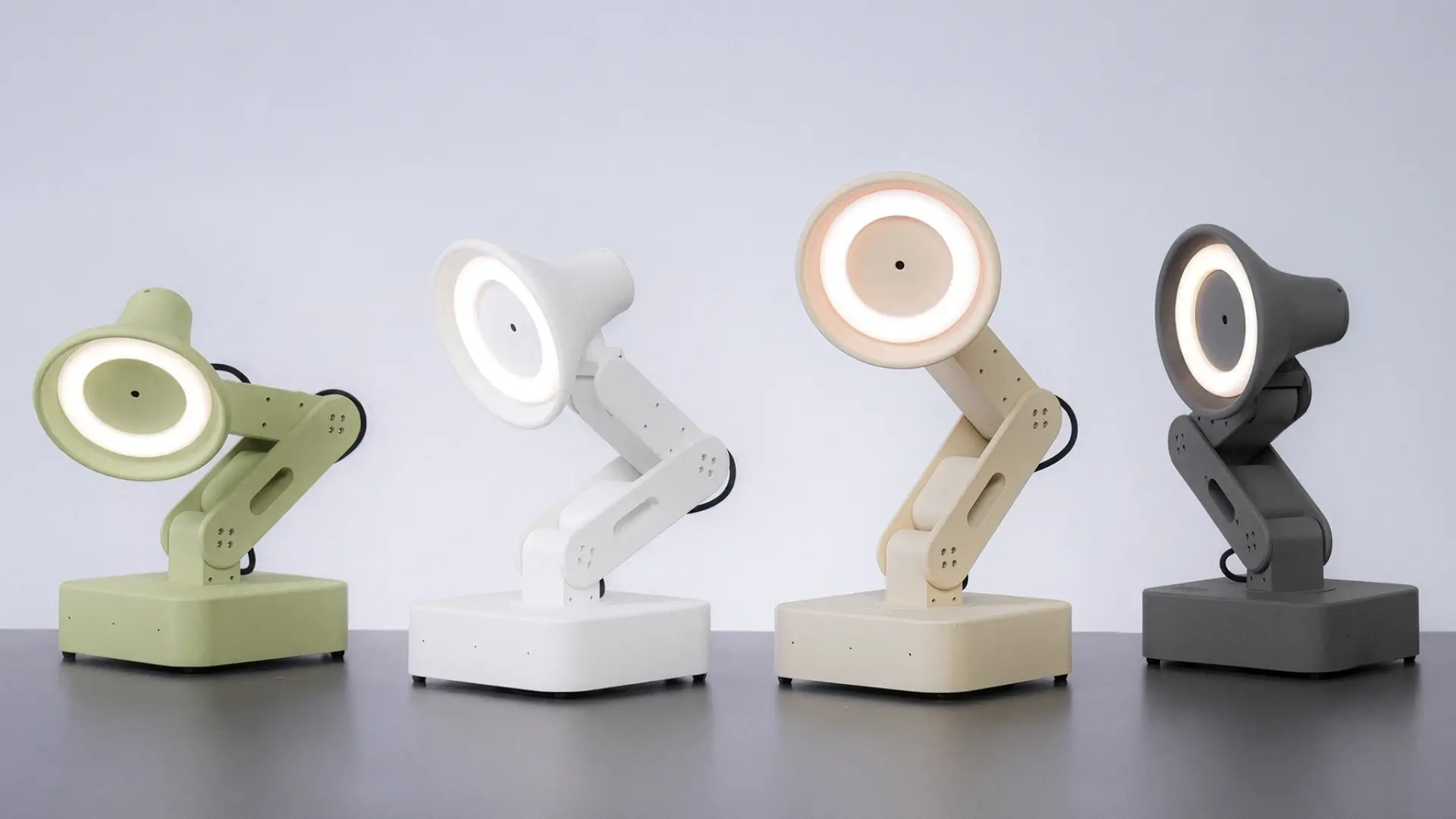
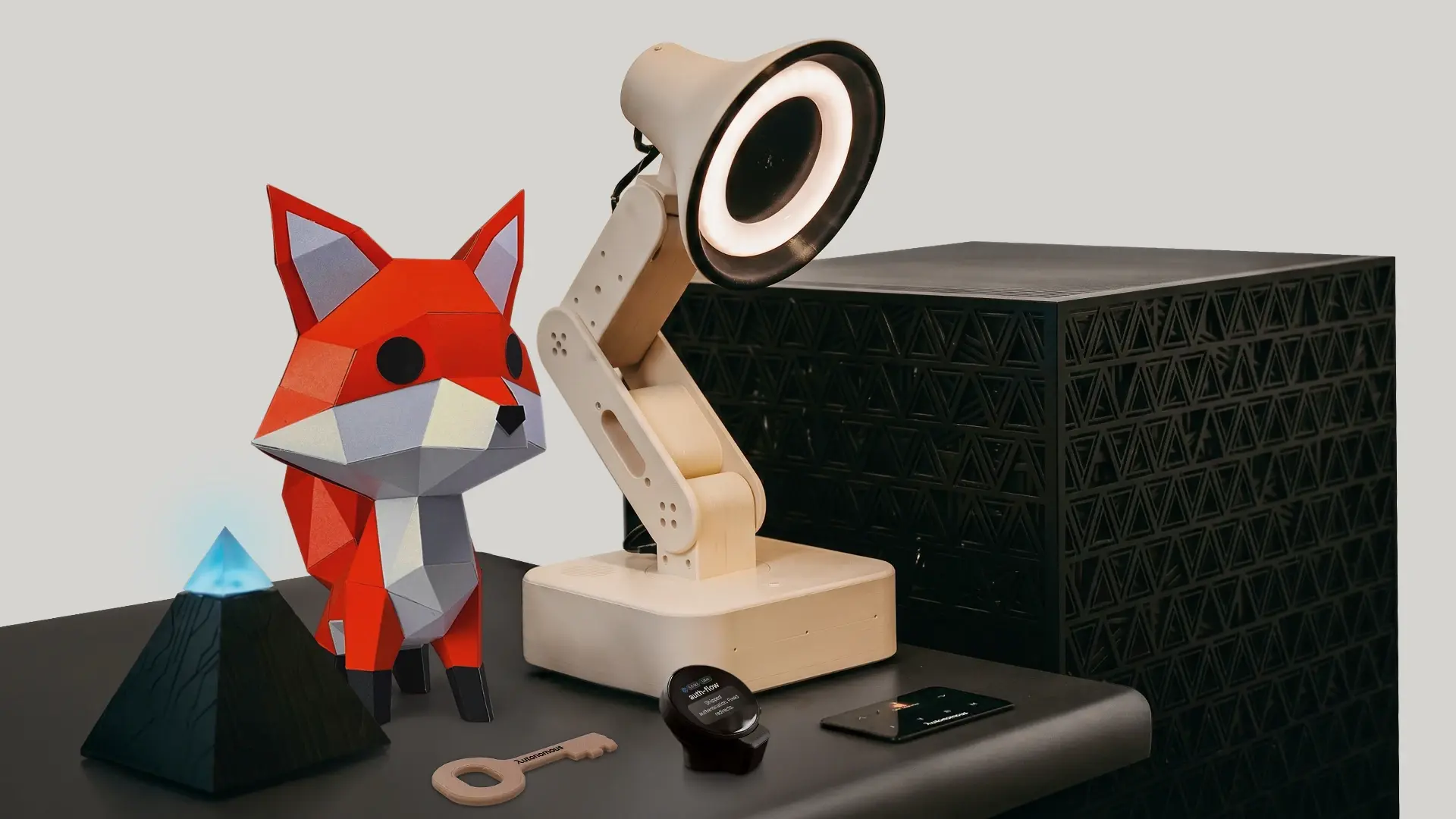
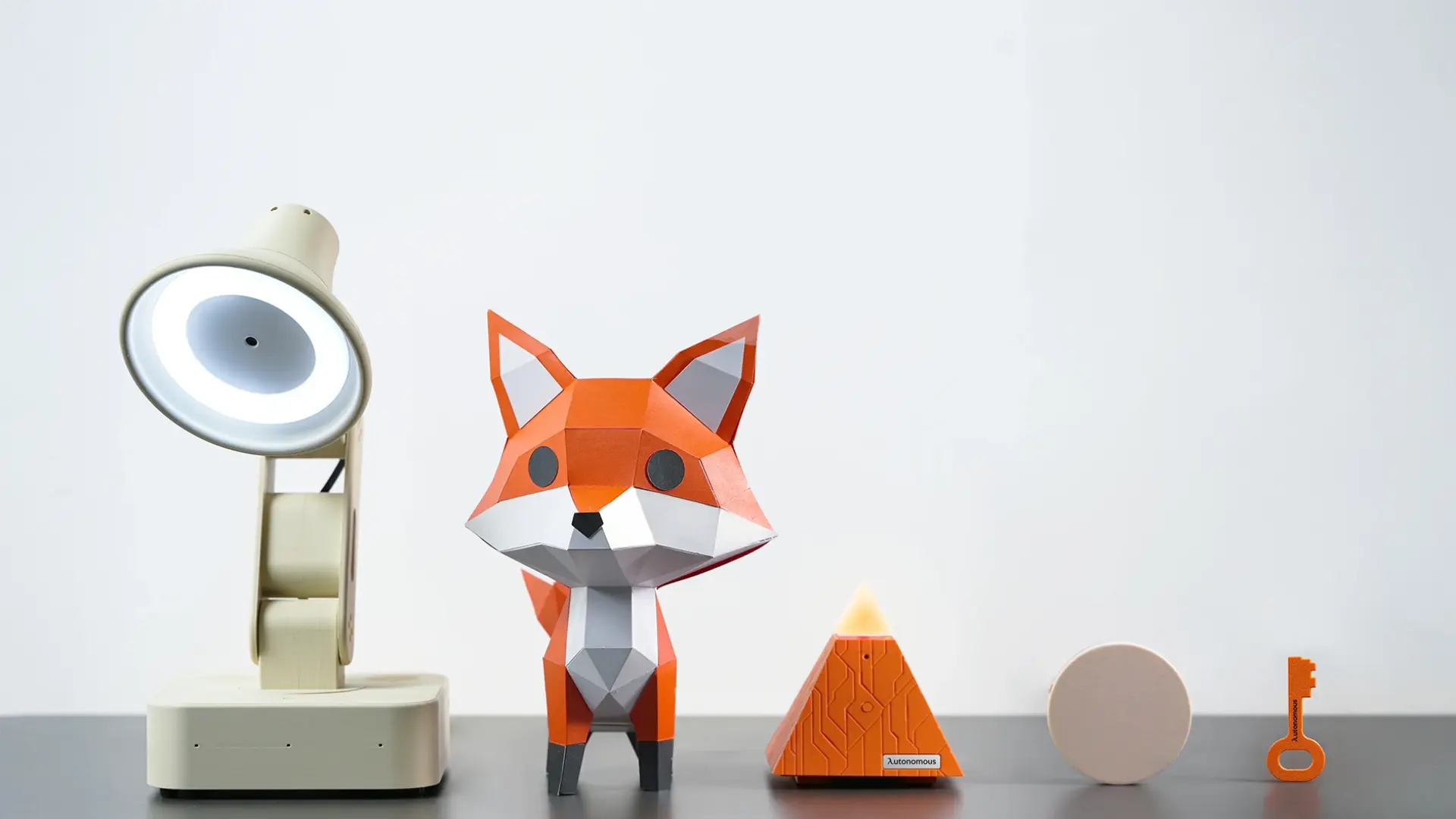
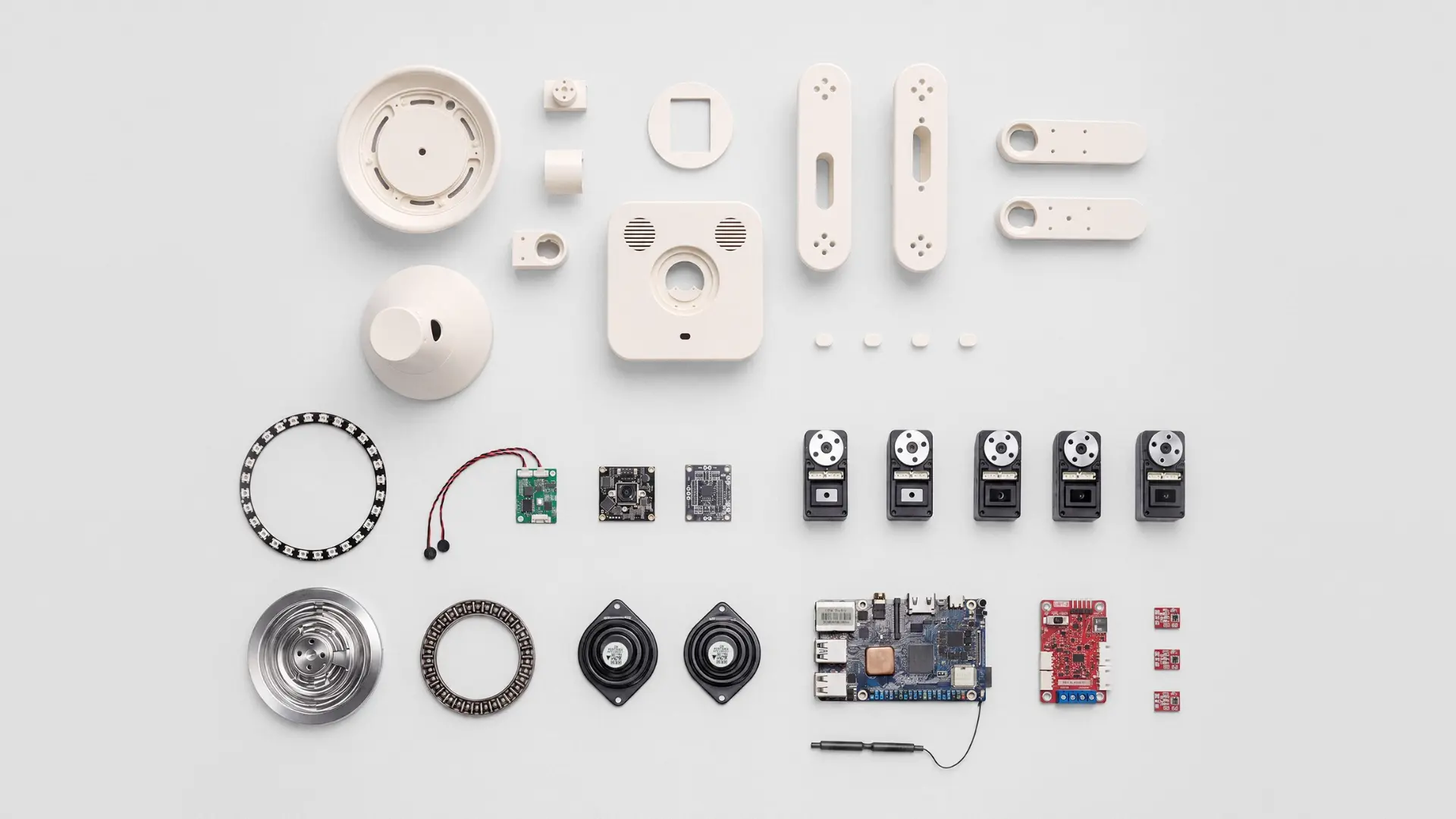
Autonomous makes the Lamp, an AI desk robot that runs an AI agent and carries out real skills rather than just reacting. What sets it apart is the software underneath: an operating system built to run the same skills across different robot bodies, not just its own. That focus on a shared brain, instead of a single sealed product, puts it closer to the software companies later in this list than to a typical gadget maker.
3. KEYi Robot
KEYi Robot makes Loona, an expressive companion pet robot known for its personality and a large library of moves and emotions. It leans hard into charm, using its camera and sensors to react to people, follow faces, and play. Loona is aimed squarely at buyers who want a robot that feels like a pet rather than a tool, and it is one of the more polished options in that space.
4. Living AI
Living AI makes EMO, a small desktop companion that was one of the earliest desk robots to go viral. It packs a lot of character into a tiny body, with hundreds of expressions and its own quirky personality, and it reacts to voice, touch, and music. EMO helped prove that people would pay for a robot whose only job is to be good company, which shaped the whole desk-companion category.
5. Sony
Sony makes Aibo, the most polished consumer companion of all, a premium robot dog priced around $2,899. Aibo has the deepest history of any robot on this list, dating back to the late 1990s, and the current version learns, forms a personality, and recognizes the people it lives with. It is expensive and needs a subscription, but nothing else feels as finished.
6. Casio
Casio makes Moflin, a small fuzzy AI pet built purely for comfort rather than tasks. It has no screen and no useful features in the usual sense; instead it develops an emotional bond over time, responding to how it is held and cared for. It is a big brand's bet that the comfort-robot idea, long owned by tiny startups, can go mainstream.
7. Matic
Matic makes an AI home vacuum that runs entirely on the device, with no cloud. That is its whole pitch: a cleaning robot that maps and navigates your home while keeping all of its camera data local, which answers the privacy worry that follows camera robots around. It shows how AI is reaching even the most ordinary home robots, and how privacy is becoming a selling point.
Humanoid robot companies
Humanoid companies build robots shaped like people, meant to work in spaces designed for people, and they pull in the most money and attention by far. Most are aimed at factories and research today, at prices from tens of thousands into the hundreds of thousands.
1. Figure AI
Figure AI is one of the best-funded robot companies in the world, valued around $39 billion, and backed by names like Nvidia and Microsoft. It builds general-purpose humanoids, from Figure 01 to 03, running on its own in-house AI. Its robot has already logged over 1,200 hours working at a BMW plant, which puts it among the few humanoids doing real factory hours rather than demos. Figure is the company most often named when people talk about humanoids reaching work first.
2. Tesla
Tesla builds Optimus, a humanoid tied directly to its car factories and its self-driving AI stack. The bet is scale: Tesla thinks it can manufacture humanoids at higher volume and lower cost than specialist startups, using the same lines and know-how that build its cars. Optimus is meant to work inside Tesla's own factories first, which gives it a ready testing ground most rivals lack.
3. Agility Robotics
Agility Robotics builds Digit, a two-legged warehouse robot that is already working inside Amazon and GXO facilities. Rather than sell the robot outright, Agility rents it as a service, with early deployments reported around $250,000, and Digit handles jobs like moving totes with a payload near 35 pounds. It is one of the clearest examples of a humanoid doing paid work today rather than being demoed.
4. Boston Dynamics
Boston Dynamics builds Atlas, widely seen as the most agile humanoid ever made, alongside the Spot robot dog and the Stretch warehouse robot. Owned by Hyundai, it has spent decades on the hard robotics problems of balance and movement, which is why its demos still set the bar. Its challenge now is turning that technical lead into robots that earn their keep, which the newer Atlas and its warehouse robots are meant to do.
5. Apptronik
Apptronik builds Apollo, a general-purpose humanoid, and is one of the better-funded humanoid startups. It is already running pilots with Mercedes-Benz and other partners, testing Apollo on real factory and logistics tasks. Apptronik's pitch is a robot designed from the start to work safely alongside people, which matters for the shop floors it is aiming at.
6. 1X Technologies
1X Technologies builds Neo, a humanoid designed for the home rather than the factory, and is backed by OpenAI. Its robots use a softer, lighter design meant to be safe around people, and the company leans on a mix of remote human help and growing autonomy. 1X is one of the few serious humanoid companies aiming at houses instead of warehouses.
7. UBTECH and AgiBot
UBTECH and AgiBot are two of the fastest-rising Chinese humanoid makers, part of a national push that has made China a center of humanoid work. UBTECH has run factory pilots with its Walker robots, while AgiBot has scaled quickly with a lineup aimed at both industry and service. Between them they show how much of the humanoid race is now happening in China, often at lower cost than Western rivals.
8. Sanctuary AI
Sanctuary AI, based in Canada, builds Phoenix, a humanoid with an unusual focus on dexterous hands. The company's bet is that the hard part of useful work is not walking but manipulation, so it has poured its effort into hands that can handle real objects. That focus makes it a company to watch as humanoids move from walking demos to actually doing tasks.
9. NEURA Robotics
NEURA Robotics, based in Germany, builds cognitive humanoids and service robots, and is one of Europe's leading humanoid makers. It designs its robots to sense and understand their surroundings rather than follow fixed paths, aiming at both factories and everyday help. NEURA is a reminder that the humanoid race is not only a US and China story.
Robot dog companies
Robot dog companies build four-legged robots that walk, climb, and navigate on their own, sitting between toys and humanoids. They are popular with developers and businesses, since a walking robot opens up jobs a desk robot cannot touch.
1. Unitree
Unitree is the company that made walking robots affordable, with its Go2 robot dog starting near $1,600, and it also builds low-cost humanoids like the R1 from around $5,900. That aggressive pricing, far below Western rivals, has made Unitree the usual entry point for developers, researchers, and hobbyists who want a real legged robot. It is arguably the most influential robot company most people have never heard of.
2. Deep Robotics
Deep Robotics builds developer-friendly four-legged robots aimed at research and industry, with open access to their software. Its quadrupeds are used for inspection, mapping, and academic work, and it competes with Unitree on price and openness. For teams that want a walking platform to build on, it is a common alternative.
3. ANYbotics
ANYbotics, a Swiss company spun out of ETH Zurich, builds ANYmal, a rugged four-legged robot made for industrial inspection. Unlike consumer robot dogs, ANYmal is built to walk autonomous routes through plants, oil rigs, and energy sites, checking gauges and spotting faults. It shows how far the robot dog idea stretches, from a $1,600 toy to serious industrial gear.
The company building the brains
Not every important robot company makes a body. As robots multiply and their hardware starts to look alike, the software that runs on them is becoming the thing that actually sets them apart. This is the layer we work on, so here is the first-hand version.
Autonomous builds an operating system for robots, one that runs the same skills across different bodies instead of being locked to a single product. A skill you write once can run on the Lamp, our own desk robot, and on other machines that have the hardware it needs. We proved that to ourselves by porting the operating system onto Pollen's Reachy Mini, a robot we did not build, and watching our own skills run on it.
That experience is what convinced us this layer matters most. Once the same software runs across bodies, the specific robot you buy matters less than the brain you put in it. The body becomes the cheap, easy part, and the software becomes where a robot stops being a demo and starts being useful.
It is why we think the real question in robotics is shifting. For years the race was to build a better body. Now it is to build a brain that any body can share, and that is the part of the field we are betting on.
How to choose which company to follow
The right AI robot company depends entirely on what you need, so match the category to your goal before you compare names. A few quick guides:
- For a robot at home, look at the consumer and companion makers, and weigh personality against usefulness.
- For research or development, a robot dog from Unitree or an open robot from Pollen gives you the most to build on.
- For a business or factory, the humanoid and industrial makers are where real deployments are happening.
- To follow where the field is heading, watch the brain builders, since software is becoming the real difference.
FAQs
What are the top AI robot companies in 2026?
The most prominent humanoid makers are Figure AI, Tesla, Agility Robotics, Boston Dynamics, Apptronik, and 1X. On the consumer side, Pollen Robotics with Hugging Face, KEYi, and Autonomous stand out, while ABB and FANUC lead industrial robots. Which is top depends on whether you mean funding, real deployments, or what you can actually buy.
Which company makes the best consumer AI robot?
There is no single best, since it depends on what you want. Pollen Robotics leads on open, hackable robots like the Reachy Mini, Sony's Aibo is the most polished companion, and Autonomous focuses on a desk robot that runs an AI agent and real skills. For most home buyers, the choice comes down to personality versus usefulness.
What is the biggest AI robot company?
By valuation, Figure AI is among the largest pure-play humanoid companies, valued around $39 billion. Tesla is far bigger overall, but robots are only one part of its business. Among industrial makers, ABB and FANUC are the giants by the sheer number of robots installed in factories around the world.
Are AI robot companies profitable yet?
Most consumer and humanoid AI robot companies are not yet profitable, since they are spending heavily to build and scale. The clear exceptions are the industrial arm makers like FANUC and ABB, which have sold to factories for decades. The newer companies are funded by investors betting on the next few years of growth.
Who is building robot AI software rather than robots?
Several of the most watched companies build the brains, not the bodies. Physical Intelligence and Skild AI train foundation models for robots, Google DeepMind builds its Gemini Robotics models, Intrinsic makes industrial robot software inside Alphabet, and Autonomous builds an operating system that runs the same skills across different robots.
Conclusion
The AI robot field gets much easier to follow once you group it: consumer companies building robots for your desk, humanoid makers chasing factory work, robot dog makers in between, industrial giants running the world's factories, and a newer group building the brains rather than the bodies. That last group is worth watching most, since cheaper hardware makes the software the real difference. Start with the kind of robot you care about, and the companies that matter get a lot easier to track.