The Microduck and the Shift From Robot Bodies to Brains

Microduck is a small open-source robot duck from Pollen Robotics and Hugging Face that walks, picks things up with its beak, and even roller-skates. It launched at $399 and sold out its first run in days, so a lot of people are asking the same things: what is it, what does it do, and is it worth buying? This guide answers all of that in plain terms, and then puts it in the bigger picture of where cheap robots are heading.
What is the Microduck
Microduck is a 25 cm biped robot built to move and learn, not to sit still and chat. It comes from Pollen Robotics, the French team behind the Reachy Mini, which is now part of Hugging Face. Where the Reachy Mini was built to sit still and interact, Microduck is built to move and act. Where most robots this cheap are either toys or kits, this is a real walking robot you can teach new tricks.
The whole idea is action. It waddles around, grabs small objects with its beak, gets back up when it falls, and can roller-skate if you swap its feet for wheels. It does not talk in words. Instead it chirps, and each duck gets its own permanent voice the first time you turn it on, so no two sound quite the same.
What can the Microduck do
Microduck ships ready to play, with seven trained moves built in, so you can start the moment it arrives without writing any code. Out of the box it can:
- Walk, sit, and crouch, and get back up on its own after most falls.
- Pick up and carry small objects with its beak, which doubles as a gripper.
- Roller-skate, once you swap its feet for the wheel attachment.
- Follow a laser pointer, react to what is around it, and trigger moves from NFC tags.
You drive it with an included game controller from the first boot. The clever part is that every one of those moves is something you can change or replace, which is where the real story starts.
Microduck specs
For a robot this small and cheap, the sensor list is dense. Here is the short version.
Spec | Detail |
|---|---|
Size and weight | 25 cm tall, under 800 g |
Motors | 15 |
Camera and sensors | Wide-angle camera, a depth sensor, two motion sensors |
Beak | Articulated, grips small objects |
Audio | Microphone and speaker, chirps instead of speech |
Battery | About an hour per charge |
Compute | A Rockchip RK3566 chip with an AI accelerator |
Colors | Cream, Graphite, Lavender, and Sky |
How much is the Microduck
Microduck costs $399 as an introductory pre-order price, before tax and shipping. It sells directly through Pollen Robotics, with shipping first promised before Christmas 2026, though demand pushed that back fast.
The launch was wild by robot standards. It passed a million dollars in sales in under seven hours and climbed past five million in its first week, selling out the early delivery window. New orders now face an estimated four-to-six-month wait, well past the original Christmas target. Prices and lead times move, so check Pollen's store for the current numbers before you buy.
Is the Microduck open source
Microduck is open-source software, not open-source hardware, and that difference matters. Everything on the software side is public: the SDK, the physics simulator, the reinforcement-learning training code, and a browser simulator, all on GitHub under a permissive license. You can read it, change it, and share what you build.
What is not open is the body. The mechanical and electronic design files stay closed, so you cannot print your own Microduck. In plain terms, you own an open brain inside a closed shell. For most buyers that is fine, since the interesting part is the software anyway.
The training loop, and why it matters
The real point of Microduck is not the seven moves it ships with. It is that you can teach it new ones. Every behavior is a policy you train in a simulator on your computer, or in the cloud, and then load onto the real robot. This is the approach everyone is calling physical AI: practice a skill in simulation, then move it to hardware.
That loop used to need a robot costing more than a car. Making the duck small, light, and cheap changes the experience, because a failed attempt just leaves a little robot on the floor instead of causing real damage. It is a safe, affordable way to actually learn how robots learn to move, which is why students, teachers, and developers jumped on it.
Is the Microduck worth it, and who is it for
Microduck is worth it if you want to learn sim-to-real robotics on hardware that actually walks, and it is the cheapest honest way to do that today. It fits students, teachers, developers, and tinkerers who want a physical AI testbed they can put on a personal card.
It is not worth it if you want a helper. Microduck does not answer questions, manage your day, or do tasks. It walks, grabs, and learns, and it chirps rather than talks.
There is also an honest open question. The behaviors that would make it genuinely useful are work Pollen has handed to the community, so much of its value rests on whether people outside the company publish tricks worth installing. If you were hoping for a robot that gets things done today, that is a different kind of machine, and it is the reason for the next section.
One OS, many robots: where the Microduck fits
Microduck is part of something bigger than a cute duck. Cheap, open robot bodies are suddenly everywhere. A year ago a walking robot cost more than a car; now one costs less than a phone, sitting alongside the Reachy Mini, the Unitree robot dogs, and a growing pile of open kits. When the body gets cheap, the real question moves up a level: what software makes any of them useful?
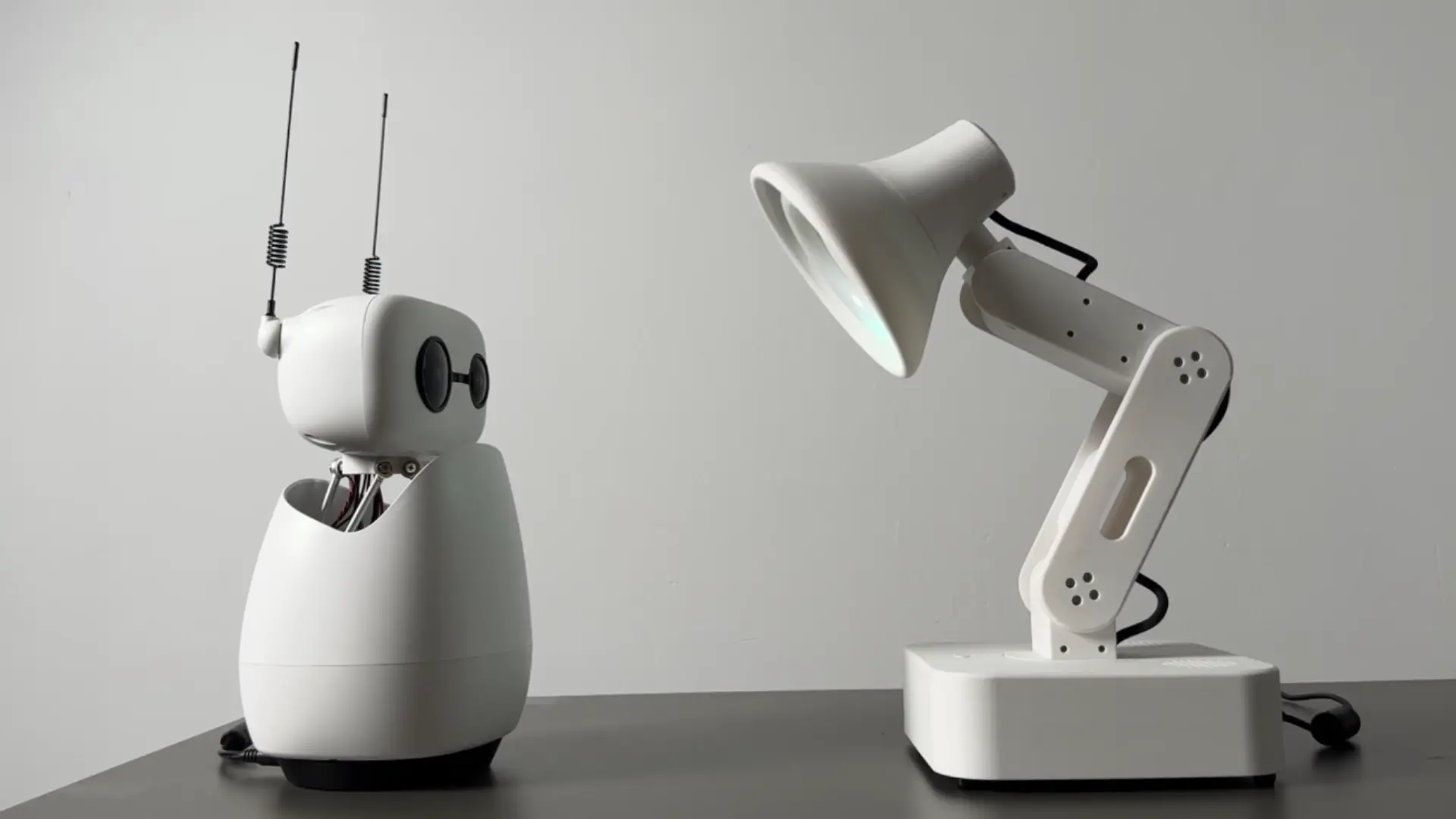
That is the layer we work on. Autonomous OS is one operating system that runs across different robot bodies, so a skill you write once works on any body with the hardware for it. It runs on the Autonomous Lamp and on Pollen's Reachy Mini today, and we filmed it: our OS driving a Reachy Mini, and a Reachy, a Lamp, and an Intern all on the same OS at once. When Microduck launched, we said our OS family is ready to welcome it too.
To be straight about what runs today: the Lamp and the Reachy Mini are live on the OS now. Microduck has legs, and legged robots need a motion layer we are still building, the same one our robot-dog port is working out. So the duck is welcomed, not running yet.
The point holds either way. The body you buy matters less every month. The brain you run on it is what turns a robot that acts into a robot that helps, and that is where a robot stops being a demo and starts being useful.
FAQs
What is the Microduck?
Microduck is a 25 cm open-source robot duck from Pollen Robotics and Hugging Face. It walks, sits, grabs small objects with its beak, gets back up after falling, and can roller-skate. It is built to move and to learn new behaviors, and it chirps instead of speaking. It costs $399 as a pre-order.
How much does the Microduck cost?
Microduck costs $399 as an introductory pre-order price, before tax and shipping, sold directly through Pollen Robotics. It sold out its first delivery window fast, and new orders now face a wait of several months. Prices and lead times change, so check the official Pollen store for the current number before ordering.
Is the Microduck worth it?
Microduck is worth it if you want to learn how robots learn to move, on real hardware, for the lowest price around. It suits students, teachers, and developers. It is not worth it if you want a robot that talks or does tasks, because Microduck only walks, grabs, and learns, and communicates in chirps.
Can you teach the Microduck new tricks?
Yes, and that is the whole point. Every behavior is a policy you train in a simulator, on your computer or in the cloud, then load onto the robot. It ships with seven moves, but you can retrain those or build new ones, and share what you make, since the software stack is open.
Is the Microduck open source?
Microduck is open-source software but not open-source AI robot hardware. Its SDK, simulator, and reinforcement-learning training code are all public on GitHub under a permissive license. The mechanical and electronic design files are closed, so you cannot build your own body. You get an open brain inside a closed shell.
Does the Microduck talk?
No, Microduck does not use words. It communicates through creature-like chirps, using its built-in speaker, and each robot gets its own permanent audio identity the first time it powers on. So your duck keeps the same voice for its whole life, and no two ducks sound exactly alike.
Conclusion
Microduck is one of the most charming robots to launch in a while, and it earns the hype for one real reason: it made a walking, learning robot cost less than a phone. Go in knowing what it is, though. It is a physical AI testbed for people who want to teach a robot to move, not a helper that does your tasks.
If that is what you want, it is a lot of robot for the money. And it is a sign of where things are going, where the body gets cheap and the software you run on it becomes the whole point.