What Is Physical AI? Meaning, Examples, and Robots

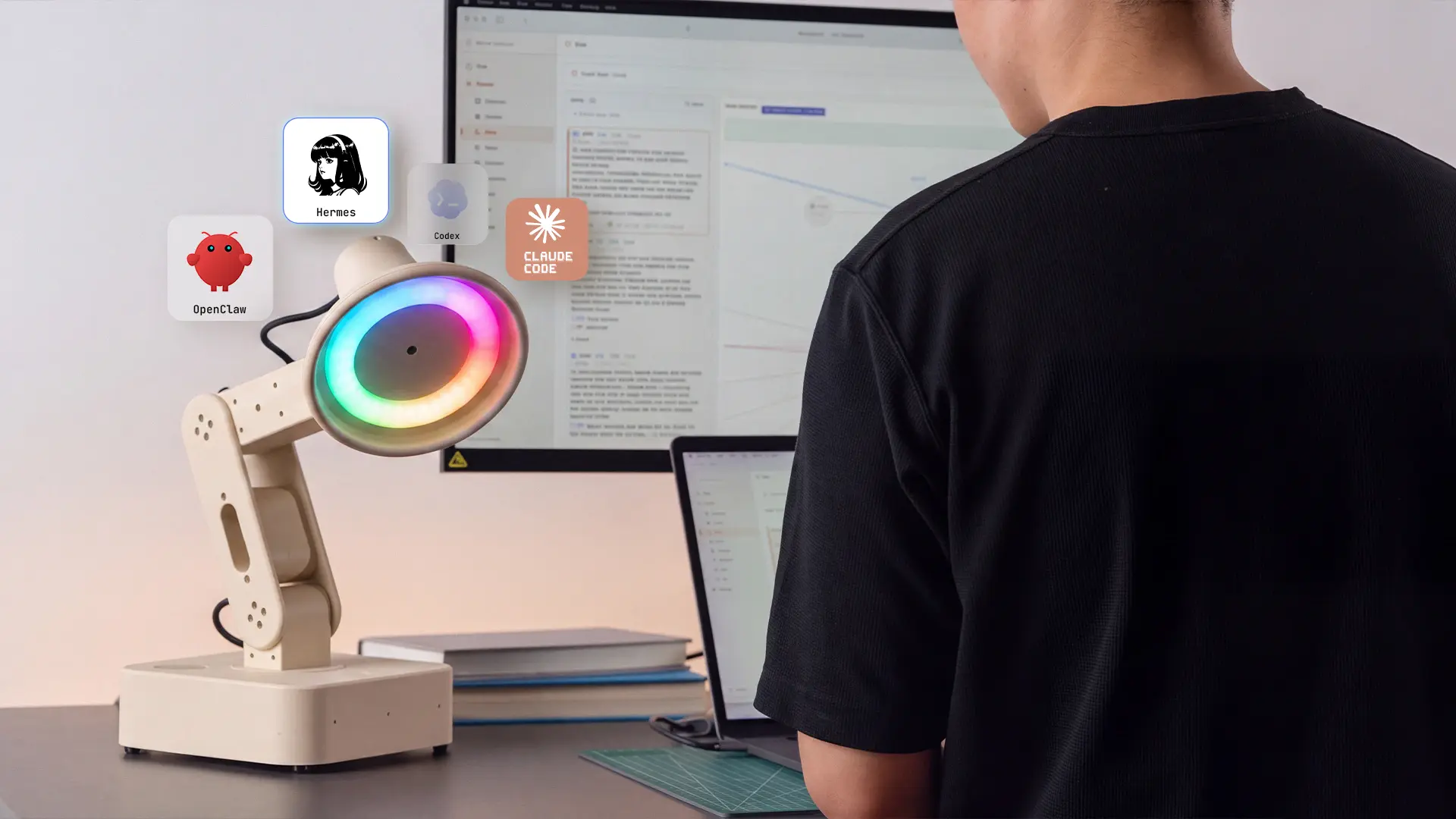
Physical AI is artificial intelligence that lives in a body and acts in the real world, instead of staying on a screen. It is the shift from AI you type at to AI that can see, move, and do things in the room with you. The term has exploded because robots are finally pairing real intelligence with real bodies, which explains why your next robot might actually be useful rather than just cute. Here is what physical AI means, how it works, and where you will meet it.
What physical AI actually means
Physical AI is AI that senses and acts in the physical world through a body, using cameras, microphones, and motors rather than only text and pixels. The clearest way to understand it is to break down the parts.
From bits to atoms
The usual way to describe physical AI is that it moves AI from the world of bits to the world of atoms. Ordinary AI produces information: a sentence, an image, a line of code. Physical AI produces action: a movement, a grip, a task completed in a real space. To do that, an AI model is joined to sensors that let it perceive and to motors and controls that let it act, so its decisions have physical consequences.
The perceive, reason, act, learn loop
Underneath, physical AI runs a simple loop. It perceives its surroundings through sensors, reasons about what is happening, acts through its body, and then learns from how that action turned out. A chatbot answers a question on a screen and stops there. A physical AI system looks at a room, understands it, does something, and gets a little better for next time. That closing of the loop, from sensing to acting to learning, is what separates it from software that only talks.
Robots before and after physical AI
Robots existed long before physical AI, but they were not intelligent. A factory arm welded the same seam a thousand times a day, and an early robot vacuum followed fixed rules, because their behavior was scripted for one narrow job in a controlled space. Physical AI changes that. A robot with a modern model has a rough common sense about objects and space, so it can handle situations it was never explicitly programmed for. The machine moves from following a script to figuring things out.
Physical AI vs regular AI
The difference between physical AI and regular AI is the body. Regular AI works entirely with text and pixels on a screen, while physical AI is wired to the world through sensors and motors, so it can sense a real environment and change it.
Regular AI | Physical AI | |
Where it works | On a screen, in software | In the physical world, through a body |
How it senses | Data you give it | Cameras, microphones, and sensors |
What it produces | Words, images, code | Action: movement and completed tasks |
Cost of a mistake | Low, discard and retry | Real, it can knock the cup over |
Everyday example | Chatbot, image generator | Robot, self-driving car |
That last row is the important one. Words on a screen can be wrong at no real cost, but a robot that misjudges a cup will knock it over. Acting in the real world raises the stakes, which is why physical AI needs different training and testing than a pure software model does.
Embodied AI vs physical AI: are they the same?
Embodied AI and physical AI mean nearly the same thing, with a small difference in emphasis. The short version is that embodied AI is the research idea and physical AI is the broader, product-facing label.
Embodied AI | Physical AI | |
What it stresses | Intelligence is shaped by having a body | AI that senses and acts in the world |
Where you hear it | More in research and academia | More in products and industry |
Scope | The body and its environment | Robots, vehicles, factories, and more |
In everyday use they overlap heavily, and most people reach for physical AI as the umbrella term. If you see either phrase, assume they point at the same shift:
intelligence that acts, not just answers.
Why physical AI is happening now
Physical AI is taking off now because several things that used to hold it back broke open at the same time. For years, robots were either factory arms running fixed scripts or toys with canned tricks, and neither was really intelligent. Four changes flipped that.
- Better AI models: modern vision and language models give a robot a rough common sense about objects and space, so it does not need to be programmed for every situation.
- Better simulation: robots can now learn inside realistic virtual worlds before they ever touch reality, which is faster and safer.
- More computing power: the chips and data centers needed to train all this finally exist at scale.
- Better hardware: cheaper sensors, lighter parts, and on-robot chips make capable robots affordable, even for small teams.
The momentum is real enough that NVIDIA's CEO, Jensen Huang, who helped popularize the term, has called this the ChatGPT moment for robotics. Whether or not that holds, the pieces are clearly in place.
How physical AI learns
Physical AI usually learns in simulation first, then in the real world. Because collecting real robot data is slow and expensive, teams build a virtual copy of the task, a kind of digital sandbox, and let the AI practice there thousands of times.
Inside that sandbox, the robot tries something, gets a high score when it does the task well, and a low one when it fails. Over many rounds it keeps the behaviors that work, a process called reinforcement learning. The virtual world is deliberately varied, with different lighting, surfaces, and clutter, so the robot never sees the same scene twice and does not just memorize one setup.
Once it is good enough in simulation, it moves to the real world, where it is fine-tuned on the messy details no sandbox fully captures. This back and forth, from simulation to reality and back, is how a physical AI system gets reliable enough to trust.
Physical AI examples: where you will see it
Physical AI already shows up across a huge range of sizes and settings. Some common examples of physical AI:
- Self-driving cars and driver-assist features that read the road and steer
- Warehouse robots that pick, sort, and move stock on their own
- Factories that sense conditions and adjust themselves
- Surgical and medical robots that assist precise procedures
- Desk and home robots that see you and run everyday skills
Most coverage focuses on the industrial examples, but the newest one is arriving on your desk.
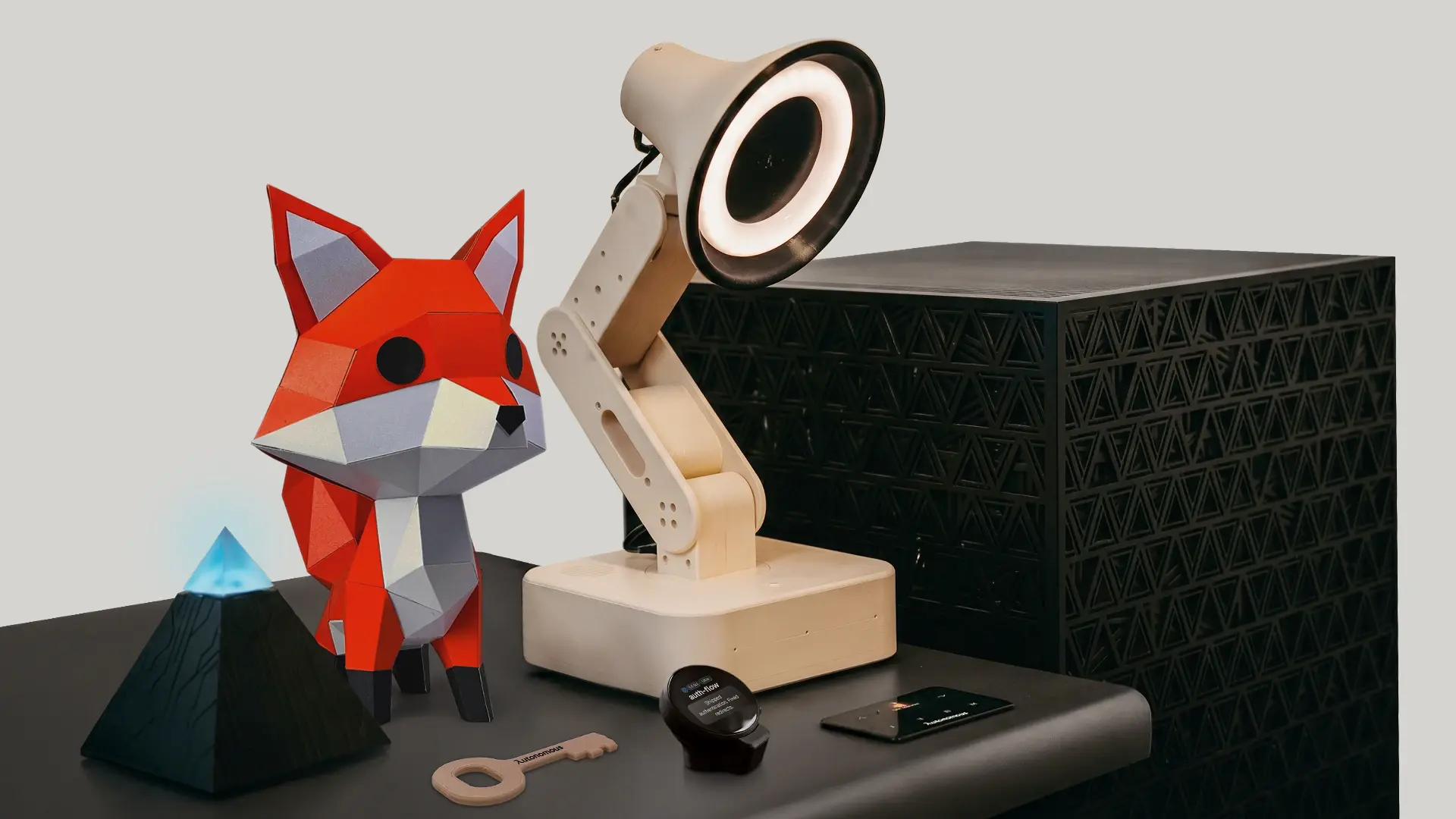
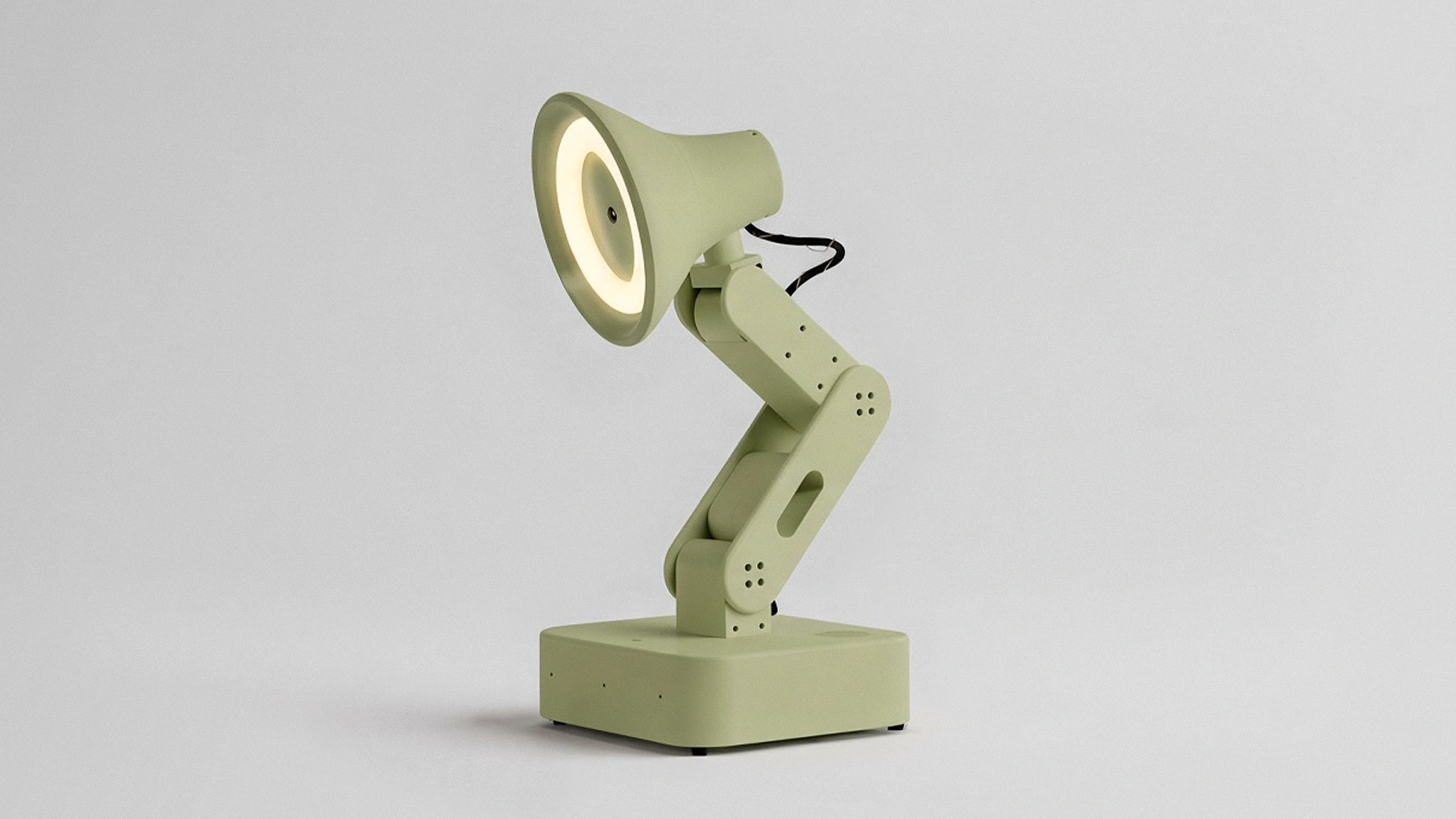
The Autonomous Lamp is one desk-sized example, a robot lamp that runs an AI agent and carries out skills you can add in plain language. The point is not any single product; it is that a small robot on a desk can now do things, which is genuinely new.
Why physical AI matters
Physical AI matters because it moves AI from advising you to acting for you. Software AI can draft an email, but physical AI can be the thing that also notices you left, keeps an eye on your space, and picks up a task without being asked each time. It is the point where an agent stops being a tab and becomes part of the room.
There is a practical upside too. Because the intelligence is software, the same robot can get better over time as models improve, without you buying new hardware. That is a different relationship with a machine than we are used to, and it is why so many people are paying attention to robots again.

FAQs
What is physical AI in simple terms?
Physical AI is artificial intelligence that has a body and acts in the real world, using sensors and motors instead of only a screen. It can see, move, and do things, so its output is action rather than just text. Robots are the clearest example.
What is the difference between physical AI and regular AI?
Regular AI, like a chatbot, works with text and images on a screen. Physical AI is connected to the world through cameras, microphones, and motors, so it can sense a real environment and act in it. The underlying intelligence is similar; the body is what is new.
Is embodied AI the same as physical AI?
Nearly. Embodied AI is the research idea that intelligence comes from having a body and interacting with an environment. Physical AI is the broader term for AI that operates in the physical world. In everyday use they overlap and are often used interchangeably.
Why is physical AI a big deal now?
Because better AI models, realistic simulation, cheap computing, and improved hardware arrived together, so robots can run real intelligence instead of fixed scripts. That turns a robot from something that moves on cue into something that senses, decides, and acts.
What are examples of physical AI?
Self-driving features, warehouse and factory robots, and the new wave of desk and home robots that run AI agents are all physical AI. On a desk, it looks like a small robot that sees you and carries out skills rather than playing canned animations.
What is a physical AI robot?
A physical AI robot is a robot that runs physical AI: it senses its surroundings, decides what to do, and acts, instead of following a fixed script. That covers warehouse and factory robots, and newer desk robots that can see you and run everyday skills on their own.
How does physical AI learn?
It usually trains in simulation first, practicing a task thousands of times in a varied virtual world and keeping the behaviors that score well. Then it moves to the real world for fine-tuning, looping between simulation and reality until it is reliable enough to use.
Conclusion
Physical AI is the moment intelligence steps off the screen and into the room. It is why robots are suddenly interesting again: not because they move, which they always did, but because they can finally sense, decide, and act in the real world. Whether it arrives as a car, a warehouse machine, or a small robot on your desk, the shift is the same. AI is getting a body, and that changes what we can ask a machine to do.