What Should CO2 Levels Be Indoors? 600 to 1,000 ppm

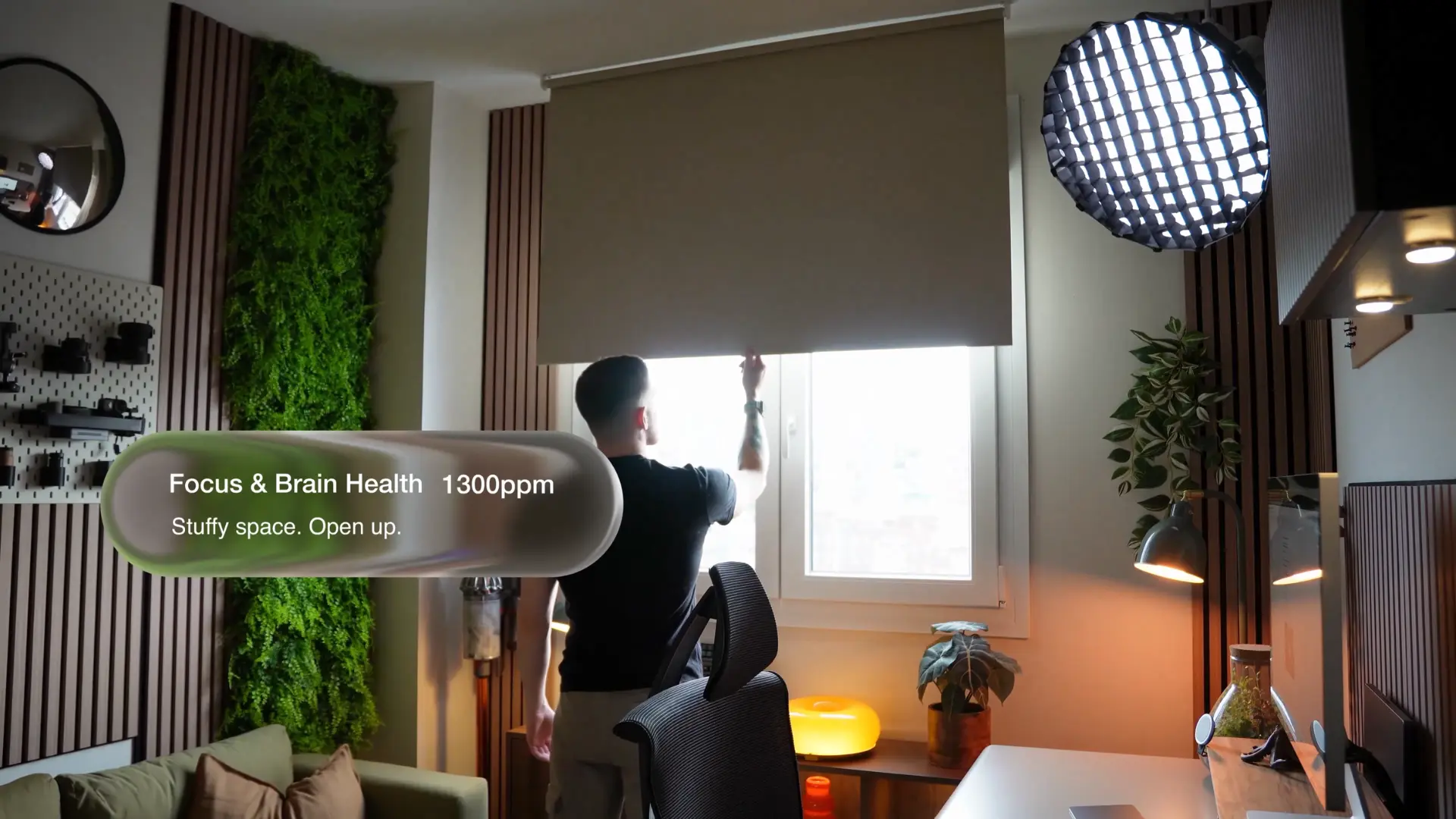
Outdoor air sits around 430 ppm of carbon dioxide. A normal occupied room reads between 600 and 1,000 ppm. If you have just bought a monitor and want to know what should CO2 levels be in a room you actually work in, that is the honest baseline for indoor CO2 levels. Below: the ranges, what pushes the number up, how to bring it down, and why the 1,000 ppm rule everyone quotes turns out to be a misreading of a 19th-century study.
What should CO2 levels be indoors?
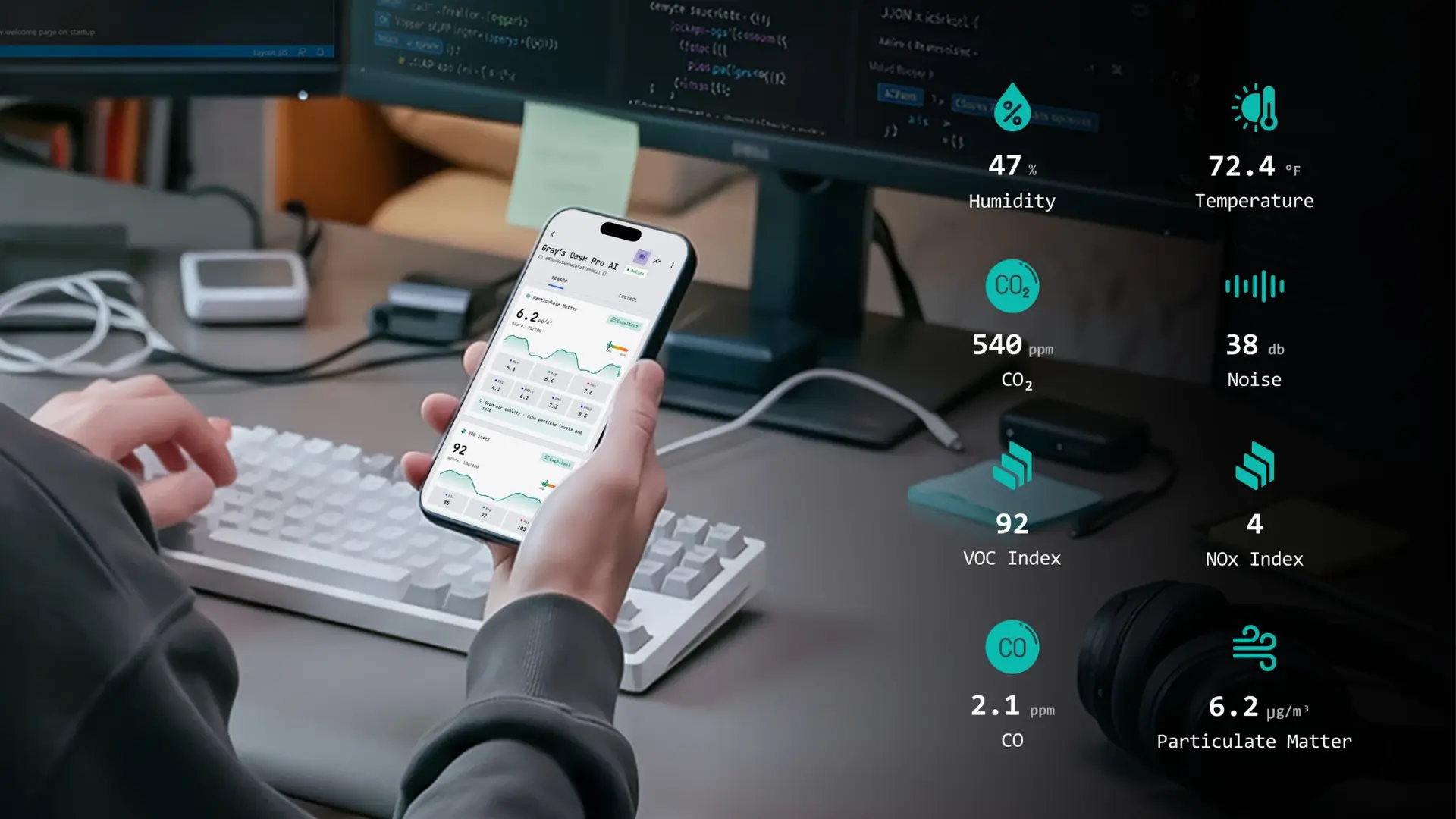
Indoor CO2 in an occupied room typically runs between 600 and 1,000 ppm, against an outdoor baseline of about 430 ppm. The gap between those two numbers is the part you control, because almost all of it is air that people in the room have already breathed.
Here is what you will actually see on a monitor.
Reading | What it usually means |
|---|---|
400 to 450 ppm | Outdoor air, or a room with a window open |
600 to 800 ppm | Occupied room with decent air exchange |
800 to 1,200 ppm | Occupied room, door closed, ventilation is limited |
1,200 to 2,000 ppm | Closed room with more people or more hours than the air exchange can keep up with |
Above 2,000 ppm | Air is being recirculated with very little fresh supply |
The NOAA Global Monitoring Laboratory measured 429.12 ppm at Mauna Loa in July 2026, which is why 430 is the number to anchor on rather than the 400 you will still see quoted on older pages. Your local outdoor reading can run higher near traffic.
Notice that the table describes what each reading means rather than naming one as acceptable and another as too high. That is deliberate, and it is not hedging. No standards body publishes an acceptable indoor CO2 level, which is the part of this topic almost every other page gets wrong.
If you came here looking for safe CO2 levels in ppm, the honest answer splits in two. Occupational limits are real and set by regulators. Comfort and alertness are far less settled.
The regulated numbers:
Limit | Value | Set by |
|---|---|---|
8-hour recommended exposure | 5,000 ppm | NIOSH |
8-hour permissible exposure | 5,000 ppm | OSHA |
Short-term limit | 30,000 ppm | NIOSH |
Immediately dangerous to life and health | 40,000 ppm | NIOSH |
These sit about ten times higher than anything a closed home office produces. A safe CO2 ppm figure borrowed from workplace regulation is not a useful test for a house. Indoor CO2 levels in a home are a ventilation question, not a poisoning question.
The 1,000 ppm rule is not what you think it is
ASHRAE does not set a 1,000 ppm indoor CO2 limit, and it has not for close to thirty years. This is the single most repeated error on this topic, and correcting it changes how you should read your own monitor.
ASHRAE's own position document on indoor carbon dioxide, published 12 February 2025, puts it plainly: "Despite many statements to the contrary, ANSI/ASHRAE Standard 62.1 does not provide a limit value for indoor CO2." The same document adds that "ASHRAE does not recommend a specific CO2 concentration as a metric of infection risk or ventilation adequacy."
A NIST paper by Andrew Persily, titled "Quit Blaming ASHRAE Standard 62.1 for 1000 ppm CO2," traces how the misattribution spread. No current ASHRAE standard contains an indoor CO2 limit.
So where did 1,000 come from? ASHRAE traces it to Max von Pettenkofer, a 19th-century researcher who used it as a rough marker of whether a room was ventilated at all. Never a health threshold. ASHRAE is blunt about the result: "This misunderstanding of the significance of 1000 ppmv has resulted in many confusing and erroneous conclusions about IAQ and ventilation in buildings."
So what does 1,000 ppm actually mean? It is a reasonable signal that a room is getting less fresh air than it could. It is not a safety line, nothing happens to you when you cross it, and a monitor that turns red at 1,001 is making a design choice, not reporting a medical event.
On whether moderate CO2 dulls your thinking, the evidence is mixed and we are not going to pretend otherwise. ASHRAE's review found the evidence "inconsistent" at commonly observed indoor concentrations. Six studies reported an association around 1,000 ppm. Others found nothing. Anyone telling you the science is settled in either direction is overselling it.
What is not in dispute: rising CO2 tells you air is not being exchanged. Whatever else is in that room, from cooking fumes to off-gassing from new furniture, is building up alongside it. That is the useful reason to watch the number.
What are the symptoms of high CO2 in a house?
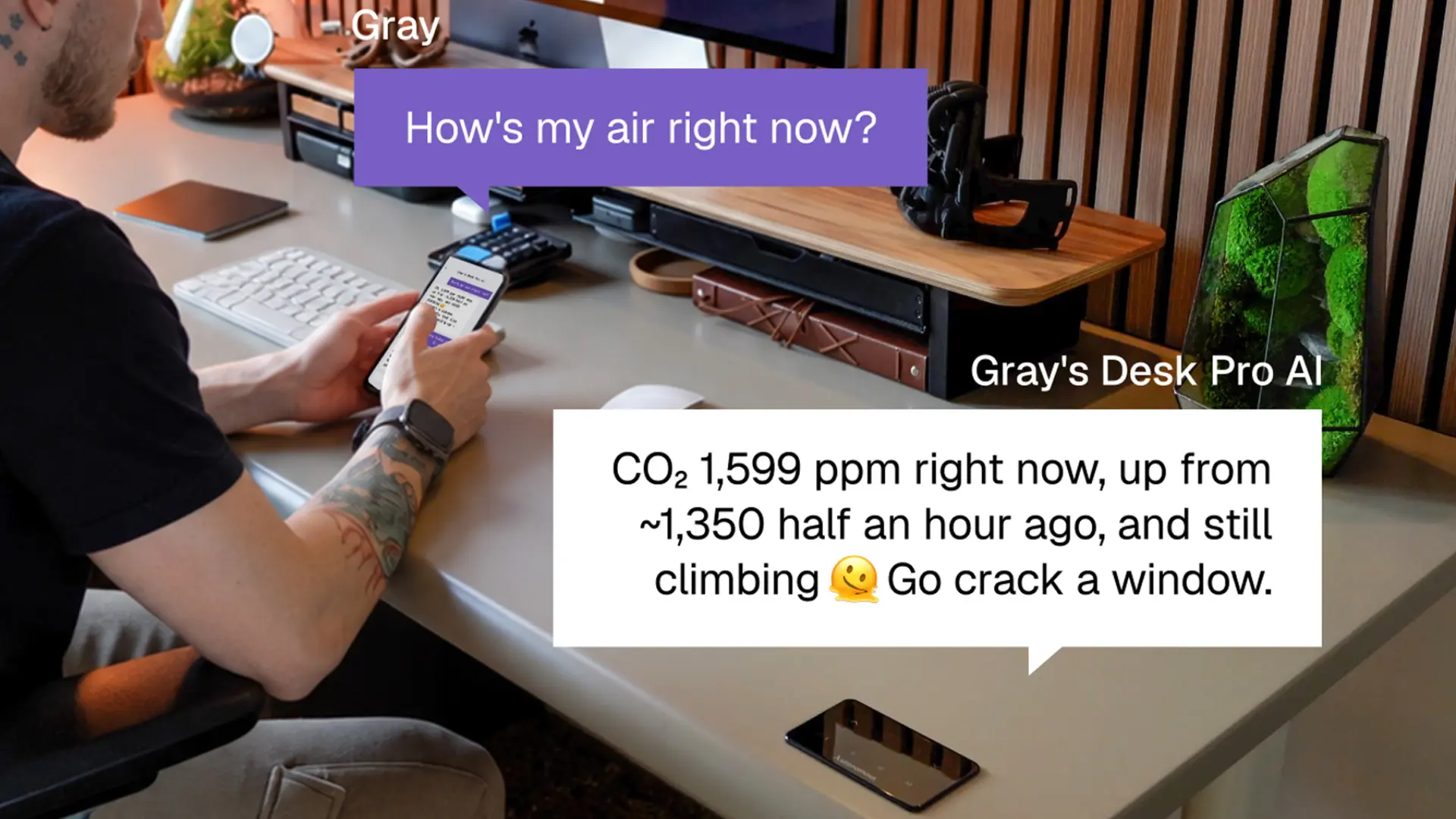
At the levels a normal home reaches, most people notice stuffiness and mild drowsiness rather than anything sharper, and whether those feelings track CO2 specifically is one of the genuinely unsettled questions in this field. The symptoms that are well documented appear at concentrations far above what a house produces.
Here is the split that most pages blur together.
Range | What is reported | How likely in a home |
|---|---|---|
Below 2,000 ppm | Stuffiness, possibly mild drowsiness. ASHRAE calls the evidence for direct effects inconsistent | Almost every home and office sits here |
2,000 to 5,000 ppm | Headaches, sleepiness, poor concentration | Needs a small sealed room, several people and long hours. More typical of a packed meeting room or a vehicle |
Above 5,000 ppm | Past the NIOSH and OSHA eight-hour limits | Industrial and confined-space territory, not domestic |
Above 40,000 ppm | NIOSH classes it immediately dangerous to life and health | Not reachable in a normal building |
Two things worth knowing before you blame a symptom on CO2.
Carbon dioxide is odourless, so you cannot smell it. The stale smell of a stuffy room comes from what builds up alongside it: body odour, cooking, and materials releasing gas.
If you have a headache in a house with a gas appliance, rule out carbon monoxide first. Different gas, genuinely dangerous, needs its own alarm.
What can cause CO2 levels to be high in a house
People are the main source of high carbon dioxide in a house, and everything else is a distant second. An adult at rest exhales roughly 20 litres of CO2 an hour, and in a closed room with limited air exchange that accumulates faster than most people expect.
The common causes, in rough order of how often they turn out to be the answer:
- Occupancy against room size.
Two people in a small closed bedroom overnight beat one person in an open-plan living room every time. This is why bedrooms are the worst rooms in most houses.
- A closed door.
The most underrated variable. Closing an interior door is usually the difference between a reading around 800 and one above 1,500.
- Tight, well-sealed construction.
Newer and retrofitted homes leak less air. Good for heating bills, bad for passive ventilation. An older draughty house often reads lower for reasons nobody designed.
- Recirculating HVAC.
Many residential systems move air around without bringing much in from outside. The air feels fresh because it is moving, and the CO2 keeps climbing.
- Gas appliances and anything with a flame.
Hobs, unvented heaters, wood stoves and candles all produce CO2 as they burn.
- Small sealed spaces.
A converted garage, a van or a car all climb fast: very little volume per person, very little air exchange.
Two follow-ups that come up constantly.
Gas appliances matter for a second and more serious reason. Incomplete combustion also produces carbon monoxide, a different gas and a genuine hazard. A CO2 reading tells you nothing about it, and no CO2 sensor replaces a certified carbon monoxide alarm.
A CO2 sensor in a car exists for the same reason as one in a shed. Cabin air on recirculate with two or more people climbs quickly, and some newer vehicles switch to fresh air automatically when the level rises.
Does CO2 rise or fall in a house? Carbon dioxide is denser than air, so people expect it to pool at floor level. At indoor concentrations it does not. Ordinary air movement from people walking about, doors opening and heating running mixes it through the room. Sensor height is not what matters. Proximity to the people breathing is.
How to lower CO2 levels in a home
Opening a window is the fastest way to lower CO2 in a room, and in most homes it drops the reading within minutes. Everything else below is a variation on the same idea: how to ventilate a room well enough that outdoor air replaces what you have already breathed.
What works, cheapest first
- Open a window, even briefly.
A few minutes of cross-ventilation moves more air than an hour with a fan running. Two openings on different walls beat one, because you get airflow rather than diffusion.
- Open the interior door.
Free, instant, and it fixes more small-room readings than any purchase will.
- Run an extractor fan.
Bathroom and kitchen extractors pull stale air out and draw replacement air in from elsewhere in the house.
- Reduce occupancy in the smallest rooms.
Not always practical, but the problem scales with people per cubic metre.
- Add mechanical ventilation if the building is tight.
Heat recovery ventilation brings outdoor air in continuously and recovers most of the heat. Real cost, real intervention, and the right answer for a sealed home where open windows all winter are not viable.
What does not work, despite being sold as if it does
- An air purifier.
Purifiers filter particles and some capture VOCs, but a standard HEPA unit does not remove CO2. If your reading is high and you buy one, the number will not move. It is still genuinely useful for other pollutants.
- Air conditioning.
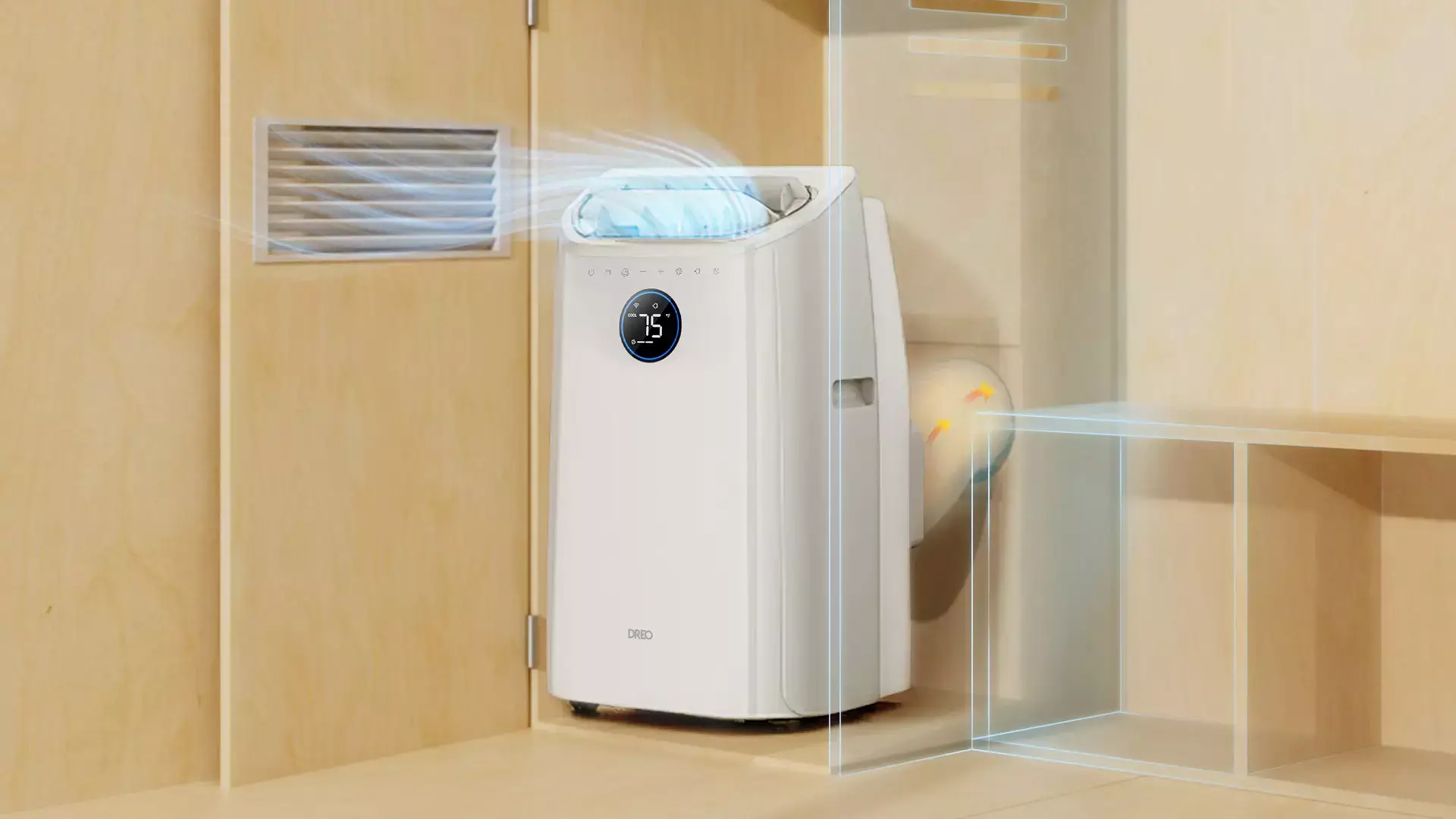
Most residential AC cools and recirculates the air already in the room. Unless the unit has a dedicated fresh-air intake, running it harder makes the room more comfortable and leaves the CO2 exactly where it was.
- Houseplants, at any realistic scale.
The quantity needed to offset one adult's respiration is far beyond what fits in a room.
Measured or estimated: why two monitors disagree
A real CO2 sensor measures the gas directly using non-dispersive infrared. A cheap one usually reports eCO2, an estimate inferred from a VOC sensor, and that is why two monitors in the same room disagree.
The difference shows up fast. Use hand sanitiser or spray cleaning product near an eCO2 device and it can spike into the thousands while actual CO2 has not moved. Useful as a general air-quality signal. Not a CO2 reading.
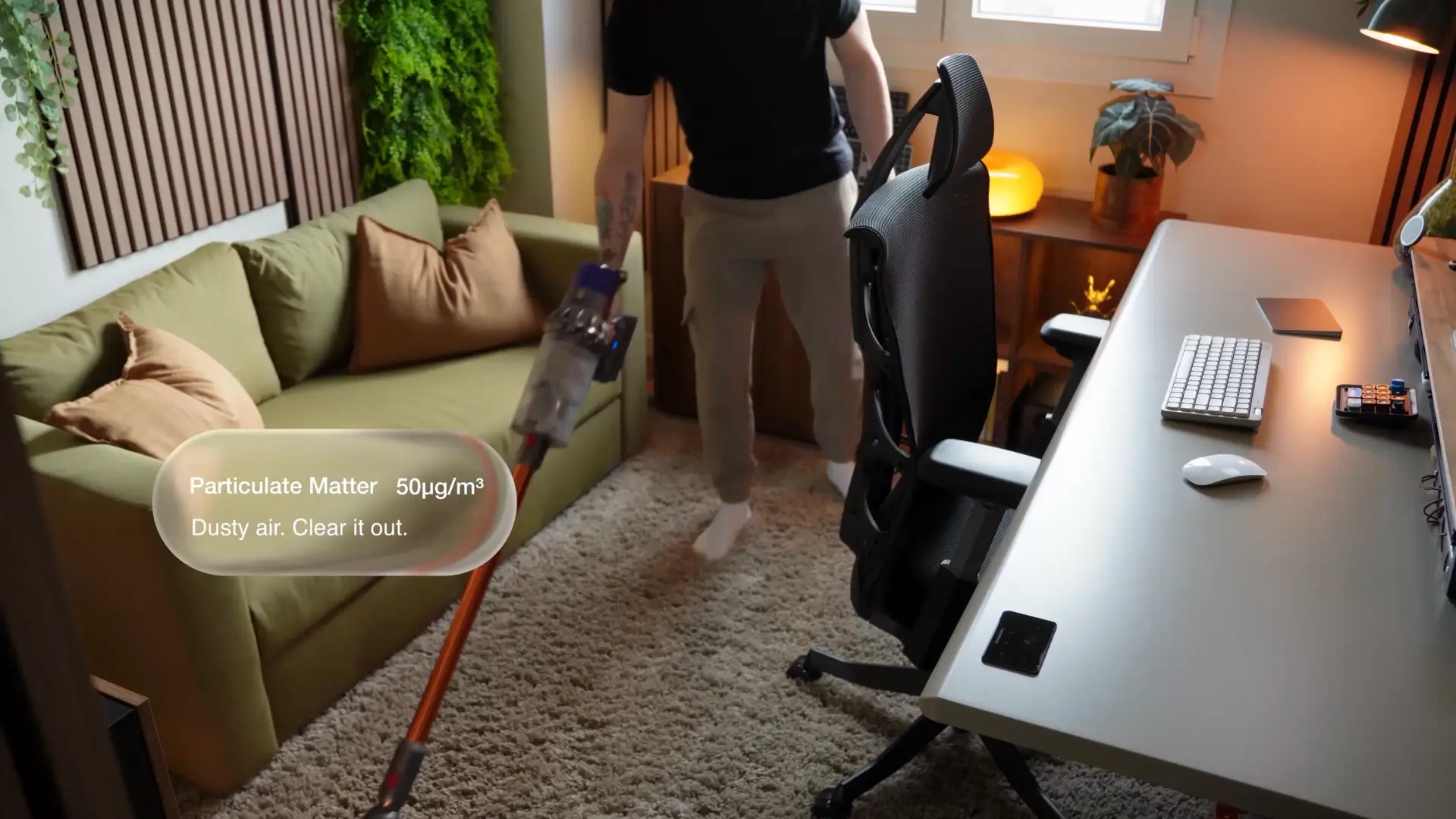
The Autonomous Desk Pro AI measures rather than estimates:
Component | What it does |
Sensirion SCD41 | CO2 by photoacoustic NDIR, measured directly |
Sensirion SEN55 | VOC and particulates on a separate sensor, so VOC never feeds the CO2 figure |
mmWave radar plus time-of-flight | Tells sitting at the desk from walking past, so readings tie to hours you were there |
Sound level | Computed on-device, no audio recorded |
Output | 13 readings total, 8 scored in the app |

Placement matters as much as the sensor. CO2 is highest closest to the person exhaling it, so a desk-mounted reading describes what you are breathing while a hallway sensor describes the building.
Buying something else? Ask one question: NDIR-measured or VOC-estimated. Plenty of inexpensive devices do not say, and that silence is usually the answer.
.webp)
Frequently asked questions
What should CO2 levels be in a room?
An occupied room typically reads 600 to 1,000 ppm against an outdoor baseline near 430 ppm. Below 800 ppm suggests decent air exchange. Above roughly 1,200 ppm suggests the room is not getting much fresh air. No standards body sets a specific indoor limit.
What is a good CO2 level in a house?
A good indoor CO2 level is one that stays within a few hundred ppm of outdoor air, so roughly 600 to 800 ppm in most homes. The number matters less as a threshold and more as a trend. A room climbing steadily through the day is telling you ventilation is not keeping up.
Is 1,000 ppm CO2 dangerous?
No. ASHRAE states that Standard 62.1 contains no indoor CO2 limit and that it does not recommend a specific concentration as a ventilation metric. The 1,000 ppm figure traces to 19th-century work by Pettenkofer as a ventilation marker. Occupational limits sit at 5,000 ppm.
What CO2 level causes drowsiness or headaches?
Headaches, sleepiness and poor concentration are commonly described between roughly 2,000 and 5,000 ppm. Below 2,000 ppm the evidence is inconsistent, and ASHRAE says so directly. Most homes never reach the higher range without a small sealed room and several occupants.
Does air conditioning remove CO2 from a room?
No. Most residential air conditioning cools and recirculates the air already inside the room. Without a dedicated fresh-air intake it changes the temperature and leaves the CO2 exactly where it was. Only exchanging air with outdoors lowers the reading, so a window or an extractor does what the AC cannot.
What can cause CO2 levels to be high in a house?
People are the main cause, since an adult exhales about 20 litres of CO2 an hour. Closed doors, tight modern construction, recirculating HVAC and gas appliances all add to it. Small rooms with more than one occupant reach high readings fastest.
How do you reduce CO2 in a bedroom?
Leave the door ajar. A closed bedroom is usually the highest reading in a house because it combines the smallest air volume with the longest occupancy. Open a window before bed if overnight ventilation is unappealing. A fan makes a room feel less stuffy at night without changing the CO2.
How do you ventilate a room without windows?
Leave the door open and put a fan in the doorway pointing out, which draws replacement air in around it. Open a window in the adjoining room, since the space can only be as fresh as what it draws from. An inline extract fan is the real fix for daily use.
How do you know if your room has too much CO2?
You cannot tell without measuring, because carbon dioxide is odourless and colourless. A stuffy feeling is a hint, not a reading. Use a monitor with a true NDIR sensor, and place it near where you sit or sleep rather than in a hallway, since proximity to people is what moves the number.
Do CO2 monitors detect carbon monoxide?
No. Carbon dioxide and carbon monoxide are different gases requiring different sensors, and a CO2 reading tells you nothing about carbon monoxide. Carbon monoxide is lethal and undetectable by smell. Every home with a combustion appliance needs a certified carbon monoxide alarm.
Conclusion
Indoor CO2 levels are a ventilation signal, not a health verdict. An occupied room sitting between 600 and 1,000 ppm against a 430 ppm outdoor baseline is doing fine, and the 1,000 ppm line that gets quoted everywhere is a misreading of a 19th-century ventilation marker rather than a safety threshold. What the number is genuinely good for is telling you when a room has stopped exchanging air, because everything else in that room is accumulating at the same time.
If you want to act on it rather than worry about it, open the door to the room you work in and watch what the reading does over the next ten minutes. That single test tells you more about your space than any chart.
References
- ASHRAE. Position Document on Indoor Carbon Dioxide. 12 February 2025. ashrae.org
- Persily, A. Quit Blaming ASHRAE Standard 62.1 for 1000 ppm CO2. Proceedings of Indoor Air 2020, the 16th Conference of the International Society of Indoor Air Quality and Climate, Seoul. National Institute of Standards and Technology. nist.gov
- National Institute for Occupational Safety and Health. Carbon Dioxide, Immediately Dangerous to Life or Health Concentrations. Centers for Disease Control and Prevention. cdc.gov
- NOAA Global Monitoring Laboratory. Trends in Atmospheric Carbon Dioxide, Mauna Loa monthly mean, July 2026. gml.noaa.gov