How to Remove Office Chair Wheels in 5 Minutes

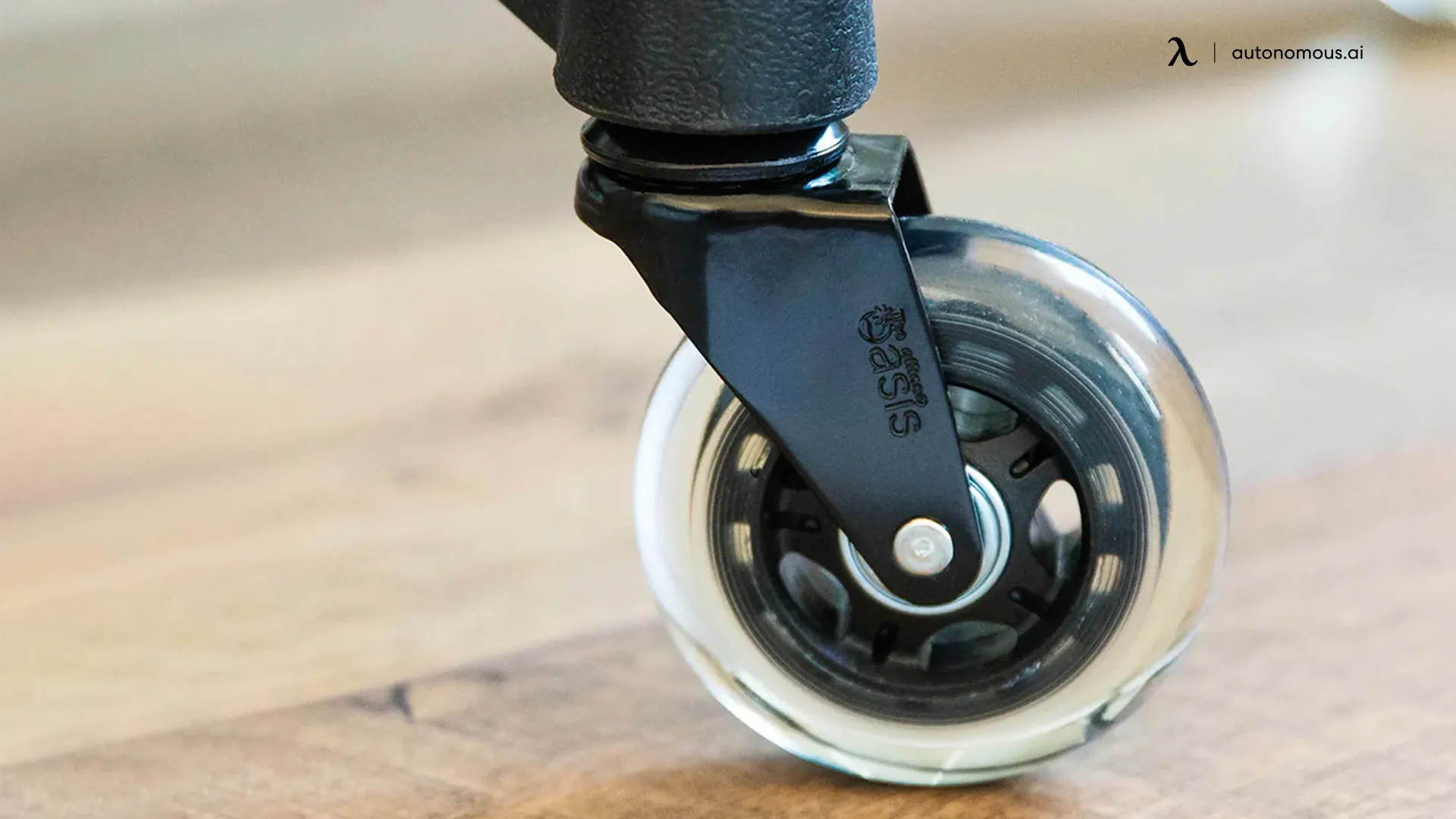
Flip the chair upside down. Grab a wheel firmly with both hands and pull straight out. About 95% of office chair wheels will pop off this way - they use a grip-ring stem that holds in place by friction and releases under direct pull. If your wheel doesn't budge, it's either threaded (twist counterclockwise) or stuck with rust and debris (lubricate, wait, try again).
That's the short version. Below: the full process, the exact stem measurements you need before buying replacements, and what to do when the wheel won't come out.
What you'll need
- A towel or blanket (protects the floor and the chair when it's upside down)
- Work gloves or an old rag (improves grip on the wheel)
- A flathead screwdriver (only if the wheel is stuck)
- WD-40 or similar lubricant (only for stuck casters)
- A rubber mallet (optional, for stubborn cases)
Time: 5 minutes for all five wheels on a standard chair. Add 10–20 minutes per stuck wheel.
Step-by-step
1. Flip the chair onto a towel.
Set a folded towel or blanket on the floor. Turn the chair upside down so the wheels point up and the seat and backrest support the weight. The towel protects both the chair and the floor.
2. Identify your stem type.
Look at one wheel where it meets the base. There are two common types:
- Grip-ring stem (95% of office chairs). Cylindrical stem with a small metal ring near the top that snaps into the socket. Pulls straight out.
- Threaded stem. Looks like a bolt that screws into the base. Unscrews counterclockwise.
If you're not sure, try pulling first. If the wheel doesn't move at all under firm pull, try twisting counterclockwise.
3. Remove a grip-ring caster.
Grip the wheel with both hands close to where it enters the base. Pull straight out with steady force - not jerky tugs. The wheel should pop free in 2–5 seconds. A work glove or old towel wrapped around the wheel improves grip.
4. Remove a threaded caster.
Hold the chair leg with one hand and turn the wheel counterclockwise. It should unscrew like a bolt. If it's tight, a pair of pliers around the wheel hub gives you leverage - but turn slowly to avoid stripping the threads.
5. Repeat for the remaining wheels.
All five wheels come off the same way. If the first wheel was easy and the fourth is stuck, the issue is rust or debris in that socket - not the stem type.
When a wheel won't come out
The grip-ring stem is held in place by friction and a small metal locking ring. Years of dust, hair, and corrosion can lock it in. Three escalating fixes:
Apply lubricant. Spray WD-40 (or any penetrating oil) where the stem meets the base. Let it sit 15–30 minutes. The lubricant works down the stem and dissolves the corrosion. Try pulling again.
Use a flathead screwdriver as a lever. Insert the screwdriver blade between the wheel hub and the chair base. Push the handle down gently to pry the wheel upward. Switch sides and repeat. The caster usually pops loose within a few attempts.
Heavy stuck cases. For wheels that have been in place for 10+ years on a chair stored in damp conditions, lubricate, let sit several hours, then use the screwdriver method. If the wheel still won't move, the stem may be corroded into the socket - replacement of the base, not just the wheel, may be the path forward.

What to measure before buying replacement wheels
Once one wheel is off, you can measure the stem. Two dimensions matter:
Measurement | Standard size | Why it matters |
Stem diameter | 7/16" (11 mm) | The stem must fit the socket exactly - too narrow and it falls out; too wide and it won't seat |
Stem length | 7/8" (22 mm) | Length determines whether the grip ring locks into the socket properly |
Wheel diameter | 2"–3" | Affects roll smoothness; carpet works better with 2.5"–3" |
The 7/16" × 7/8" combination is the standard for about 95% of office chairs sold in the US. If your chair is European or older than 20 years, measure to confirm - some chairs use 10 mm or 11 mm metric stems that look identical to imperial 7/16" but won't fit.
For wheel diameter, pick based on flooring:
- Hardwood, tile, laminate: soft polyurethane wheels (2"–2.5") to prevent scratching
- Low-pile carpet: 2.5"–3" hard-plastic wheels for smoother rolling
- Thick carpet: 3" wheels minimum, otherwise the chair sticks
Should you remove the wheels permanently?
Some users remove their wheels and don't replace them. Two common reasons:
1. The chair rolls too much.
Slanted floor, glossy surface, or just a preference for stability during focused work. The fix: glide stems (sometimes called "fixed casters" or "static feet"). These replace the wheels with a stationary disc that lets the chair stay put.
2. The wheels keep marking the floor.
Polyurethane caster replacements solve this without removing the wheels entirely. Cheaper and keeps the chair mobile.
Removing wheels permanently without replacements isn't recommended - the base is designed to roll, and a stationary base on a non-flat floor wobbles in ways the wheels were designed to absorb.
When the wheels aren't the real problem
If you've removed and cleaned the wheels and the chair still rolls badly, the issue is usually one of three things:
- Worn socket. The base's plastic sockets stretch over years. Even new wheels will sit loose. Time for a new base or a new chair.
- Bent or cracked base. Five-star bases crack at the spider joints under heavy use. Visible damage = replace the base.
- The chair itself is past its life. If you're replacing wheels on a 10-year-old chair and the lumbar is gone, the seat foam is flattened, and the tilt mechanism is sticky, the wheels aren't going to fix the underlying problem.
If you're at this point, an upgrade is the better economics than the third caster replacement on a chair that's worn out. The Autonomous ErgoChair Ultra 2 ships with a welded steel frame, lifetime warranty, and 2.36" casters built into a five-star aluminum base - the wheel-and-base combination that wears out on cheaper chairs is overbuilt here.

Frequently asked questions
How do you remove office chair wheels?
Flip the chair upside down on a towel, grip a wheel firmly close to the base, and pull straight out. Most office chairs (95%) use a grip-ring stem that releases under direct pull. For threaded stems, twist counterclockwise instead. If the wheel is stuck, apply lubricant and wait 15–30 minutes before trying again.
What size are office chair caster stems?
The standard office chair caster stem size is 7/16" diameter by 7/8" length - used on about 95% of office chairs sold in the US. Always measure your existing stem before buying replacements; some older or European chairs use metric sizes that look similar but won't fit.
How do I remove a stuck office chair wheel?
For a stuck office chair wheel, apply WD-40 or similar lubricant where the stem meets the base and wait 15–30 minutes. Insert a flathead screwdriver between the wheel hub and base, then gently pry upward while pulling the wheel. Repeat on the opposite side if needed. The caster usually pops loose within a few attempts.
Can I remove office chair wheels without tools?
Yes - about 95% of office chair wheels can be removed by hand using direct pull, with no tools needed. A work glove or old towel improves grip. Tools (screwdriver, WD-40) are only needed if the wheel is stuck from rust or debris.
Are office chair wheels universal?
About 95% of office chair wheels are universal at the 7/16" × 7/8" grip-ring stem size - replacement wheels at these dimensions fit most chairs across brands. The exceptions are threaded-stem chairs, European chairs using metric stems, and older or specialty chairs with proprietary mounts. Measure your stem before ordering.
Should I replace office chair wheels or buy a new chair?
Replace office chair wheels if the chair is under 5 years old, the base is undamaged, and the seat, lumbar, and tilt mechanism are still working. Replace the whole chair if multiple components have failed, if the base is cracked, or if the chair is past its warranty and showing wear in more than one area. New casters won't fix a worn-out chair.
What's the difference between grip-ring and threaded caster stems?
A grip-ring stem is a smooth cylinder with a small metal ring near the top that snaps into the socket - it pulls straight out. A threaded stem is shaped like a bolt and screws into the base - it unscrews counterclockwise. About 95% of office chairs use grip-ring stems; threaded stems are more common on wooden or antique chairs.
Bottom line
Removing office chair wheels takes five minutes if the chair has grip-ring stems and the casters are clean. Flip the chair, pull straight out, repeat. The stem size is almost always 7/16" by 7/8" - measure before buying replacements. If the wheels are sticky and the chair is showing other signs of wear, the casters probably aren't the real problem.