Does Standing Count as Exercise? The Real Answer
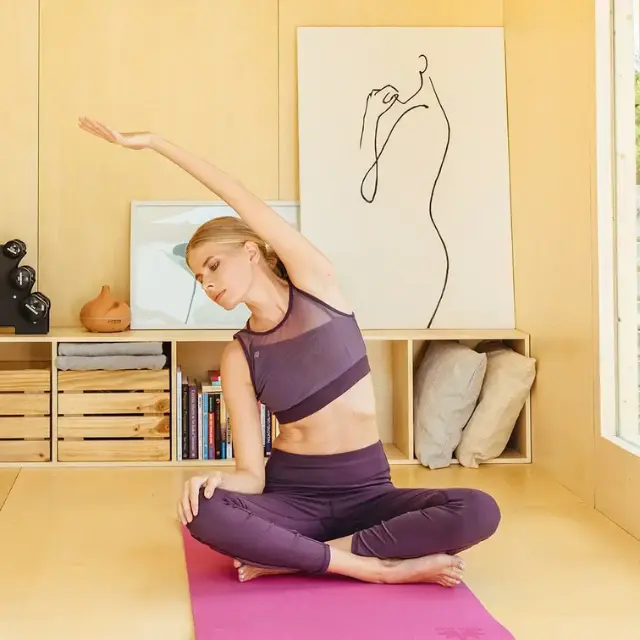

Standing does not count as exercise in the formal sense. Exercise means planned, structured activity that raises your heart rate, and standing does not reach that intensity. It sits just above sitting on the activity scale, as light movement rather than a workout. That does not make it pointless: standing beats sitting, cuts the time you spend sedentary, and is easy to build on. This guide covers what standing actually counts as, why it falls short of exercise, and how to make it more active.
Is standing exercise?
Standing is not exercise, but it is light physical activity. Exercise is usually defined as planned, structured, repetitive movement done to improve fitness, and it pushes your heart rate into a moderate or vigorous range. Standing keeps your muscles lightly engaged and your blood moving, but it does not raise your heart rate the way a walk, a run, or a workout does.
The clearest way to see the gap is intensity, measured in METs, a scale where sitting quietly is about 1. Standing sits around 1.5 to 2 METs, which counts as light activity. Moderate exercise, the kind health guidelines track, starts at about 3 METs, roughly a brisk walk. Standing simply does not reach that threshold, so it falls short of the definition of exercise.
Activity | Intensity (METs) | Counts as |
|---|---|---|
Sitting quietly | about 1.0 | Sedentary |
Standing still | 1.5 to 2 | Light activity |
Slow walking | 2.5 to 3 | Light to moderate |
Brisk walking | 3.5 to 5 | Moderate exercise |
Running | 7 or more | Vigorous exercise |
The table shows why the line matters. Everything at 3 METs and above builds fitness and counts toward exercise guidelines; standing, at 1.5 to 2, lands with light activity, above sitting but short of a workout.
Does standing count toward your weekly exercise?
Standing does not count toward the exercise targets in physical-activity guidelines. Health bodies recommend about 150 to 300 minutes of moderate-to-vigorous activity a week, and because standing is light activity below the moderate threshold, hours of standing do not add to that total.
What standing does count as is reduced sedentary time, which is a separate health lever. Sitting for long unbroken stretches carries its own risks, and breaking those up by standing helps, whether or not you hit your exercise minutes. So standing is worth doing, just not as a replacement for a workout.

Standing vs walking: which counts as exercise?
Walking counts as exercise and standing does not, and the gap is wider than it looks. A slow walk runs about 2.5 to 3 METs and a brisk one 3.5 to 5, which reaches the moderate range that builds fitness and counts toward activity guidelines. Standing sits at 1.5 to 2, below that line.
So when you can choose between standing at your desk and taking a short walk, the walk does far more for your health. This is the most useful takeaway of the whole question: a few short walks through the day, at breaks, at lunch, or between meetings, add real exercise that standing on its own never will.
Does standing all day count as exercise?
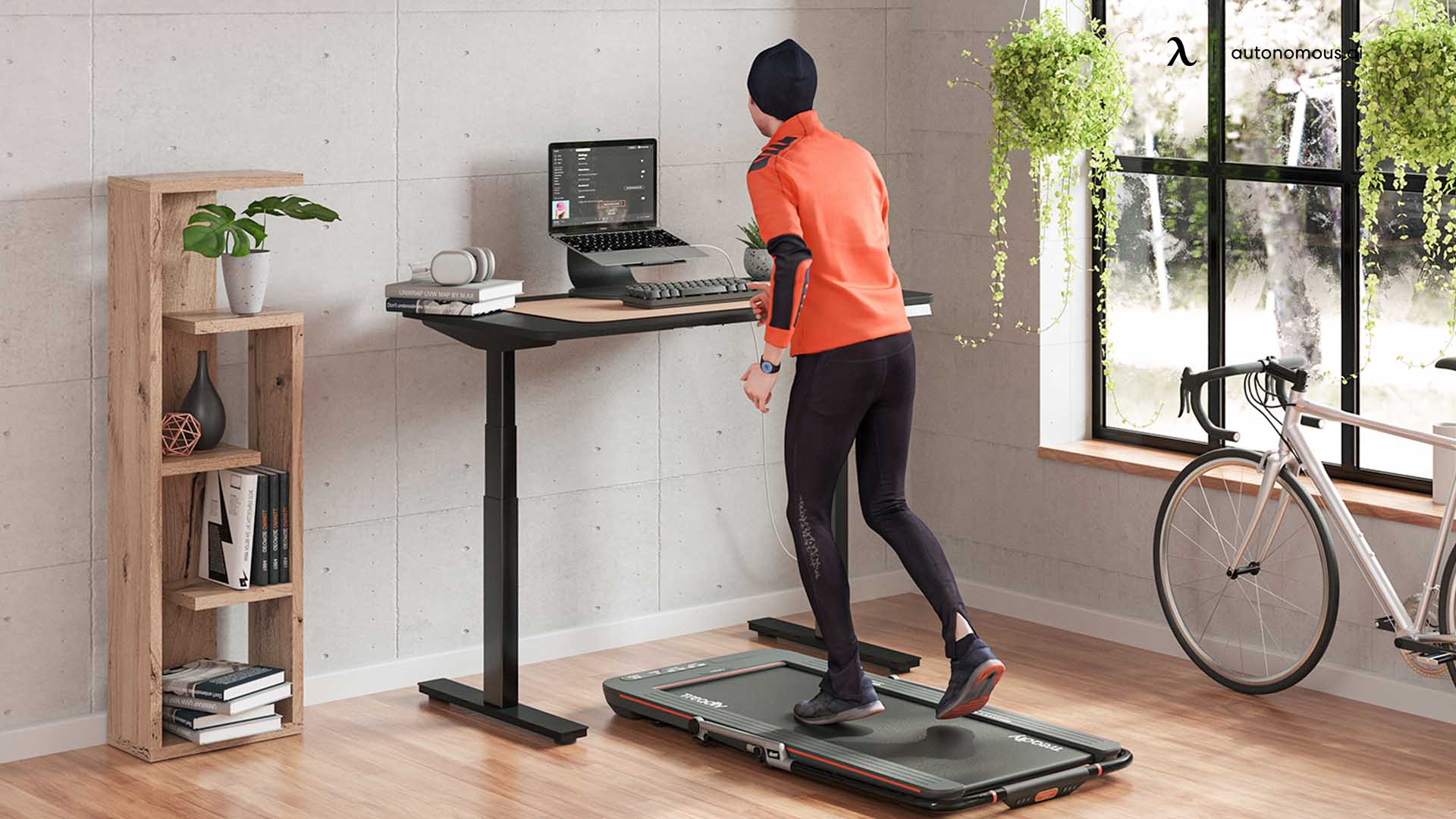
Standing all day still does not count as exercise. Spending eight hours on your feet is more light activity than sitting, and it burns modestly more calories, but the intensity never rises to a workout level, so it does not build fitness the way structured exercise does.
Standing all day also has downsides of its own. Prolonged static standing can cause leg fatigue, sore feet, and lower-back or circulation problems, which is why the goal is to alternate sitting and standing rather than stand for hours straight. More standing beats constant sitting, but standing all day is not a substitute for moving.
Who benefits most from standing?
Standing helps some people more than others as a first step toward moving more. It is low-impact and needs no equipment, so it suits people who cannot yet do harder exercise: those with limited mobility, anyone easing back after an injury, and older adults working on balance and staying steady on their feet.
For someone who sits all day, standing more is a realistic, gentle way to cut sedentary time before adding real workouts. Used that way, as a starting point rather than a finish line, standing lowers the barrier to being active, which for a mostly sedentary person is where a lot of the health gain begins.
Why standing still matters
Even though standing is not exercise, it earns its place in the day. It engages your legs, core, and back to hold you upright, keeps blood flowing better than sitting does, and supports better posture. It also raises your non-exercise activity, the small energy you spend just moving and staying upright, which adds up over weeks.
The calorie difference is real but small, around 9 extra an hour over sitting, so standing is not a weight-loss tool on its own. Our guide on whether standing burns calories covers those numbers, and for the wider health case, from circulation to focus, the benefits of a standing desk guide goes deeper. The short version is that standing is a useful base layer of daily activity, not the activity itself.
How to turn standing into light exercise
You can make standing more active, which is where the real benefit is. Small, steady movement while you are on your feet nudges standing from passive to lightly active:
- Shift your weight from foot to foot and change stance often, which keeps circulation moving and stops stiffness.
- Do calf raises or march in place for a minute between tasks to lightly work your legs.
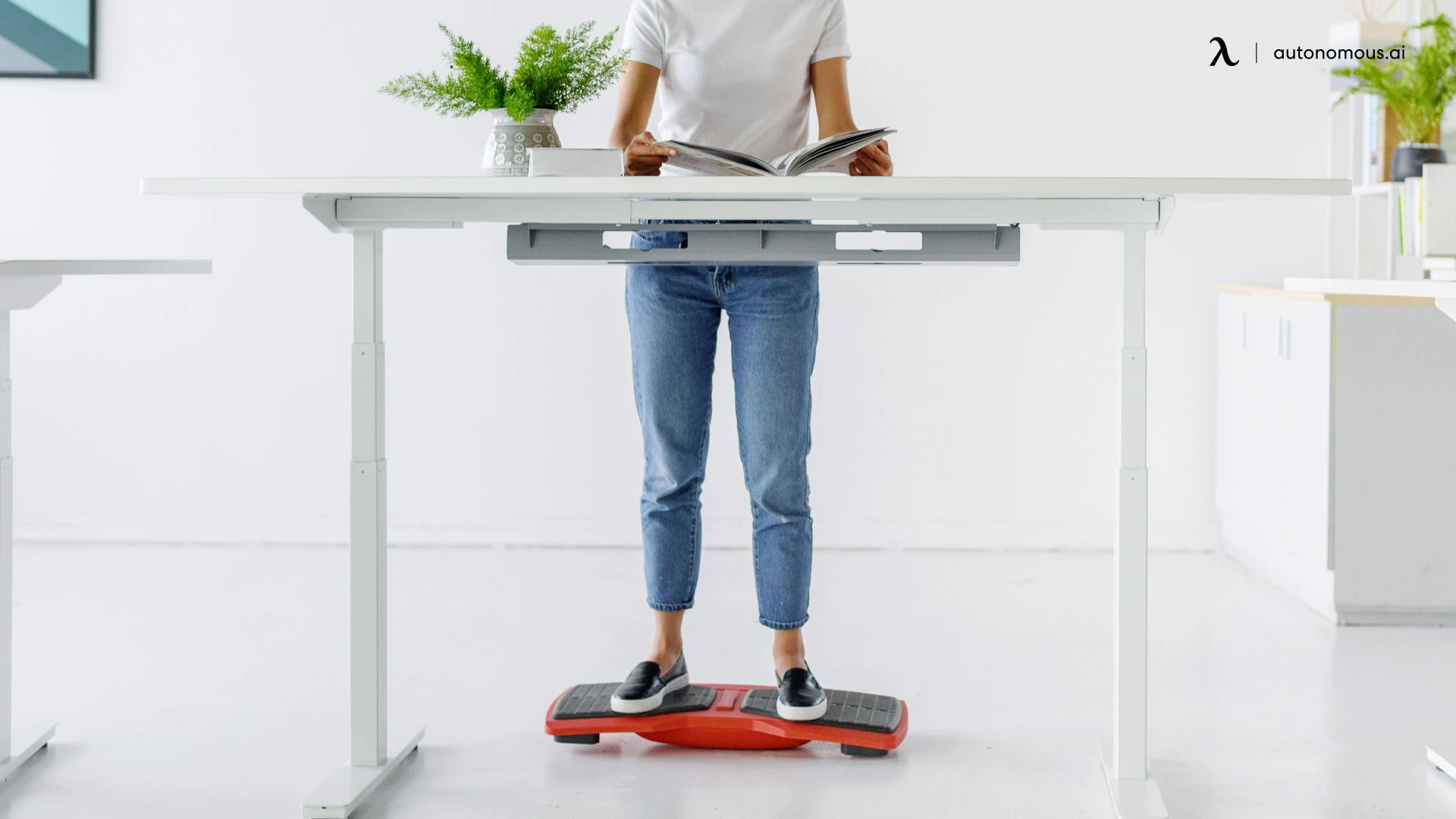
- Stand on a balance board or an anti-fatigue mat, which makes your stabilizing muscles work a little harder.
- Take short walks on breaks and take calls on your feet, since walking is real light-to-moderate activity that standing is not.
Start small if standing is new to you: 5 to 10 minutes an hour, building up over time. An adjustable standing desk makes alternating easy, so you can spend part of each hour on your feet without thinking about it. None of this turns standing into a workout, but it turns idle standing time into movement, which is the point.
FAQs
Does standing count as exercise?
No, standing does not count as exercise. Exercise is planned activity that raises your heart rate into a moderate range, about 3 METs or more, while standing sits at roughly 1.5 to 2 METs. It counts as light physical activity and reduced sitting time, both of which are useful, but it is not a workout.
Is standing considered exercise?
Standing is considered light physical activity, not exercise. It engages your muscles more than sitting and keeps circulation moving, but it does not reach the intensity that fitness guidelines count as exercise. Think of it as a step above sitting on the activity scale, worth doing but not a substitute for real movement.
Does standing all day count as exercise?
No. Standing all day is more light activity than sitting all day, but the intensity never rises to a workout level, so it does not build fitness or count toward your weekly exercise. Standing all day can also cause fatigue and foot or back strain, so it is better to alternate with sitting.
Is standing exercise effective?
Standing is effective at cutting sedentary time and adding a little daily activity, but it is not effective as exercise for fitness or weight loss. The gains are modest and passive. To make standing more effective, add movement like calf raises, marching, or short walks, which lift the intensity closer to real activity.
Is standing better than sitting?
Yes, standing is better than sitting for most people. It burns slightly more energy, eases the strain that long sitting puts on your back and circulation, and keeps you more lightly active through the day. The healthiest approach is not standing all day, but alternating between sitting and standing.
How can I make standing more of a workout?
Add movement while you stand. Shift your weight, do calf raises or squats between tasks, march in place, or use a balance board to engage more muscle. Better still, break up standing with short walks, which are real light-to-moderate exercise, unlike standing on its own.
Is standing better than walking for exercise?
No. Walking reaches 3 METs or more, the moderate range that counts as exercise and builds fitness, while standing stays at 1.5 to 2 METs. Standing is a good way to break up long sitting, but for exercise, even a short slow walk does far more than any amount of standing.
Does standing build muscle?
Standing lightly engages your legs, core, and back to hold you upright, which supports posture and stability, but it does not build muscle the way resistance training does. The load is too low and too constant. To build strength, add bodyweight moves like squats and calf raises, or proper strength training.
Conclusion
Standing does not count as exercise. It is light activity that sits above sitting but well below the moderate threshold that fitness guidelines track, so it will not build fitness or replace a workout. What it does well is cut down sedentary time and keep you lightly active through the day, which is worth having. Treat standing as a healthy default that makes it easier to add real movement, and pair it with walks and a few standing desk exercises to get the actual exercise your body needs.
References
- World Health Organization. Physical Activity: WHO guidelines on physical activity and sedentary behaviour. https://www.who.int/news-room/fact-sheets/detail/physical-activity
- Wilmot EG, Edwardson CL, Achana FA, et al. Sedentary time in adults and the association with diabetes, cardiovascular disease and death. American Journal of Preventive Medicine. https://pmc.ncbi.nlm.nih.gov/articles/PMC3550520/