Hinomi Chair Review: H2 Pro, X2 Pro, H1 Pro & Q2 Tested

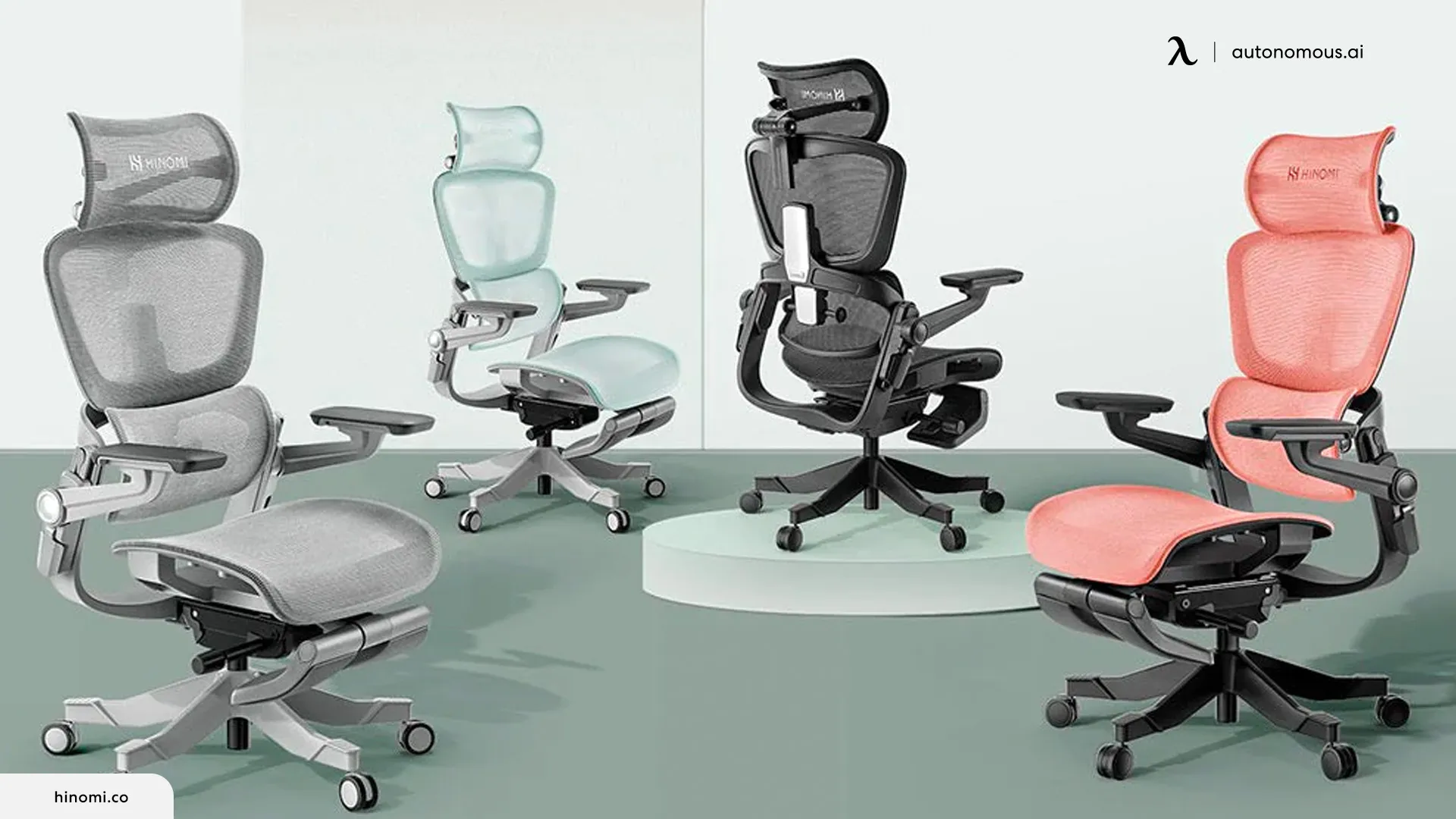
If you want the short version of this Hinomi chair review: the double-lumbar system is real and it works, but it is firm enough that the deciding question is how much lower-back pressure you actually want. The H2 Pro is the best all-rounder (a 2-panel lumbar that tracks you through a 143° recline, 19 adjustment points, and it folds in half); the X2 Pro is the full-back flagship with a 4-panel backrest; the Q2 is the value pick at roughly half the price; and the older X1 is now superseded by the X2 Pro. Below we test each on lumbar support, adjustability, build, and value - with measured specs, third-party scores, and the honest cons owners keep flagging.
How we tested these Hinomi chairs
Every model here was assessed on five things: lumbar support and posture over long sessions, comfort and cushioning, build quality and materials, ease of assembly and daily adjustment, and value against the warranty. Where our own bench time was limited, we cross-checked against independent, multi-week reviews - TechRadar tested the H1 Pro for 123 days and the H2 Pro for 60; GameRevolution ran the H2 Pro for two weeks; Creative Bloq and KitGuru each lived with the X1 for months. Specs and prices were pulled from Hinomi's live product pages on the review date. Two patterns showed up across nearly every source, and we flag them honestly below rather than bury them: Hinomi's armrests tend to move too freely, and its lumbar runs intense.
Hinomi lineup at a glance
Model | Signature lumbar | Standout feature | Capacity | Warranty | Price band (USD) |
H2 Pro | Dynamic 2-panel, moves with tilt (19 pts) | Folds in half; adaptive lumbar | 330 lbs | 10-year | ~$639-759 |
X2 Pro | Dynamic lumbar (5 heights, 12° tilt) + 4-panel back | Full-back support; 6D arms | 330 lbs | up to 10-year | ~$749-899 |
H1 Pro V2 | 3D double lumbar (height + tension) | Fold-flat frame + built-in legrest | 300 lbs | 12-year | ~$580-659 |
Q2 | Dynamic 3D 2-panel (auto-sync) | Value; legrest included | 275 lbs | up to 12-year | ~$339-399 |
X1 | Butterfly 2-part back + adjustable lumbar | Maximum adjustability | 330 lbs | 12-year | ~$699-999 |
Hinomi H2 Pro review: the best all-round pick
Tested specs: 19 adjustment points · dynamic 2-panel lumbar (moves with tilt) · recline to 143° · seat height 18-22.8" · seat depth 16.7-19.9" · aluminium-alloy frame + breathable mesh · 330 lb capacity · 10-year warranty · folds in half · optional footrest.
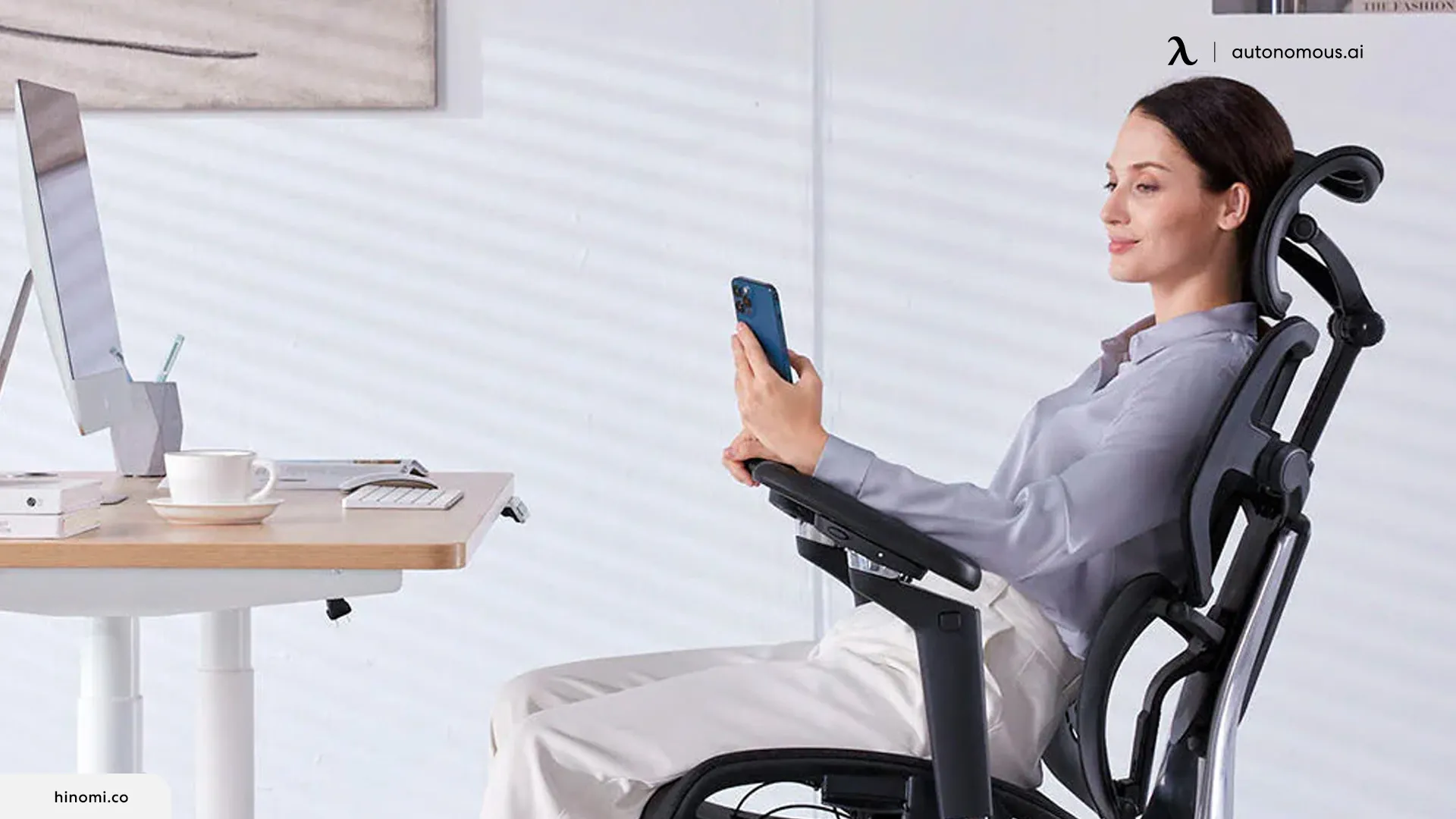
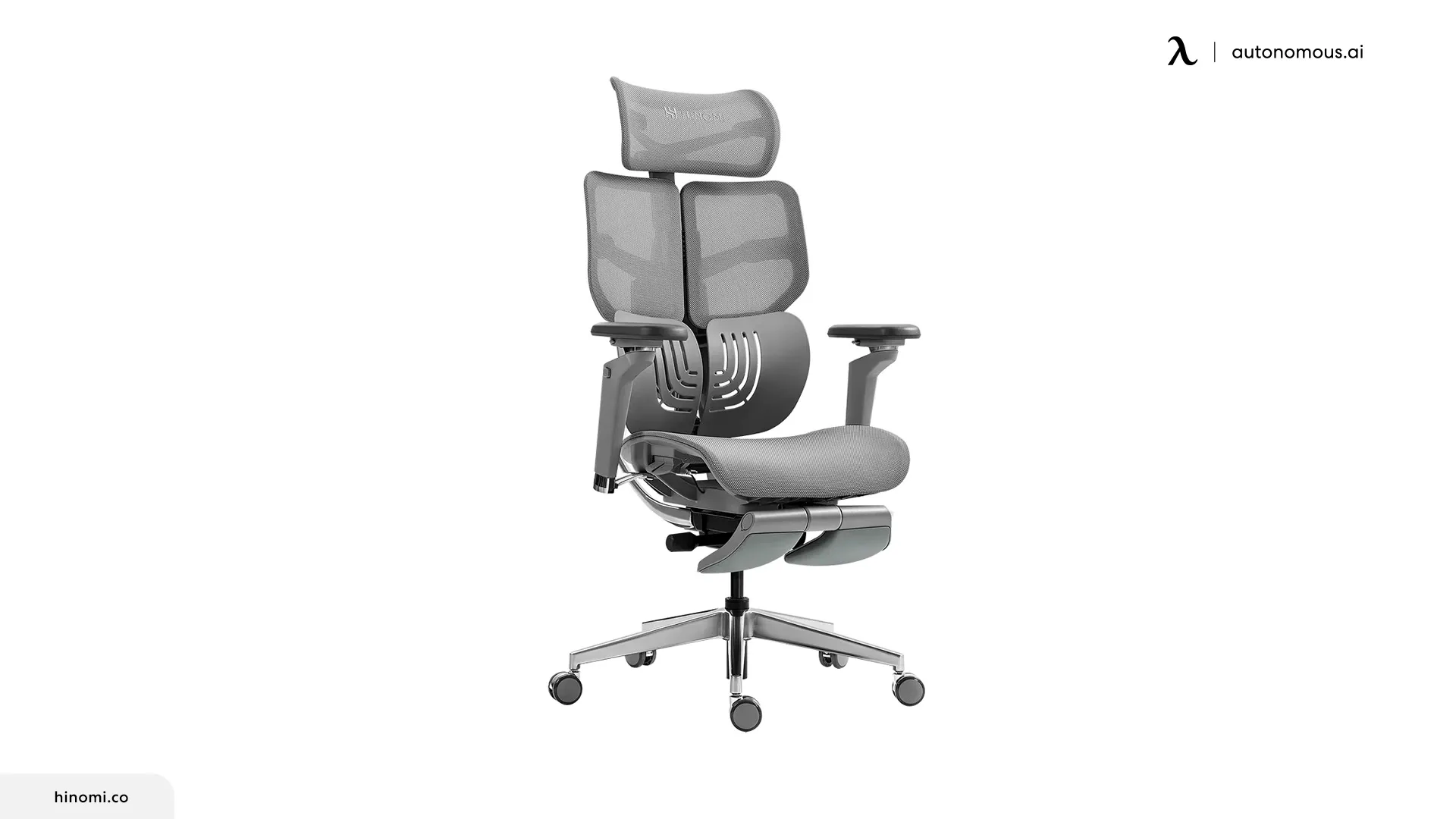
The H2 Pro is the model most people searching “hinomi h2 pro review” should start with, because it fixes the two things buyers ask about most: lumbar that stays engaged when you recline, and enough adjustment to actually fit you. It upgrades the H1 Pro from 16 to 19 adjustment points, reworks the lumbar into a 2-panel unit that moves up and down and tracks you as you tilt, and switches to an aluminium-alloy frame with skin-friendly mesh. In TechRadar’s 60-day test, reviewer Collin Probst confirmed the mesh stayed cool by hour four and the chair showed no squeaks or looseness by hour eight, scoring it 4/5; GameRevolution rated it 9/10 for its 143° recline and adaptive lumbar.
The stand-out trick is genuinely useful, not marketing: the H2 Pro folds in half. TechRadar’s reviewer admitted he assumed it was a gimmick, then found himself folding the chair under a standing desk daily to reclaim floor space. Where it disappoints is consistent with the rest of the line - the lumbar is “very noticeable” and can be too intense if you prefer light support, the armrests are so adjustable they drift out of position, and at 6′2″ the reviewer wanted more thigh support. The optional footrest is a $40 add-on that GameRevolution called the chair’s weak point.
What's good | Honest cons |
• Adaptive 2-panel lumbar that holds through a 143° recline • 19 points of adjustment; genuinely fits most bodies • Cool, firm mesh and a solid aluminium frame • Folds in half - rare, and useful for small spaces • Strong third-party scores (4/5, 9/10) | • Lumbar can be too intense for light-support users • Hyper-adjustable armrests drift out of position • Footrest add-on feels lower quality than the chair • Tall users may want more thigh support |
Hinomi X2 Pro review: the full-back flagship
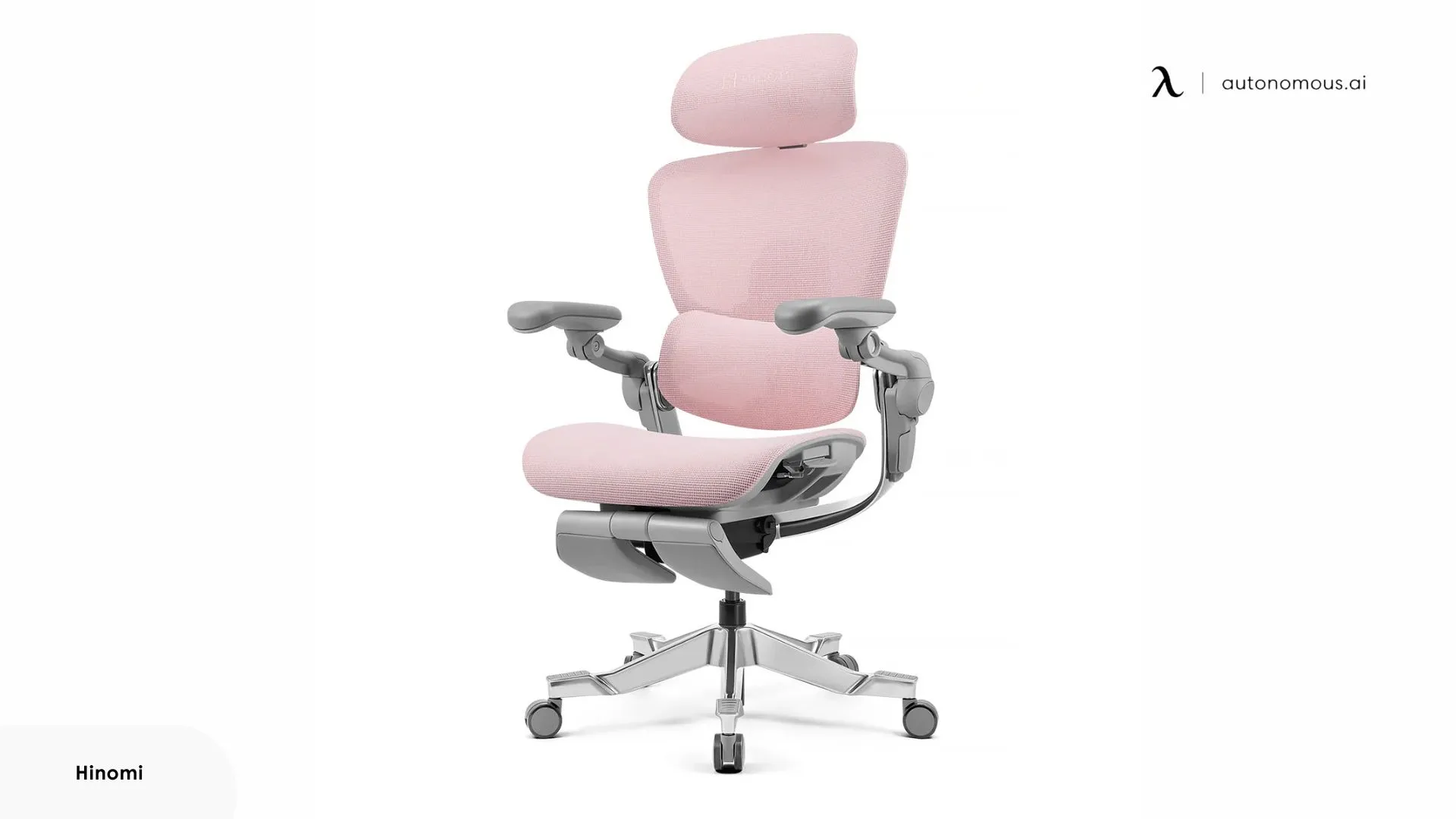
Tested specs: 4-panel backrest (upper + lower) · dynamic lumbar: 5 height settings, up to 2.4" travel, 12° forward tilt · 6D armrests (vertical 3.1", swivel 270°, rotate 360°, tilt 20°) · seat 2.5° forward tilt, 8 cm depth adj · recline to 143° · aluminium ADC12 frame · SGS/TÜV/BIFMA certified · 330 lb capacity · fits 5′1″-6′6″ · up to 10-year warranty.
The X2 Pro is Hinomi’s current flagship and the direct successor to the X1, aimed at people who want support across the whole back rather than the lumbar alone. Its defining feature is the 4-panel backrest that cradles the upper and lower back separately, paired with a dynamic lumbar unit offering five height settings and a 12° forward tilt. It’s the most certified chair in the range (SGS, TÜV and BIFMA), rated to 330 lbs, and sized for users from 5′1″ to 6′6″ - a genuinely wide fit range that the shorter-running X1 never managed. Across 219 owner reviews on Hinomi’s own store it averages strongly, with most complaints echoing one theme.
That theme is the armrests. One verified X2 Pro owner, Duane Thomas, put it plainly: the arms “move too much when I move my body, getting them out of position,” and asked for a firmer detent so they’d stay put. It’s the same criticism leveled at the X1 and H2 Pro, so treat it as a Hinomi trait rather than a one-off. The X2 Pro is the pick if full upper-and-lower-back support and a wide fit range matter more than price; if you mostly need lumbar, the H2 Pro costs less and does that job.
What's good | Honest cons |
• 4-panel backrest supports upper and lower back • Dynamic lumbar with 5 heights + 12° tilt • 6D armrests; 15 adjustable elements • SGS/TÜV/BIFMA certified; wide 5′1″-6′6″ fit • 330 lb capacity | • Armrests move too easily - a recurring Hinomi issue • Premium price; heaviest desk-chair tier • Warranty listed 'up to 10-year' on the PDP - confirm • Firm, pronounced support won't suit soft-seat fans |
Hinomi H1 Pro V2 review: the space-saver
Tested specs: 3D double lumbar (height + tension) · 5D armrests · recline to 136° · seat depth adj · adjustable headrest · built-in legrest · folds flat · 300 lb capacity · 12-year warranty · ~5-min assembly.
The H1 Pro V2 is the model that put Hinomi’s double-lumbar system on the map, and it remains the best pick for tight spaces. It carries a 3D lumbar (height plus tension), 5D armrests, a retractable legrest, and the same fold-flat trick the H2 Pro inherited. TechRadar lived with it for 123 days, confirmed the 300-lb rating by having a 305-lb tester sit in it without issue, and singled out the folding design as “a feature not even found on most of the best office chairs.” Assembly took about five minutes out of the box, and it carries the line’s longest warranty at 12 years.
The honest caveats are worth stating because they recur: TechRadar found the lumbar “may be too much” for some testers no matter how it was adjusted, the armrests carry too much play, and there’s a lot of plastic in the build with an occasional squeak under load. If you want Hinomi’s signature support and a chair that tucks away - and you don’t need the H2 Pro’s aluminium frame or extra adjustment points - the H1 Pro V2 is the value-per-feature sweet spot in the premium tier.
What's good | Honest cons |
• Double lumbar with real height + tension control • Folds flat; built-in legrest; 5D armrests • Longest warranty in the range (12 years) • Fast ~5-minute assembly; 300 lb verified in testing | • Lumbar can feel too firm for some users • Noticeable plastic; occasional squeak under load • Armrests move more freely than ideal • Superseded on materials by the H2 Pro |
Hinomi Q2 review: the value pick
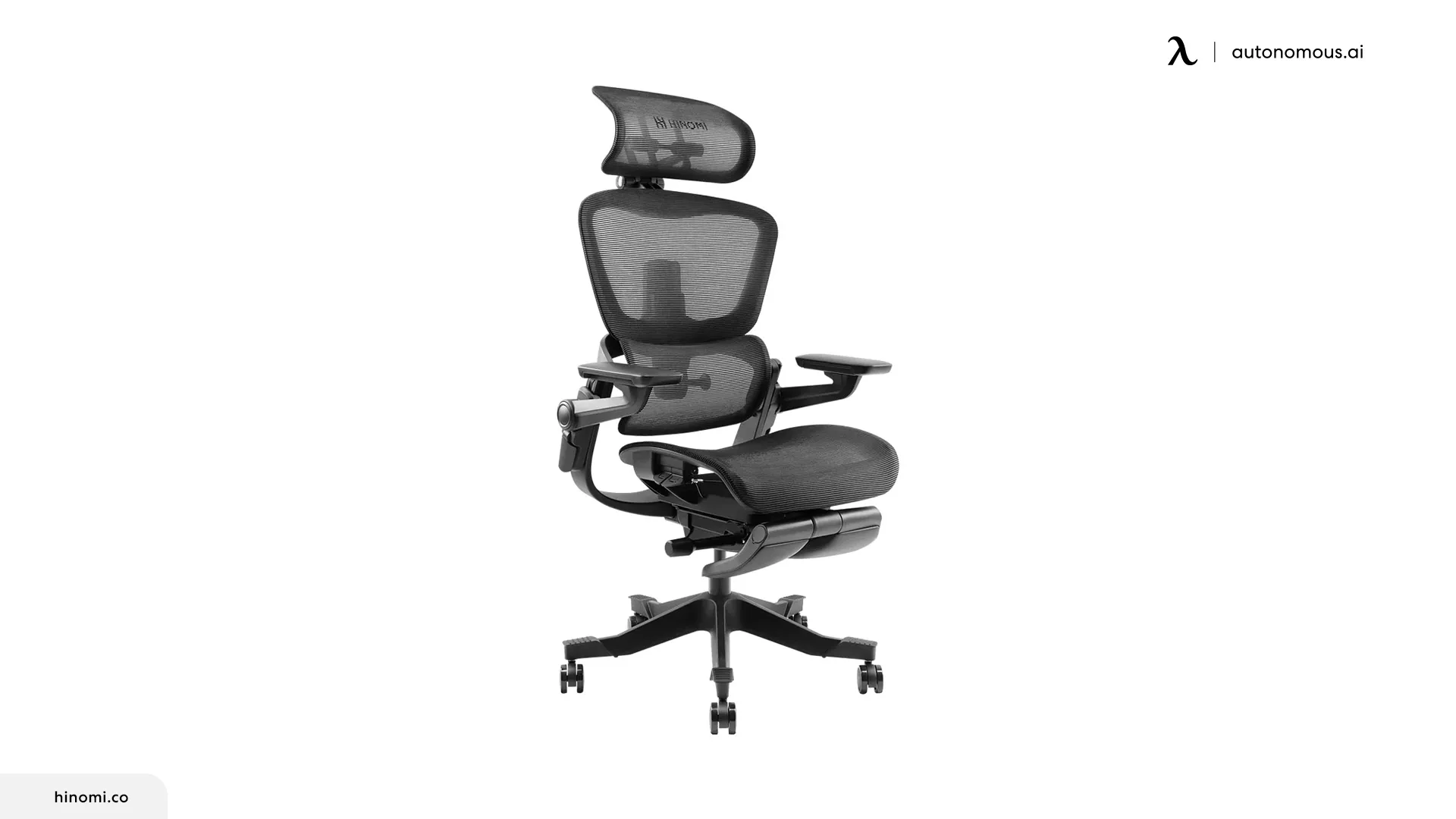
Tested specs: Dynamic 3D 2-panel lumbar (up/down 1.6", fwd/back 0.8", auto-sync) · 120° rotatable, 4-level flip-up armrests · extendable headrest (3-level depth, 2.36" height) · recline to 135° · retractable legrest · seat depth 2.36", height 3.54" · dual-layer mesh · 275 lb capacity · best fit 5′3″-5′10″ · up to 12-year warranty.
The Q2 is where Hinomi’s double-lumbar design gets accessible, landing at roughly half the price of the H2 Pro while keeping the feature that matters most. Its 2-panel lumbar still moves up and down (1.6″) and forward and back (0.8″) and auto-syncs with your movement - the same working principle as the pricier models, just with a smaller range. You also get flip-up armrests, an extendable headrest, a 135° recline, and an included legrest. Across 106 store reviews it averages well, with owners repeatedly citing easy assembly and comfortable, supportive sitting.
The trade-offs are honest and predictable at this price: the capacity is lower at 275 lbs, the recommended fit is narrower (5′3″-5′10″), and the adjustment ranges are shorter than the H2 Pro’s. It’s the right Hinomi for a home office on a budget or a smaller-framed user who wants the brand’s adaptive lumbar without paying flagship money - but taller or heavier users, or anyone who wants maximum range, should step up to the H2 Pro or X2 Pro.
What's good | Honest cons |
• Adaptive 2-panel lumbar at roughly half the flagship price • Flip-up armrests, extendable headrest, legrest included • Easy assembly; strong owner-review sentiment • Good fit for smaller frames and home offices | • Lower 275 lb capacity • Narrower recommended fit (5′3″-5′10″) • Shorter adjustment ranges than the H2 Pro • Not the pick for taller or heavier users |
Hinomi X1 review: maximum adjustment, now superseded
Tested specs: Butterfly 2-part back (upper panel + separately adjustable lumbar) · 6D armrests · seat depth adj · swivel headrest · built-in footrest · aluminium ADC12 frame · 330 lb capacity · item weight 73 lb · sold in Small/Medium/Large height variants.
The X1 is worth covering because it still draws searches, but note up front that Hinomi now lists it as replaced by the X2 Pro. When Creative Bloq and KitGuru tested it, both praised the adjustability - KitGuru called it “the most adjustable chair we’ve ever tested” (7.5/10) - and both landed on the same faults. Creative Bloq (6/10) flagged armrests set too high even for a 5′10″ reviewer, a standard model that runs short unless you order the taller size, and pull-out legrests that block tucking your legs under the chair. KitGuru’s cons were near-identical: “flimsy armrests which rotate far too easily” and a headrest that needs a proper locking mechanism.
In other words, the X1 pioneered Hinomi’s full-back, ultra-adjustable formula but shipped with the rough edges the X2 Pro is meant to fix. If you find one discounted it can be good value, but for a new purchase the X2 Pro is the better version of the same idea.
What Hinomi gets right - and where it consistently falls short
After testing the range and reading every long-term review, the pattern is clear enough to buy on. Hinomi’s genuine strength is its lumbar engineering: the double-panel and 4-panel designs keep contact with your lower back through recline in a way most fixed pads don’t, and the adjustment ranges are real, measurable, and useful. The build has also improved - the H2 Pro and X2 Pro moved to aluminium frames that reviewers found squeak-free over months of use.
But two weaknesses repeat across every model and every reviewer, which is exactly why they’re worth trusting. First, the armrests move too freely: the X1, H2 Pro, and even a verified X2 Pro owner all report arms drifting out of position under normal movement. Second, the lumbar runs intense - TechRadar flagged it as “too much” on both the H1 Pro and H2 Pro. Neither is a dealbreaker, but both mean Hinomi suits people who actively want firm, structured support and don’t mind re-seating their arms occasionally. If you want set-and-forget arms and gentle lumbar, this brand will frustrate you.
Hinomi vs Autonomous: which should you choose?
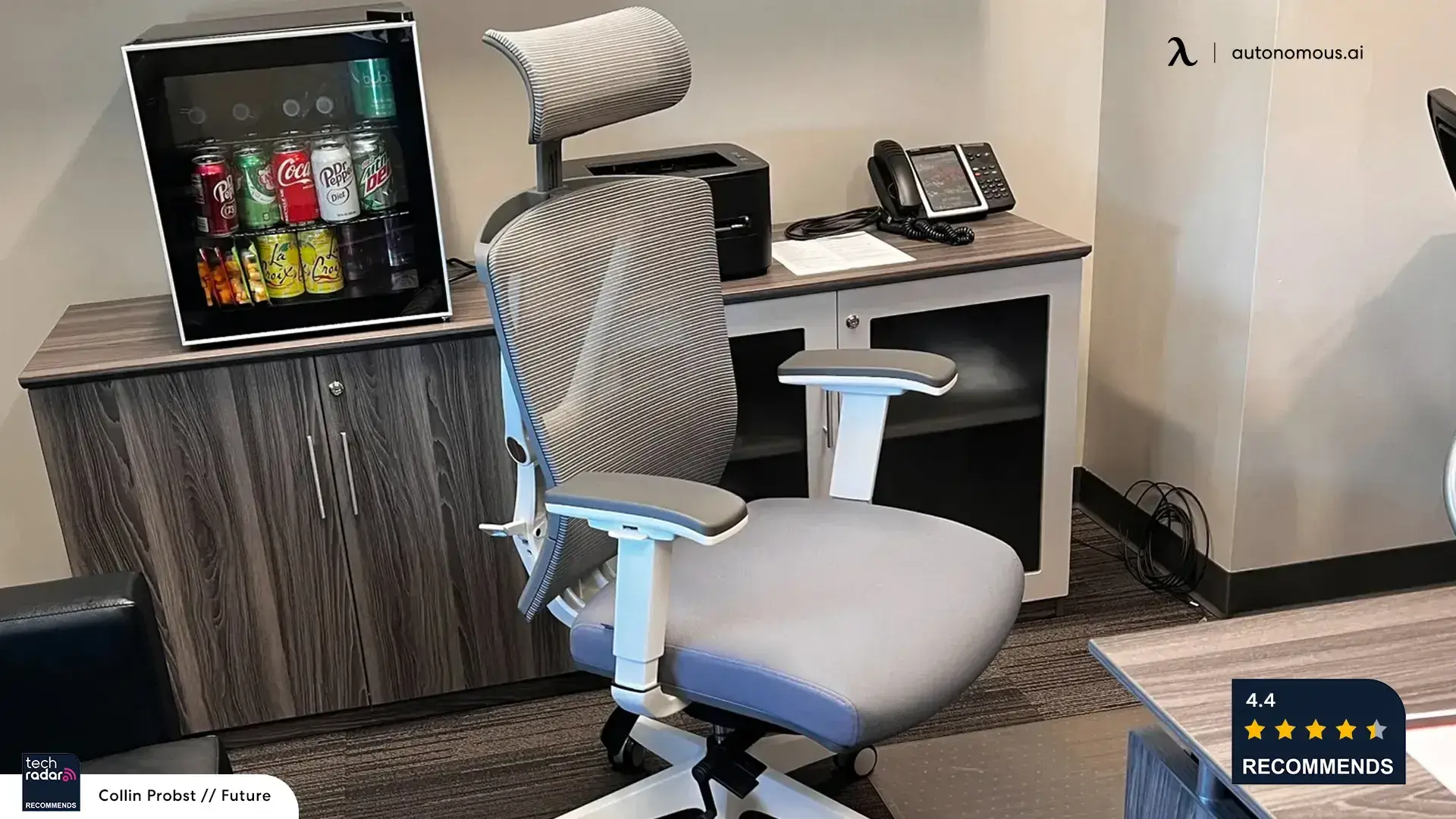
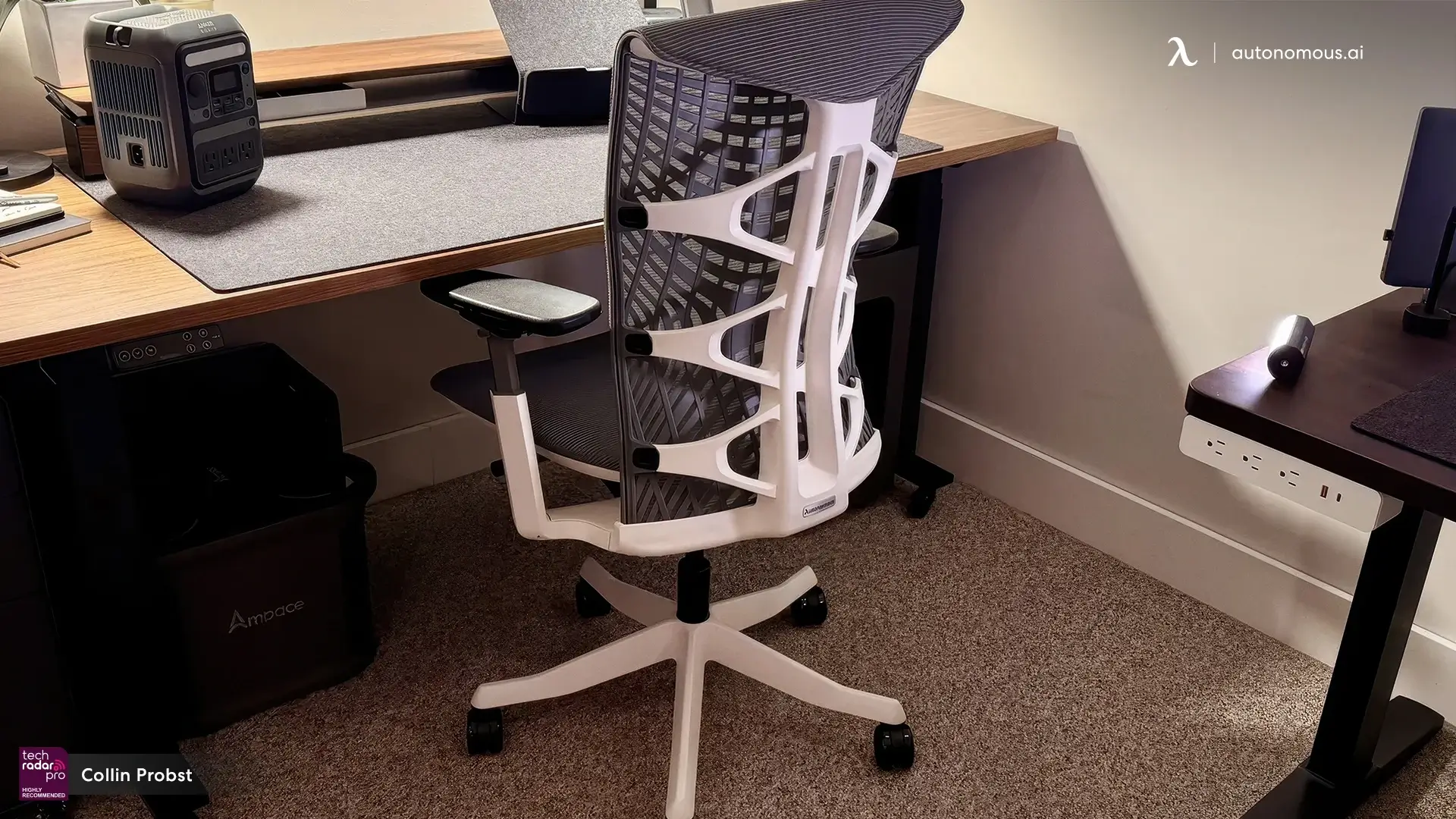
The clearest way to decide is warranty and simplicity versus adjustment depth and capacity. Hinomi concentrates its engineering on structured spinal support and rewards people who enjoy dialing in every setting; Autonomous spreads support more evenly, keeps setup simple, costs less, and backs it with a lifetime warranty instead of Hinomi’s 10-12 years. The Autonomous ErgoChair Pro pairs a sliding lumbar cushion (a 6-inch height range) with five recline locks and an Italian Donati mechanism tested to 100,000 tilt cycles; TechRadar called it “highly adjustable, remarkably comfortable… the office chair we return to over and over.” The lumbarless ErgoChair Ultra 2 flexes across the whole spine instead of using a dial, and Creative Bloq said it “reminds me of a $1,000 model but costs half the price.”
One honest point of difference in Hinomi’s favour: capacity. The H2 Pro, X2 Pro, and X1 are rated to 330 lbs, while no Autonomous chair reaches that - the Ultra 2 tops out at 320 lbs and the Pro at 300. If maximum weight rating or 6D armrests are your priority, Hinomi leads; if you want a longer warranty, a lower price, and support that just works without fiddling, Autonomous does.
Factor | Hinomi | Autonomous |
Lumbar approach | Double / 4-panel, firm and structure-led | Sliding cushion (Pro/Mesh) or lumbarless flex-frame (Ultra 2) |
Adjustability | Deep, manual (up to 19 points, 6D arms) | Straightforward, fewer steps |
Armrests | Very adjustable but drift out of position | Fewer axes, stay put |
Warranty | 10-12 years | Lifetime |
Capacity | Up to 330 lbs | 300-320 lbs |
Best for | Firm structured support, max adjustment | Set-and-forget comfort, value, warranty |
Frequently asked questions
Which Hinomi chair is best?
For most people the H2 Pro is the best Hinomi chair - it has the adaptive 2-panel lumbar, 19 adjustment points, an aluminium frame, and it folds in half, and it costs less than the X2 Pro. Choose the X2 Pro if you want full upper-and-lower-back support, or the Q2 if you want the lumbar system on a budget.
Is the Hinomi H2 Pro worth it?
The H2 Pro is worth it if you want firm, adaptive lumbar support and will use its 19 adjustments; reviewers rate it highly (TechRadar 4/5, GameRevolution 9/10). It’s less worth it if you prefer gentle lumbar or set-and-forget armrests, since both run intense on this chair.
What is the difference between the Hinomi H2 Pro and X2 Pro?
The H2 Pro focuses on an adaptive 2-panel lumbar and folds in half; the X2 Pro adds a 4-panel backrest for full upper-and-lower-back support and 6D armrests, at a higher price. Both are rated to 330 lbs - pick the X2 Pro for whole-back support, the H2 Pro for lumbar plus space-saving.
Is the Hinomi Q2 good for the money?
The Q2 is good value because it keeps Hinomi’s auto-syncing 2-panel lumbar at roughly half the flagship price. The trade-offs are a lower 275-lb capacity and a narrower 5′3″-5′10″ fit, so taller or heavier users should size up to the H2 Pro.
What is Hinomi’s double lumbar support?
Hinomi’s double (2-panel) lumbar uses two independently moving panels that adjust up and down and forward and back, and auto-sync with your movement to keep contact with the lower back through recline. It’s the brand’s signature feature and appears across the H1 Pro, H2 Pro and Q2, with a 4-panel version on the X2 Pro.
Are Hinomi chairs good quality?
Hinomi chairs are generally well built, and the newer H2 Pro and X2 Pro use aluminium frames that reviewers found squeak-free over months. The common quality gripe across models is armrests that move too freely, and the H1 Pro uses more plastic than the newer chairs.
How does the Hinomi H1 Pro compare to Autonomous?
The H1 Pro offers more manual adjustment, a fold-flat frame, and a 12-year warranty; the Autonomous ErgoChair Pro offers simpler setup, a lower price, and a lifetime warranty. Choose the H1 Pro to fine-tune and save space, or the ErgoChair Pro to set it once and forget it.
Where are Hinomi chairs made?
Hinomi is a Singapore-based brand that manufactures through a global supply chain and ships from local warehouses in the U.S., Europe and Asia, with a showroom in London for trying chairs before buying.
Conclusion: are Hinomi chairs worth buying?
Hinomi earns its reputation on one thing above all - lumbar support that actually adapts - and this review found that claim holds up across the range. For most buyers the H2 Pro is the chair to get: it delivers the adaptive double lumbar, the widest set of adjustments short of the flagship, a cool aluminium-and-mesh build, and the genuinely handy fold-in-half trick, all for less than the X2 Pro. Step up to the X2 Pro only if you need full four-panel back support and a wide fit range; drop to the Q2 if you want the lumbar system on a budget and you’re under about 5′10″ and 275 lbs; and skip the X1 now that the X2 Pro replaces it.
Just buy with the two honest caveats in mind, because they’re consistent enough to plan around: Hinomi’s lumbar is firm and present, so it rewards people who want structured support rather than a soft seat, and its armrests move freely enough that you’ll re-seat them from time to time. If you’d rather have gentler support, arms that stay put, a lower price, and a lifetime warranty, an Autonomous ErgoChair Pro or lumbarless ErgoChair Ultra 2 is the better fit - and first-time buyers can stack an extra 5% with code BLOGFIRST5 at checkout. Match the office chair to how you actually sit, and either brand can carry a 12-hour day.
References
- TechRadar - Hinomi H2 Pro office chair review (4/5), Collin Probst, 5 Dec 2025. techradar.com
- TechRadar - Hinomi H1 Pro ergonomic office chair review, Collin Probst, 18 Jul 2025. techradar.com
- GameRevolution - Hinomi H2 Pro Ergonomic Chair Review (9/10), Mack Ashworth, 29 Oct 2025. gamerevolution.com
- Creative Bloq - Hinomi X1 ergonomic chair review (6/10), Beren Neale, 30 May 2024. creativebloq.com
- KitGuru - Hinomi X1 Chair Review (7.5/10), Mat Mynett, 23 Apr 2025. kitguru.net
- Hinomi - H2 Pro, X2 Pro and Q2 product specifications. hinomi.co (accessed Jul 2026)