


The 6 Best Office Chairs with Adjustable Seat Depth

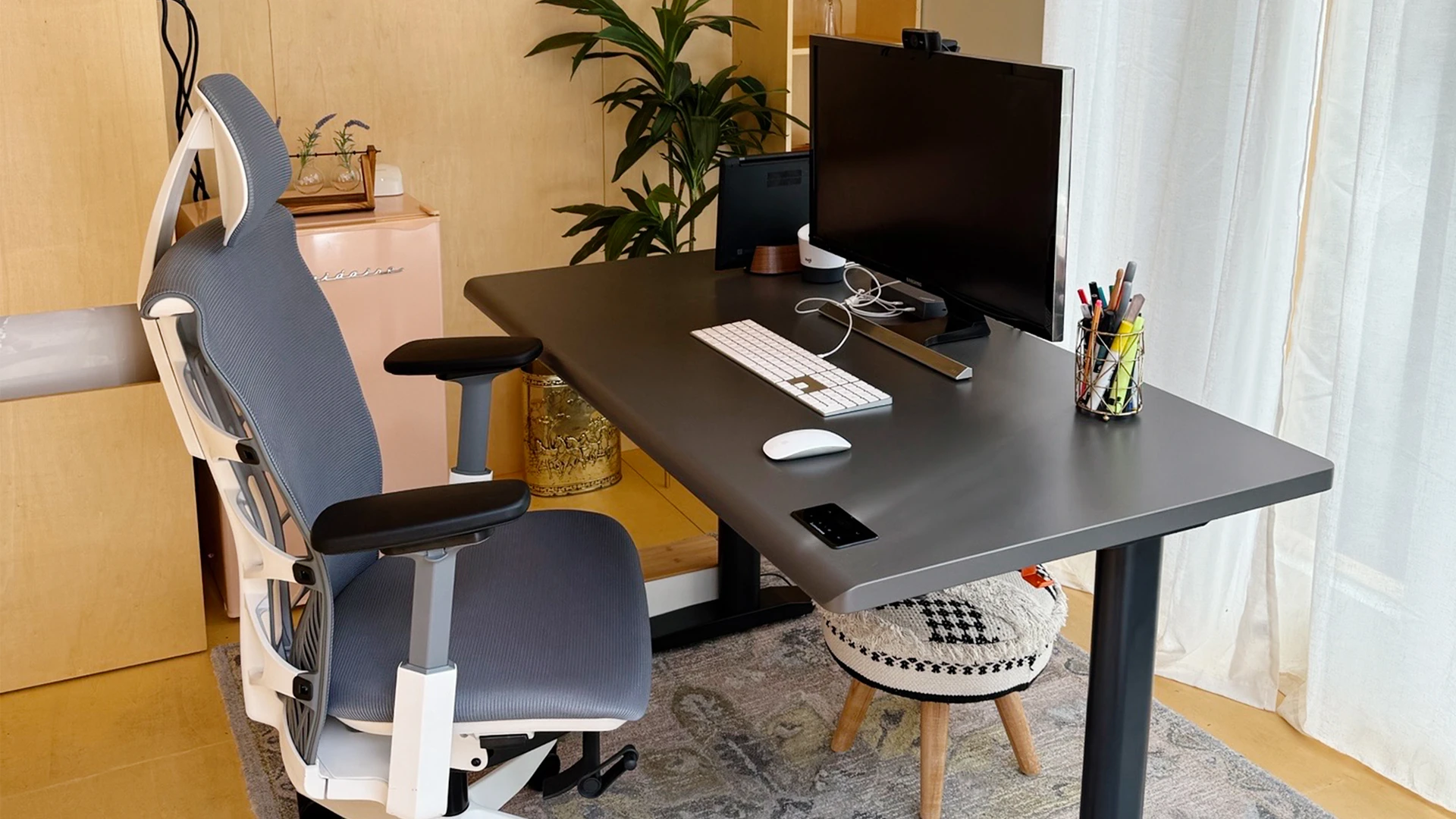
Seat depth is the horizontal length of an office chair's cushion from the front edge to the surface of the backrest. When a chair's seat is too deep, shorter users cannot lean back fully without the edge pressing uncomfortably into the area behind their knees. If the seat is too shallow, taller individuals lose critical thigh support, which leads to poor thigh support and lower back strain. Choosing an office chair with adjustable seat depth solves this problem by allowing you to slide the seat pan forward or backward to match your exact leg length.
Quick Comparison
Chair Model | Seat Depth Range | Capacity | Price |
Autonomous ErgoChair Pro | 19.0” - 21.5” | 300 lbs | $499 |
Autonomous ErgoChair Ultra 2 | 18.0” - 20.5” | 320 lbs | $499 |
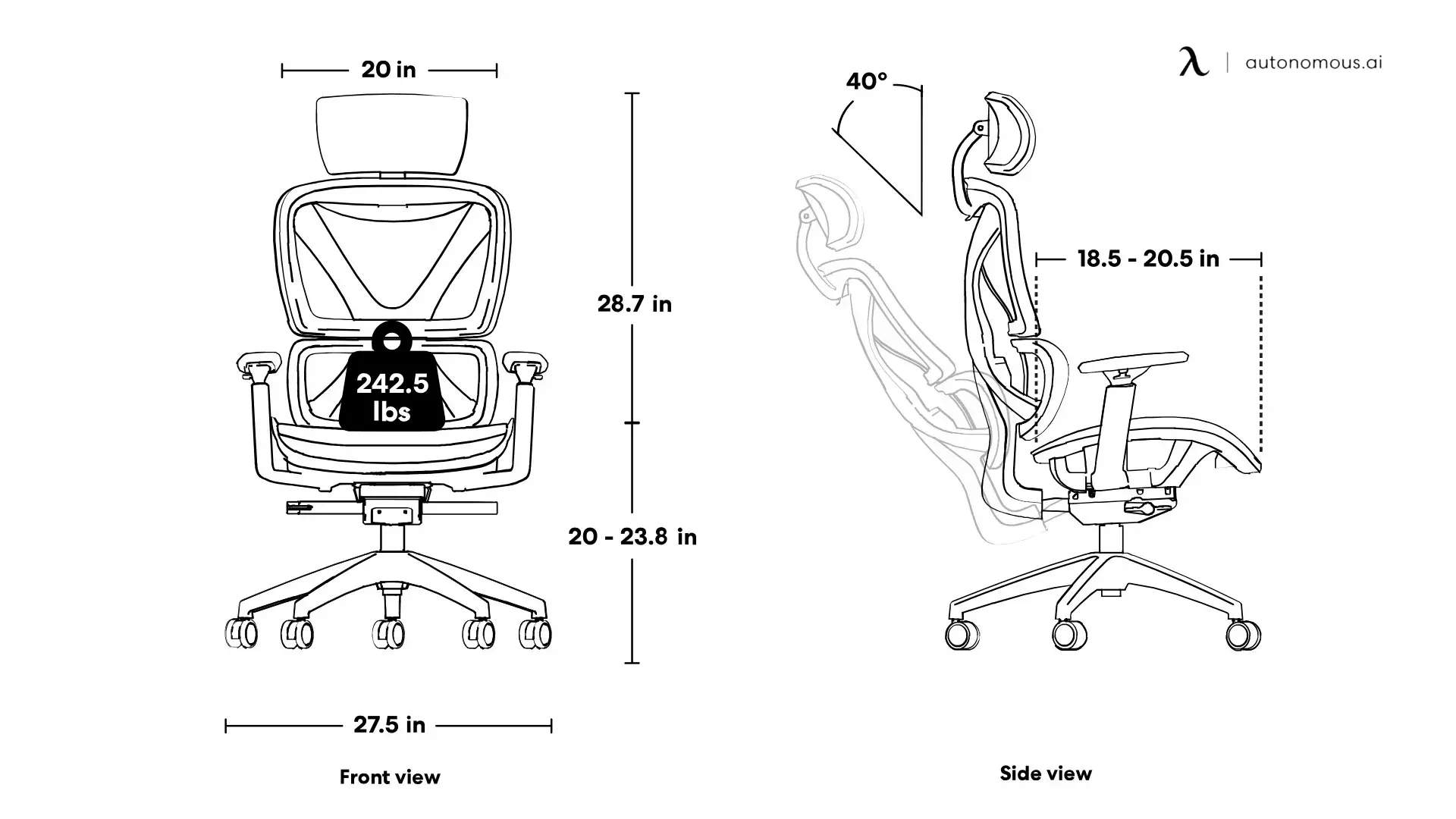
Autonomous ErgoChair Core | 18.5” - 20.5” | 242.5 lbs | $299 |
Autonomous ErgoChair Mesh | 18.0” - 20.0” | 300 lbs | $499 |
HBADA E3 Pro (2026 Edition) | 17.7” - 19.7” | 330 lbs | $659 |
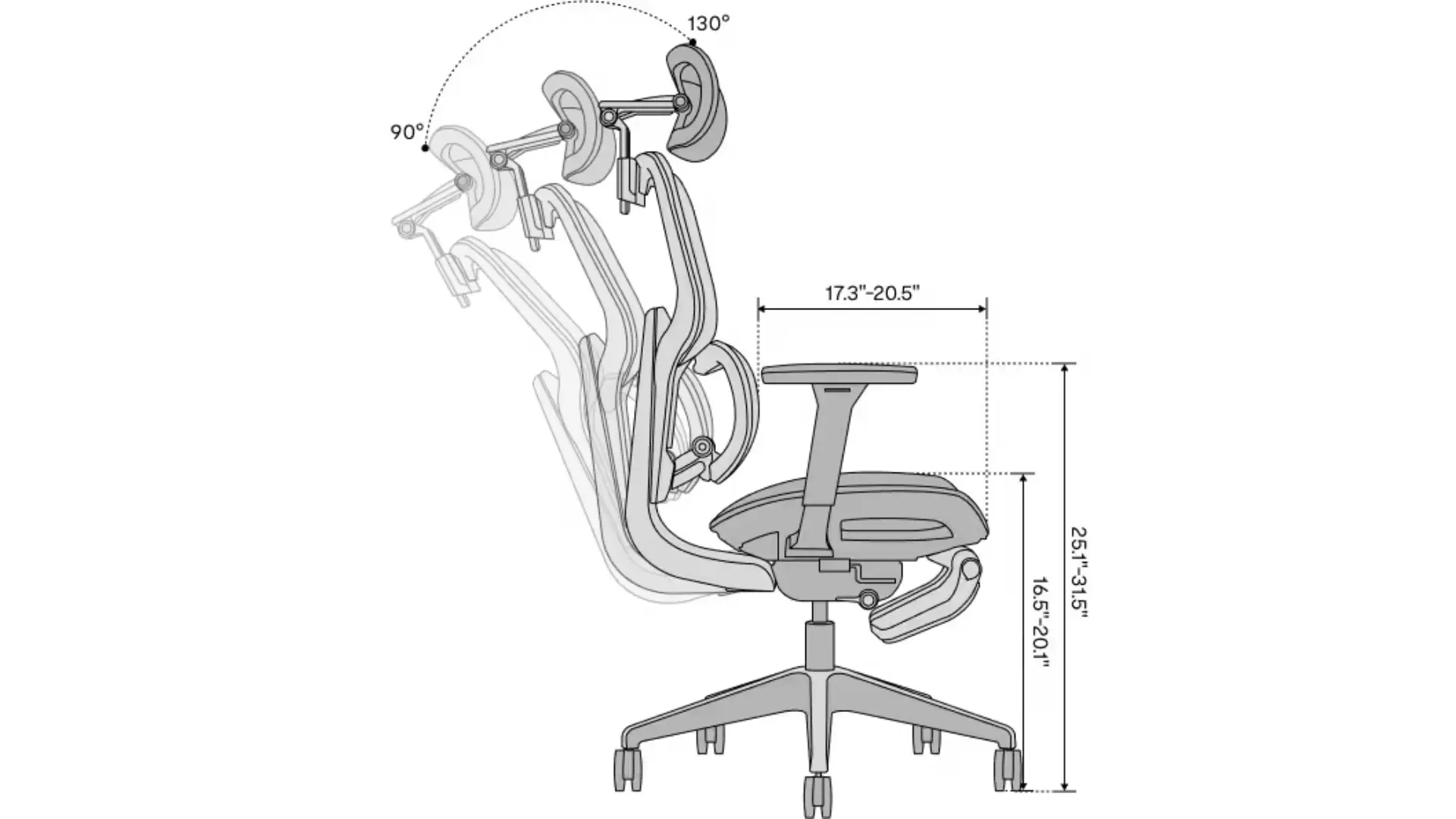
FlexiSpot Premium Chair (C7) | 17.3” - 20.5” | 320 lbs | $429 |
What Is Seat Depth Adjustment on an Office Chair?
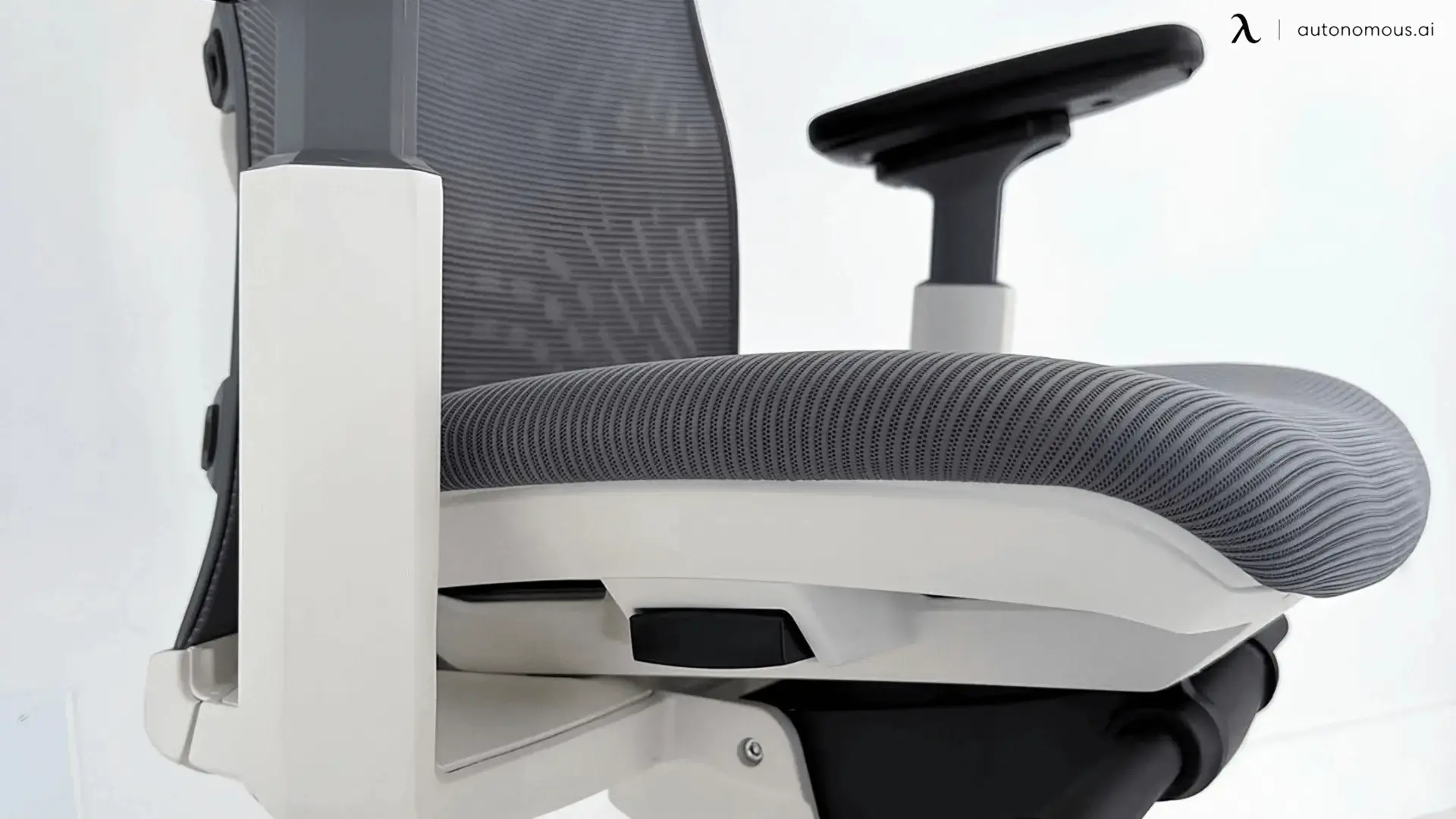
Seat depth adjustment is a forward-back seat pan adjustment mechanism that changes thigh support length while keeping the backrest fixed [1]. This design feature allows you to alter how much horizontal surface area supports your legs throughout the day. Controlled by a simple lever or button underneath the cushion, the mechanism lets the user expand or shorten the seat area to establish proper lower body alignment and prevent poor circulation [1].
Fixed vs. Adjustable Seat Depth: What is the Difference?
The difference between fixed and adjustable seat depth is the ability to change the physical footprint of the lower cushion to fit different body types. A chair with a fixed seat depth features a static cushion size that cannot be altered, meaning it will only fit a very narrow height and leg length range perfectly. An adjustable seat depth chair uses a moving track system that customizes the seat length on demand, making it highly versatile for shared workspaces or exact personal comfort adjustments.
How Much Seat Depth Adjustment Do You Actually Need?
The ideal amount of seat depth adjustment depends on your height and leg length, with the goal of supporting your thighs without crowding your knees. Sitting completely back against the lumbar pad should never cause the edge of the seat to press tightly against the back of your calves.
User Height | Typical Seat Depth Required | Effect of Fixed (Non-Adjustable) 20" Seats |
Under 5'4" | Shallower (15.5” - 18.0”) | Restricts knee area; forces user to sit forward and lose back support. |
5'4" - 6'0" | Medium (18.0” - 20.0”) | Generally acceptable, though sub-optimal without fine-tuning. |
Over 6'0" | Deeper (20.0” - 22.0”) | Leaves thighs hanging unsupported; triggers pelvic tilt and back fatigue. |
While the standard recommendation is to maintain a two-to-three finger gap behind the knee, remember that this rule is a helpful approximation rather than a universal standard. To find your personal requirement, measure from the back of your glutes to roughly two inches before the fold of your knee while sitting flat on a bench [2]. Matching this number to a chair's slider range ensures your feet can stay flat on the floor with your thighs fully supported.
Best Office Chairs With Adjustable Seat Depth
1. Autonomous ErgoChair Pro - Best Overall
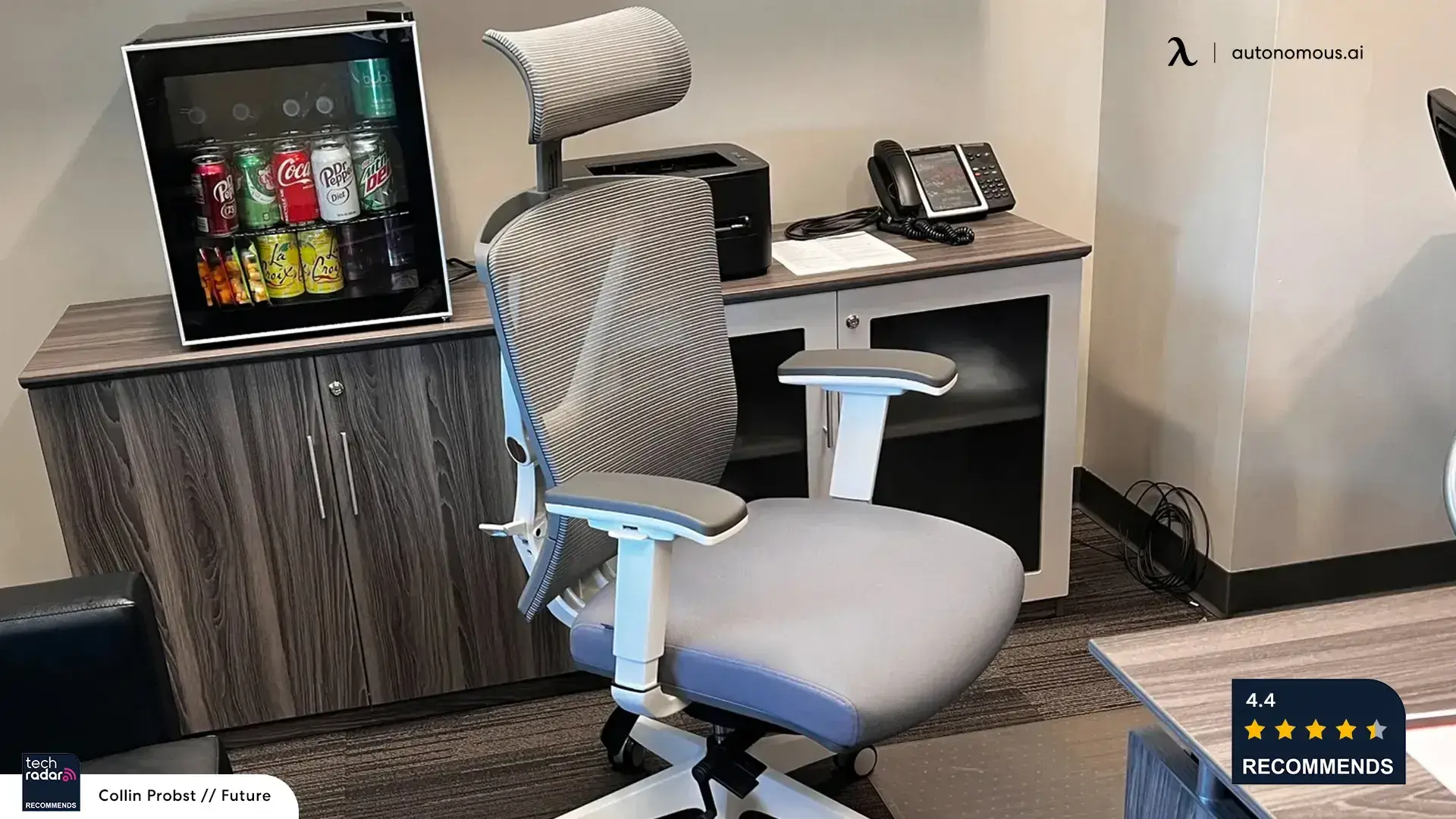
The Autonomous ErgoChair Pro is a highly adaptable ergonomic desk chair built around nine custom body adjustments for reliable daily physical support.
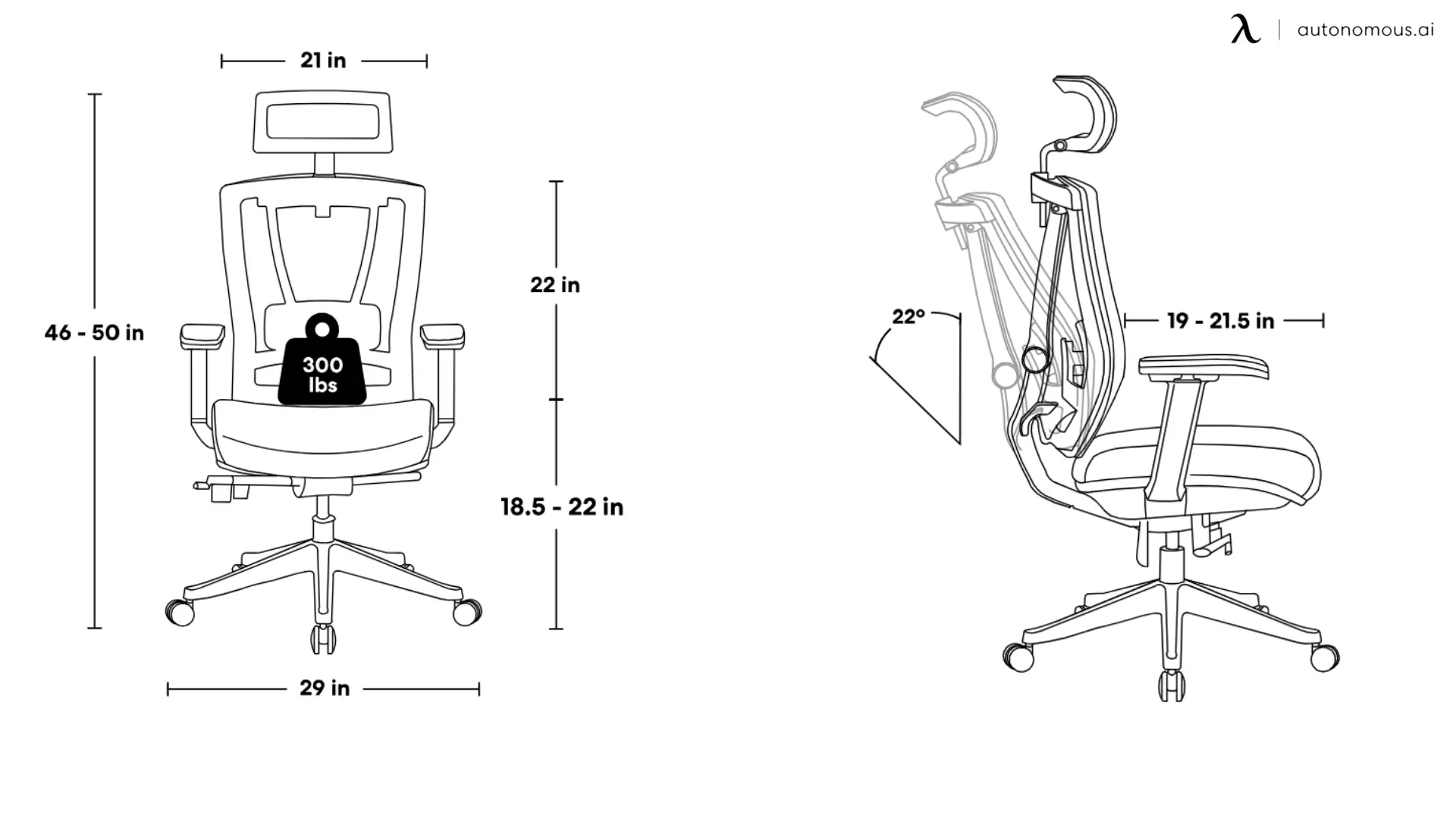
This model utilizes a mechanical sliding seat pan that shifts smoothly forward and backward beneath the cushion, allowing for precise thigh-length adjustment without changing the backrest position. The adjustment range spans from 19” to 21.5”, making it a great match for users between 5'5" and 6'2". Sitting in this chair feels supportive because the thick molded foam does not sink completely down after long hours of typing. When sliding the seat out, the Italian-made Donati tilt mechanism keeps everything level so your feet stay flat on the ground even when reclining.
2. Autonomous ErgoChair Ultra 2 - Best Premium Selection
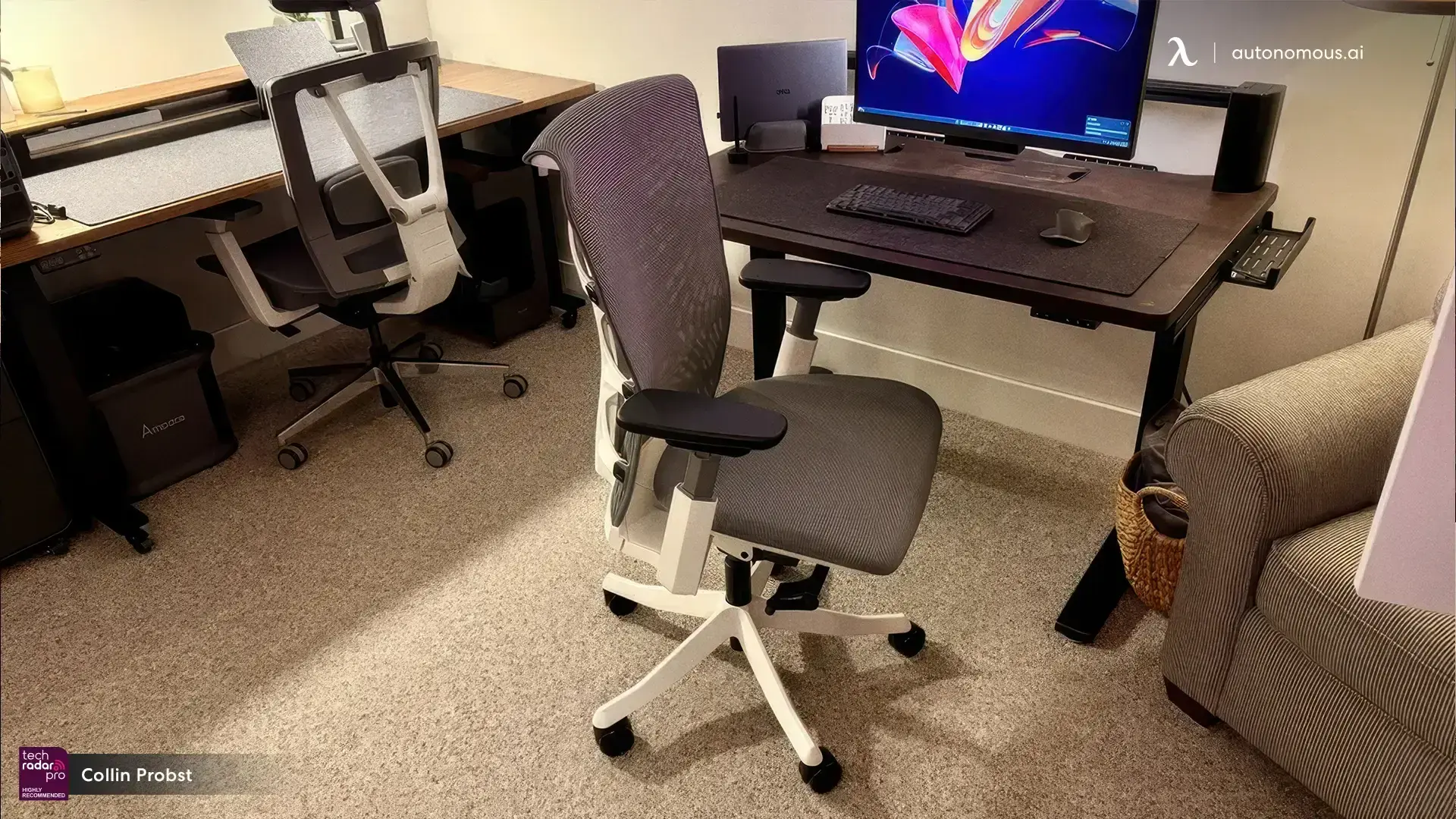
The Autonomous ErgoChair Ultra 2 is a frameless, high-responsiveness task chair engineered for extensive, long-hour office sessions.
The adjustment system uses a flexible, track-mounted sliding seat pan that clarifies weight distribution over an internal matrix of 186 polymer springs. It provides an adjustable range of 18” to 20.5”, which easily fits individuals from 5'3" up to 6'1". Sitting on this unique material feels like floating on an endurance bike saddle because it avoids traditional foam and uses open channels to keep you perfectly cool. The seat depth adjustment coordinates beautifully with a flexible backrest that bends with your spine as you shift positions.
3. Autonomous ErgoChair Core - Best Budget Value
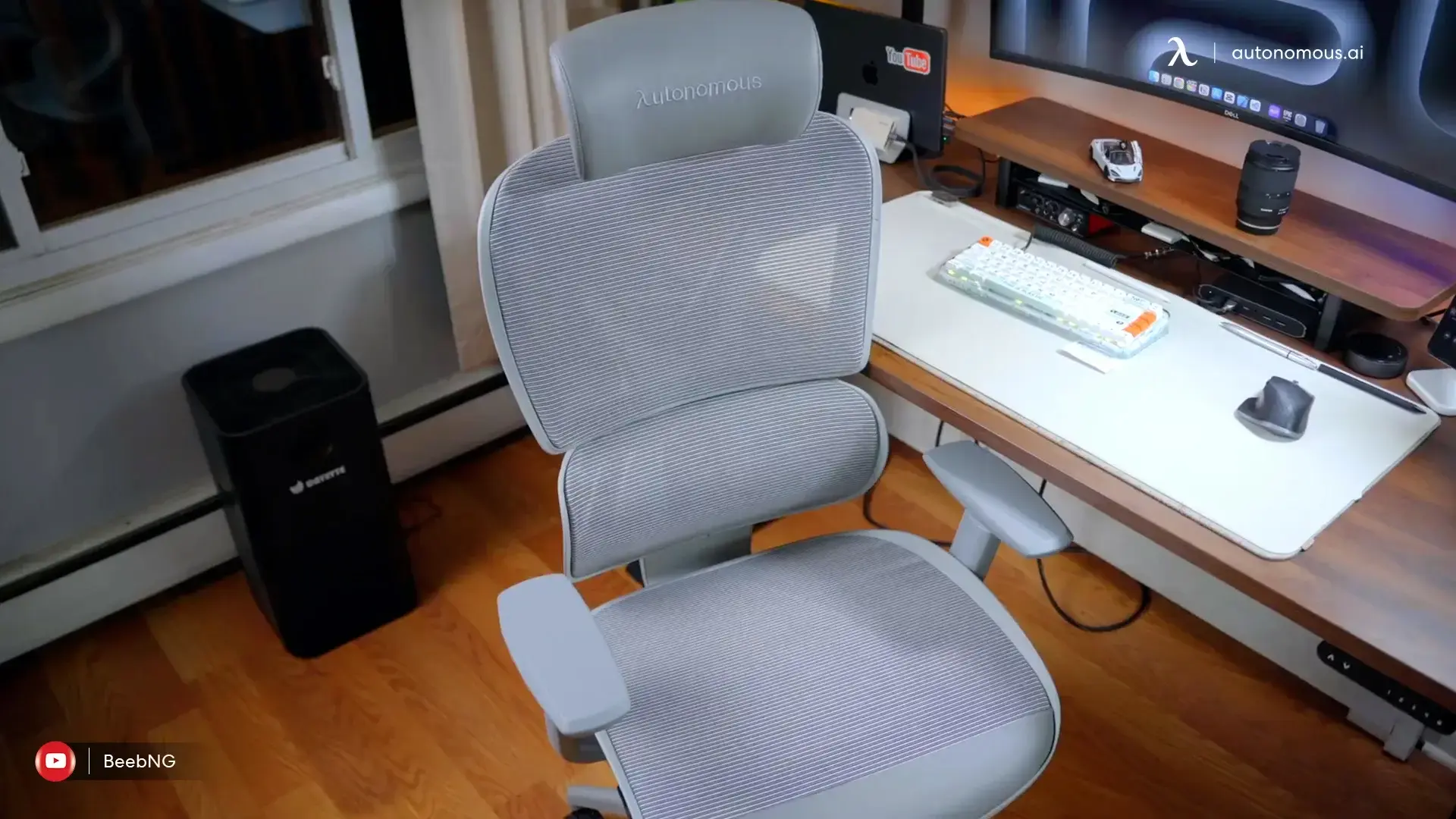
The Autonomous ErgoChair Core is a streamlined ergonomic chair that delivers key lower back support via a dual-layered frame design.
This chair relies on an adjustable manual seat pan slider that moves horizontally to accommodate shorter or medium leg profiles. The adjustment range runs from 18.5” to 20.5”, making it a reliable fit for people between 5'4" and 6'0". The backrest uses a flexible mesh tensioned over an X-shaped frame that holds your torso steady as you move. High-contact areas like the armrests feature soft PU leather pads that protect your elbows, making this a straightforward option for solid daily support.
4. Autonomous ErgoChair Mesh - Best for Active Support & Airflow
.jpg)
The Autonomous ErgoChair Mesh is a lightweight, high-ventilation task chair designed to move naturally with your daily posture changes.
The adjustment design features a quick-release sliding seat pan that repositions easily to prevent you from slipping forward while working. It offers an exact seat depth range of 18” to 20”, which works beautifully for shorter and average-height users under 5'11". The specialized German mesh seat provides excellent airflow, and when you lean back, the 2:1 synchro-tilt system lowers the backrest while keeping the seat cushion parallel to the ground to keep tension off your hamstrings.
5. HBADA E3 Pro (2026 Edition) - Best With Footrest
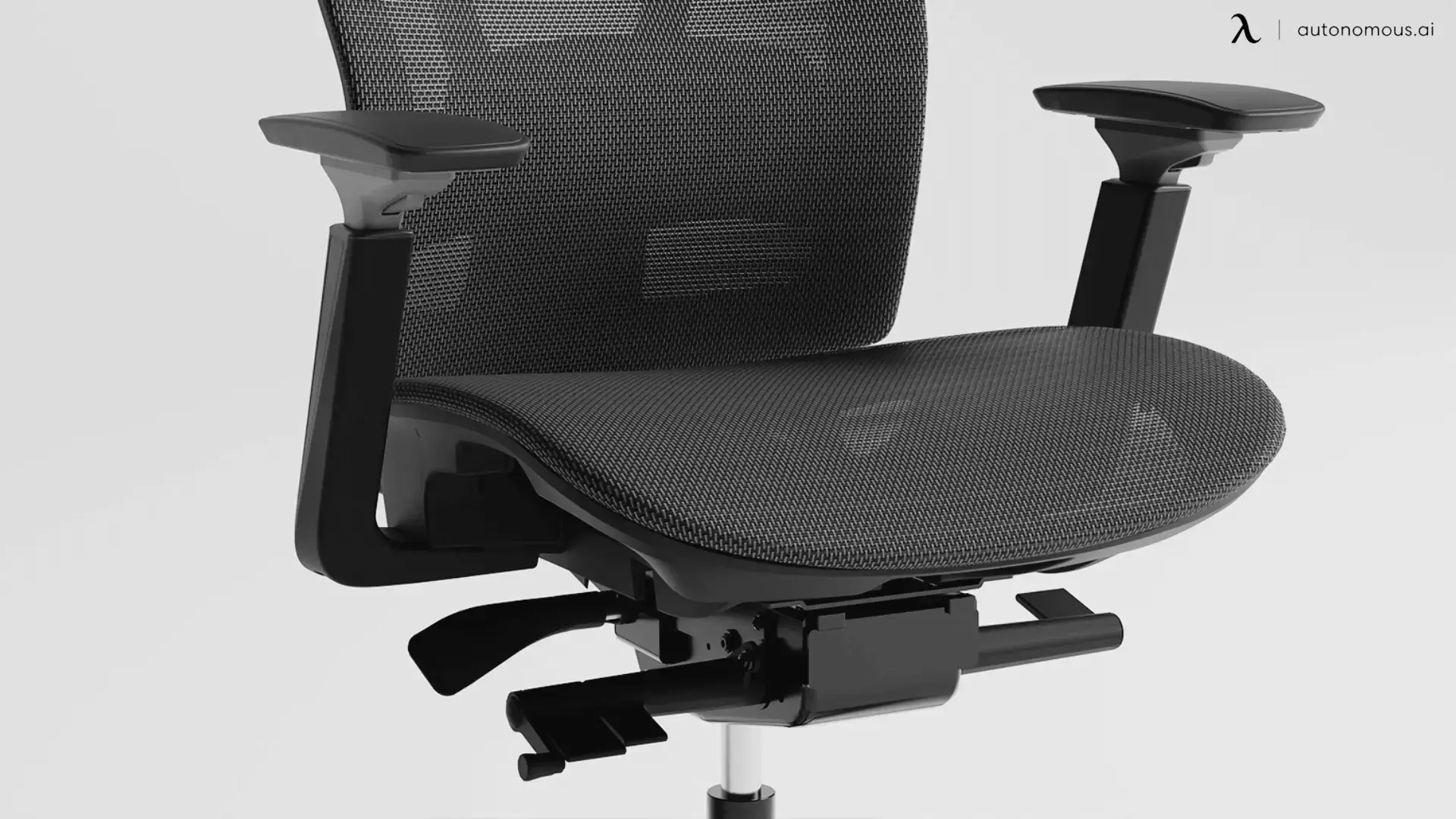
The HBADA E3 Pro is an advanced ergonomic office chair that integrates a multi-axis arm and leg support system for structured comfort during work and rest.
This chair features a dedicated seat pan adjustment system providing 2 inches (50mm) of travel, moving the depth from 17.7" to 19.7" (45-50 cm). This makes it highly effective at accommodating a broad height bracket from 5'1" all the way up to 6'5". When sliding the seat pan forward, the robust frame maintains total stability under its 330 lbs weight rating. The adjustment coordinates naturally with the CloudMesh tech seat and a 3-zone adaptive lumbar support system, allowing your lower back to stay flat against the spine cradles even when you expand the seating area.
6. FlexiSpot Office Chair C7 - Best Dynamic Lumbar Support
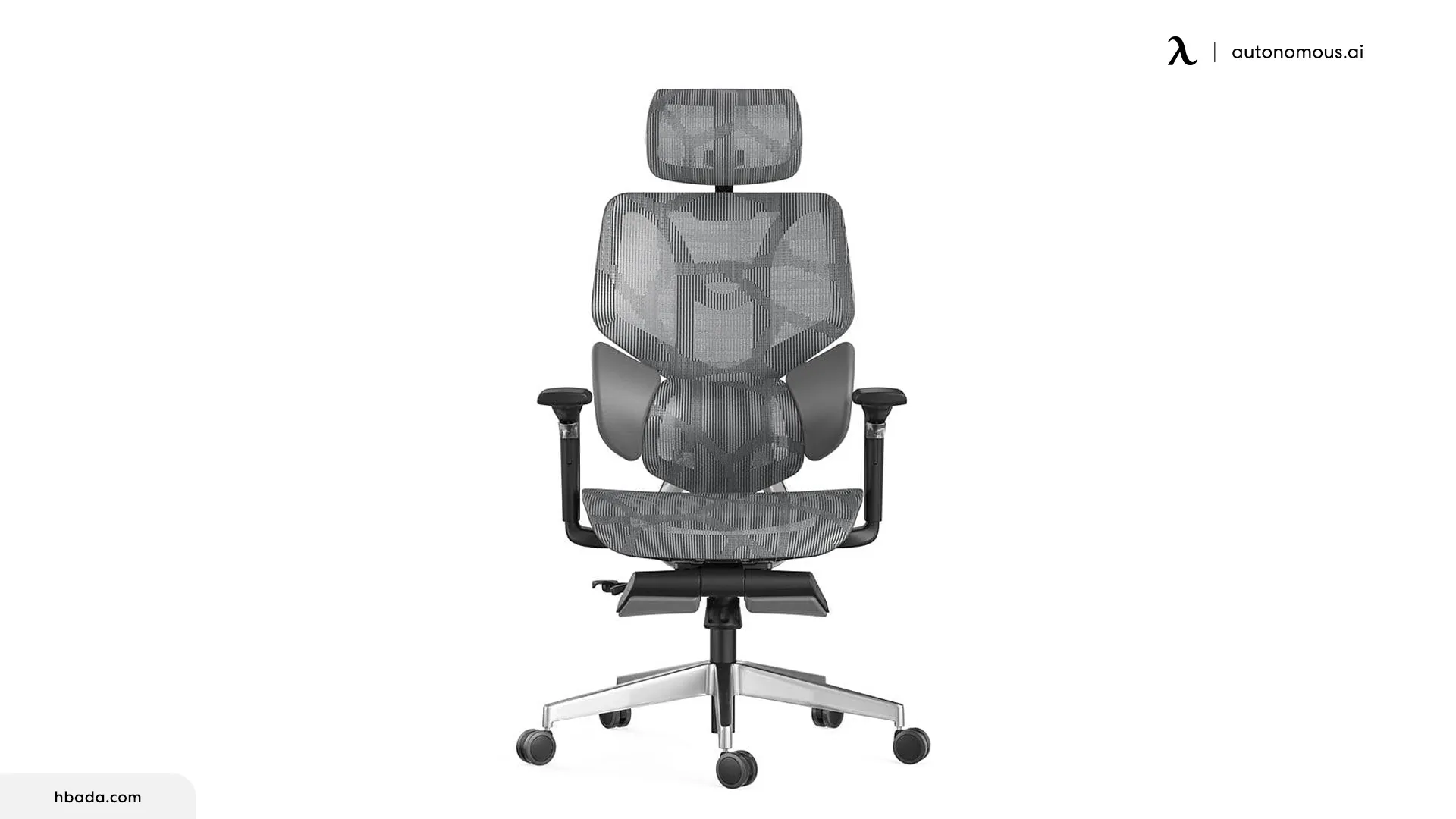
The FlexiSpot Premium Ergonomic Office Chair (C7) is an adjustable high-back chair pairing a multi-level rising frame with a self-adaptive back support pad.
This model utilizes a comprehensive slider track that delivers a wide seat depth adjustment range from 17.3" to 20.5". The mechanism allows users to expand or contract the seat pan independently of the backrest frame to secure a perfect two-to-three finger gap behind the knees. Sitting in the chair highlights its auto-responding lumbar support, which physically pivots to follow your movements if you lean into your desk or recline between 90 and 130 degrees. The full backrest can also slide up and down across five distinct height levels, ensuring that both tall and short frames can align the headrest and lumbar cushion without feeling neck strain.
FAQs
What is the difference between seat depth and seat height?
Seat height measures the vertical distance from the floor to the top of your seat cushion, while seat depth measures the horizontal length from the front edge of the cushion to the backrest. Height controls how your feet rest on the floor, while depth controls how much of your thighs are supported.
Do ergonomic chairs actually have adjustable seat depth?
Not all ergonomic chairs include this feature, as many budget models use a fixed seat size to save on manufacturing costs. Premium ergonomic designs almost always include an adjustable sliding seat pan to accommodate different leg lengths.
Is seat depth adjustment necessary for office chairs?
It is highly necessary if multiple people use the same chair or if your height falls outside the average range. Without it, you risk dealing with restricted circulation behind your knees or a complete lack of lower back support.
How do I know if my office chair seat is too deep?
Your seat is too deep if your calves press tightly against the front edge of the cushion when you try to sit all the way back against the lumbar pad. This layout forces you to slide forward, which removes all support from your upper body.
Are office chairs with adjustable seat depth worth it?
Yes, because a proper seat slider allows you to match the chair to your exact physical proportions. This single adjustment prevents chronic knee strain, improves hip alignment, and helps stop lower back fatigue.
Conclusion
Choosing an office chair with adjustable seat depth is the most effective way to ensure your workstation matches your exact leg length. Finding a proper fit prevents you from slouching forward, keeps your lower spine flush against the lumbar support, and removes harmful pressure from the back of your knees.
For most users, the Autonomous ErgoChair Pro offers the best overall balance of range, cushion firmness, and long-term durability. If you prefer a highly responsive, high-airflow design for long hours of sitting, the ErgoChair Ultra 2 is an excellent premium alternative. Whichever model you select, prioritizing a sliding seat pan will directly protect your posture and elevate your daily comfort.
References
- [1] Human Factors and Ergonomics Society. BIFMA X5.11: General Purpose Office Chairs. BIFMA standards define seat depth as part of anthropometric fit requirements for office seating systems.
- [2] Grandjean, E. Fitting the Task to the Man: An Ergonomic Approach. Taylor & Francis.