Table of Contents
Not all standing desks are built the same. Some prioritize raw stability and premium materials. Others compete on price, speed of delivery, or design. A few are pushing into new territory with integrated technology.
This guide breaks down 15 of the most relevant standing desk brands selling in the U.S. market right now — evaluated on frame and motor quality, real-world stability, warranty terms, customer service reputation, and long-term value. No single brand wins in every category. The right one depends on what you actually need from your desk.
Best Standing Desk Brands Comparison
Before diving into individual reviews, here's a high-level look at where each brand sits in the market. Standing desk brands cluster into three broad price tiers, and the differences between tiers are real — not just cosmetic.
Brand | Tier | Known For | Warranty |
Uplift Desk | Mid-Range to Premium | Deepest customization in the category | 15 years |
Autonomous | Mid-Range | AI-integrated workspace technology | 3 years |
Fully (Jarvis) | Mid-Range to Premium | Eco-focused materials, Herman Miller lineage | 15 years |
FlexiSpot | Budget to Mid-Range | Aggressive price-to-feature ratio | 5–15 years |
Vari | Mid-Range | Pre-assembled, plug-and-play delivery | 5 years |
Branch | Mid-Range | Minimalist design with an office bundle ecosystem | 10 years |
Secretlab | Premium | Full-metal modular desk system | 5 years |
Steelcase | Premium | Contract-grade durability, corporate wellness | 12 years |
Ergonofis | Premium | Handcrafted solid wood, made-to-order | 10 years |
Eureka Ergonomic | Mid-Range | Bold design, RGB integration, curved surfaces | 5–10 years |
IKEA | Budget | Affordable Scandinavian simplicity | 10 years |
Vernal | Mid-Range | Spacious corner desk engineering | 15 years |
VIVO | Budget | Widest selection under $300 | 3–6 years |
Mount-It! | Budget | Integrated mount and riser ecosystem | 5 years |
The Standing Desk | Mid-Range | Premium gas-spring mechanical lift | 5 years |
How We Evaluated These Standing Desk Brands
Comparing standing desk brands requires looking past marketing claims. A 15-year warranty means little if the company has only existed for three years. A 350 lb weight capacity sounds impressive until you learn it refers to a static load, not the operating lift capacity. These distinctions matter, and most buying guides skip over them.
For this guide, we assessed each brand across six criteria:
- Frame and motor quality:
The standing desk motor system is the most failure-prone component in any electric standing desk. Brands using established motor manufacturers tend to deliver smoother, quieter lifts with longer operational lifespans than those using generic, unbranded systems. But the motor is only part of the equation. Column thickness, leg shape, crossbar design — these determine whether your desk stays solid at standing height or starts wobbling after a few months.
- Stability at height:
Nearly every desk feels fine at office chair. The differences emerge when the columns are fully extended, which is where thin steel and missing crossbars become obvious. This is also where desks marketed as heavy-duty standing desks tend to separate themselves from lighter designs, particularly under higher loads or wider desktop configurations. We leaned on long-term user reports, independent testing footage, and editorial hands-on reviews to get a realistic picture.
- Warranty and support:
We looked at what's actually covered — not just the headline number. Some brands warranty the frame but exclude the motor, control box, or electronics. We also factored in customer service responsiveness and how brands handle claims based on documented user experiences.
- Material and build honesty:
Desktop surfaces range from solid hardwood to particleboard with a printed veneer. Both have their place, but the price should reflect the material.
- Value alignment:
Price alone doesn't determine value. A $250 desk that lasts two years costs more per year than a $700 desk that lasts seven. We evaluated whether each brand delivers durability and features proportional to its price point.

15 Best Standing Desk Brands Worth Knowing in 2026
What follows is a closer look at each brand — what it does well, where it falls short, and who it makes the most sense for. No brand on this list is perfect across the board. Some excel at build quality but charge accordingly. Others nail the price point but cut corners you might not notice until later.
The goal is to lay out enough about each of these standing desk brands for you to figure out which trade-offs you're willing to make.
1. Autonomous.ai
Known for: AI-integrated workspace technology
Warranty: Up to 10 years (varies by model)
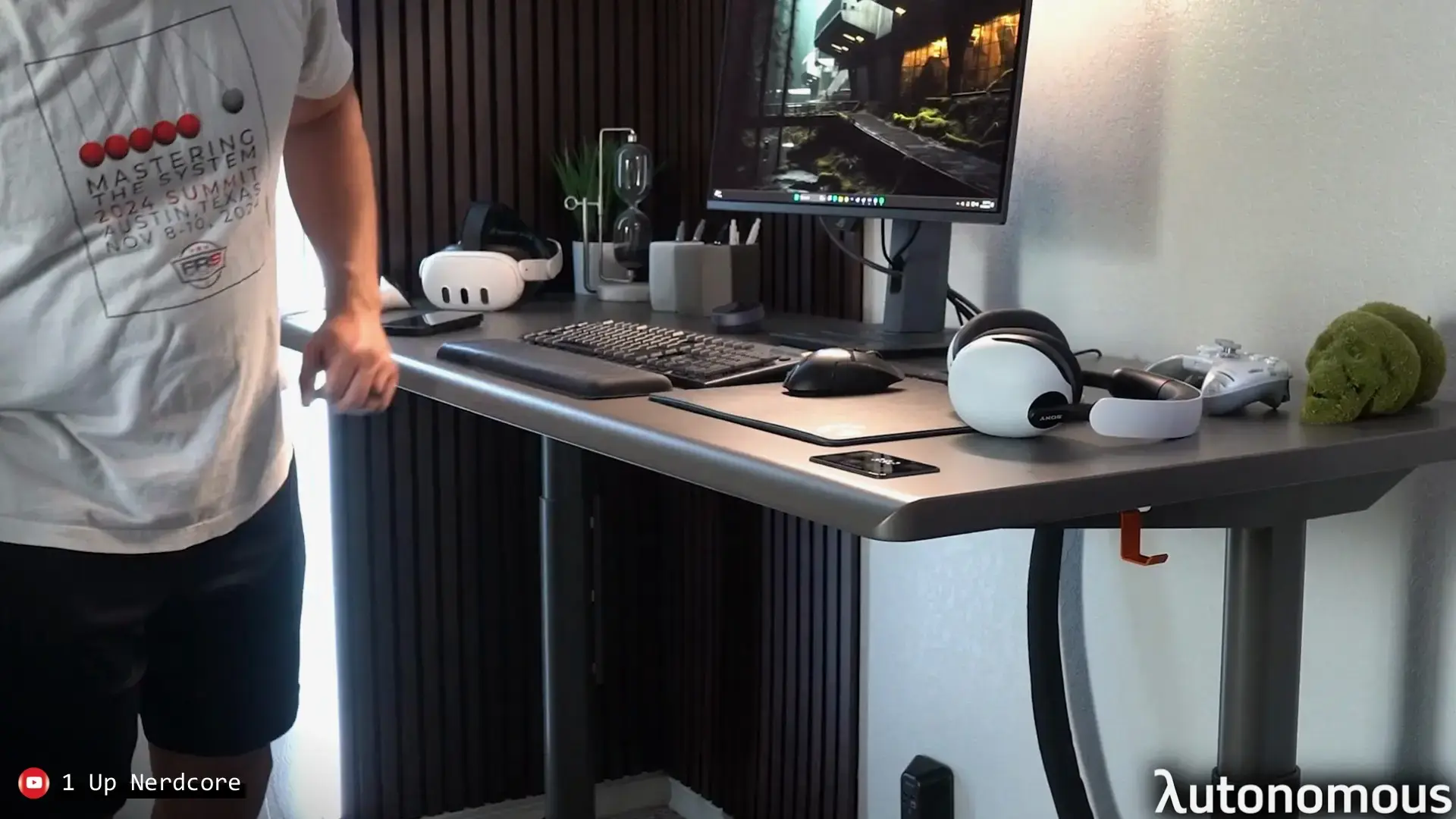
Autonomous built its reputation on a simple premise — deliver the core features of a mid-range standing desk at a price point that undercuts most competitors. Instead of concentrating on a single flagship, the brand maintains a tiered range that covers common use cases, from first-time buyers to users with more complex room layouts.
At the entry level, the Desk Core focuses on basic electric adjustability and compact footprints for home offices with limited space. The Desk 2 sits as the long-running workhorse in the lineup, offering higher weight capacity, dual motors, and broader size compatibility. Autonomous also offers an L-shaped desk for corner layouts and a DIY frame option that allows users to pair the lifting system with custom desktops, a flexibility point not all mid-range brands support.
The most differentiated product in the lineup is the Autonomous Desk AI. It has built-in environmental sensors tracking seven factors including air quality, temperature, humidity, and noise, consolidating them into a real-time Workspace Score through a companion app. The app then delivers personalized nudges — posture adjustments, hydration reminders, movement prompts, guided micro-exercises — that adapt over time based on how you work. This feature set positions the desk as part of a broader workspace monitoring system rather than a purely mechanical lift.
Across the range, core hardware is consistent with mid-tier expectations. Pro and AI models use dual-motor systems, include anti-collision detection, and rely on steel frames designed to remain stable through typical standing heights. The Levitate 2 introduces a floating-style desktop and an integrated cable management tray, offering a more visually streamlined option without moving into premium-material pricing.
Customization depth is where Autonomous draws clearer boundaries. Desktop finishes and color options are limited compared to brands that emphasize configurability, and the accessory catalog is narrower. For buyers who want precise control over surface materials, grommet placement, or extensive add-on ecosystems, this can be a constraint.
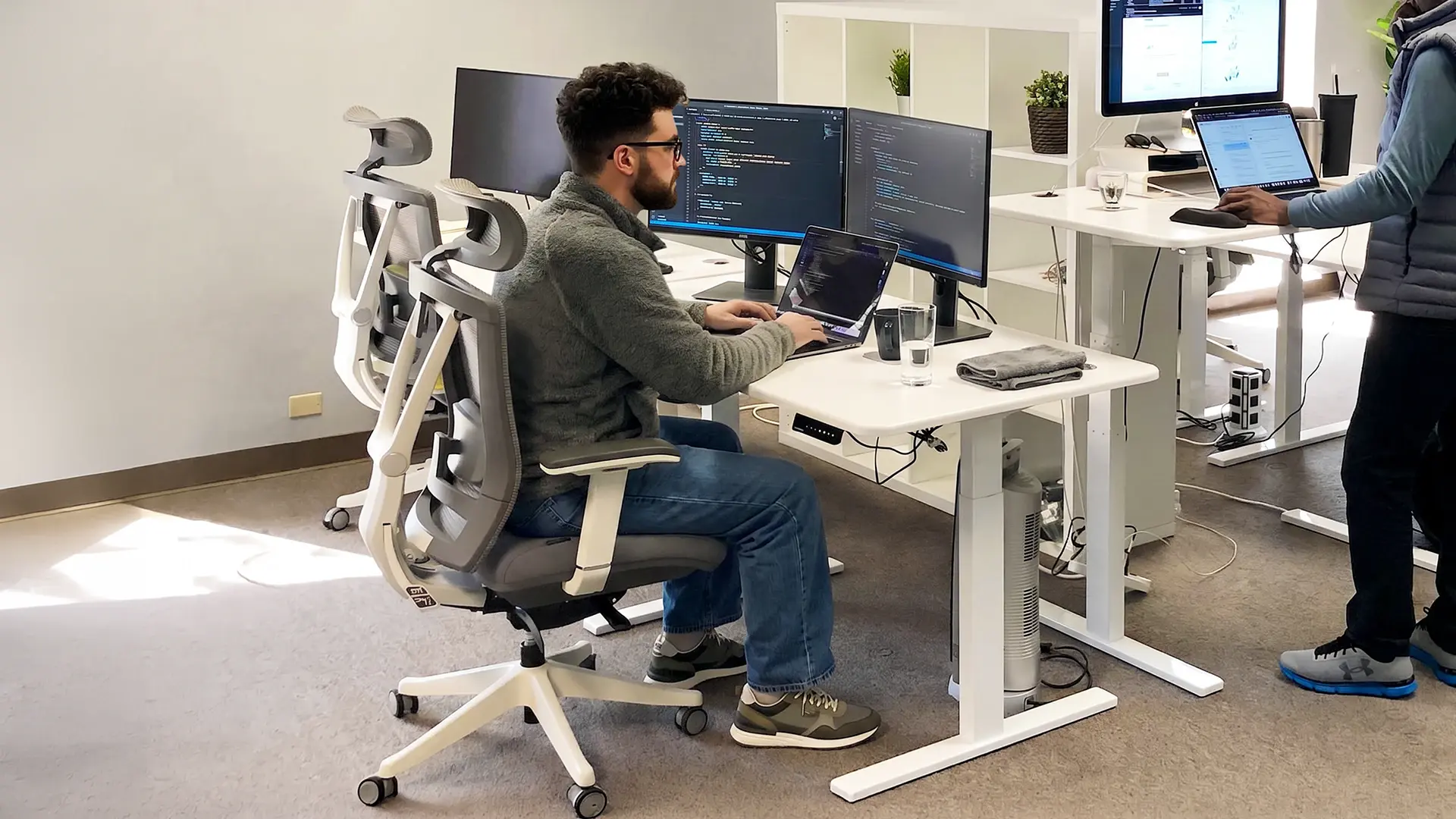
Autonomous is best suited for users who want a well-priced, functionally complete standing desk and are interested in features that extend beyond height adjustment alone. It prioritizes structured lineup coverage and workspace feedback over deep customization or luxury materials.
2. Uplift Desk
Known for: Deepest customization options in the category
Warranty: 15 years (frame, motor, electronics)
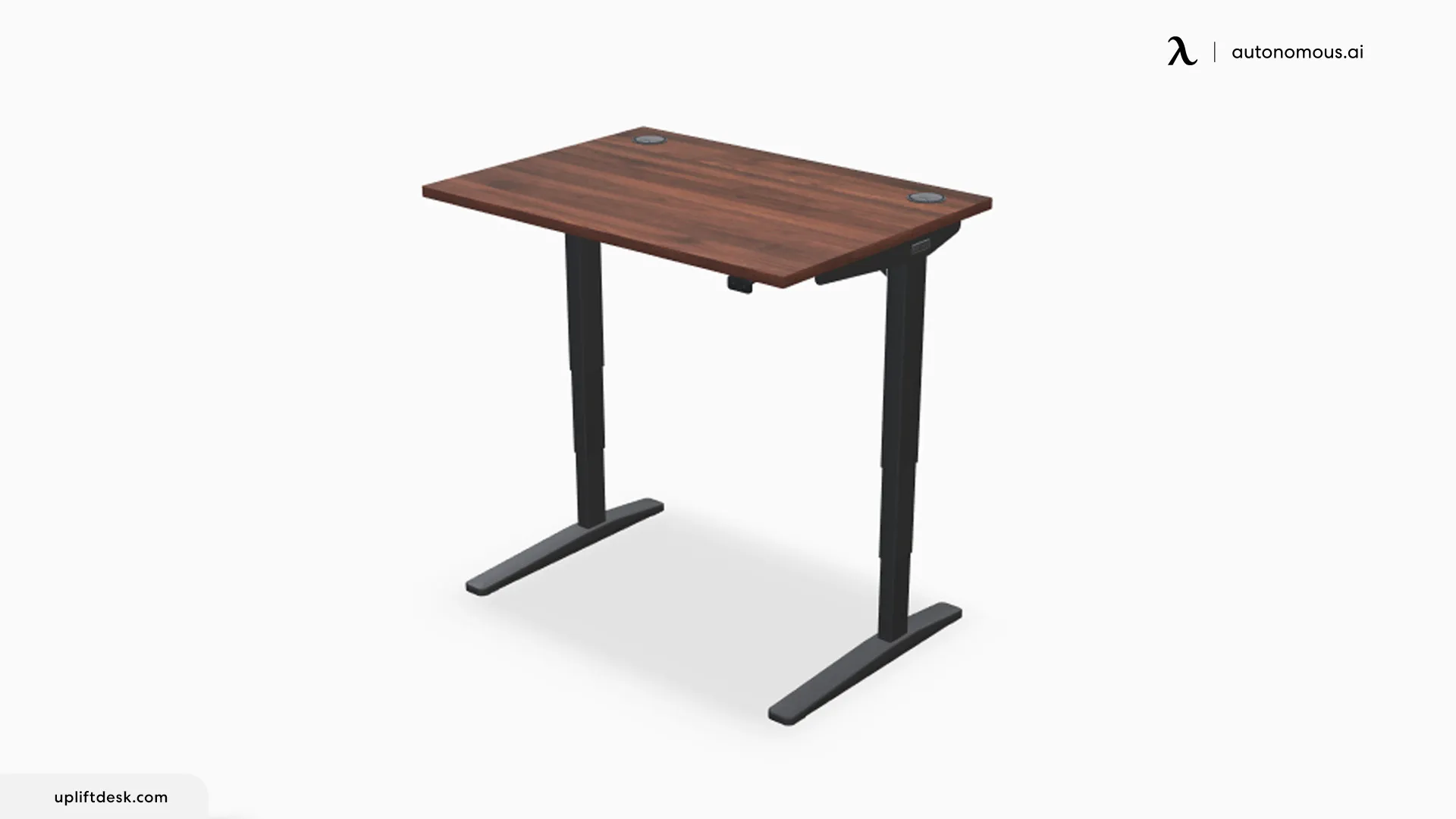
Uplift Desk is one of the most recognized and respected names among standing desk manufacturers in the U.S., and for good reason — they let you build exactly the desk you want. Over 30 desktop finishes, multiple frame colors, five keypad options, and a catalog of add-ons that range from monitor arms to under-desk hammocks.
The flagship V2 frame is built on industrial-grade steel and holds up to 355 lbs. At sitting height, it feels rock solid. At full extension, it performs better than most competitors, though some users on taller setups (above 46 inches) have reported minor lateral movement — a common issue across the category, not unique to Uplift. The dual motors are quiet, and the height transition is smooth enough that you stop noticing it after the first week.
Where this standing desk brand earns real trust is the warranty. Fifteen years covering the frame, motor, and electronics — not just the steel. That is one of the most comprehensive coverage terms among all standing desk brands currently selling in the U.S., and their support team has a documented track record of honoring it without excessive friction.
The trade-off is price. A fully configured V2 with a solid wood top and accessories can push well past $1,500. The base model is more accessible, but the appeal of the brand is in the customization — and that adds up quickly.
Among the top standing desk brands, they strike a perfect balance between quality and customizability. If you want a desk that fits your workflow down to the desktop material, grommet placement, and keypad layout, this is where the category starts.
3. Fully (Jarvis)
Known for: Eco-focused materials and certified B Corporation status
Warranty: 15 years (frame, motors, electronics), 5 years (desktop surfaces)
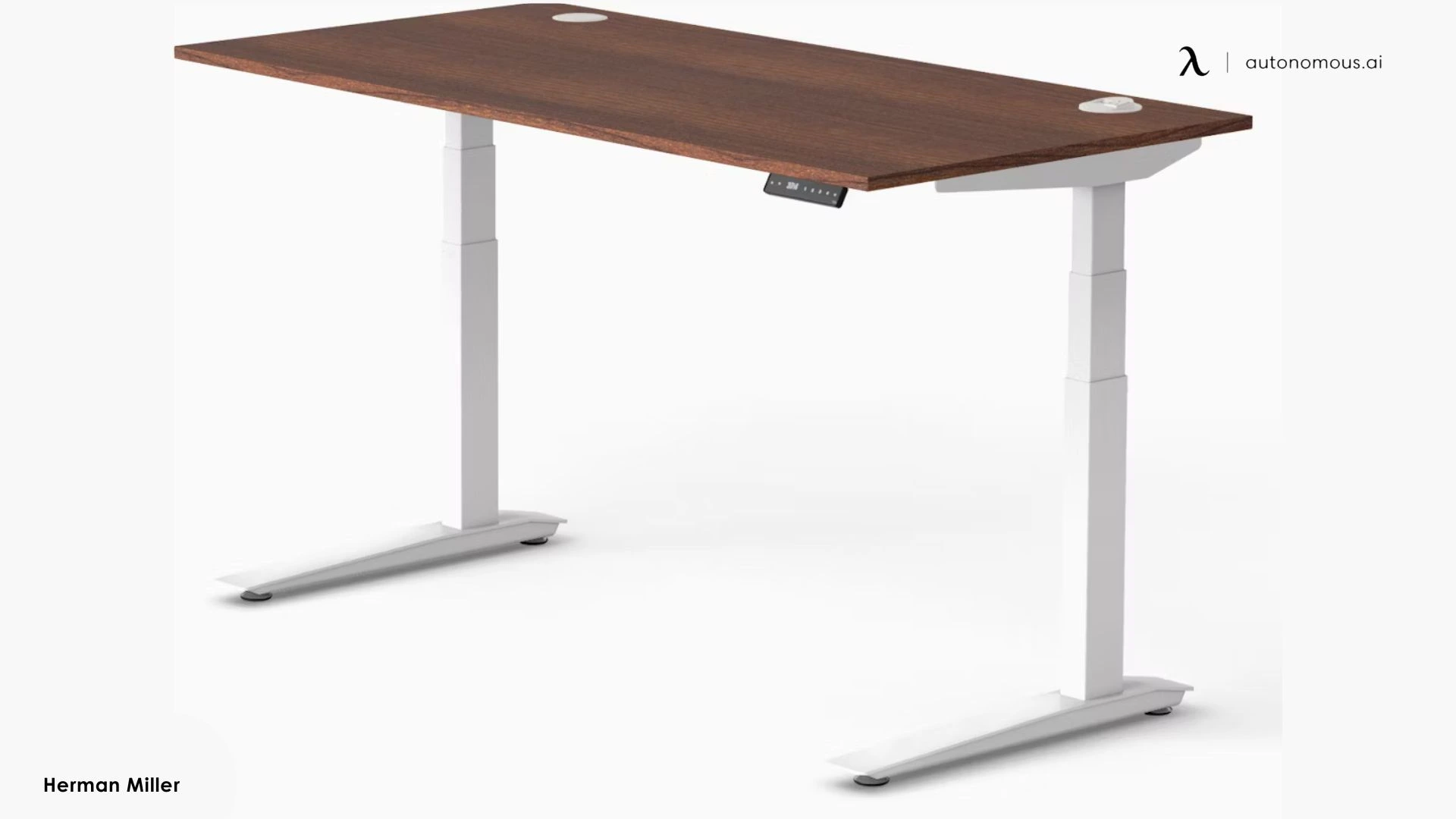
Fully made its name with the Jarvis line before being acquired by Herman Miller in 2019. The brand now operates under the MillerKnoll umbrella, but the products, mission, and Oregon roots remain intact. For buyers who factor sustainability into purchasing decisions, It is one of the luxury standing desks that backs its environmental claims with substance rather than just marketing language.
The flagship Jarvis Bamboo desk uses bamboo grown without pesticides or fertilizers, hand-harvested to preserve root structures, and finished with a UV-cured, water-based coating. Packaging is 100% recyclable and EPE-free. The company holds Certified B Corporation status, which requires meeting verified standards across environmental and social performance.
On performance, the Jarvis frame handles up to 350 lbs and offers a height range from 24.5 inches to just over 50 inches in the extended configuration, which accommodates both shorter users and those pairing the desk with an under-desk treadmill. The lift runs at 1.5 inches per second with noise under 50 dB. Two handset options are available — a basic up-down toggle and an OLED programmable handset with four height presets.
The limitation is stability at the upper end of the height range. Independent reviewers have noted lateral movement above 40 to 42 inches, particularly on wider desktop configurations. It is not a dealbreaker for most users at normal standing heights, but worth knowing if you are taller or plan to use the desk near maximum extension. Desktop durability has also drawn mixed feedback — some owners report wear on bamboo surfaces over time, though the 5-year top warranty provides a backstop.
A good standing desk brand fits buyers who want a well-built desk from a company with genuine environmental credentials and the backing of one of the most established names in office furniture. It is not the cheapest option in the mid-range, but the combination of build quality, warranty coverage, and sustainability accountability gives it a clear identity among the best standing desk brands.
4. FlexiSpot
Known for: Aggressive price-to-feature ratio across a wide model range
Warranty: 5 to 15 years (varies significantly by model)
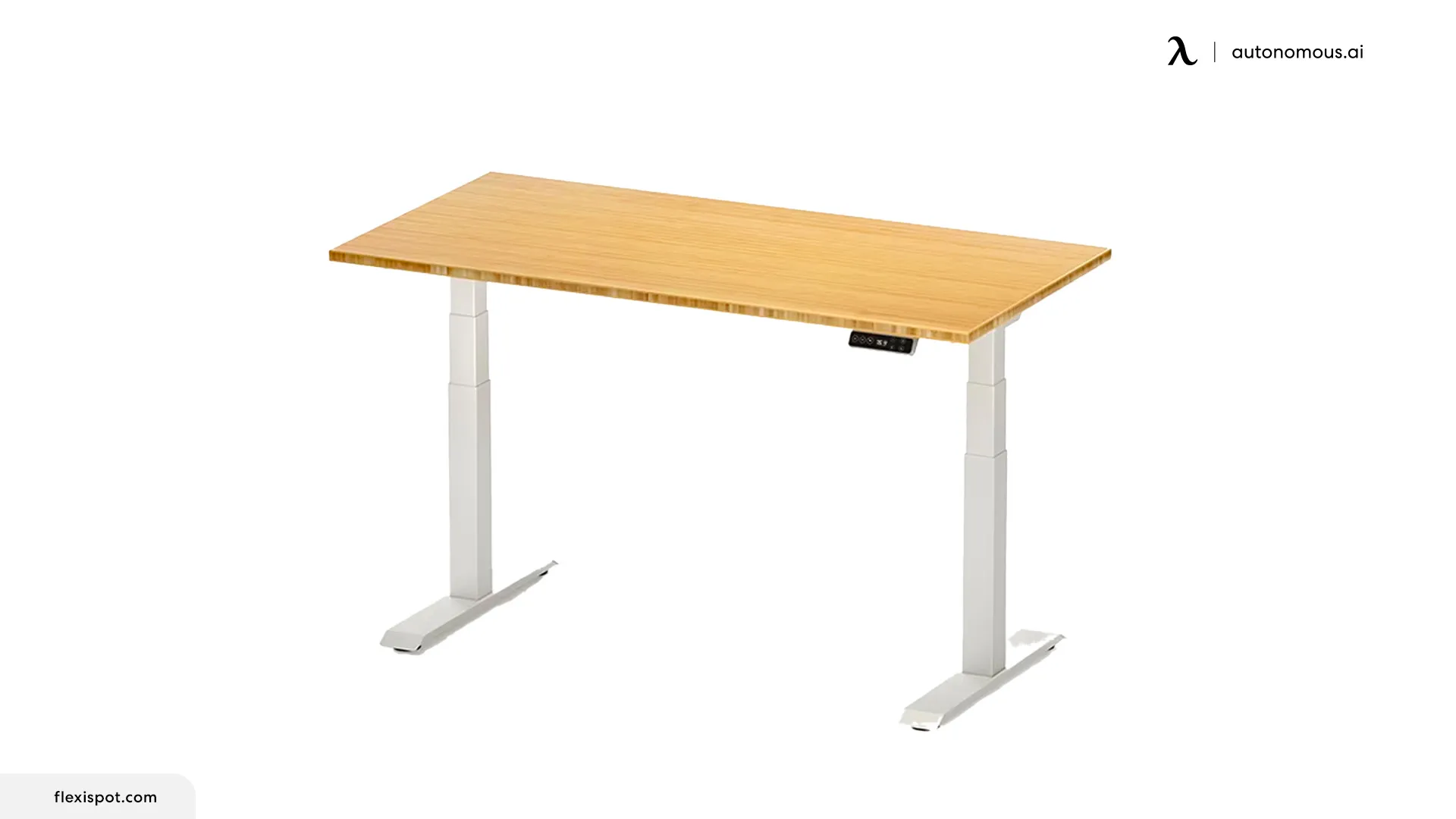
FlexiSpot is probably the first brand most people encounter when searching for a standing desk under $500. They offer a model range broad enough to cover almost any budget or use case — from the entry-level EC1 single-motor desk around $250 to the E7 Pro, which competes directly with desks twice its price.
The E7 Pro is the model that earns FlexiSpot its spot among popular standing desk brands. The 2026 edition uses a dual-motor system tested for over 30,000 lift cycles, automotive-grade steel legs with extended overlapping columns, and a C-leg frame designed to maximize legroom without sacrificing stability. Weight capacity reaches 440 lbs on the Pro, which is higher than what most mid-range and even some premium competitors advertise.
The range below the Pro is where things get more variable. Budget FlexiSpot models use single motors with lower weight ratings and thinner frames. They work fine for lighter setups — a laptop, a single monitor, some desk accessories — but start showing limitations under heavier loads or at taller heights. Wobble complaints at full extension are a recurring theme in user forums, particularly for the sub-$300 models.
Warranty is the area that requires the most attention. Some warranties cover only the frame while treating the motor and electronics separately. Reading the specific terms for the specific model you are buying is necessary.
Customer service feedback is mixed. Some users report smooth warranty claims and fast replacements. Others describe slow response times and difficulty reaching support. This inconsistency is a known trade-off with high-volume brands that prioritize scale and price over white-glove service.
This popular standing desk brand works well as an entry point or as a practical choice for buyers who want solid fundamentals without paying for brand prestige. It delivers roughly 80 to 85 percent of what premium brands offer at 50 to 60 percent of the cost. That math makes sense for a lot of people — just know what you are getting at each price tier within the lineup.
5. Vari
Known for: Pre-assembled delivery and plug-and-play simplicity
Warranty: 5 years to lifetime (depending on model line)
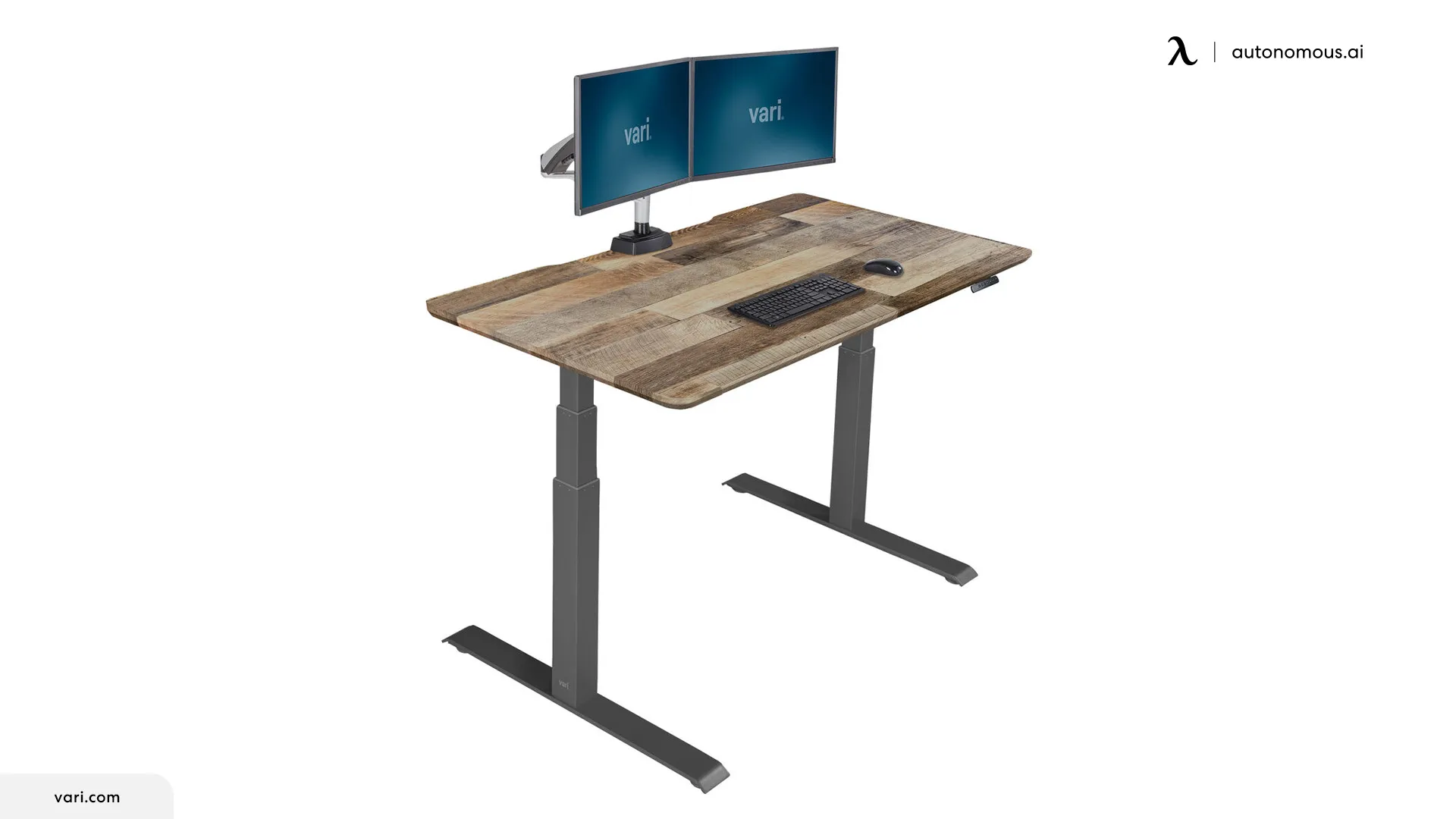
Vari started as VariDesk, the company that popularized standing desk converters before the full electric standing desk market took off. Their desks ship partially or fully pre-assembled, and most users report going from box to working desk in under 15 minutes. For anyone who has spent an hour wrestling with an IKEA-style flat-pack frame, that alone is a meaningful differentiator.
The current lineup has expanded considerably. The Classic Electric line ships at 200 lbs capacity and T-style legs, positioned as a reliable mid-range option. The newer ComfortEdge series adds an ergonomic contoured front edge and bumps capacity to 220 lbs. The Ergo Electric model pushes further with a curved desktop and a lifetime warranty — a significant step up from the 5-year coverage on their standard desks.
Where Vari holds an edge is in the overall ecosystem. They sell monitor arms, cable trays, standing desk mats, file cabinets, meeting tables, and active seating — all designed to look cohesive together. For small teams or companies outfitting multiple workstations with a consistent aesthetic, Vari makes the procurement process simpler than piecing together components from different brands.
The trade-off is weight capacity and raw build heft. At 200 to 220 lbs on the Classic and ComfortEdge lines, this standing desk brands sits below other competitors like Uplift (355 lbs), Fully (350 lbs), and FlexiSpot E7 Pro (440 lbs).
For a standard two monitor setup and typical desk accessories, this is plenty. For heavy multi-monitor rigs with a desktop tower, it is tight. Desktop material is laminate across most of the range — durable and easy to clean, but not offering the solid wood or bamboo options that other brands at this price point provide.
It fits buyers who value convenience, a polished out-of-box experience, and access to a coordinated product ecosystem. It is not trying to win on specs or customization. It is trying to make the entire process — buying, unboxing, assembling, and using — as painless as possible. For a lot of people, especially those furnishing a home office setup for the first time, that approach is exactly right.
6. Branch
Known for: Minimalist design with an integrated accessory system
Warranty: 10 years (Duo frame and desktop), 3 years (motor and electronics on older model)
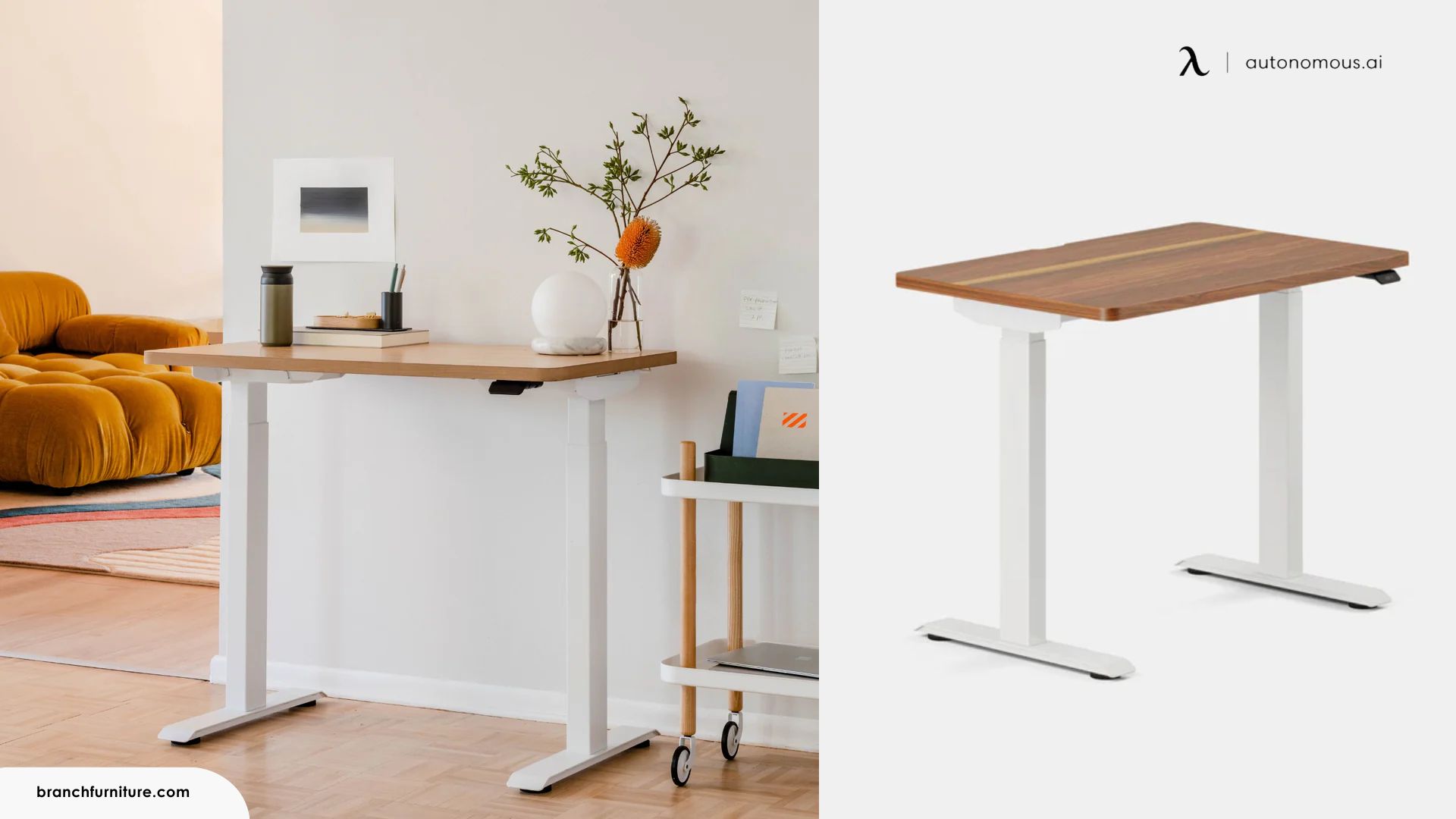
Branch is a newer entrant that has gained traction quickly, largely on the strength of the Duo Standing Desk. Priced starting around $499, it delivers a design-forward package that looks more expensive than it is.
The Duo uses a frameless design — no crossbar connecting the legs — which creates noticeably more legroom than most desks in this category. It also enables Branch's cleverest feature: an optional drawer that integrates flush into the underside of the desktop, something the traditional crossbar layout physically prevents. Height range runs from 28 to 47.8 inches with a 275 lb lift capacity.
The aesthetic is deliberately restrained -- rounded corners, clean lines, laminated MDF tops in four colorways, powder-coated steel legs in white or charcoal. This kind of visual simplicity is often favored in home studios and creative workspaces, where desk layout and accessory placement matter as much as raw specs, particularly when planning a digital artist desk setup rather than a traditional corporate workstation.
The limitation that needs attention is the warranty fine print. Branch advertises a 10-year warranty on the Duo, and that covers the frame and desktop. But on their older Standing Desk model, motor and electronic components were covered for only 3 years — a significant gap that independent reviewers have flagged. The Duo's warranty terms appear more comprehensive, but it is worth confirming exactly what is covered before purchasing, particularly on the motor and control box.
Build quality impressions are generally positive from editorial reviewers, though the desk is newer to market and lacks the multi-year ownership data that brands like Uplift and Fully have accumulated. Assembly is quick thanks to threaded inserts, and most users report completing setup solo in under 20 minutes.
For anyone looking to upgrade their office with a clean, efficient, and well-priced workstation, this standing desk brand is a strong option. As one of the good standing desk brands rising fast in 2025, it proves that you don’t need to compromise between design and performance.
7. Secretlab
Known for: Full-metal modular desk system with patent-pending cable management
Warranty: 5 years
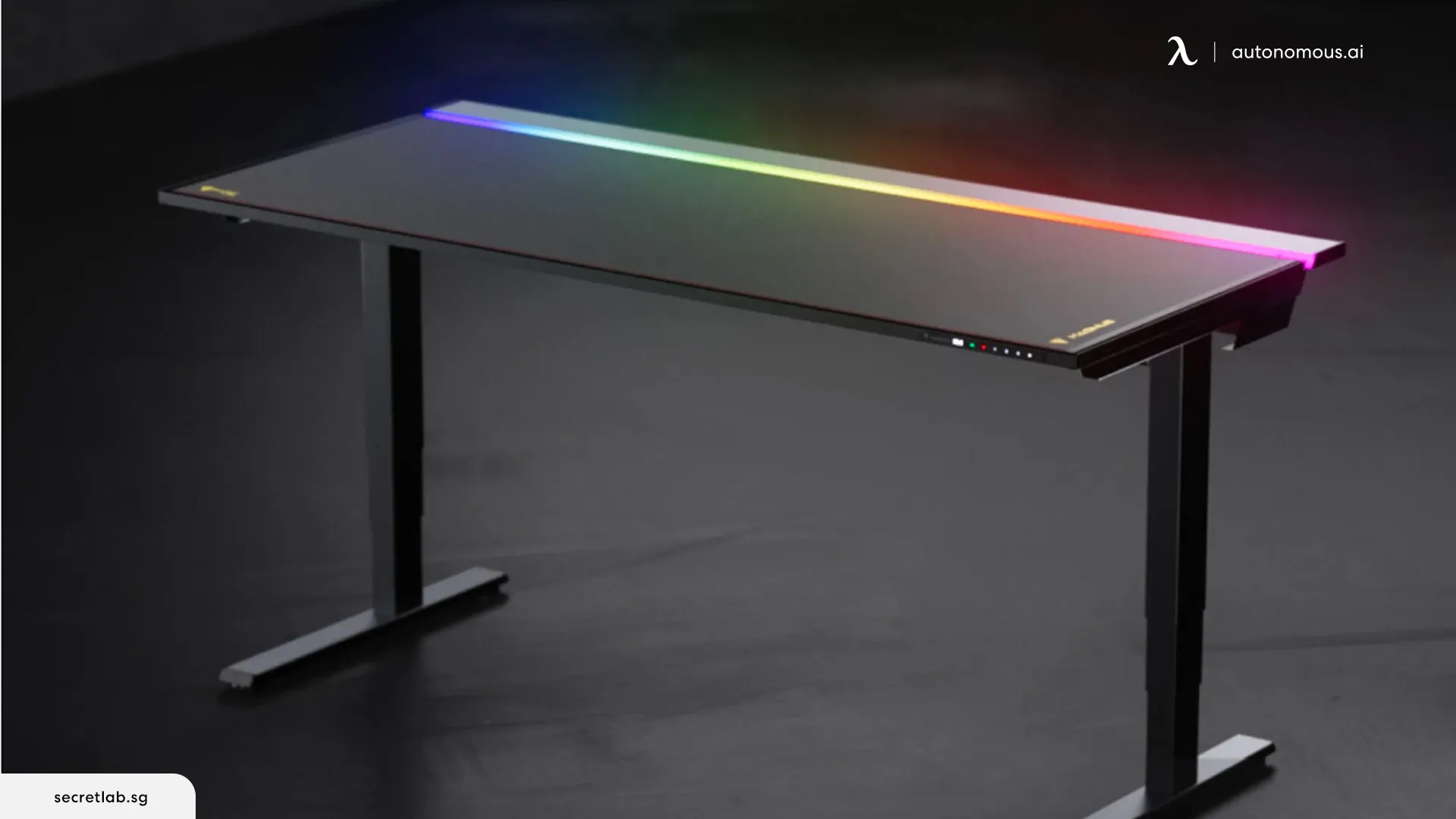
Power feeds into a concealed socket housed inside a full-length rear cable tray, allowing adapters and excess cabling to be hidden entirely once the hinged cover is closed. In practice, even complex setups can operate with a single visible cable running to the wall, which is a common priority in dense multi-device environments like a streamer desk setup where cameras, lighting, audio gear, and PCs all need power and clean routing.
That system-first approach carries through the rest of the design. The desktop uses a steel exterior over an MDF core, keeping overall weight manageable while enabling Secretlab’s magnetic accessory ecosystem. Desk mats, cable anchors, headphone holders, and LED light strips attach magnetically without clamps or tools.
In terms of physical specs, the Magnus Pro is offered in two sizes: a standard 59.1 × 27.6-inch model priced at $799, and an XL version measuring 70 × 31.5 inches at $949. Height adjustment spans 25.6 to 49.2 inches, and total desk weight comes in around 125 lbs.
The trade-offs become clearer when comparing it against similarly priced competitors. Maximum lifting capacity is rated at 265 lbs, lower than other competitors. Warranty coverage is limited to five years — short for this price tier, especially given that the frame uses JieCang components, the same supplier found in desks offering 10 to 15 years of coverage. Customization is also constrained: the desk is only available in black, and while the accessory ecosystem is cohesive, it is proprietary and priced at a premium ($169 for a single monitor arm, $279 for dual).
This standing desk brand makes the most sense for buyers who prioritize cable management and visual order above maximum load capacity or long-term warranty coverage. For multi-device setups where reducing visible clutter is a primary goal, it delivers a level of integration most standing desks do not. If flexibility, higher lifting limits, or longer coverage matter more, other brands in this tier offer stronger value on those dimensions.

8. Steelcase
Known for: Contract-grade durability and science-backed ergonomic design
Warranty: Lifetime (frame), 12 years (electrical components and worksurfaces)
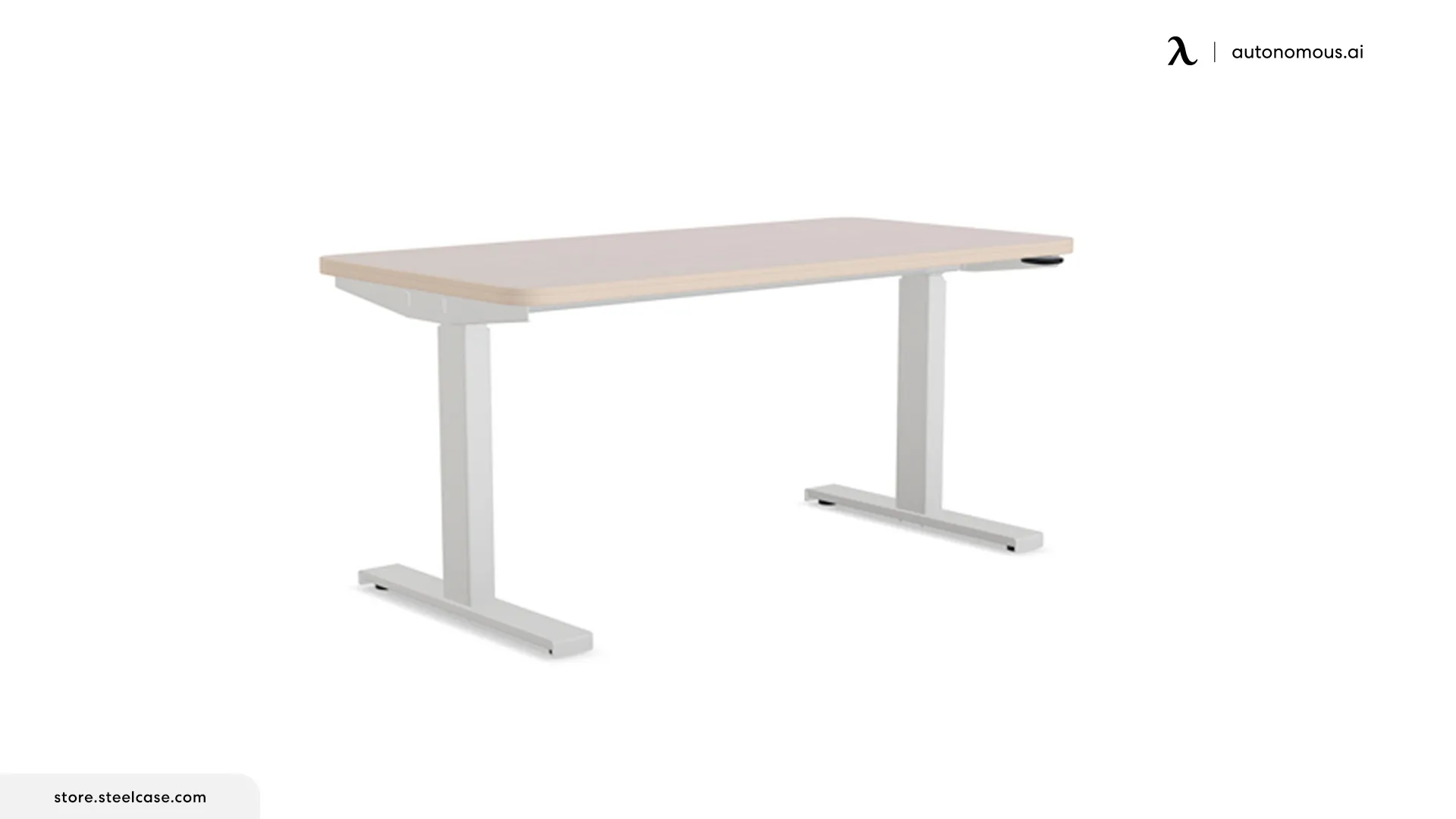
Steelcase approaches standing desks from an enterprise perspective rather than a consumer one. Founded in 1912, the company has long focused on furniture for offices, healthcare facilities, and educational institutions, where products are expected to perform consistently over long service lives. As a result, Steelcase standing desks are typically specified through dealers and procurement teams rather than sold directly through consumer retail channels.
The Ology is Steelcase’s primary height-adjustable desk offering. It supports a height range of 22.6 to 48.7 inches, with a notably low minimum height that can better accommodate shorter users. The desk is rated for a 313 lb lifting capacity. Control options include a Simple Touch controller for basic height adjustment, and a controller that connects to the mobile app, enabling sit-stand tracking, interval reminders, and stored user profiles. Frequently touched components incorporate BactiBlock antimicrobial material, a feature developed for shared and healthcare environments.
The desk supports multiple desktop shapes along with privacy panels, modesty screens, integrated lighting rails, power modules, and monitor arms. These components are designed to integrate with the brand’s broader furniture systems, allowing organizations to standardize workstation layouts across large installations while maintaining compatibility with other products.
Warranty coverage aligns with this long-term use case. The frame carries lifetime coverage, while electrical components and worksurfaces are covered for 12 years. Steelcase desks are sold mainly through authorized dealers, with pricing not publicly listed for most configurations. Depending on specifications, costs typically range from approximately $1,200 to $2,500 or more, and lead times may extend several weeks. The purchasing process is structured around organizational procurement rather than quick, direct-to-consumer fulfillment.
For organizations managing large or shared workspaces, this approach aligns with long-term operational needs. For individual home office buyers prioritizing immediate availability or direct purchasing, the process may feel less accessible.
9. Ergonofis
Known for: Handcrafted solid wood desktops and made-to-order production
Warranty: 10 years (frame), 3 to 5 years (surfaces depending on material)
Ergonofis positions itself through materials and production method rather than scale. Based in Canada, the company builds standing desks to order using solid wood desktops sourced from local suppliers, including walnut, maple, white oak, and cherry. Unlike veneer-based surfaces common in this category, Ergonofis uses full solid wood tops, which influences durability, weight, and long-term surface behavior.
Two main models anchor the line. The Sway uses solid wood tops and represents the brand's highest-end offering, starting around $1,495. The Shift uses a melamine surface with an antimicrobial, scratch-resistant coating, starting at roughly $756 — more accessible while still built on the same frame and motor system. Both desks use high-performance electric frames with quiet dual motors, and the height transition is consistently described in reviews as smooth and near-silent.
Construction details reflect the brand’s furniture-oriented approach. Cable management trays and cutouts are integrated directly into the desk design rather than added as accessories. The control panel supports programmable height presets, and desktop edges are shaped to reduce pressure during extended use. Materials are sourced locally, and production emphasizes controlled manufacturing rather than volume throughput, which affects both pricing and lead times.
The trade-off is cost and availability. A fully configured Sway with a solid walnut top pushes toward $2,800. That is premium standing desk territory by any measure, and it puts this standing desk brand in direct competition with high-end options. Because desks are made to order, shipping timelines are longer than those of brands that keep inventory in warehouses. If you need a desk this week, Ergonofis is not the answer.
From a component standpoint, the frame and motor system are comparable to those used by other premium and upper mid-range standing desk brands. The distinguishing factor is the desk materials and build process rather than proprietary motion technology. For buyers who prioritize solid wood construction and made-to-order manufacturing, Ergonofis offers an option that few standing desk brands provide. For those primarily focused on motor performance and adjustability, similar functionality is available at lower price points with alternative surface materials.
10. Eureka Ergonomic
Known for: Vertically integrated manufacturing and bold design language
Warranty: 5 years
This popular standing desk brand focuses on standing desks that combine distinctive design choices with robust frame construction. While it is often associated with gaming and creator setups, its product range also includes executive-style standing desks designed for users who need larger work surfaces and consistent stability throughout the height range.
Many models emphasize form factor and layout flexibility. Curved desktops, integrated drawers, and built-in cable routing are common across the lineup, alongside optional RGB lighting on select models. These features are paired with dual-motor lift systems designed to handle larger desktop loads without compromising movement smoothness.
From a construction standpoint, its desks rely on steel frames with a focus on rigidity rather than minimal weight. Compared to entry-level desks that use thinner laminates and lighter frames, the brand’s desks prioritize stiffness over minimal weight. Steel frames and reinforced leg assemblies are used to limit surface movement, particularly when desks are raised. This construction approach contrasts with lighter, laminate-focused designs where flex can become noticeable over time.
Visually, Eureka takes a more expressive approach than most mid-range standing desk brands. The designs are meant to be seen rather than blended into the background, which may suit users who want their desk to function as a central element of the workspace rather than purely as supporting furniture.
Eureka Ergonomic fits buyers looking for standing desks that balance structural strength with distinctive design choices. It sits between understated office furniture and purely aesthetic setups, offering an option for those who want durability without defaulting to a conventional, minimalist look.

11. IKEA
Known for: Same-day in-store availability at entry-level pricing
Warranty: 10 years
This popular standing desk brand do not compete on specs. It competes on the fact that you can walk into a store, try one, load it into your car, and have it set up by dinner. For a significant portion of buyers — particularly those purchasing their first height-adjustable desk -- that immediacy and low financial risk matter more than motor specs or weight capacity ratings.
The two primary models are the Bekant and the Trotten. Bekant is the electric option, with a height range of roughly 22 to 48 inches and a weight capacity around 154 lbs. Trotten is available in both manual crank and electric versions, positioned slightly below Bekant in price. Both use laminate or veneer surfaces over particleboard, and both meet IKEA's standard environmental and safety certifications.
The pricing is straightforward. Electric models start around $549 for the Bekant. Manual options begin under $300. IKEA backs them with a 10-year warranty, which is notably generous relative to the price point — though the warranty terms should be read carefully for coverage scope on electrical components.
Where IKEA falls short is in everything that separates a basic standing desk from a good one over time. The 154 lb capacity on Bekant limits what you can put on it — a dual monitor setup with a desktop tower and office accessories will push close to that ceiling. Stability at standing height has drawn consistent negative comments in user reviews, with lateral wobble being a common complaint. Motor noise is louder than what you will find from brands with more refined lift systems.
IKEA works as a starting point. If you are unsure whether a standing desk fits your workflow and want to test the concept without a large financial commitment, the Trotten manual crank is a reasonable low-risk entry. If you already know you want a standing desk and plan to keep it for years, the limitations in stability, capacity, and build quality will likely push you toward other options in the $400 to $600 range that deliver meaningfully more.

12. Vernal
Known for: Frame rigidity and community-driven reputation
Warranty: 15 years
Vernal is a relatively new brand that has built a focused reputation around one thing: stable, spacious desks at mid-range pricing. Rather than offering dozens of models across every category, the brand keeps the lineup tight — a few frame and desktop combinations, engineered around the same core platform. The simplicity is deliberate, and it works in their favor for buyers who find the configuration overload from brands exhausting rather than appealing.
The frame uses an integrated welded design with upgraded 2mm-thick columns that Vernal claims reduce deflection by 50 percent compared to standard column designs. Weight capacity is rated at 352 lbs, and the desks carry a 15-year warranty -- one of the longest in the category, and notable for a brand without decades of market presence to back it up. Dual motors, programmable memory presets, and an anti-collision system that detects obstacles including chair armrests round out the standard feature set.
Desktop options lean toward walnut and oak tones in laminate finishes, giving the desks a warm, residential feel rather than the industrial or corporate look of most competitors. Pre-drilled cable grommets, a cable management tray with a Velcro back panel, and beveled edges come standard. Assembly requires bending the included cable tray along a perforated line — a design choice that reviewers have noted can crack the paint on the metal, though functionality is unaffected.
The limitation is brand maturity. Vernal does not have the multi-year ownership data, the established customer service infrastructure, or the accessory ecosystem that longer-running brands have built. A 15-year warranty is a strong signal of confidence, but it is only as reliable as the company's ability to honor it over time. Desktop variety is also limited compared to brands offering solid wood, bamboo, or dozens of laminate colors.
For buyers who prioritize frame stability and clean design over brand pedigree and configuration depth, Vernal is a name that has earned attention quickly — and the product, based on available data, appears to justify it.

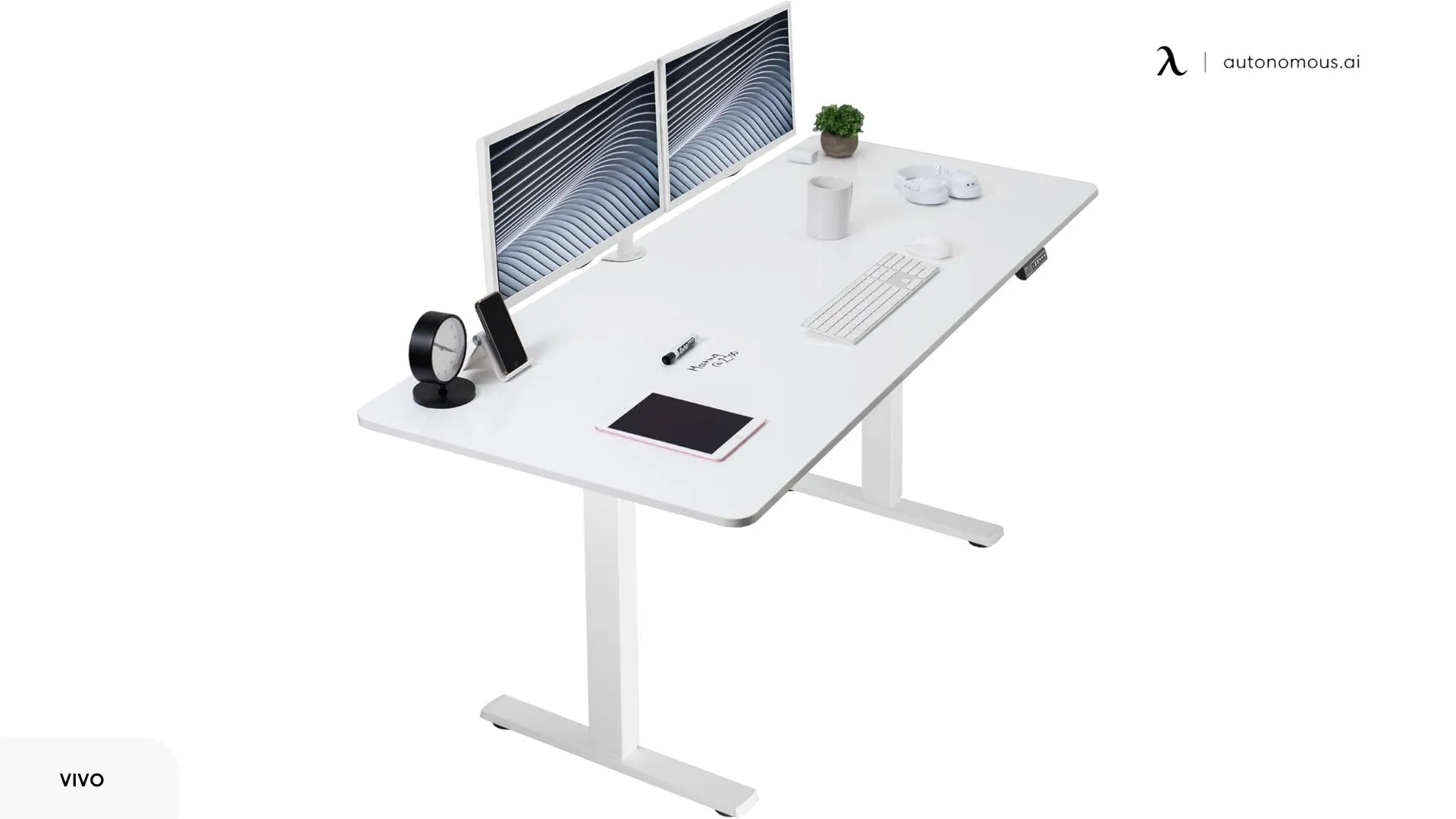
13. VIVO
Known for: Widest selection of budget form factors
Warranty: 3–6 years (varies by model)
VIVO operates primarily in the value segment of the ergonomic furniture market, with a product range that spans electric standing desks, manual desks, desk converters, and accessories. Rather than focusing on a narrow flagship model, the brand emphasizes breadth and accessibility, offering options for users with different budgets, space constraints, and setup requirements.
Electric standing desks make up a large portion of VIVO’s lineup. Most models include dual motors, programmable memory handsets, and steel frames, and are designed to be straightforward to assemble without specialized tools. Performance tends to be consistent within the price category, making these desks a practical choice for users who want basic height adjustment without additional system complexity.
Space flexibility is another area where VIVO differentiates itself. The brand offers compact frames, curved desktop options, and desk risers intended to sit on top of existing tables. This allows its products to fit into small home office desk setups, shared rooms, or temporary workspaces where full-size desks may not be practical.
Support and warranty coverage are positioned to align with the brand’s value-focused pricing. While not comparable to enterprise-grade terms, customer support is generally responsive, and warranty coverage is sufficient for the intended use cases. This combination has helped VIVO maintain steady adoption among students, remote workers, and small teams looking for cost-controlled ergonomic solutions.
This standing desk brand is best suited for buyers prioritizing affordability, ease of setup, and functional adjustability. For users seeking advanced customization, premium materials, or long-term infrastructure-grade durability, other brands may be more appropriate. As an entry point into standing desks and ergonomic upgrades, it remains a widely available and practical option.

14. Mount-It!
Known for: Integrated mounting and display accessory ecosystem
Warranty: 5 years
Mount-It! came from monitor arms and display mounting hardware. The standing desks arrived later, built around the same idea — modular components designed to work together as a system.
The desks themselves are standard mid-budget fare. Dual motors, memory presets, clean aesthetic, adequate stability for a typical home office. Spec for spec, nothing distinguishes them from a half-dozen other brands in the same range. This is the same segment where buyers often compare multiple options based on price and basic functionality, especially when searching for an affordable standing desk rather than a fully customized system.
The value shows up when you need more than just a desk. A dual monitor arm that matches the frame finish and clamps cleanly to the edge. A laptop riser rated for the same weight specs. A keyboard tray designed to fit the desktop depth. Buying all of that from one brand eliminates the compatibility guessing game that comes with mixing parts from four different manufacturers. For someone building a complete workstation on a moderate budget, that coherence saves time, money, and frustration.
This brand also makes wall-mounted desk stations and clamp-on converters for spaces where a full standing desk frame is impractical — small apartments, shared rooms, temporary home offices. Most brands in this category do not acknowledge that use case. Mount-It! has built multiple products around it.
15. The Standing Desk
Known for: Gas-spring mechanical lift, no electricity required
Warranty: 5 years
No motor. No control box. No power cord. The Standing Desk builds height-adjustable desks around gas-spring mechanisms — push the surface up, pull it down, the spring holds position. Adjustment is silent and immediate.
The Klöud, their primary model, uses an aluminum and steel frame manufactured in the U.S. with sustainably sourced desktop materials. The construction runs lighter than motorized desks, which is a practical detail that matters if the desk needs to move between rooms or does not have a permanent location.
The appeal is mechanical simplicity. Electric standing desks have motors that wear out, control boxes that glitch, and wiring that adds complexity. A manual standing desk strips all of that away. Fewer components, fewer failure points, and no dependency on being near an outlet. For co-working spaces, studio apartments, or anyone who has replaced a standing desk motor and would rather not do it again, the concept has clear logic behind it.
There is no programmable memory, no height readout, no app. You find your position by feel and the spring locks it there. Capacity and height range fall below what dual-motor electrics deliver. These are real constraints if your setup is heavy or if you value precision automation. They are irrelevant if what you want is a reliable desk that adjusts when you need it to and never asks to be plugged in.
FAQs
What are the best standing desk brands?
The best standing desk brands vary by use case. Autonomous emphasizes mid-range value with optional AI features, Uplift and Fully focus on customization and long warranties, and Steelcase targets enterprise environments with contract-grade durability. The right brand depends on whether you prioritize price, materials, stability, or long-term support.
How do standing desk brands differ from each other?
Standing desk brands differ in motor quality, frame design, desktop materials, warranty coverage, and customer support. Budget brands often use thinner steel and entry-level motors, while mid-range and premium brands invest more in stability at standing height and long-term durability.
Are expensive standing desk brands actually better?
More expensive standing desk brands often use higher-grade components and offer longer warranties, but higher price does not guarantee a better fit for every user. For lighter setups or shorter daily use, many mid-range or budget desks perform just as well. Value depends on matching the desk to your workload and expectations.
Which standing desk brands are best for home offices?
For home offices, the best standing desk brands like Autonomous, FlexiSpot, Branch, and Vari are commonly chosen for their balance of price, delivery speed, and ease of setup. These brands sell direct to consumers and are designed for residential spaces rather than large-scale corporate deployments.
Which standing desk brands are most stable at standing height?
Standing desk brands such as Autonomous, Uplift, and Fully tend to perform better at standing height due to thicker lifting columns and reinforced frame designs. Stability depends more on column overlap and frame geometry than advertised weight capacity alone.
How important is the warranty when comparing standing desk brands?
Warranty length matters, but what’s covered matters more. Some standing desk brands advertise long warranties that exclude motors or electronics, which are the most failure-prone parts. Always check whether the warranty applies to the frame, motors, and control box.
Which standing desk brands are best for small spaces?
Standing desk brands like VIVO, Mount-It!, and IKEA offer compact frames, desk converters, or wall-mounted options that work well in small rooms. These designs reduce floor footprint while still providing basic height adjustability.
Are budget standing desk brands reliable?
Budget standing desk brands can be reliable for lighter setups and moderate daily use. However, they often show limitations at taller heights, under heavier loads, or after several years of use. Understanding those constraints helps avoid disappointment.
Which standing desk brands are best for heavy multi-monitor setups?
Standing desk brands, including Autonomous, Uplift, Fully, and Steelcase are better suited for heavy multi-monitor setups because they support higher operating lift capacity and stronger frame construction. Buyers should confirm that the listed weight rating refers to lifting capacity, not static load.

Conclusion
Fifteen standing desk brands, each with a different angle on the same problem. The right choice depends on what you are actually optimizing for — frame stability, price, sustainability, design, technology, or long-term durability. No single brand leads across all of those.
Uplift and Fully offer the deepest combination of build quality and warranty coverage. Autonomous is the only brand integrating workspace sensors and AI-driven feedback into the desk itself. FlexiSpot and VIVO make the category accessible without requiring a large upfront commitment. Steelcase and Ergonofis serve buyers who treat their desk as a long-term investment. And brands like Vernal and Eureka Ergonomic are proving that newer standing desk brands can compete on engineering without relying on brand recognition.
Start with what matters most to your workspace. Work backward from there.
Spread the word