


C-Frame vs. T-Frame Standing Desks: Which is Right for You?

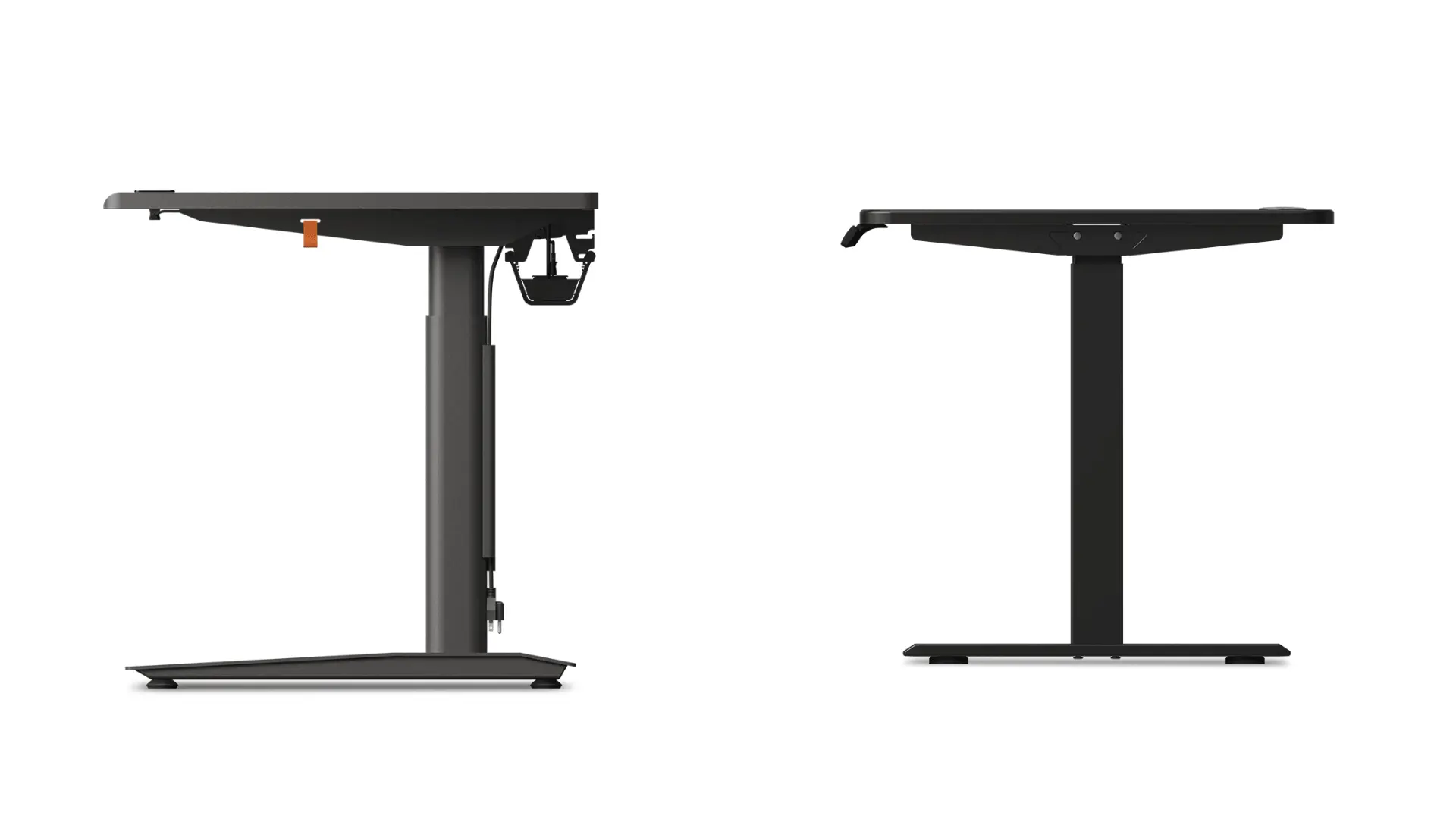
C-frame and T-frame standing desks differ in how the foot under each column extends. A C-frame extends in one direction (forward, toward the user) and removes the front crossbar. A T-frame extends in both directions with a crossbar connecting the legs. That single structural difference changes knee clearance, wall placement, and how the standing desk fits the room around it.
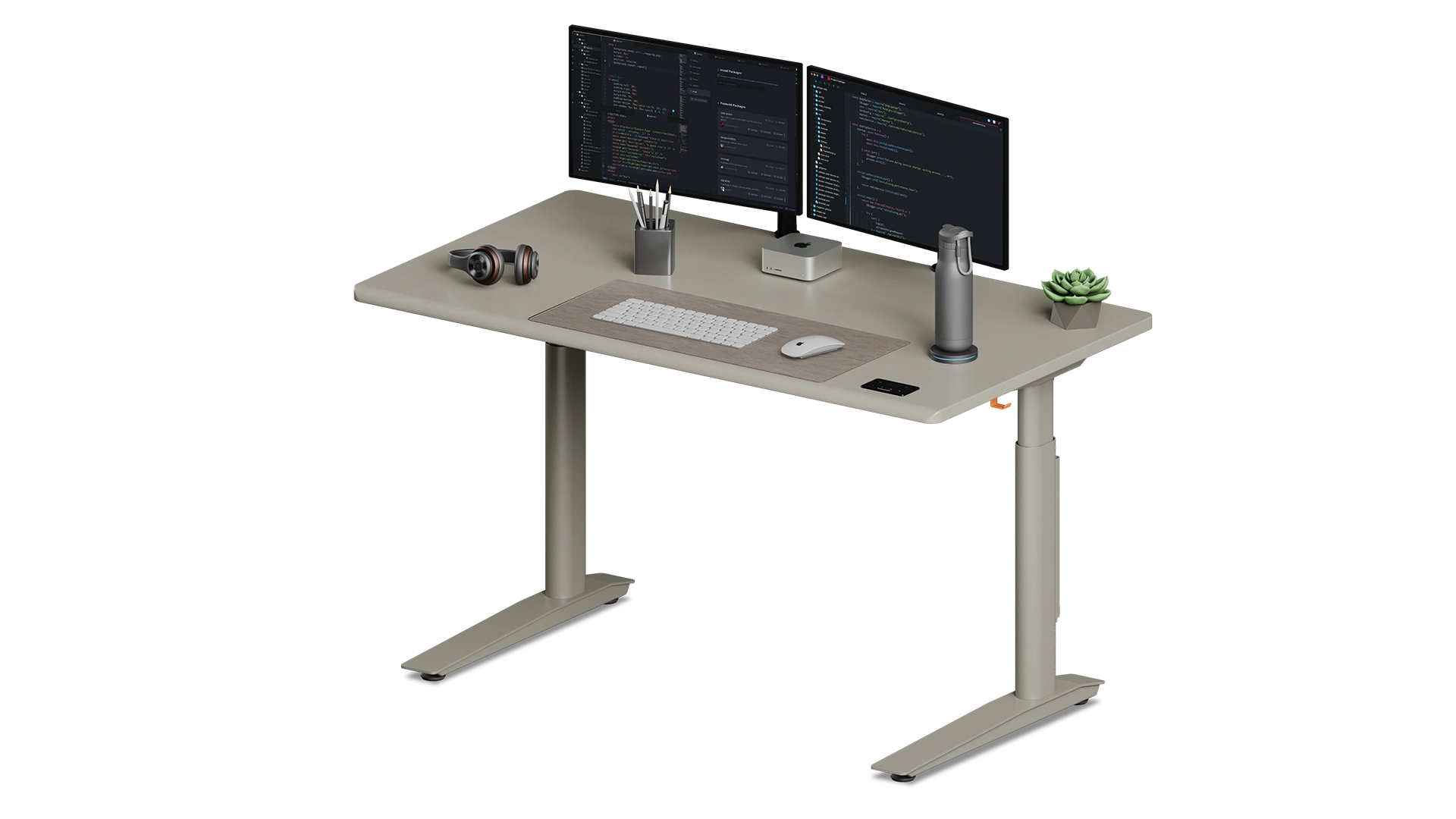
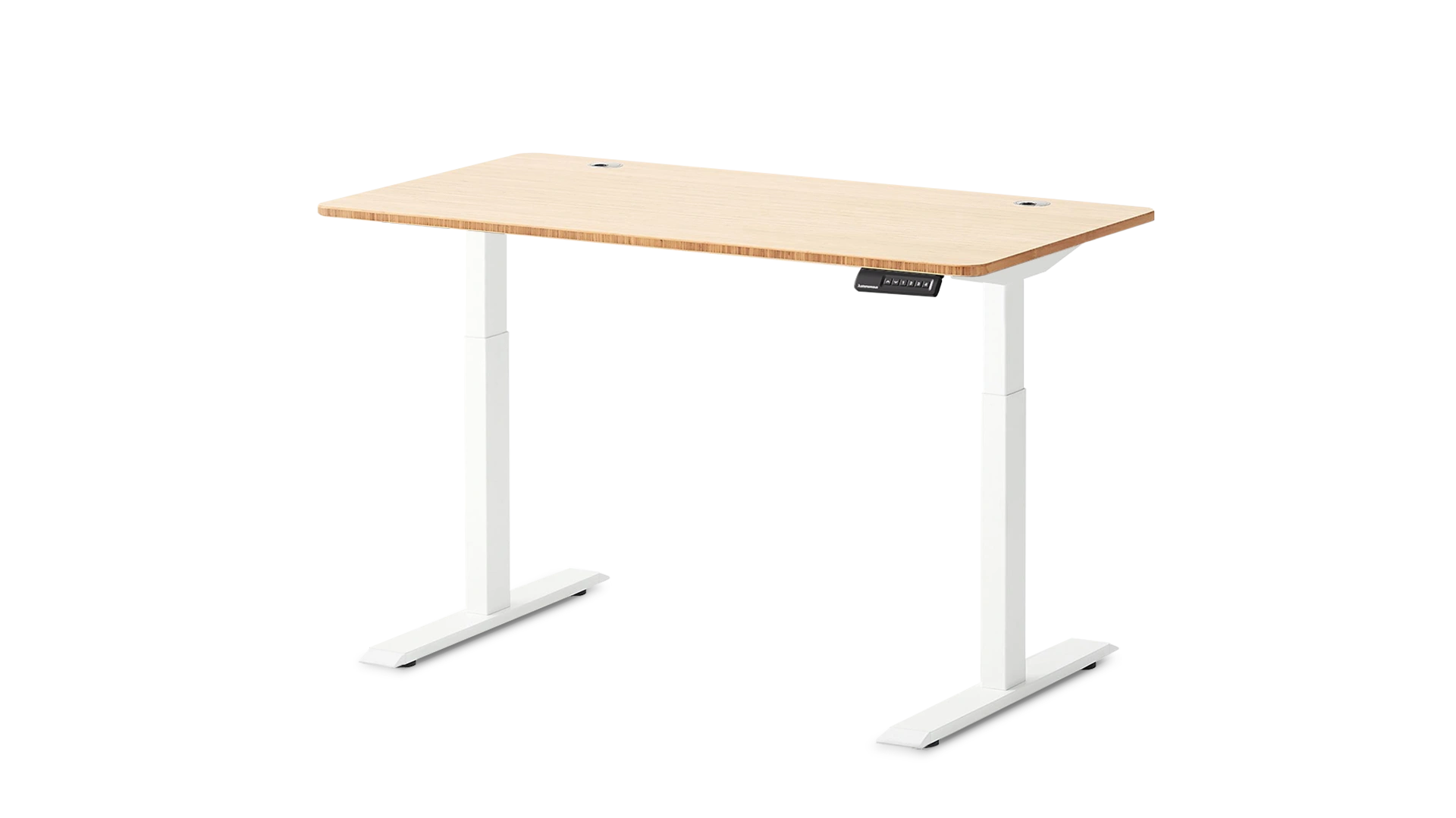
The difference, in one image each
The C-frame removes the front crossbar entirely. The chair rolls under the desktop with nothing between the knees and the back of the desk. The T-frame uses the symmetric foot design. Feet extend both directions from the column, with a crossbar connecting the two legs at the front or back.
C-frame vs T-frame at a glance
Feature | C-frame | T-frame |
Foot direction | One side of column (forward) | Both sides of column |
Front crossbar | Removed | Standard |
Knee clearance | Maximum | Limited by crossbar |
Wall placement | Flush against wall | Requires 6"+ behind |
Stability at 70"+ widths | Stable at rated capacity | Slightly more stable |
Aesthetic | Modern, minimal | Traditional |

How the two frames compare
Knee clearance
T-frame standing desks have a crossbar between the two legs for lateral stability. When you sit at the desk, the crossbar sits between your knees and the desk edge, limiting how far the chair rolls under the surface. C-frame eliminates this crossbar. The chair rolls all the way under, with nothing between the knees and the back of the desk.
For users sitting 6+ hours daily, this changes posture options - forward-leaning focus, neutral upright work, reclined call positions, all without the crossbar in the way.
Wall placement
C-frame desks sit flush against the wall because the foot extends only forward. T-frame desks need at least 6" of clearance behind the column for the rear foot. In smaller rooms, against bookshelves, or under window sills, this gap matters - a C-frame against a wall gains roughly 6"–8" of usable floor space behind the desk.
Stability
At standard widths (48"–70"), stability is comparable between the two designs when both use dual-motor electric construction with steel frames. The difference only emerges at extreme widths (70"+ with heavy combined load), where T-frame's symmetric base resists side-to-side sway slightly better. For most desk builds - single or dual monitors plus a mid-tower PC - stability is equivalent.
How each frame gets engineered
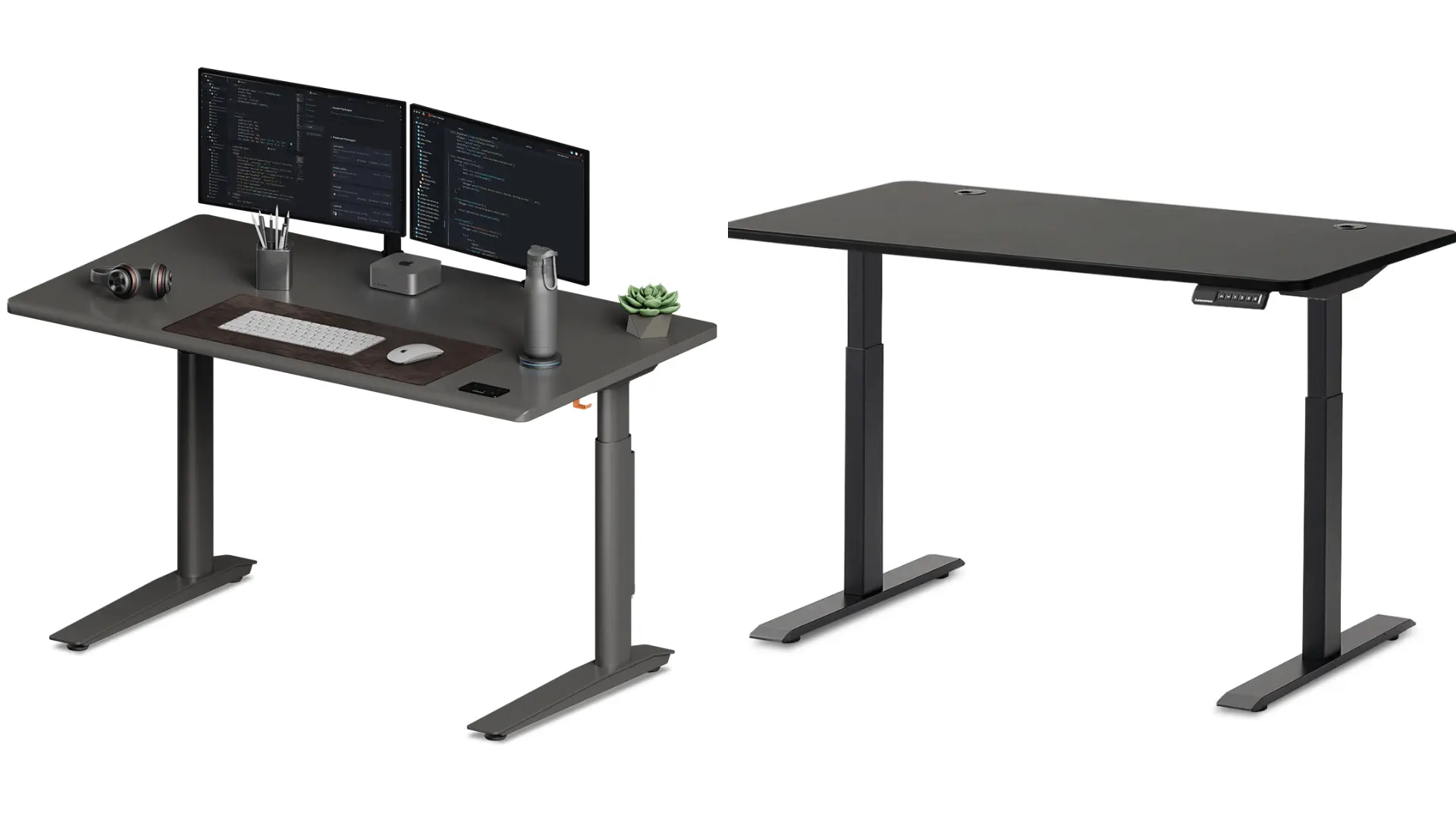
C-frame and T-frame solve the same problem - holding a desktop steady at any height - through different load paths. C-frame puts the work on the column. With no crossbar bracing the legs, each column carries its share of the load independently - thicker steel, optimized cross-sections, longer single foot. The Autonomous Desk Pro takes this approach: 330 lb capacity, under 30 dB motors, full knee clearance.
T-frame spreads the work across the base. The symmetric foot carries load both directions, and the crossbar adds a lateral brace between legs. The Autonomous Desk 2 takes this approach: the chassis Autonomous has shipped since 2015 across over a million units, 250 lb capacity, under 45 dB motors.
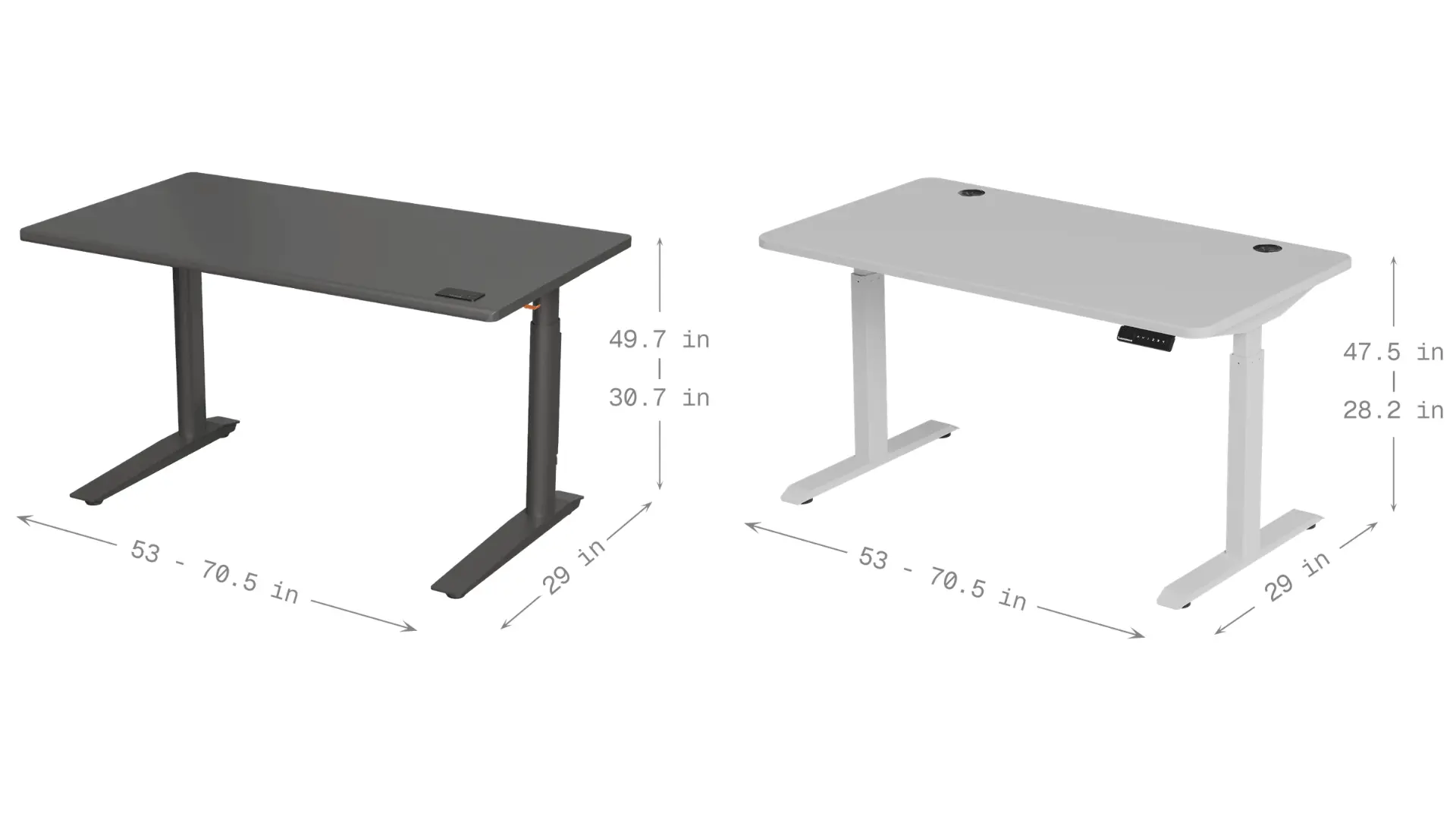
The trade-off is where the structure carries the load. C-frame over-engineers the column to remove the crossbar; T-frame uses the crossbar so the column doesn't have to do as much. Both stable at their rated capacities - the decision is between maximum knee clearance and the symmetric base design.
Frequently asked questions
What is a C-frame standing desk?
A C-frame standing desk has a foot that extends in one direction from each column - typically forward, toward the user - and removes the front crossbar that connects the two legs in traditional designs. The single-direction foot creates a C-shape when viewed from the side. C-frame desks sit flush against walls and provide maximum knee clearance under the desktop because nothing connects the two legs at the front.
What is a T-frame standing desk?
A T-frame standing desk has a symmetric foot extending both forward and backward from each column, with a crossbar typically connecting the two legs for lateral stability. The symmetric foot creates a T-shape when viewed from the side. T-frame is the original standing desk design and supports slightly more lateral stability at extreme widths (70"+).
What's the difference between a C-frame and T-frame standing desk?
The difference is the foot direction under each column. A C-frame extends in one direction (forward) and removes the front crossbar. A T-frame extends in both directions with a standard crossbar. C-frame provides maximum knee clearance and sits flush against walls. T-frame uses the symmetric base design with slightly more lateral stability at extreme widths.
Which is better, C-frame or T-frame standing desk?
C-frame is better for most home and office workstations under 70" wide because the removed crossbar gives maximum knee clearance. T-frame is better for tops wider than 70" with heavy combined load, or for buyers who prefer the symmetric base design. Neither is universally better - the choice depends on desk width and workspace layout.
Is a C-frame standing desk more stable than a T-frame?
At standard widths (48"–70"), C-frame and T-frame stability is comparable when both use dual-motor electric construction with steel frames. T-frame's symmetric base resists side-to-side sway slightly better at extreme widths (70"+) or maximum height extension. For most desk builds (dual monitor, mid-tower PC, peripherals), stability is equivalent.
Does a C-frame standing desk wobble more without a crossbar?
No. C-frame designs compensate for the missing crossbar with thicker column walls and optimized cross-sections that distribute stress through the column itself. Wobble is a function of column quality, motor synchronization, and joint precision - not frame shape. Both frame types pass standard cycle testing at their rated capacity.
Which standing desk frame is best for small spaces?
A C-frame standing desk is best for small spaces because the foot extends only forward, letting the desk sit flush against a wall. T-frame desks need at least 6" of clearance behind the column for the rear foot. C-frame gains 6"–8" of usable floor space behind the desk against a wall.
Do C-frame standing desks have more legroom than T-frame?
Yes. C-frame standing desks have more legroom because they remove the front crossbar that connects the two legs in T-frame designs. With a C-frame, the chair rolls fully under the desktop with nothing between the knees and the back of the desk. T-frame's crossbar limits how far the chair can roll under.
Bottom line
For workstations under 70" wide against a wall, C-frame is the better answer - removed crossbar, flush wall placement, maximum knee clearance. For tops wider than 70" with heavy load, T-frame's symmetric base earns its keep. The Autonomous Desk Pro is the C-frame answer. The Autonomous Desk 2 is the T-frame answer. Both at $499. Use code BLOGFIRST5 for an extra 5% off any Autonomous desk.