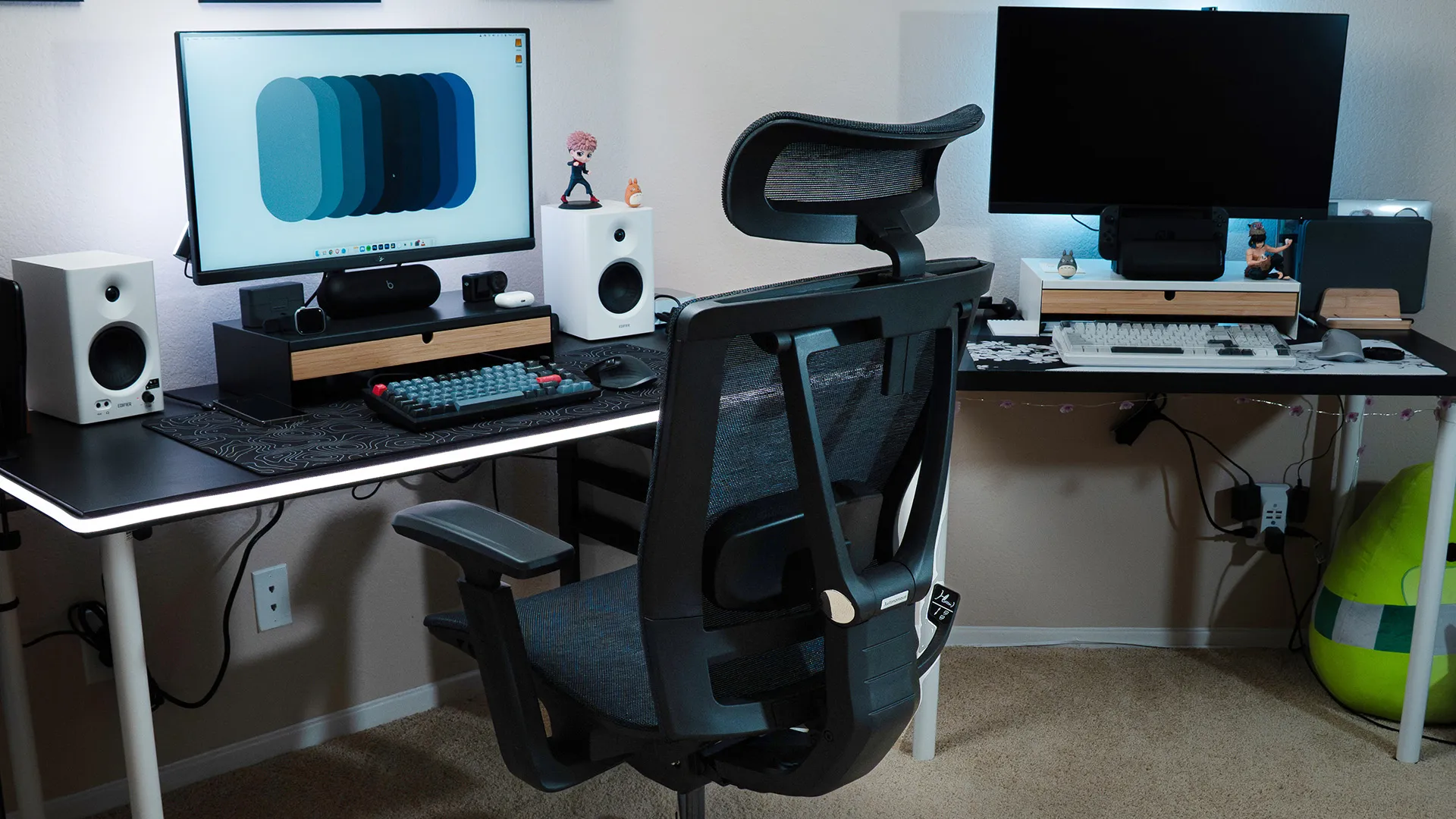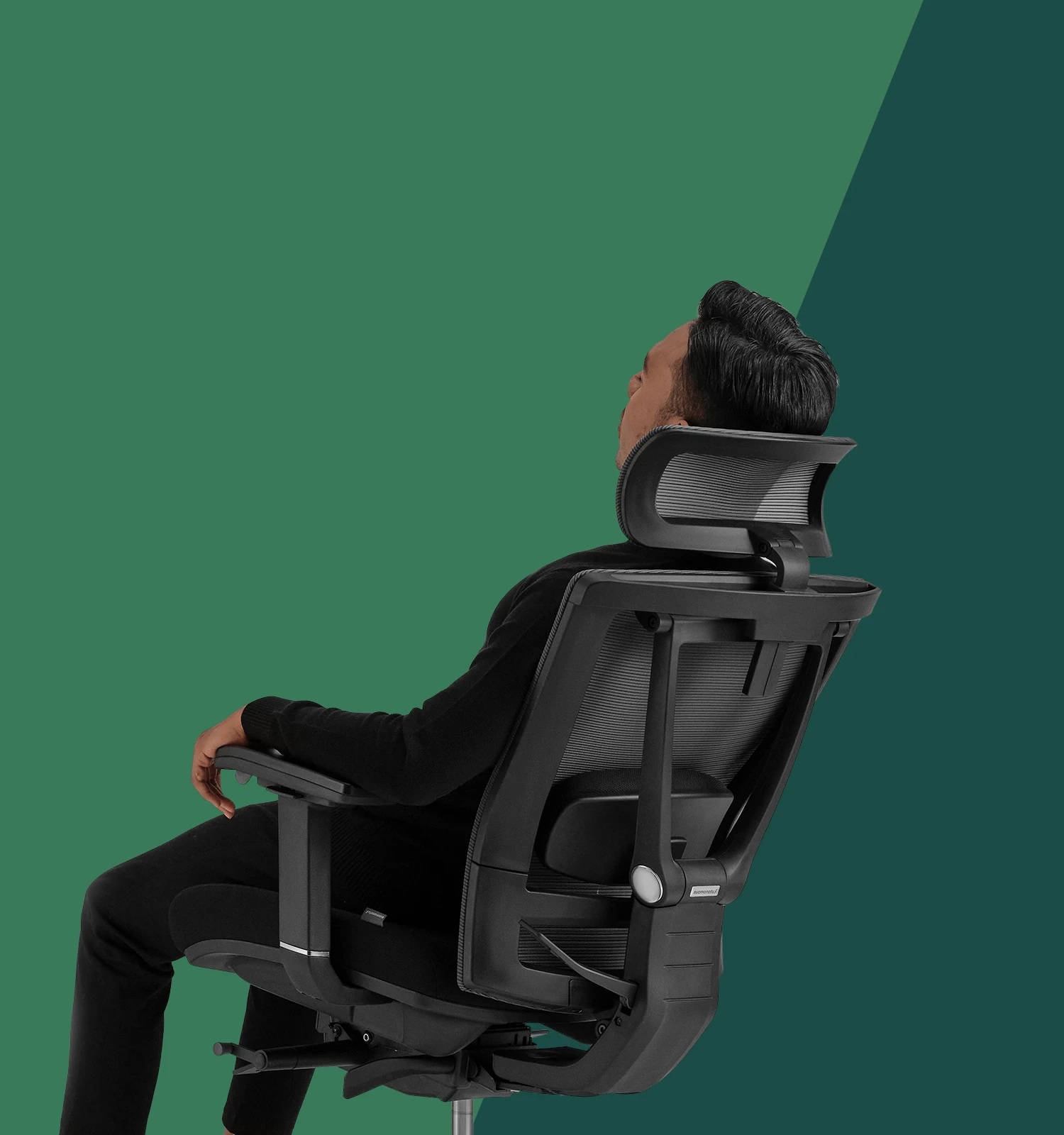
ErgoChair Pro
Black Friday price.
Built for 12-hour sessions.
Ergonomic chairs that adjust to you.
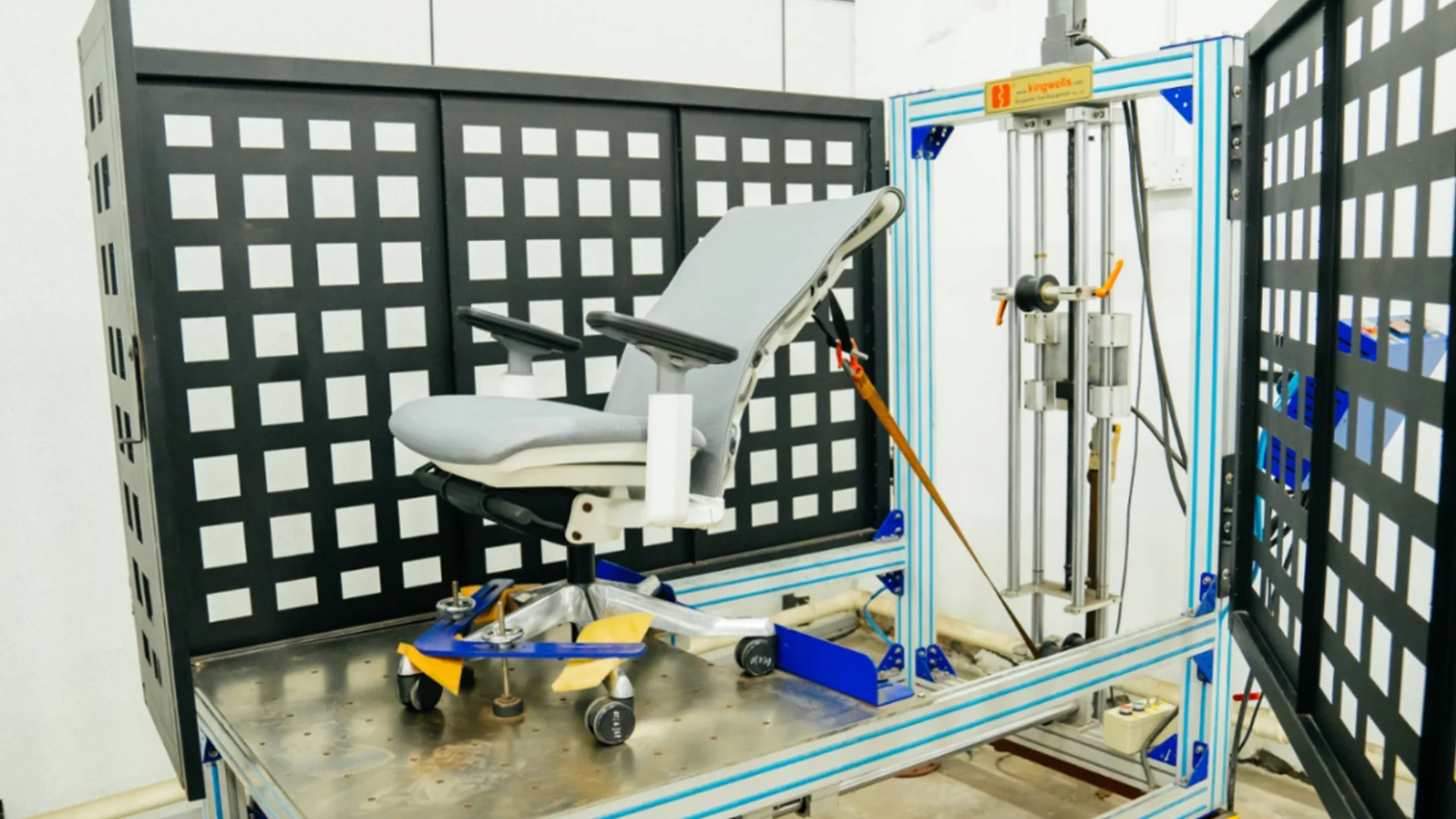
9 points of adjustment, flex-frame, 100,000-cycle tested. Pick the one your back wants. 9 points of adjustment, flex-frame, 100,000-cycle tested.
Black Friday price.
Built for 12-hour sessions.
9 points of adjustment, flex-frame, 100,000-cycle tested. Pick the one your back wants. 9 points of adjustment, flex-frame, 100,000-cycle tested.
Seat height and depth come first. Your feet should rest flat on the floor with your hips level with your knees, and two or three fingers of space should remain between the seat edge and the back of your knees. The desk matters too: with the seat set right, your forearms should rest level on the desktop. Our seat height calculator turns your height into matching sitting and standing desk heights and a seat height.
Lower-back support comes in two forms. A lumbar pad, as on the ErgoChair Pro, slides along the backrest until it meets the curve of your lower spine and stays there, while a flex-frame back, as on the ErgoChair Ultra 2, bends with you as you lean in or back, so the support follows your movement instead of holding one spot.
Armrests that adjust in height and direction let your shoulders drop while you type. A synchro-tilt reclines the backrest faster than the seat, so you can lean back between tasks without losing your typing position, and a headrest adds support when you recline for calls or short breaks.
Seat and back material changes how a chair feels over a long day. Mesh runs cooler and foam feels firmer and more even, so the choice follows your room and your preference. The ErgoChair Pro comes with a foam or a Cool mesh seat, and the ErgoChair Mesh is built around breathable Ultra Air Mesh, developed with German experts.
The ErgoChair Ultra 2 takes a different route: a TPE layer behind the mesh back and a seat of molded foam over polymer coil springs, with no lumbar dial to set. The ErgoChair Core pairs breathable mesh with a dual backrest that supports your upper and lower back separately.
If you sit six hours or more, judge a chair by the afternoon, not the first minute. Most office chairs for long hours share three traits: a seat depth you can adjust so the front edge never presses behind your knees, lower-back support that either stays where you set it or moves with you, and a back that reclines so you can shift position often. On the ErgoChair Pro that support is a lumbar pad with 6 inches of travel; on the Ultra 2 it is the flexing back.
For a small room, measure the space behind your desk before you pick a model. The seat needs room to roll back when you stand up, and the backrest needs clearance to recline without touching a wall or the bed. Seat widths range from 18 inches on the Ultra 2 to 20 inches on the Core, so you can check the footprint against your space before you order.
For a first ergonomic chair, the ErgoChair Core covers seat height and depth, 3D armrests, back tilt and a headrest at the entry price.
The Ultra 2 is an office chair with a welded frame and an Italian tilt mechanism, made for people who shift position all day. The Pro is the desk chair for those who set one posture and hold it.
The right chair is the one that fits how you sit. Pick the Ultra 2 if you shift position all day and want support with nothing to set, the Pro if you would rather tune one position and keep it, the Mesh if your room runs warm, and the Core for the basics at the entry price.