Anime Gaming Setup: Ideas, Room Layouts and Accessories
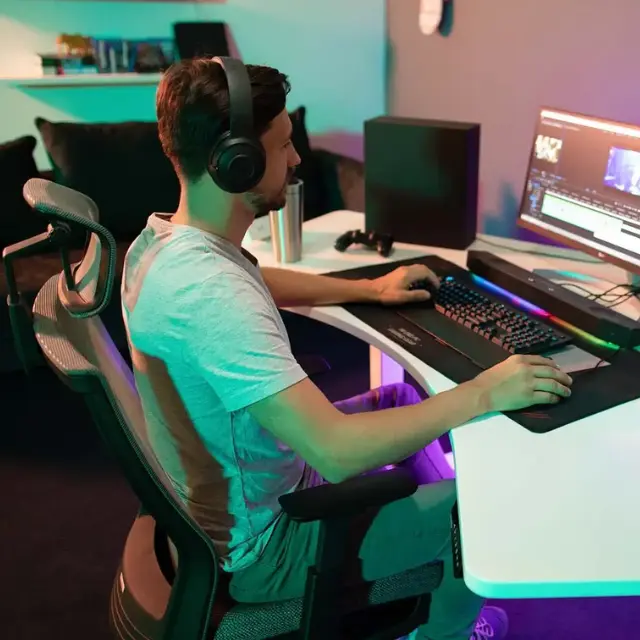
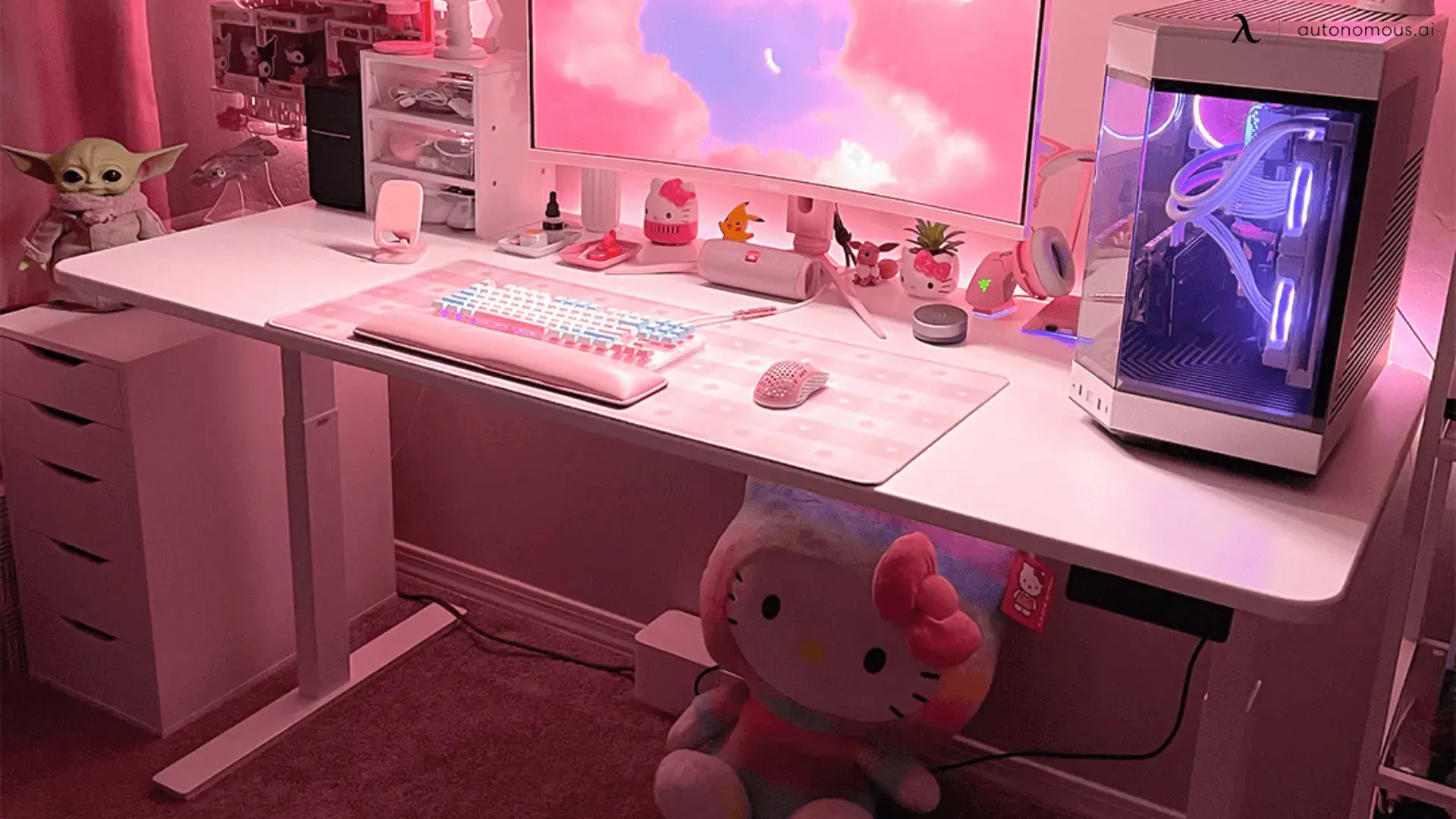
An anime gaming setup is easy to start and easy to overdo. Most people buy character items before deciding what the room is supposed to look like, and end up with a desk that reads as clutter instead of a theme. The setups that hold together pick one style, build the room around the screens, and treat accessories as the last layer rather than the first. This guide covers what defines an anime gaming setup, seven ideas across the main styles, how to lay out the room, what the PC side needs, and which gaming accessories to buy in what order.
What makes a setup an anime gaming setup?
An anime themed gaming setup is defined by three layers working together: character content on the screens, lighting that matches the mood of that content, and a small number of physical items that carry the theme into the room. Take away any one and it stops reading as a theme.
Most people get the first layer right and stop there. Wallpaper alone is not a setup, because the moment the screen sleeps the room looks like any other desk. The physical layer is what makes it persist.
The second thing that defines it is restraint. Anime as a genre spans soft slice-of-life and high-contrast cyberpunk, and the two do not mix. Every setup that looks accidental is usually running items from both.
7 anime gaming setup ideas
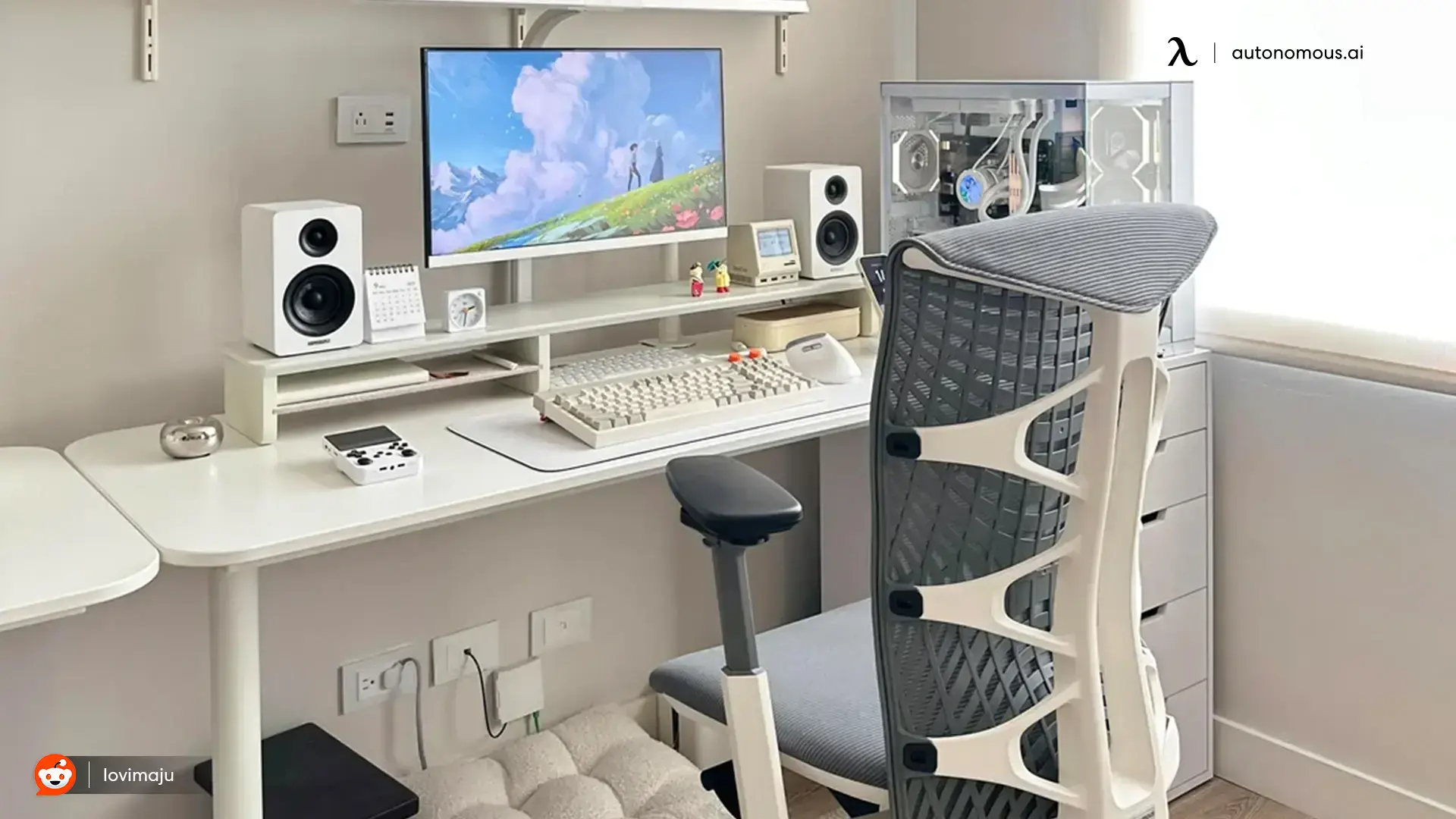
1. The cozy anime setup
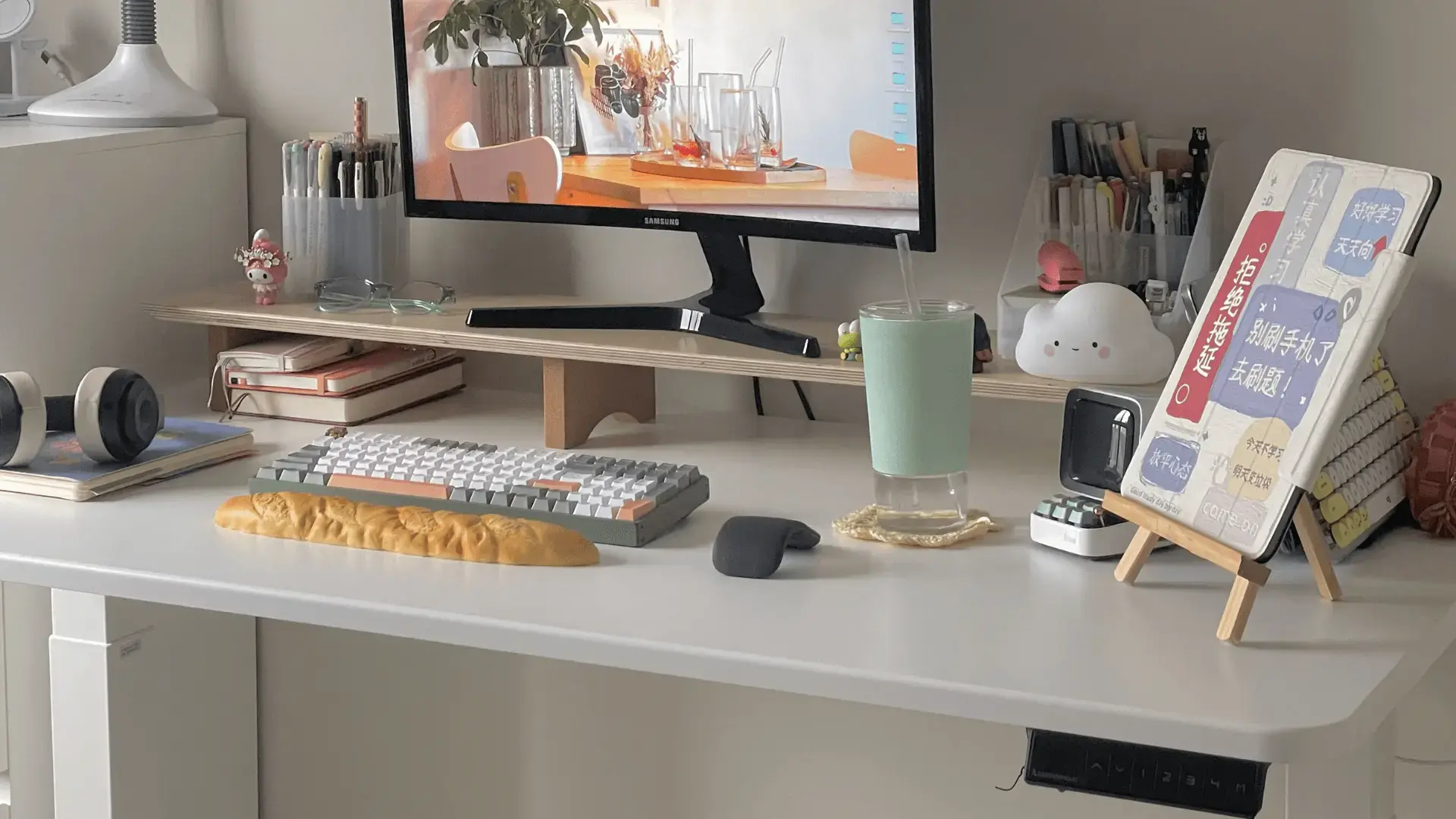
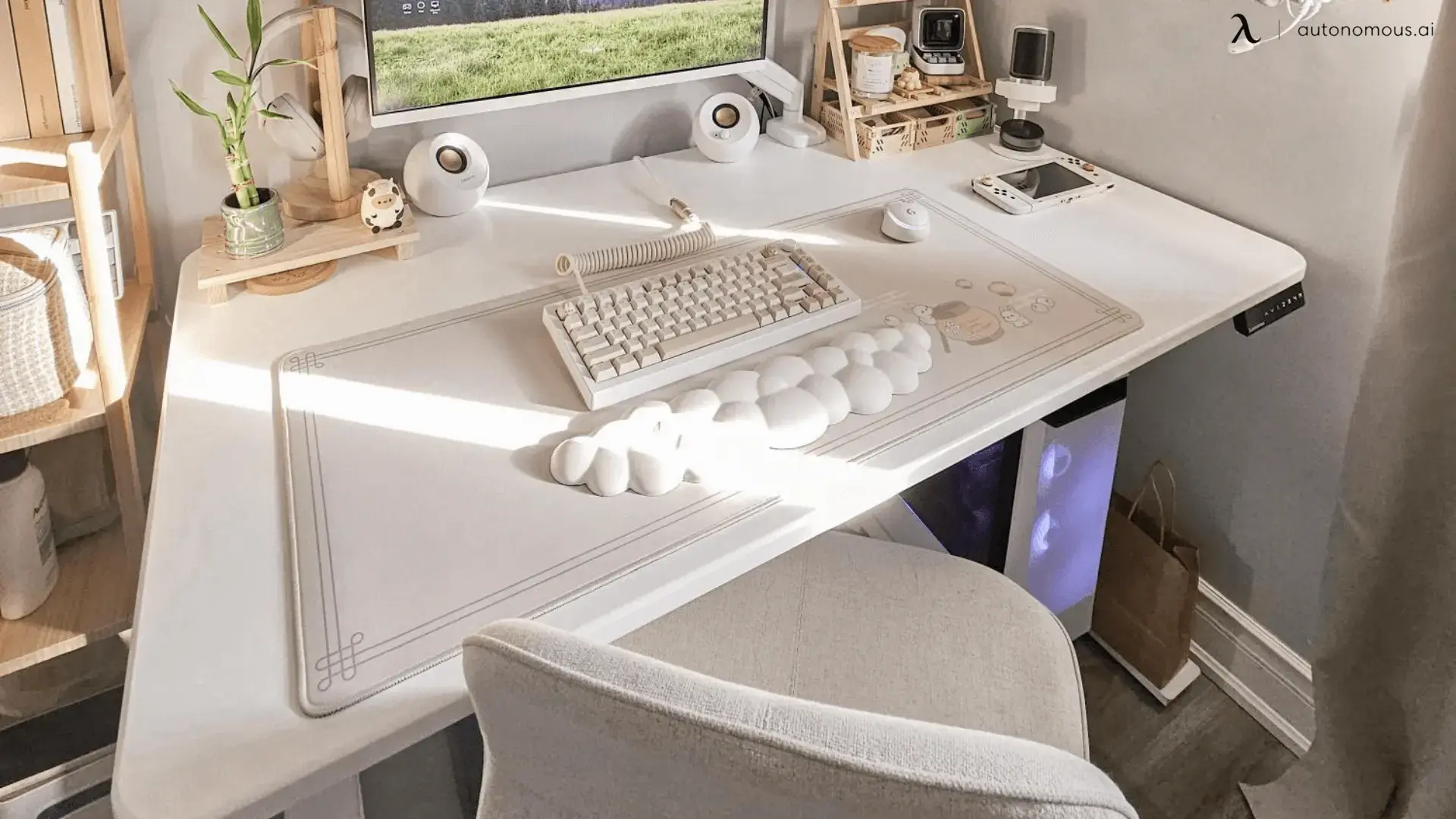
A cozy gaming setup in anime style runs warm rather than bright: cream and wood tones, one soft lamp, plush textures, and character items that are small and rounded rather than dramatic. It is the easiest style to live in for long sessions because nothing in peripheral vision is fighting for attention.
Build it from the surface up. A light desk, a large fabric deskmat, a warm monitor light bar, and two or three small figures. Keep the lighting under about 3000K so the room reads warm on camera as well as in person.
The one thing to avoid is coloured RGB. A single strip of magenta in an otherwise warm room undoes the whole effect.
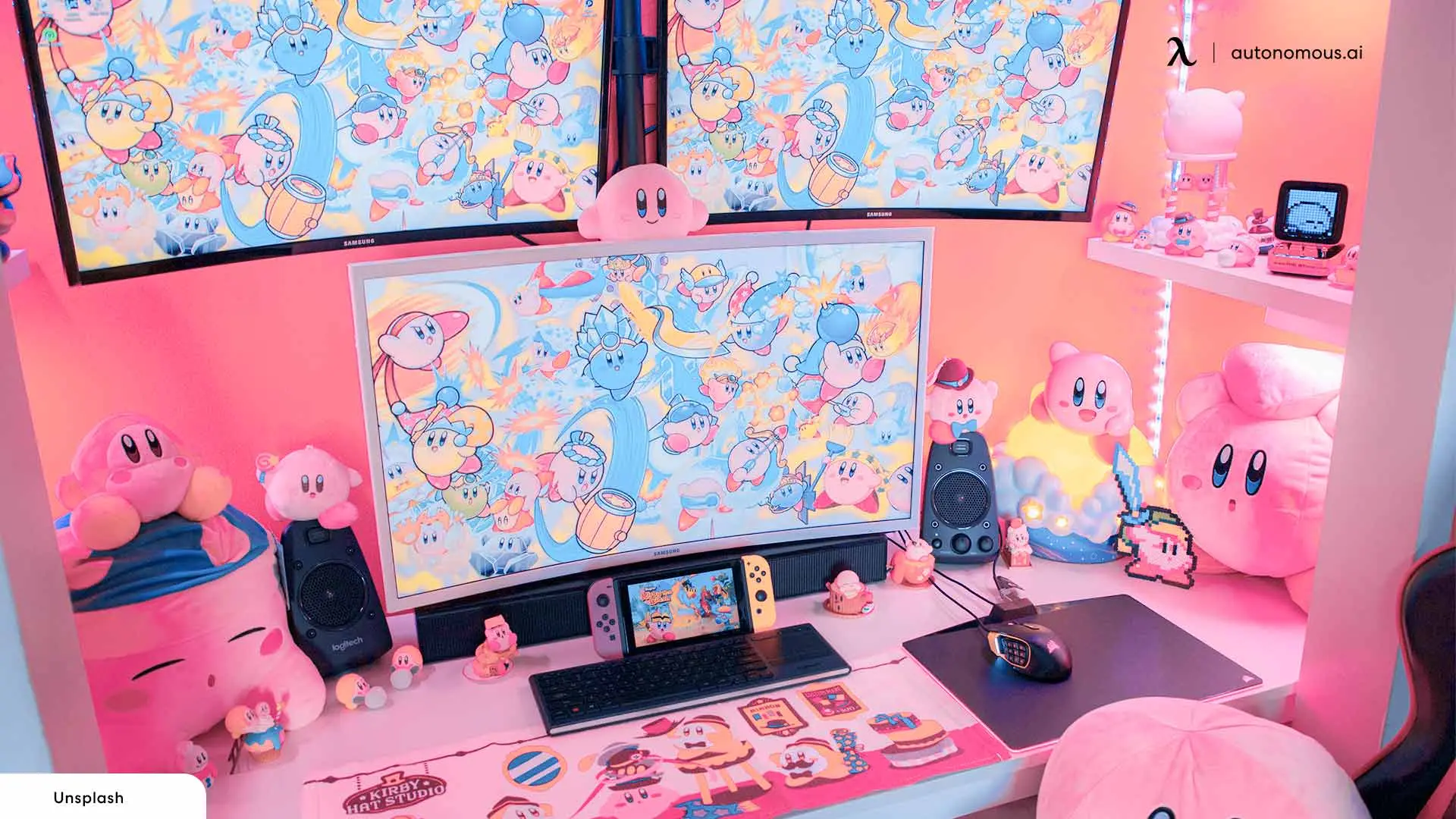
2. The cute pastel setup
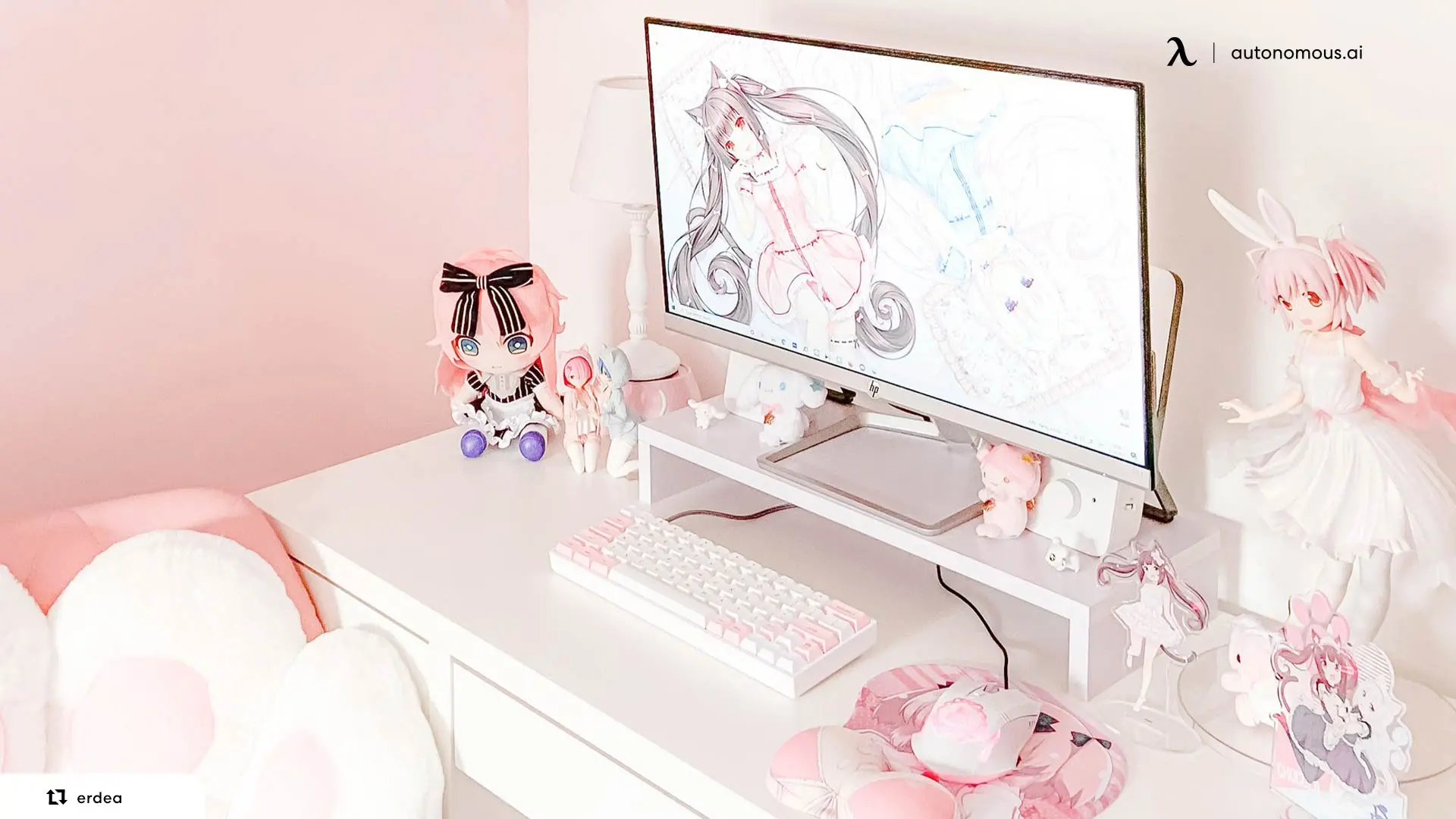
A cute anime gaming setup leans pink, white and lilac, with soft toys and figures as the main visual weight. It is the most photographed style and the most likely to overrun the desk, so the discipline is vertical storage rather than fewer items.
Put a shelf above the desk or a wall net beside it. Anything you do not touch during a session lives up there, which lets you keep twenty items in the room and six on the surface.
Pair pastel with a light desk. On a dark top the colours lose contrast and the whole look goes muddy.
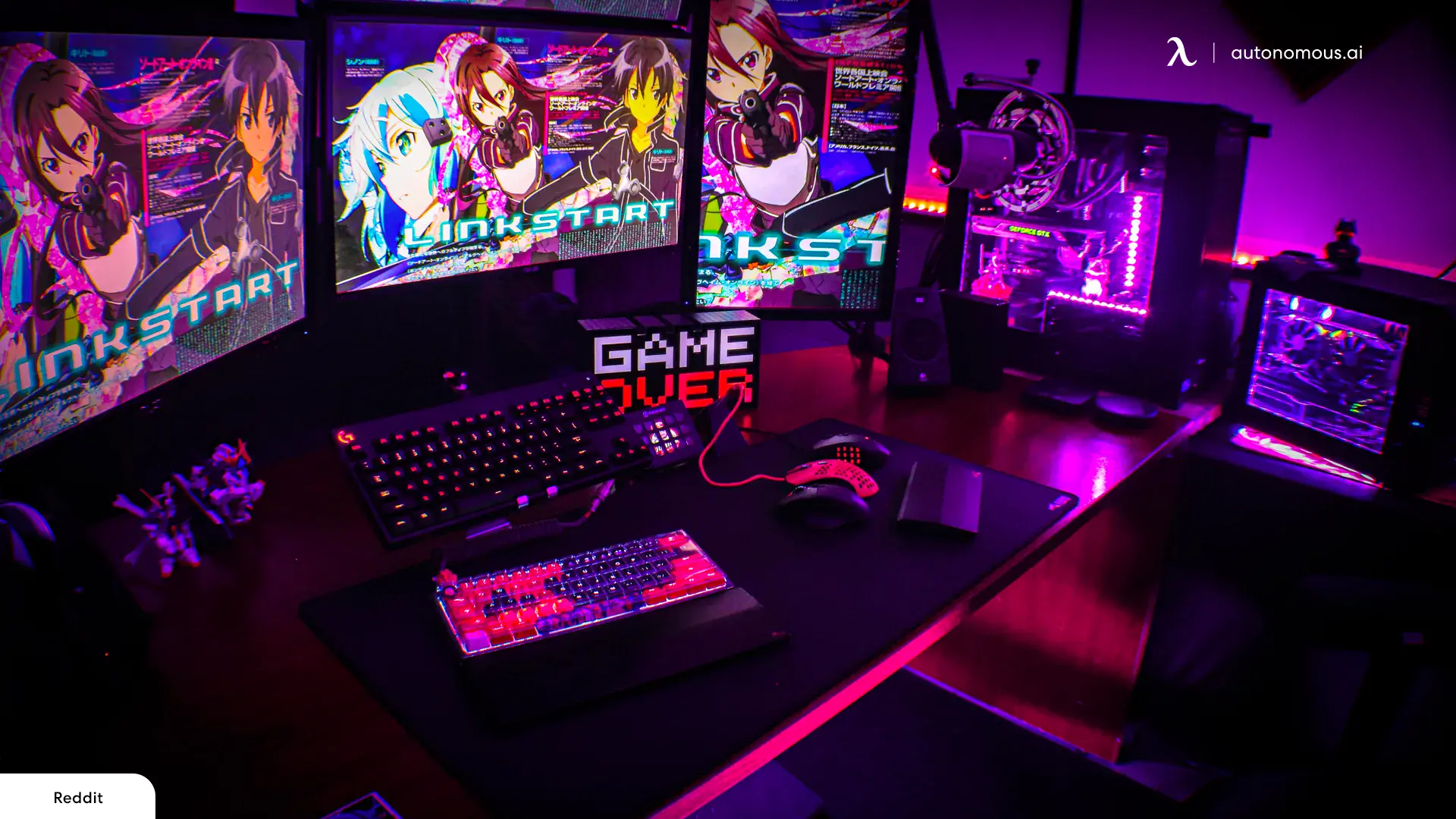
3. The neon cyberpunk setup
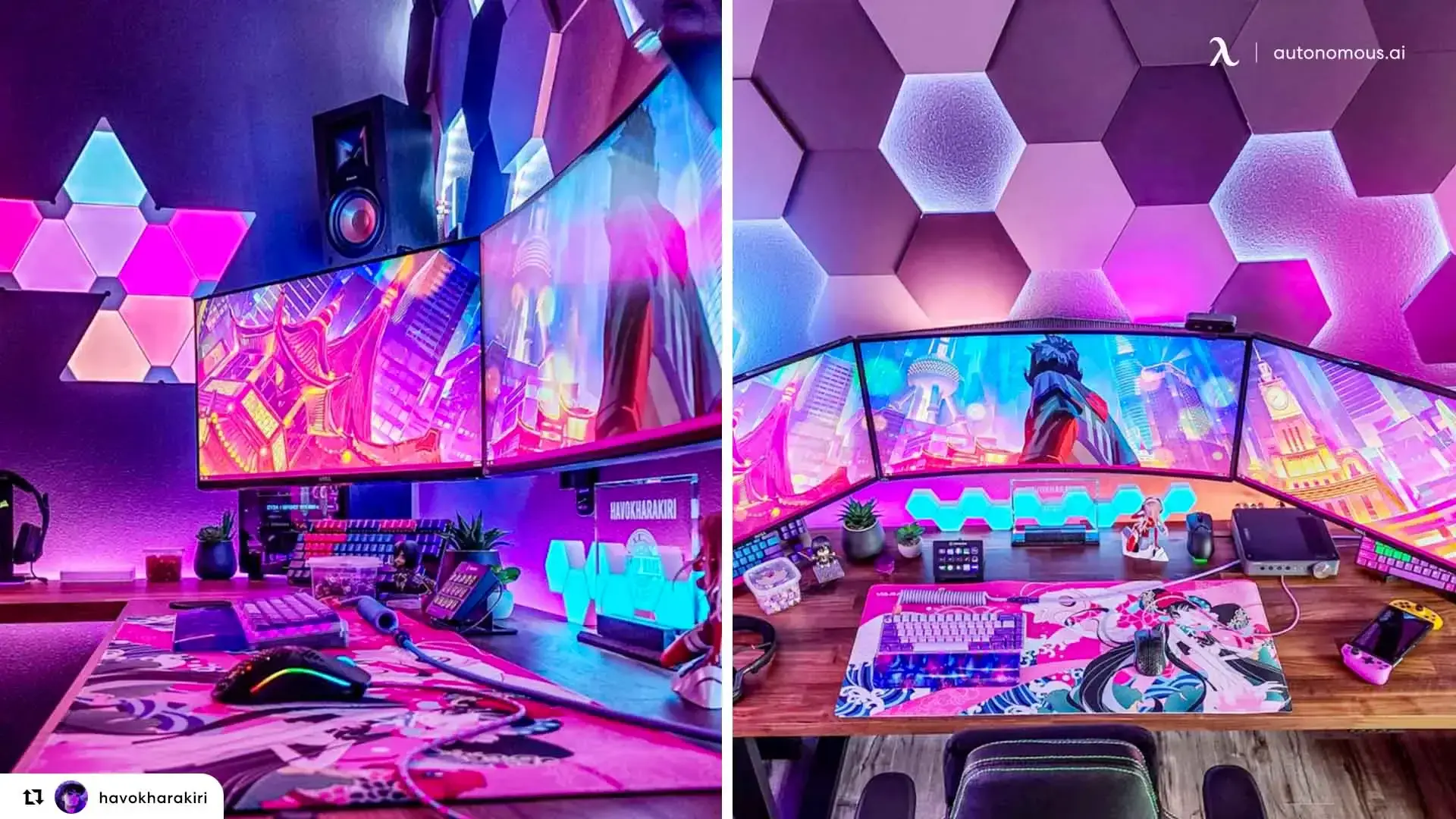
The neon style is the opposite discipline: a dark room, a dark desk, magenta and cyan lighting, and almost no soft objects. The light comes from the screens and the walls rather than from a lamp.
Wall panels are what make this style work rather than just look lit. Hexagon or triangle LED panels mounted behind the monitors light the wall, which gives the screens depth instead of leaving them floating in a dark room. Many panels also have some acoustic damping, which helps in a hard-walled room.
Keep the desk surface almost empty here. Neon setups read as cluttered much faster than pastel ones because every object catches coloured light.
4. The multi-monitor key art setup
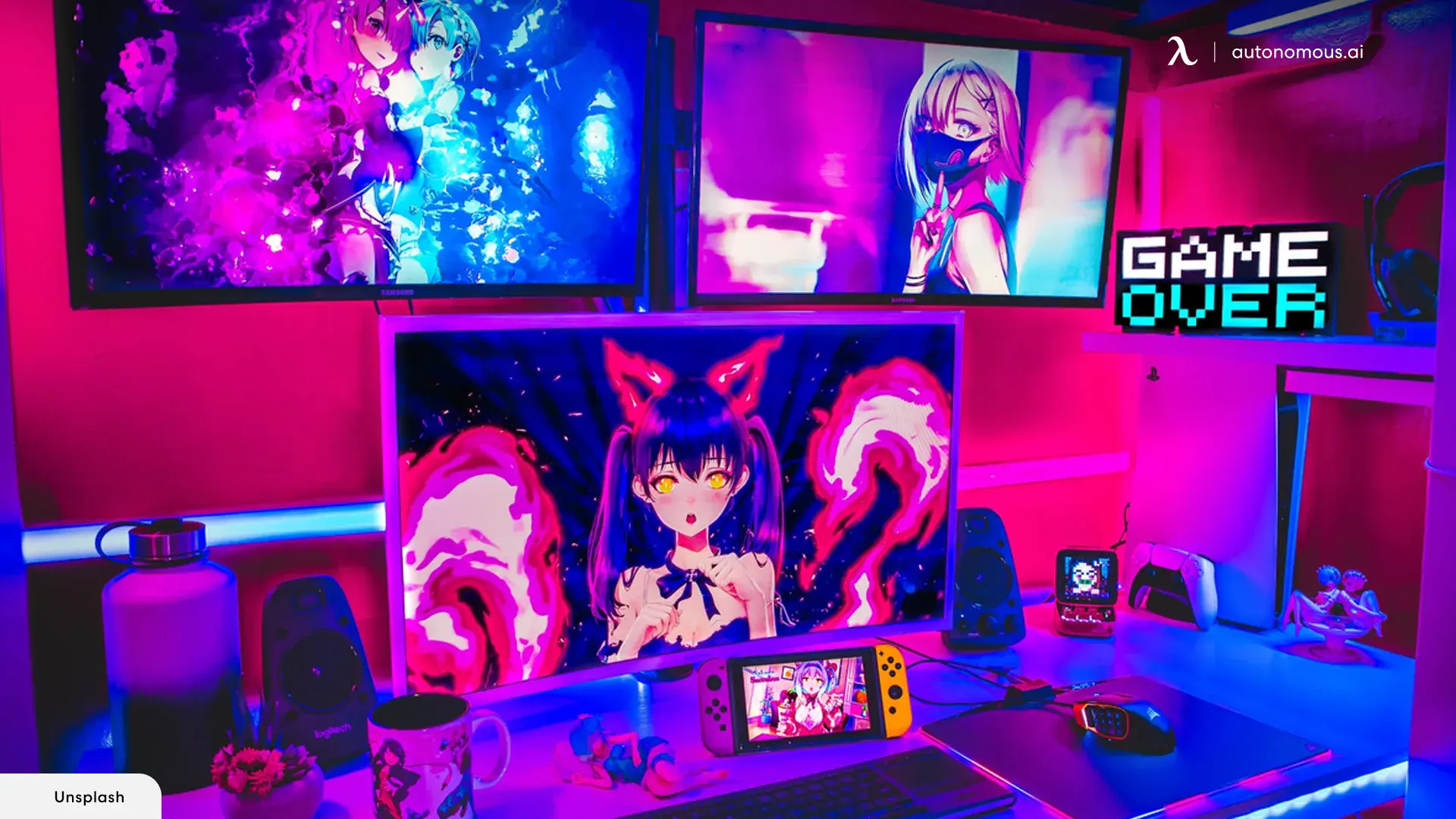
Running two or three screens turns the wallpaper into the largest design element in the room, which is the cheapest high-impact move in any anime setup. One image spanning all displays looks dramatically better than three separate wallpapers.
The practical constraint is desk width. Three 27-inch gaming monitors need roughly 70 inches of usable width, which rules out most 48-inch desks unless you mount them on arms and overhang the edges.
Match the bezels. Three identical screens make the spanned image work. Mixed sizes break it, and no amount of lighting fixes that.
5. The one-figure minimal setup
A minimal anime setup carries the theme with a single figure and the screen, and nothing else. It is the version that survives a video call, and the one most likely to still look good in two years.
The rule is one statement object. A single well-lit figure or a framed print reads as taste. Five of them read as a collection, which is a different thing and needs a shelf rather than a desk.
This style benefits most from cable discipline, because with so little on the surface any visible cable becomes the thing you notice.
6. The bedroom anime setup
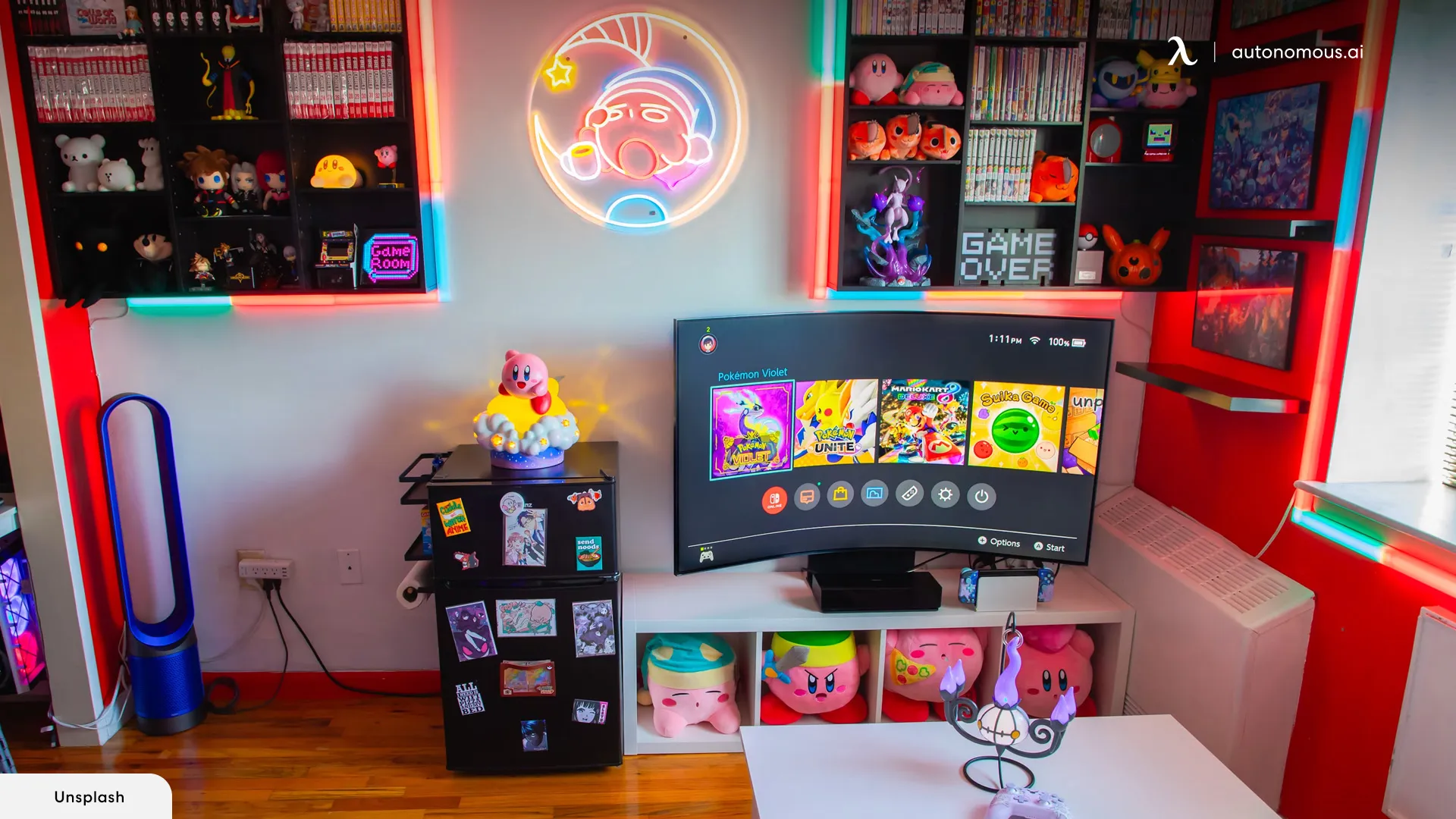
In a bedroom the setup competes with the rest of the room, so the fix is to contain it rather than spread it. Keep the theme inside the desk zone and the wall directly behind it, and leave the rest of the room neutral.
Two moves do most of the work. Light only the desk zone, so the setup reads as a defined area after dark rather than lighting the whole room. And go vertical with storage, since floor space in a bedroom is usually already spoken for.
Heat and noise matter more here than anywhere else. A tower and three monitors warm a small closed room noticeably over a long session.
7. The budget starter setup
The cheapest credible anime setup is a large deskmat, a spanned wallpaper and one light source, which together change more visible area than any amount of merchandise. Everything else can wait.
Spend in this order: deskmat, then lighting, then character items. Buying figures before lighting means looking at them badly for months, and figures are the category where taste changes fastest.
Skip for now: themed chairs, branded peripherals at a premium, and anything sold as a bundle. Bundles are where anime pricing gets worst.
Anime gaming room ideas: the space around the desk
An anime gaming room setup is decided by the wall behind the monitors, because that is the only surface most people ever see in a photo or on camera. Treat it as the feature and the rest of the room can stay plain.
Four moves cover most rooms.
The feature wall.
Paint it darker than the others for neon builds, or hang a small gallery of prints for pastel ones. A single large poster is usually worse than three small framed pieces because it competes with the screens.
The floor.
A rug under the desk defines the zone and absorbs some of the room echo that comes with hard floors and multiple screens. Dark under a light desk, light under a dark one.
Storage and display.
Shelving is what separates an anime room from a cluttered one. Two floating shelves above or beside the desk hold the collection and keep the work surface usable.
Sound.
Bare walls plus three monitors make voices and game audio sound thin. Soft surfaces on two walls, whether curtains, fabric panels or the acoustic LED panels mentioned above, fix most of it.
Anime PC setup: screens, lighting and the tower
An anime PC setup differs from a console one in two ways that matter: the tower is visible, and the lighting is controllable from the machine itself. Both are opportunities rather than problems.
Glass-side cases have become the default in this style because the interior lighting becomes part of the scheme. If the case is on the desk rather than the floor, it counts as one of your surface objects and should be lit to match the room rather than left on rainbow cycling.
Sync the lighting sources. Case, keyboard, mouse and any strips running independent effects is the single most common reason a PC-led anime setup looks chaotic. One colour, or one slow gradient, across everything.
On screens, high refresh matters less to this style than panel uniformity. Key art wallpapers show banding and backlight bleed far more obviously than game content does.
Anime gaming setup accessories worth buying
The accessories that earn their place do a job as well as carrying the theme. Grouped by what they actually change:
Surface.
A full-desk mat covers more visible area than any other single purchase and improves mouse tracking. A wrist rest is the one item that is functional first, as long as its height matches your keycaps. A coiled aviator cable ties a keyboard into a colour scheme for very little money.
Light.
A monitor light bar lights the desk without glare on the panel. Bias lighting behind the screen reduces the contrast between a bright display and a dark wall. LED wall panels do the same job at room scale.
Character.
Acrylic standees take almost no depth and suit small desks. Full figures need a shelf. Wall prints fill the largest empty surface in the room for the least money.
Support.
A monitor riser raises the screen to eye level and creates a second tier for the small items that would otherwise crowd the keyboard. Matching speakers and a pixel clock are visible, symmetrical and already have to be there.
Choosing a desk and chair that suit the style
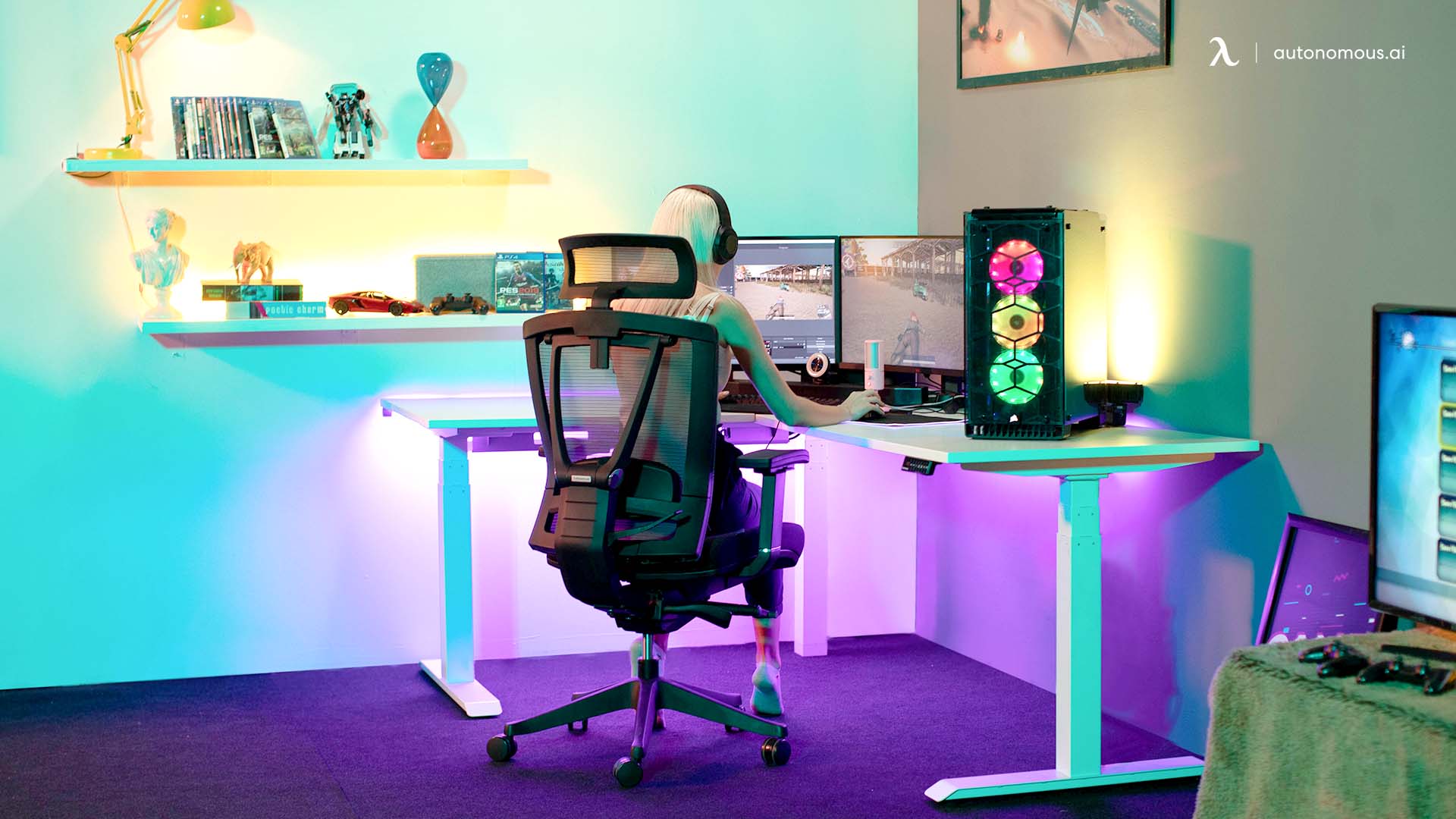
The desk colour decides which style the room can support, so choose it before the deskmat rather than after. Light tops carry the cozy and pastel styles, dark tops carry neon, and getting this backwards is expensive to undo.
Autonomous standing desks cover both ends, from Titanium White and Pearl White through to Onyx Black. Desk width is the other constraint worth checking early, since a three-monitor build needs roughly 70 inches of usable top.
.jpg)
On seating, an anime setup is usually a long-session setup, so the chair matters more than its colour. Every ergonomic chair in the range comes in black, with grey options that suit lighter rooms.
FAQs
What do you need for an anime gaming setup?
Character content on the screens, lighting that matches its mood, and a few physical items that carry the theme off the display. A deskmat and a spanned wallpaper get you most of the way. Figures and lighting are the finishing layers, and a light or dark desk decides which style the room can support.
What is the best anime gaming setup style?
There is no single best, but the cozy and neon styles are the two that hold up longest. Cozy suits long sessions because nothing in peripheral vision competes for attention. Neon photographs better and suits dark rooms. Mixing the two is what makes a setup look accidental.
How do you make an anime gaming room without it looking cluttered?
Move anything you do not physically touch off the desk and onto a shelf or wall net. Most desks start reading as cluttered at around six objects on the work surface. Keeping one clear zone beside the keyboard fixes most of the rest.
What is the cheapest way to build an anime gaming setup?
A large deskmat and a wallpaper spanning your monitors. Together they change the two largest visible areas in the room for very little, and they establish the style before you spend anything on figures or lighting.
What monitor setup works best for an anime PC setup?
Two or three identical screens running one image across all of them. Matching bezels and sizes is what makes a spanned wallpaper work. Panel uniformity matters more than refresh rate here, because key art shows banding and backlight bleed far more than game content does.
What colour desk suits an anime gaming setup?
White or light for cozy and pastel styles, black or dark for neon. The desk is the largest single surface in the setup, so it decides the style before any accessory does. Choose it first, then buy a deskmat to match.
Can an anime gaming setup still look professional?
Yes, if the character content stays on the screen and one physical item. A neutral desk, a plain deskmat and a single well-placed figure reads as personal rather than themed, which is the version that survives a work call.
Final thoughts
An anime gaming setup comes together when you choose a style before you buy anything, then build outward from the screens. Decide between cozy and neon, get the desk colour right, put the deskmat and lighting in before the figures, and move anything you do not touch onto a shelf. The room around the desk does more work than most people expect, and the wall behind the monitors is the cheapest thing on that list to fix.
References
- Illuminating Engineering Society, recommended practice for screen-based task lighting and luminance ratios, ies.org
- Business and Institutional Furniture Manufacturers Association, ANSI/BIFMA G1 ergonomics guideline for work surface and wrist support, bifma.org