OpenAI Codex Micro vs Autonomous Harness: Which to Buy?

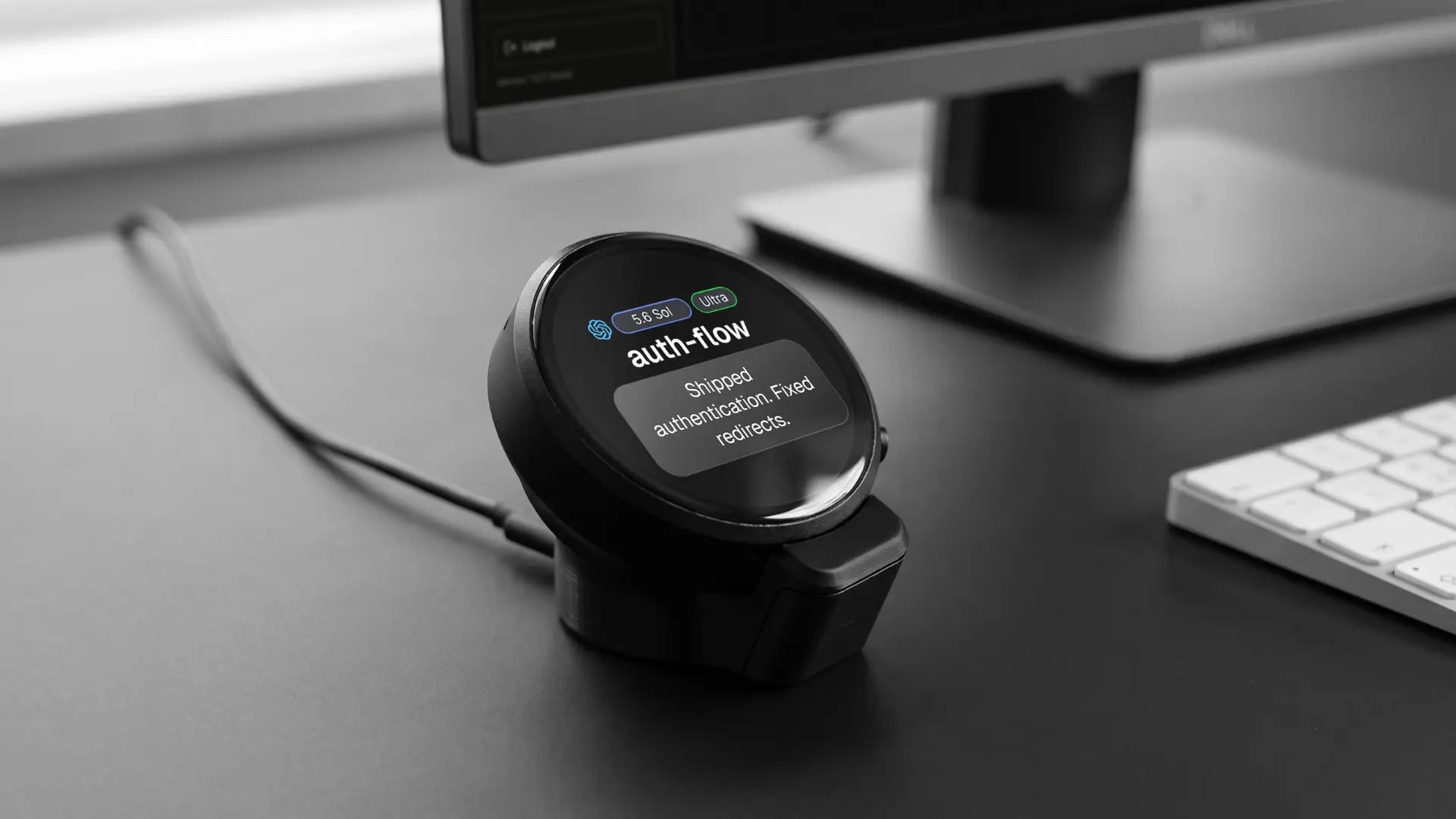
The OpenAI Codex Micro and the Autonomous Harness are both desk devices for controlling AI coding agents, and the difference that decides between them is simple: the Codex Micro drives one agent with physical keys, while the Autonomous Harness drives every agent with your voice. OpenAI's Micro is a macro pad built for Codex users. The Harness is a voice device that dispatches work to whatever agents you already run. This guide compares the two on what they do, what they cost, and who each one fits.
At a glance
Both devices sit at the base of your monitor and let you steer agents without a chat window. Where they part ways is agent support, control method, and availability.
OpenAI Codex Micro | Autonomous Harness | |
|---|---|---|
Maker | OpenAI, with Work Louder | Autonomous |
Form | 13-key macro pad, joystick, dial | Matte-black disc with a round display |
Control | Press keys, joystick, and a dial | Double-tap and speak |
Agents | Codex only | Every major agent, including Claude Code, Codex, Cursor |
Status view | Light-up agent keys | Always-on display: task, time, and spend |
Extensible | No, built around Codex | Open protocol, bring your own agent |
Connection | Bluetooth or USB-C | Wi-Fi, Bluetooth LE, USB-C |
Availability | Limited run, sold out at launch | Selling now |
Price | $230 | $149 |
What is the OpenAI Codex Micro
The OpenAI Codex Micro is OpenAI's first hardware product, a $230 light-up macro pad that pairs with its Codex coding agent, released on July 15, 2026. Co-designed with keyboard maker Work Louder and sold through OpenAI's Supply Co store, it is a small control pad meant to sit beside a full keyboard. What it packs into 13 keys:
- Six translucent Agent Keys that light up to show the status of a linked Codex conversation
- Customizable Command Keys for common Codex actions
- A joystick to launch workflows
- A dial that adjusts how much reasoning an agent spends on a task
- A CNC aluminum and polycarbonate body, clicky or silent switches, Bluetooth or USB-C on Mac and Windows
Two honest caveats shape how to read it. It is Codex only, built for OpenAI's agent, and OpenAI described it to press as a limited-run novelty rather than a mass-market product. It sold out within about 12 hours of launch, with units reselling well above list, and under the branding it is Work Louder's existing Creator Micro 2 remapped for Codex.
What is the Autonomous Harness
The Autonomous Harness is a voice-controlled desk device that dispatches tasks to the coding agents you already run. Instead of pressing keys, you double-tap the matte-black disc and say the task out loud, and it routes the work to the right agent across your laptop, servers, or the cloud. What sets it apart:
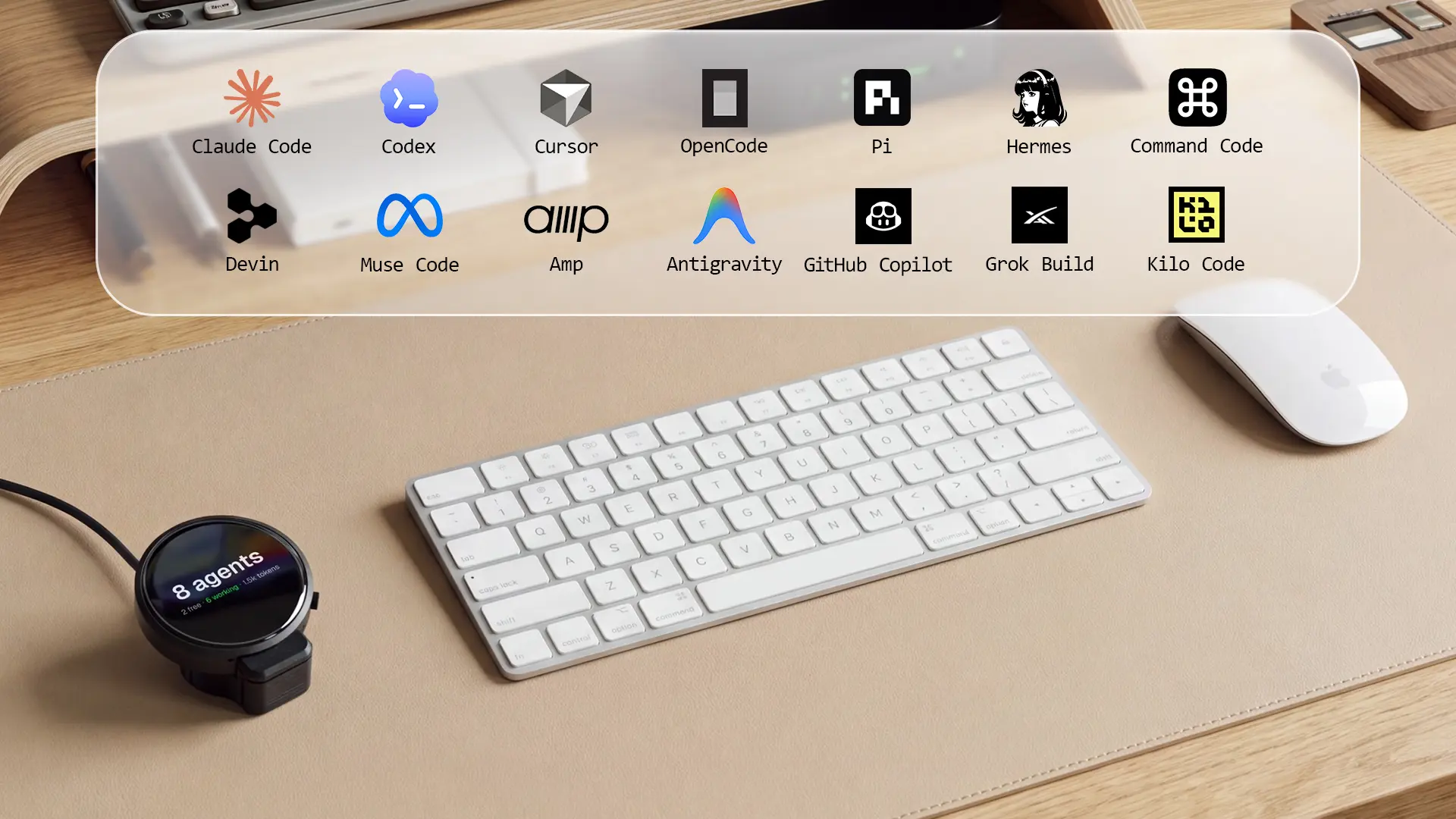
- Works with Claude Code, Codex, Cursor, OpenCode, and a growing list of agents
- An open protocol, so you can add your own agent with a CLI command or HTTP endpoint
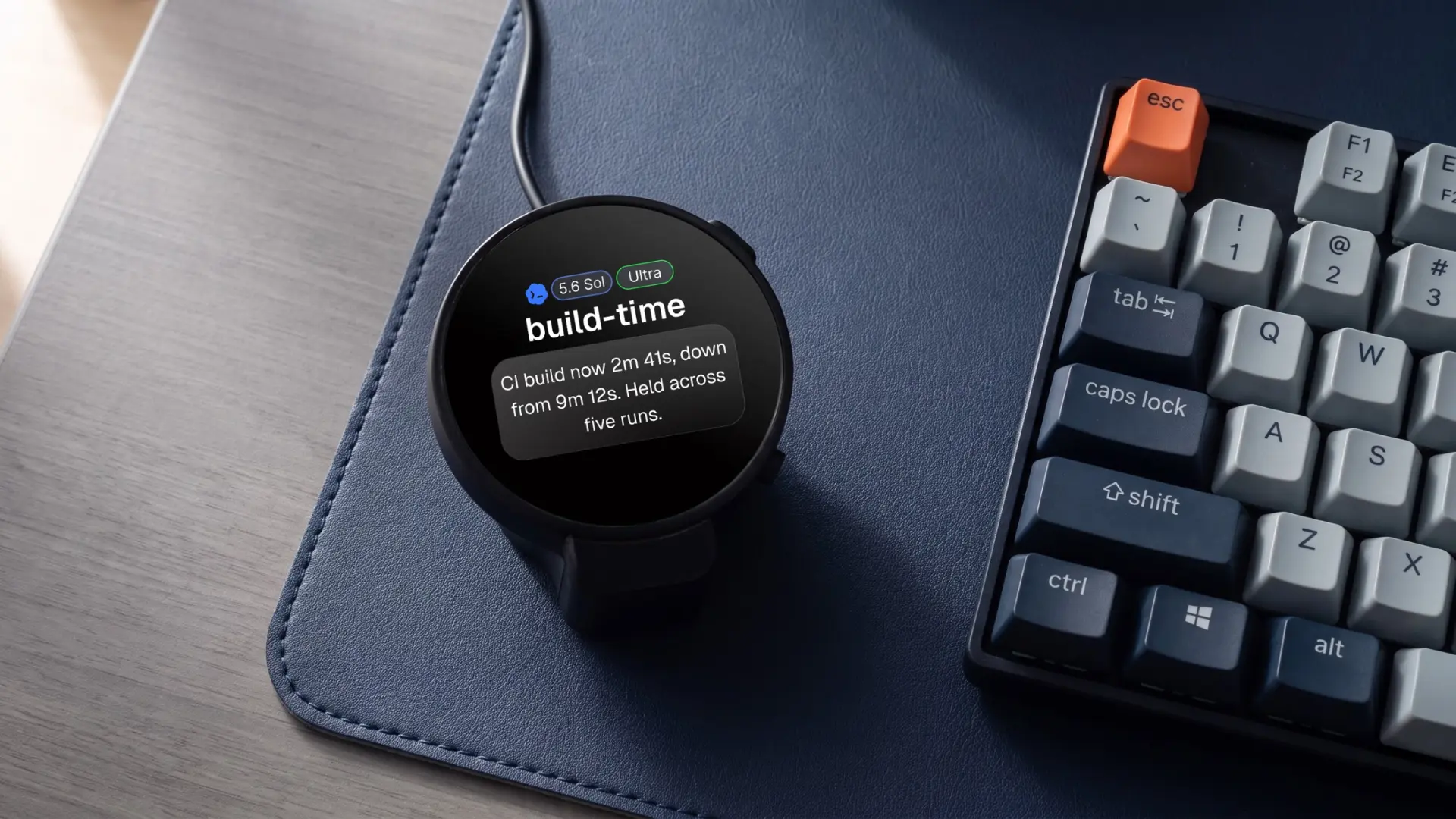
- A round always-on display showing the running task and its time, finished work as it lands, and the day's spend to the cent
- Voice in, one quiet tone out, no chat window and no menus to learn
- End-to-end encrypted: the agent runs where it lives, and only the result comes back
The display is the counterpart to the Micro's status lights, and it carries more, since the spend readout has no equivalent on the pad. Its defining trait, though, is breadth: it drives whatever agents you run rather than one.
One agent versus every agent
The biggest difference between the two is how many agents they control, and it is the difference most likely to decide your choice. The Codex Micro is built around Codex and nothing else, so every Agent Key, every shortcut, and the reasoning dial all point at one agent. If Codex is your whole workflow, that focus is a feature.
The Autonomous Harness is agent-agnostic by design. It drives Claude Code, Codex, Cursor, and the rest from one face, which matters because most developers who run agents do not run just one. They reach for Claude Code on a supervised refactor and Codex on an async delegation, and the Harness is the single surface across both. The open protocol means the list keeps growing rather than being fixed to one vendor's roadmap.
So the honest split is this. A Codex-only shop gets a tighter, more tactile tool in the Micro. A multi-agent shop gets a control layer that does not care which agent you picked this hour in the Harness.
Keys versus voice
The two devices ask for different hands. The Codex Micro is a press-and-turn instrument: you launch workflows with the joystick, check status on the glowing keys, and turn the dial to change reasoning level, all without leaving the pad. For people who like mechanical feedback and muscle memory, that is a real pleasure, and it keeps your hands near the keyboard.
The Harness replaces the keys with a sentence. You double-tap and say what you want, which is faster for dispatching a whole task ("watch the deploy and flag anything red") than mapping it to buttons, but it trades away tactile control. Voice is the better fit when the unit of work is a full instruction you hand off and walk away from. Keys are the better fit when you want granular, physical control of one agent's settings.
Status lights versus a display
Both devices try to answer the same question at a glance: what are my agents doing right now? The Codex Micro answers it with light. Its Agent Keys glow to show the state of each linked Codex conversation, which is elegant and immediate for a handful of agents.
The Harness answers it with a screen that carries more detail: the running task and its elapsed time, the finished output as it lands, and the day's spend to the cent. The spend readout is the piece the Micro has no equivalent for, and it matters once several agents are burning tokens in parallel, where the cost is easy to lose track of. If your worry is not just what is running but what it is costing, the display does more work than the lights.
Price and availability
Price and availability are where the two diverge most for a buyer today. The Codex Micro launched at $230 as a limited run, and it sold out fast, so getting one at list price is the first challenge, and resale prices have run far higher. It is a flashy, desirable object, but it is a scarce one, and OpenAI has framed it as a novelty rather than a staple.
The Autonomous Harness is the more affordable of the two and is selling now, not as a limited drop, with a one-year warranty and a 30-day return window. See the table above for both prices. For a buyer who wants a device they can actually get, order, and return if it does not fit, that difference is not a small one.
Which should you buy
Choose the OpenAI Codex Micro if:
- Codex is your entire agent workflow
- You want physical keys and a reasoning dial for one agent
- You can get one at a fair price, since it is a scarce limited run
Choose the Autonomous Harness if:
- You run more than one agent, or expect to soon
- You want to drive agents by voice rather than by buttons
- You want status and spend on one display, from a device you can buy today
.jpg)
Honest limit: if you only ever touch Codex and love mechanical hardware, the Micro will feel more tailored to you, and that is a fair reason to prefer it.
Frequently asked questions
What is the OpenAI Codex Micro?
The OpenAI Codex Micro is OpenAI's first hardware product, a $230 macro pad released on July 15, 2026 that pairs with the Codex coding agent. It has 13 mechanical keys, light-up Agent Keys, a joystick, and a reasoning dial, and was co-designed with keyboard maker Work Louder as a limited run.
Is the Codex Micro sold out?
Yes, the Codex Micro sold out quickly after its July 15, 2026 launch, within about 12 hours, and units have appeared on resale sites well above the $230 list price. OpenAI described it as a limited-run collaboration rather than a mass-market product, so stock has been capped and hard to get at list.
What is a good Codex Micro alternative?
The Autonomous Harness is the closest alternative, and it is broader: rather than controlling Codex alone, it dispatches tasks by voice to every major coding agent, including Claude Code, Codex, and Cursor. It is available now rather than sold out, and it shows agent status and spend on an always-on display.
Does the Autonomous Harness work with Codex?
Yes, the Autonomous Harness works with Codex, along with Claude Code, Cursor, OpenCode, and a growing list of other agents. Because it uses an open protocol, you can also add your own agent with a CLI command or an HTTP endpoint. Codex is one of many agents it drives, not the only one.
Which is better, the Codex Micro or the Autonomous Harness?
Neither is better for everyone. The Codex Micro is the tighter tool if Codex is your whole workflow and you want tactile keys. The Autonomous Harness is the more practical pick if you run several agents and want voice control plus status and spend tracking across all of them. Match the device to how many agents you run.
Do you need a device to use Codex or other coding agents?
No, coding agents like Codex and Claude Code run fully from your terminal and editor without any hardware. A device like the Codex Micro or the Autonomous Harness is optional, adding a physical way to launch, monitor, and control agents. Start with the agent itself, then add hardware if juggling agents becomes the bottleneck.
The short version
The OpenAI Codex Micro and the Autonomous Harness answer the same need at two different widths. The Micro is a polished, Codex-only macro pad with keys, a joystick, and a reasoning dial, a scarce limited run. The Harness is a voice device that drives every major agent and shows status and spend on a display, available now. If you live in Codex and want tactile keys, the Micro fits. If you run more than one agent, the Harness is the more practical choice.
References
- TechCrunch. Amid hardware legal battle, OpenAI releases a $230 keyboard for Codex.
- Tom's Hardware. OpenAI's first hardware device is an RGB macropad, the Codex Micro.
- Fortune. OpenAI's first hardware device debuted at $230.
- Axios. Codex Micro is a physical keyboard for AI agents.