The 10 Best Ergonomic Saddle Chairs

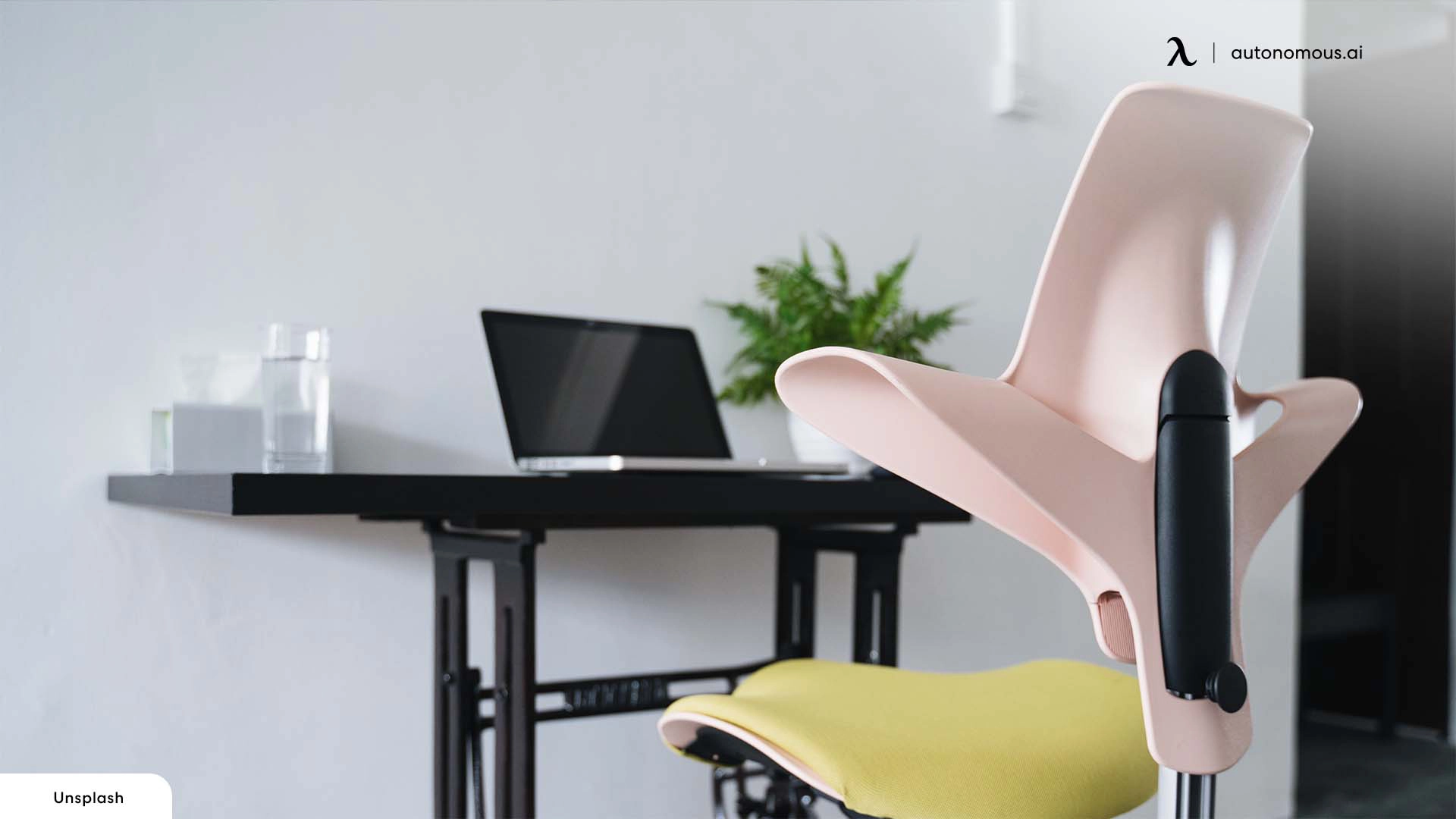
Saddle chairs and stools encourage a more open hip angle and a more upright spine than flat office chairs. The trade-off is a 2-4 week adjustment period and the need to set height correctly - most users who give up on saddle seating do so because of bad setup, not bad design. This guide covers ten saddle chairs and stools across price tiers, from the Finnish originals to budget medical-style options, with the trade-offs each makes.
The ten saddle chairs at a glance
Chair | Format | Backrest | Height range | Capacity |
HÅG Capisco 8106 | Chair | Yes | 16.5"-32" | 300 lbs |
Salli Saddle Chair | Chair | Optional | 21.5"-32" | 265 lbs |
Bambach Saddle Chair with ErgoBack | Chair | Yes | 18.5"-30" | 353 lbs |
HÅG Capisco Puls 8010 | Chair | Yes | 21.5"-30.5" | 240 lbs |
ErgoLab Advanced Saddle | Chair | Optional | Multiple options | 300 lbs |
Sit Healthier Split Seat | Chair | No | 20.5"-27.5" | 550 lbs |
Iloa Plus | Chair | Optional | 22"-32" | 265 lbs |
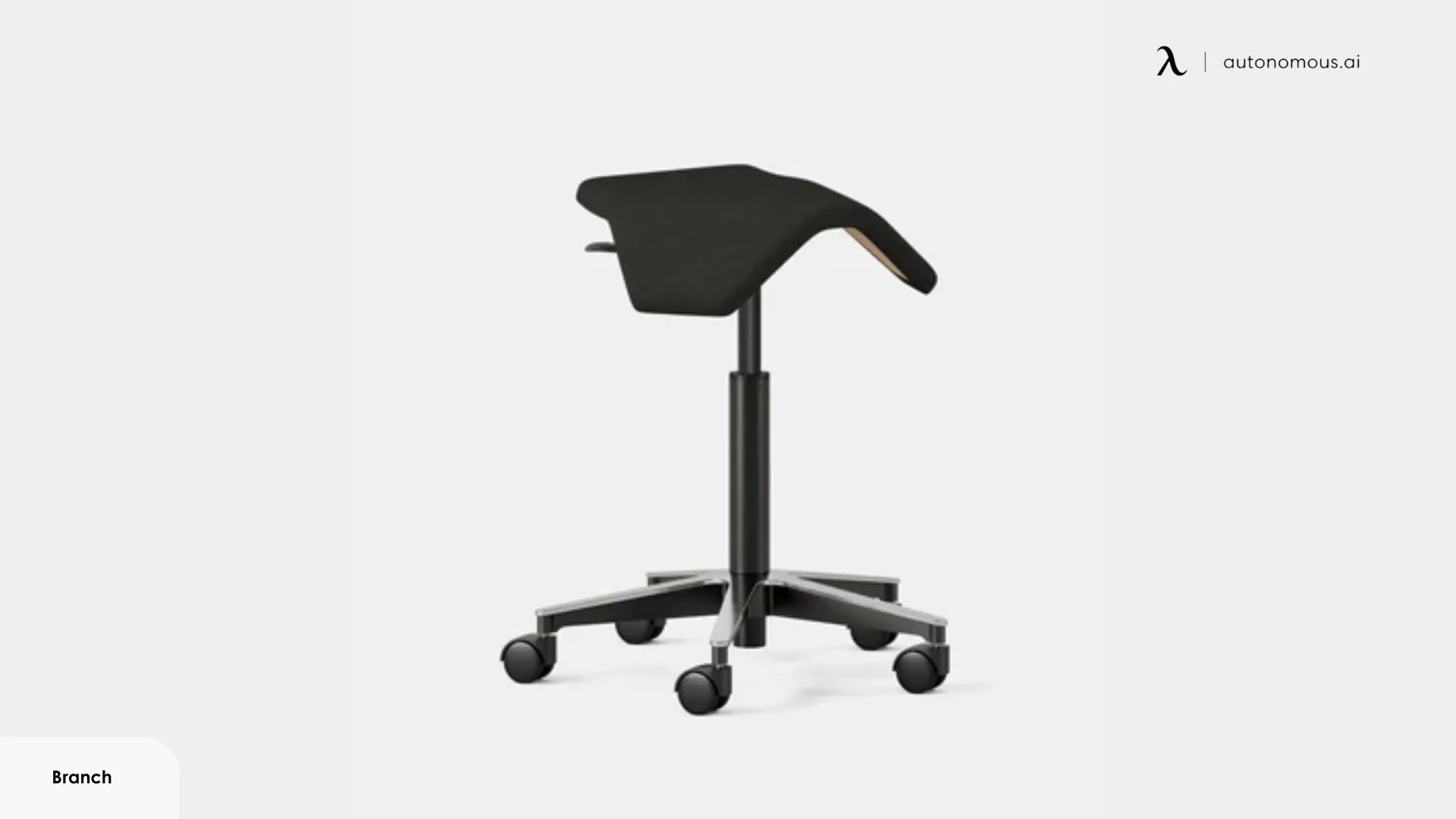
Branch Saddle Chair | Stool | No | 21"-31" | 265 lbs |
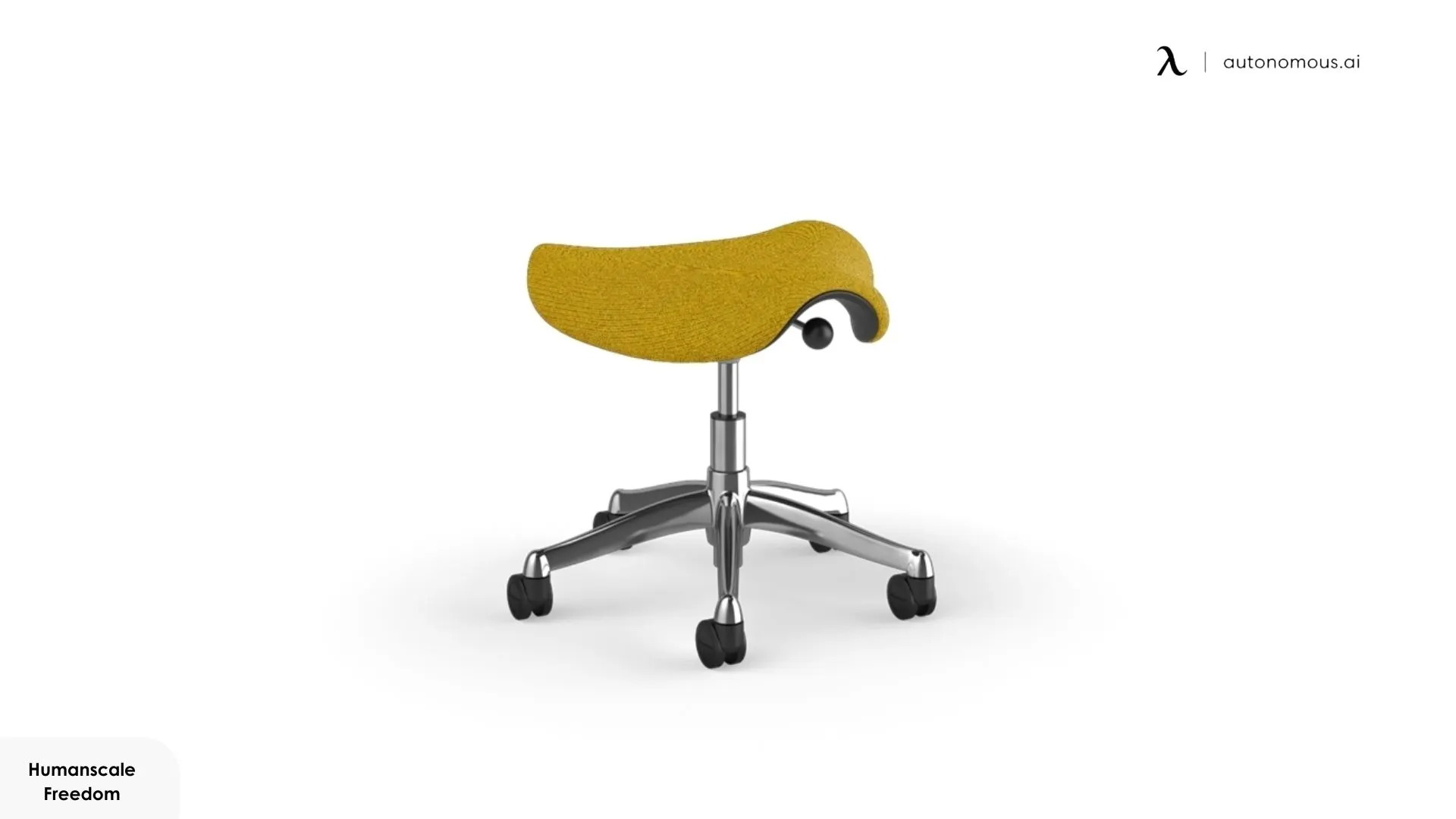
Humanscale Freedom Saddle | Stool | No | 24.25"-32" | 250 lbs |
Master Massage Swivel Saddle | Stool | No | 20.5"-27.5" | 550 lbs |
Most users do best starting with a chair that has at least an optional backrest. Pure stools require more core engagement and tend to fatigue faster during long sessions. Full saddle chairs with backrests suit office workers; backless saddle stools suit healthcare, salon, and standing-desk users.
The chairs reviewed
1. HÅG Capisco 8106 - the category leader
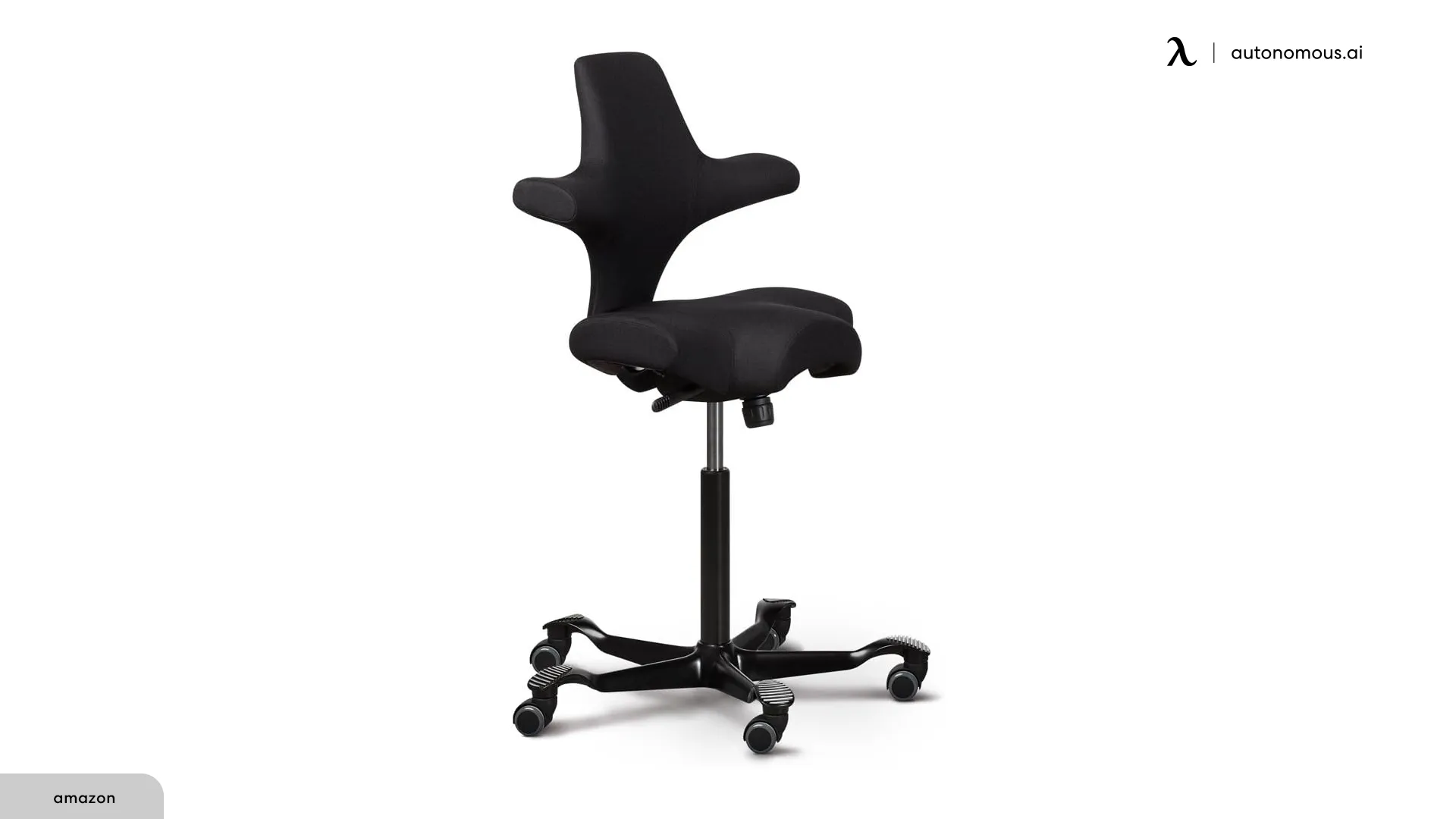
The HÅG Capisco is what most ergonomic seating professionals point to when asked about saddle chairs. It takes the saddle concept and builds a fully adjustable office chair around it. You get seat height (16.5"-32"), seat depth, seat tilt, backrest height, and backrest tilt - the most adjustability in this category. The saddle shape is subtle compared to clinical-style stools, which makes it easier to adapt to over the first few weeks.
The chair supports multiple sitting positions: upright at the desk, forward-leaning for focused work, backward-facing for casual conversations (the backrest doubles as a chest support), and higher perching for standing-desk transitions. The wraparound backrest provides slight lateral support during task switching, which most flat office chairs lack.
The learning curve is real. Finding the right combination of settings takes experimentation, and users who just want to sit and work may find it fussy at first. The price runs $900+, which makes the most sense if you'll actually use the adjustability rather than set it once and forget it. Twenty-year warranty on the frame mechanism reflects what HÅG expects of the chair's lifespan.
Best for: Users who change postures frequently throughout the day and want full chair adjustability.
2. Salli Saddle Chair - the Finnish original
Salli has been making saddle chairs in Finland for over five decades, and the company invented the split-seat saddle design that most competitors now copy. The split seat divides pressure away from the central pelvic area - the original ergonomic reason for the saddle category. Users who experience numbness or pressure discomfort in solid-seat saddle chairs typically find Salli's split design solves the problem.
The chair is offered in multiple variants - SwingFit (active rocking base), MultiAdjuster (fully adjustable), Twin (deeper split). All share the 50-year refinement and the precise split-seat angle that Salli's research determined years before competitors started reverse-engineering it.
Build quality is at the premium tier. The materials, mechanisms, and craftsmanship are noticeable in the daily use over multi-year ownership. The trade-off is price - Salli chairs run $1,200+ depending on configuration, and the brand sells primarily through medical/dental suppliers rather than office furniture retailers, which can complicate buying logistics.
Best for: Users who want the most-refined split-seat saddle design from the brand that invented the category, with the budget to support the premium tier.
3. Bambach Saddle Chair with ErgoBack - the backrest specialist
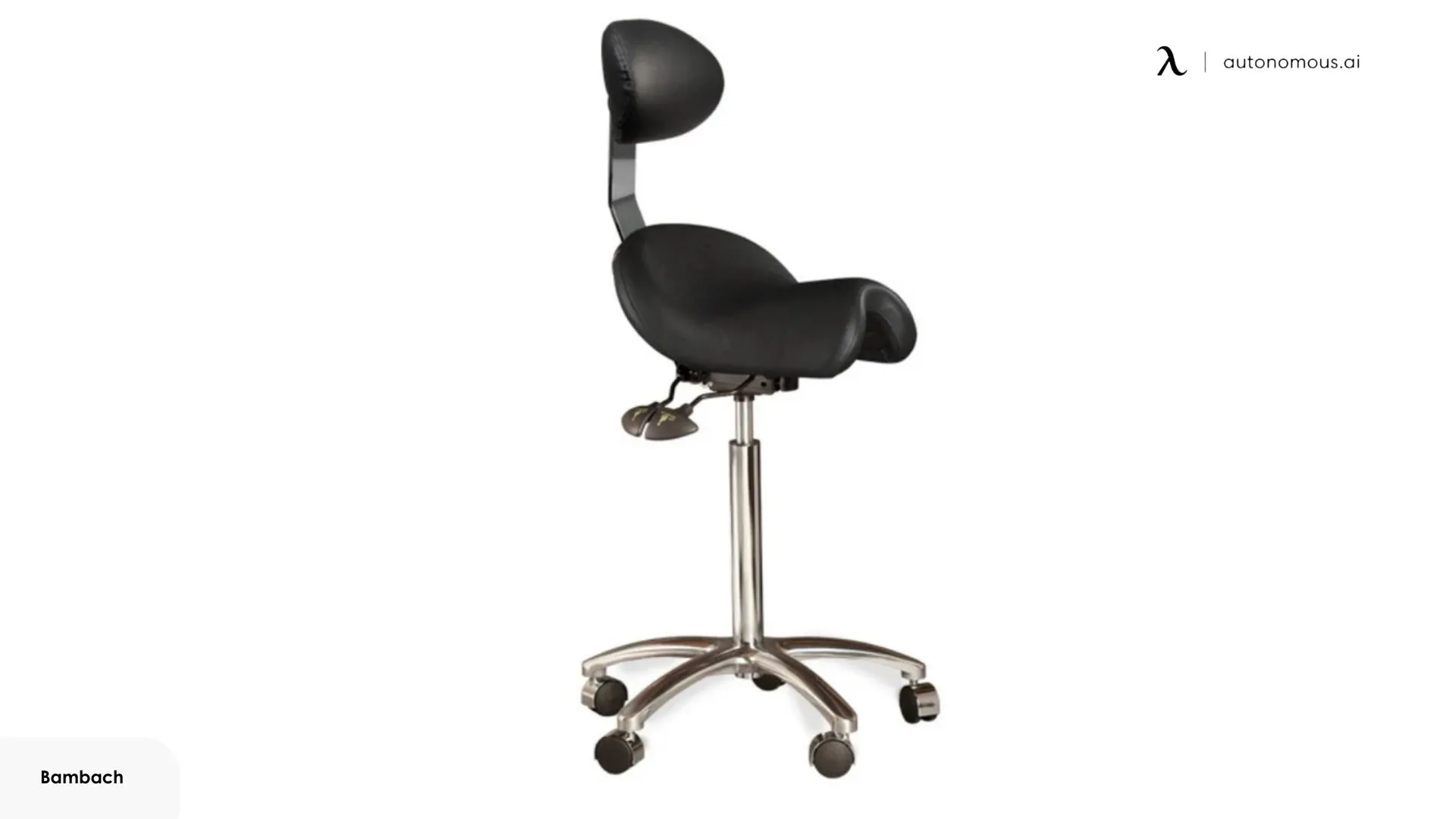
Where many saddle designs treat the backrest as optional or secondary, the Bambach treats it as central. The contoured saddle seat opens the hip angle, and the ErgoBack is engineered to keep you upright without requiring constant core engagement. This is the saddle chair for users who want the postural benefits without the active-sitting fatigue.
Healthcare professionals and precision-task workers (dentists, lab technicians, watch repairers, drafters) make up much of Bambach's customer base for a reason. Steady upright support during long precision-focused tasks is exactly what the chair is built for. The seat contour is more pronounced than average, which holds your position firmly but feels restrictive for users who like to shift around frequently.
Price runs at the premium tier ($1,600+), and adjustability is more limited than the HÅG Capisco. If you prefer wide cushioned seats or want to recline occasionally, the Bambach won't accommodate that. It's a focused chair designed for one thing - guided upright posture for sustained precision work - and engineered to do it well.
Best for: Users in precision-task professions who want guided upright support without relying on core engagement.
4. HÅG Capisco Puls 8010 - affordable Capisco tier
The Puls 8010 is HÅG's entry into the Capisco line. Same saddle seat concept, same multi-position sitting capability (forward, backward, perching), but with simpler mechanisms and less adjustability than the 8106. Seat height range 21.5"-30.5", backrest height adjusts, but the seat depth and tilt mechanisms found on the 8106 are removed.
The trade-off is straightforward: you get the Capisco saddle experience at roughly half the price of the 8106. Most users won't notice the missing adjustability after the first month - they'll find their sweet spot and stay there. Heavy users who need to dial in different positions throughout the day will hit the Puls 8010's adjustment limits.
Build quality remains at the HÅG standard. The 240 lb capacity is the main spec to verify against the higher-tier 8106's 300 lbs - heavier users should look at the 8106 or Capisco Puls 8020 (the cushioned variant).
Best for: Users who want the Capisco saddle experience without the premium 8106 price tag and don't need full adjustability.
5. ErgoLab Advanced Saddle - sustained sitting specialist
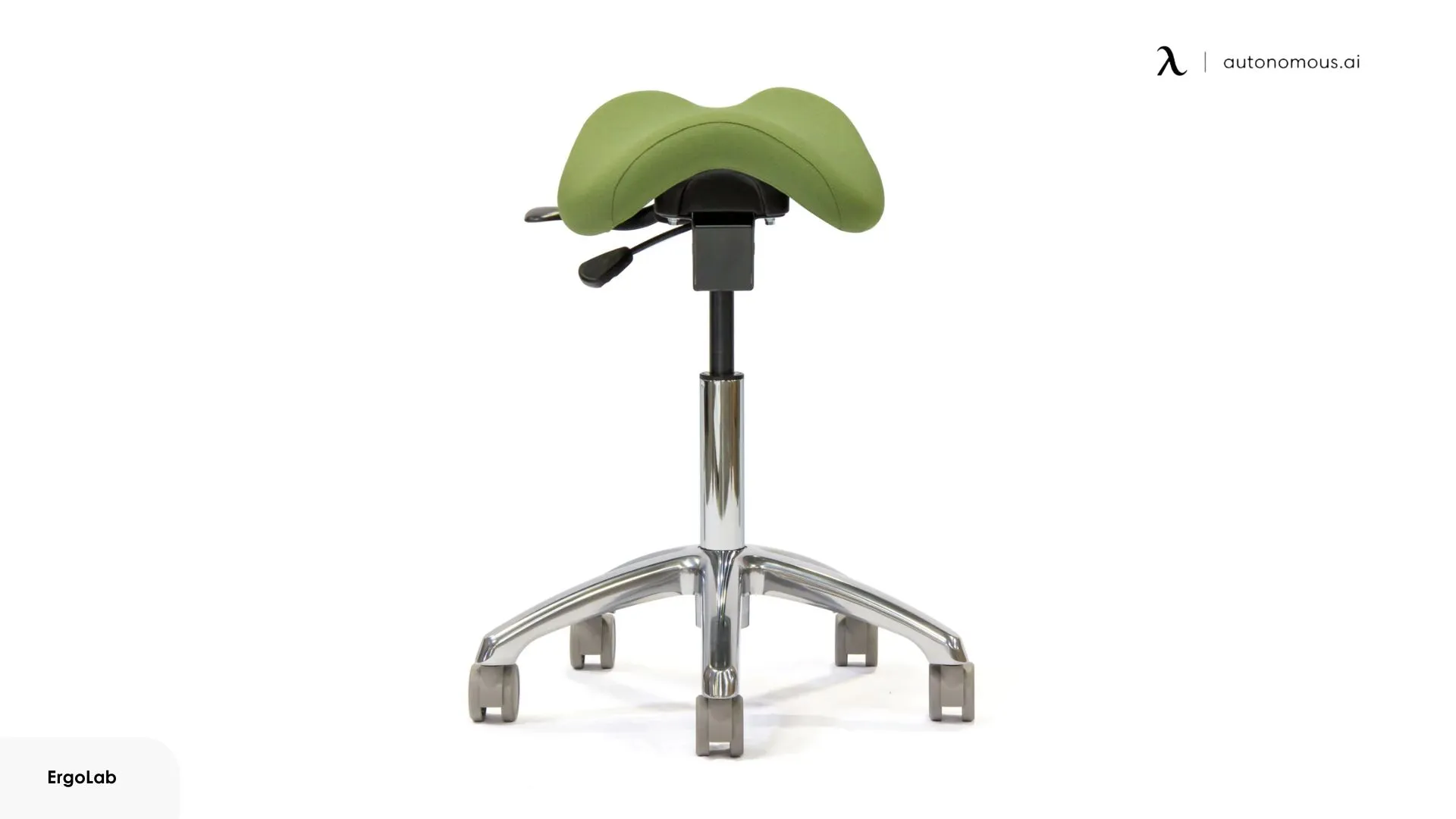
Where some saddle chairs focus on movement or perching, the ErgoLab Advanced Saddle is built for sustained sitting. The seat features a central groove that relieves tailbone pressure, and the multi-angle pelvic positioning system helps maintain spine alignment across longer work blocks. It's less about active repositioning and more about staying comfortable in one posture for extended periods.
The construction details matter. The foam is injection-molded rather than layered, which tends to hold its shape better over years of daily use. ErgoLab offers seat upgrades to memory foam or serene gel - a level of customization rare in this price tier. The aluminum base adds stability without making the chair feel heavy.
The trade-off vs HÅG or Salli: lower brand prestige and a less-refined adjustment mechanism. The chair works well, but doesn't have the 50-year heritage that justifies premium pricing on the Finnish brands. At roughly half the Salli price, it makes sense for users who want sustained-sitting saddle benefits without paying for category-original branding.
Best for: Professionals who sit for long stretches and want a saddle chair that holds shape over time without the premium-brand price tag.
6. Sit Healthier Split Seat - soft tissue pressure relief
The defining feature is the split seat. Unlike solid saddle designs, the Sit Healthier divides the cushion down the middle, which reduces contact pressure on soft tissue and improves airflow. For users who've felt numbness or discomfort during long sessions in a standard saddle chair, this design addresses the problem directly.
The forward-angled seat encourages the pelvis to tilt naturally, which helps the spine settle into a more neutral position without constant self-correction. PU leather over steel frame construction, forward tilt standard, height range 20.5"-27.5".
Trade-offs: the seat gap width is fixed, so fit varies by build. There's an adjustment period - most users need 2-4 weeks before the position feels natural, as hip and core muscles adapt. Coming from a heavily cushioned office chair, the firmness is jarring at first. The 550 lb weight capacity is unusual for this category, making it one of the few saddle chairs rated for plus-size users.
Best for: Office workers who experience numbness or pressure discomfort during long saddle sessions and need a split-seat alternative.

7. Iloa Plus - sustainable Finnish saddle chair
Developed in collaboration with Finnish design company myKolme, the Iloa Plus integrates active seating principles into a saddle chair built from sustainably sourced materials. Where most saddle chairs prioritize ergonomics first and aesthetics second, the Iloa Plus targets users who want both - the saddle posture benefits and a modern minimalist design that fits clean office aesthetics.
The frame uses sustainably harvested wood, recycled metals, and natural fiber upholstery rather than the PU leather and steel found in most competitors. For environmentally conscious buyers or modern-design offices where chair aesthetics matter, the Iloa Plus is the strongest sustainable option in the saddle category.
The trade-off is comfort vs. design. The chair's minimalist construction means less padding than competitors, which some users find too firm during long sessions. The Iloa Plus works best for users who treat saddle sitting as one mode in a rotation rather than the only chair they use.
Best for: Environmentally conscious buyers and modern offices where chair aesthetics matter as much as ergonomics.
8. Branch Saddle Chair - design-forward perch
The Branch Saddle Chair is a minimalist saddle chair built around one job: a supportive perch for focused work without the bulk of a traditional task chair. Functionally, it sits somewhere between a stool and a chair. The contoured saddle seat encourages a natural leg position, and the height range (21"-31") works for both standard desks and standing-desk setups.
Birch plywood frame, recycled polyester seat fabric, powder-coated aluminum base - Branch's materials choices reflect their broader furniture aesthetic. The compact footprint makes it easy to tuck away or roll between workstations. The fixed seat angle simplifies the adjustment process - no learning curve on tilt or depth, just set the height and use it.
The simplicity cuts both ways. If you like to fine-tune your seating position, you won't find much to adjust. And without back support, it's better suited for shorter focused blocks than all-day sessions. Branch sells the chair direct-to-consumer with a 30-day trial, which makes it easier to test than premium options that require furniture-showroom evaluation.
Best for: Design-conscious buyers who want a compact perch with premium materials and minimal setup complexity.
9. Humanscale Freedom Saddle Stool - standing desk perch
The Humanscale Freedom Saddle takes a different approach. The triangular cushion is contoured rather than flat, which encourages a posture that lowers the thighs and opens the hips. This design supports the lumbar spine's natural curve and reduces pressure points around the tailbone.
At 14 lbs, it's noticeably lighter than most saddle stools, making it easy to move between workstations or tuck under a standing desk when not in use. The compact footprint suits small studios or sit-stand setups where a bulky chair would be in the way. The free-float tilt with lock lets you choose between active (unlocked) and stable (locked) modes.
The Freedom Saddle works best as part of a sit-stand routine where you alternate positions throughout the day. It's not designed for extended seated sessions - there's no backrest, the cushion isn't deeply padded, and users who need to stay in one place for hours will find it limiting.
Best for: Standing desk users and small studios who want a lightweight saddle stool that's easy to move and store.
10. Master Massage Swivel Saddle Stool - best budget option
Master Massage stools are a staple in dental offices, salons, and physical therapy clinics for a reason: they work, they hold up, and they're affordable. The Master Massage Swivel Saddle ($130) is the budget category leader.
At this price point, the build quality is unexpectedly solid. The foam is molded directly onto the seat base rather than glued, which prevents separation and extends lifespan. The 550 lb weight capacity is unusually high for this category. Polyurethane wheels roll smoothly across hardwood, tile, or carpet without leaving marks.
The seat is firm, which is intentional. For work that involves forward leaning, shifting between tasks, or moving around a room, that firmness keeps you balanced and engaged. It's not the right fit for 8-hour sitting marathons - there's no backrest, and the cushion doesn't have much give. But as a saddle stool for mixed-use environments or as an entry point into saddle seating before committing to a $1,000+ chair, it punches above its weight.
Best for: Budget-conscious buyers, healthcare and salon professionals, and anyone testing whether saddle seating works for them before committing to a premium option.
Frequently asked questions
What is the best saddle chair?
The best saddle chair has full adjustability (seat height, depth, tilt, backrest), a saddle shape that matches your build, and a height range that fits your desk. For users who change postures frequently throughout the day, full-adjustment chairs work best. For users who set one position and stay there, simpler chairs with fewer adjustments are sufficient and cost less.
Are saddle chairs good for posture?
Saddle chairs encourage a more open hip angle and more upright spine than flat office chairs by changing how the pelvis sits. The forward-angled seat keeps the pelvis from rolling backward into the tucked position that causes slouching. They work best when height is set correctly and when alternated with other sitting positions rather than used static for hours.
Are saddle chairs worth it compared to a normal office chair?
A saddle chair is worth it if your current chair leads to slouching, a tucked pelvis, or lower back rounding. A traditional ergonomic office chair is often better if you need relaxed all-day back support or if you've tried saddle seating and found the adjustment period too difficult. The two chair types serve different sitting styles.
Are saddle chairs good for back pain?
Saddle chairs can help with back pain rooted in prolonged slouched sitting because the forward-angled seat reduces lower-back collapse. They won't fix back pain caused by structural issues, disc problems, or poor workstation setup. Consult a clinician for serious or persistent back pain before changing your seating.
Are saddle chairs good for sciatica?
Saddle chairs help some users with sciatica by reducing pressure on the lower spine, but they aggravate others by creating hip tension at the seat edges. Start with short sessions (15-30 minutes) and correct height/foot support before deciding. If symptoms worsen during the first 2 weeks, saddle seating may not be the right tool for your specific case.
Can you sit in a saddle chair all day?
Not comfortably, especially during the first few weeks. Most users do better rotating between saddle seating in 30-60 minute blocks and either a structured ergonomic chair or standing for the rest of the day. Saddle chairs with backrests support longer sessions than backless saddle stools, but few users sit any single saddle chair for 8 hours straight without fatigue.
Why do my inner thighs hurt on a saddle chair?
Inner thigh discomfort on a saddle chair is almost always a height-setting issue. The seat is set too high relative to your feet - your legs hang and your thighs bear weight they shouldn't. Lower the seat or add a footrest so your feet are firmly planted and your legs can share the load. The discomfort usually resolves within a few days of correct setup.
Bottom line
For the most adjustable and best-supported saddle chair, the HÅG Capisco 8106 is the category leader. For the original split-seat design from the brand that invented the category, the Salli Saddle Chair delivers 50 years of refinement. For sustained precision work with guided upright support, the Bambach with ErgoBack is the backrest specialist.
If you try saddle seating and find the adjustment period too difficult, the Autonomous ErgoChair Ultra 2 is the structured ergonomic alternative - adaptive back, dynamic seat, and 9 adjustment points that support good posture without the saddle learning curve. Use code BLOGFIRST5 for an extra 5% off any Autonomous chair.