0checkout

Chairs that adjust to you. 9 points of adjustment, flex-frame, 100,000-cycle tested. Pick the one your back wants.Chairs that adjust to you. 9 points of adjustment, flex-frame, 100,000-cycle tested.

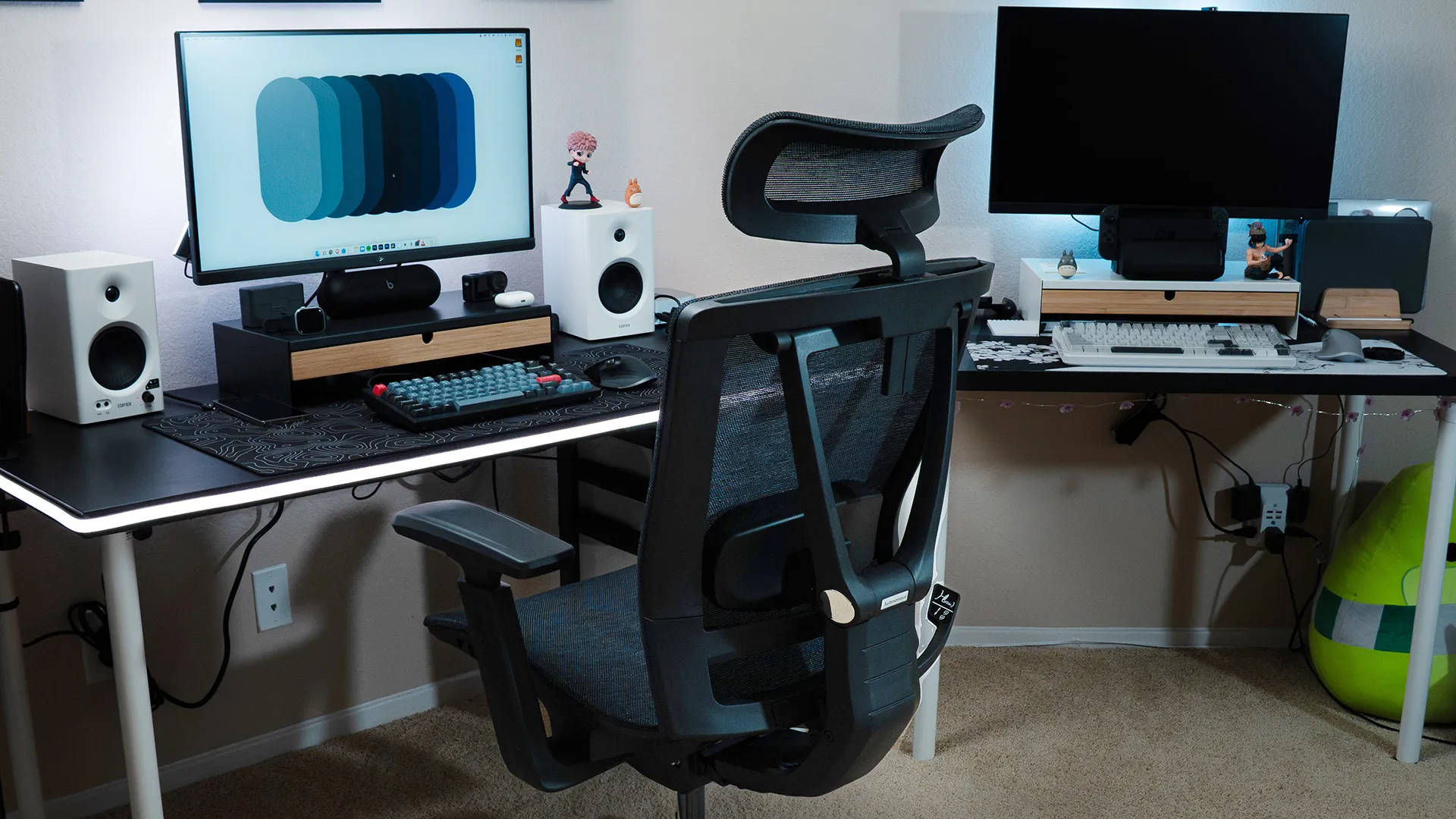
ErgoChair Mesh
ErgoChair Mesh
9 degrees of freedom with air mesh. Synchro-tilt. 22° recline. 3D armrests. 300 lbs capacity. Lifetime warranty.9 degrees of freedom with air mesh. Synchro-tilt. 22° recline. 3D armrests. 300 lbs. Lifetime warranty.
JULY 4TH
€603.79
ErgoChair Ultra 2
ErgoChair Ultra 2
4-layer seat, flexing backrest. 62 pressure nodes. Synchro-tilt. 25° recline. 4D armrests. 320 lbs capacity. Lifetime warranty.4-layer seat, flexing backrest. Synchro-tilt. 25° recline. Lifetime warranty.
researchopen source
€482.79
ErgoChair Pro
ErgoChair Pro
9 degrees of freedom. Sliding lumbar. Synchro-tilt. 22° recline. 3D armrests. 300 lbs capacity. Lifetime warranty.9 degrees of freedom. Sliding lumbar. 22° recline. Lifetime warranty.
research
JULY 4TH
€506.99
ErgoChair Ultra 2 Plus
62 pressure nodes. 4-layer seat. Synchro-tilt. 25° recline. 4D armrests. 330 lbs capacity. Lifetime warranty.
€531.19

Workshop Notes — drops, build logs, and what broke this week.

© 2026 Autonomous · NYC · SF · Shenzhen · Saigon[email protected] · GitHub · X · Reddit ·
· Track your order ·
Privacy ·
  • Bulk Order
  • Reviews
  • Engineering
  • Open Source

About Autonomous ergonomic office chairs

Most office chairs fail in one of three ways: the foam packs down and stops supporting you within a year, the gas cylinder sinks so the seat won't hold its height, or the mesh sags out of shape. We engineered against those three. Every chair is built to 100,000 load cycles — the seat, the tilt mechanism, and the gas lift tested together, not one part in isolation — on a reinforced aluminium 5-star base, not nylon. The CAD for the ErgoChair Ultra 2 is open source on GitHub, and the work behind the backrest is documented in our ergonomics research. You can read the design instead of trusting a spec sheet. A mesh office chair lives or dies on the back — ours vents heat over a long session and holds its shape over years of daily use.

Who an Autonomous office chair is for

People who sit for the long stretch — long work sessions, deep work, building, writing, coding. A desk chair has to hold up over hours, not minutes, so the design is built for the eighth hour: synchro-tilt that moves with you, 3D or 4D armrests that get out of the way, a seat that relieves pressure instead of trapping heat. If you're up and around all day, a simpler task chair is fine — this one is for the people who stay in the seat. Pair it with a standing desk if you want to break the sit, too.

How to choose an ergonomic office chair

Three questions settle most of it. How your back wants support — the ErgoChair Ultra 2 is lumbarless, its exoskeleton frame flexes to hold the whole spine; the ErgoChair Pro has a lumbar pad you slide to the exact spot. How tall and heavy — the Pro fits up to 6'3" and rates to 300 lbs, the Ultra 2 Plus takes up to 330. How long it needs to last — the frame warranty runs from 2 years on Core to lifetime on Ultra 2 and Pro. Sit in it for 30 days at your real desk; if your back doesn't agree, send it back. The comparison page lays the specs out side by side.

How we think about pricing

Three rough tiers in the office chair market. Big-box chairs under $200 use thin foam and nylon bases that give out in a year. Premium ergonomic brands at $1,000–$1,800 — the engineering is real, but a chunk of the price is the name on the back. Autonomous holds the engineering bar from the $279 Core to the $499 Ultra 2 Plus. What we don't do: hide the spec sheet, ship a nylon base, charge for the brand. What we do: publish the recline range, the cycle count, and the weight rating.

Last updated June 2026.

FAQs

The back. Ultra 2 is lumbarless — the exoskeleton frame supports the whole spine. Pro has an adjustable lumbar pad you slide to your preferred spot. Italian tilt, mesh back, aluminium base, lifetime warranty — same on both.

The back. Ultra 2 is lumbarless — the exoskeleton frame supports the whole spine. Pro has an adjustable lumbar pad you slide to your preferred spot. Italian tilt, mesh back, aluminium base, lifetime warranty — same on both.

Pick by how you want your back held. ErgoChair Ultra 2 if you want whole-spine support that works the moment you sit — the lumbarless exoskeleton flexes with you, nothing to set. ErgoChair Pro if you'd rather tune lumbar height to an exact spot and want a headrest for long calls. Both run synchro-tilt and a lifetime frame warranty.

Adjustability that fits your body instead of the other way around. Look for lumbar or whole-spine back support, a synchro-tilt that reclines with you, seat height and depth that match your legs, and armrests that move in 3 or 4 directions. Ours carry up to 9 points of adjustment — you set the chair, the chair doesn't set you.

Set it from the ground up. Seat height first — feet flat, knees level with your hips. Then seat depth — two or three fingers between the seat edge and the back of your knees. Set the backrest and lumbar to meet the curve of your lower back, then the armrests so your shoulders relax and forearms rest level. Tune tilt tension last.

Ultra 2. The exoskeleton back extends further up the spine and it rates to 320 lbs. Pro fits up to 6'3", rates to 300 lbs, and adds an adjustable headrest if neck support on long calls matters more. Both use a reinforced aluminium 5-star base.

Heat. Over a long session the back of a foam-and-fabric chair traps body heat against the spine. Mesh vents it. The other reason is structure — mesh holds shape over years of daily use; foam-backed chairs eventually pack down. The seat is contoured foam on Pro and 4-layer construction on Ultra 2 — that's where pressure relief matters more than airflow.

A lot of people who buy one report it does. We don't claim it as a medical outcome — a chair isn't a medical device. If there's a diagnosed condition, talk to a clinician first.

Not for hours unbroken. Even the best chair isn't meant to hold one posture all day — stand or walk a few minutes every half hour. A good chair makes the sitting stretches comfortable; movement does the rest. Pairing it with a standing desk is the cleaner fix.

Lifetime on the frame for Ultra 2 and Pro. Mechanism, casters, and upholstery have separate coverage — see the Warranty Policy.

30 days. Sit in the chair at your actual desk. If it doesn't fit, send it back. Full terms in the Trial & Return Policy.

Yes. Both models qualify through Truemed. With a letter of medical necessity, the pre-tax saving works out to around 30%. See our HSA/FSA page for details.

10–15 minutes for one person. No special tools — everything needed ships in the box. Video walkthroughs are above on this page.