Does a Standing Desk Burn Calories? Standing vs Sitting

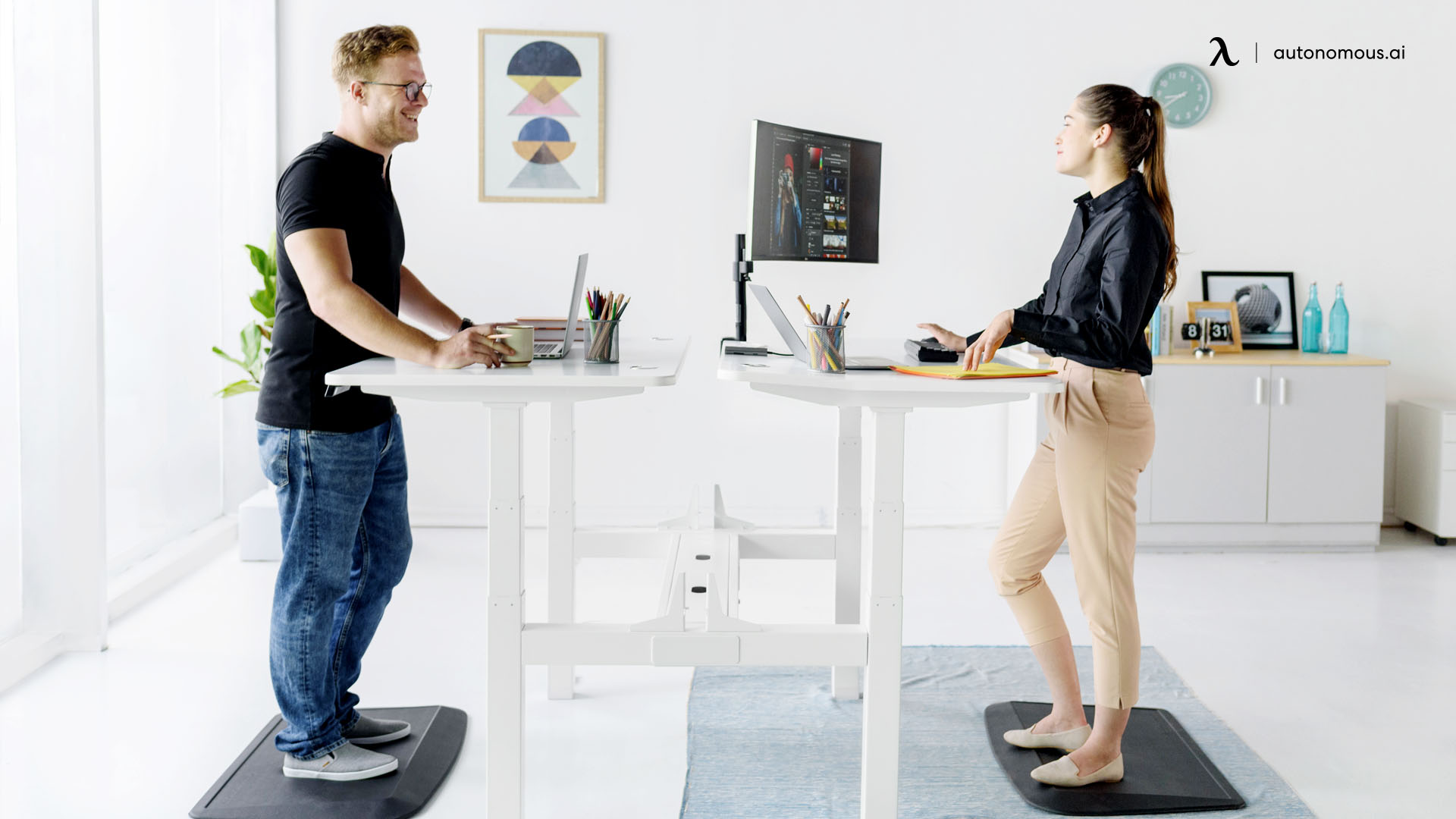
Standing burns more calories than sitting, but not many. A 2018 meta-analysis measured the difference at about 0.15 calories per minute, roughly 9 extra calories an hour, or around 50 over a full work day. That is real, but small, which is why the honest answer to whether a standing desk burns calories is yes, with a caveat. This guide covers the actual numbers, the math over an 8-hour day, whether standing raises your metabolism, and how a desk job fits into losing weight.
How many calories does standing burn vs sitting?
Standing burns roughly 0.15 more calories per minute than sitting, based on a review of the measured research. That works out to about 9 more calories per hour. Your total burn scales with body weight, so a heavier person burns a little more, but the extra from standing itself stays modest.
The figures below show the rough difference for light desk work. Treat them as estimates, since posture, fidgeting, and metabolism all shift the exact numbers.
Body weight | Sitting (per hour) | Standing (per hour) | Extra from standing |
|---|---|---|---|
150 lb | about 80 kcal | about 88 kcal | about 8 kcal |
180 lb | about 90 kcal | about 99 kcal | about 9 kcal |
200 lb | about 100 kcal | about 110 kcal | about 10 kcal |
The type of work matters less than whether you move. Standing perfectly still is close to sitting, and the burn only climbs once you shift your weight, do a few calf raises, or pace during a call. That small extra movement, not the standing itself, is where most of the difference comes from.
At a standing desk | Approx per hour |
|---|---|
Standing still, light desk work | about 90 kcal |
Standing with small movements | 100 to 120 kcal |
Pacing during calls | 120 to 140 kcal |
Slow walking on a treadmill desk | about 200 kcal |

Calories burned standing for 8 hours
Standing for a full 8-hour day burns roughly 70 extra calories compared to sitting the whole time. Standing all day is neither realistic nor comfortable, though, so a sit-stand split of 3 to 4 hours on your feet adds closer to 30 to 50 extra calories a day.
Stretched over time, that is where it starts to matter. A steady sit-stand routine adds a few hundred extra calories a week, and if nothing else changes, the research behind the 0.15-per-minute figure works out to a couple of pounds a year for someone standing several hours a day. It is slow, and a little extra eating undoes it, but it is not nothing.
Does standing raise your metabolism?
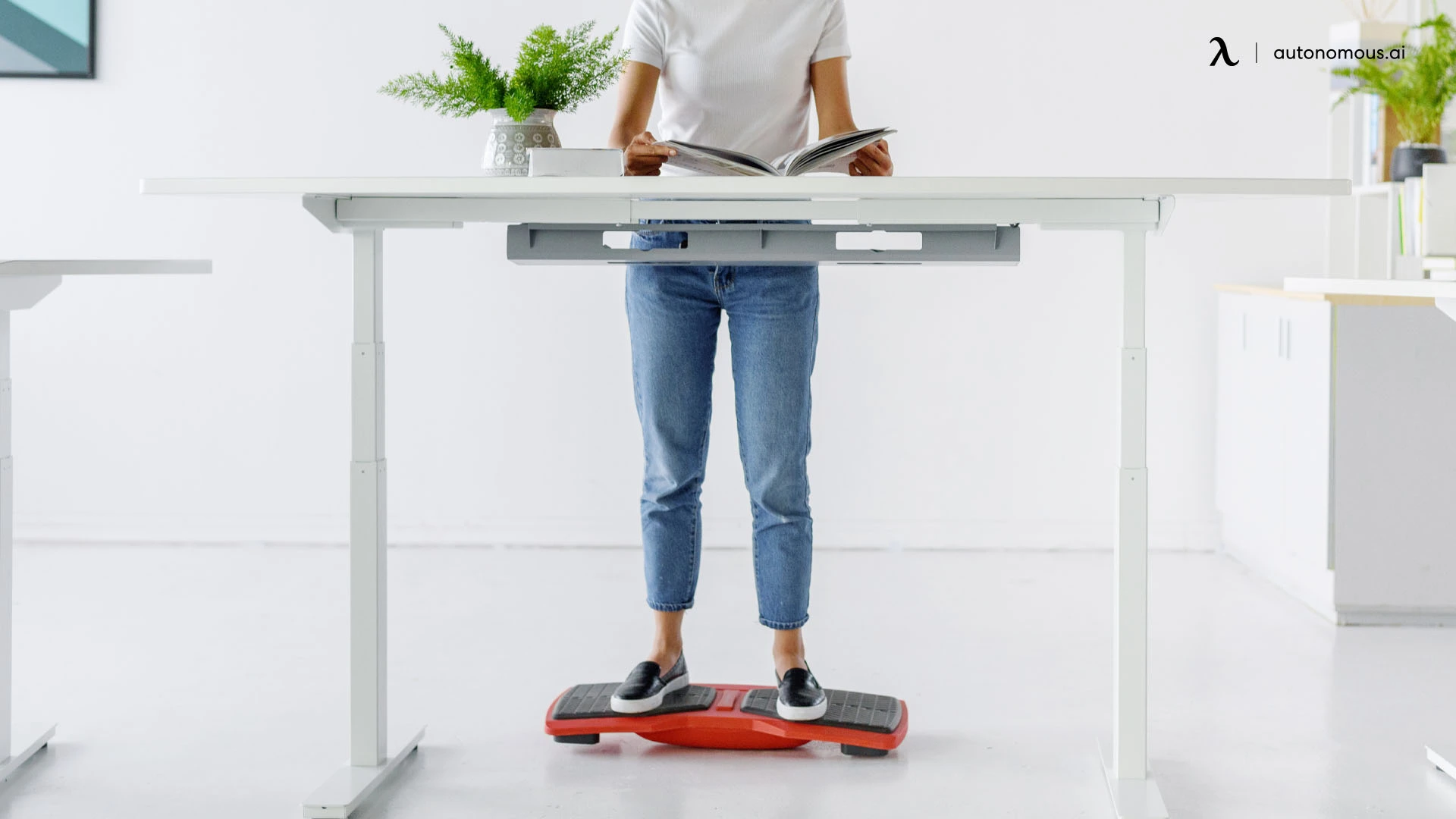
Standing raises your metabolic rate slightly because holding yourself upright uses more muscle than sitting does. Your legs, core, and back stay lightly active, and the small adjustments you make to keep your balance add tiny amounts of energy use through the day. That is the mechanism behind the extra 0.15 calories a minute.
Most of the effect falls under non-exercise activity thermogenesis, or NEAT, the energy you spend on everything that is not formal exercise. NEAT covers standing, walking, fidgeting, and general moving about, and it varies a lot from person to person. Keeping NEAT up across the day is linked to better weight management, and a standing desk is one easy way to nudge it higher without setting aside time to work out.
Can a standing desk help you lose weight?
On its own, a standing desk will not drive weight loss. Losing about a pound of fat takes a deficit of roughly 3,500 calories, and 50 extra calories a day would take more than two months to reach that, an amount a single snack can cancel out.
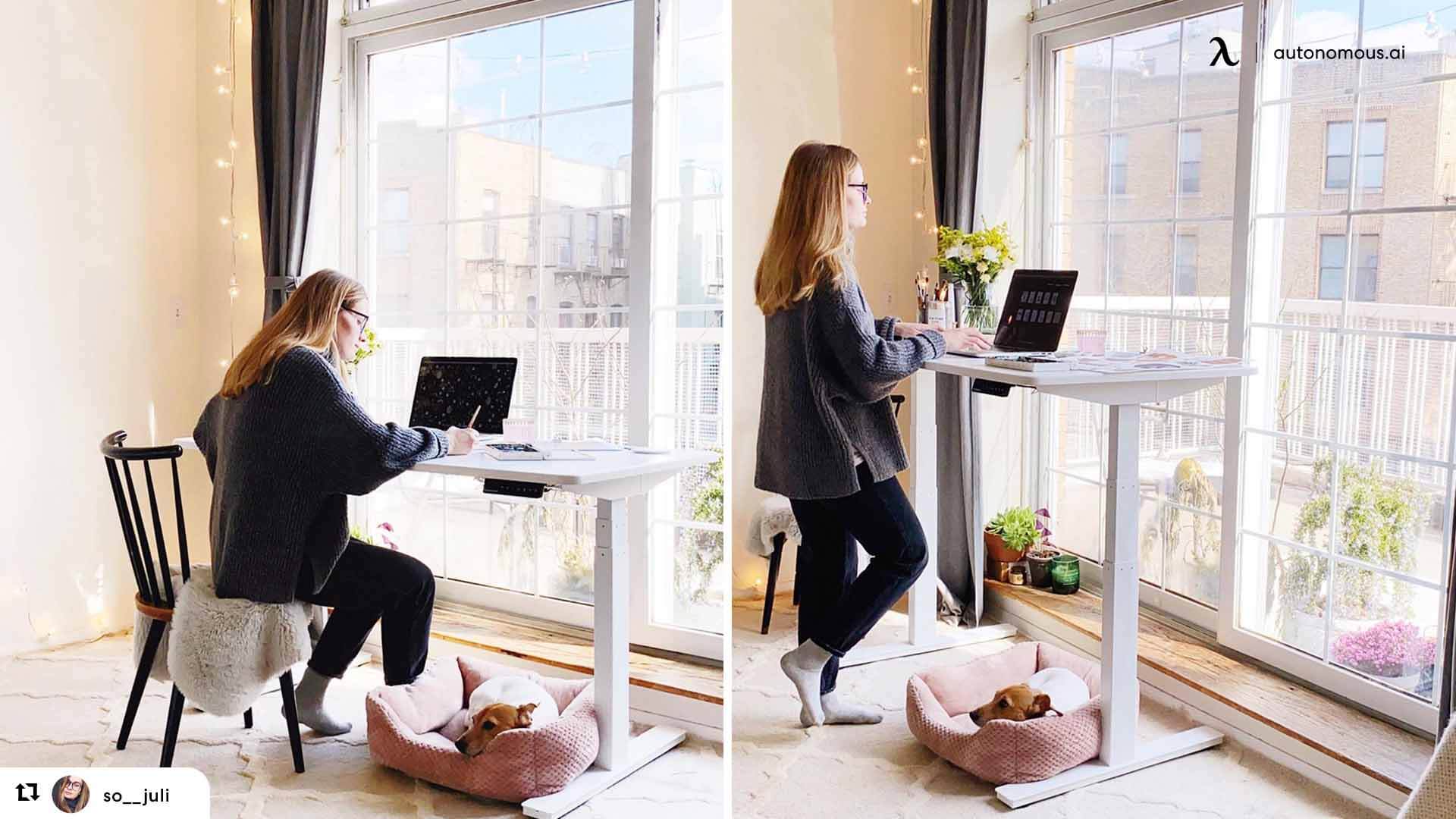
Where standing helps is as one small part of a larger routine. It raises your daily activity, breaks up long sedentary stretches, and makes it easier to add movement, all of which support a calorie deficit when paired with diet and exercise. Treat it as a base layer of activity, not the workout itself.
It also helps in less direct ways. Standing tends to make people shift, stretch, and step away more than sitting does, and it can ease the afternoon slump that leads to snacking. For the wider health case beyond calories, our guide to the benefits of a standing desk covers posture, energy, and circulation.
How to lose weight with a desk job
A desk job keeps you seated for most of the day, and that is the real obstacle to weight loss, not the desk itself. The fix is to stack small amounts of movement onto the workday so you are not sedentary for hours at a stretch.
Alternate sitting and standing. Aim for roughly 30 minutes standing each hour rather than one long stretch, which keeps you moving without wearing you out. Build up gradually if standing is new to you.
Walk whenever you can. Walking burns far more than standing, around 200 calories an hour at a slow pace, so a short walk at breaks, at lunch, or between meetings does more for weight loss than hours on your feet. Taking calls standing and using the stairs add steps without eating into work time.
Add a few standing desk exercises. Short bursts raise your heart rate in a way standing alone does not:
- Calf raises: rise onto your toes and lower slowly, 15 to 20 reps, to work your lower legs while you read.
- Squats: a set of 10 to 15 between tasks brings blood back to your legs after standing.
- Incline push-ups: brace against the desk edge and push up, which is easier than floor push-ups and works your upper body.
- Chair dips: with a stable, non-rolling chair, lower and lift yourself for a quick set.
An under-desk pedal exerciser or a treadmill desk goes further, turning standing time into light active time that burns well beyond standing still.
None of this replaces a sensible diet, which does most of the work in weight loss. But together, these habits keep a desk job from being fully sedentary, and the movement adds up over weeks and months.
How long should you stand each day?
There is no single right number, but a common target is a 1:1 ratio: stand for about 30 minutes of each hour, working up to 3 to 4 total hours of standing across the day. Breaking it into short intervals burns more cumulatively than one long stretch, and is easier on your legs and joints.
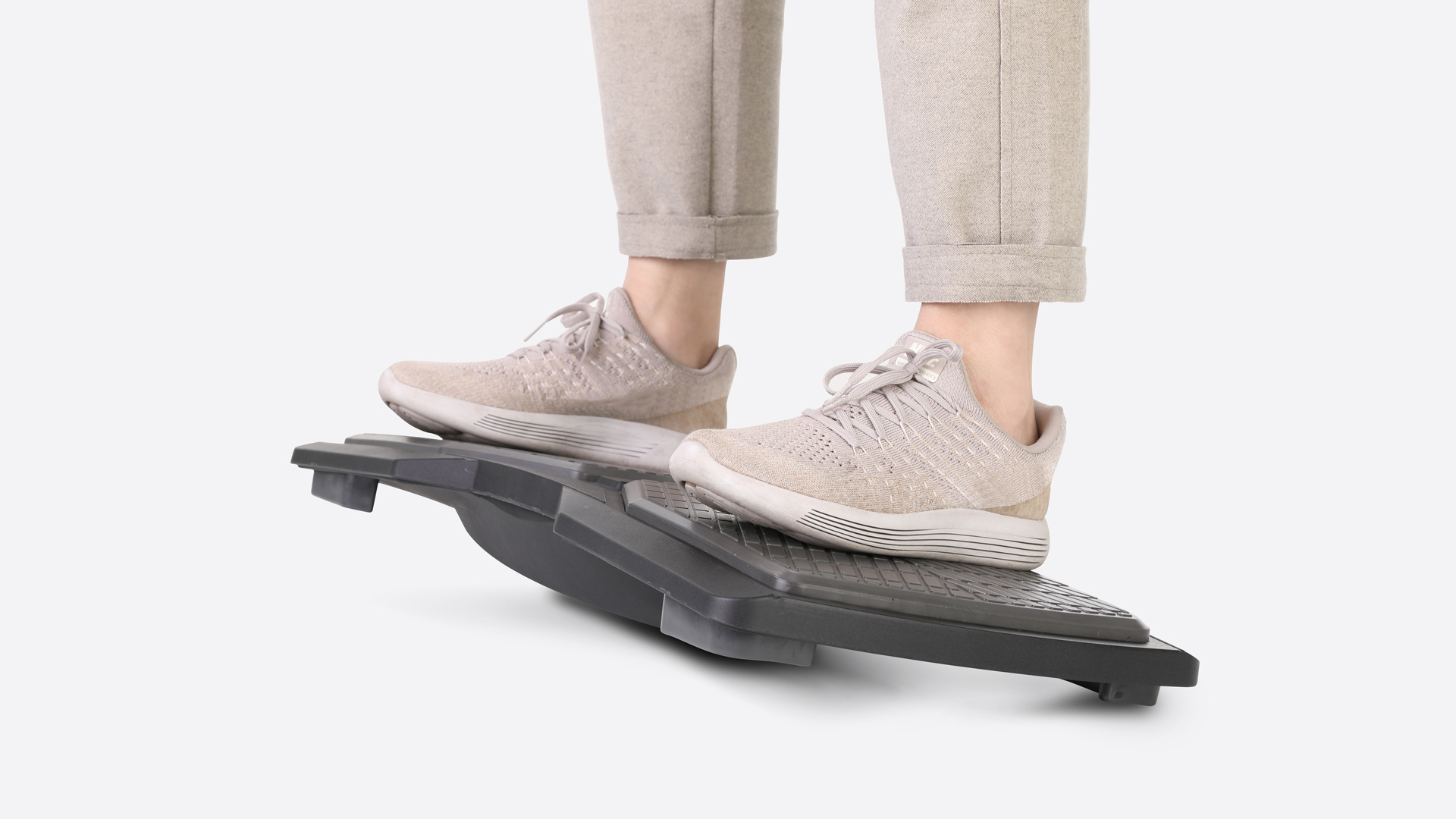
Standing too long has its own downsides. Prolonged static standing can cause leg fatigue, sore feet, and lower-back or circulation issues, so alternate with sitting, use an anti-fatigue mat, and take micro-breaks to move. Whether standing itself counts as exercise is a separate question, and our guide on whether standing counts as exercise covers where it lands.

FAQs
Does standing burn calories?
Yes, but modestly. Standing burns about 0.15 more calories per minute than sitting, or roughly 9 extra calories per hour. Over a full work day that adds up to around 50 to 70 extra calories. The exact amount depends on your body weight and how much you move while you are standing.
How many calories do you burn standing vs sitting?
Standing burns roughly 8 to 10 more calories per hour than sitting for a typical adult, based on a difference of about 0.15 calories per minute. A 150-pound person burns about 80 calories an hour sitting and about 88 standing. Adding small movements while standing raises that figure noticeably.
How many calories do you burn standing for 8 hours?
Standing for a full 8 hours burns roughly 70 extra calories compared to sitting the whole time. Because standing all day is not practical, a realistic split of 3 to 4 hours standing adds closer to 30 to 50 extra calories, and more if you move around while you are on your feet.
Can a standing desk help you lose weight?
Not on its own. The extra 50 or so calories a day is too small to create a meaningful deficit, since a pound of fat takes about 3,500 calories. Standing does raise your daily non-exercise activity, so paired with a good diet and regular movement it supports weight management over time.
Is standing better than walking for weight loss?
Walking is much better. A slow walk burns around 200 calories an hour, while standing still adds only about 9 over sitting. Standing is a useful way to break up long sitting through the day, but for weight loss, walking and other movement do far more of the work.
Does standing reduce belly fat?
Standing does not target belly fat specifically. It raises your overall energy use by a small amount, which can support fat loss across the body when combined with a calorie deficit, core work, and regular exercise. On its own, the effect on any single area is minimal.
How many calories does 30 minutes of standing burn?
Thirty minutes of standing burns only about 4 to 5 more calories than sitting for the same time, based on the 0.15-per-minute difference. It is a small amount, but standing for 30 minutes of every hour through a work day is how those small numbers add into something worthwhile.
How long should you stand a day to lose weight?
Aim to build up to 3 to 4 hours of standing across a work day, split into short intervals rather than one long stretch. On its own that supports only slow change, so pair it with walking, a few desk exercises, and a sensible diet, which together do most of the work.
Conclusion
A standing desk burns modestly more calories than sitting, about 0.15 per minute, 9 an hour, or 50 over a work day. That is a small, steady top-up, not a fat burner, and it will not move the scale on its own. The value of standing is in breaking up long sedentary stretches and raising your daily activity, so treat it as one habit among several. Pair it with regular walking, a few desk exercises, and a sensible diet, and the calories add up in your favor over time.
References
- Saeidifard F, Medina-Inojosa JR, Supervia M, et al. Differences in energy expenditure between standing and sitting: a systematic review and meta-analysis. European Journal of Preventive Cardiology, 2018. https://academic.oup.com/eurjpc/article/25/5/522/5926122
- Levine JA. Non-exercise activity thermogenesis (NEAT). Best Practice and Research Clinical Endocrinology and Metabolism, 2002. https://pubmed.ncbi.nlm.nih.gov/12468415/