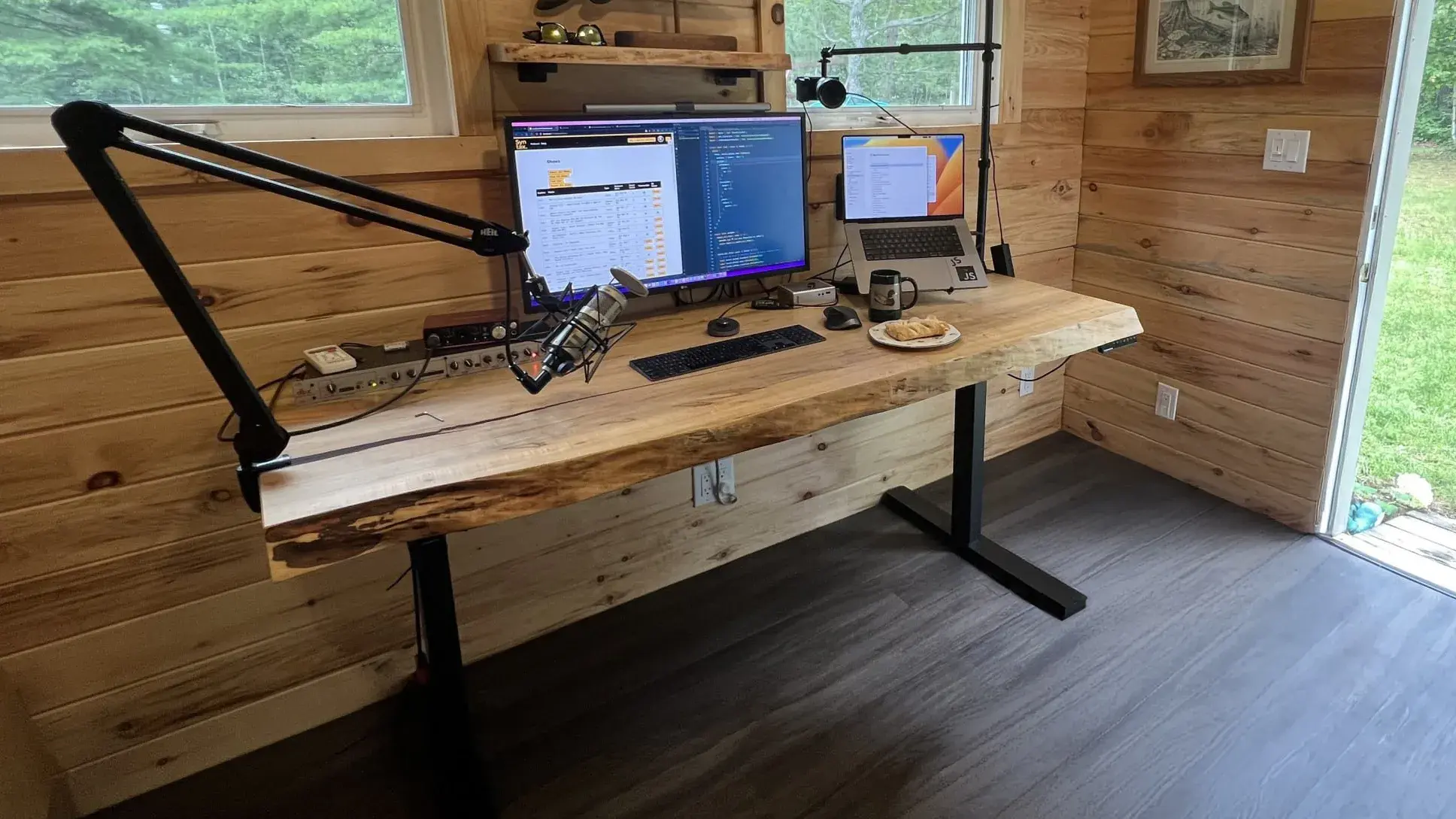
A standing desk frame is the engine of a sit-stand desk: the motorized legs that raise and lower, without a top attached. Buying the frame on its own lets you build a desk around a surface you choose, but the frame still has to be sturdy, quiet, and sized to your setup. Here is what to check before you buy one.
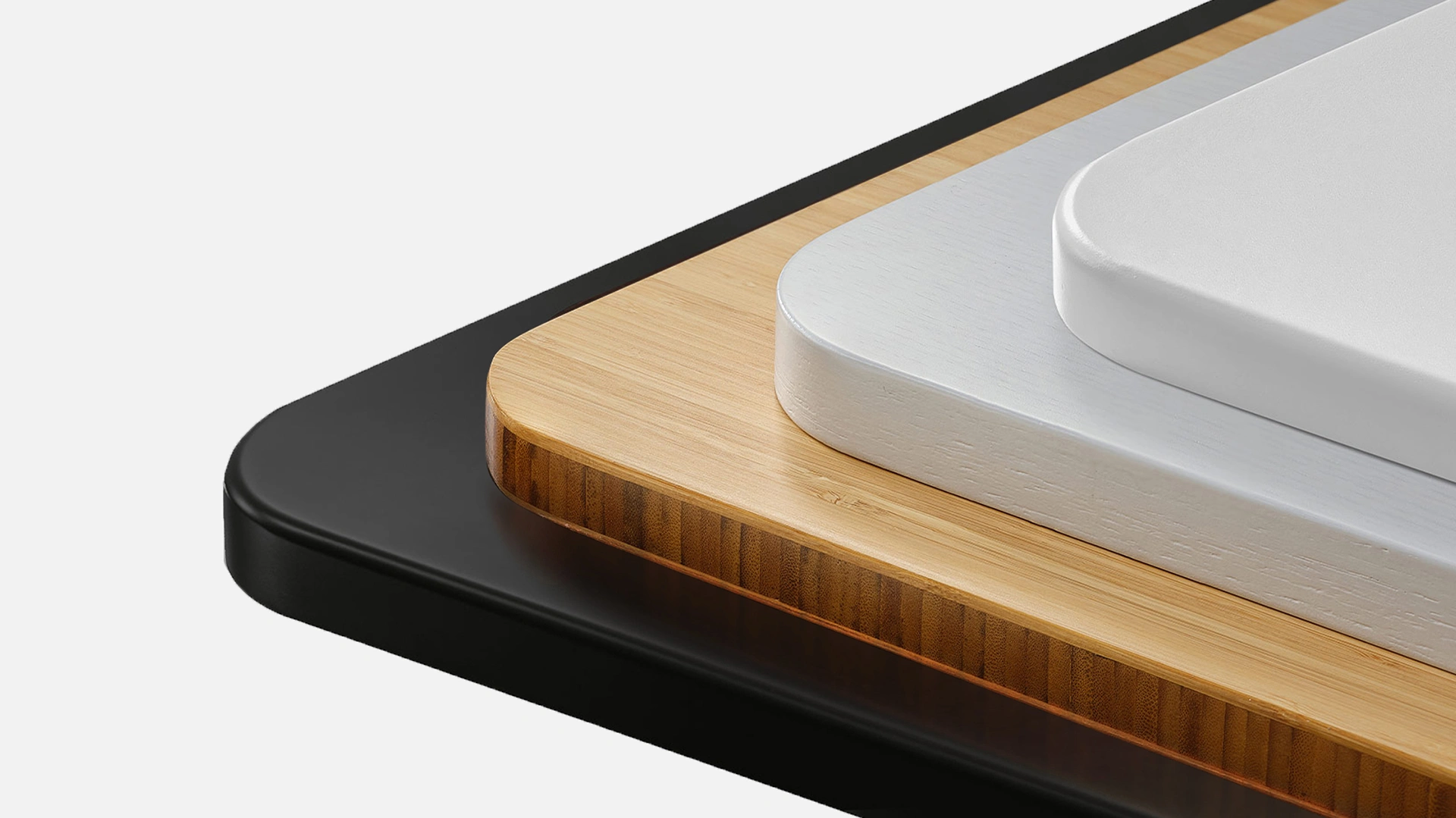
A frame-only base suits anyone who wants a custom top, whether that is butcher block, reclaimed wood, or a slab you already own. You get the legs, motor, and controller, then add your own surface. If you would rather not source a top, you can pair the frame with a ready-made desk surface cut to standard sizes, which turns the DIY route into a near drop-in build.
The motor decides how smoothly and quietly the desk moves, and how much it can lift. A dual-motor frame, with one motor in each leg, moves more evenly and holds more weight than a single-motor base, which matters once you add a heavy top, monitors, and a PC. Look for a capacity that clears your whole setup with room to spare, and a noise rating low enough for a shared room.
Check that the frame reaches a comfortable standing height for you, with your eyes level with the screen and your elbows near a 90 degree angle, and that it drops low enough to sit. A wider range suits taller users and shared desks. Programmable memory presets are worth having too, since they let you switch between saved sitting and standing heights with one button instead of holding a switch.
Because the motor and frame do years of raising and lowering, a solid warranty is a good sign of build quality, so look for several years of frame coverage. An anti-collision system is worth having as well: it stops the desk when it senses an obstacle on the way down, which protects your gear, your walls, and the frame itself from damage.
Once the basics check out, compare the small features that make the build and daily use easier. A cable channel and pre-drilled mounting points speed up assembly and keep wires hidden, a keypad with presets saves your heights, and a steel frame in a finish that matches your top keeps the look clean. Weigh those against the price and pick the frame that covers what you will actually use.
Building your own desk on a quality frame gives you a workspace that fits your room and taste exactly, often at a better price than a finished desk of the same quality. You control the size, the finish, and the top, while the frame handles the smooth, powered movement. If you would rather buy a complete desk instead, the full standing desks range covers ready-made tops on the same class of frame.
The Desk DIY frame comes as a straight two-leg base or a three-leg L-shape, in white, grey, or black. Whatever top you plan to add, there is a frame shape and finish to match the room.
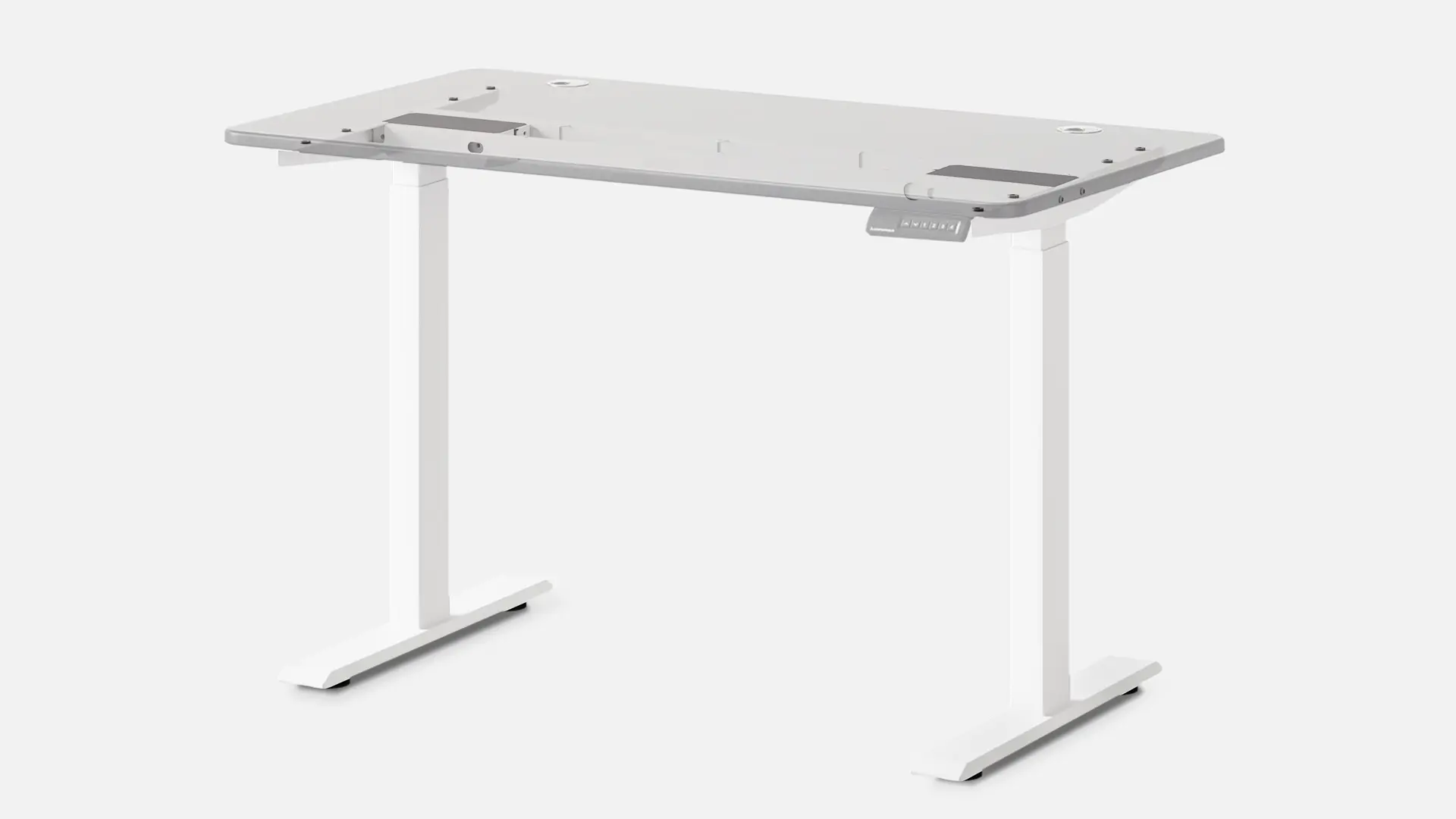
This is a frame, not a finished desk, so you choose the surface. Owners mount butcher block, reclaimed wood, or a laminate top, then bolt it to the pre-drilled frame for a desk that is their own.
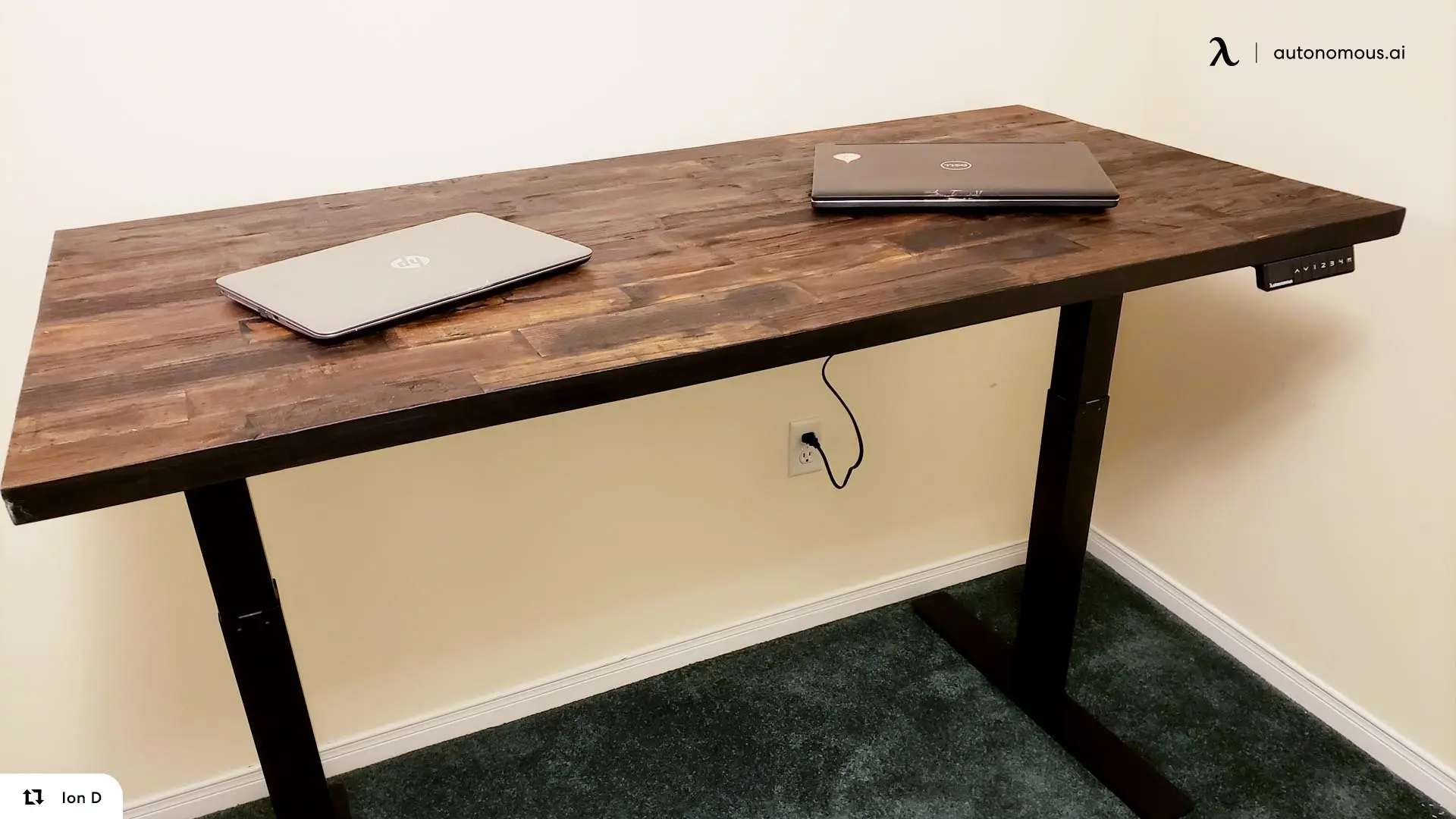
Even as a bare frame it ships ready: a programmable keypad with memory presets, a cable channel along the beam, and pre-drilled mounting points, so the build is mostly bolting your own top on.
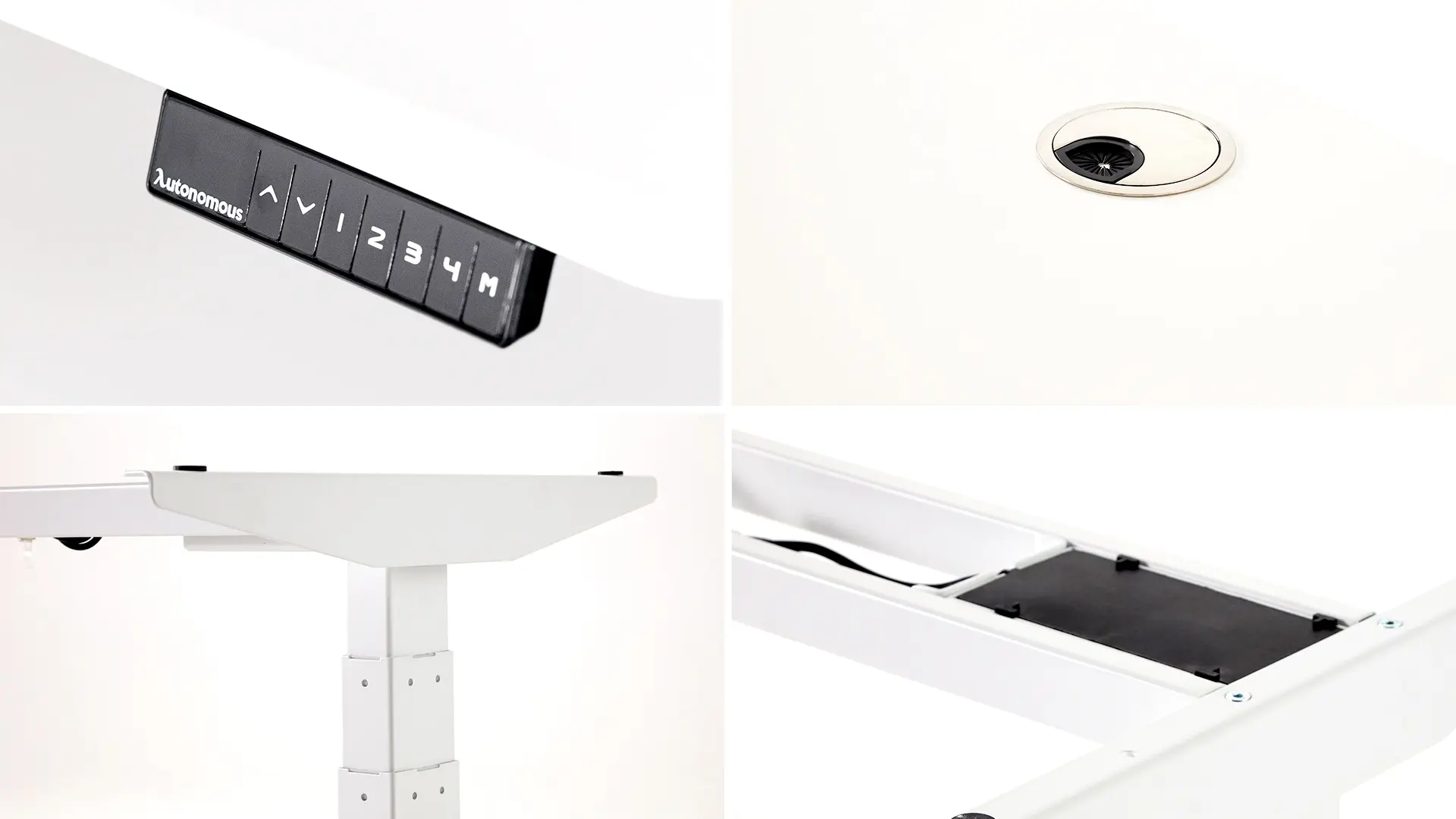
Building it is mostly attaching your top and clipping in the cables. The frame routes wires along the beam and into a tray, so once the surface is on, the desk is wired and ready to raise.

Under any top sits a dual-motor SPCC steel frame that lifts 250 pounds quietly, with anti-collision that stops the desk if it meets an obstacle on the way down. A 10-year warranty backs the frame.
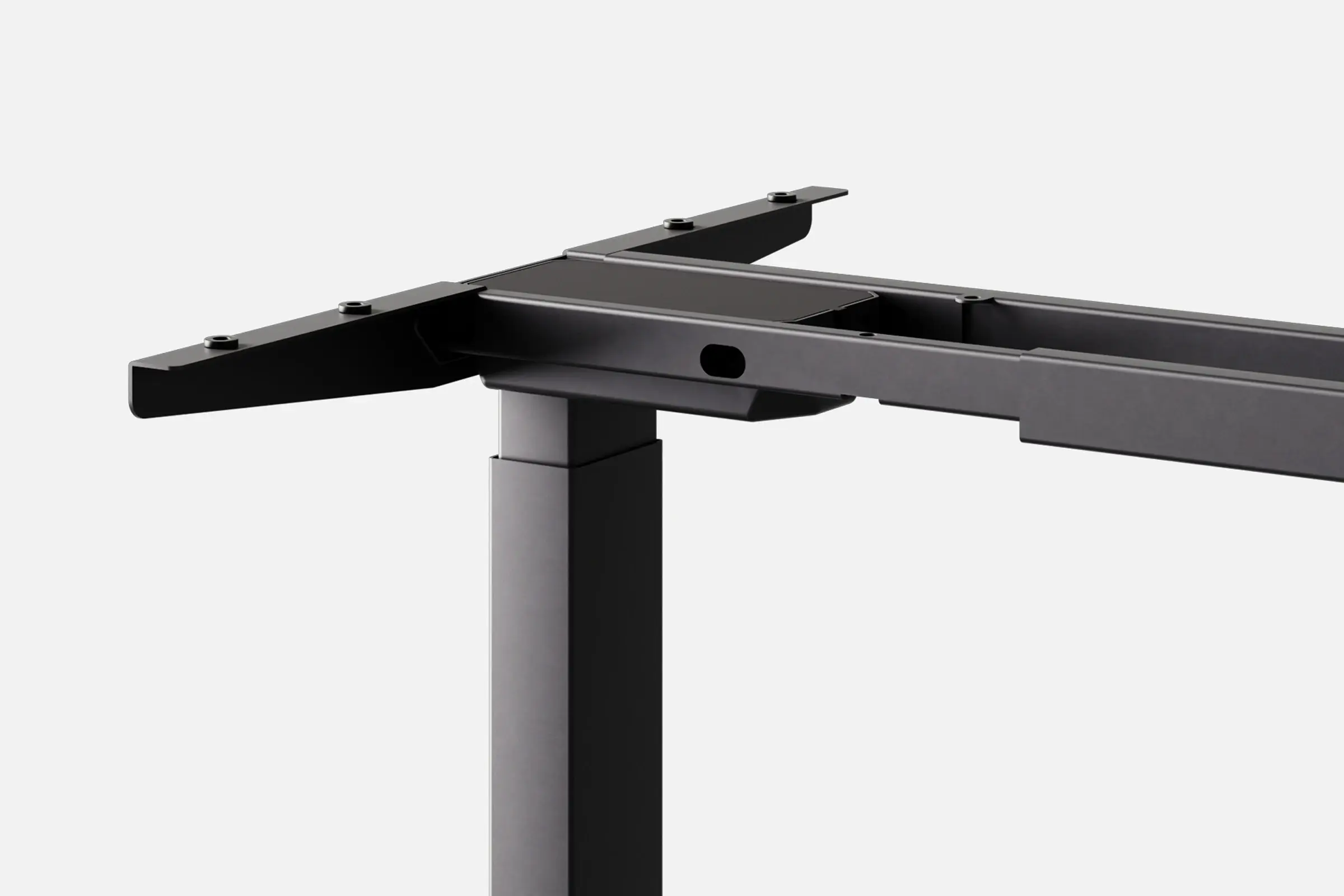
Need a corner? The L-shape frame adds a third leg and steps up to a 400-pound capacity, so it holds a wide wrap-around top and a full multi-monitor setup without any flex or wobble.
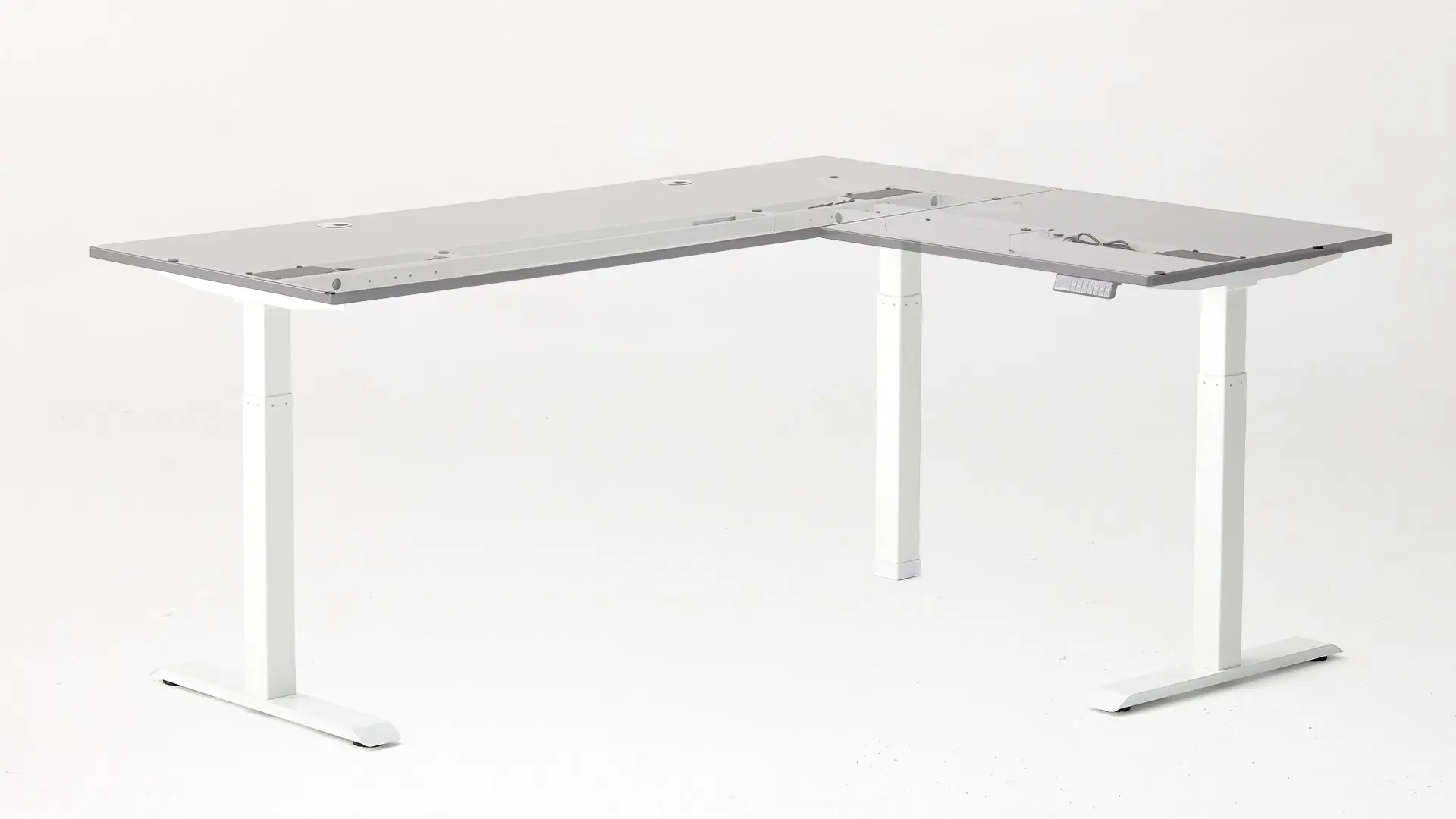
A standing desk frame is the motorized base of a sit-stand desk: the legs and crossbar that raise and lower without a top attached. Autonomous sells it as the Desk DIY frame, a dual-motor SPCC steel base you pair with your own surface to build a custom electric standing desk.