Best Orthopedic Office Chairs for Tailbone and Coccyx Pain 2026


The best office chair for tailbone pain uses seat geometry, not thick padding, to lift your weight off the coccyx. What actually works is a waterfall or mesh seat that spreads pressure onto your sit bones and thighs, seat-depth adjustment, a forward tilt or recline to shift weight off the tailbone, and lumbar support that stops you slumping back onto it. A soft, deep cushion often makes coccyx pain worse, because you sink into it and load the very bone you are trying to protect. This guide ranks 7 chairs that get the geometry right, plus three cushions for flare-ups, and it covers seating comfort rather than medical care, so see a doctor for persistent tailbone pain.
Why sitting causes tailbone pain, and what to look for
Tailbone pain, or coccydynia, flares when your body weight presses directly on the coccyx instead of your sit bones. It usually happens when you slump into a posterior pelvic tilt, rolling your pelvis back so the tailbone takes the load. The fix is a chair whose shape and adjustments keep weight forward and spread out. Look for five things:
- Seat shape that offloads the tailbone: a waterfall front edge or a suspension mesh seat spreads weight across the sit bones and thighs rather than the coccyx. Raw padding depth does the opposite.
- Seat-depth adjustment: setting the seat so your thighs are supported without pressure behind the knees keeps your pelvis upright and stops you sliding into a slump.
- A forward tilt or recline: tipping the seat slightly forward, or reclining, rolls weight off the tailbone onto the thighs and backrest. This is one of the most direct fixes.
- Lumbar support that holds you out of a slump: firm lower-back support keeps your pelvis from rolling backward onto the coccyx, which is the root cause for most people.
- A cushion for flare-ups: a U-shaped coccyx cushion suspends the tailbone so nothing presses on it, and it pairs with any chair below.
The 7 best office chairs for tailbone pain
1. Autonomous ErgoChair Ultra 2, best overall
Best for: most people who want a pressure-spreading seat that keeps weight off the tailbone all day.
The ErgoChair Ultra 2 is the best overall chair for tailbone pain, because its four-layer webbing-and-spring seat spreads your weight across the whole surface instead of loading it onto the coccyx. Where foam lets you sink and press down on the tailbone, the suspension seat holds you up and pushes the load out to the sit bones and thighs, which is exactly the geometry coccydynia needs. The lumberless flex-frame back is the other half of the fix: instead of a fixed pad, it tracks your spine and resists the backward pelvic slump that rolls weight onto the coccyx in the first place.
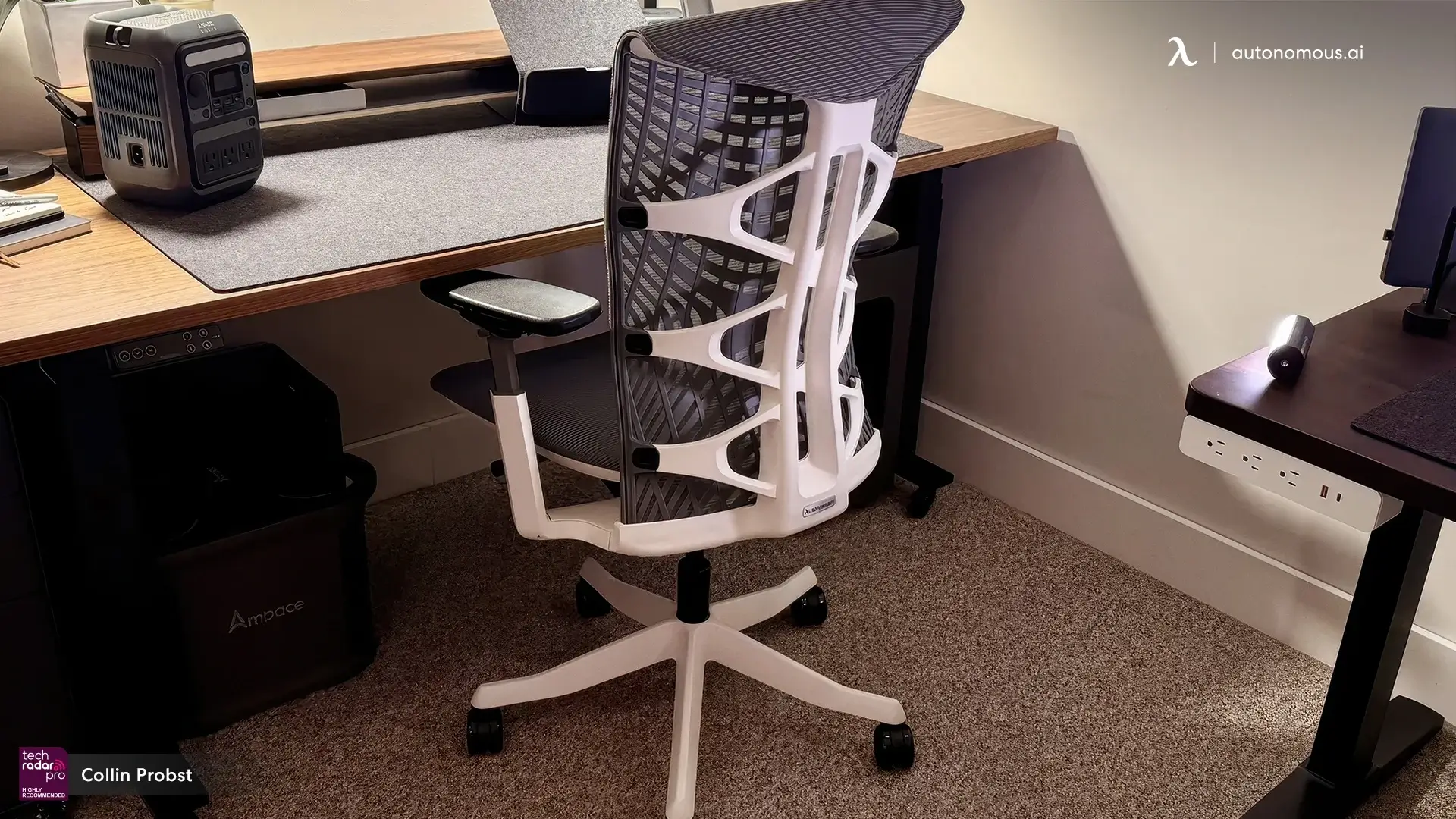
- Four-layer webbing-and-spring seat that distributes pressure off the tailbone
- Adjustable seat depth (18 to 20.5 inches) to keep the pelvis upright
- 25-degree recline to shift weight off the coccyx, plus 4D arms
- Lumberless flex-frame back with 62 pressure nodes; 320 lb
Keep in mind: the seat is firm rather than plush, so during an acute flare pair it with a U-shaped cushion from the section below.
2. Autonomous ErgoChair Mesh, best breathable
Best for: people who run warm and want a pressure-spreading seat that also stays cool.
The ErgoChair Mesh is the most breathable pick, with an all-mesh seat that spreads pressure off the tailbone while letting air move, so heat does not add to the ache over a long day. The mesh flexes to distribute weight the way the Ultra 2's webbing does, but with more airflow, which matters if a warm seat makes you shift and slump after a few hours. Its sliding lumbar is the coccyx feature that sets it apart from cheaper mesh chairs: you set it low on your back to hold the pelvis upright and stop the slide onto the tailbone.
.jpg)
- All-mesh seat that distributes weight and breathes
- Sliding lumbar you position low to prevent the pelvic slump
- Adjustable seat depth and a 22-degree recline; 300 lb
Keep in mind: like most task chairs it has no coccyx cut-out, so pair it with a U-shaped cushion during a flare.
3. Autonomous ErgoChair Core, best budget
Best for: buyers who want a pressure-spreading mesh seat and seat-depth adjustment without spending much.
The ErgoChair Core is the budget pick that still gets the geometry right, pairing a breathable mesh seat and back with seat-depth adjustment rather than a hard foam pad that concentrates weight on the coccyx. Most chairs at this price cut the seat-depth adjustment first, and that is the one adjustment that keeps your pelvis upright, so having it here matters more than the price suggests. The passive dual backrest holds both the lower and upper back to keep you out of a slump.
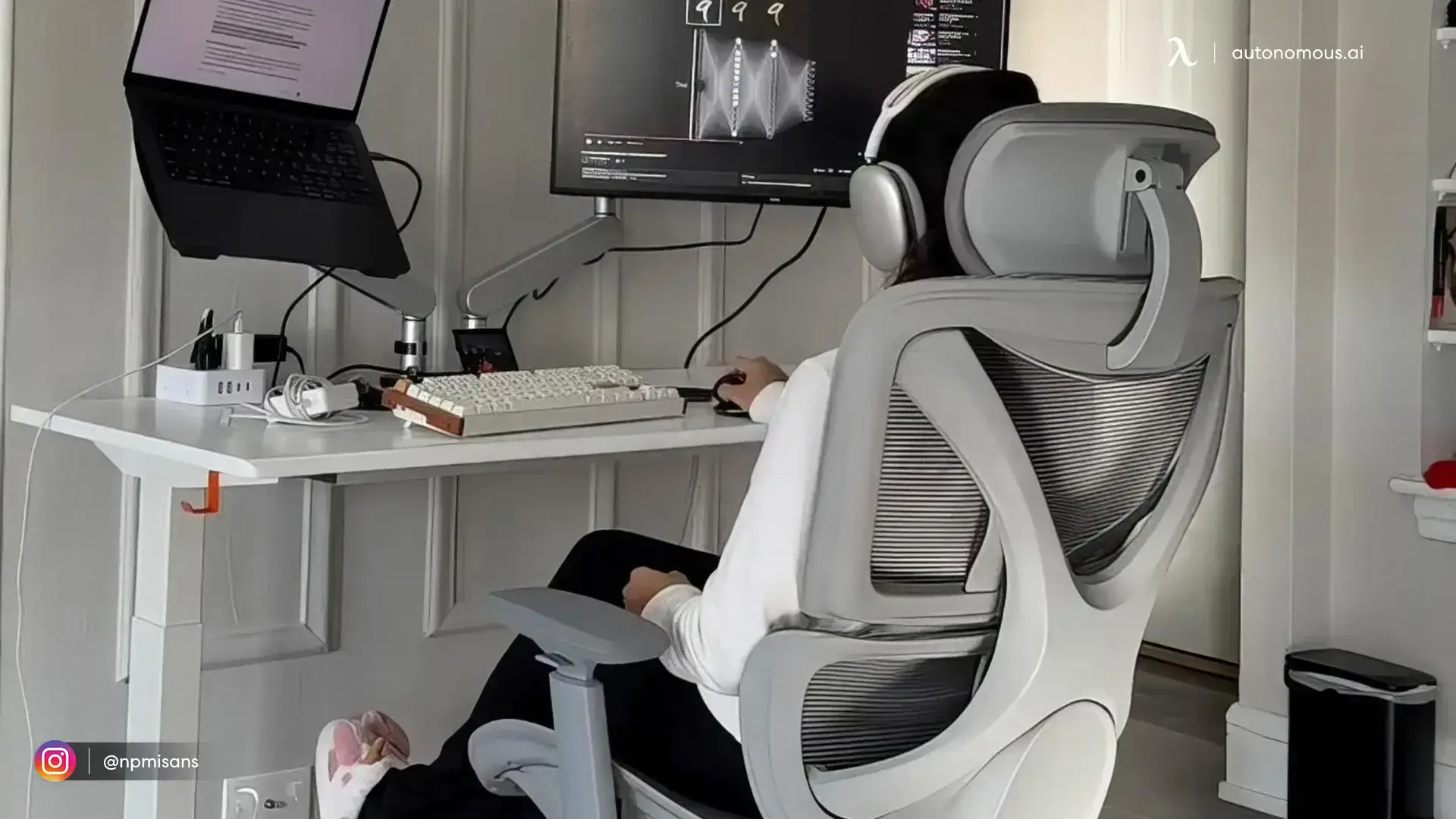
- Breathable mesh seat that spreads weight off the tailbone
- Seat-depth adjustment, rare at this price, to keep the pelvis upright
- Passive dual backrest and a 130-degree recline; 242.5 lb
Keep in mind: the two-year warranty is shorter than the other Autonomous office chairs and the lumbar is passive, so add a cushion for targeted coccyx relief.
4. Core Chair, best for active sitting
Best for: people who want to stay in motion and engage their core rather than settle into a slump.
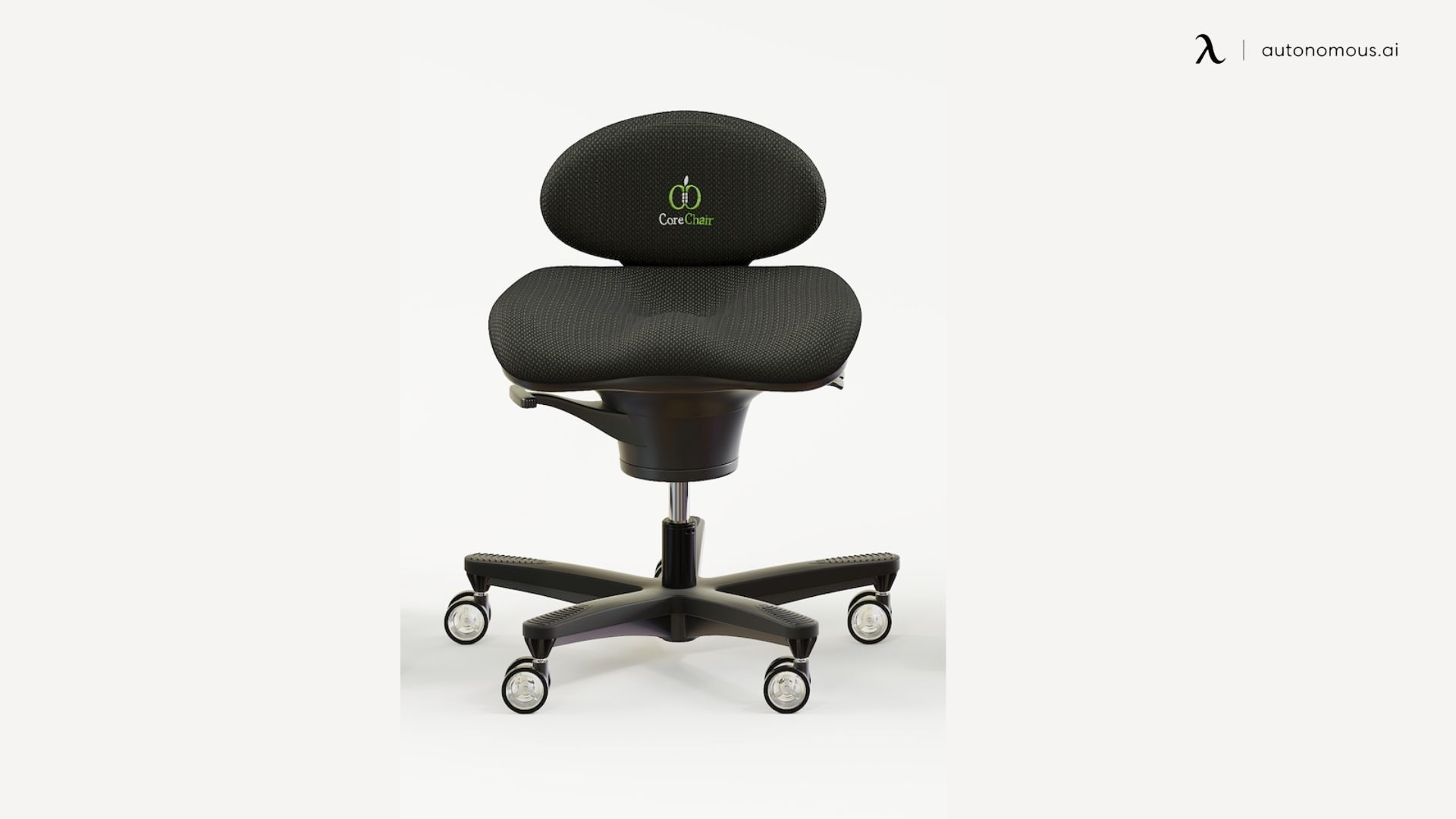
The Core Chair takes the opposite approach to a shaped seat: instead of a contoured cushion, it uses an active-sitting design that keeps you making small movements so you never fully slump into the posterior pelvic tilt that loads the coccyx. The seat is compact and mounted so it tips and shifts with you, engaging the core and keeping weight moving across the sit bones rather than settling onto the tailbone. A wheeled base makes those micro-adjustments easy, and the 3D-knit cover breathes.
- Active-sitting design that engages the core and discourages slumping onto the tailbone
- Compact, stable seat with a wheeled base for easy micro-movements
- Breathable 3D-knit fabric cover
Keep in mind: it has no armrests or backrest and a premium price near $995, so it suits people who want movement over a traditional supported chair, ideally alternating with one.
5. Duramont Ergonomic Office Chair, best all-round support
Best for: buyers who want straightforward adjustable support and recline at a mid price.
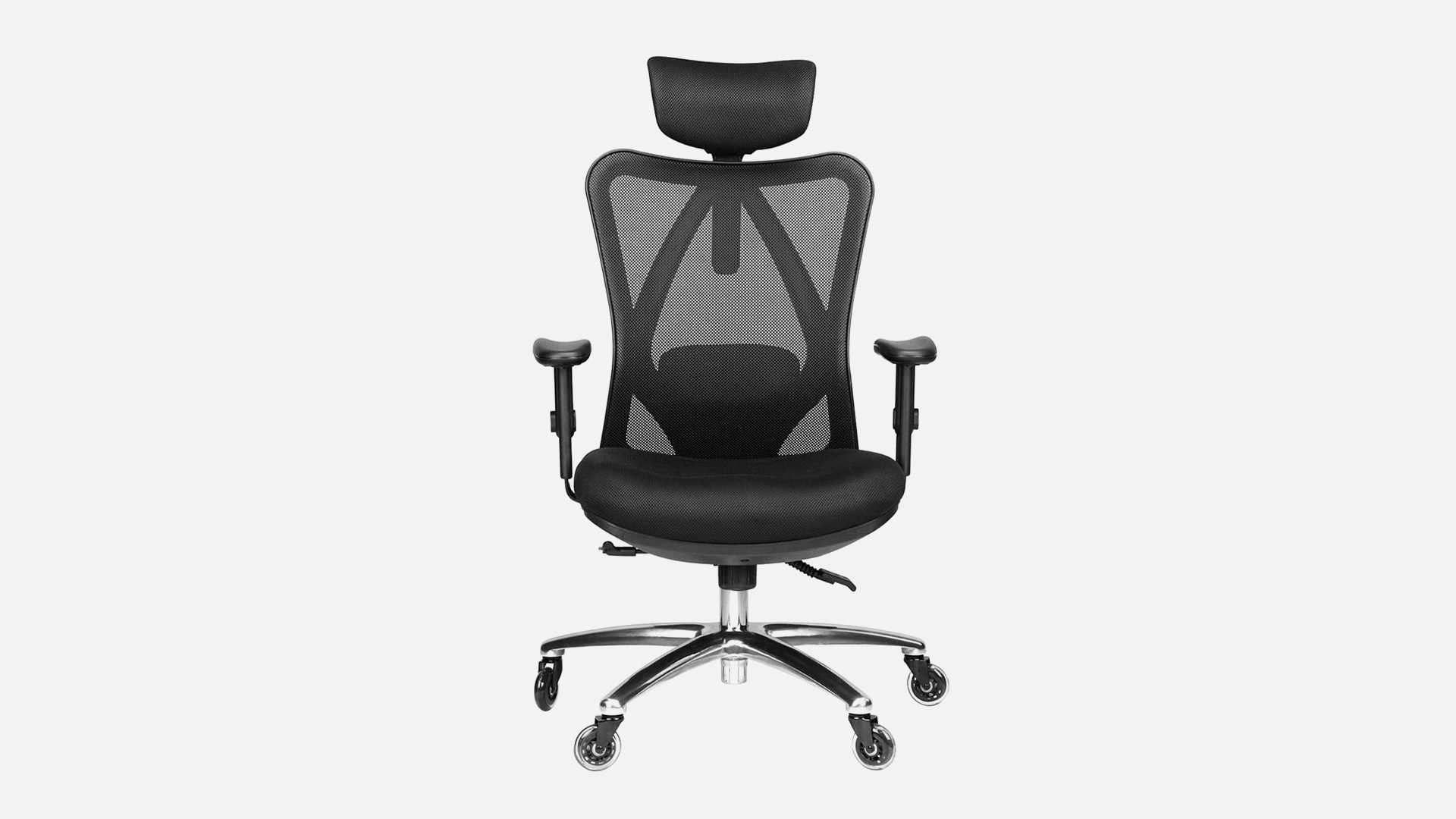
The Duramont covers the tailbone basics without complication. Its adjustable lumbar lets you dial in support to hold your lower back out of the slump that rolls weight onto the coccyx, its smooth recline shifts weight off the tailbone during breaks, and its breathable mesh back keeps you cool over a long day. It is a solid, no-drama ergonomic chair rather than a specialist coccyx design, and it assembles in under ten minutes.
- Adjustable lumbar to prevent the backward slump that loads the tailbone
- Smooth recline to shift weight off the coccyx, plus a breathable mesh back
- Adjustable headrest and armrests; supports up to 330 lb
Keep in mind: the foam seat is firmer than a mesh one and has no waterfall edge, so pair it with a cushion if tailbone pressure persists.
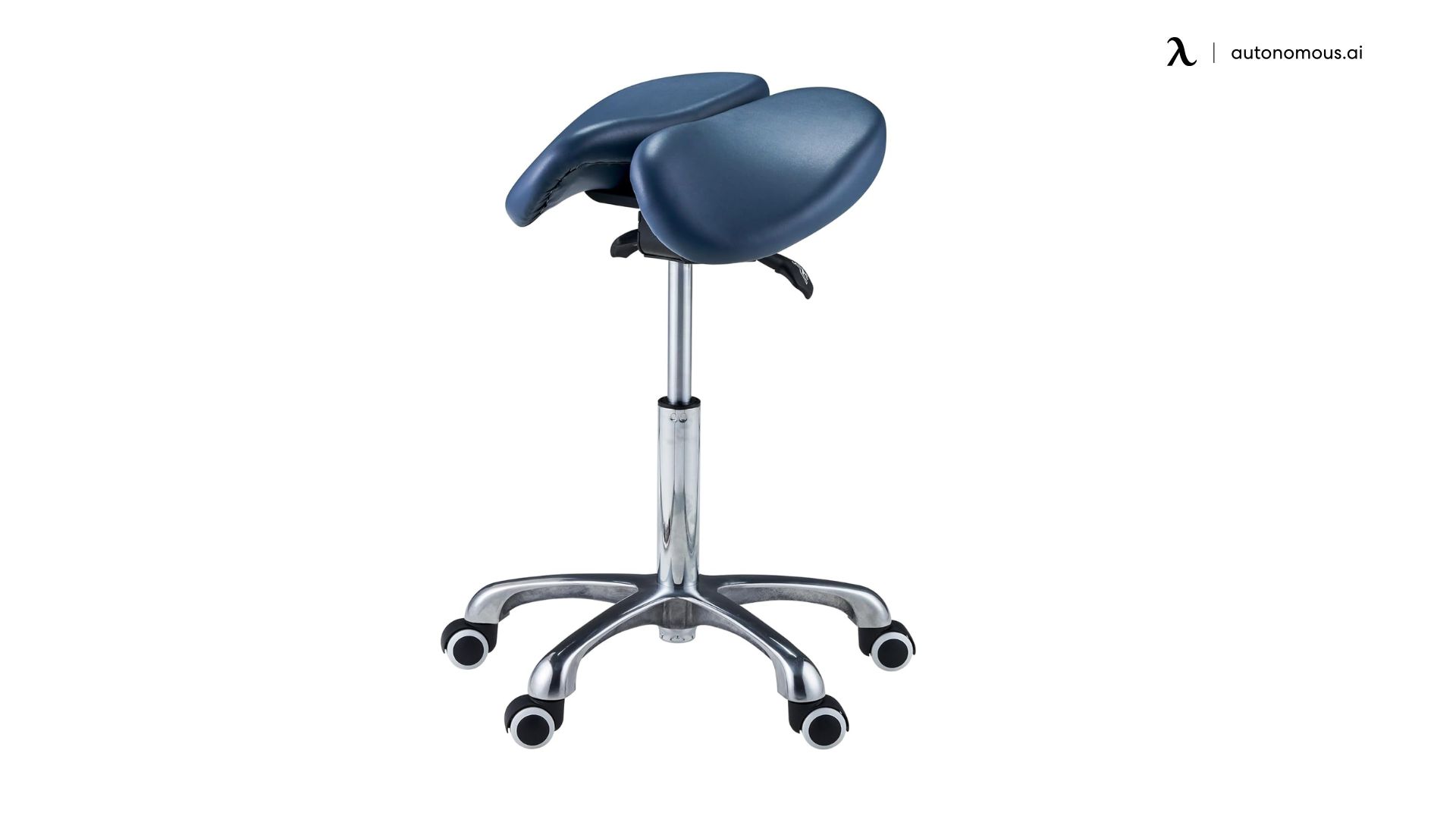
6. Master Massage Berkeley Stool, best saddle design
Best for: people who want a saddle seat that keeps the pelvis neutral and lifts weight off the tailbone by design.
The Master Massage Berkeley is a saddle stool, and its sloped seat is exactly why it helps with coccyx pain. The saddle shape holds your pelvis in a neutral, upright position so your weight rests on your thighs and sit bones instead of rolling back onto the tailbone, which is the same geometry a forward-tilt seat creates, built into the stool itself. Its height tilts on the fly for quick posture changes, and a five-star aluminum base keeps it stable despite the compact seat.
- Sloped saddle seat that keeps the pelvis neutral and off the tailbone
- On-the-fly tilt and height for active posture changes
- Sturdy five-star aluminum base and hypoallergenic upholstery
Keep in mind: there is no backrest and the saddle style takes time to adjust to, so it suits shorter sessions or alternating with a backed chair.
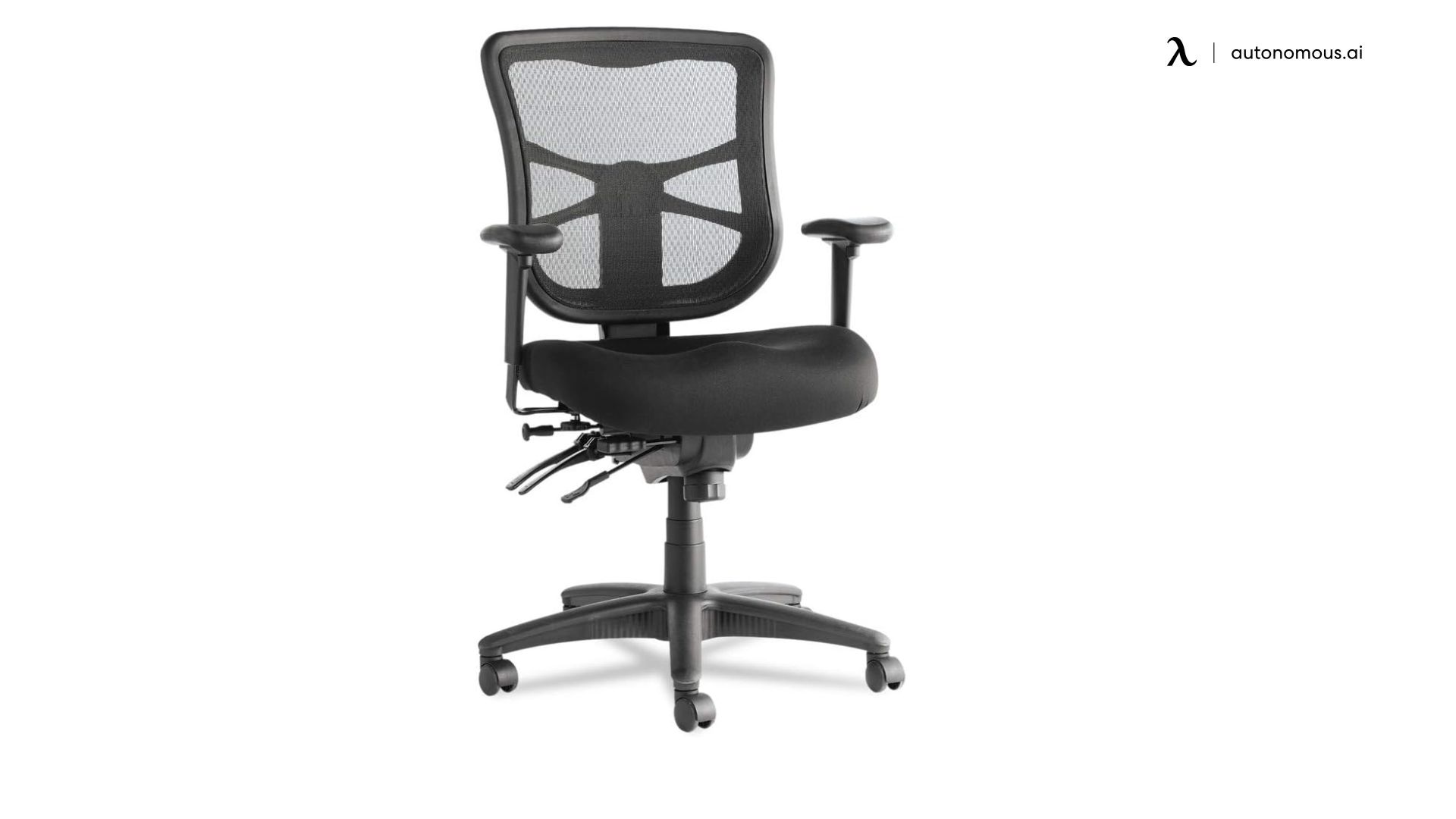
7. Alera ALEEL42ME10B, best no-frills mesh
Best for: buyers who want a simple, durable mesh chair with seat-depth adjustment at a moderate price.
The Alera ALEEL42ME10B is the no-frills pick, a durable mesh chair whose breathable back and seat-depth adjustment cover the coccyx essentials without extra features. The seat-depth adjustment is the one that matters most for tailbone pain, since it keeps your pelvis upright and your thighs supported, and the mesh back keeps you cool through a long session. On a sturdy aluminum frame, it is built to last years of daily use.
- Seat-depth adjustment to keep the pelvis upright and off the tailbone
- Breathable mesh backrest and a sturdy aluminum frame
- Smooth height adjustment and reliable, long-term durability
Keep in mind: it has a basic lumbar and a firmer, minimally padded seat with no waterfall edge, so add a cushion if you need more coccyx relief.
Best cushions for tailbone pain
If a new chair is not in the cards, a U-shaped coccyx cushion is the fastest way to take pressure off the tailbone, and it pairs with any chair above during a flare. The design is what matters: a U-shaped cut-out suspends the tailbone so nothing presses on it, while a plain donut ring or a soft flat pad can make things worse. These three are worth owning.
1. AUVON Ergonomic Seat Cushion
The AUVON is the reliable everyday pick. Its U-shaped coccyx cut-out suspends the tailbone so your weight rests on the sit bones and thighs instead of the bone itself, and the high-density memory foam holds that shape rather than flattening after a few weeks. A non-slip base keeps it from sliding forward, and at about three inches thick it lifts you without throwing off your desk height. At $34.99 it is the safe first thing to try before spending on a new chair.
2. Doctor Butler's Seat Cushion
Doctor Butler's is the pick for the most direct offloading. It is memory foam shaped specifically to redirect pressure off the tailbone and the surrounding tissue, from a brand that focuses on this kind of relief rather than generic seat comfort. It costs more than a basic cushion at $44.95, but the purpose-built contour suits people whose pain is sharp and centered right on the coccyx rather than spread across the seat.
3. ComfiLife Gel Enhanced Seat Cushion
The ComfiLife is the pick when heat is part of the problem. It pairs memory foam with a cooling gel layer on top and the same U-shaped cut-out that suspends the tailbone, so it offloads the coccyx while staying cooler than plain foam through a long day. A non-slip base, a washable cover, and a built-in handle round it out at $39.95, which also makes it easy to move between a desk chair and a car seat.
How to sit with tailbone pain
How you sit matters as much as what you sit on, so set the chair up to keep weight off the coccyx.
- Sit back fully and set the seat depth. Use the whole seat so your weight rests on your sit bones, with a two-to-three finger gap behind your knees. This keeps your pelvis upright instead of rolling back onto the tailbone.
- Tilt slightly forward, or recline. A small forward tilt or a gentle recline rolls weight off the coccyx onto your thighs and backrest. Avoid perching upright and rigid.
- Set the lumbar to hold your lower back. Firm support at your lower back stops the backward slump that loads the tailbone, the single most important adjustment for most people.
- Add a cushion on bad days, and move often. During a flare, put a U-shaped cushion on the chair, and stand or shift every 30 to 60 minutes, since no position is good for hours.
FAQs
What is the best office chair for tailbone pain?
The best office chair for tailbone pain spreads weight onto the sit bones with a waterfall or mesh seat, adjusts seat depth, and offers a forward tilt or recline to lift pressure off the coccyx. Firm lumbar support that stops you slumping backward matters as much as the seat itself.
Is a firm or soft chair better for tailbone pain?
A firm, pressure-spreading seat is better than a soft one. Soft, deep cushions let you sink and load the tailbone directly, which usually worsens coccyx pain. A mesh or webbing seat that holds you up and distributes weight to the sit bones eases it, ideally with a U-shaped cushion during flares.
Do seat cushions help with tailbone pain?
Yes. A U-shaped coccyx cushion suspends the tailbone so nothing presses on it, which is why it helps during a flare. Avoid a plain donut ring or a soft flat pad, since neither offloads the coccyx the way a firm cushion with a proper cut-out does.
What is the best sitting position for tailbone pain?
Sit back fully so your weight is on your sit bones, keep your feet flat, and tilt slightly forward or recline to roll weight off the coccyx. Set the lumbar support to hold your lower back out of a backward slump, and stand or move every 30 to 60 minutes.
Can sitting too long cause tailbone pain?
Yes. Long hours on a hard or overly soft seat load the coccyx directly and can trigger or worsen coccydynia, especially if you slump into a posterior pelvic tilt. A supportive seat, good posture, and regular movement reduce the pressure. Persistent pain should be assessed by a doctor.
How long until an orthopedic chair helps my tailbone pain?
Many people feel less pressure within a couple of weeks of switching to a chair that offloads the coccyx and holding better posture. A chair manages the pressure that aggravates coccydynia rather than curing it, so if pain persists or worsens, see a doctor.
Bottom line
The right office chair for tailbone pain is the one that keeps weight off the coccyx: a waterfall or mesh seat, seat-depth adjustment, a forward tilt or recline, and firm lumbar support to stop the slump. Skip the deep soft padding that makes it worse. The ErgoChair Ultra 2 and Mesh spread weight off the tailbone with breathable, adjustable seats, a saddle stool or active-sitting seat keeps the pelvis neutral, and a U-shaped cushion handles flare-ups on any chair. Move often, and if the pain persists, treat it as a reason to see a doctor rather than a seating problem alone.