The 7 Best Gaming Chairs for Big and Tall Guys 2026
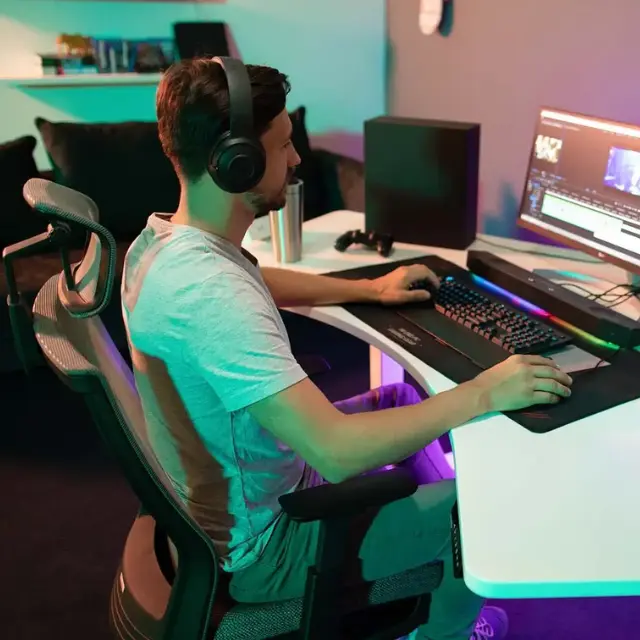
Most chairs that claim to fit tall or big players were built for an average frame with a bigger label slapped on. If you are over six feet and your head clears the top of the backrest, or the seat edges dig into your hips after an hour, you already know the problem. Choosing a gaming chair for big guys and taller players is less about the marketing size and more about a few numbers most listings bury: backrest height, seat width, seat depth, and real weight capacity. This guide starts with the best chairs on the market right now, then covers how to choose for height and size, and where our own chairs fit honestly in that picture.
Best gaming chairs for big and tall guys, compared
The best gaming chairs for big and tall guys pair a tall backrest with a 395-pound-plus rating and a seat at least 20 inches wide. Here is a quick look at the top picks, followed by a detailed review of each, including where our own chairs fit honestly.
Chair | Best for | Fits up to | Capacity | Lumbar | Price |
Autonomous ErgoChair Pro | Tallest backrest | about 6 ft 4 | 300 lb | Sliding pad, 6-in range | about $499 |
Autonomous ErgoChair Ultra 2 Plus | Constant position shifts | about 6 ft 2 | 320 lb | Lumberless flex, headrest | about $499 |
Autonomous ErgoChair Mesh | Staying cool | about 6 ft 2 | 300 lb | Sliding cushion, air mesh | about $499 |
Secretlab Titan Evo XL | Best overall | about 6 ft 9 | 395 lb | Adjustable | about $599 |
AndaSeat Kaiser 3E XL | Tallest fit | about 6 ft 11 | 397 lb | Fixed | about $379 to $439 |
AKRacing Master Series Max | Broad, plus-size frames | large frames | 400 lb | Fixed cushion | $499 |
Vertagear PL6800 | Staying cool on a budget | about 6 ft 6 | 400 lb | Fixed, contoured | about $470 |
Standard-size options sit in the best gaming chairs we have tested.
1. Autonomous ErgoChair Pro
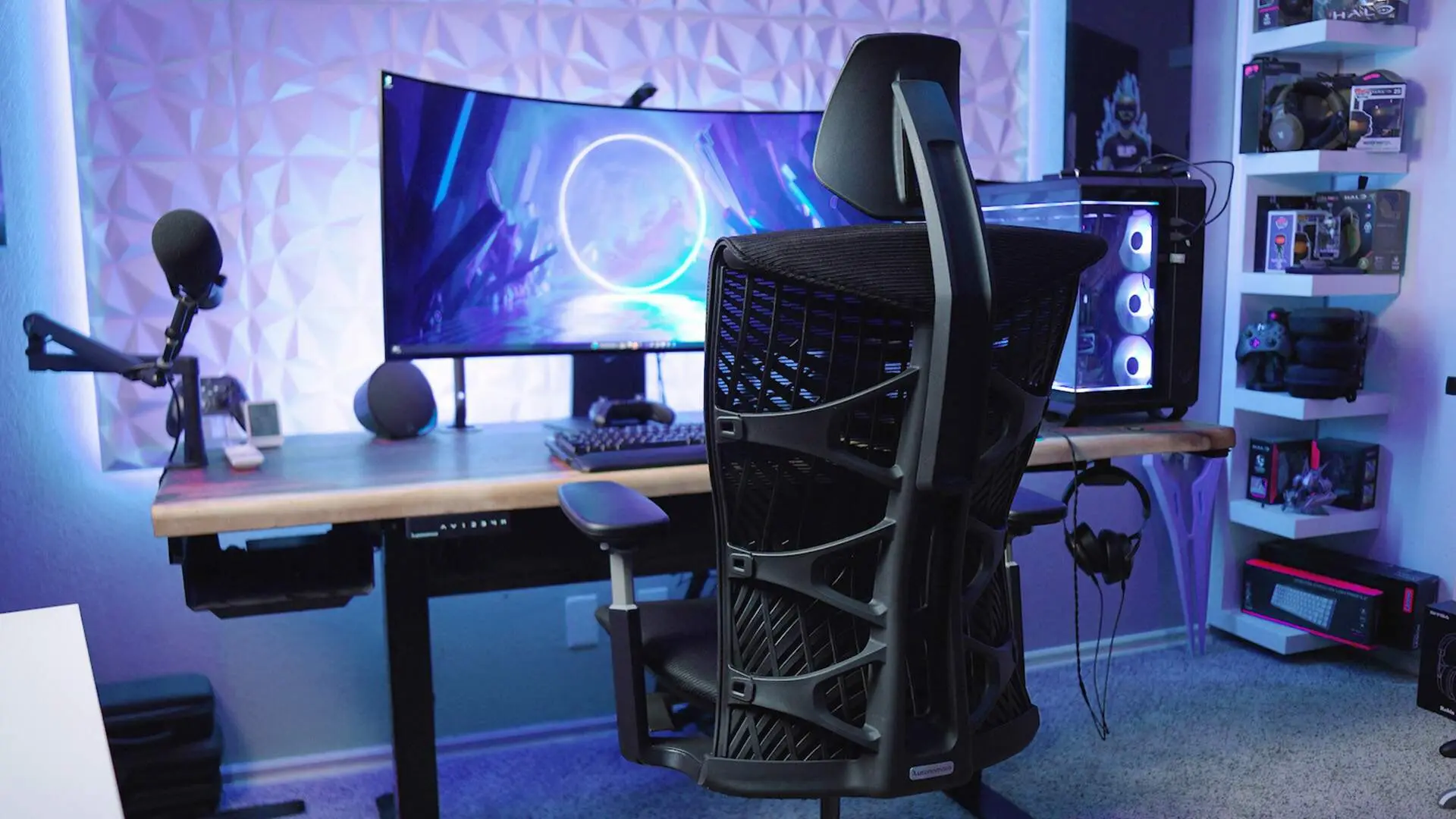
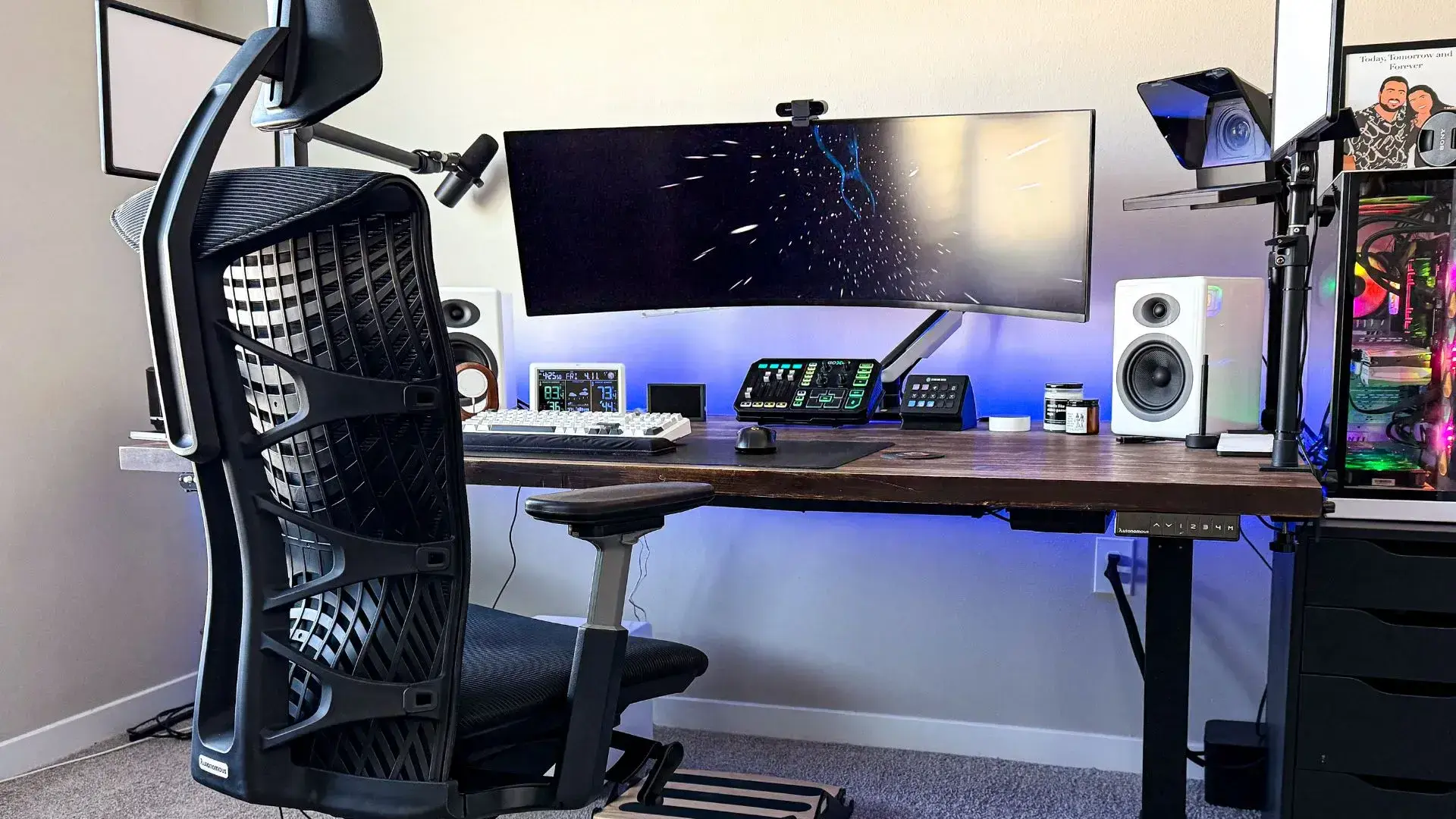
The Autonomous ErgoChair Pro is the better pick if you are tall, because it has the tallest backrest in the line at 21 inches wide by 28 to 31 inches high with the headrest fitted. It holds 300 pounds, raises the seat from 18.5 to 22 inches, adjusts seat depth from 19 to 21.5 inches, and carries a lifetime warranty. Nine adjustment points cover lumbar height, seat depth, armrest position, tilt tension, recline angle, and headrest, with the lumbar sliding through a 6-inch range to meet your lower spine wherever it sits. The synchro-tilt reclines the back at a 2-to-1 ratio through 22 degrees across five lock positions, so the seat stays level and your knees hold their typing angle through the lean.
The clearest evidence for the fit comes from owners rather than spec sheets. One customer who is 6 foot 4 and over 220 pounds reports the chair fits him well all the way up to the headrest, which matches what the 28 to 31 inch backrest should do for a long torso. Across 3,370 reviews averaging 4.6, the recurring themes are adjustability for people working long hours and durability, including one owner five years in whose mechanisms still work as they did on day one. The most common complaint is not the chair but the paperwork: several buyers found the adjustment diagram hard to follow, and assembly is easier with a second pair of hands.
If you want a lumbar height you set yourself rather than a frame that flexes, this is the one, and the code BLOGFIRST5 takes an extra 5% off at checkout. If back support over long sessions is your main worry, it is worth reading up on whether a gaming chair helps lower back pain first.
2. Autonomous ErgoChair Ultra 2 Plus
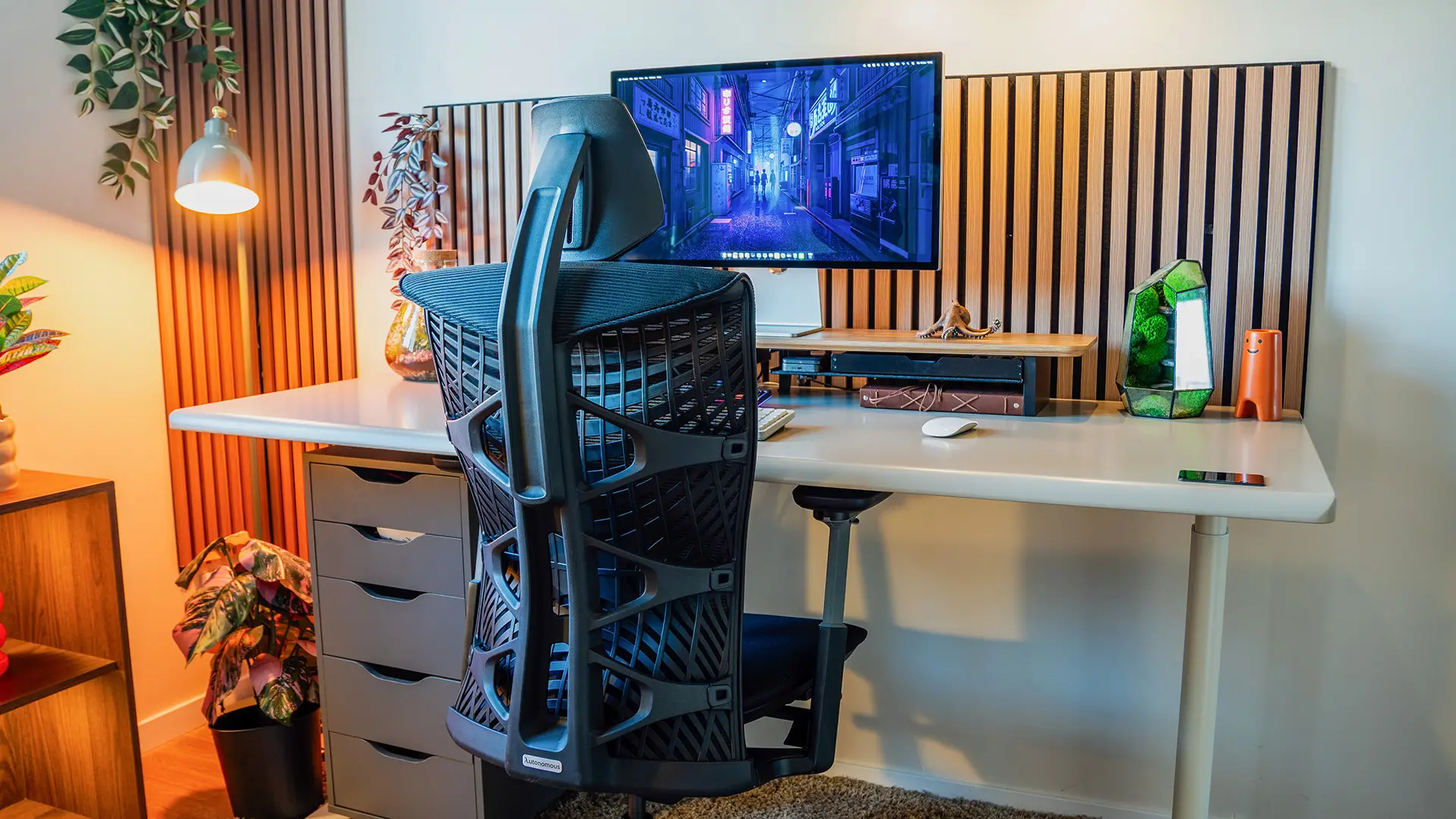
The Autonomous ErgoChair Ultra 2 Plus is the pick for taller players who shift position constantly rather than settling into one. It holds 320 pounds, raises the seat from 18 to 23 inches, slides through 18 to 20.5 inches of depth, and reclines 25 degrees on a Donati mechanism made in Italy and rated to 100,000 tilt cycles. The frame is welded in house rather than bolted, which avoids the joint slack modular chairs develop, and it carries a lifetime warranty.
There is no lumbar dial. A TPE layer behind the mesh flexes forward as you lean in and back as you lean out, spreading support across the whole spine instead of pressing at one point.
Across 365 customer reviews averaging 4.6, the pattern we see most is people arriving from racing-style gaming chairs and describing the same two problems: hips and lower back aching after a few hours, and heat. One owner who sits 8 to 10 hours a day in a warm apartment reported it was the first chair that stopped his back sweating through the day. Several buyers dealing with herniated discs, spinal curvature, or past back surgery cite it as the reason they left a bucket seat behind. One reviewer named the obvious skepticism directly: the lumbar support looks underwhelming at a glance, and turned out to be one of the sturdiest he had used.
The honest fit note for tall players is the backrest, which measures 20 inches wide by 23 inches high before the headrest. That is short next to the 34-inch backs on the racing chairs below, so the headrest on the Plus is doing real work for anyone over six feet, and we would not send a tall buyer to the headrest-free version. Capacity stops at 320 pounds, so a 380-pound frame is better served elsewhere.
3. Autonomous ErgoChair Mesh
.jpg)
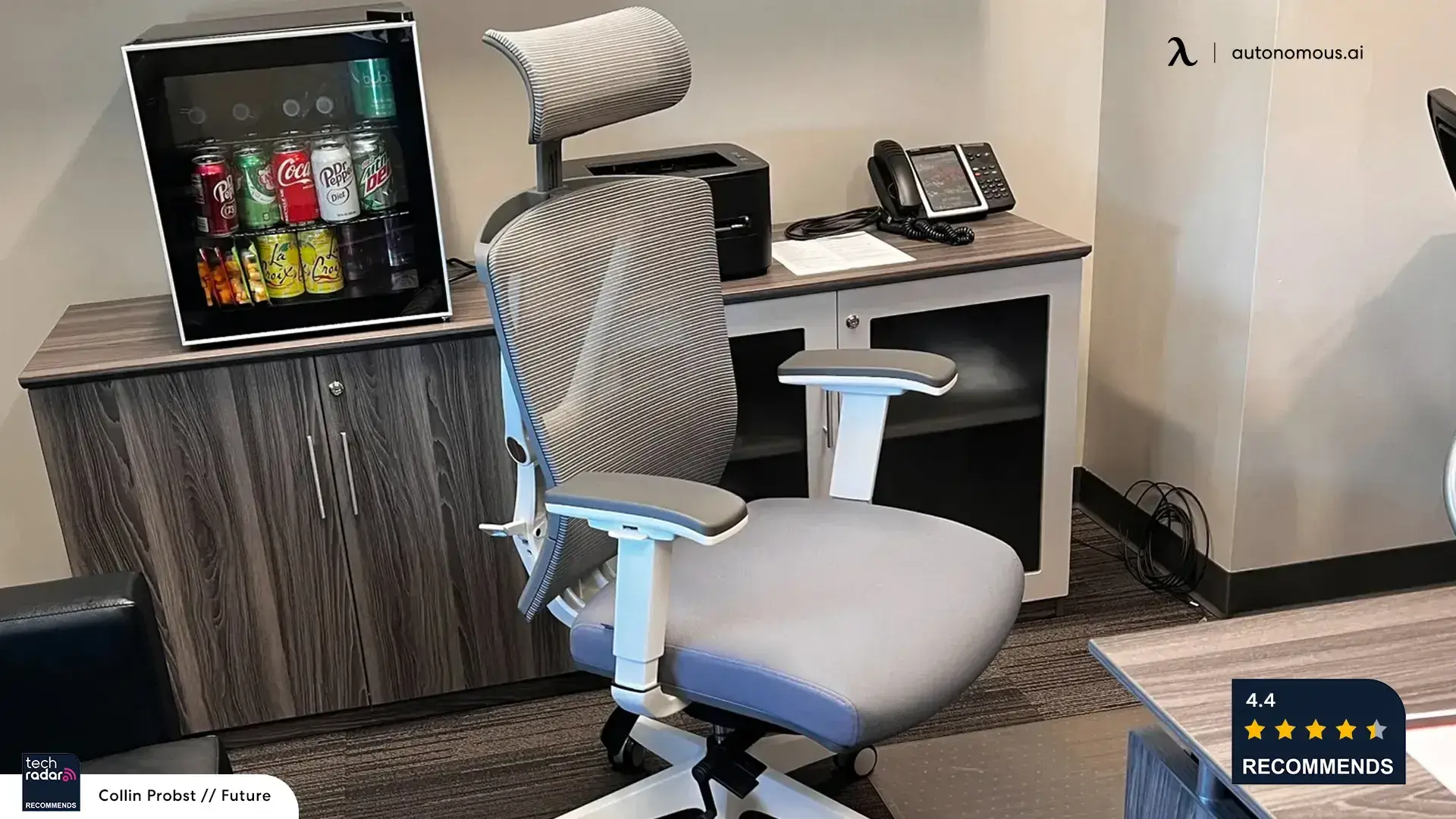
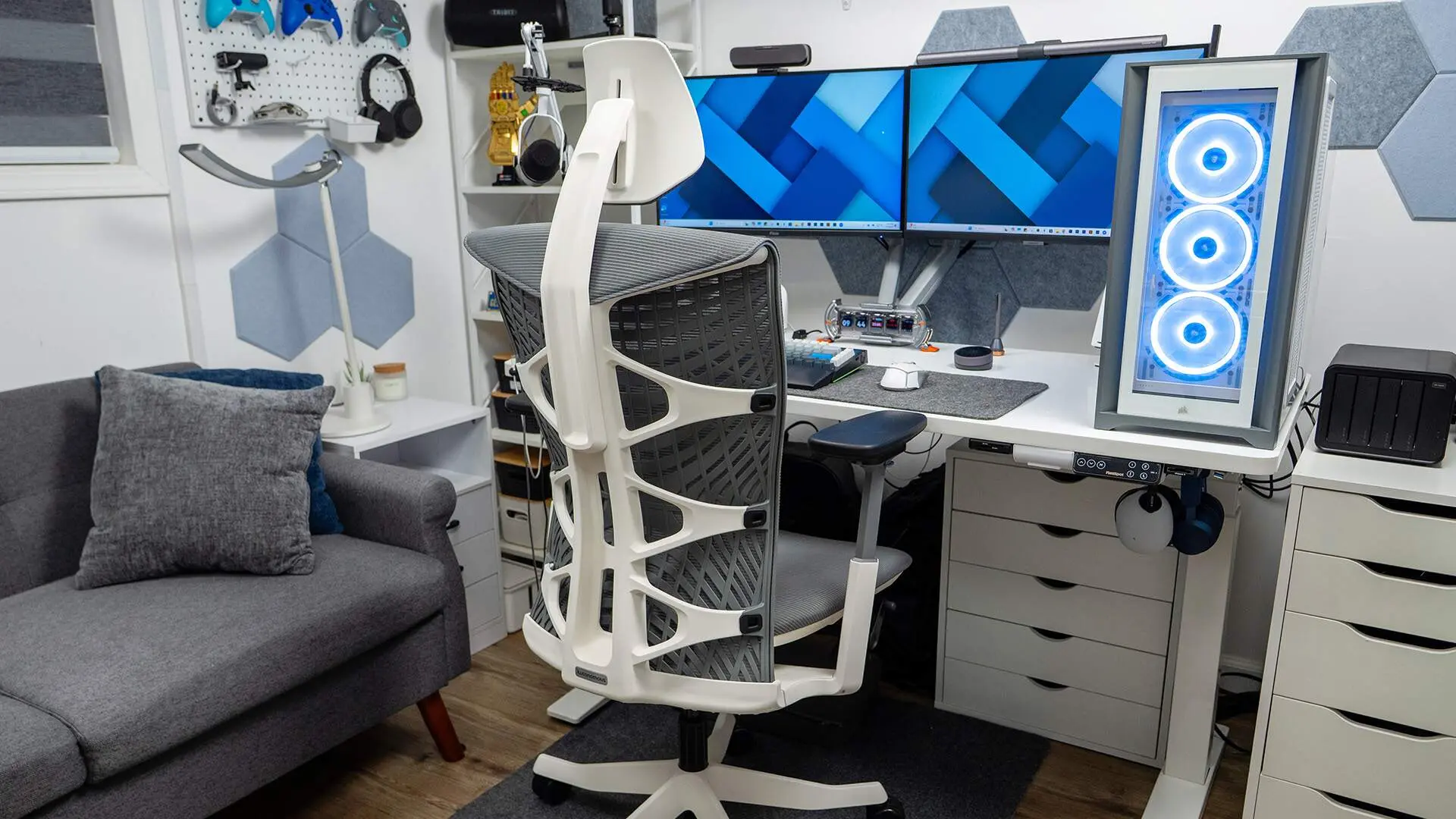
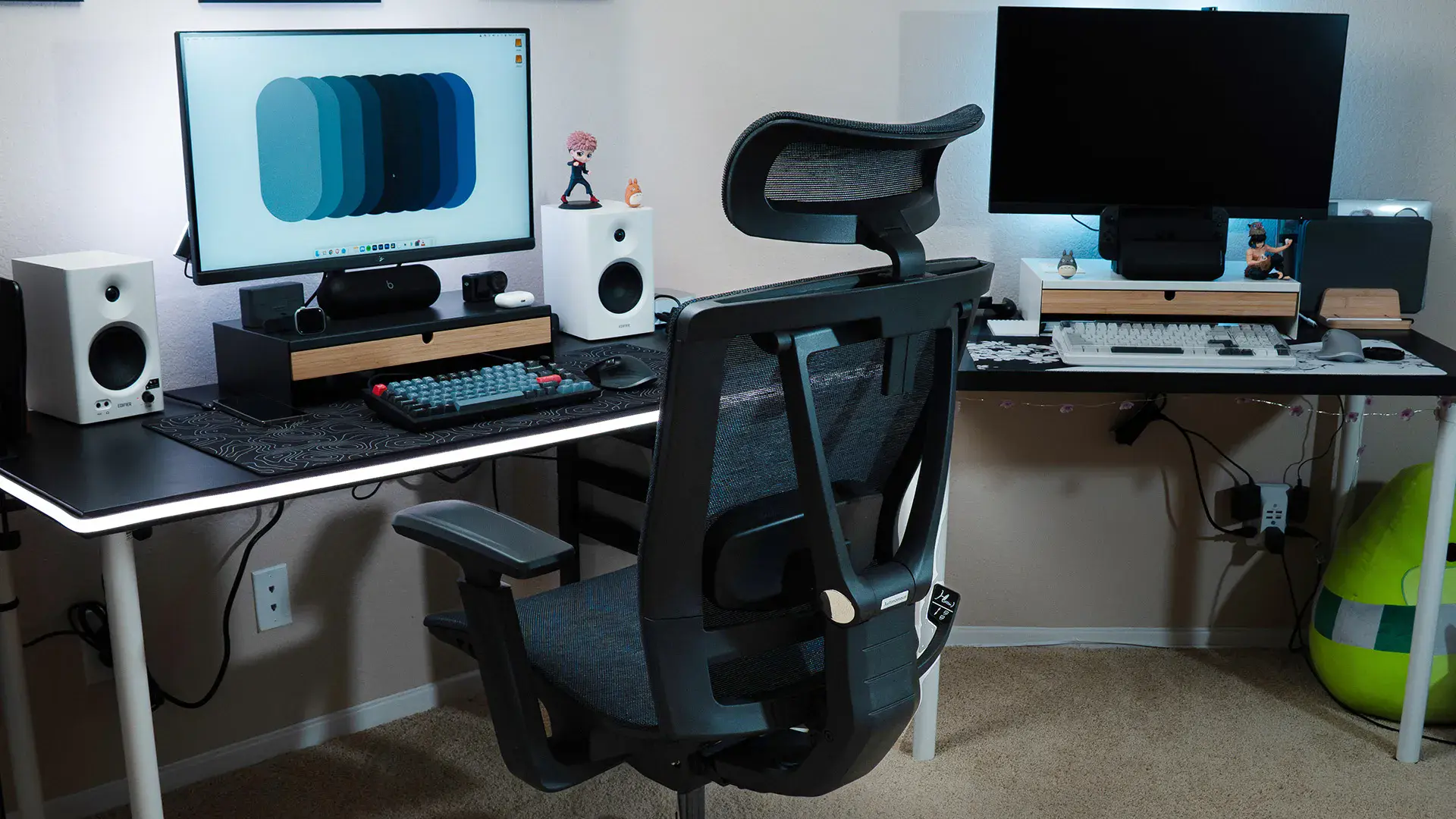
The Autonomous ErgoChair Mesh is the pick for players who overheat in a padded racing chair, since the whole backrest is air mesh rather than foam and fabric. It holds 300 pounds on a 20-inch-wide seat, raises from 18 to 21 inches, and carries a 22-inch backrest, fitting frames up to about 6 foot 2. That makes it the smallest fit of the three, so very tall players are better served by the Pro or the Ultra 2 Plus.
Heat is the reason to choose it. Over a long session a foam-backed chair traps body heat against your spine, while mesh vents it, and mesh also holds its shape over years of daily use where foam packs down. It carries 9 degrees of freedom, synchro-tilt, 22 degrees of recline, 3D armrests, and a sliding lumbar cushion you position to your own lower back, so it is close to the Pro in adjustment with a cooler back.
Reviewing it for TechRadar, Collin Probst described it as a perfected version of the ErgoChair Pro he already used daily, praised the clear labelling and organised parts, and put assembly at about 22 minutes with a powered screwdriver.
For a broad frame it is worth noting the 20-inch seat is narrower than the 22-inch-plus racing seats below, so this is a chair for tall-and-average builds who run hot, not for the widest frames.
4. Secretlab Titan Evo XL
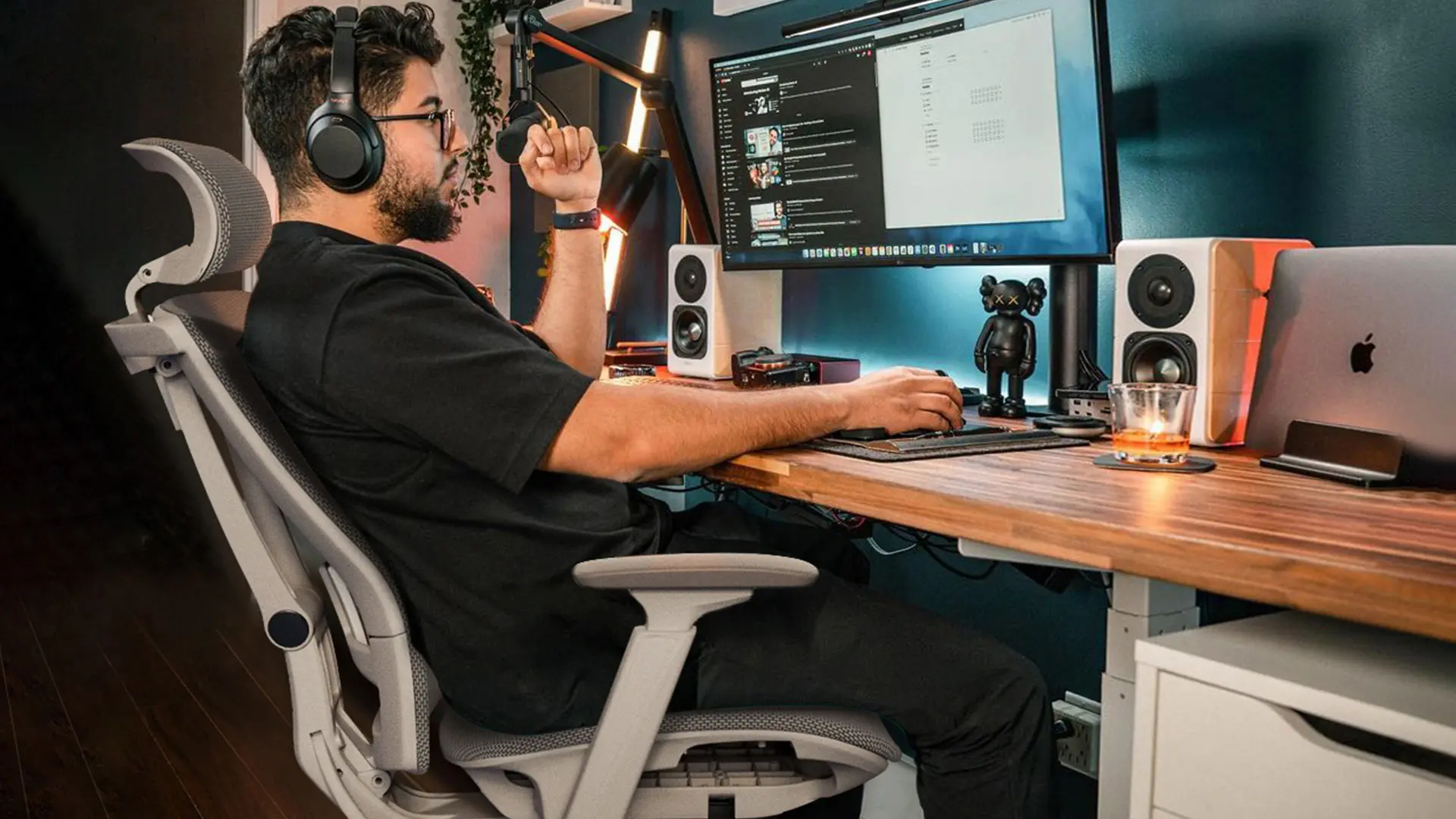
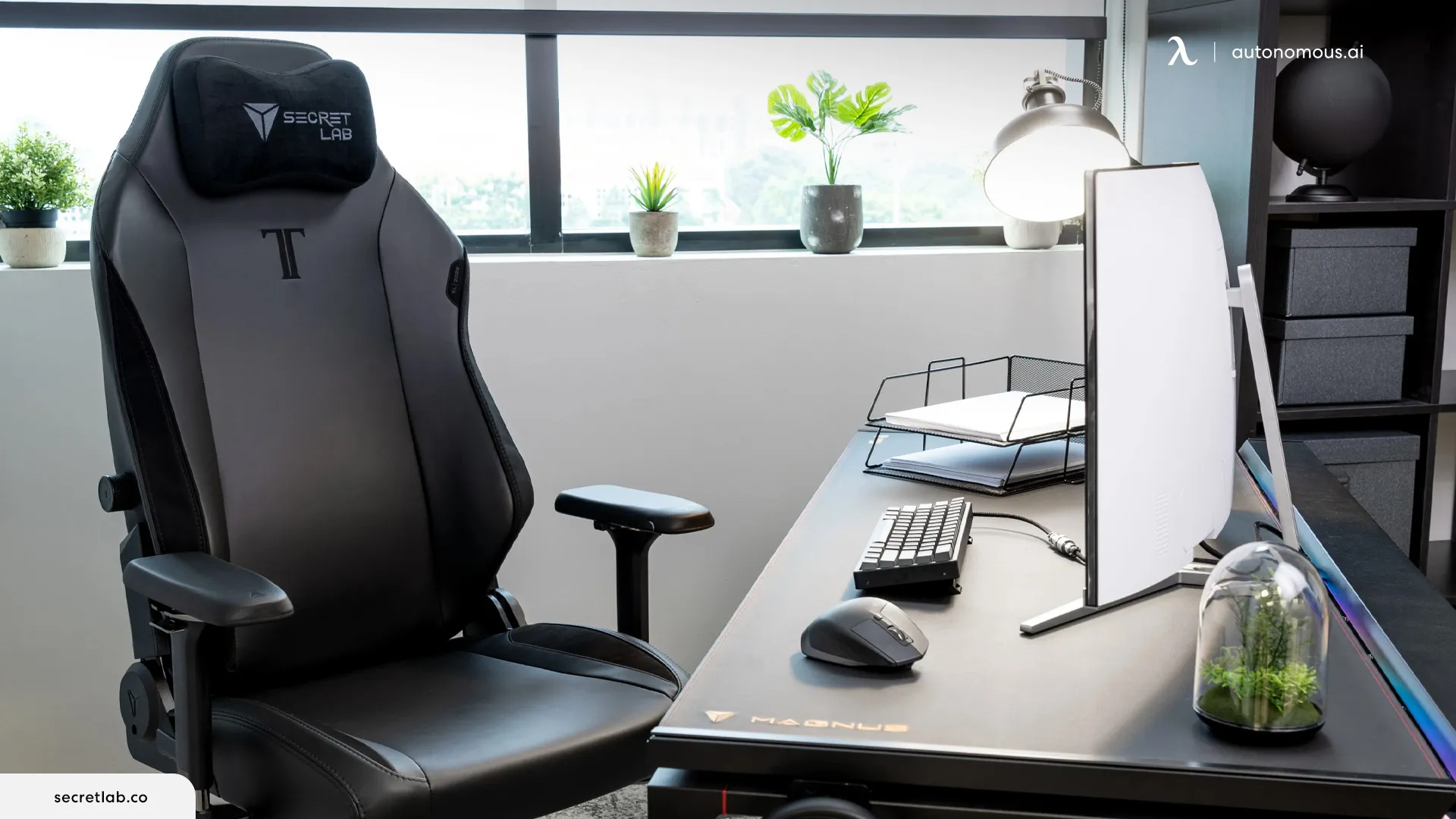
The Secretlab Titan Evo XL is the most complete racing-style chair for tall players, fitting frames up to about 6 foot 9 with a 395-pound rating and a 22.8-inch seat. It is built on a metal base and metal casters rather than the plastic most rivals use, with firm foam, a magnetic gel memory-foam headrest, and swappable armrest tops. The lumbar is a genuine adjustable system you dial in to your own back, which is uncommon in this category and the main reason it leads the racing chairs on support.
Reviewers who tested it trusted the build enough to drop straight back into the seat with no flex, and rated the foam firm without being hard, which holds up better over long sessions than plush padding that packs down.
The trade-offs are real. At around $599 it is the most expensive chair here, and the firm cushioning divides opinion, with buyers coming from soft bucket seats often describing the first week as an adjustment period. The warranty runs 5 years, which is strong for a gaming chair but short of a lifetime frame warranty, and the padded seat has no ventilation, so a warm room is felt more here than on a mesh back. If you want a wide seat with adjustable lumbar and will pay for it, this is the benchmark. If airflow or value matters more, it is the wrong end of the market.
5. AndaSeat Kaiser 3E XL
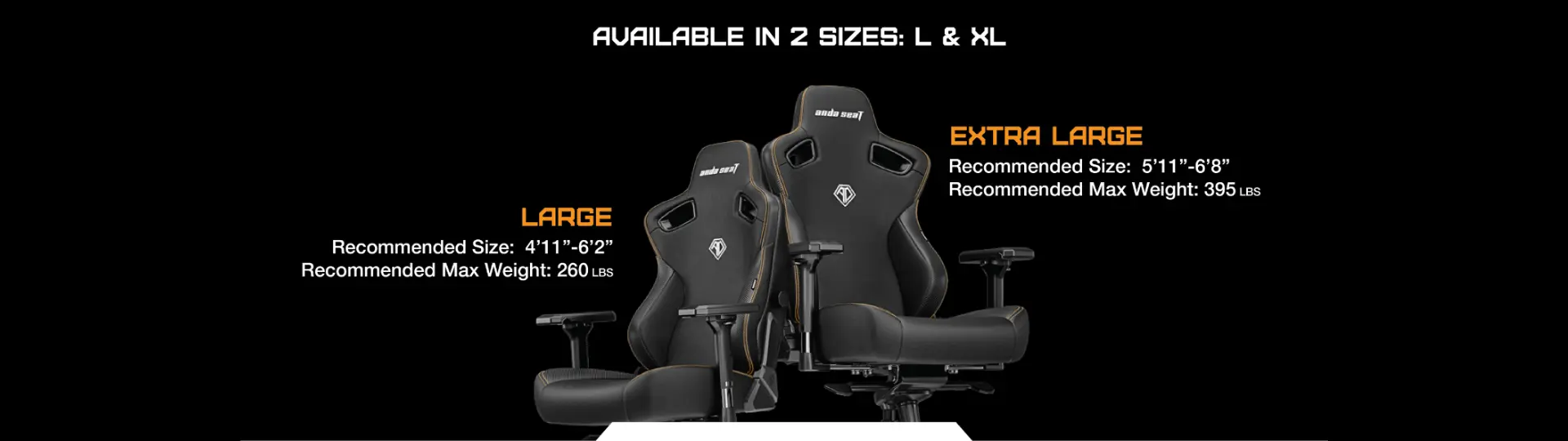
The AndaSeat Kaiser 3E XL reaches further than any chair here, fitting players up to about 6 foot 11 and holding 397 pounds. The backrest measures 34 inches, the seat is 21 inches deep, and recline runs from 90 to 160 degrees, on an aluminium wheelbase over a reinforced steel frame. It sells for roughly $379 to $439, which makes it the value option among the big-and-tall racing chairs.
In PC Gamer's testing, the linen-style fabric finish ran noticeably cooler than leatherette, the frame felt built for larger bodies rather than adapted for them, and assembly went smoothly.
The compromise sits in the model name. This cost-reduced 3E version removes the lumbar adjustment dial found on the standard Kaiser 3, so lower-back support is fixed where the chair puts it rather than where your spine wants it, and the headrest is an optional extra rather than included. For a very tall player chasing maximum reach at this price, that is a reasonable trade. For anyone whose main problem is lower-back pain rather than height, a fixed lumbar is the wrong starting point, and the standard Kaiser 3 or a chair with adjustable support is the better route. Fabric also stains more readily than PU, which matters if you eat at your desk.
6. AKRacing Master Series Max
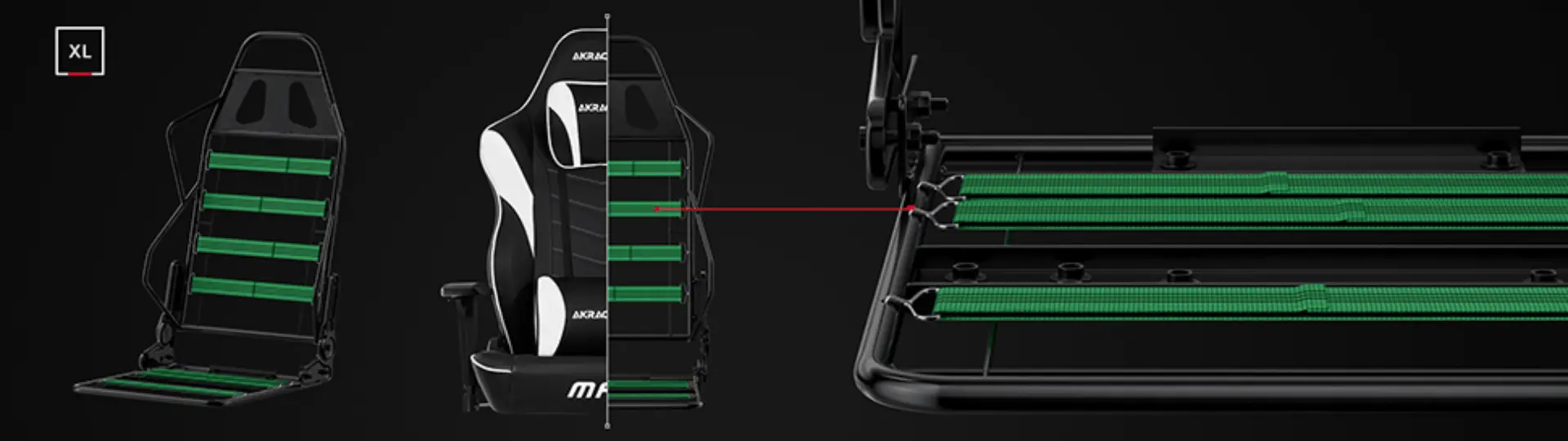
The AKRacing Master Series Max is the roomiest chair here, built for broad and plus-size players rather than the tallest. It holds 400 pounds on a steel upper base and a solid aluminum lower base, rolls on five 2.5-inch PU casters, and carries an MSRP of $499. The padding is cold-cure foam under faux leather, and the armrests adjust for height, slide in four directions, and twist 15 degrees either way.
PCMag scored it 3.5 out of 5. Its reviewer, who is around 250 pounds, described himself as swimming in the seat, which tells you plainly who the chair is for. He also rated the frame sturdy and the recline generous.
Three honest limits came out of that testing. It can feel far too roomy if you are not genuinely broad, so a smaller player loses the side support a bucket seat is meant to provide. It folds completely flat to 180 degrees, but the balance felt precarious there even with the tilt locked, so the headline feature is one the reviewer advised against using. And PCMag still preferred the Secretlab Titan for anyone under about 290 pounds, on build quality and padding. Lumbar and headrest are slide-on cushions held by elastic straps rather than adjustable systems, which is a meaningful step down if support is your reason for upgrading.
7. Vertagear PL6800
The Vertagear PL6800 is the pick for staying cool without moving to a mesh back. It holds 400 pounds, fits players up to about 6 foot 6, and pairs 4D armrests with a steel frame and an aluminum base at around $470. The seat is the interesting part: VertaAir construction uses hexagonal air pillars under a coffee-fiber fabric rather than a solid foam slab, so air moves through the cushion instead of sitting trapped beneath you.
A reviewer who is 6 foot 6 tested it through long working days and found the seat genuinely stayed cool, with the ContourMax lumbar shaping to his back rather than needing adjustment.
That lumbar is also the limitation. It contours, but it does not adjust, so where it sits on your spine is fixed by the chair rather than chosen by you, and taller players whose lumbar curve falls higher or lower than average cannot move it to meet them. The stock casters are the other weak point, dragging on carpet badly enough that the reviewer suggested replacing them, which is an extra cost on a chair already close to $500. Worth choosing for heat and capacity, not for fine ergonomic control.

How to choose a gaming chair for a big and tall player
The specs that decide fit are backrest height, seat height, seat depth, weight capacity, and seat width. Height fit comes first for taller players, while capacity and width come first for bigger and plus-size players, so start with whichever describes you.
Spec | What to look for | Matters most for |
Backrest height | 33 to 35 in, so it reaches past your shoulders | Tall players |
Seat height range | High enough to keep knees at or below hips | Tall players |
At least 20 in over 6 ft 2, for thigh support | Tall players | |
Weight capacity | At least 50 lb above your body weight | Bigger players |
Seat width | 20 in minimum, 22 to 24 in for broad frames | Bigger players |
Frame and base | Steel frame, Class-4 gas lift, metal 5-star base | Everyone over 250 lb |
Two numbers get overlooked most. On height, a backrest under 32 inches leaves a long torso unsupported once you pass six feet, so read the manufacturer's recommended height range before anything else. On weight, ratings get inflated: testing guides report capacities are often overstated by 20 to 30 percent, so a chair listed at 300 pounds can flex closer to 250 in daily use. Pick a chair rated at least 50 pounds above your weight, and favor a welded steel frame and metal base over plastic, since the base is usually the first part to fail under load. Most premium ergonomic office chairs top out at 300 pounds, with Steelcase as the main exception rated to 400.
Setting up your chair for long sessions
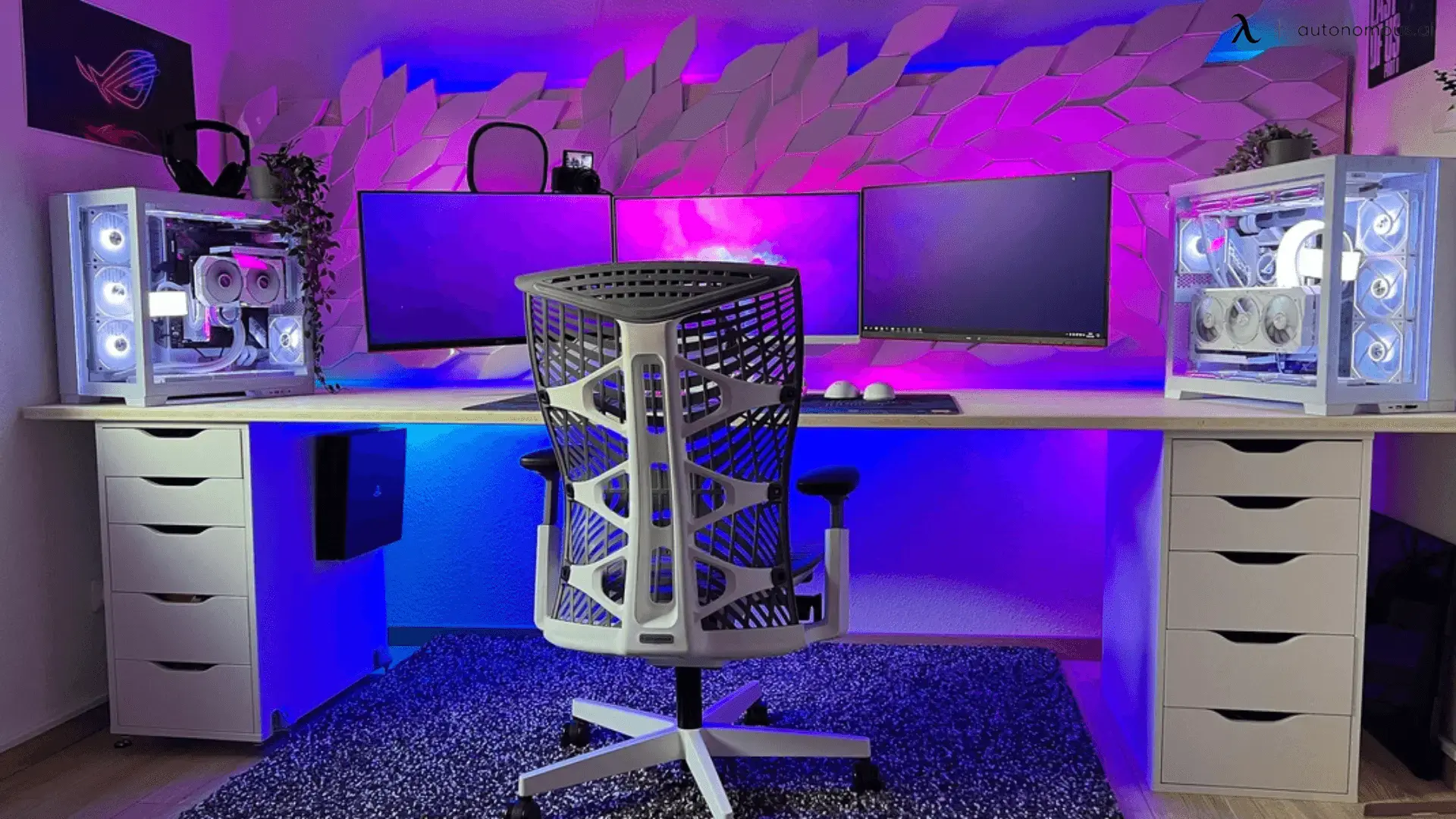
Set the chair so your hips sit slightly above your knees, your feet rest flat on the floor, and two to three fingers fit behind your knees at the seat edge. Getting these three right prevents most of the hip and lower-back strain that comes from a seat that technically fits but is adjusted wrong.
From there, raise or lower the armrests until your elbows rest at about 90 degrees without your shoulders lifting. Set the recline lock somewhere around 100 to 110 degrees for active play, which takes pressure off your lower spine without pulling you away from the keyboard. For taller players, raise the headrest until it meets the back of your head rather than your neck. The last habit matters more than any single setting: stand up and move every 30 to 60 minutes, since even the best-fitting chair works against you if you sit frozen in it for hours.
Frequently asked questions
What is the best gaming chair for tall people?
The best gaming chair for tall people has a backrest around 33 to 35 inches, a high seat-height range, and a seat depth of at least 20 inches. The Secretlab Titan Evo XL fits players up to about 6 foot 9, and the AndaSeat Kaiser 3E XL stretches to roughly 6 foot 11 for very tall frames.
What weight capacity should a big guy look for in a gaming chair?
Aim for a chair rated at least 50 pounds above your weight. A 250-pound player is safest in a 300-pound-plus chair, and anyone near or above 300 pounds should choose a 400-pound-rated model. Published capacities carry little margin and are often tested optimistically, so extra headroom protects the frame.
How wide should the seat be for a big and tall player?
A big and tall player should look for a seat at least 20 inches wide, with 22 to 24 inches ideal for broader frames. Seat width matters as much as weight capacity, because a narrow seat pins your hips even when the chair holds your weight without trouble.
Are office chairs better than gaming chairs for big guys?
Office chairs are often better for big guys who work long hours, since they offer finer seat-depth and lumbar adjustment and longer warranties. Racing-style gaming chairs usually give wider seats and a sportier look but fewer precise controls. The right pick depends on whether you mostly game or also work full days.
Do Autonomous chairs work for big and tall gamers?
Autonomous chairs fit taller players up to about 6 foot 3 and 330 pounds, with the ErgoChair Ultra 2 Plus as the highest-capacity option. They are not built for the heaviest or broadest frames, since the seats run about 18 to 20 inches wide and none exceed 330 pounds.
How long do big and tall gaming chairs last?
A well-built big and tall chair with a steel frame and Class-4 gas lift lasts around 5 to 10 years of daily use. Cheaper 400-pound chairs with plastic bases tend to wear out sooner, so frame material and warranty length are better durability signals than the price tag.
The bottom line
A gaming chair for big guys and tall players comes down to matching real numbers to your body, not trusting a size label. If you are tall, lead with backrest height, seat height, and seat depth. If you are bigger, check that the capacity clears your weight by 50 pounds, the seat is wide enough, and the base is metal rather than plastic. Racing-style XL chairs give you the widest seats and the tallest backs, ergonomic office chairs give you finer control for long work days, and our own chairs suit taller players who want mesh and posture support within a 320-pound limit. Measure yourself first, then pick the chair whose specs back up its claims.
References
- GameTyrant and TechRadar. Secretlab Titan Evo XL reviews.
- PC Gamer. AndaSeat Kaiser 3E XL review, and Autonomous ErgoChair Ultra 2 review.
- PCMag. AKRacing Masters Series Max review.
- The Gadgeteer. Vertagear PL6800 big and tall gaming chair review.
- TechRadar. Autonomous ErgoChair Mesh office chair review.