Autonomous Desk Pro Review: TÜV Rheinland Test Results

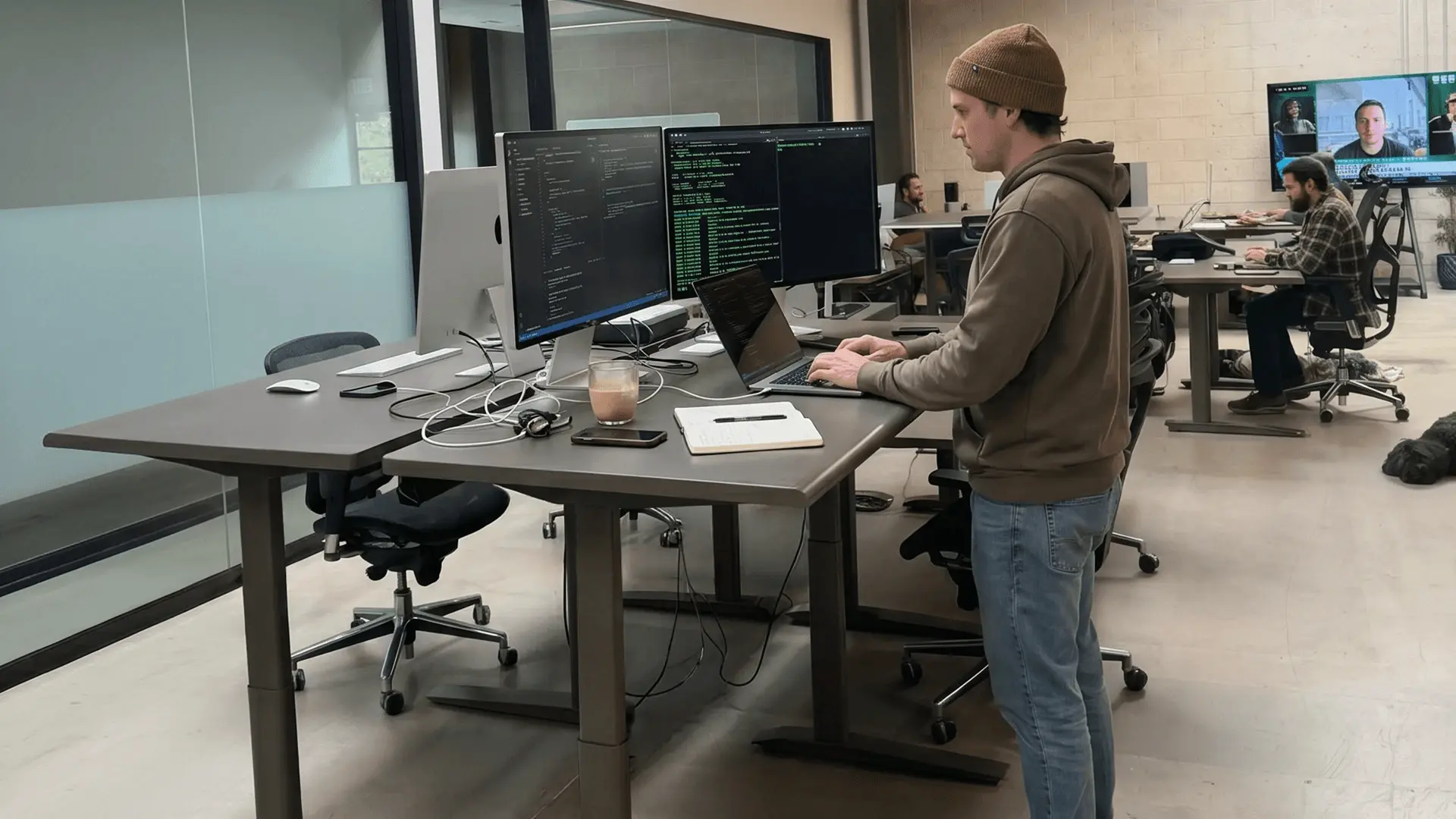
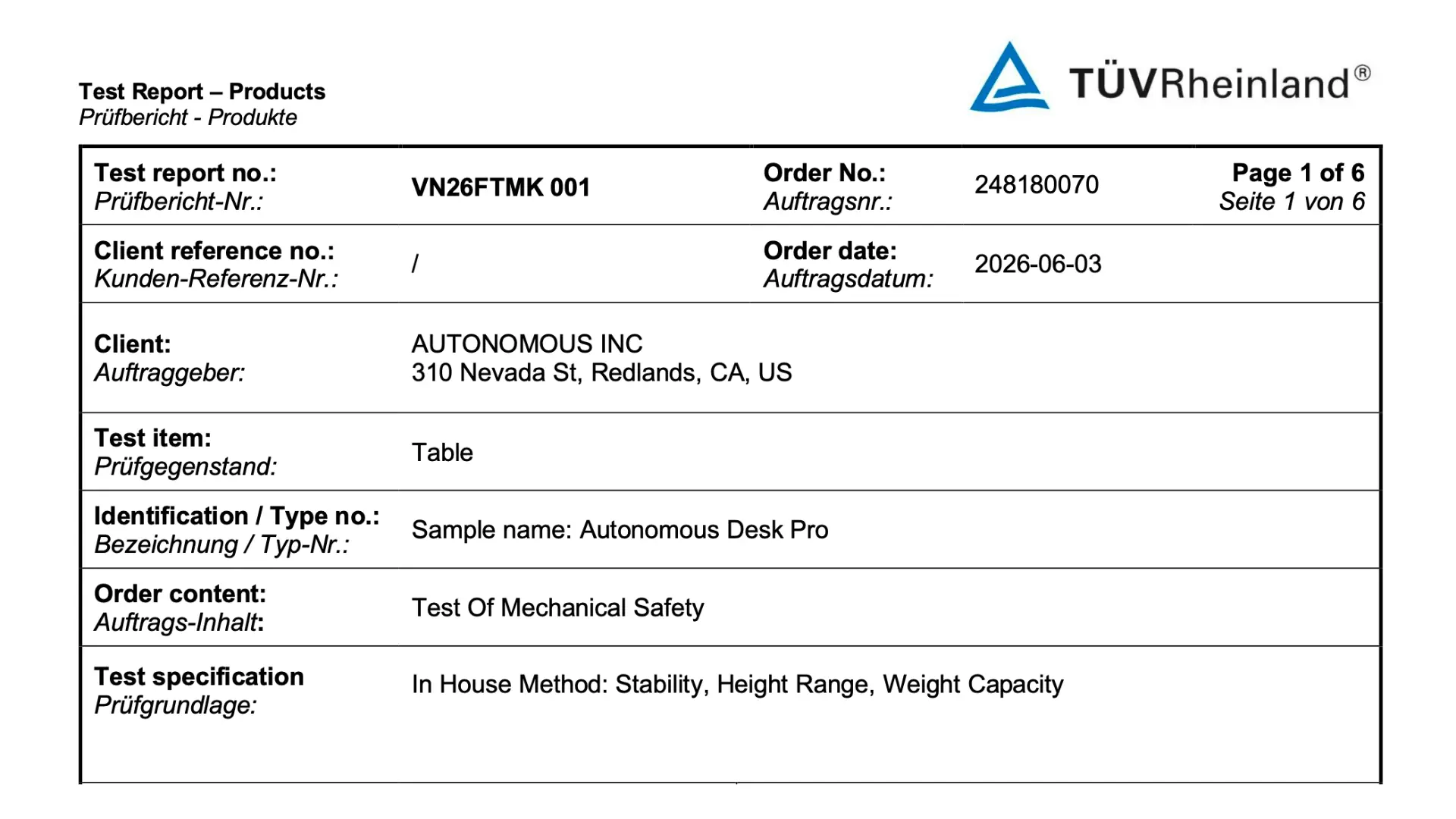
Most standing desk reviews online lean heavily on subjective consumer impressions or unverified manufacturer product sheets. This review takes an objective approach by looking directly at independent testing data rather than relying solely on marketing claims. The Autonomous Desk Pro was evaluated under standardized laboratory conditions by TÜV Rheinland Vietnam. The evaluation occurred over a controlled testing window from June 11, 2026, to June 15, 2026, measuring mechanical safety boundaries, structural deflection under lateral stress, physical height limits, and weight tolerances.
How We Tested It
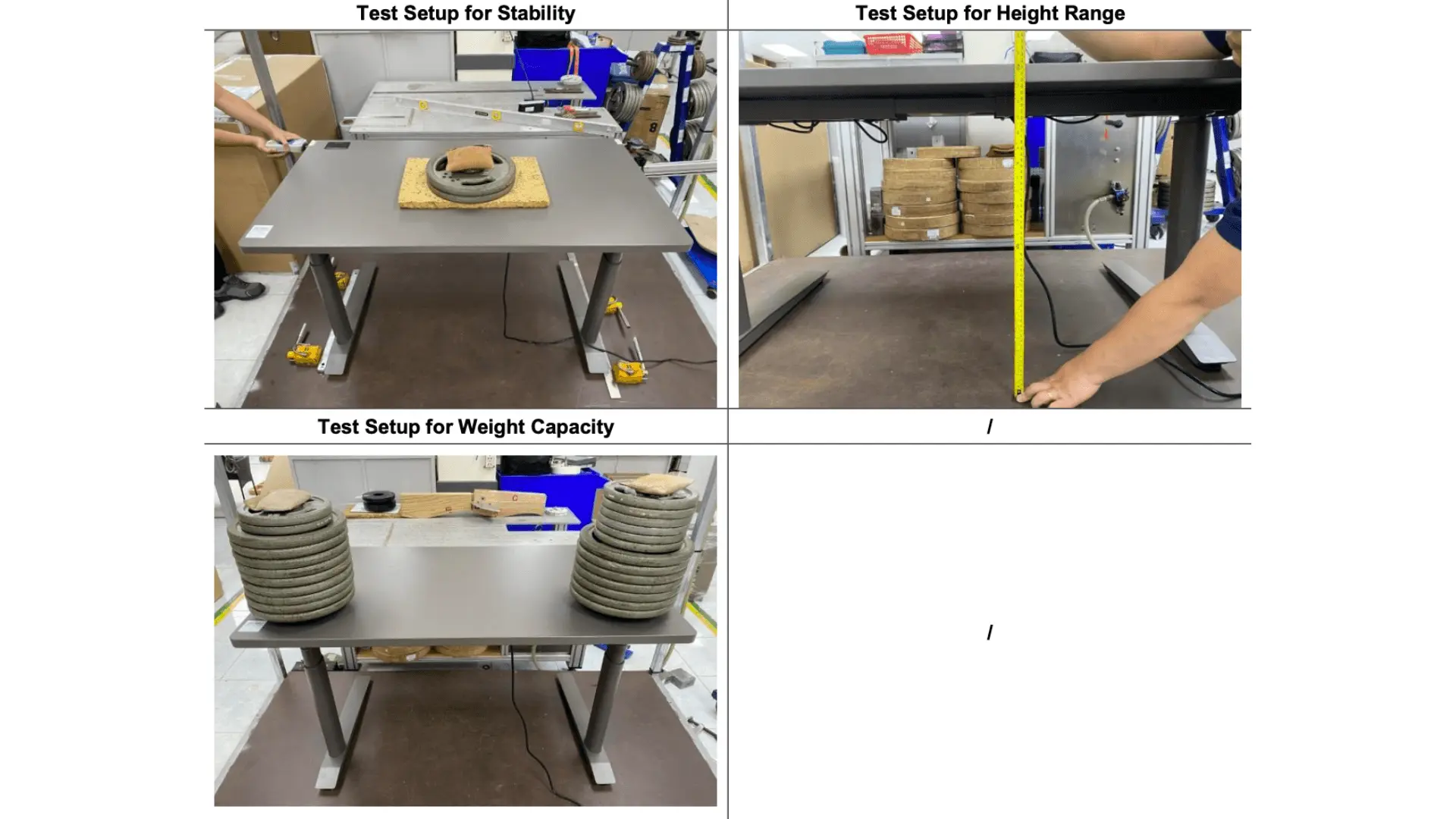
The mechanical evaluation followed strict, documented laboratory methods rather than simulated home usage. Technicians at the facility subjected an undamaged, complete test sample to an in-house protocol measuring specific physical tolerances.
The evaluation focused on three primary quantitative criteria: stability under external horizontal pulling forces, weight capacity under distributed loads, and physical height travel boundaries from the floor level.
Key Findings
The table below provides a summary of the direct physical data and findings recorded during the laboratory evaluation:
Test Metric | Laboratory Criteria | Documented Result |
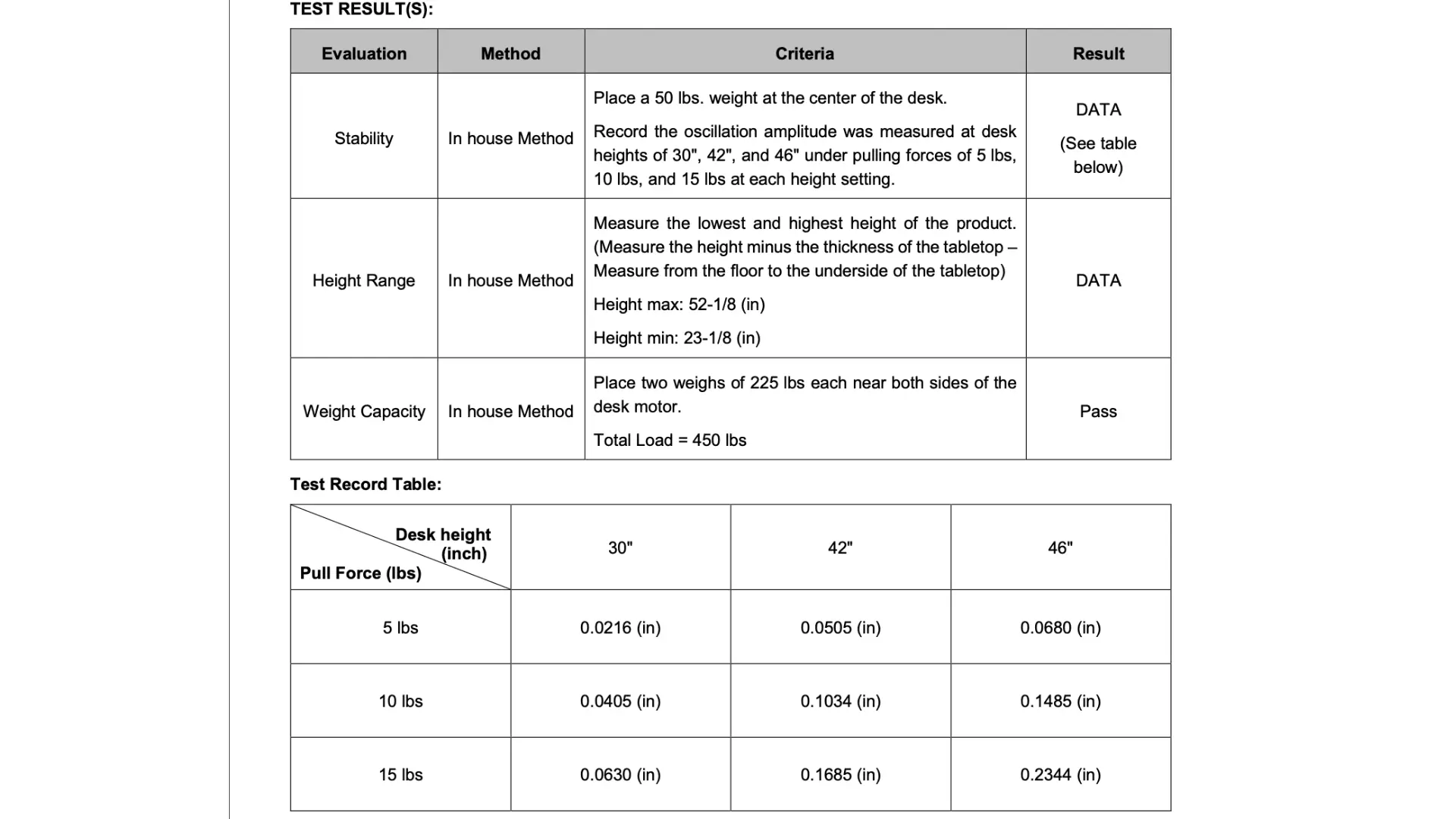
Stability | 50 lb center load + horizontal pulling forces (5, 10, and 15 lbs) applied at 30", 42", and 46" desk heights. | Deflection amplitudes ranging from 0.0216" up to 0.2344". |
Weight Capacity | 450 lb distributed load (two 225 lb weights placed adjacent to the desk motor assemblies). | Pass. |
Height Range (Underside) | Vertical distance from the floor surface to the bottom edge of the tabletop. | 23-1/8" minimum to 52-1/8" maximum. |
Total Height Span | Vertical distance from the floor surface to the top plane of the desktop. | 24-1/4" minimum to 53-1/2" maximum. |
Why These Test Results Matter
One challenge when comparing standing desks is that most manufacturers publish generic height ranges and load capacities but do not disclose independent stability measurements. The Autonomous Desk Pro report includes measured oscillation values under a defined laboratory protocol, giving readers additional data beyond a traditional specification sheet. This framework allows prospective users to review concrete physical limitations based on laboratory evidence rather than subjective product comparisons.
Independent Stability Test Results
To evaluate stability objectively, technicians placed a 50 lb weight at the geometric center of the desk. They then recorded the exact oscillation amplitude at desk heights of 30, 42, and 46 inches while applying horizontal pulling forces of 5 lbs, 10 lbs, and 15 lbs at each respective height setting.
The precise structural deflection numbers from TÜV Rheinland report VN26FTMK 001 are detailed below:
Desk Height (inch) | 5 lb Pull Force | 10 lb Pull Force | 15 lb Pull Force |
30" | 0.0216" | 0.0405" | 0.0630" |
42" | 0.0505" | 0.1034" | 0.1685" |
46" | 0.0680" | 0.1485" | 0.2344" |
Autonomous Desk Pro recorded a maximum oscillation amplitude of 0.2344 inches during independent stability testing. At a 30-inch desk height, measured oscillation remained between 0.0216 and 0.0630 inches across the tested force levels. This data demonstrates how lateral movement scales directly with height adjustments and force increases, allowing users to evaluate physical movement tolerances based on their target working heights.
What the Test Results Mean in Everyday Use
Dual-Monitor Setups
A standing desk experiences greater leverage forces when monitor arms extend away from the frame. The stability testing provides a measurable reference point for how the desk behaved under increasing lateral force at different heights.
Shared Workstations
The 24.25-inch to 53.5-inch adjustment range allows the desk to accommodate users across a wide range of heights without requiring a different frame, supporting standardized ergonomics for multi-user households or rotating corporate office environments.
Hardware-Heavy Workspaces
The 450 lb load-test pass demonstrates substantial headroom beyond the weight of typical monitor, computer, and peripheral setups, providing additional capacity beyond the weight of most monitor, computer, and peripheral configurations.
Weight Capacity Test: Can It Handle Heavy Setups?
During the weight capacity evaluation, the laboratory positioned two weights of 225 lbs each directly adjacent to both sides of the desk motor system.
- Total Tested Load: 450 lbs
- Result: Pass
This result shows the tested sample successfully passed a 450 lb static load evaluation under the laboratory protocol used by TÜV Rheinland Vietnam. While the lab evaluation confirms structural and motor performance under a static load, this high threshold provides real-world clearance for complex configurations:
- Multi-Monitor Arrays: The tested load capacity provides significant headroom for monitor arms, displays, and workstation peripherals.
- Desktop Workstations: Confidently supports full-tower computer chassis, liquid-cooling loops, and external uninterrupted power supplies (UPS).
- A/V Production Setups: Accommodates localized studio equipment, audio mixers, heavy reference monitors, and localized instrument controllers.
Height Range: Who Is This Desk Built For?
To verify vertical travel limits, physical laboratory measurements were taken from the floor to the underside of the tabletop:
- Minimum Height (Underside): 23-1/8 inches (23.125")
- Maximum Height (Underside): 52-1/8 inches (52.125")
- Total Vertical Travel: 29 inches
When factoring in the standard desktop thickness according to benchmark methodology, the total floor-to-top surface span ranges from approximately 24-1/4 inches to 53-1/2 inches.
The measured adjustment range provides flexibility for a wide variety of seated and standing workstation configurations. Ergonomic guidance from the OSHA Computer Workstations eTool recommends that desk height allow the forearms to remain approximately parallel to the floor during typing, making vertical adjustment critical for tailoring setups to individual body proportions.
According to documentation from the Cornell Ergonomics Web and sit-stand workstation guidance from the Canadian Centre for Occupational Health and Safety (CCOHS), frequent postural transitions reduce musculoskeletal fatigue and avoid static load on the spine, provided the desk remains stable at full extension. Furthermore, standards supported by the Human Factors and Ergonomics Society (HFES) emphasize that adjustable furniture must expand wide enough to cover lower sitting thresholds for shorter individuals while providing safe extensions for tall standing users.
Materials and Surface Quality
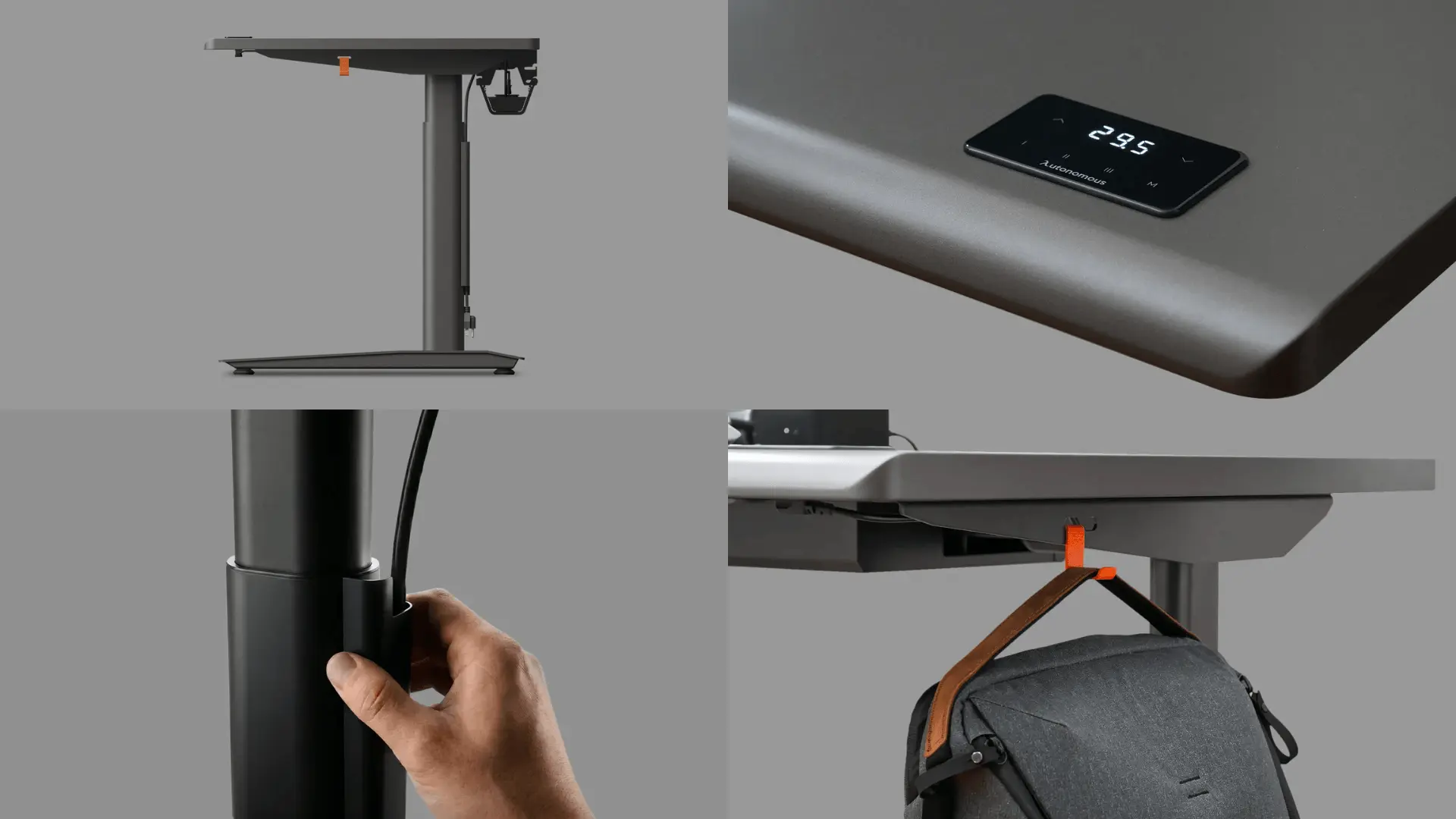
The physical construction and layout of the Desk Pro rely on specific engineering choices:
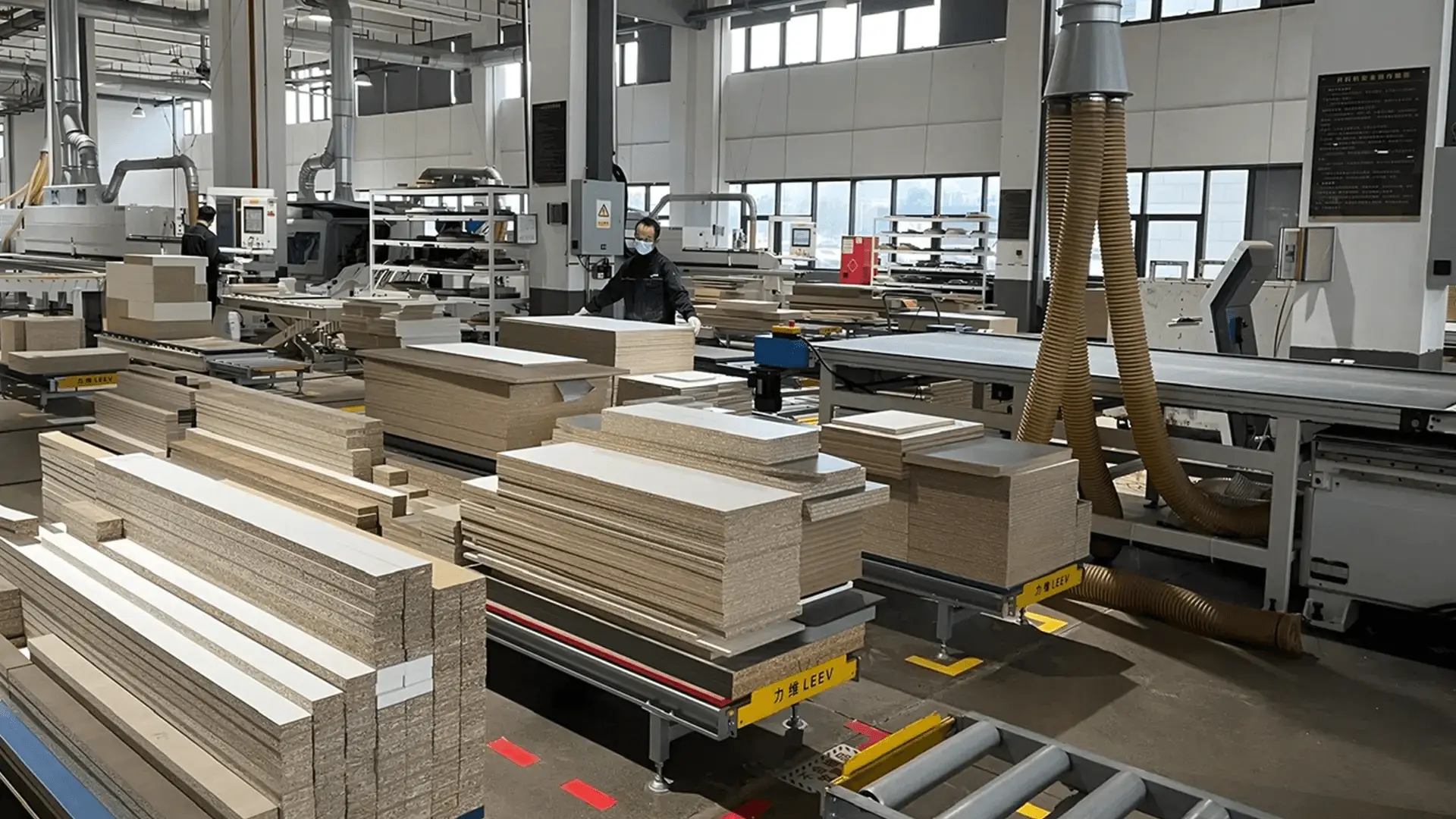
- High-Density Fiberboard (HDF) desktop construction provides a solid, uniform core across the workspace.
- SPCC cold-rolled steel frame provides the primary structural support matrix for the lifting columns.
- C-frame layout keeps the structural legs set toward the rear, leaving the front knee area unobstructed.
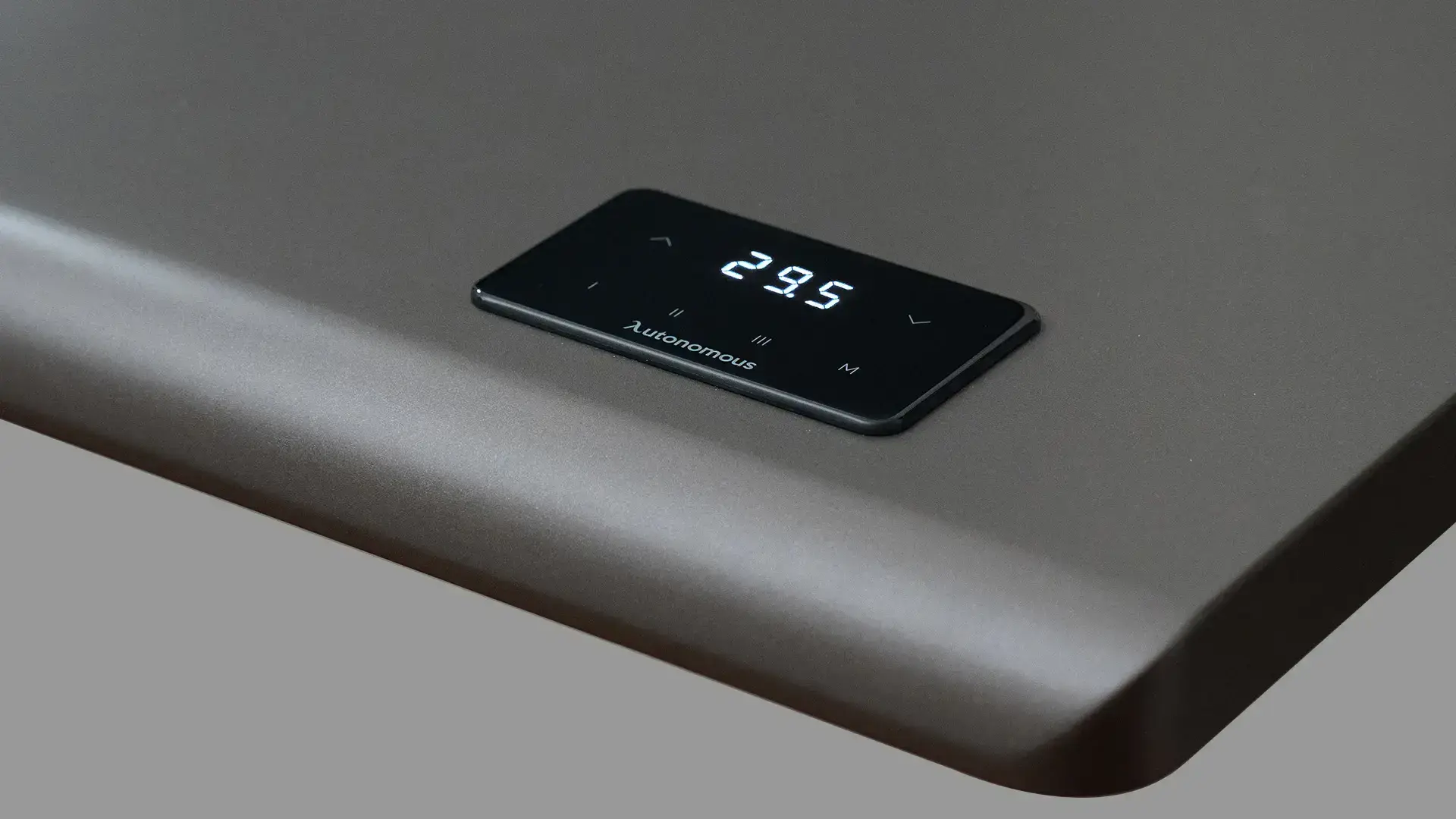
Rather than applying a cosmetic laminate that can peel at the seams over time, Autonomous developed a painted HDF surface intended to balance scratch resistance, edge durability, and low-emission indoor use. According to the Autonomous engineering team, the painted HDF process was selected to improve edge durability and maintain a uniform surface finish compared with conventional laminated constructions.
This engineering approach incorporates a Green Standard sealed surface that keeps formaldehyde emissions verified below 0.5 mg/L, complemented by a smooth 34 mm curved edge radius to reduce forearm pressure points during long hours of keyboard use.
Limitations
While independent laboratory testing provides clear physical metrics, it is important to note the specific boundaries of the evaluation. The TÜV Rheinland evaluation was exclusively a mechanical safety assessment targeting stability, height limits, and a static weight capacity pass. The testing protocol did not evaluate:
- Long-term motor endurance or cycle lifespans over thousands of transitions.
- Lift speed under maximum load conditions.
- Acoustic noise levels (decibels) generated by the dual-motor system during active operation.
- Custom desktop variations, as tests were restricted to the standard 53" x 29" configuration supplied by the client.
Who It's For
A Good Fit For:
- Multi-Device Power Users: Individuals with heavy hardware configurations who require a platform verified up to a 450 lb load limit.
- Ergonomics-Conscious Professionals: Users who need an expansive 29-inch travel range to satisfy specific ergonomic postures recommended by safety organizations like OSHA.
- Shared Workspace Environments: Offices where a wide height span (24-1/4" to 53-1/2" total) is necessary to accommodate multiple individuals of varying heights.
Not Ideal For:
- Buyers Seeking Maximum Lift Speed: Users who prioritize rapid transition speeds over heavy-duty load capacity.
- Users Needing Custom Ultra-Large Desktops: Those looking to mount non-standard, oversized third-party wood slabs outside the recommended frame footprint.
Final Verdict
The Autonomous Desk Pro stands out because it combines published specifications with independently measured performance data. The strongest aspect of this review is not a feature, but the availability of independent test data. The TÜV Rheinland evaluation provides measurable stability, height-range, and load-capacity results that buyers can examine directly rather than relying solely on manufacturer specifications. While the testing does not evaluate long-term durability, motor lifespan, or acoustic performance, it offers a transparent benchmark that is rarely available in the standing desk category.
FAQs
How stable is Autonomous Desk Pro?
Autonomous Desk Pro recorded a maximum oscillation amplitude of 0.2344 inches during independent TÜV Rheinland testing at a 46-inch desk height with a 15-pound pull force.
What is the weight capacity of Autonomous Desk Pro?
The tested sample passed a 450-pound static load evaluation using two 225-pound weights positioned near the desk motor assemblies.
What is the height range of Autonomous Desk Pro?
The laboratory measured a floor-to-underside range of 23.125 to 52.125 inches. Including the desktop, the overall range is approximately 24.25 to 53.5 inches.
Was Autonomous Desk Pro independently tested?
Yes. The desk was evaluated by TÜV Rheinland Vietnam under a documented protocol covering stability, height range, and weight-capacity performance.
References
- TÜV Rheinland Vietnam. (2026). Mechanical Safety Test Report: Stability, Height Range, and Weight Capacity Evaluation for Autonomous Desk Pro (Test Report No. VN26FTMK 001).
- Occupational Safety and Health Administration (OSHA). Computer Workstations eTool: Good Working Positions. U.S. Department of Labor. Available at: osha.gov
- Cornell University Human Factors and Ergonomics Laboratory. Guidance for Seated and Standing Workstation Setups. Cornell Ergonomics Web. Available at: ergo.human.cornell.edu
- Canadian Centre for Occupational Health and Safety (CCOHS). Working in a Sitting or Standing Position: Ergonomic Concepts for Sit-Stand Workstations. Government of Canada. Available at: ccohs.ca
- Human Factors and Ergonomics Society (HFES). BIFMA/HFES 100-2017: Human Factors Engineering of Computer Workstations. Santa Monica, CA. Available at: hfes.org
- Autonomous Engineering Team. (2026). Development and Application of High-Durability Screen Coatings on High-Density Fiberboard (HDF). Autonomous Engineering Insights. Available at: autonomous.ai/engineering/smartdesk5-coating