The Best Office Chairs for Core Strength

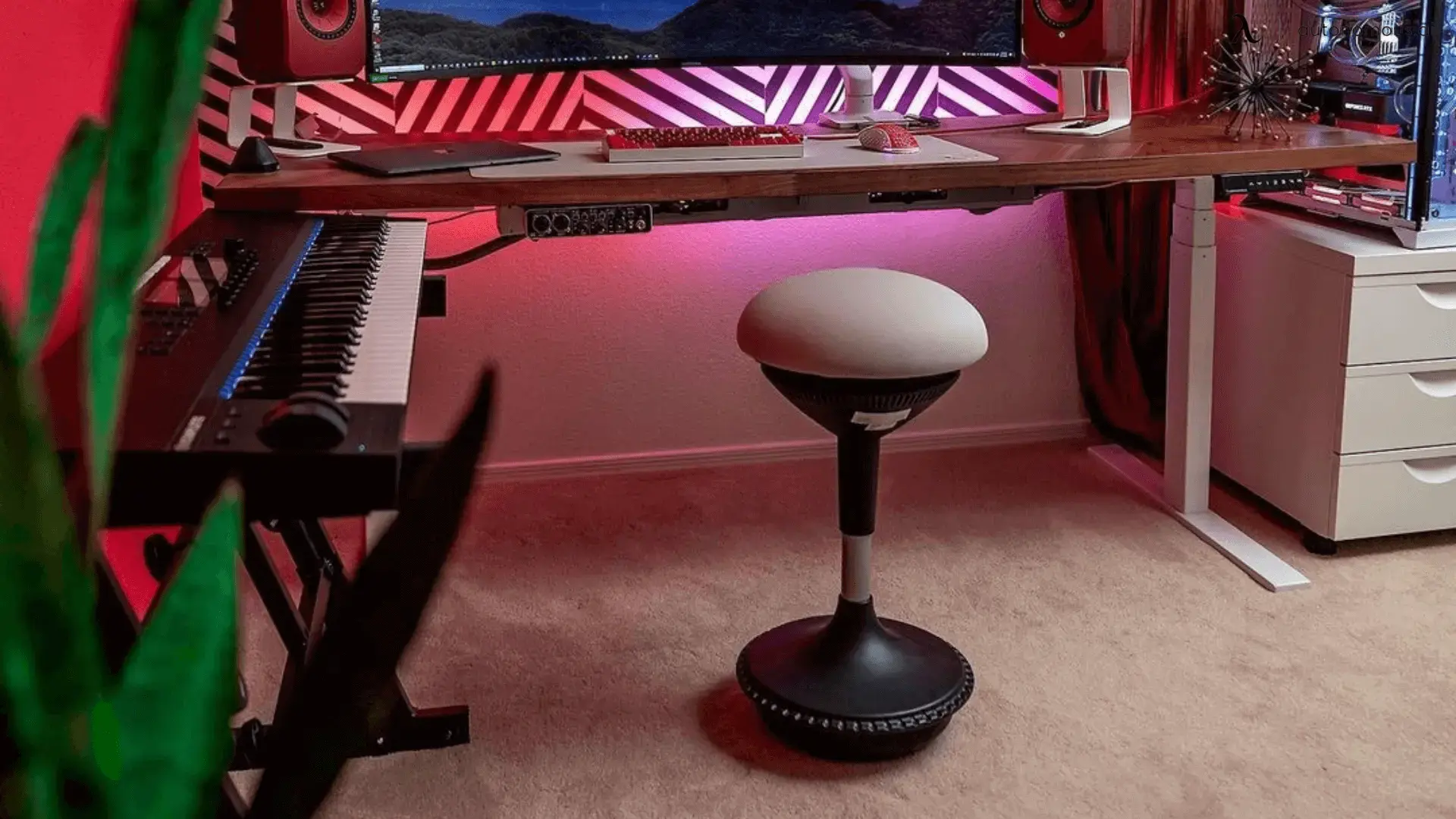
Most "office chairs for core strength" don't do what they claim. After six months testing active-sitting products at my desk, I found two truths: chairs that engage your core require constant micro-balance adjustments, and you can't use them eight hours a day. This guide covers ten chairs that genuinely engage core muscles across sway bases, saddle seats, wobble stools, and adaptive ergonomic designs.
The ten chairs at a glance
Chair | Mechanism | Capacity | Best for |
Autonomous ErgoChair Ultra 2 | Adaptive TPE back + dynamic seat | 320 lbs | Half-day active, half-day structured |
CoreChair Classic | Sway base + pelvic stabilizer | 250 lbs | Category leader for true core engagement |
Uncaged Ergonomics Wobble Stool | Counter-balanced wobble | 250 lbs | Maximum motion, lower price |
HÅG Capisco 8106 | Saddle seat, open hip angle | 300 lbs | Active sitting with backrest option |
QOR360 Tilt | 360° tilt active stool | 300 lbs | Budget active sitting, surgeon-designed |
Varier Variable Balans | Rocking kneeling chair | 300 lbs | Posture variation, weight on shins |
BackApp 2.0 | Ball base active chair | 260 lbs | Premium ball-based active sitting |
Gaiam Balance Ball Chair | Ball in frame with backrest | 300 lbs | Budget ball-based with stability |
Muvman Leaning Stool | Lean-to-rest design | 240 lbs | Standing desk users, lean breaks |
iMovR Tempo Sit-Stand Stool | Active stool for sit-stand setups | 250 lbs | Pairing with standing desks |
For most users wanting genuine core engagement, the CoreChair or a wobble stool deliver the strongest active-sitting mechanism. For users who want one chair that works for both active and traditional sitting, the Autonomous ErgoChair Ultra 2 is the closest hybrid in the ergonomic chair category.
The chairs reviewed
1. Autonomous ErgoChair Ultra 2 - the everything-else chair
You can't be on an active-sitting stool for eight hours a day. After six months of testing, the lesson I learned the hard way: 30-60 minute active-sitting blocks, then switch to a structured chair for calls, video meetings, and reading. The Autonomous ErgoChair Ultra 2 is the right chair for "everything else."
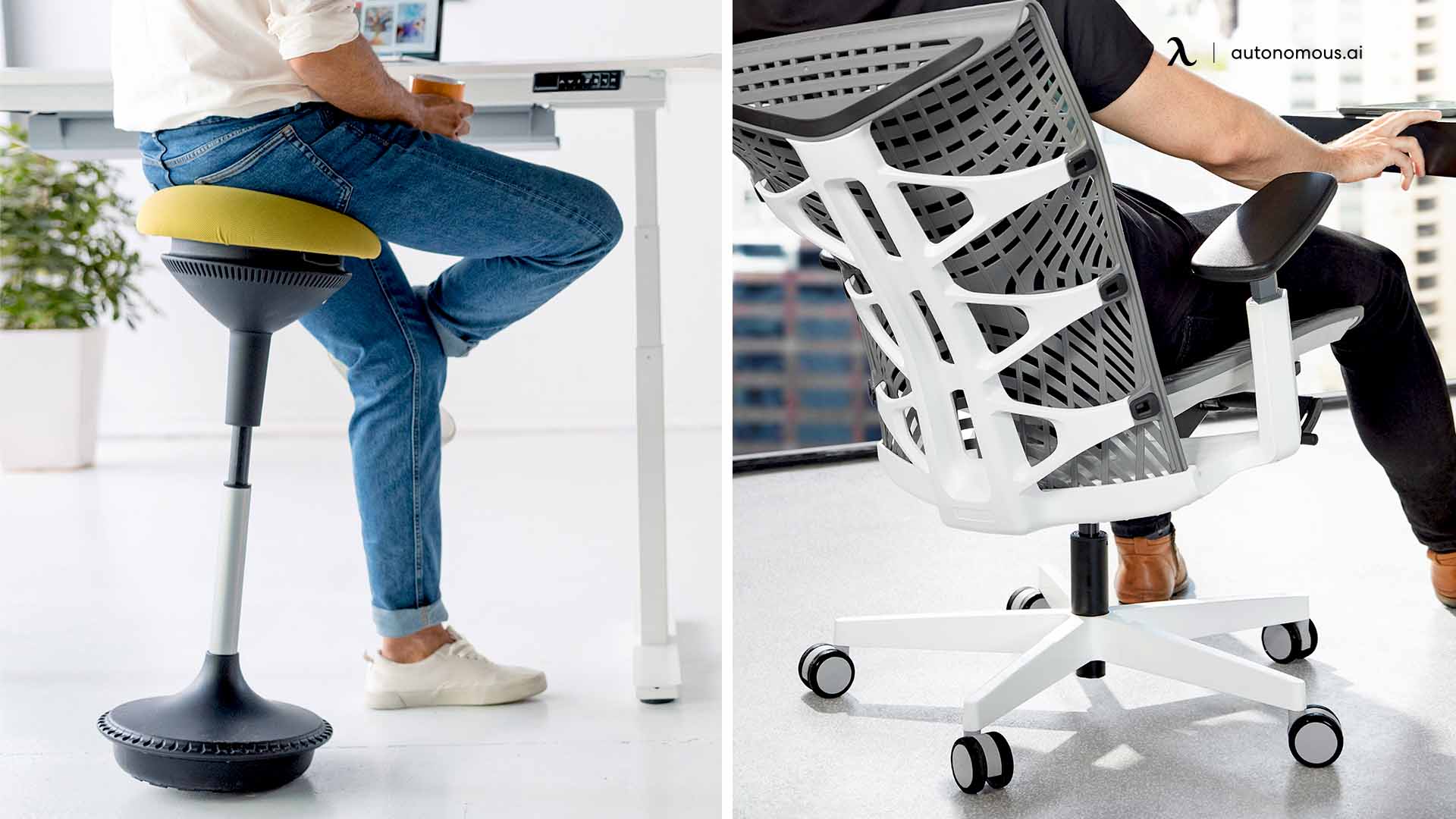
The back panel flexes through 62 pressure nodes and 186 struts that move with the spine, instead of locking you into a fixed shape. The seat uses TPE webbing and polymer coil springs under the foam, so when you shift weight, the seat shifts under you instead of compressing flat. It's not active sitting - you're not engaging your core to stay balanced - but it's also not the static brick most office chairs are.
For a workflow that alternates an active stool and a structured chair throughout the day, the Ultra 2 is what fills the structured-chair slot. 18" × 18" seat, 18"-20.5" adjustable depth, 25° tilt range, 320 lb capacity, lifetime frame warranty.
Best for: Pairing with an active-sitting stool for the half of the day when active sitting isn't realistic.

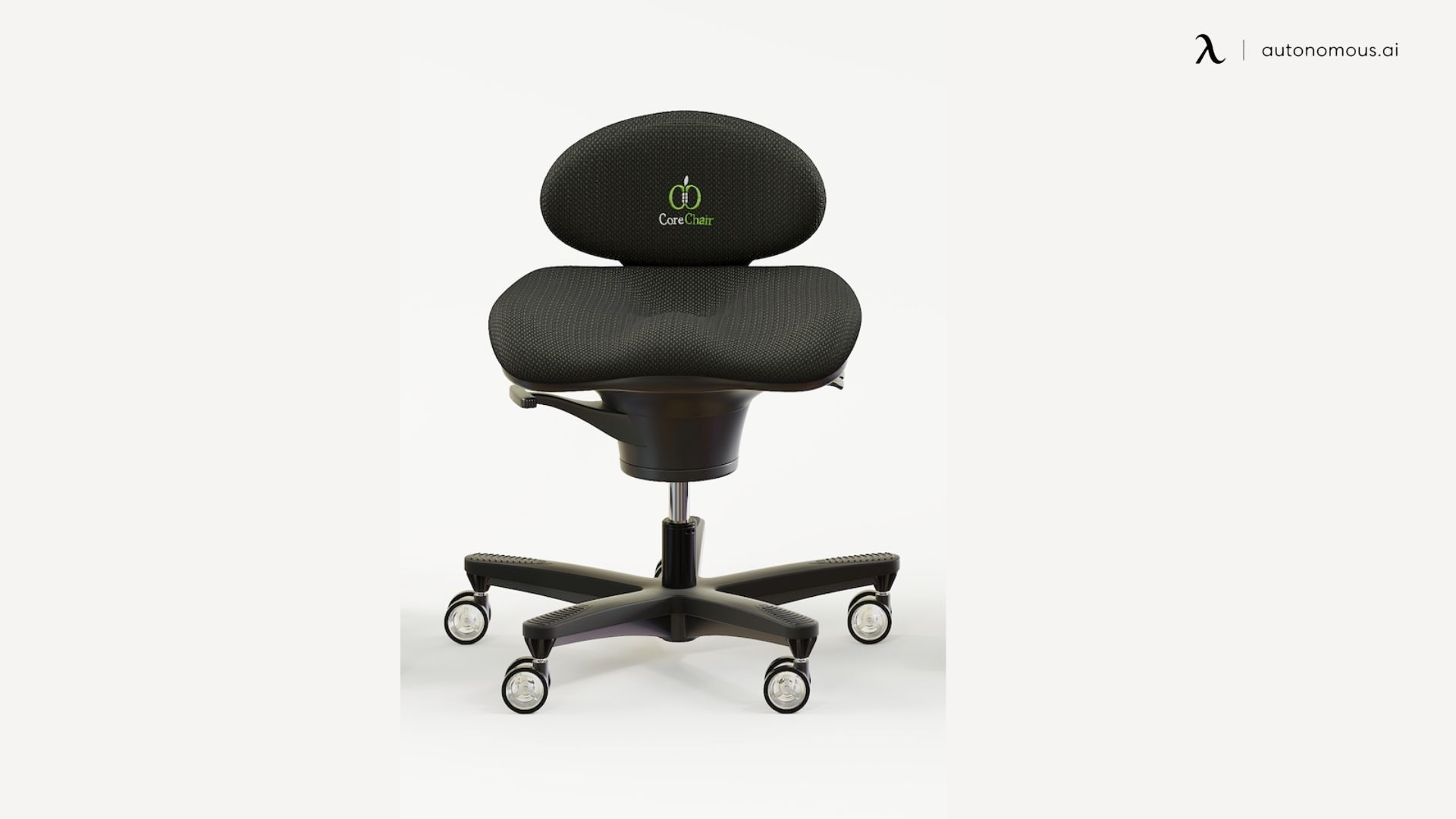
2. CoreChair Classic - the category leader
The CoreChair is what people are searching for when they type "core building chair." NEAT-certified (one of two active chairs to earn this), the design uses a sway base with adjustable tilt tension and an integrated pelvic stabilizer that prevents the sliding most active stools have. The University of Waterloo found the CoreChair as effective as an exercise ball for activating the core, without the balance fatigue that comes with ball seating.
The differentiator vs cheaper sway stools: the pelvic stabilizer keeps your hips anchored while letting your torso move. Most wobble stools let your whole body slide around, which creates compensation patterns over a long workday. The CoreChair forces the motion into the spine and core specifically.
Trade-off: it's expensive ($800+). And like every active sitting chair, it's designed for 30-60 minute blocks, not all-day use. The lack of armrests means you'll feel the lack of upper body support during long sessions.
Best for: Users committed to active sitting who want the most-researched and most-certified chair in the category.
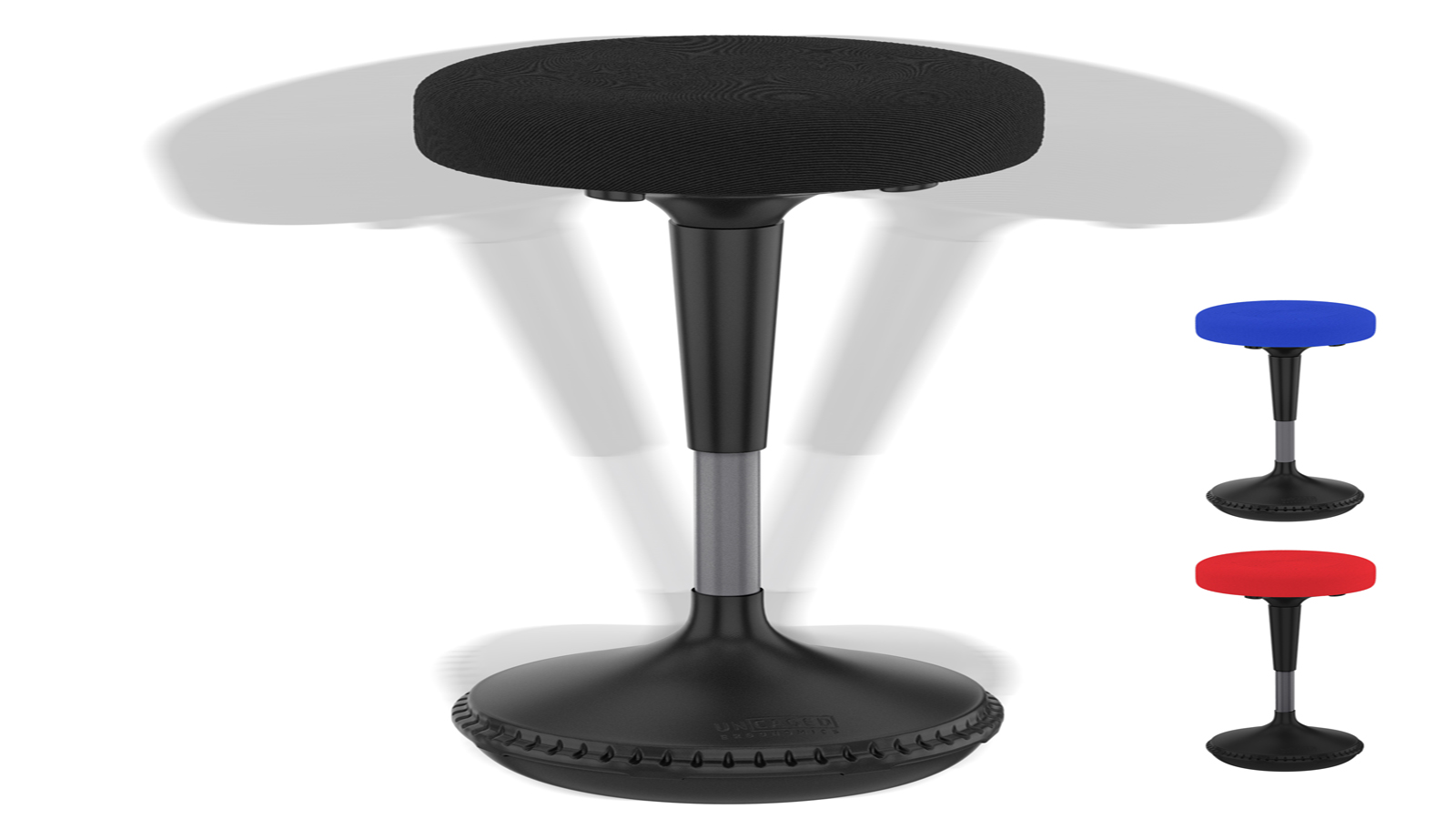
3. Uncaged Ergonomics Wobble Stool - maximum motion at lower cost
The Wobble Stool is a counter-balanced base - the stool wobbles freely in any direction with no tilt-and-return mechanism. Some users love the constant micro-movement; the core works harder, and shifting positions doesn't fight you. After two months of testing, I found it tiring compared to chairs with weighted bases - the constant attention required pulled focus from work.
The build quality reflects the price point. One-year warranty (vs the CoreChair's longer coverage). The foam seat is thicker but the frame feels less substantial. Adjusts roughly 23"-33" in height, so it fits standing desks comfortably.
For users who specifically want maximum unrestricted movement and don't mind the engagement it requires, the Wobble Stool is the value pick. For users who want gentler engagement, a weighted-base stool is the right call.
Best for: Budget-conscious buyers who want unrestricted wobble motion and don't mind the constant attention required.
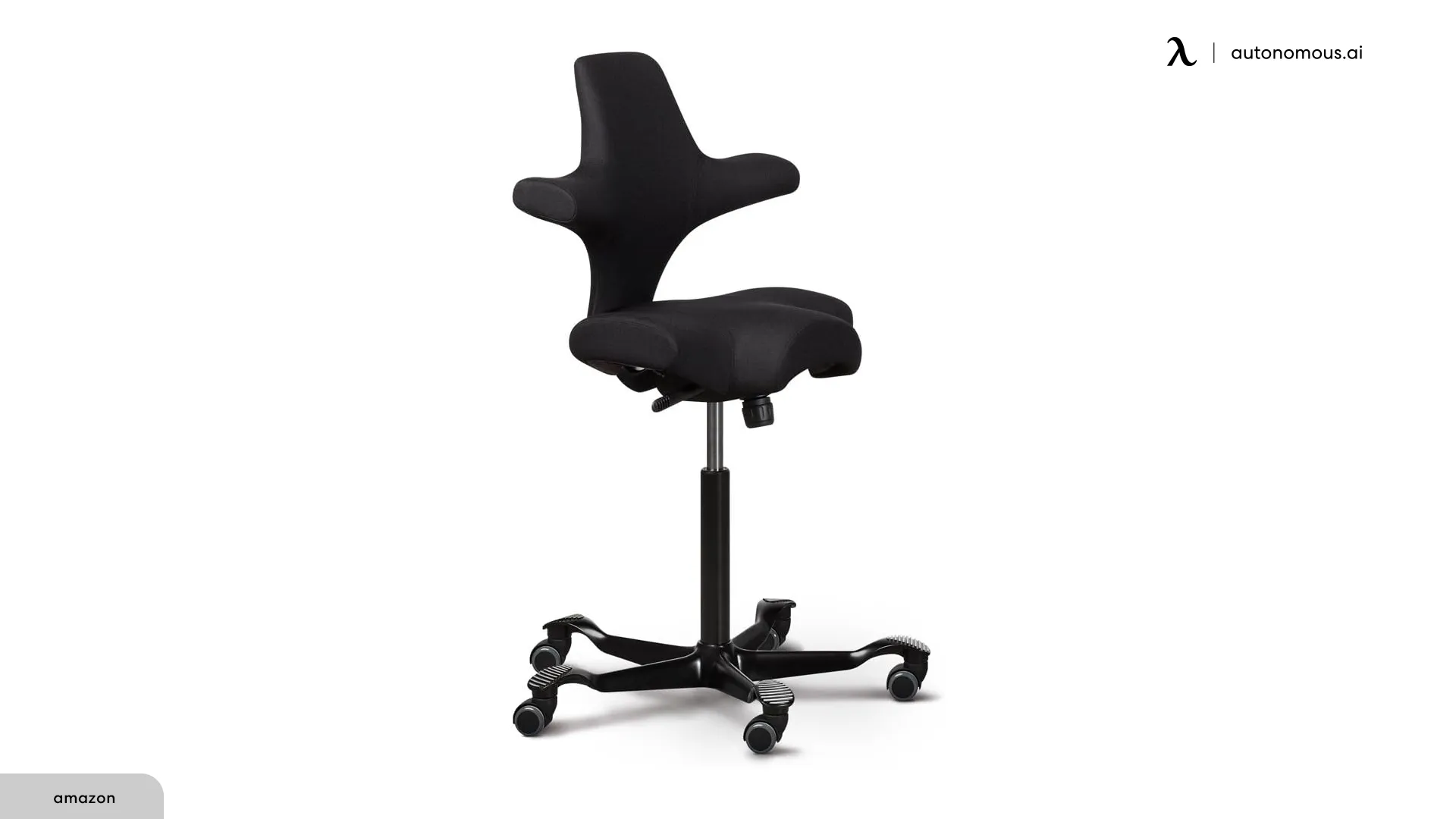
4. HÅG Capisco 8106 - saddle seat with backrest option
The Capisco bridges saddle chair and conventional chair. The saddle-style seat opens the hip angle (which reduces lower-spine compression and encourages upright posture), but the chair also has a backrest you can lean against during breaks. Saddle chairs typically force you to engage your core to stay upright; the Capisco lets you choose when to lean.
The forward-tilted saddle takes 2-4 weeks of adaptation. The narrow profile lets you face the chair forward (saddle) or backward (lean against the backrest for casual conversations), which doubles its uses. Height range fits both seated and standing-desk positions.
Trade-off: the saddle shape isn't comfortable for everyone, particularly users with hip mobility issues. Test at an office furniture showroom before committing - the Capisco is a $1,000+ chair and the saddle is either right for your body or it isn't.
Best for: Active sitters who want the option of a backrest during long sessions, and who can adapt to a saddle-style seat.
5. QOR360 Tilt - surgeon-designed active stool
The QOR360 Tilt was developed by Dr. Turner Osler, a trauma surgeon focused on what he calls "sitting disease." The design centers on a 360° tilt mechanism with a buckwheat hull seat - natural materials, minimal components, designed for full motion in every direction.
The buckwheat hull seat is the differentiator. It conforms to your body without compressing flat like foam, and it stays cooler. The lightweight design (about 12 lbs) makes it easy to move around - useful for users who relocate between rooms or store the stool when not in use.
The Tilt is less hyped than the CoreChair but covers the same use case at a lower price. Less brand prestige, similar mechanism. Worth considering if you want active sitting without the CoreChair price tag.
Best for: Active sitters who want a budget-friendly alternative to the CoreChair with a unique buckwheat seat material.
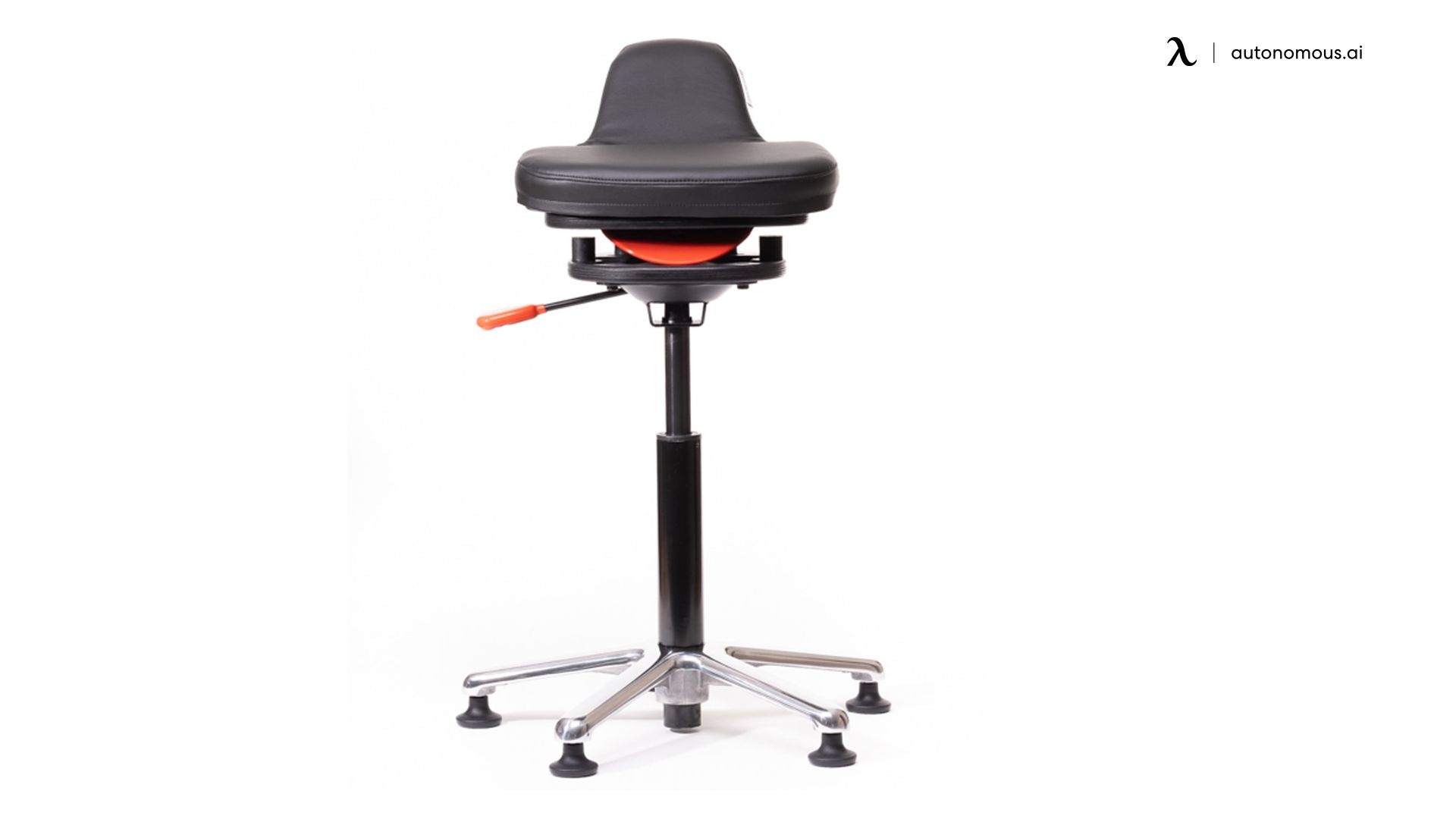
6. Varier Variable Balans - the rocking kneeling chair
Designed by Peter Opsvik (who said "the best position is always the next one"), the Variable Balans is a rocking kneeling chair that shifts weight forward onto the shins while letting the chair rock gently. Combines kneeling chair posture with active-sitting motion in one design.
What it does well: the forward tilt opens the hip angle and promotes upright spine alignment, and the rocking motion adds micro-movement that keeps you from settling into one position. The padding is generous, which makes it more comfortable for longer sessions than most kneeling chairs.
What it doesn't do: engage your core directly. The kneeling position shifts weight off the sit bones onto the shins - the core works less, not more. Better for posture variation than for building core strength specifically.
Best for: Users who want posture variation through a kneeling rock motion, less for users specifically targeting core strength.
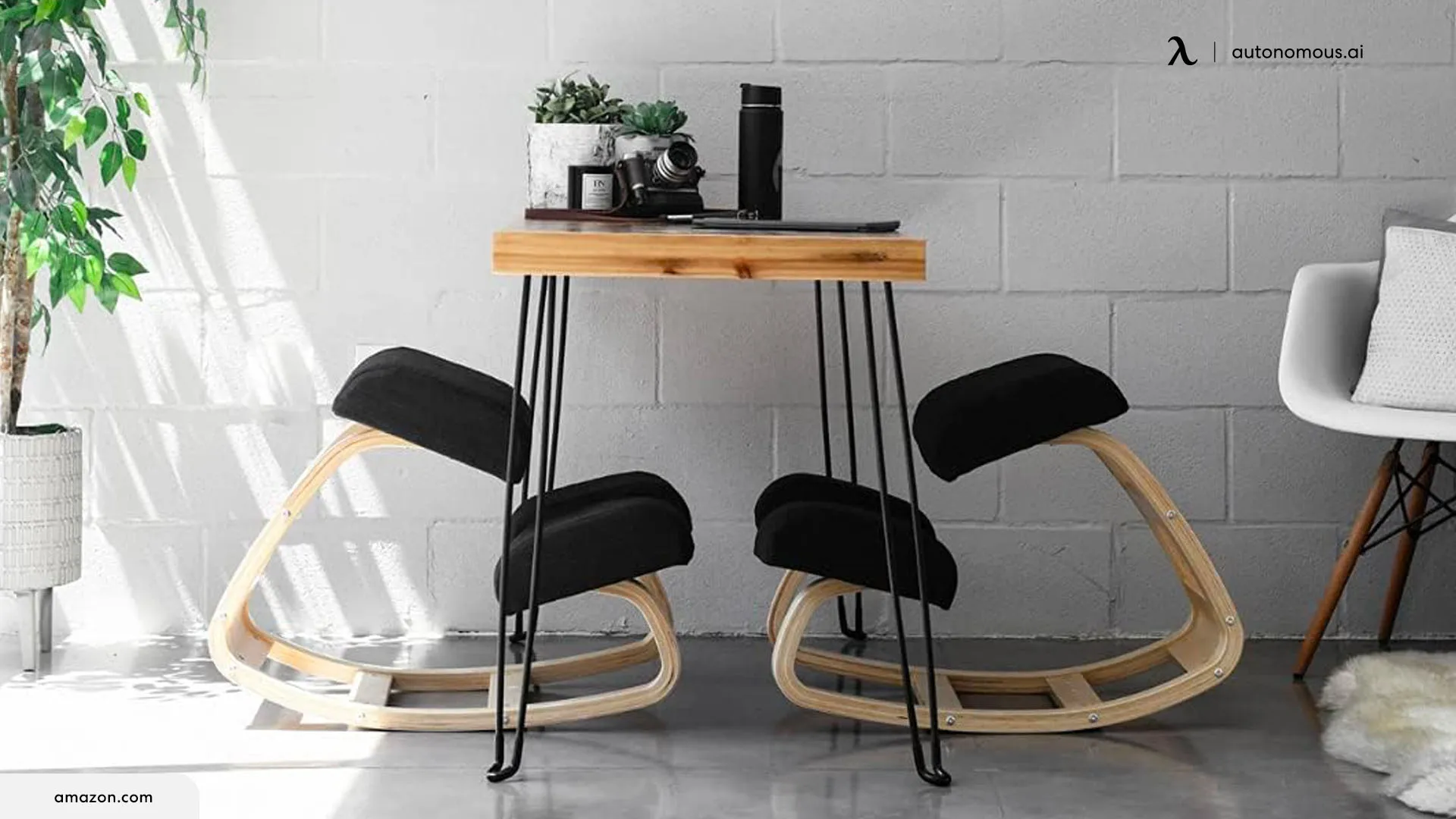
7. BackApp 2.0 - premium ball-based active chair
The BackApp 2.0 is the higher-end take on ball-based active sitting. Instead of an exercise ball, it uses a smaller integrated ball as the base - providing wobble motion with more stability than a full-sized exercise ball. The seat has light cushioning, height adjusts up to standing-desk position, and the chair feels more refined than the typical ball-on-frame design.
The trade-off vs the original BackApp: it costs significantly more (~$700+). For the price, you're paying for the build quality and the cleaner aesthetics. The active-sitting mechanism itself is similar to less expensive alternatives.
Best for: Premium active-sitting buyers who want ball-based motion with a refined design and aren't budget-constrained.
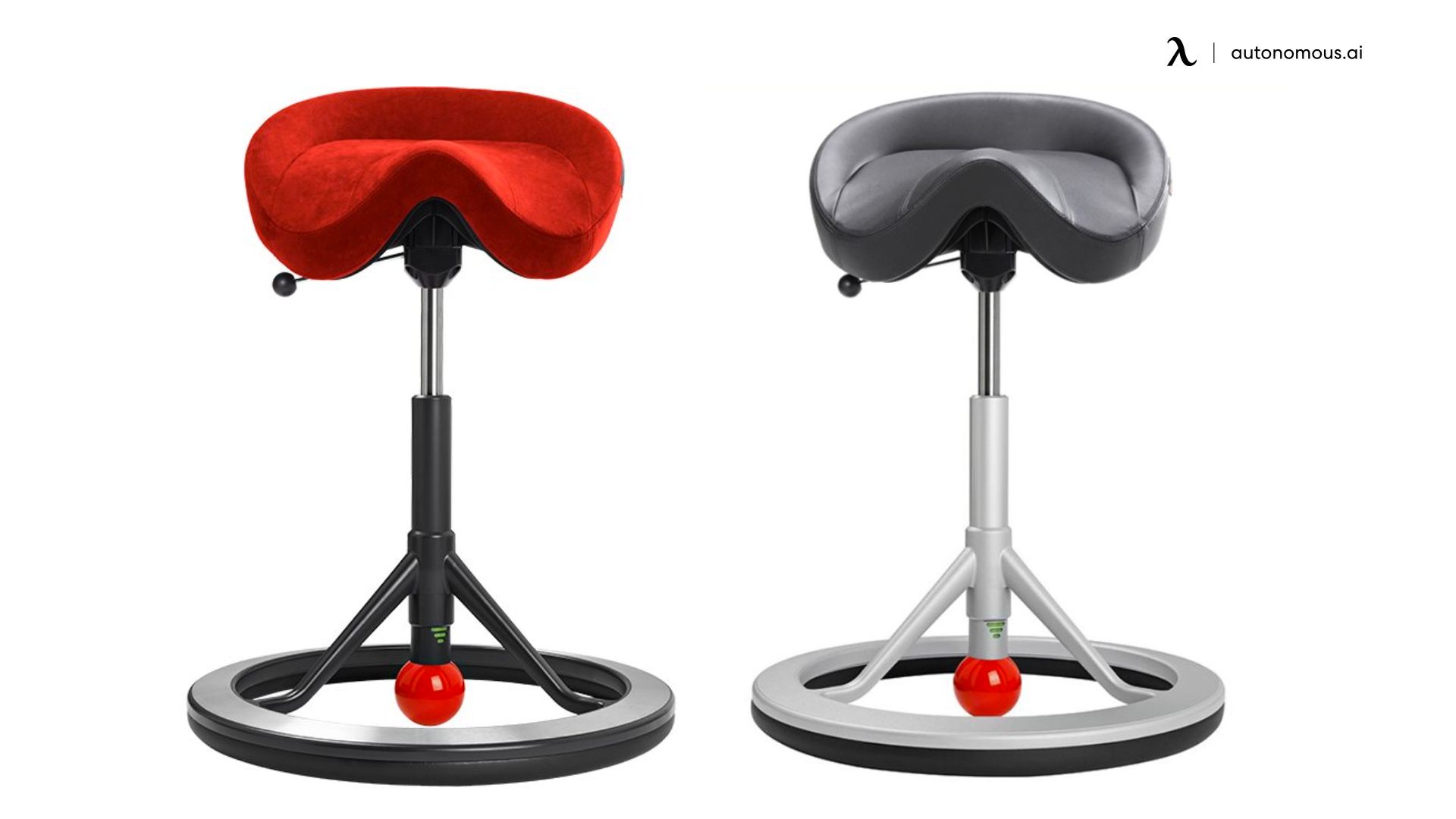
8. Gaiam Balance Ball Chair - the budget ball-based option
The Gaiam puts a removable exercise ball inside a stable frame with a backrest. Gets you ball-based active sitting at a fraction of the BackApp 2.0's price. The frame prevents the ball from rolling away, and you can remove the ball to use it for floor exercises separately.
What works: it's cheap, the ball is replaceable when it wears out, and the backrest gives you a fallback when active sitting fatigues. What doesn't work as well: the ball compresses over time and needs reinflation, the chair only fits users 5'0"-5'11" (taller users need separate leg extenders), and the build quality reflects the price point.
For users testing whether ball-based active sitting works for them before committing to a $700 chair, the Gaiam is the entry point. After six months, you'll either upgrade to a BackApp 2.0 or move to a different mechanism entirely.
Best for: Users testing ball-based active sitting on a budget before committing to a premium option.
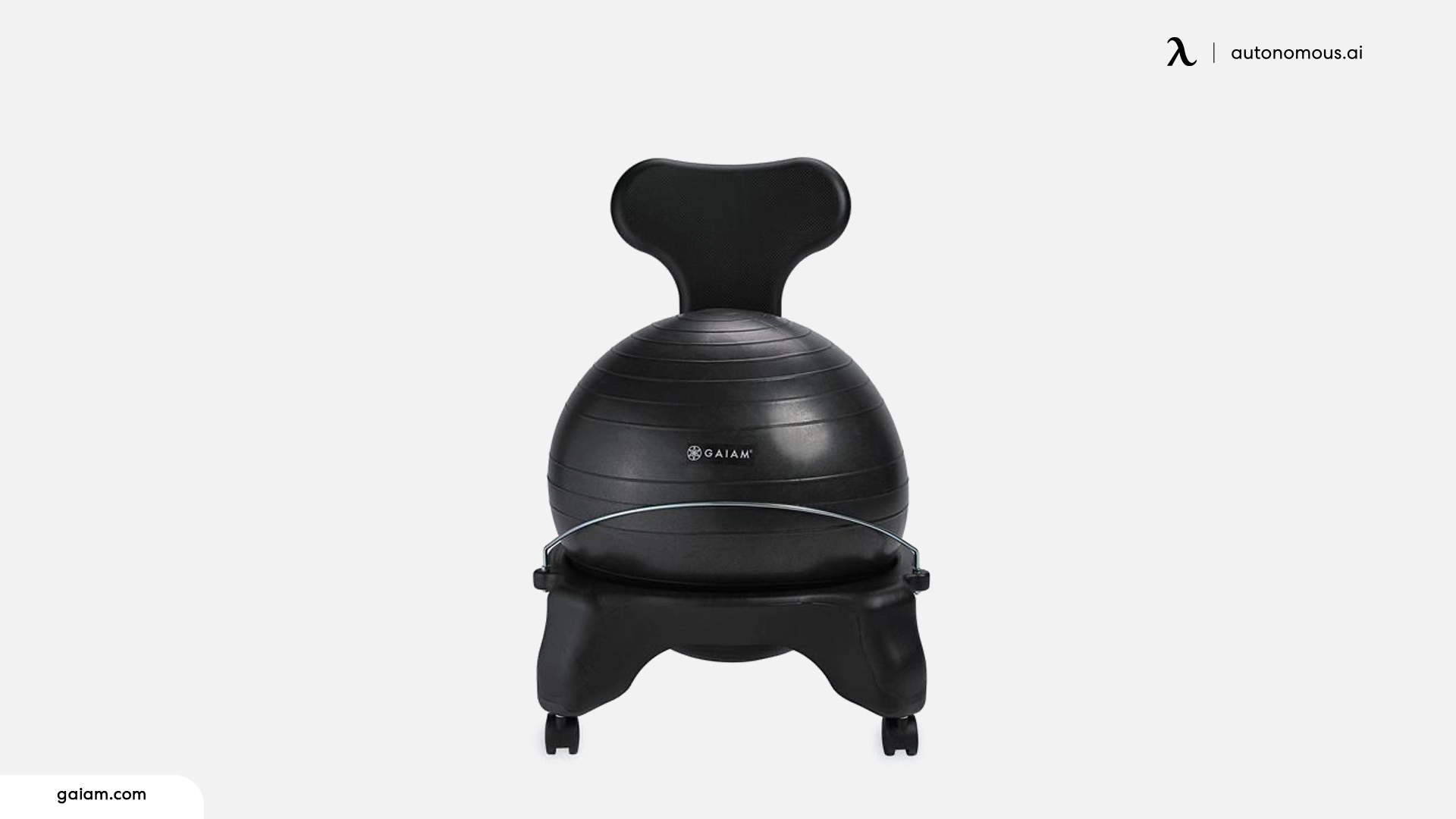
9. Muvman Leaning Stool - lean-to-rest design
The Muvman is built for standing desk users who want a lean-to-rest option without fully sitting down. The seat is angled forward, the height runs taller than a standard stool (so you're at standing-desk height), and the base is weighted for stability when you lean against it.
What active sitting looks like on the Muvman: you alternate between standing and leaning, with your core engaged in maintaining balance whichever position you're in. The leaning position keeps weight on the legs (active) rather than the seat (passive), which keeps blood flow moving through the lower body.
It's not a full chair - you can't sit on the Muvman for extended periods like a stool. Treat it as a hybrid between standing and sitting for users with standing desks who want to extend the time they can be on their feet.
Best for: Standing desk users who want to extend standing time with periodic lean-rest breaks.
10. iMovR Tempo Sit-Stand Stool - active stool for sit-stand setups
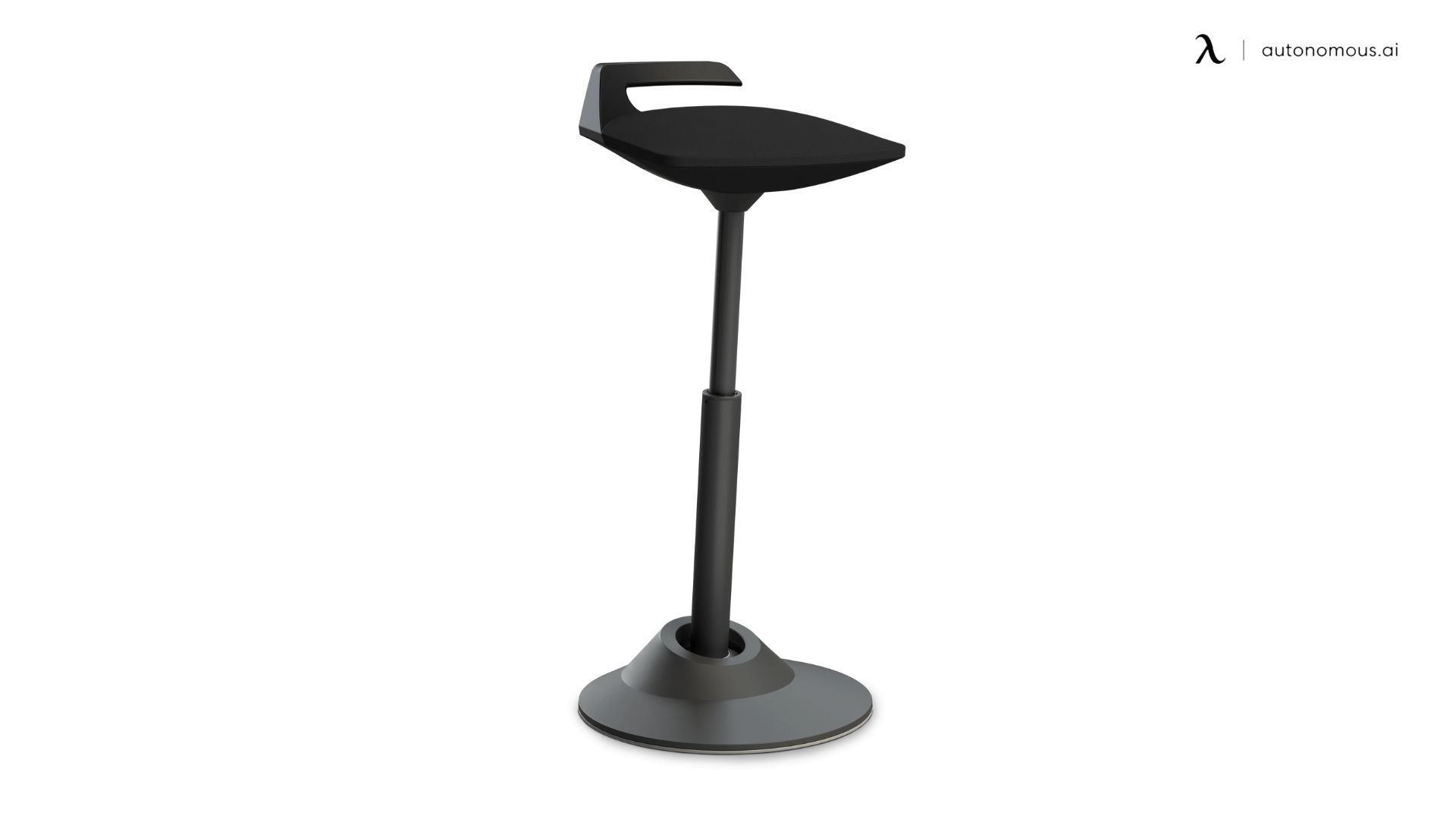
The iMovR Tempo is designed specifically for users with sit-stand desks. The seat has a slight slope and a curved base that allows micro-rocking, but the design prioritizes stability at standing-desk heights (where most active stools become unstable).
Pneumatic height adjustment runs from sitting-desk height up to standing-desk height - the widest range in this category. Foam-padded seat with breathable fabric covers. Built for users who alternate between sitting and standing throughout the day and want active sitting in both modes.
Trade-off vs the CoreChair or QOR360 Tilt: the tempo's motion is more limited - less dramatic wobble, more subtle rocking. That makes it easier to use during focused work but less effective at engaging the core compared to dedicated wobble stools.
Best for: Sit-stand desk users who want the same stool to work at both heights, with subtle active-sitting motion.
How to actually use active sitting tools
After six months of testing, here's the rhythm that worked:
Start with 15-minute intervals during light tasks. Don't try to switch full-time. The muscles that have been napping for years can't suddenly do eight hours of work. Most users who try cold turkey quit within a month with a wrecked lower back.
Add 10 minutes per session every few days. By week three you should be at 30-60 minute blocks of active sitting before switching to a structured chair.
Alternate, don't replace. Use an active stool for 30-60 minutes of focused work (writing, coding, anything requiring concentration), then switch to a structured chair for calls, video, reading, and anything where moving for two hours straight is impractical.
Stand-up break every 60-90 minutes. Regardless of which chair you're in, sustained sitting (even active sitting) needs breaks. A standing desk that lets you alternate sitting and standing throughout the day is the strongest active-sitting setup overall.
Don't fight the chair. Active sitting chairs are designed to move with you. Trying to hold yourself rigid on a wobble stool defeats the purpose. The micro-movements are the point - let your body shift.
Frequently asked questions
Can an office chair really build core strength?
Active sitting chairs engage core muscles through constant micro-balance adjustments. Sway bases, saddle seats, wobble stools, and rocking chairs all require small posture corrections that activate the transverse abdominis and internal obliques throughout the day. Standard ergonomic chairs hold you in position and don't engage the core. Research from the University of Waterloo found active sitting chairs activate core muscles as effectively as an exercise ball - without the balance fatigue.
What's the best chair for core strength?
The best chair for core strength is one with an active-sitting mechanism - a sway base, saddle seat, wobble stool, or rocking design that requires constant balance corrections. The right choice depends on body type and use case: sway bases give the most-researched core engagement, saddle seats add a backrest option, and wobble stools offer maximum movement at lower prices. Active sitting chairs require constant balance corrections, which engages the core throughout the day.
How long does it take to build core strength from active sitting?
Most users notice better posture and reduced afternoon stiffness within 2-3 weeks of consistent use (3-4 hours daily on an active sitting chair). Genuine core strength gains take 6-8 weeks. Active sitting won't replace planks or other dedicated core exercises, but it reverses the muscle deconditioning that comes from static sitting.
Can I use an active sitting chair all day?
No. Active sitting chairs are designed for 30-60 minute intervals, not 8-hour shifts. The right approach is alternating between an active sitting chair and a structured ergonomic chair throughout the day. Full-time active sitting causes lower-back fatigue, and most users who try this approach abandon the chair within a month.
Is a saddle chair better than a wobble stool for core strength?
Saddle chairs and wobble stools engage the core through different mechanisms. Saddle chairs open the hip angle and force upright posture, engaging the core to maintain alignment. Wobble stools require active balance adjustments through micro-movements of the legs and torso. Saddle chairs are easier to adapt to over the first few weeks; wobble stools engage the core more dynamically once you're used to them.
What's the difference between an active sitting chair and a kneeling chair?
An active sitting chair engages your core through micro-balance adjustments - your torso has to maintain its position against constant small motions in the seat. A kneeling chair shifts weight from your sit bones to your shins and forward-tilts your seat, but the core does no extra work. For core strength specifically, active sitting is the right tool. For posture variation without core engagement, a kneeling chair is the alternative.
Will active sitting fix my back pain?
Active sitting can help reduce desk-related back pain rooted in postural weakness. It won't help acute injuries, disc problems, or structural issues. For most desk workers, the issue is weak postural muscles that develop from years of static sitting, and active sitting genuinely addresses that - but consult a clinician for serious or persistent back pain before changing your chair setup.
Bottom line
Active sitting works, but only if you pick the right tool. Sway bases give the most-researched core engagement, saddle seats add a backrest fallback, and wobble stools offer maximum movement at lower prices. The single most important rule: don't try to replace your regular chair. Alternate. Use an active sitting tool for 30-60 minute focused blocks, then switch to a structured chair for calls, video, and longer sessions.