L-Shaped Desk Dimensions and How to Measure a Corner

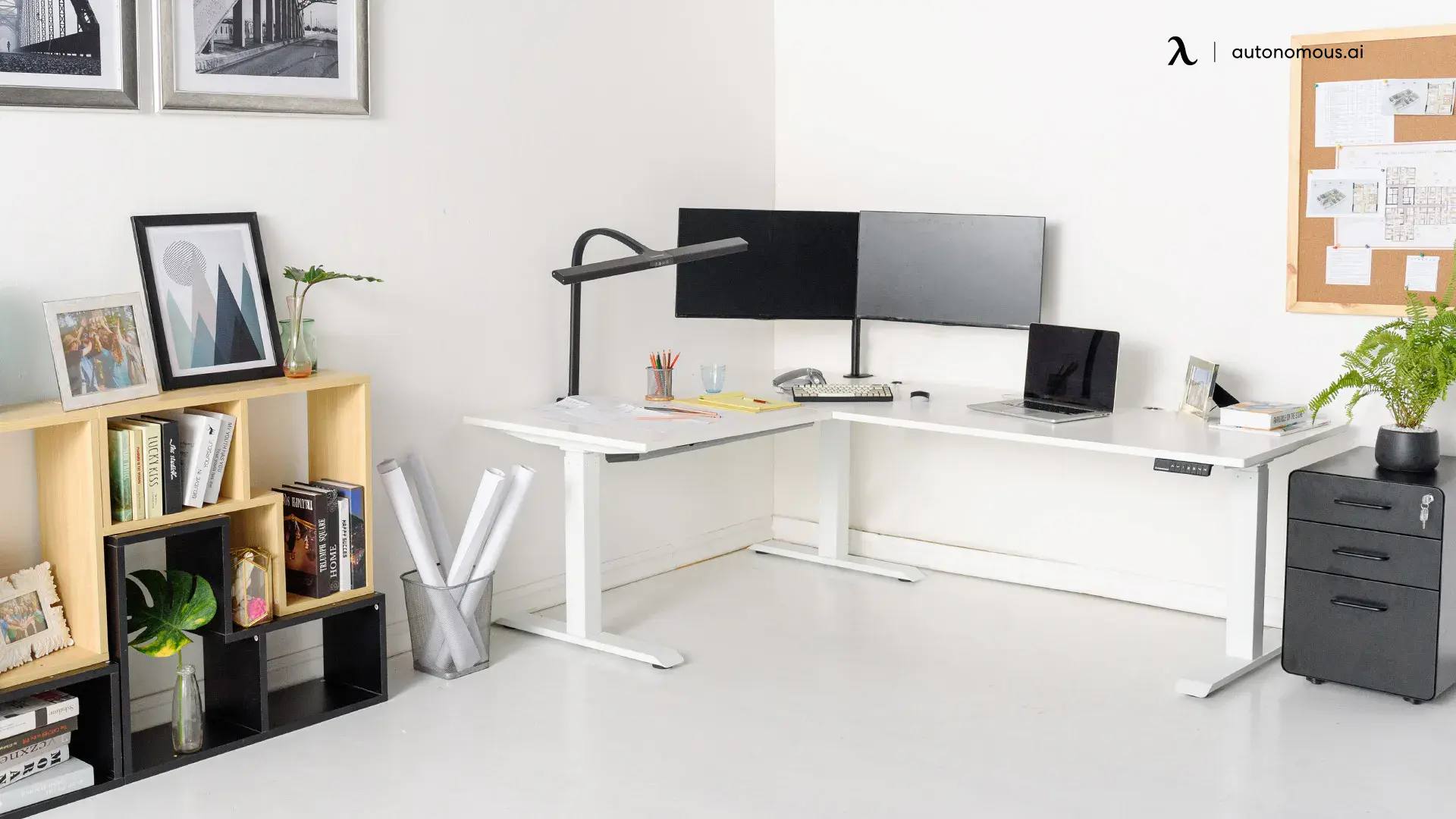
Standard L-shaped desk dimensions are 60-72 in (152-183 cm) on the long side, 48-58 in (122-147 cm) on the short return, 20-30 in (51-76 cm) deep, and 29-30 in (74-76 cm) tall. These ranges suit most home offices and pair well with a standard office chair.
The numbers come from office furniture conventions, not guesswork. A height near 29-30 in keeps the surface at a comfortable typing level for most adults. The depth gives room for monitors and paperwork, and the return extends the surface into the corner so a second task - a printer, a notebook, a laptop - has its own zone.
L-shaped desk size comparison
L-shaped desks fall into three size classes. The table maps each to a room and a use case.
Size class | Common dimensions (long × return × height) | Best for |
Compact corner desk | ~48-55 in × 48 in × 30 in | Small apartments, dorms, minimalist setups |
Standard L-shaped desk | ~60-66 in × 48-58 in × 30 in | Home offices, single-monitor or balanced setups |
Executive L-shaped desk | ~72 in and up × 60-72 in × 30 in | Large offices, multi-monitor, statement furniture |
Pick the class by your room first and your gear second. A compact corner desk keeps a small room open; a large L-shaped desk needs a dedicated office to avoid swallowing the floor.
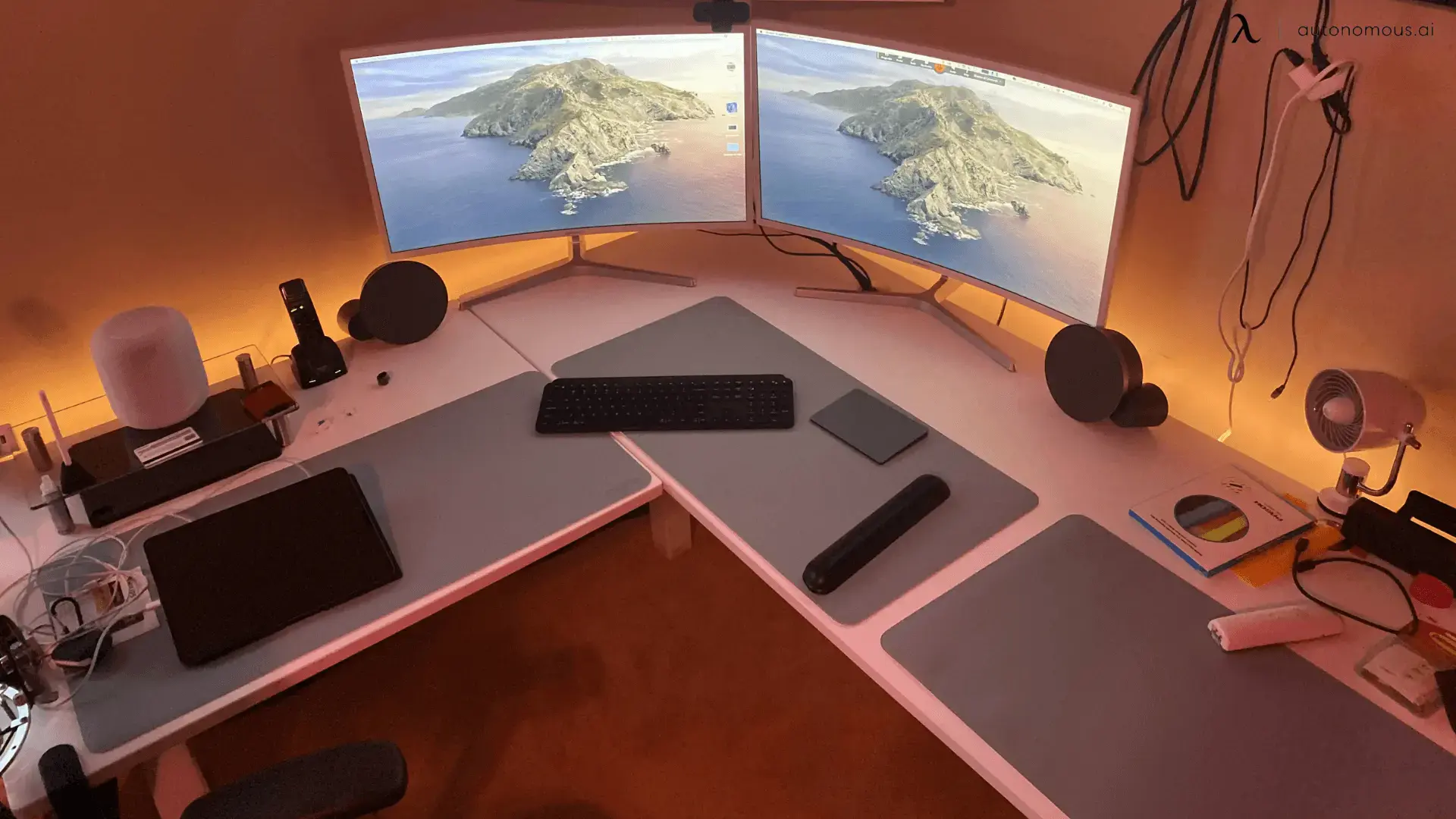
How much more space does an L-shaped desk give you?
An L-shaped desk gives roughly 40% more usable surface than a straight desk of the same long-side width, because it adds a return into corner space a straight desk leaves empty.
Here is the math behind that figure, using a 60 in long side, a 48 in return, and a 24 in depth:
- Straight desk: 60 in × 24 in = 1,440 sq in
- L-shaped desk: (60 in × 24 in) + (48 in × 24 in) − (24 in × 24 in shared corner) = 2,016 sq in
- Difference: 2,016 ÷ 1,440 ≈ 40% more surface
This is a model based on those exact dimensions; your numbers shift with depth and return length. The takeaway holds regardless: the L-shape converts a corner you weren't using into a second work zone, which is why it fits more surface into less of the room than widening a straight desk would.
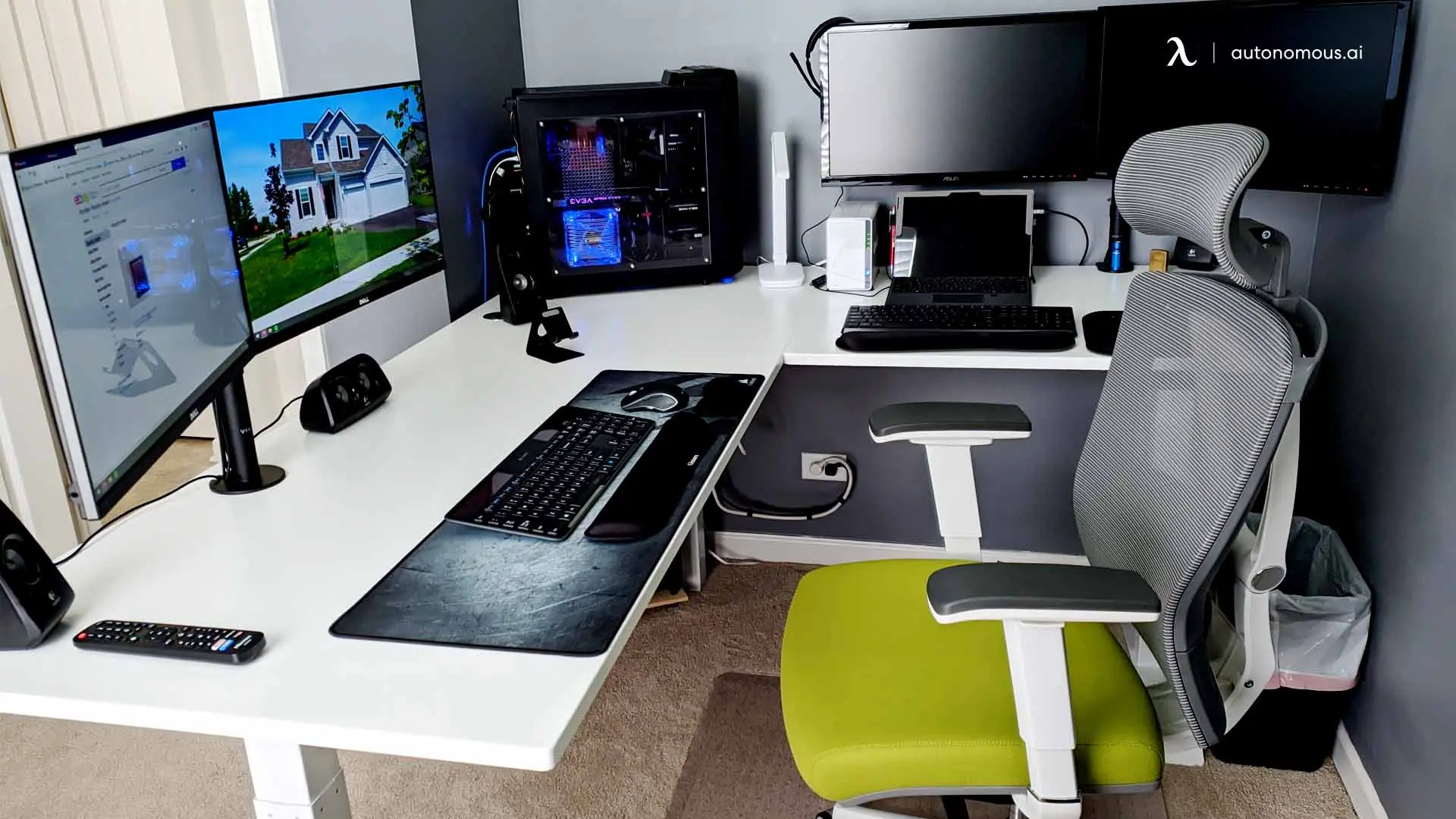
How to choose the right L-shaped desk size for your room
Match the L-shaped desk size to your room, then to your work. Three room situations cover most setups.
- Small rooms or apartments: a compact corner desk of 48-55 in per side keeps walking space and natural light.
- Medium home offices: a standard 60-66 in long side balances surface and breathing room, enough for a computer and paperwork.
- Large or shared offices: 70 in and up gives presence and room for multiple monitors or side storage.
Also decide which way the return faces. A left-return or right-return layout changes where the desk fits and how you face the room. Facing a window can cut glare and lift focus; placing the return against a wall keeps clutter out of sight.
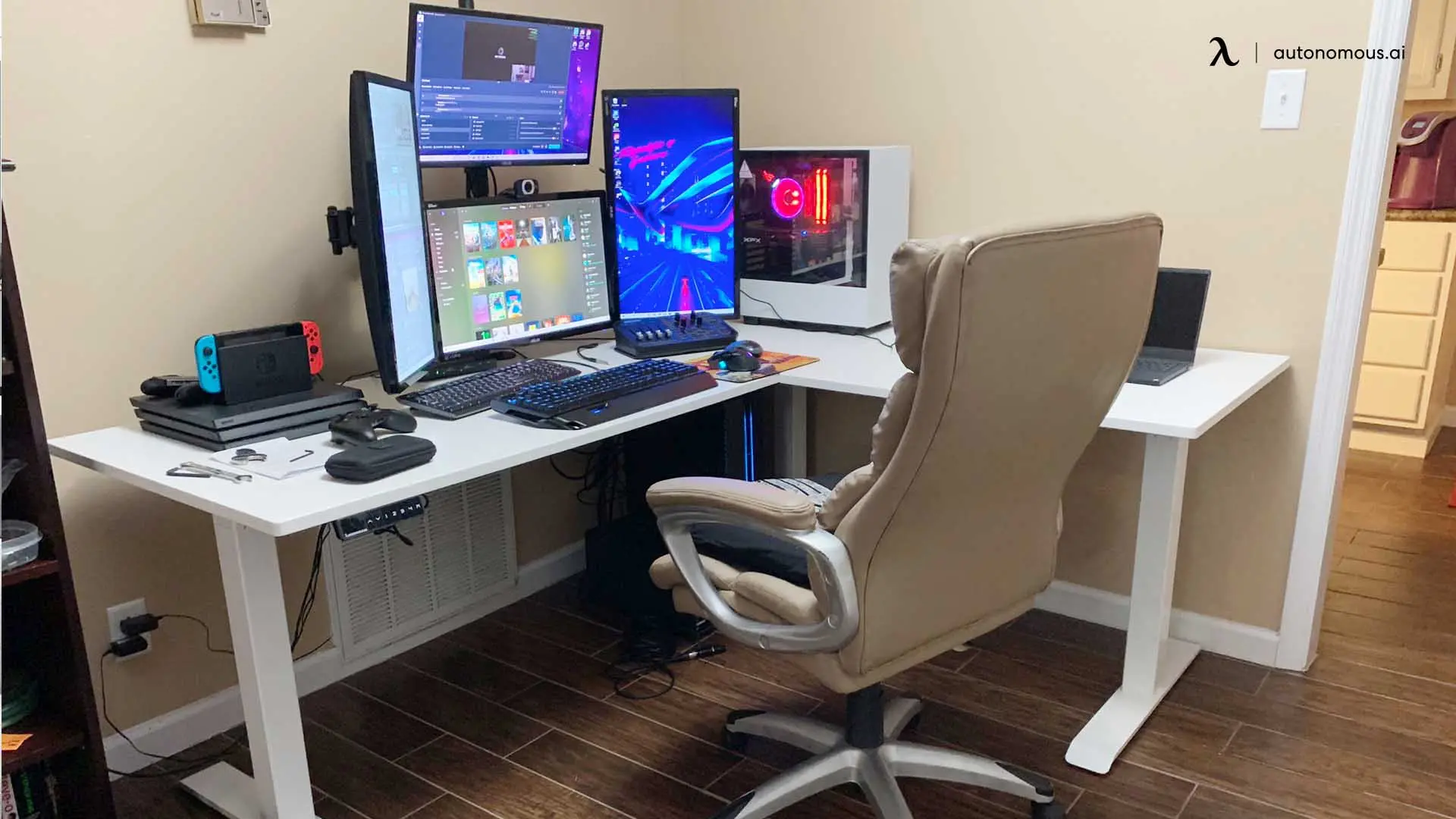
How to measure a corner desk before you buy
Measure the corner before you commit to a size. Knowing the standard desk dimensions only helps if those numbers fit the actual wall.
Map the corner. Measure outward along both walls from the corner to set the maximum length each side of the L can be.
Allow clearance. Leave about 3 ft (91 cm) behind your chair so you can stand and move freely.
Mark the footprint. Outline the desk on the floor with painter's tape and walk the space before deciding.
Check outlets and light. Note windows, doors, and the nearest power outlet so cables reach and daylight helps rather than glares.
Plan for depth. For multiple monitors or a PC tower, favor the deeper end of the range, 28-30 in, so screens sit at a comfortable distance.
To measure a corner desk you already own, record three things: the length of each side, the depth front to back, and the height from floor to surface. Those are the numbers that tell you whether it will fit a new room.
Ergonomics and depth considerations
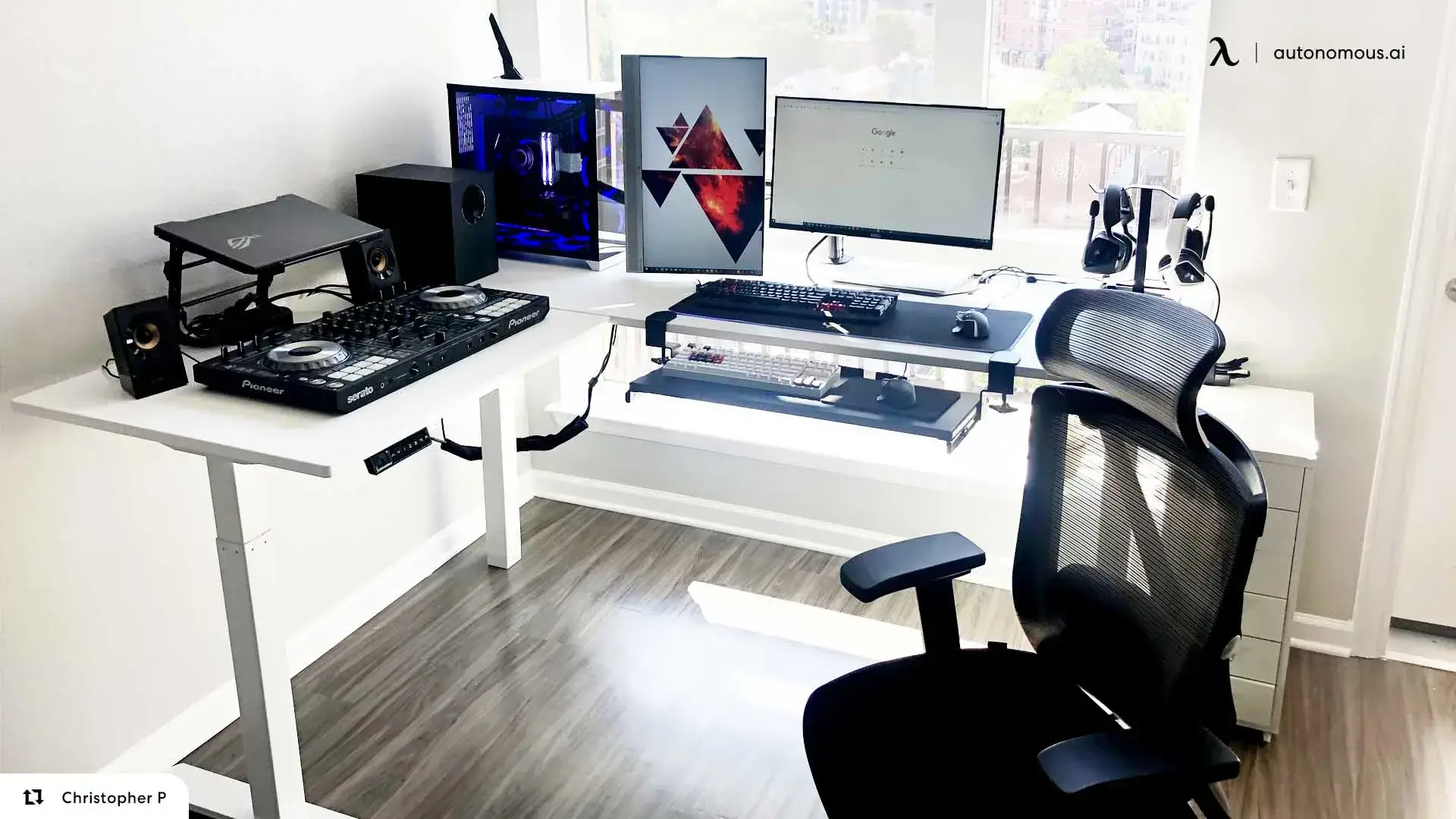
L-shaped desk comfort comes from height, depth, and legroom, not just surface area. A height of 29-30 in works for most people; if you're taller or shorter, an adjustable frame brings the surface to you. For multi-monitor or L-shaped desk gaming setups, a depth near 28-30 in keeps screens at an arm's-length viewing distance and reduces eye strain. Clear space under both sides of the L matters too - storage that blocks your knees makes even a large desk feel cramped.
A corner desk sized for multi-monitor work
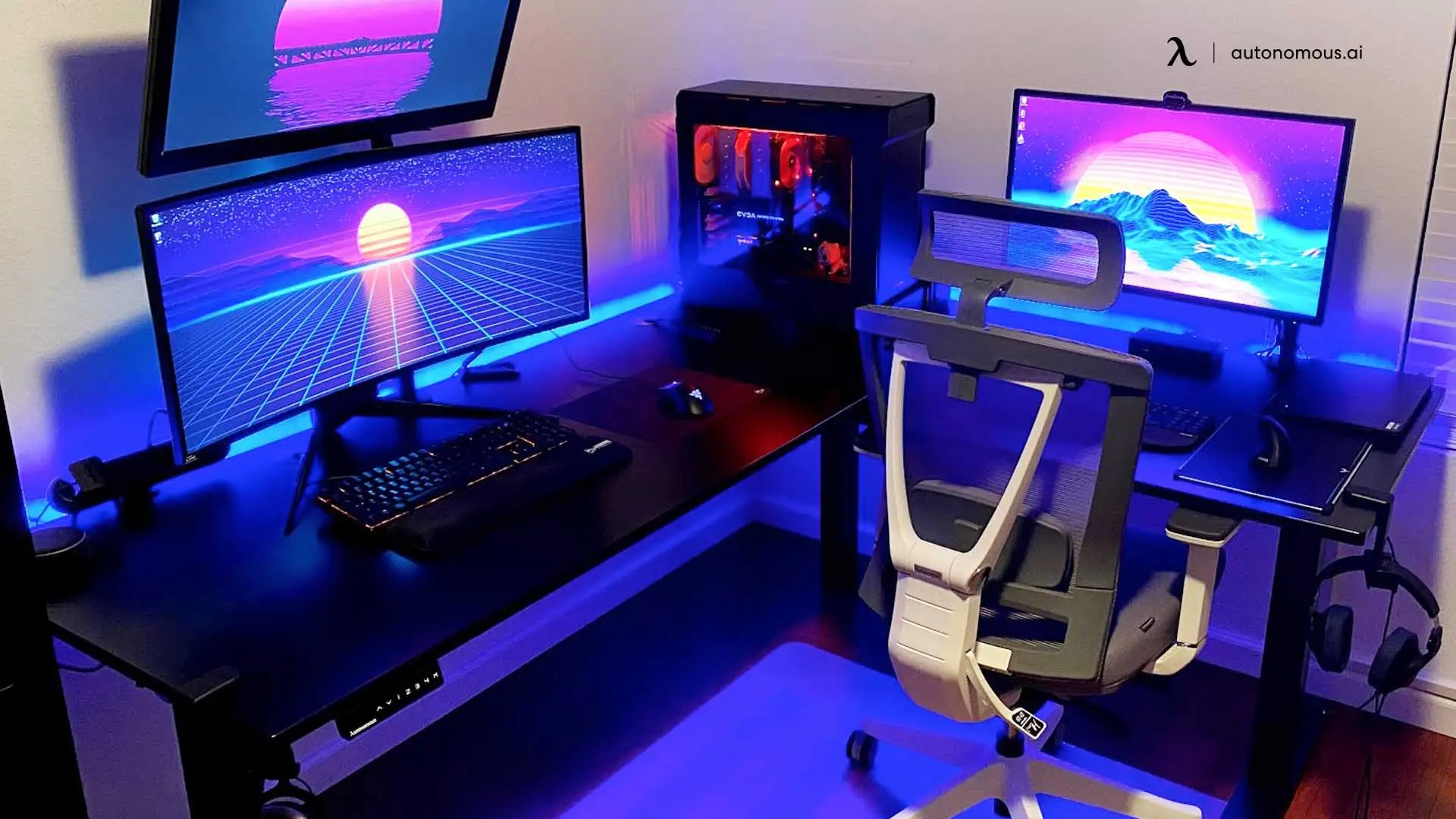
A corner desk earns its footprint when you fill both sides, and a height-adjustable L-shape adds the option to stand without giving up the surface. The constraint to watch is the corner itself: the desk has to match your room's orientation and leave knee room across both zones.
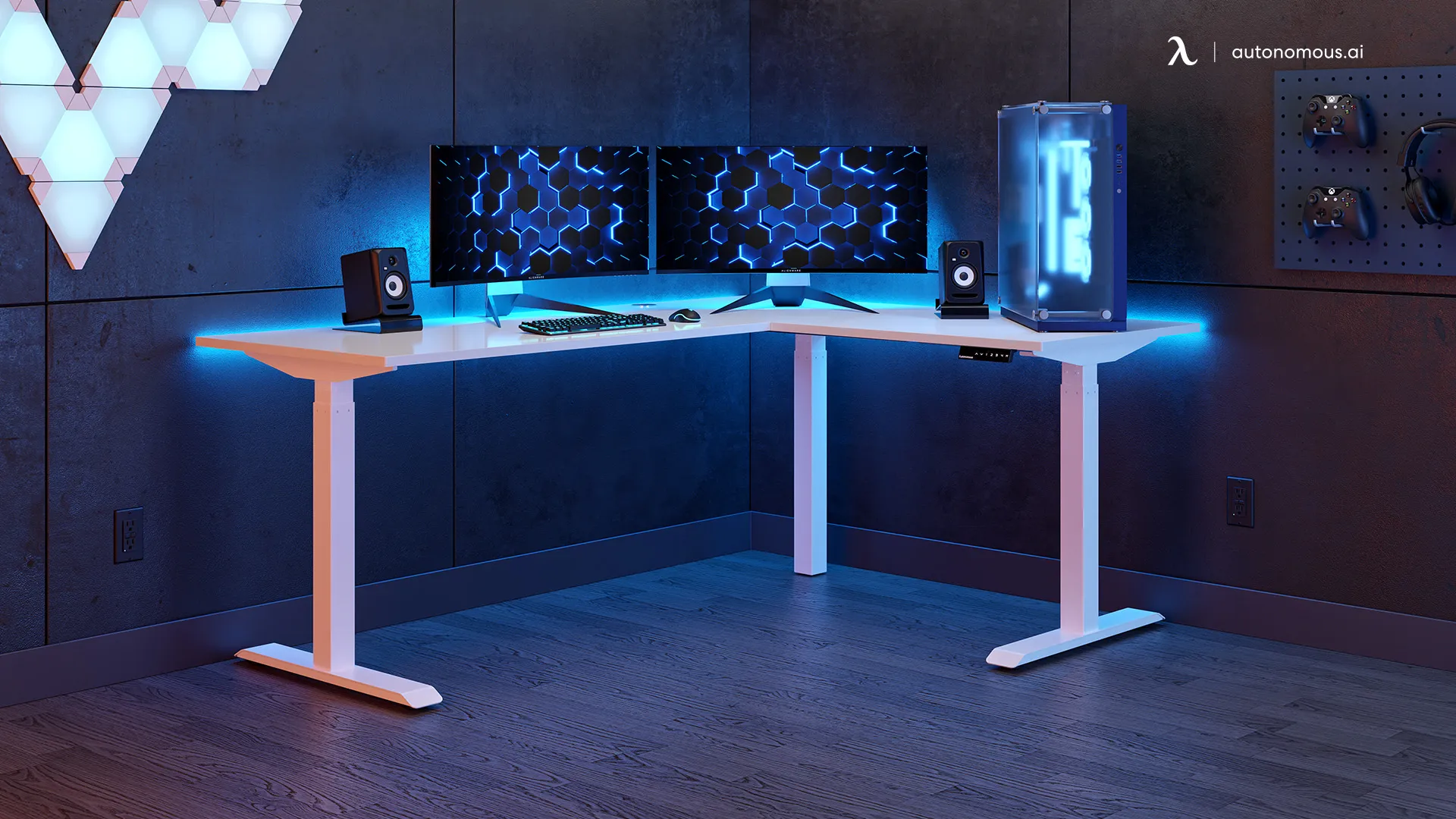
The Autonomous Desk 2 L-Shaped is built for that case. Its full L surface measures 77 in long by 64 in wide, enough for three 27-32 in monitors plus a PC and notes. The legs adjust from 29.4 in to 48 in across sitting and standing, and the frame length adjusts from 42 in to 71 in, so it sizes to the corner rather than forcing one footprint.
A triple-motor frame lifts 400 lb at 50 dB, the steel frame is BIFMA-certified through 50,000 lift cycles, and the short side reverses from left to right to fit either corner layout. It ships from $1,149 with a 10-year frame warranty and an included cable tray.
FAQs
How do I measure a corner desk?
Record three dimensions: the length of each side (the long side and the return), the depth from front to back, and the height from floor to surface. Also measure the corner and both walls in the room to confirm clearance for your chair and movement before you buy.
What is the standard size of an L-shaped desk?
Standard L-shaped desk dimensions are 60-72 in on the long side, 48-58 in on the return, and 29-30 in tall, with a depth of 20-30 in. These measurements suit most home offices and give enough room for monitors, a laptop, and accessories across two work zones.
Is a 30-inch desk too small?
For an L-shaped desk, 30 in is a depth measurement, not a length. As a width, 30 in is too small for a monitor plus a keyboard and workspace. Aim for at least 48 in on the long side for a compact setup, and use the 30 in figure for depth instead.
Is 20 inches deep enough for a desk?
A 20 in depth works for a laptop or a writing surface, but it is tight for monitors or gaming gear. Standard L-shaped desk dimensions call for 24-30 in of depth so screens sit at a healthy viewing distance with room for a keyboard in front.
How much more surface does an L-shaped desk give than a straight desk?
An L-shaped desk provides roughly 40% more usable surface than a straight desk of the same long-side width. A 60 in straight desk at 24 in deep gives about 1,440 sq in, while a 60 in L-shape with a 48 in return gives about 2,016 sq in, because the return uses corner space.
What are the best L-shaped desk dimensions for small spaces?
\For small spaces, aim for a compact L-shape of 48-55 in on the long side and 24-28 in deep. That gives a functional two-zone surface without crowding the room or blocking light. A reversible return helps you fit it to whichever corner is free.
How wide should an L-shaped desk be for gaming?
For gaming, an L-shaped desk of about 60-70 in on the main side with a 28-30 in depth gives room for multiple monitors, a keyboard, and controllers. The depth matters most, since it keeps several screens at a comfortable viewing distance during long sessions.
Which L-shaped desk size works best in a corner office?
A corner office works well with about 66 in on the long side and 48 in on the return, at 24-30 in deep. That balances a usable surface with room to move, and it leaves space for a chair and walking clearance without dominating the office.
Can I flip an L-shaped desk from left to right?
A reversible L-shaped desk lets you move the short return from one side to the other to match your corner and your handedness. Confirm the model is reversible before buying; not all are. A reversible design adds flexibility if you move or rearrange the room later.
Is an L-shaped desk good for a home office?
An L-shaped desk suits a home office because it tucks into a corner and turns unused space into two work zones. It keeps the rest of the room open and separates focused work from secondary tasks, which helps in a room that also serves another purpose.
Conclusion
L-shaped desk dimensions come down to three numbers and one corner: a 60-72 in long side, a 48-58 in return, and a 29-30 in height, fitted to the space you actually have. The shape pays off because it adds usable surface into a corner a straight desk would waste. Measure both walls, leave clearance behind your chair, and decide which way the return should face before you choose a size. Get the corner right, and the rest of the desk follows.