Falling Asleep Standing Up at Work, and How to Stop

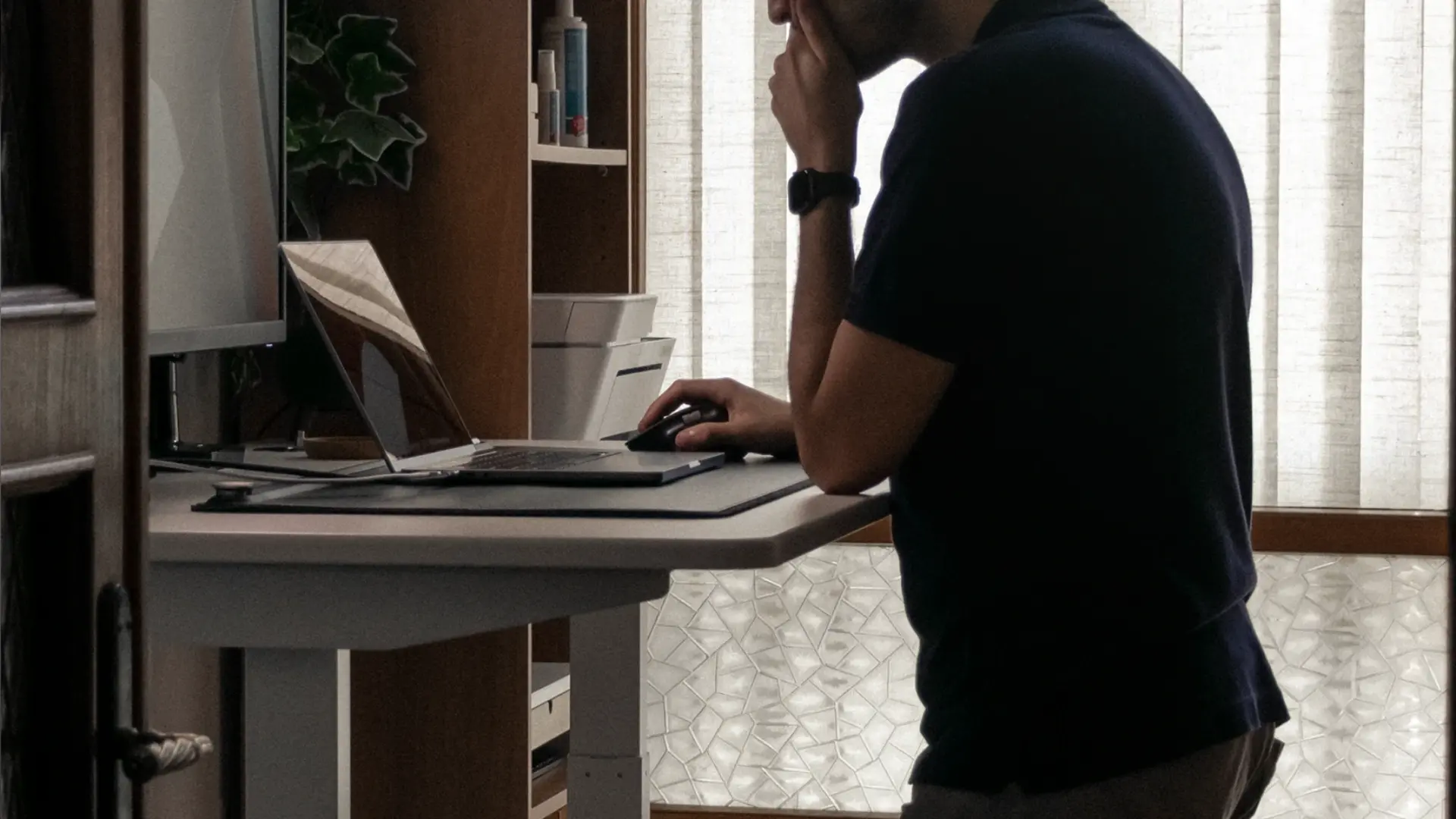
Feeling like you could fall asleep standing up at work is a sign of real fatigue, and it can happen even at a standing desk. Standing keeps you a little more alert than sitting, but it does not cancel out a short night's sleep, the natural afternoon dip, or a stuffy, low-airflow room.
Most of it is fixable with movement, light, water, and fresh air. This guide covers why you fall asleep standing up, how to wake up fast, one cause people rarely check, and when constant sleepiness is worth seeing a doctor about.
Why do you fall asleep standing up at work?
Falling asleep at work, even standing up, almost always traces back to one or more of a handful of causes, and standing does not prevent them. Naming yours is the first step to fixing it.
Not enough sleep
The most common cause is simple sleep debt. A run of late nights or poor-quality sleep leaves your body carrying a deficit, and the quiet, low-stimulation environment of a desk job is exactly where that debt surfaces. Standing masks it for a while, but the underlying tiredness is still there.
The post-lunch dip
Your body clock naturally lowers alertness in the early afternoon, usually between 1 and 3 pm, no matter how well you slept. A large, carb-heavy lunch deepens it as your blood sugar spikes and then falls, which is why the urge to nod off so often hits right after lunch, whether you are sitting or standing.
Sitting still, or standing still
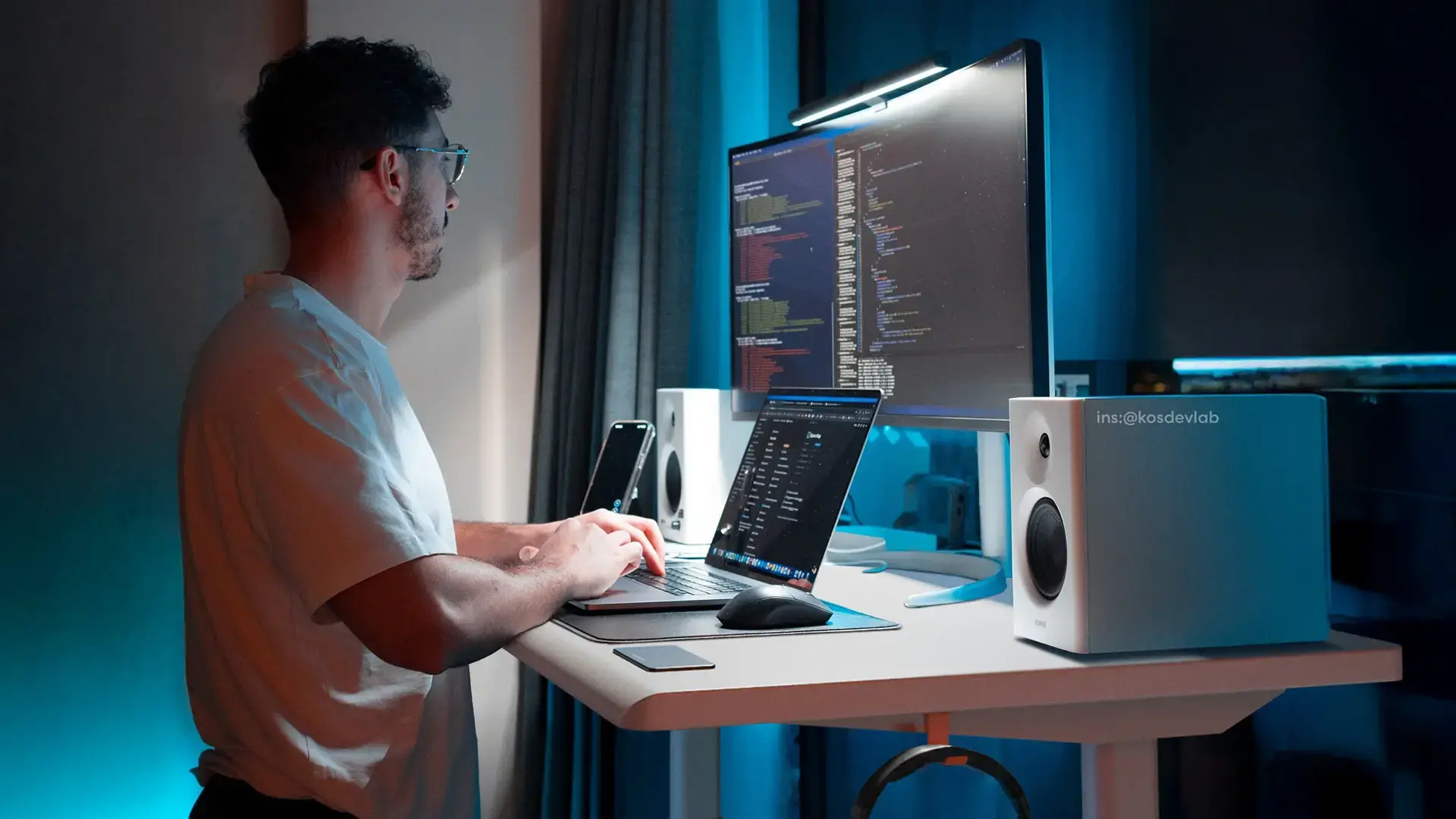
Low-stimulation, sedentary work lets your alertness drift down, and standing still does not fix that on its own. Monotonous tasks with no movement are a reliable way to feel drowsy, which is why staying on your feet at a standing desk still leaves you fighting sleep if you are not actually moving.
Dehydration
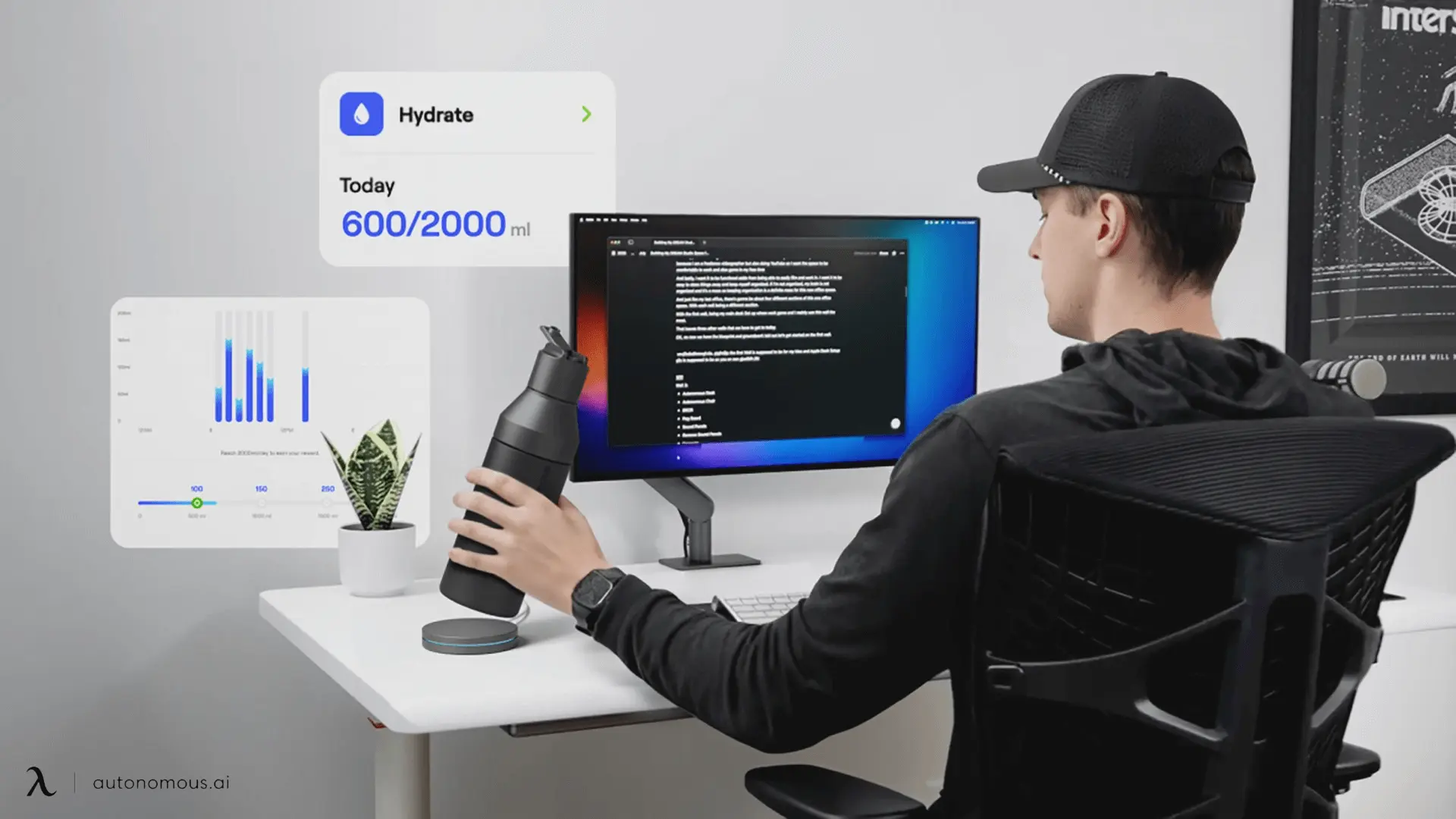
Even mild dehydration causes tiredness and trouble concentrating, and it is easy to under-drink through a busy day without noticing. Because the symptoms feel like general fatigue, people rarely connect the two, and reach for coffee when water would do more.
Stuffy air and high CO2
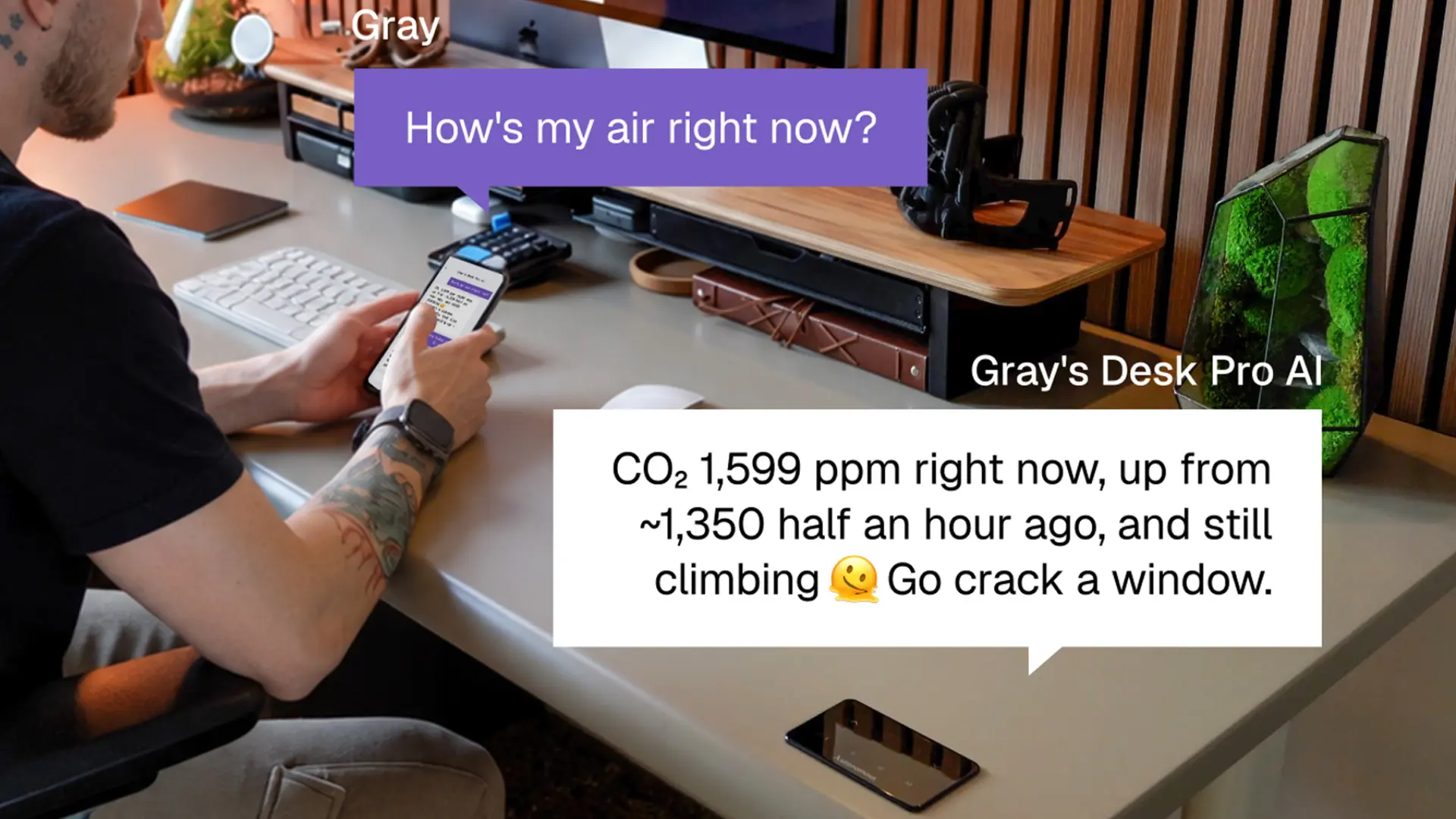
Poor ventilation lets carbon dioxide build up in a closed room, and raised indoor co2 levels lowers alertness and slows thinking. It is one of the most overlooked causes because you cannot see or smell it, and you adapt to it without noticing. This one gets its own section below, since catching it is the hard part.
An underlying health issue
If you sleep enough and still fight to stay awake most days, the cause may be medical rather than your routine. Sleep apnea, an underactive thyroid, low iron, and sleep disorders all cause persistent daytime sleepiness. The last section covers when this is worth seeing a doctor about.
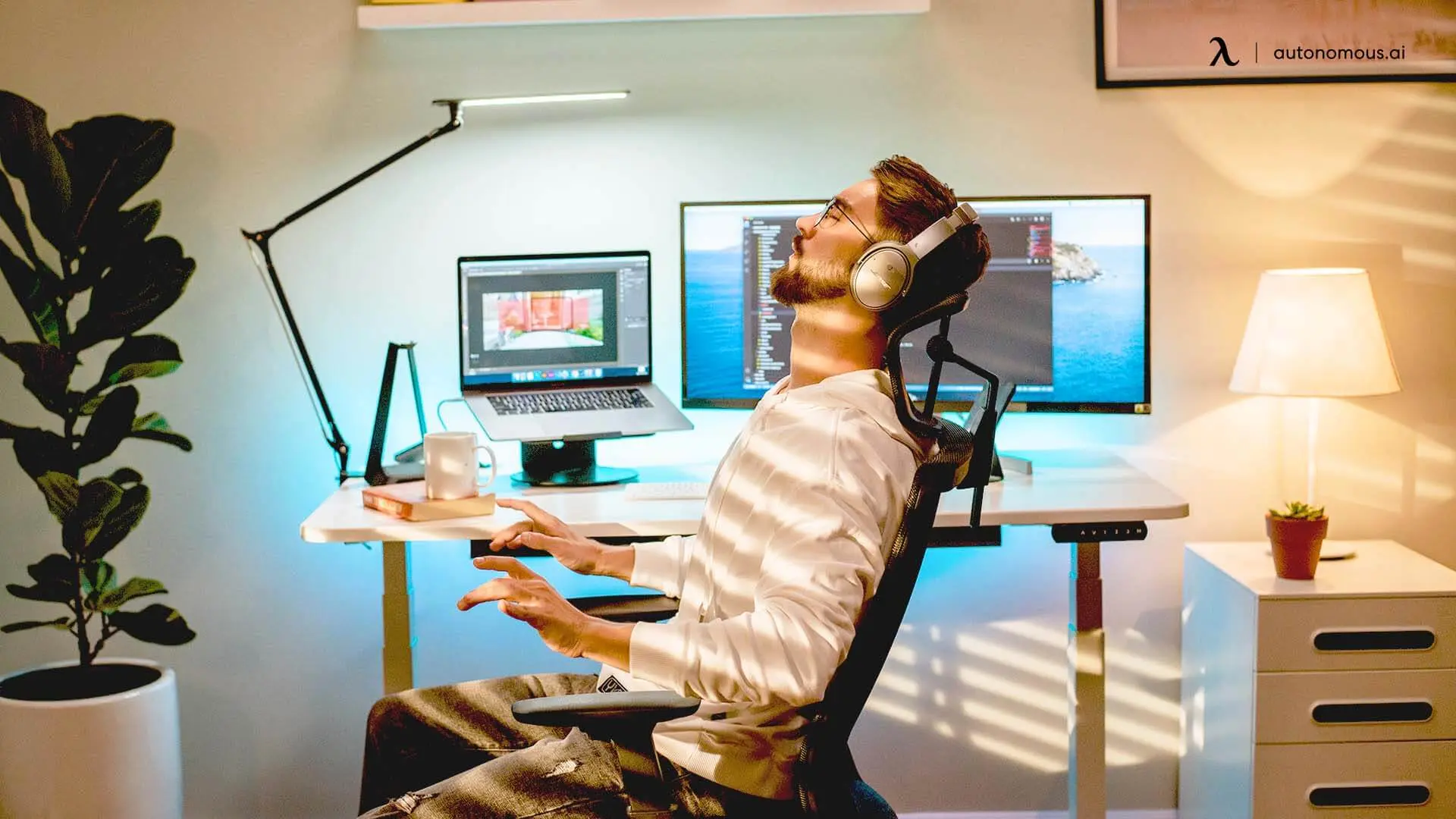
Does a standing desk keep you awake?
Standing keeps you slightly more alert than sitting, but it does not keep you awake on its own. The difference is small: standing raises your energy use and muscle activity a little, which can take the edge off drowsiness, but it does nothing about the real causes like sleep debt or stale air. That is why people still feel like nodding off at a standing desk.
What actually helps is the movement a standing desk makes easy, not the standing itself. Shifting your weight, stepping away, and taking short walks do far more to wake you up than standing still, so treat standing as a prompt to move rather than relying solely on the benefits of a standing desk to fix your fatigue.
.webp)
How to stop falling asleep at work
The fastest way to wake up is to change your state: move your body, change the light and temperature, and get fresh air. A few of these together clear the fog in minutes, and the habits below keep it from creeping back.
Move your body
Standing up and moving is the single fastest way to break drowsiness. Stand, stretch tall, walk to refill your water, or climb a flight of stairs, since raising your heart rate for even a minute pushes blood and oxygen to your brain and lifts your alertness. A standing desk makes it easy to get on your feet without stopping work, and a few desk exercises like calf raises or squats give a stronger jolt than standing alone.
Get fresh air
Open a window or step outside for two or three minutes. Fresh, cooler air and daylight are two of the strongest natural wake-up signals, and stepping out also moves you away from the stale, higher-CO2 air that builds up at a desk. If you cannot leave, opening a window or switching on ventilation clears the air around you, and often the fog with it.
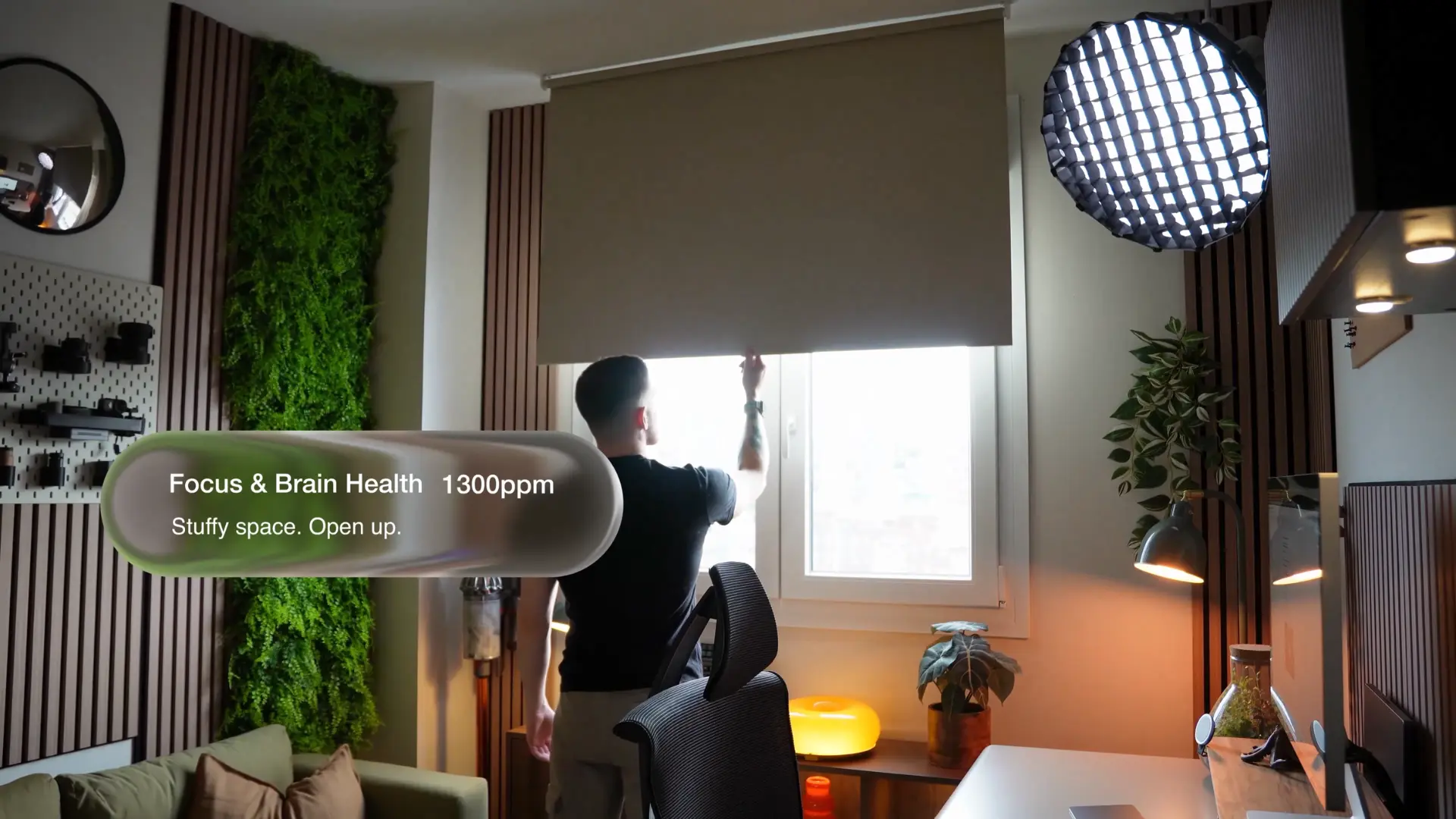
Use light and cold
Bright light, ideally daylight, tells your body clock it is not time to sleep and holds back the drowsiness hormone. Sit near a window, step into the sun, or turn the lights up. Cold adds a faster jolt: splash cold water on your face or wrists, or hold a cold drink, and the mild shock sharpens your alertness within seconds.
Drink water
Rehydrate before reaching for more coffee, since mild dehydration alone causes tiredness and trouble concentrating, and it is easy to under-drink through a busy day. Keep a bottle on your desk where you can see it, and practice simple tips on how to drink more water throughout the day rather than waiting until you feel thirsty, by which point you are already behind.
Time caffeine well
A coffee helps, but timing decides whether it fixes the slump or feeds it. Caffeine lingers for hours, so a cup after mid-afternoon can still be in your system at bedtime, costing you that night's sleep and setting up the same drowsiness tomorrow. Use it earlier in the day, and learn how to stay awake without caffeine by leaning on movement and fresh air for the afternoon dip instead.
Snack smart
Choose protein, fiber, or fruit over sugar and refined carbs. A sugary snack spikes your blood sugar and then drops it, and that crash is often what makes you sleepy an hour later. Steadier options like nuts, yogurt, or a piece of fruit give energy that lasts without the dip, which keeps the afternoon slump from getting worse.
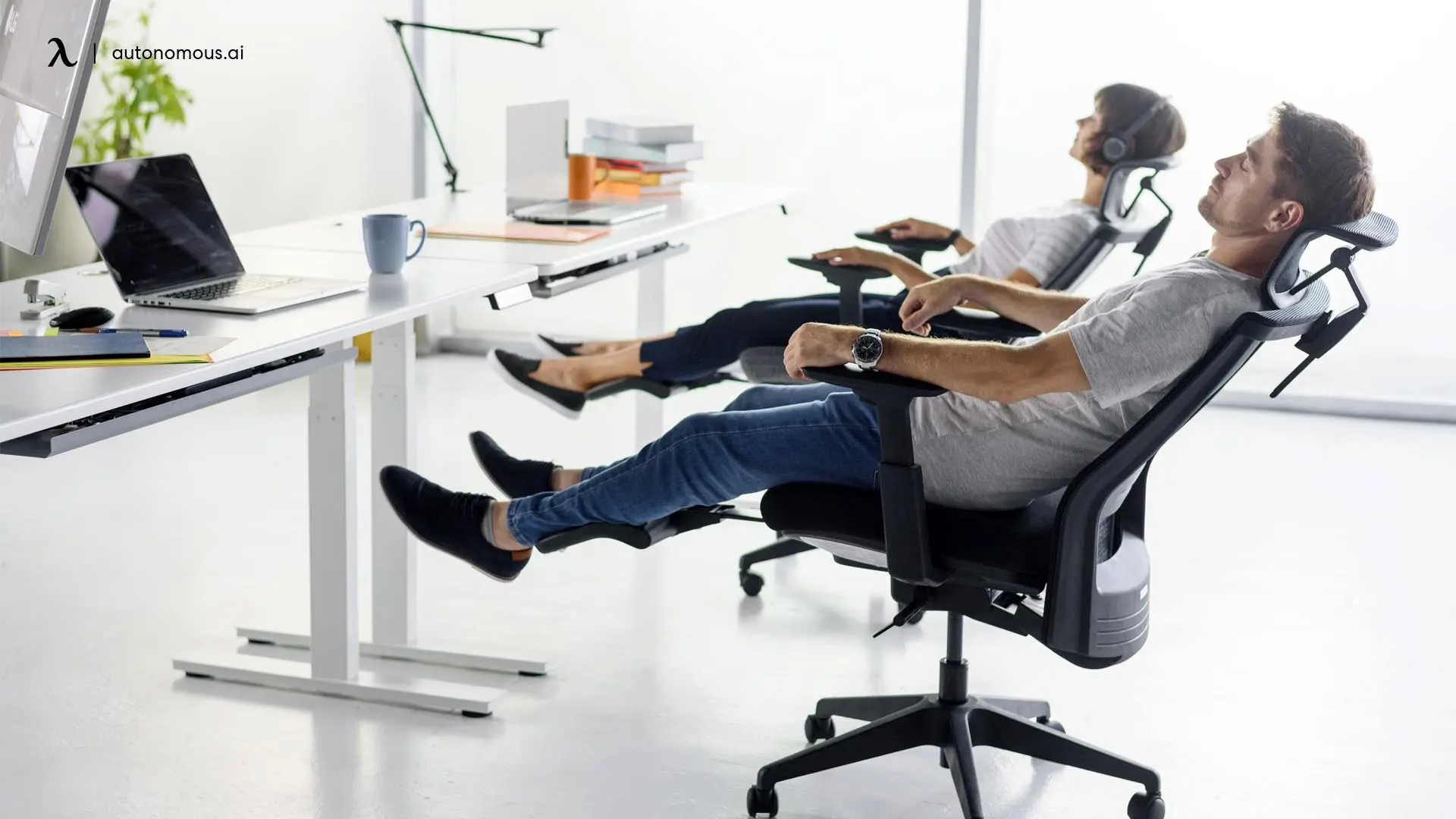
Take a short nap if you can
A 10 to 20 minute nap restores alertness without the grogginess a longer one brings, because staying out of deep sleep avoids the heavy, disoriented feeling of waking from it. Set an alarm so you do not overshoot, and if a real nap is not possible at work, a few minutes with your eyes closed and no screen still gives your attention a reset.
The cause people miss: stuffy air and CO2
One cause of the afternoon slump gets overlooked because you cannot see it: the air itself. In a closed room with people and little fresh airflow, carbon dioxide builds up through the day. Outdoor air sits around 400 parts per million, while a stuffy office can climb past 1,000 to 2,000, and studies have linked CO2 at those levels to lower alertness and slower thinking. You feel it as a heavy, foggy drowsiness that a walk or an open window clears within minutes.
The hard part is knowing when the air has gone stale, because you adapt to it without noticing. This is where a desk that measures the air helps.
The Autonomous Desk Pro AI builds CO2 and air-quality sensors into the desk itself, scoring the air right where you sit, so when CO2 climbs into the range that makes people sleepy you can see it and act: open a window, step out, or switch on ventilation, instead of reaching for another coffee.
If you would rather not change the desk, the Autonomous Lamp does the same job from a lamp. Its Sense feature, on the Pro model only, tracks CO2, particulates, humidity, and temperature, and tells you when the room is stuffy or hard to breathe. Either way the point is the same: the device does not keep you awake. It shows you when the air, not you, is the reason you are fading, which is a cause most people never think to check.
When falling asleep at work is a health issue
If you sleep enough at night and still struggle to stay awake most days, the cause may be medical rather than your routine or the room. Persistent excessive daytime sleepiness can point to sleep apnea, an underactive thyroid, low iron, or a sleep disorder, and it is worth talking to a doctor rather than pushing through it.
Pay particular attention if you doze off suddenly during the day, snore heavily or wake gasping at night, or feel unrefreshed no matter how long you sleep. These are signs the sleepiness is a symptom to investigate, not just a habit to fix. A doctor can check for the common, treatable causes and rule out the rest.
FAQs
Why do I fall asleep standing up at work?
Feeling ready to fall asleep standing up means you are genuinely tired, usually from too little sleep, the early-afternoon dip, or a stuffy room. Standing does not prevent it, because it does not fix those causes. Movement, fresh air, water, and daylight do more to wake you than standing still.
Does standing keep you awake at work?
Only a little. Standing raises your alertness slightly over sitting, but not enough to overcome real fatigue, so you can still feel like nodding off at a standing desk. The movement a standing desk encourages, shifting, stretching, and short walks, does far more to keep you awake.
How do I stop falling asleep at work?
Change your state fast: stand up and move, step outside for fresh air, and splash cold water on your face. Drink water, get bright light, and save caffeine for earlier in the day. If tasks are monotonous, break them up with short active breaks to keep your alertness from drifting down.
How do I wake up when I feel sleepy at work?
Get moving and get fresh air. A brisk two-minute walk, a stretch, or a flight of stairs raises your heart rate and clears the fog, and daylight or cold water adds a quick jolt. A short 10 to 20 minute nap works well too, if you have somewhere to take one.
Why do I fall asleep at work in the afternoon specifically?
The early afternoon slump is built into your body clock, which lowers alertness around 1 to 3 pm regardless of how you slept. A large, carb-heavy lunch deepens it, and a stuffy room with rising CO2 makes it worse. Light, movement, and fresh air counter the dip.
Can bad air make you sleepy at work?
Yes. In a closed, poorly ventilated room, carbon dioxide builds up, and studies link raised CO2 to lower alertness and slower thinking. You feel it as foggy drowsiness. Opening a window or stepping outside usually clears it, and an air-quality sensor can flag when the room is the problem.
Is falling asleep at work a sign of a health problem?
It can be. If you sleep enough and still fight to stay awake most days, conditions like sleep apnea, thyroid problems, or low iron may be the cause. Sudden daytime dozing, heavy snoring, or waking unrefreshed are worth seeing a doctor about rather than pushing through.
.webp)
Conclusion
Falling asleep at work is usually the sum of small, fixable things: too little sleep, the afternoon dip, a heavy lunch, too little movement, and stale air. Start with the easy wins, move often, get daylight and fresh air, drink water, and time your caffeine, and check the one cause people miss by paying attention to how stuffy the room feels.
If none of that helps and the sleepiness sticks around despite good sleep, treat it as a health question and see a doctor. Staying awake at work is less about willpower and more about removing the reasons you are tired in the first place.
References
- Satish U, Mendell MJ, Shekhar K, et al. Is CO2 an indoor pollutant? Direct effects of low-to-moderate CO2 concentrations on human decision-making performance. Environmental Health Perspectives, 2012. https://ehp.niehs.nih.gov/doi/10.1289/ehp.1104789
- Allen JG, MacNaughton P, Satish U, et al. Associations of cognitive function scores with carbon dioxide, ventilation, and volatile organic compound exposures. Environmental Health Perspectives, 2016. https://ehp.niehs.nih.gov/doi/10.1289/ehp.1510037
- Centers for Disease Control and Prevention. About Sleep and Sleep Disorders. https://www.cdc.gov/sleep/about/index.html