Autonomous ErgoWalk 3D
3D Printing: When to Use Triangle vs. Hexagon Lattices
Not every 3D printed lattice is designed for the same job. Here's why we use triangle and hexagon lattices differently across our products, and how each geometry changes the way a part behaves.
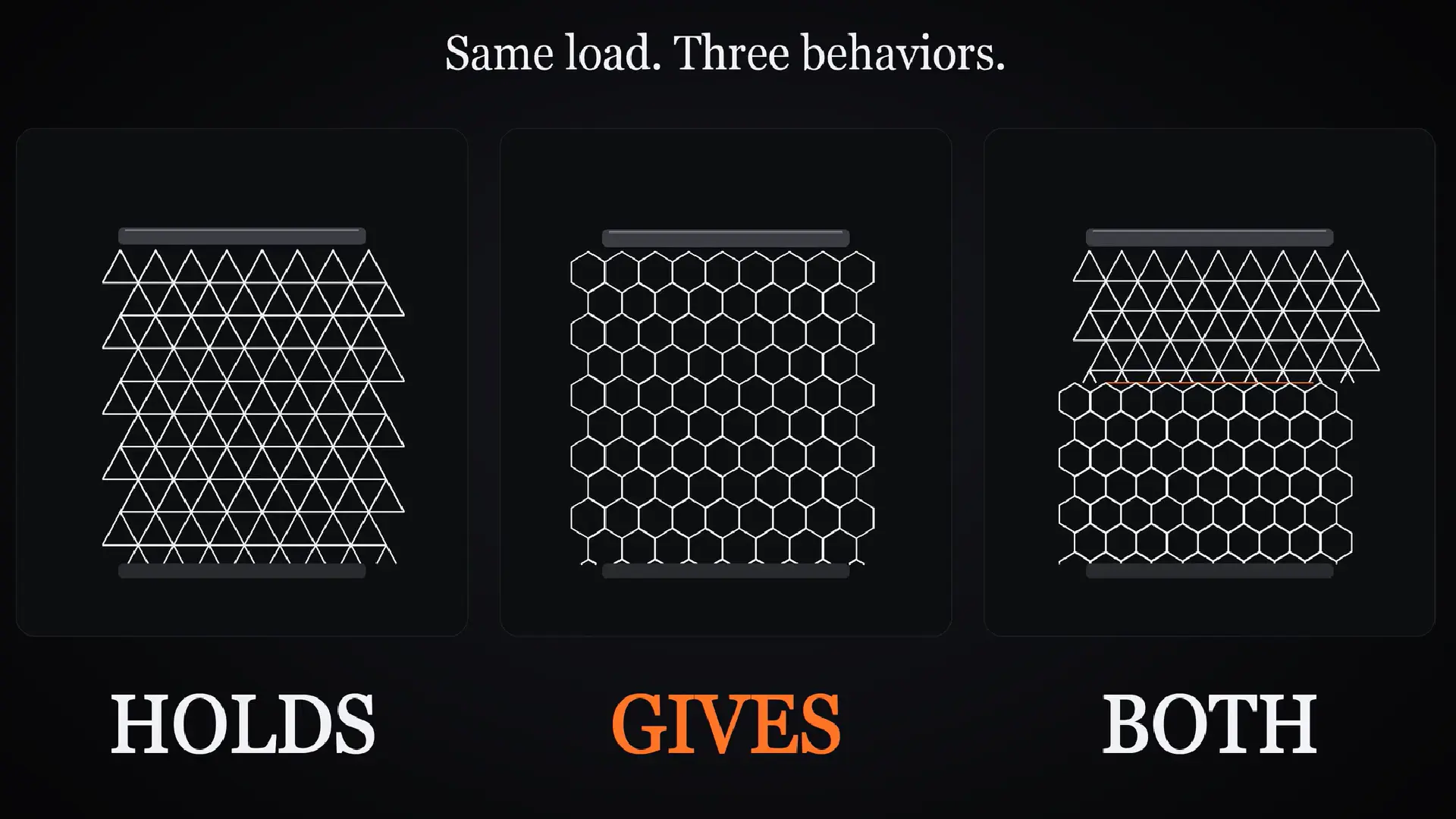
Look closely at our 3D printed products and you'll notice the lattice isn't the same everywhere. Some parts are built from triangles, some from hexagons, and a few combine both in different regions of the same part. People often ask whether one pattern is simply better than the other. They aren't competing. Each geometry is optimized for a different mechanical behavior, so we choose based on what that section of the product actually needs to do.
Triangles Hold Their Shape
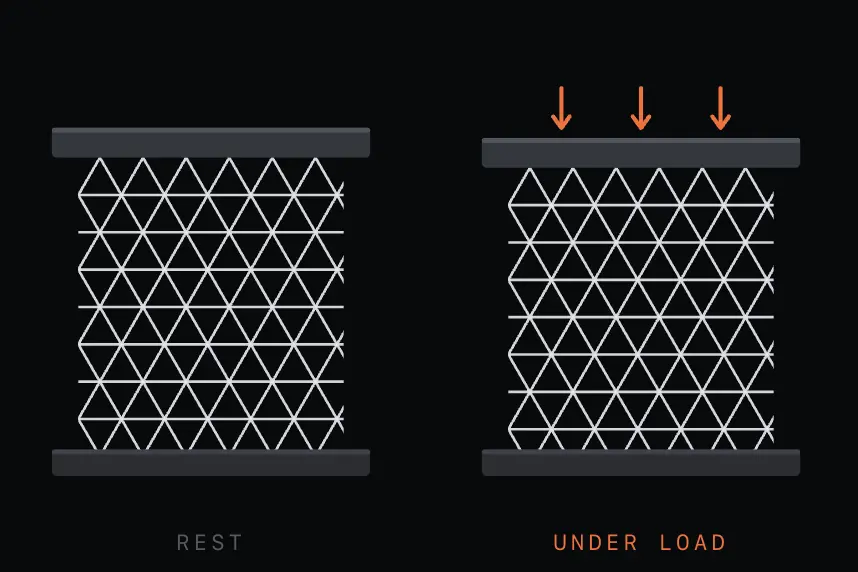
A triangle is rigid because of its geometry. Fix the length of its three sides and there is only one possible shape. Unlike a square or a hexagon, it cannot fold sideways without stretching one of its edges. That's why triangulated structures naturally resist bending and twisting, and why bridges, towers, and geodesic domes rely so heavily on triangles.
We use triangle lattices when a part has to maintain its shape under load. The ErgoClick 3D wrist rest is a good example. Its domed top continuously supports the weight of your wrist, so maintaining stiffness matters more than minimizing material usage. The tradeoff is additional print time and material because a triangulated lattice packs more struts into the same area.
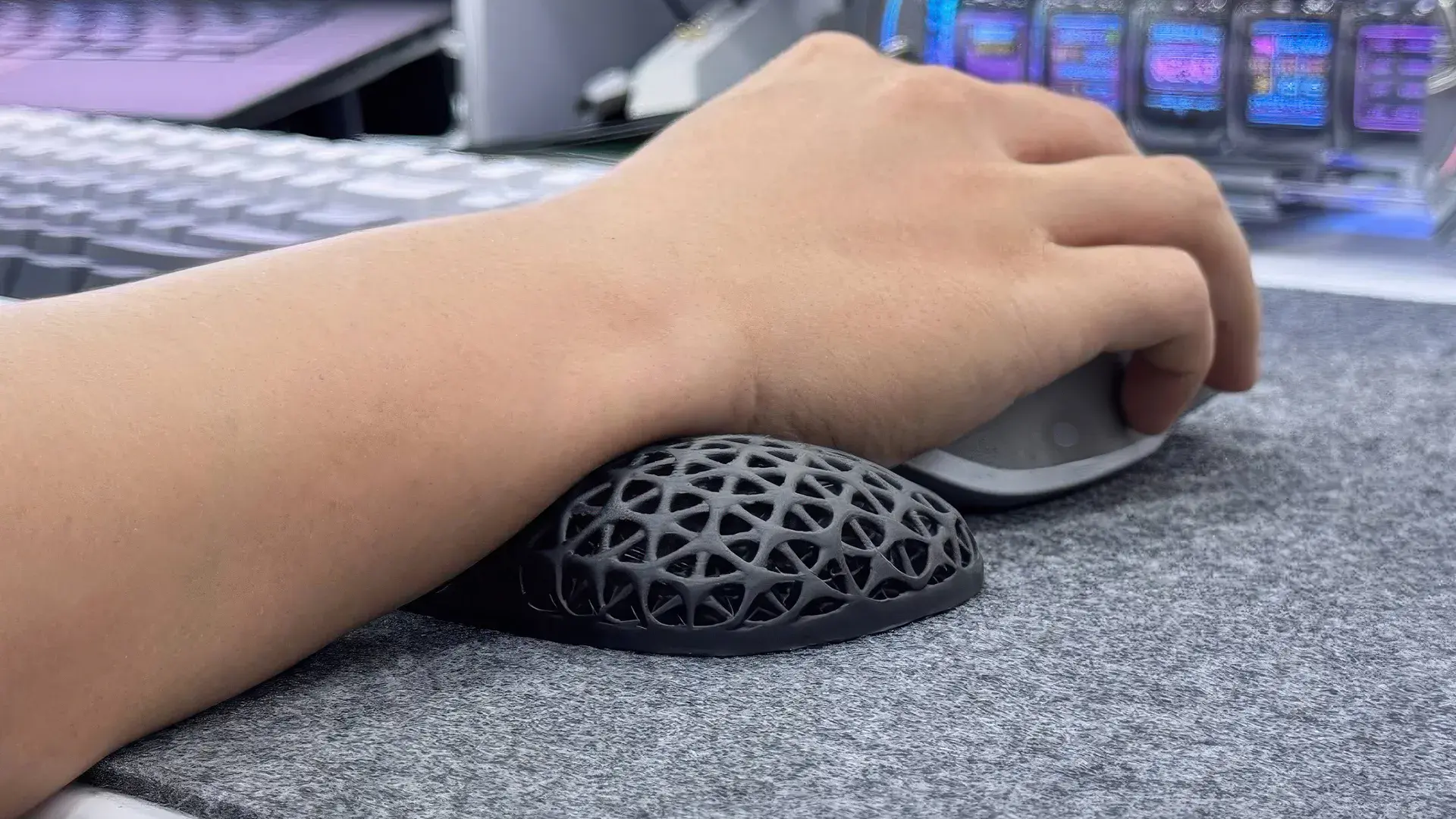
Interestingly, we only discovered another advantage while prototyping. The domed surface kept exposing small distortions whenever we mapped a regular hexagonal lattice across it, whereas the triangulated version behaved much more predictably. It wasn't something we noticed on flat test coupons. Triangulated meshes simply adapt more naturally to doubly-curved surfaces, which explains why dome structures have traditionally been triangulated.
Hexagons Use Material Efficiently
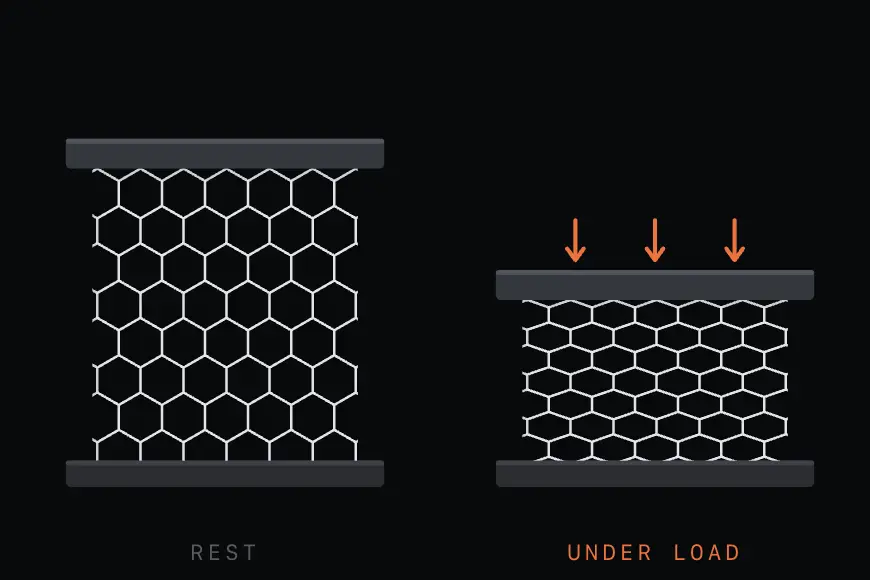
Hexagons solve a different problem. Among the regular shapes that tile a flat plane, they enclose the most area with the least wall length. That's the reason honeycomb structures appear so frequently in lightweight engineering.
When compressed through the cell direction, a hexagonal lattice can deform gradually instead of transferring the load immediately through the structure. The result is a softer response and better pressure distribution. Material still matters though. A flexible elastomer behaves very differently from a thin-walled rigid plastic. The lattice influences the behavior, but it doesn't replace material properties.
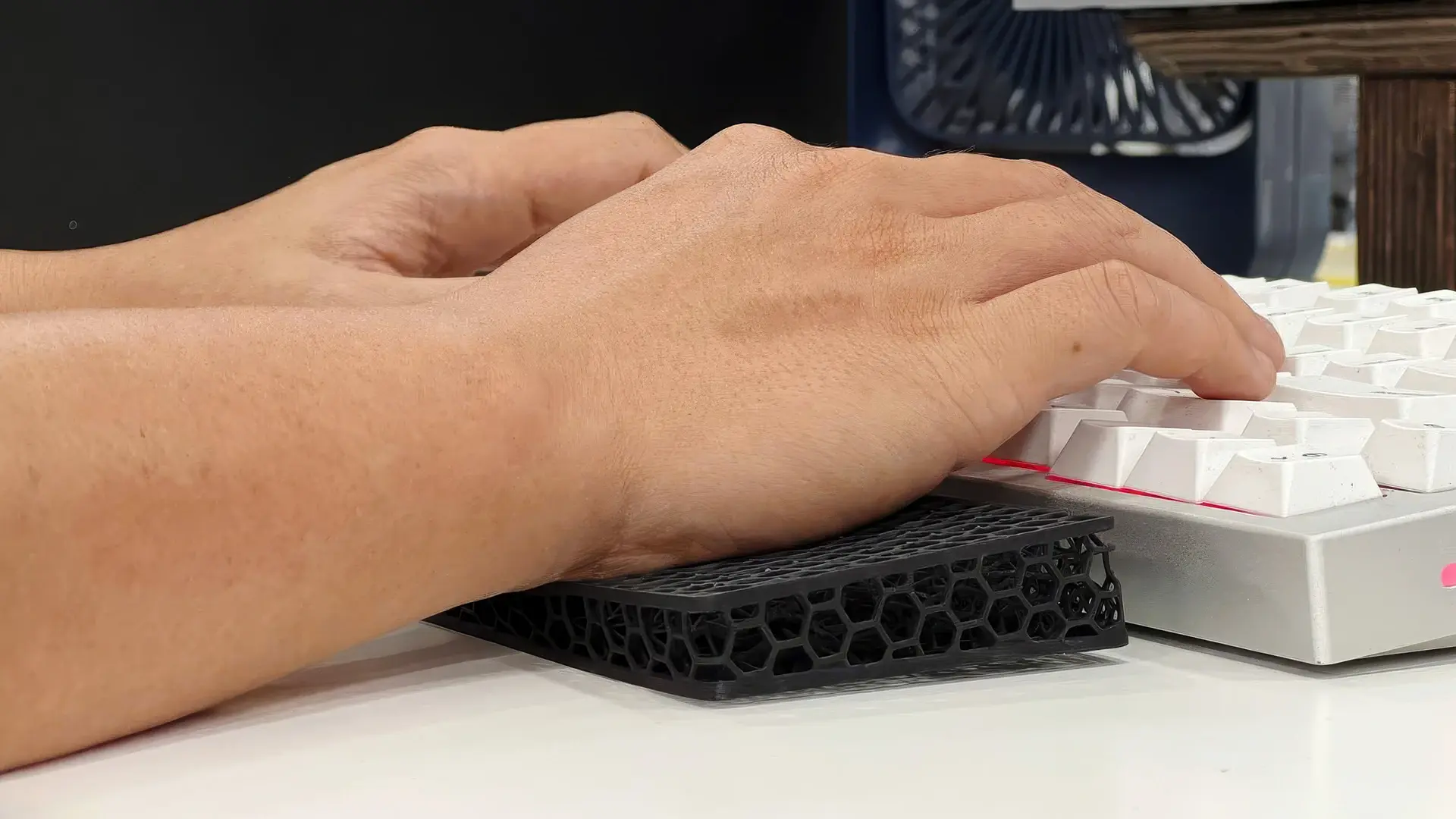
For parts that mainly experience compression and benefit from lower weight, controlled compliance, or airflow, hexagons are usually the better choice. Our ErgoRest 3D keyboard pad fits that description. It supports the palms while allowing pressure to spread across the surface without making the part unnecessarily heavy.
When One Part Needs Both
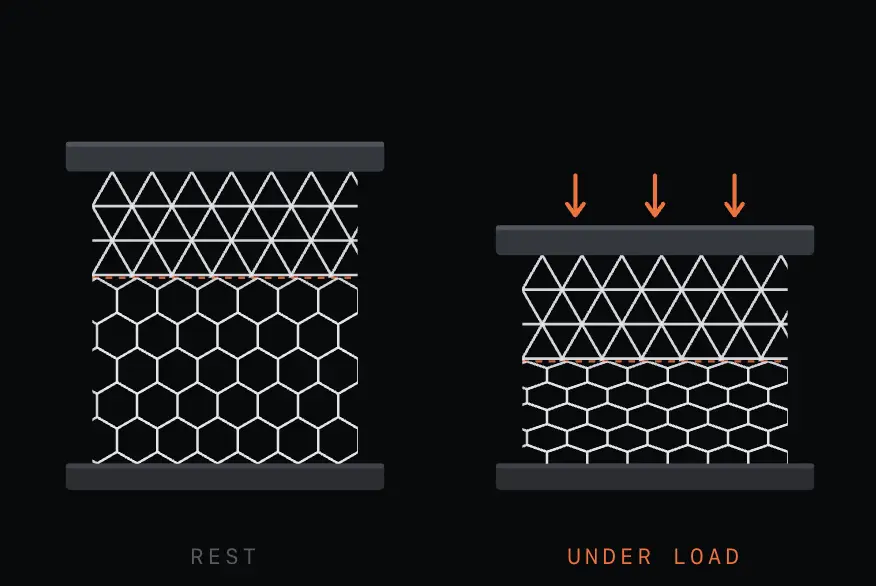
Real products rarely experience only one loading condition. Different areas often perform different jobs, so different lattice patterns can coexist within the same part.
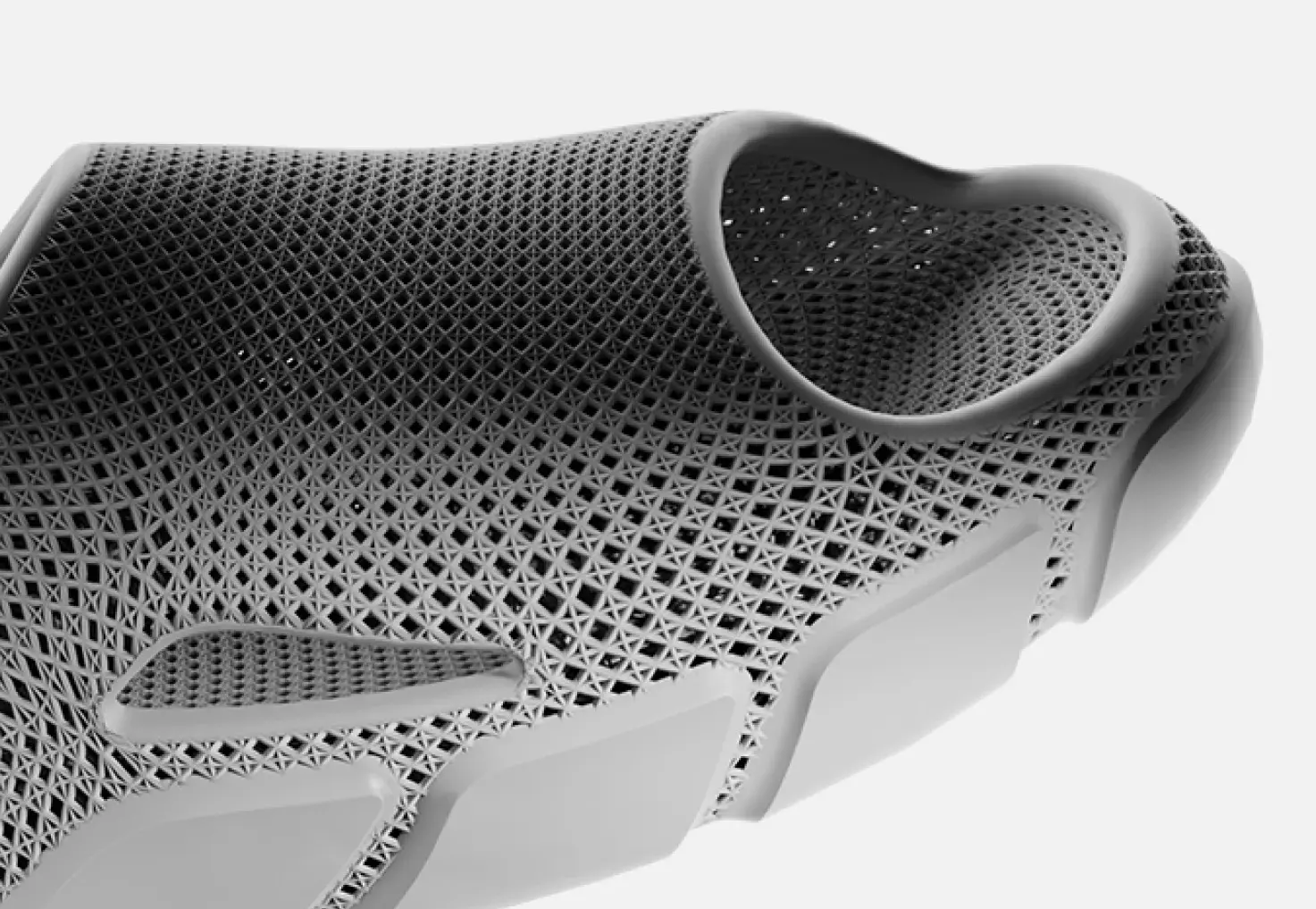
The ErgoWalk 3D sandal demonstrates this well. The straps and midfoot bridge experience bending and twisting, so those regions use triangulated lattices to preserve stability. The footbed and upper primarily support body weight while benefiting from cushioning and airflow, making hexagonal cells a better fit. Rather than asking which lattice is better, we ask what each region of the product needs to accomplish.
Two Practical Notes
Pattern selection isn't the only design variable. Cell size changes behavior significantly. Smaller triangle cells generally increase stiffness and weight, while larger hexagonal cells reduce material usage and print time at the expense of structural strength.
We also avoid making lattice walls thinner than roughly twice the nozzle width—about 0.8 mm with a standard 0.4 mm nozzle. Going below that often leads to inconsistent extrusion in fine lattice regions, something we learned through a number of failed prototypes.
Choosing the Right Pattern
Neither lattice is universally better. Triangle lattices excel where geometry must remain stable under bending or twisting. Hexagonal lattices shine where efficient material use, controlled compliance, and airflow matter most. Many of our products ultimately combine both, allowing each region to perform the job it was designed for.