Calm App Review: Does It Live Up to $80/Year In 2026?


Quick Takeaway
Calm is a sleep and meditation app that costs $69.99–$79.99/year depending on where you subscribe, with a 7–14 day free trial. After 30 days of daily use, Sleep Stories and the Daily Calm were the features worth paying for — everything else was a nice extra but not a reason to subscribe on its own. The app fits best if you'll use it daily for sleep or morning meditation. If your needs are more occasional, free alternatives will likely cover you.
Table of Contents
- Quick Takeaway
- What Is Calm
- How Much Does Calm App Cost, and What Do You Get for Free
- My Thoughts After 30 Days of Use Calm
- 1. Sleep Stories — The Feature That Made Me Keep The Subscription
- 2. Daily Calm And The Guided Meditation Library
- 3. Breathing Exercises, And Whether They Earn Their Place
- 4. Soundscapes And Sleep Music — Where Calm Competes With Free
- 5. Calm Body — A Lighter Layer Than Expected
- 6. Masterclasses And The Long-Form Content Most People Never Open
- What 30 Days of Daily Use Actually Changed
- Who Calm Fits Best, And Who May Want Alternatives
- How Calm Compares To Others
- FAQs
- Final Verdict — Is Calm Worth It?
Most people considering Calm want to know one thing before starting the free trial: will I actually keep using this a month from now? I wondered the same thing, so I signed up for Premium and used it daily for 30 days. This Calm app review walks through the 2026 version of the app — what each feature is actually like in practice, where the experience surprised me, where it didn't, and who gets the most value from the subscription.
What Is Calm
Calm is a mental health app designed around audio-based tools for stress, sleep, and daily wellbeing. It was founded in 2012 by Alex Tew and Michael Acton Smith, and has since grown to over 100 million downloads across iOS, Android, Apple Watch, Apple TV, Apple Vision Pro, and desktop.
The easiest way to understand the app is through its core Calm app features — what you'll actually see when you open it:
Feature | What It Does | Scale |
Sleep Stories | Narrated bedtime audio designed to ease you into sleep | 500+ stories; narrators include Cillian Murphy, Stephen Fry, Matthew McConaughey, Rosé |
Guided Meditations | Sessions organized by topic — anxiety, stress, focus, self-esteem, relationships | 10–20 minutes each, beginner through advanced |
Breathe Bubble | Quick guided breathing for in-the-moment stress relief | 60 seconds |
Soundscapes & Music | Ambient audio — rain, brown noise, ocean waves, campfires — for sleep or focus | 90+ tracks |
Calm Body | Short mindful movement sessions rooted in yoga and tai chi | Most under 10 minutes |
Beyond the library, three daily programs bring fresh content each morning. The Daily Calm with Tamara Levitt — who serves as Head of Mindfulness and voices most of the app's core meditation content — is the flagship. The Daily Jay with Jay Shetty and the Daily Trip with Jeff Warren round it out. Each runs about 10 minutes and covers a different wellness theme. These rotate daily, so even if you use the app for months, there's something new waiting each morning.
The 2026 version has added a few notable tracks. The Mattering Practice is a research-backed series focused on reclaiming your sense of self and prioritizing your own needs. There's also a newer meditation series focused on romantic partnerships. New content is added monthly, which helps keep the library from going stale if you're a long-term subscriber.
Calm runs on a freemium model — a limited free tier, and a Premium subscription that unlocks everything above — the rest of this Calm app review covers whether that's worth it.
How Much Does Calm App Cost, and What Do You Get for Free
The free tier is not empty, but the app's onboarding steers you toward the Premium trial, making the free content easy to miss. Calm's onboarding steers you toward the Premium trial from the start. That's not entirely true, but the free experience is limited enough that it functions more as a sample than a standalone product.
Without paying, you get a rotating selection of meditations, some soundscapes, breathing exercises, and mood check-ins. What you don't get is the Daily Calm, the full Sleep Stories catalog, Masterclasses, Calm Body sessions, or the complete music library.
Feature | Free | Premium |
Select meditations | Yes | Full library |
Daily Calm | No | Yes |
Sleep Stories (full catalog) | No | Yes |
Soundscapes | Limited | Full (90+) |
Breathing exercises | Yes | Yes |
Mood check-ins | Yes | Yes |
Calm Body / movement | No | Yes |
Masterclasses | No | Yes |
Music library | Limited | Full |
Kids content | Limited | Full |
Is the Calm app free in a meaningful way? If you're looking for a basic breathing tool or a few ambient sounds at bedtime, the free version handles that. For anything beyond — structured meditation programs, the full Sleep Stories library, daily guided content — you'll need Premium.
When you're ready to subscribe, here's what the pricing looks like in 2026:
- Monthly: $16.99/mo, cancel anytime — best if you want to test beyond the free trial without committing to a full year.
- Annual: $69.99/yr (~$5.83/mo) — the most common plan, and where most subscribers land.
- Family: $99.99/yr for up to six separate accounts — each person gets their own profile, favorites, and listening history.
- Lifetime: One-time payment for permanent access. Pricing varies by platform — expect somewhere between $399.99 and $499.99 depending on where you purchase.
Some longtime users on Reddit have noted that the value calculation feels different at $70. At this price point, Calm sits in the same range as Headspace, which makes the comparison between the two more relevant than it used to be.
My Thoughts After 30 Days of Use Calm
Now that the pricing is out of the way, here's what actually matters — whether the app delivers enough value to justify it. I used every major feature over 30 days, some daily, some only a handful of times before I stopped reaching for them. Here's how each one held up.
1. Sleep Stories — The Feature That Made Me Keep The Subscription
Sleep Stories are narrated bedtime audio tracks designed to help you fall asleep, and after 30 days, this is the feature I reached for most often. The range covers everything from slow train journeys through Norway to dreamy explorations of the universe, to gentler stories originally written for children that turn out to be strangely effective for adults too.
What surprised me was how well the format works. The stories are paced deliberately — sentences slow down, details get softer, and the narrative gradually fades rather than building toward a conclusion. On most nights, I was asleep before a story ended. That pattern comes up consistently in user reviews as well — many describe Sleep Stories as the single feature that justified the subscription, and some say they've helped with long-standing difficulty falling asleep in ways that white noise or other methods hadn't. Individual experiences will vary, but it's a theme that shows up too often to ignore.
The narrator lineup mixes celebrities and professional voice actors. Cillian Murphy reading a slow train journey through Ireland worked every time I played it. Stephen Fry's pacing felt similarly well-suited for sleep. Erik Braa and a few other professional narrators became my go-to rotation. Some celebrity entries felt produced more for name recognition than for the listening experience. The catalog is broad enough that you'll find narrators that suit you, though it may take some browsing.
A Calm app review on Reddit user noted that while the Sleep Stories alone make the subscription worth it, you could find similar content for free on YouTube. That's a valid point. What separates Calm as a sleep app experience is the curation — no ads mid-story, no autoplay into unrelated videos, and a library organized well enough to find something new most nights.
The sleep stories itself make it all worth it, but you can also just go on youtube and grab something for free. So it depends what you’re after and if you have a few extra bucks to spend. I give it a 4/5 for content and overall satisfaction.
The limitation is repetition over time. Once you settle into the narrators and styles that work for you, your rotation narrows. By week four, I was cycling through about eight favorites. New stories are added monthly, which helps, but long-term subscribers may find the pace slower than they'd like. Still, in the context of this Calm app review, Sleep Stories were the strongest single reason to keep the subscription.
2. Daily Calm And The Guided Meditation Library
The Daily Calm is a fresh 10-minute guided meditation that appears every morning, voiced by Tamara Levitt. It's the app's anchor feature for daily use, and it turned out to be the second thing I opened most consistently after Sleep Stories.
What makes it work is the format. Ten minutes is short enough to fit into a morning without rearranging your schedule, and because each session covers a different theme — patience, boundaries, letting go, self-compassion — it doesn't feel repetitive across a month of use. Levitt's teaching style blends light instruction with guided practice. If you're wondering if the Calm app works for building a meditation habit, this is the feature that answers that most directly.
The broader meditation library is substantial. Sessions are organized by topic — anxiety, stress, focus, relationships, self-esteem, personal growth — and by experience level. Beginners can start with the "7 Days of Calm" introductory program and move into the 21-day follow-up. More experienced meditators can find a "less guidance" category with minimal narration and longer periods of silence, which addresses a common criticism of meditation apps — that they keep you dependent on a narrator rather than building your own practice.
Carving out even just 10 mins for the Daily Calm has completely altered my mindset in just a few weeks
— Calm app review on Apple Store
The 7 Days of Calming Anxiety and 21 Days of Calm have been lifesaving programs for me. I feel immediately so relaxed after practicing them. I don’t have access to a mental health professional, or in between sessions, this is a lifesaver.
— Calm app review on Apple Store
I used the broader library less than I expected. The Daily Calm covered my morning routine well enough that I rarely browsed for additional sessions. The Daily Calm is where most subscribers will spend their meditation time, and it carries that weight well. For a different angle on mental training, the Brainway app review covers an app focused on cognitive fitness rather than mindfulness.
3. Breathing Exercises, And Whether They Earn Their Place
Calm's breathing tools offer structured patterns — box breathing, deep belly breathing, and paced exhalation — through a visual interface called the Breathe Bubble. It expands and contracts on screen to guide your rhythm.
In practice, this was the feature I reached for in high-stress moments when I didn't have time for a full meditation. Sixty seconds of paced breathing with a visual guide is a surprisingly effective way to interrupt a stress response, and the simplicity is a strength.
The limitation is depth. Both iOS and Android now offer built-in breathing tools that do roughly the same thing for free. Dedicated breathwork apps like Othership go further with structured programs and guided sessions, and the Lumenate app review covers a light-based meditation tool that takes an entirely different approach. Calm's Breathe Bubble sits between the two — more polished than the stock phone tool, but not deep enough to anchor a subscription around. It's one of those smaller Calm app features I ended up reaching for more regularly than expected, and a useful addition inside the broader package.
4. Soundscapes And Sleep Music — Where Calm Competes With Free
Calm's soundscape library includes over 90 ambient audio tracks — rain, ocean waves, campfires, forest sounds, brown noise, white noise, and a handful of ASMR recordings. The music library adds genre-sorted tracks across ambient, classical, electronic, and new age categories.
I used soundscapes two ways: as background audio while working, and layered behind Sleep Stories at bedtime. The audio quality is clean and loops don't have obvious repetition points.
The fair question is whether this justifies paying when Spotify, YouTube, and free apps offer similar content. For pure background noise — rain sounds, brown noise — free alternatives are functionally identical. Where Calm pulls ahead is in layering. You can run a soundscape behind a Sleep Story or meditation, which creates a more immersive experience than either alone. One Reddit user mentioned preferring Calm specifically because it lets you keep a soundscape running continuously in the background — particularly useful for tinnitus or environments where you need consistent audio to mask ambient noise.
If background audio is the main reason you're considering the app, free options will likely cover you. But as part of the broader subscription, soundscapes quietly became one of the Calm app features I used most often — more than I would have predicted going in.
I prefer calm over headspace, calm allows you to have a soundscape playing in the background.
— Calm app review on Reddit
5. Calm Body — A Lighter Layer Than Expected
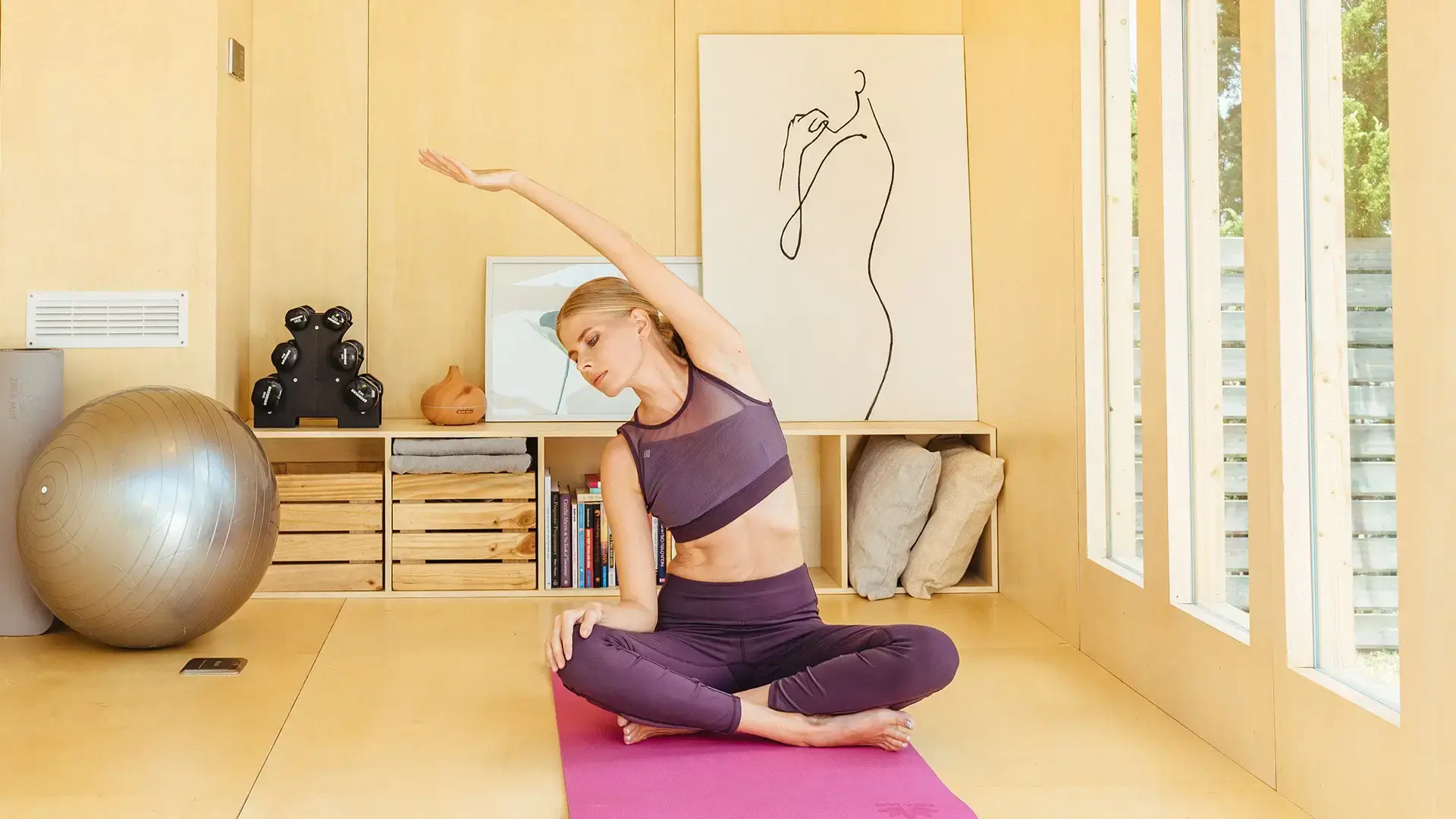
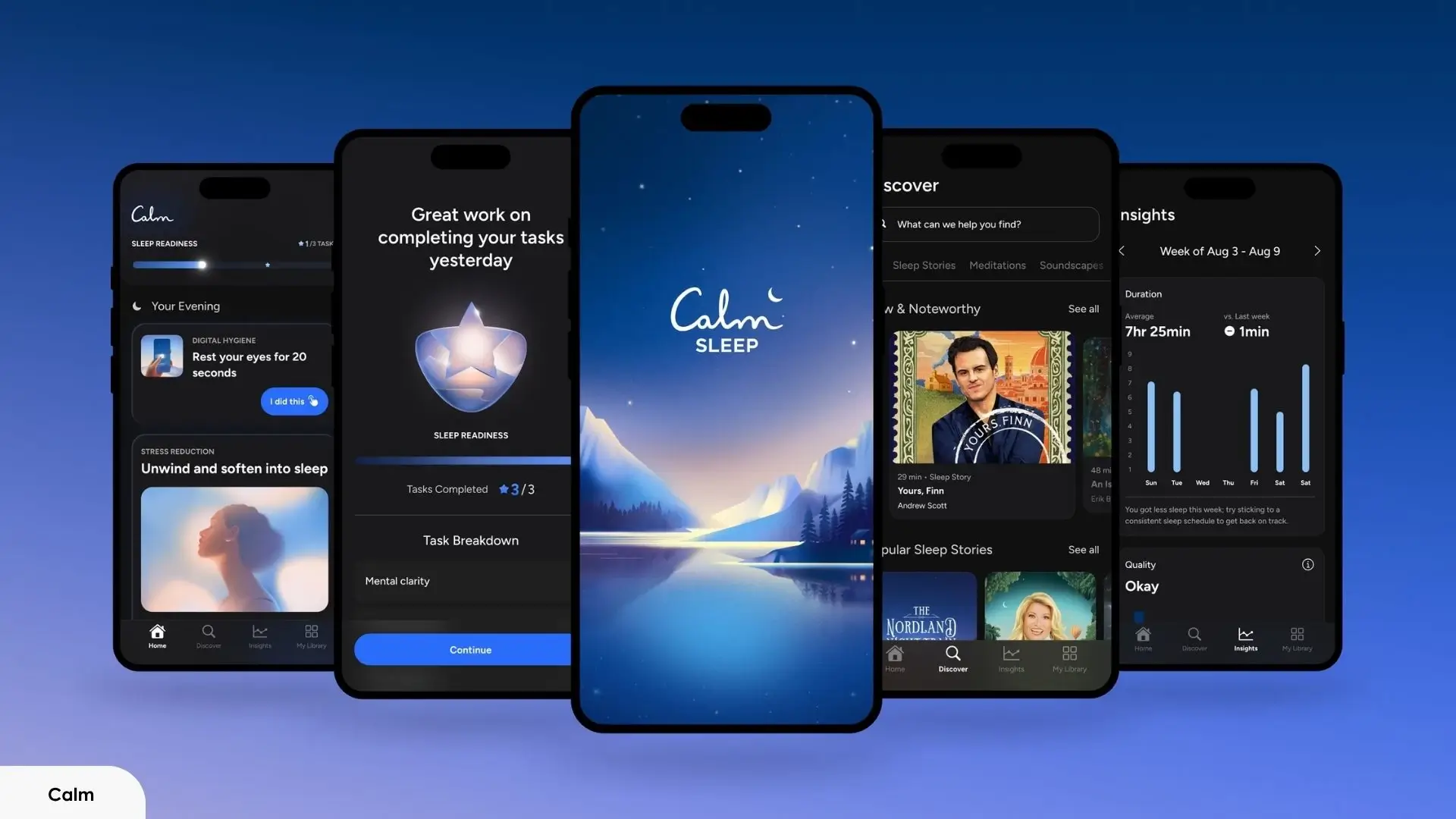
Calm Body is a collection of short guided movement sessions — stretching, yoga-inspired flows, and tai chi basics — designed as mindful movement rather than a workout.
I tried most of the available sessions during the first two weeks. Each runs under 10 minutes, the instruction is clear and the pacing is deliberately slow. As a morning stretch or a break from desk work, the sessions deliver what they promise.
The catalog is thin, though. There are currently around eight structured sessions, which means you'll cycle through the full library within a week. A Daily Move is added each day for some variety, but these are brief and don't fully compensate for the limited structured selection. By week three, I had moved on — the content wasn't poor, there just wasn't enough of it to sustain a routine. If you're looking for a dedicated movement or yoga app, this isn't a substitute. It's a small bonus that adds value if you're already subscribing for other features.
6. Masterclasses And The Long-Form Content Most People Never Open
Masterclasses are multi-session courses led by experts and public figures on topics ranging from mindful eating to managing burnout. They run longer than standard meditations — typically 15 to 30 minutes per session across several days.
I explored a few during weeks two and three. The format feels closer to a short online course than a meditation session, and the content is genuinely substantive. The burnout and stress management tracks were the most relevant to my experience, and the content felt genuinely substantive.
Where it gets tricky is fitting them into an existing routine. The app's natural daily rhythm — Daily Calm in the morning, a Sleep Story at night — already fills the Calm time most people will have. Masterclasses require a different kind of attention, and carving out an extra 20 minutes for a course on mindful communication didn't happen consistently for me. The value is real if you're the type to follow through on online courses. If you tend to leave them half-finished, that's worth factoring into whether the Calm app is worth it for you.

What 30 Days of Daily Use Actually Changed
The practical question behind any review of the Calm app is whether it produces a noticeable difference when used consistently.
After 30 days, I noticed three things:
Sleep onset got faster on nights I used a Sleep Story, though I can't separate the app's effect from being more consistent with screen-off time generally.
Stress reactivity shifted slightly. The Daily Calm sessions didn't eliminate stressful moments, but I found myself reaching for the Breathe Bubble more often as a first response instead of sitting in the tension.
Focus was the least affected. I used soundscapes as background audio while working and they were pleasant, but I didn't notice a measurable difference in concentration compared to my usual routine.
None of these are dramatic transformations, and I want to be careful not to overstate them. Meditation research generally supports small, cumulative benefits over time rather than immediate breakthroughs, and my experience tracked with that. The realistic expectation for a new subscriber is this: if you use Calm consistently for sleep and morning meditation, you'll likely notice modest improvements in how you fall asleep and how you respond to stress. If you're expecting something more immediate or more pronounced, you may find the results underwhelming relative to the price.
Meditation apps are a tool, not a treatment — and for some people, the underlying issue is less about mindfulness and more about focus and productivity at work. The Liven app review covers an app built around that angle.
Who Calm Fits Best, And Who May Want Alternatives
No Calm app review would be complete without being direct about who this is actually for. After 30 days, the pattern was clear enough to sort this out honestly.
Calm works well if you:
- Struggle with falling asleep and respond well to narrative audio. Sleep Stories are the app's strongest feature by a wide margin, and if this is your primary need, the subscription pays for itself.
- Want a short, structured daily meditation without building your own practice from scratch. The Daily Calm is a reliable 10-minute anchor that holds up over weeks of use.
- Prefer a polished, single-app experience over piecing together free tools from YouTube, Spotify, and stock phone apps. The curation, interface, and lack of ads matter more than people expect.
- Are a beginner to meditation and want guided instruction that teaches the basics without being overwhelming.
You may want to look elsewhere if you:
- Are an experienced meditator looking for depth, customization, or silence-heavy sessions. Insight Timer offers a much larger free library with more flexibility for self-directed practice.
- Care mostly about price. Calm at $70/year is fair for what it offers, but apps like Medito are completely free, and Insight Timer's free tier is more generous than Calm's.
- Want a dedicated breathwork or movement app. Calm's breathing and Calm Body features are lightweight additions, not standalone tools.
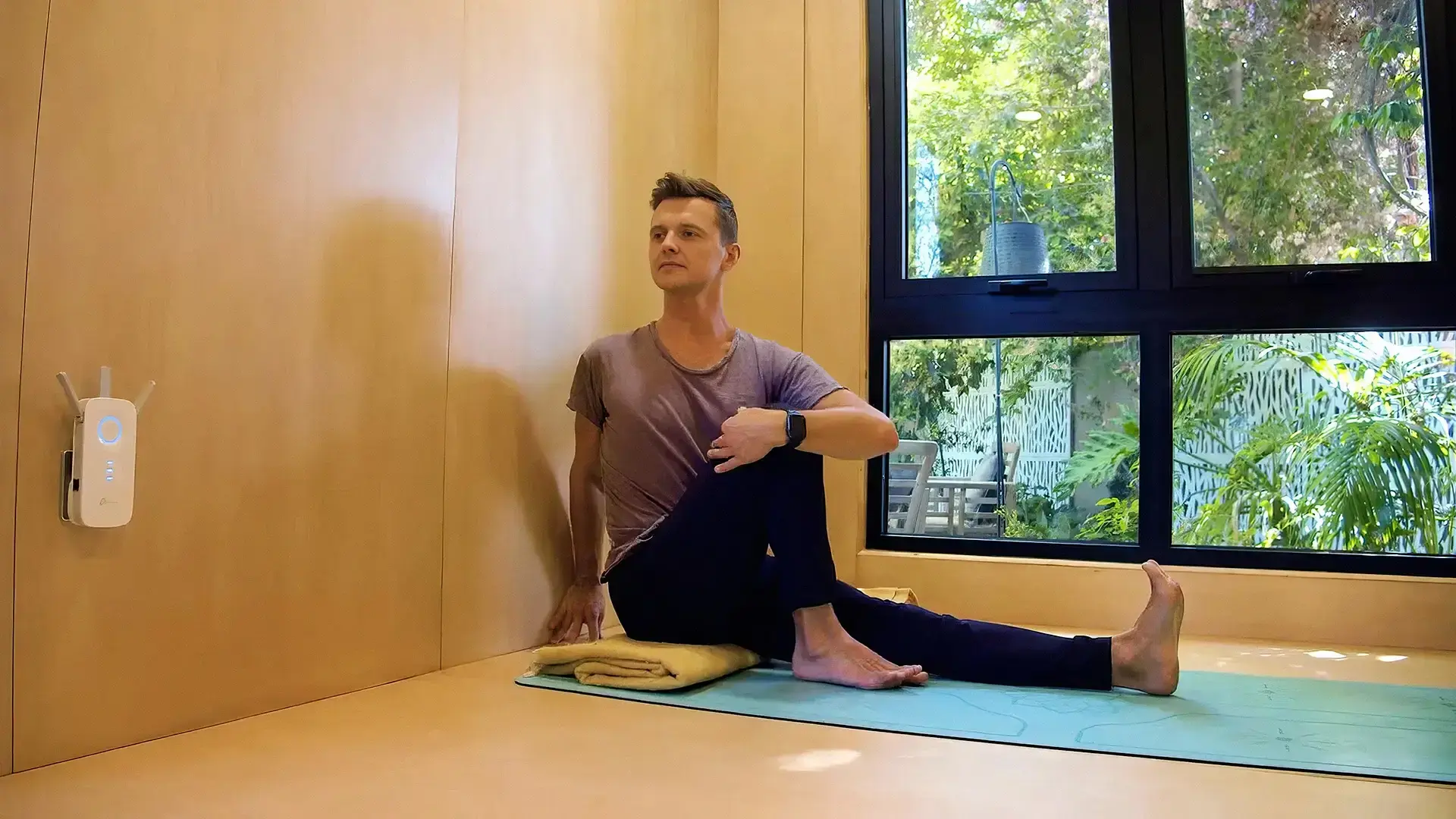
- Need sleep tracking or data. Calm helps you fall asleep but doesn't measure or analyze your sleep in any meaningful way — a dedicated tracker or the Calm Sleep companion app would serve that need better.
- Are dealing with persistent anxiety, insomnia, or other mental health concerns that need more than a wellness app. Meditation is one category within a broader best wellness apps space — matching the right tool to the right problem matters more than picking the most popular one.
- Want to build consistent daily habits beyond meditation — an app like Fabulous is designed specifically for routine-building.
- Need more structured daily emotional support than a meditation app provides — the Finch self-care app review covers an app built around daily check-ins and mood tracking.
This is also worth considering if you've used Calm before and let the subscription lapse. The app has added new daily programs, content tracks like The Mattering Practice, and the catalog has grown — but the core experience is largely the same. If the format worked for you before, there's enough new content to make resubscribing reasonable. If the format itself was the issue, the 2026 version probably won't change your mind.
How Calm Compares To Others
Calm isn't the only meditation app worth considering, and the right choice depends on what you're actually looking for. Here's how it stacks up against the three alternatives that come up most often.
Feature | Calm | Headspace | Insight Timer | Balance |
Annual price | $79.99/year | $69.99/year | $59.99/year | $69.99/year |
Monthly price | $16.99/month | $12.99/month | $9.99/month | $11.99/month |
Free trial | 14-day free trial | 7–14 day trial | No trial (free tier available) | 1-year free trial |
Free version | Limited access (basic content only) | Very limited access | Extensive free library (200,000+ sessions) | Full access during trial |
Content style | Curated library with celebrity narrators | Structured courses with step-by-step guidance | Community-driven with thousands of teachers | Personalized sessions based on user input |
Sleep features | 500+ Sleep Stories for better sleep | Sleepcasts and sleep music | User-uploaded sleep tracks | Sleep meditations and white noise |
Best for | Sleep support and flexible daily meditation | Beginners who want structured learning | Budget users who prefer free content | Users who want personalized meditation plans |
Calm vs. Headspace — same price, different philosophy.
- Headspace is built around structured courses that progress step by step. Better for complete beginners who want linear guidance — the Headspace app review goes deeper into how that works in practice.
- Calm is a library you browse — less hand-holding, more flexibility day to day.
- For sleep, Calm's 500+ Sleep Stories are significantly deeper than Headspace's sleepcasts.
- Headspace has Ebb, an AI companion that recommends sessions based on mood. Calm's recommendation engine is subtler, learning from usage patterns over time.
Calm vs. Insight Timer — less a competition, more a philosophical difference.
- Insight Timer's free library is massive — 200,000+ meditations from 17,000+ teachers — with community features like group sessions and forums.
- The trade-off is curation. Quality is inconsistent, and navigation can feel overwhelming with that much content.
- Calm offers a smaller, tightly curated library where production quality stays consistent. You're paying for someone to do the filtering for you.
Calm vs. Balance — worth considering if personalization matters most.
- Balance adapts each session based on daily check-ins about your mood, goals, and experience level. No two sessions are the same.
- The one-year free trial gives far more time to evaluate than Calm's seven days.
- Trade-off is library size — significantly smaller catalog, no Sleep Stories, no celebrity narrators.
Which one fits you?
- You want better sleep and a deep audio library → Calm
- You're a complete beginner and want structured, step-by-step courses → Headspace
- You're price-sensitive or prefer self-directed practice with maximum variety → Insight Timer
- You want sessions that adapt to how you're feeling each day → Balance
FAQs
Is the Calm app actually free?
Calm has a free tier, but it's limited. You get a handful of meditations, some soundscapes, breathing exercises, and mood check-ins. Most core features — including Daily Calm, Sleep Stories, Masterclasses, and Calm Body — require a Premium subscription. The free version is enough to try the app, but most users hit the paywall quickly.
What do you get with Calm Premium?
Calm Premium unlocks the full experience. This includes the entire Sleep Stories library (500+), Daily Calm sessions, full guided meditation programs, 90+ soundscapes, Calm Body movement sessions, Masterclasses, and the complete music library. In practice, Premium is what makes Calm feel like a complete product rather than a sample.
Does the app Calm actually work?
Yes, Calm can be helpful for sleep, relaxation, and building a daily meditation habit, especially if you use it consistently. However, results vary from person to person, and it should be seen as a wellness tool rather than a medical treatment.
Is Calm good for beginners?
Yes. Calm is beginner-friendly, especially through features like the Daily Calm and structured programs such as “7 Days of Calm.” The sessions are short, guided, and easy to follow, making it a good starting point if you don’t already have a meditation routine.
What are the cons of the Calm app?
The most common Calm app review complaints are the limited free tier, the short trial, subscription cost increases over the years, and occasional app glitches after updates. Some users also find the large content library overwhelming to navigate without a clear starting point, and paying subscribers have reported seeing promotional pop-ups within the app.
Is the Calm app worth the money?
It depends on how often you use it. If Sleep Stories and the Daily Calm become part of your daily routine — as they did for me — the annual plan works out to roughly 19 cents a day, which is fair for a wellness app. If you'd only open it a few times a month, you're probably better off with a free alternative like Insight Timer or the breathing tools already built into your phone.
How much does the Calm app cost?
As of 2026, the monthly plan is $16.99, the annual plan is $79.99 ($6.67/month), the family plan is $99.99/year for up to six accounts, and the lifetime membership is a one-time payment of $499.99. A free trial with full Premium access is available, but it requires a payment method and auto-charges if you don't cancel before day seven.
Is Calm better than free meditation apps?
Calm stands out in curation and experience rather than raw content volume. Free apps like Insight Timer or YouTube offer similar types of content, often in larger quantities. What you’re paying for with Calm is structure, consistency, and an ad-free, well-organized experience — not access to something completely unique.
Is Calm or Headspace better?
They serve different needs at a similar price point. Calm is stronger for sleep content, with 500+ Sleep Stories. Headspace is more structured, offering step-by-step courses that are better for beginners learning meditation. Choose based on whether you prioritize sleep support or guided learning.
Is Calm good for anxiety?
Calm can be useful for managing everyday stress and mild anxiety by giving users structured tools for relaxation, sleep, and mindfulness. It works best as a supportive wellness app, not as a replacement for professional mental health care.
Does Calm have content for kids?
Yes. Calm includes a kids section with Sleep Stories, meditations, and music organized by age group. Parents often highlight kids’ Sleep Stories as a standout feature. Most content requires a Premium subscription, though a small portion is available for free.
Can you use Calm offline?
Yes, but only for downloaded content. You can save Sleep Stories, meditations, and music for offline use inside the app. Without downloading in advance, most features require an internet connection.
Does Calm have a lifetime subscription?
Yes. Calm offers a lifetime membership for a one-time payment of $499.99, which unlocks full access permanently. It’s non-refundable and only applies to individual accounts, so it’s best to test the app first before committing.
How do I cancel my Calm subscription?
You must cancel through the platform you subscribed on:
- iPhone: Settings → your name → Subscriptions → Calm → Cancel
- Android: Google Play → Subscriptions → Calm → Cancel
- Website: Log into calm.com → Account Settings
Deleting the app does not cancel your subscription. You’ll retain access until the end of the billing period.

Final Verdict — Is Calm Worth It?
Calm is worth the subscription if you'll use it daily. At $70-$80/year, the math only works when the app becomes part of your routine rather than something you open once a week. For me, it did — and Sleep Stories at night and the Daily Calm each morning were the reason.
It's not the right fit for everyone. If your needs are primarily breathwork, movement, or structured cognitive training, other apps serve those better. If price is the barrier, Insight Timer's free tier is more generous. But for the specific combination of curated sleep audio and short daily meditation in one polished package, Calm does that better than anything else I've used.
Start with the free trial and set a reminder. This Calm app review is one person's 30-day experience — yours may land differently.