Ideal Office Chair Height for Proper Ergonomics

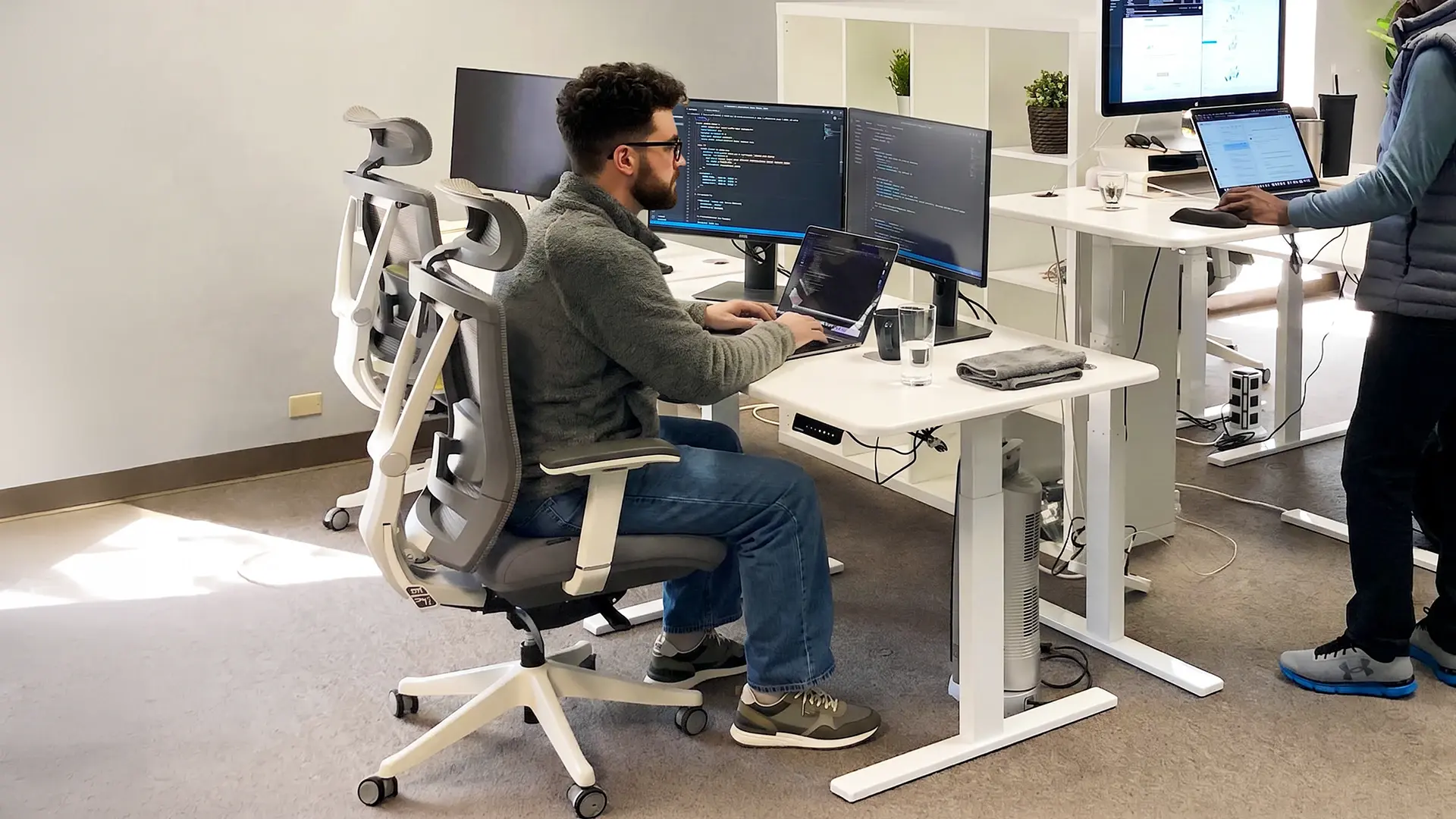
The ideal office chair height is the seat setting where your feet rest flat on the floor, your knees form a 90-degree angle, and your hips sit slightly above or level with your thighs. Finding this correct vertical placement is the absolute foundation of healthy workplace posture. Adjusting your seating to the ideal office chair height minimizes physical fatigue, improves lower-body blood circulation, and protects against long-term spinal strain.
What Is the Ideal Office Chair Height?
The ideal office chair height is a personalized measurement ranging from 16 to 21 inches (40 to 53 cm) from the floor to the top of the seat cushion for most adults. This structural range accommodates a wide distribution of body sizes, though the perfect setting depends entirely on your specific lower-leg length.
When a seat is adjusted to its proper office chair height, body weight is distributed evenly across the seat pan. If a chair is positioned too high, it creates a dangling foot posture that compresses the nerves and blood vessels behind the knees. If it is set too low, your knees rise above your pelvic line, which flattens the natural lumbar curve and forces the lower spine into an unhealthy slouch.
| User Height | Recommended Seat Height Range* |
| 5'0" (152 cm) | 15 - 16 inches (38 - 41 cm) |
| 5'4" (163 cm) | 16 - 17 inches (41 - 43 cm) |
| 5'8" (173 cm) | 17 - 18 inches (43 - 46 cm) |
| 6'0" (183 cm) | 19 - 20 inches (48 - 51 cm) |
| 6'4" (193 cm) | 20 - 21 inches (51 - 53 cm) |
*Note: Individual proportions (torso-to-leg ratio), thick-soled footwear, and current desk configurations can shift these recommended ranges by 1 to 2 inches.
How to Know Your Chair Height Is Wrong in 10 Seconds
You can instantly check if your office chair height is incorrect by performing a three-step physical audit right now. If your posture fails any of these quick tests, your workspace setup is actively causing muscular strain.
- The Slide Test: Slide two fingers under the front edge of your thigh. If your fingers slide under too easily, your chair is too low. If you cannot fit your fingers under your thigh at all, your chair is too high.
- The Heel Check: Lift your toes off the ground while keeping your heels down. If your heels naturally lift or float when you relax your legs, your seat is elevated too far.
- The Desk Level Check: Rest your hands on your keyboard. If your shoulders must shrug upward or your elbows drop significantly below the desk surface, your seat and desk heights are mismatched.

How to Measure Your Ideal Office Chair Height
The ideal office chair height is measured by finding the exact distance from the floor to the crease at the back of your knee while wearing standard work shoes. This anatomical measurement determines your personal baseline seat height before you introduce any other furniture components.
To find your personal setting, use the following step-by-step process:
- Stand directly in front of your office chair while facing away from it.
- Adjust the seat height until the highest point of the seat pan rests just below your kneecap.
- Sit down completely with your lower back resting firmly against the backrest.
- Verify that a small gap (about two to three fingers wide) exists between the edge of the seat and the back of your knees.
- Ensure your feet are fully planted on the ground without your heels lifting.
Office Chair Height vs. Desk Height: Why Both Matter
Office chair height must be synchronized with your desk height because an isolated adjustment to your seat can still result in upper-body discomfort if your work surface remains misaligned. True ergonomic safety requires a balanced relationship between the lower extremities and the typing surface, as documented by Cornell University Ergonomics.
If your desk is static and too high, you may be tempted to raise your chair past the point of comfortable foot placement, creating severe leg pressure. If your desk is too low, you will naturally hunch your shoulders and compress your neck. Utilizing a premium height-adjustable desk allows you to set your correct office chair height first, and then bring the desk surface down or up to meet your resting elbow level.
| Adjustment Target | Optimal Ergonomic Setting | Poor Alignment Consequences |
| Footing | Anchored flat on the floor or solid footrest | Dangling feet, deep thigh compression |
| Knee Flexion | Set between 90° and 100° | Pinched hip flexors, pelvic misalignment |
| Elbow Angle | Level with the keyboard surface at 90° | Shoulder shrugging, carpal tunnel strain |
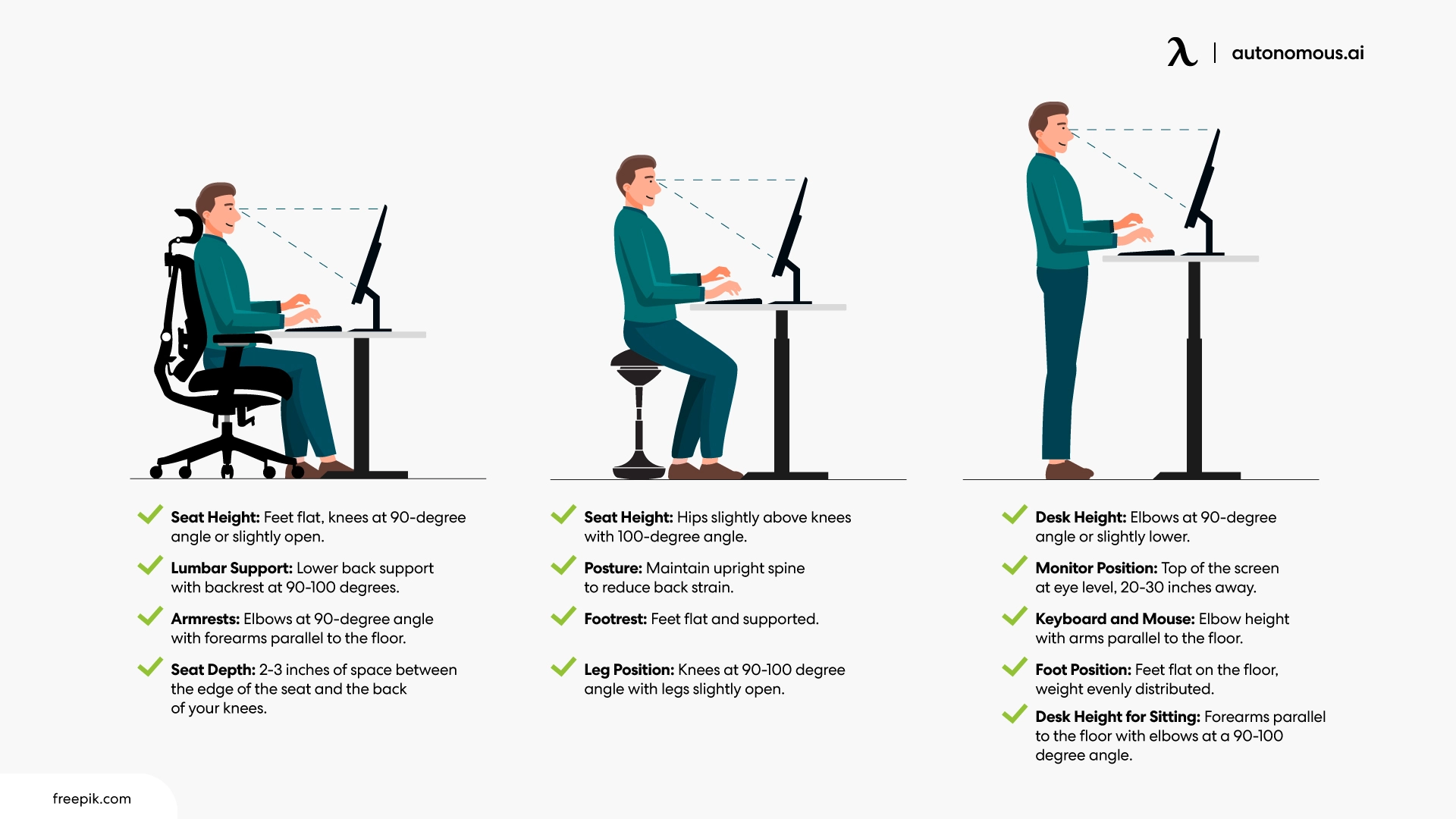
Essential Ergonomic Features for Proper Height Adjustment
A highly functional chair must include a reliable pneumatic cylinder, responsive tension controls, and independent seat depth adjustments to support proper office chair height. High-quality seating solutions provide stable locking mechanisms that prevent the seat from drifting lower over hours of constant use.
Ergonomic Insight: Mechanical stability prevents "micro-drifting," a common issue where gas cylinders slowly leak pressure over time, causing users to drop out of their optimal posture without noticing.
Beyond simple vertical travel, an effective office chair should feature adjustable armrests and adaptive lumbar support. When you modify your seat height, your relationship to your armrests changes, meaning these components must move independently to keep your shoulders relaxed.
.webp)
FAQs
What is the ideal office chair height for most people?
The ideal office chair height is a position where your feet rest flat on the floor, your knees form a 90-degree angle, and your thighs stay parallel to the ground. This setup minimizes lower back pressure and optimizes full-body circulation.
What is the average office chair height from the floor?
The average office chair height for standard adult furniture ranges between 16 and 21 inches from the floor to the top of the seat cushion. The exact number varies based on your specific leg length and torso dimensions.
Do tall people need a different average office chair height?
Yes, taller individuals require a higher seat position, often closer to 20 or 21 inches, to maintain proper hip and knee angles. Without this adjustment, their knees will rest higher than their hips, compressing the pelvis.
How high should an office chair be for a short person?
A shorter individual typically needs a seat height between 15 and 16 inches to ensure their feet safely reach the floor. If the chair cannot adjust low enough, a dedicated ergonomic footrest must be used to support the feet.
Is my office chair too high or too low?
Your chair is too high if your heels lift from the floor or you feel pressure behind your knees. It is too low if your knees sit higher than your hips, forcing your spine to slouch forward.
What happens if my chair height is wrong?
An incorrect seat height can cause lower back pain, shoulder tension, pinched nerves, and poor leg circulation. Over time, this poor positioning can lead to chronic musculoskeletal disorders.
Should chair height match desk height?
Chair height should be adjusted to fit your body first, and then your desk height should be altered to match your resting elbow level. If your desk is non-adjustable and too high, raise your chair and use a footrest to bridge the gap.
Can a footrest fix bad chair height?
A footrest is an excellent tool to compensate for a fixed desk that forces your chair to be too high for your feet to touch the floor. However, it should only be used when your chair cannot independently achieve a proper relationship with the floor.
What is the best chair height for avoiding back pain?
The best chair height keeps your hips slightly above or level with your knees while keeping your feet firmly grounded. This unloads stress from the lumbar discs and allows your chair’s backrest to support your spine properly.
Is chair height important when using a standing desk?
Yes, chair height remains highly important because you must preserve proper ergonomic posture during your sitting intervals. When switching back to a seated position, your chair must still meet your exact lower-body requirements.
Do ergonomic chairs automatically set the correct office chair height?
No, ergonomic chairs offer a wide range of physical adjustments but must still be set manually by the user to fit their unique body. No chair can self-adjust to your dimensions without your active calibration.
What features ensure proper office chair height when buying a new seat?
When buying a new seat, look for a heavy-duty pneumatic gas lift with a wide vertical travel range and smooth operation. Independent seat depth adjustment is also crucial to ensure your legs are properly supported at any height.
Conclusion
Finding the ideal office chair height is not about picking an arbitrary number, but rather about creating a personalized relationship between your body and your workstation. When your seat is adjusted properly, it unloads stress from your spinal columns, enhances blood circulation, and prevents long-term occupational fatigue. For the best health outcomes, always view your ideal office chair height as the foundation of an integrated ergonomic system that includes desk height, monitor placement, and supportive footwear.

References
- Occupational Safety and Health Administration (OSHA): Computer Workstations eTool (osha.gov)
- Cornell University Ergonomics Web: Sitting and Chair Design (ergo.human.cornell.edu)
- Mayo Clinic: Office Ergonomics: Your How-To Guide (mayoclinic.org)